
CLASSE: GASTROPODA: TERRESTRE
FAMÍLIA: TOMOGERIDAE
ESPÉCIE: Anostoma brunneum Verdcourt, 1992
Tamanho médio: 34 mm
Distribuição: Brasil (Goiás)
Localidade tipo: 20 km a Sudeste de Dianópolis, Goiás
Habitat: vive no solo, sob folhas ou enterrada parte do tempo, em afloramento de rocha calcária
Nome original: Anostoma octodentatum brunneum Verdcourt, 1992
Descrição original:
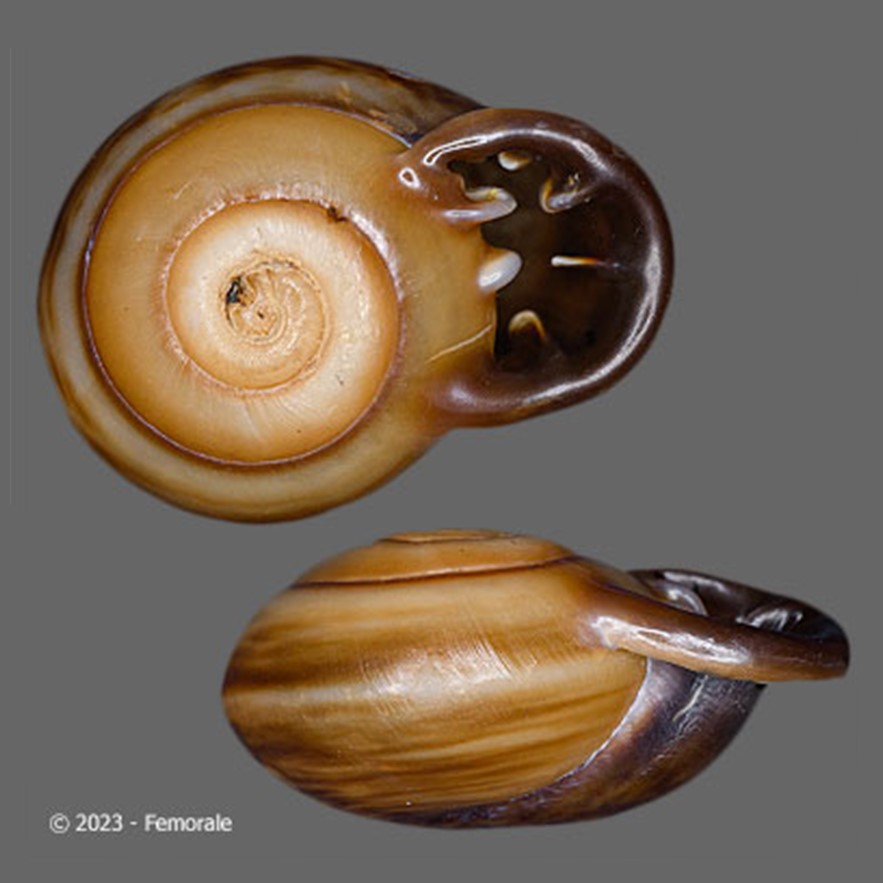
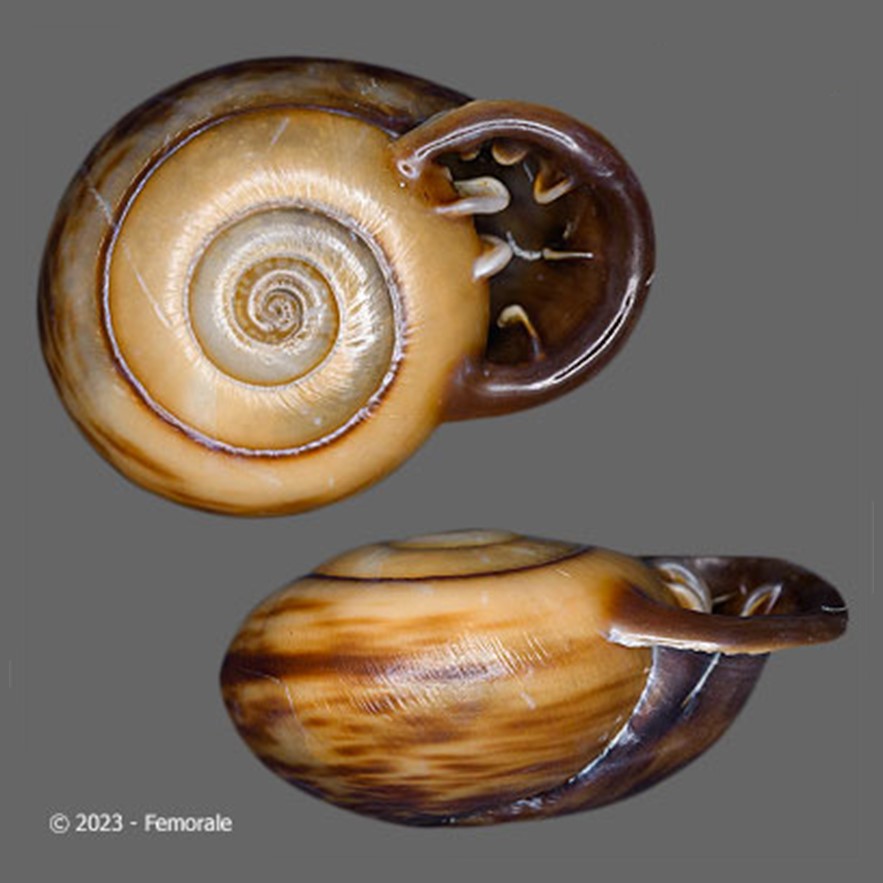
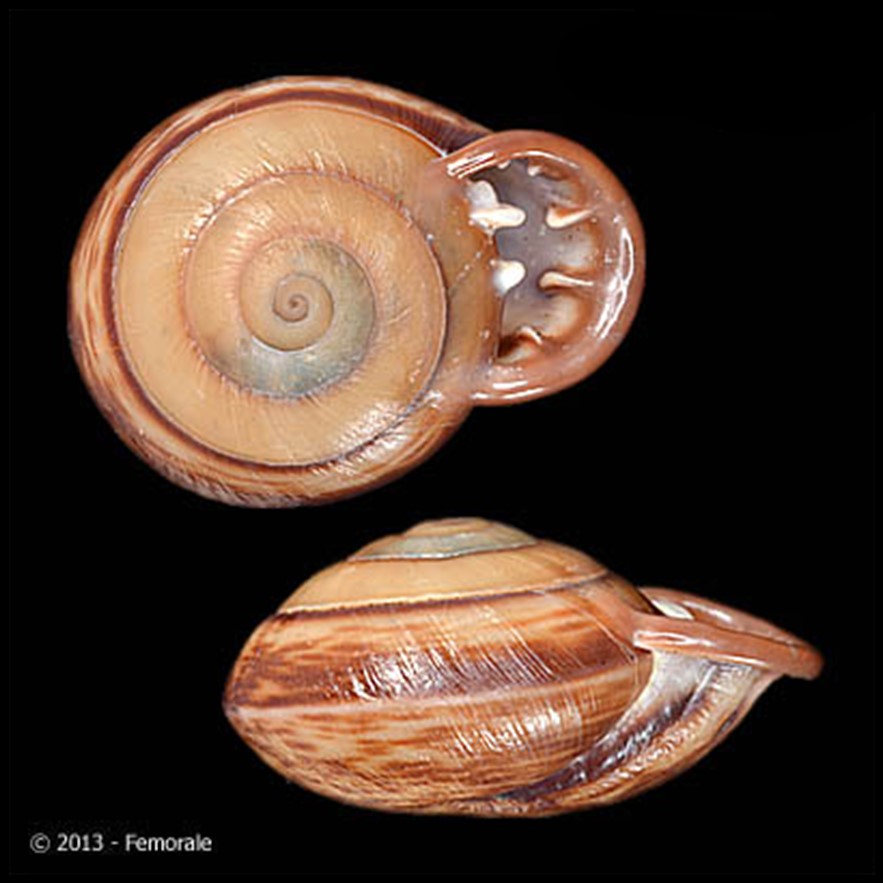
(Vercourt, 1992) “Shell depressed globose, biconvex, somewhat oblong in plan, distinctly keeled; body whorl with narrow darker band above the keel and narrower one above below the suture, the keel itself more or less pale and base densely blotched. Whorls 5; sculpture (taken from the juvenile shell): protoconch almost smooth with only very obscure transverse marks, rest with strong close irregularly interrupted transverse rugae, spiral element not very evident on upper 3 whorls but from there on with about 15 fine spiral lines irregularly spaced and traces of fine lines between them; base with more regular closer raised spiral lines; sculpture soon worn down in adult shells; peristome thickened and strongly reflexed.
Dentition variable, the holotype with 7 labial lobes similar to the figure given by Pilsbry (1901, t. 64, fig. 43) but including an obscure additional one between the paired group and the basal lamella, and 3 parietal lobes the upper pair in planes at right angles to each other, actually joined and not separate as in Pilsbry’s figure; the adult paratype has the same parietal arrangement but only 5 labial lobes arranged as in Pilsbry’s Fig. 40. Alt. 16 mm, greater diam. 33-34 mm, lesser diam. 24—26 mm.
A juvenile paratype 21-5 x 20 mm has a perfectly regular uniformly brown circular very depressed shell with the periphery very sharply keeled and sculpture very clear; the umbilicus is deep, 5 mm wide and is of course later entirely covered by the change of direction of growth undergone by the body
whorl”
Fotos: (1-3) cortesia Femorale, 2023, Goiás, ~29 mm
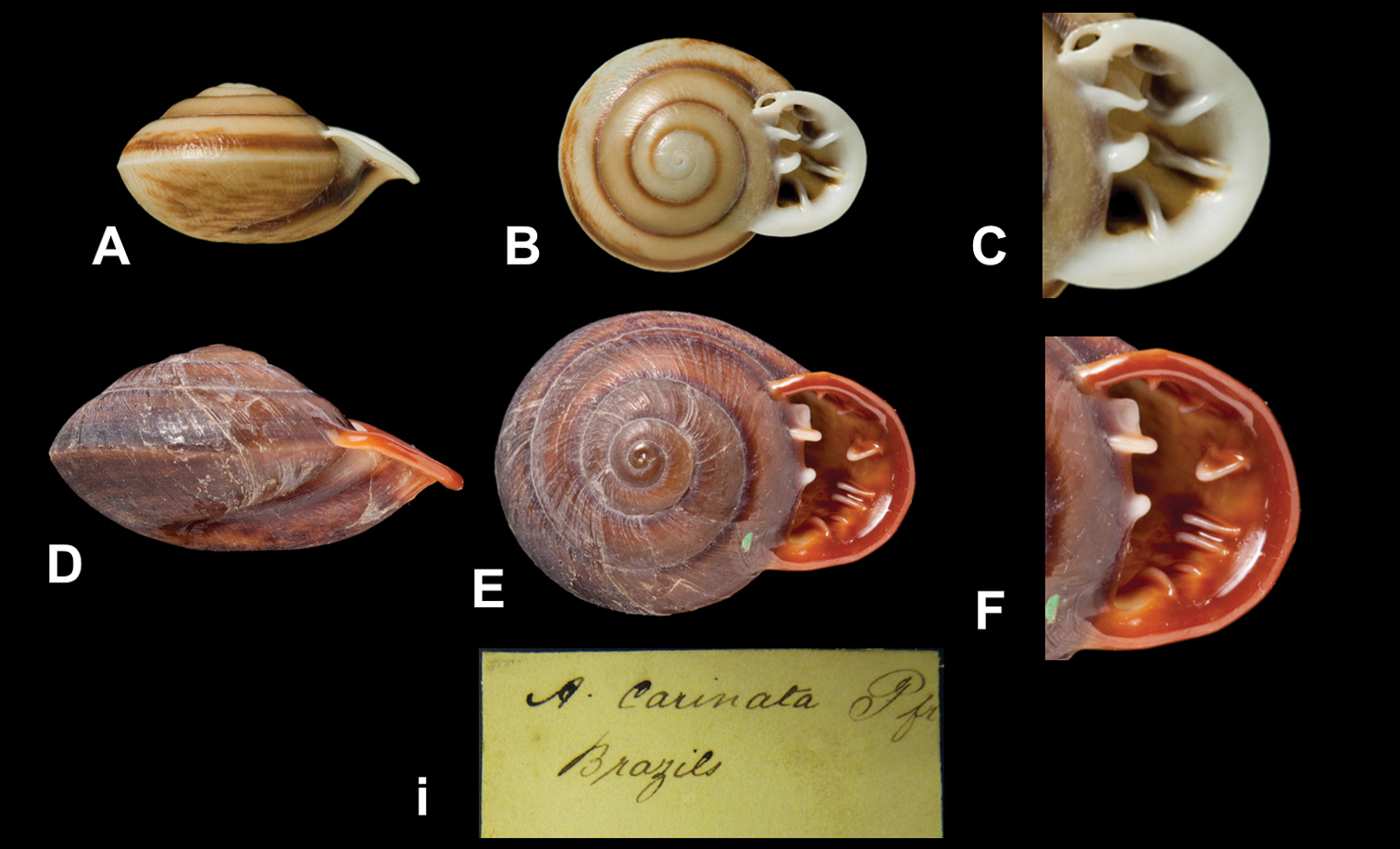
Figura: Breure A, Ablett J (2012): (A–C, i) Anostoma carinatum (Pfeiffer, 1853), provável SYNTYPE NHMUK 20100509 (D = 24.3mm); (D–F) Anostoma brunneum Verdcourt, 1991, HOLOTYPE NHMUK 1990126 (D = 32.6mm)
Fontes:
Descrição original: (como Anostoma octodentatum brunneum Verdcourt, 1992) Verdcourt, B. (1992). A new Anostoma from Brazil (Gastropoda: Pulmonata: Bulimulidae). Journal of Conchology. 34: página (s) 81–82, disponível online em https://www.biodiversitylibrary.org/part/408713
Simone, L. R. L. (2006). Land and Freshwater Molluscs of Brazil. Editora Gráfica Bernardi, FAPESP. São Paulo, 390 pp. página(s): 174
Breure A, Ablett J (2012) Annotated type catalogue of the Bothriembryontidae and Odontostomidae (Mollusca, Gastropoda, Orthalicoidea) in the Natural History Museum, London. ZooKeys 182: 1-70, disponível online em https://doi.org/10.3897/zookeys.182.2720
Molluscabase: https://www.molluscabase.org/aphia.php?p=taxdetails&id=1328275

Vive em árvores e arbustos

Vive sob ou sobre pedras

Vive em corais ou recifes

Vive em algas marinhas

Vivem em fundos de cascalho de coral, pedra ou conchas

Vive no solo. Sob folhas ou enterada parte do tempo

Vive em fundos arenosos, enterrada ou sob ele.

Animais que nadam ou vivem livremente

Presos a certos animais ou parasitando

Vive em fundos lodosos

Vive em plantas de água doce

Seu habitat é desconhecido

Alimenta-se de plantas e algas

Alimenta-se de outros animais

Alimenta-se de qualquer fonte

Alimenta-se de animais mortos
Seu hábito alimentar é desconhecido


