
CLASSE: GASTROPODA: TERRESTRE
FAMÍLIA: CLAUSILIIDAE
ESPÉCIE: Brevinenia richardsi (Grego & Szekeres, 2004)
Tamanho médio: 14.1 – 16.8 mm
Ocorrência: Peru (Amazonas)
Habitat: “em rochas húmidas e com musgo, rodeadas por vegetação exuberante”
Localidade tipo: Peru, “6 to 7 km from Leimebamba along the road to Balsas, dpto Amazonas”
Nome original: Andiniella richardsi Grego & Szekeres, 2004
Etimologia: o nome da espécie é uma homenagem ao malacologista chileno Dulack Richards, coletor do material tipo
Descrição original:
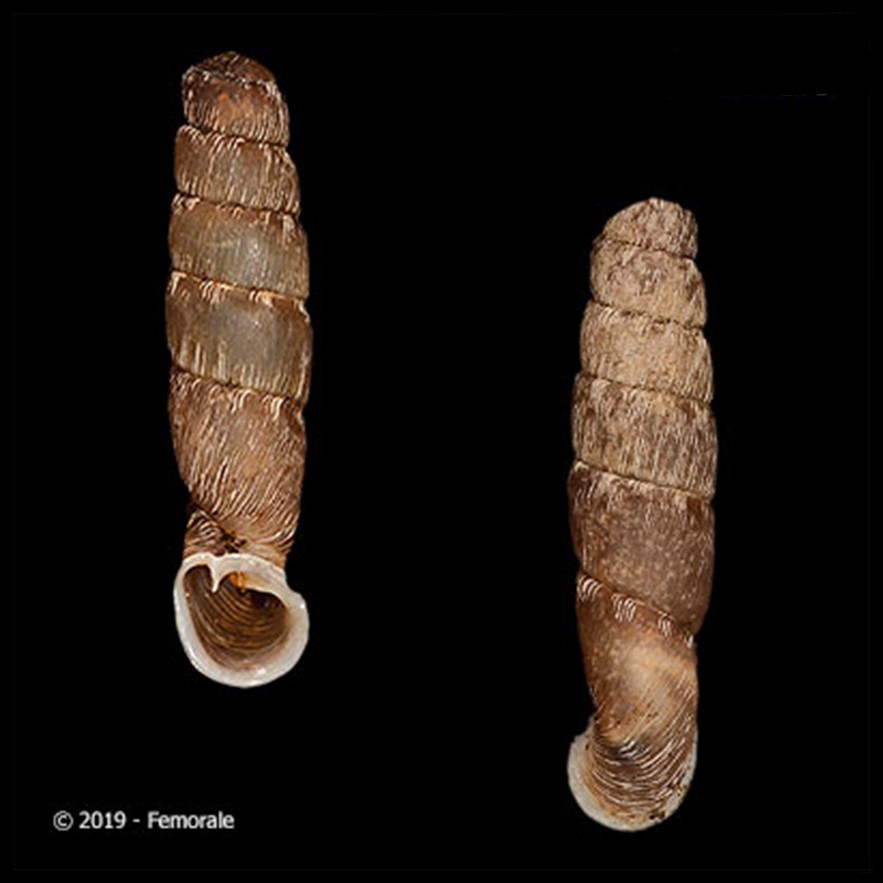
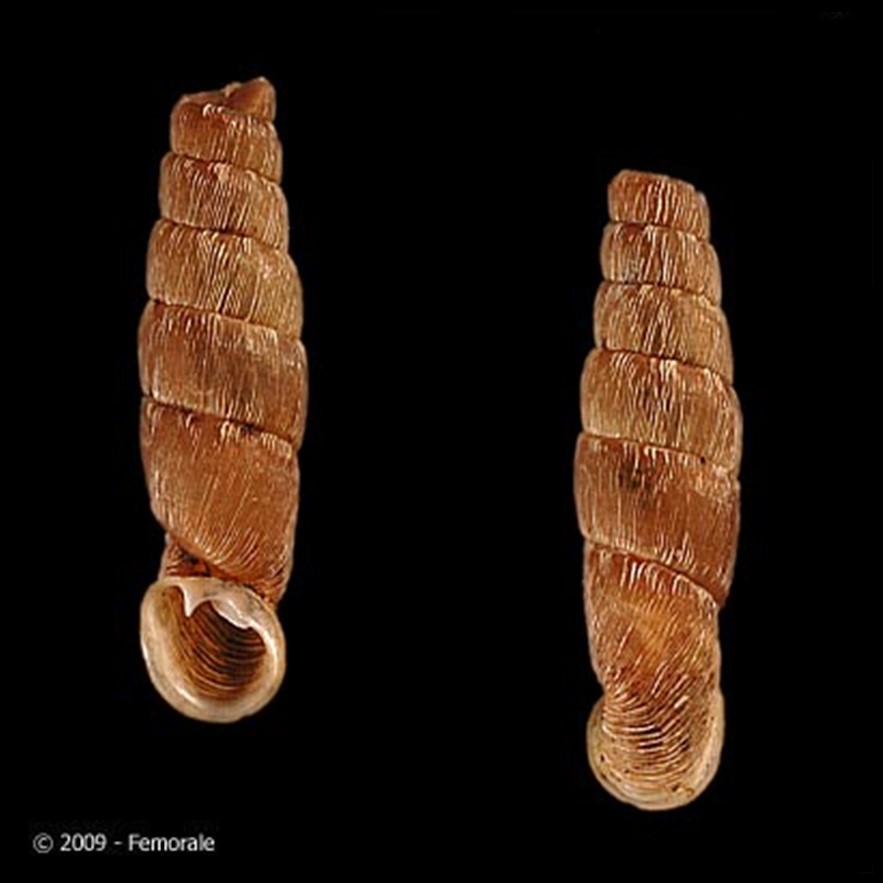
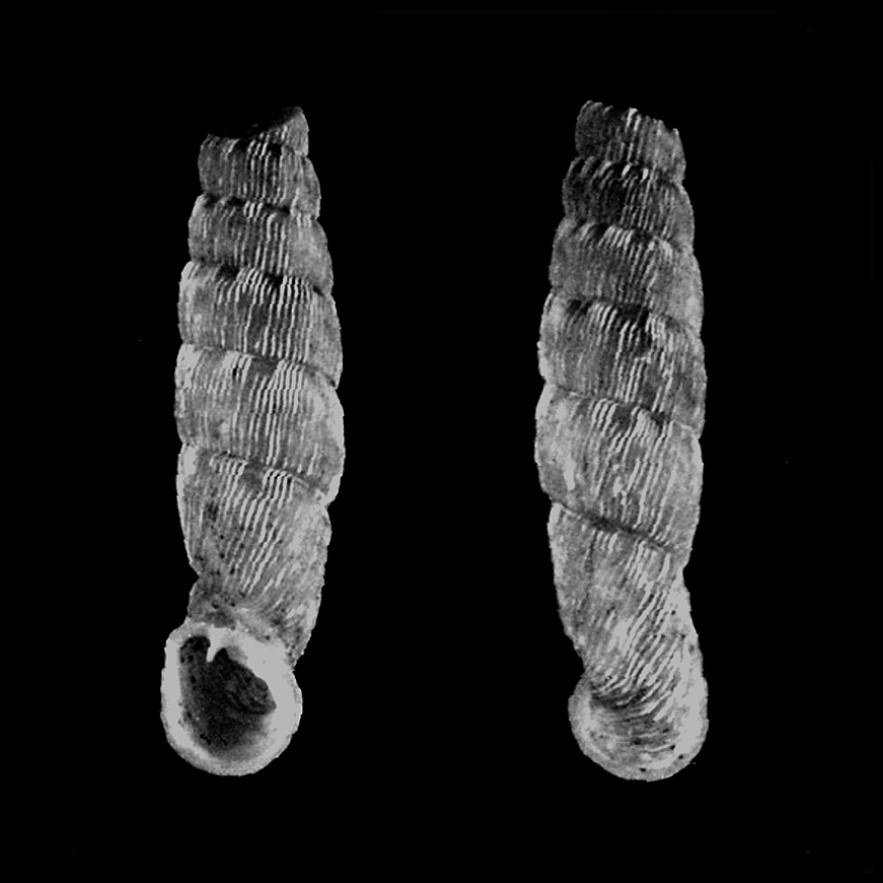
(Grego & Szekeres, 2004): “The horn colour to light brown decollated shell consists of 5 1/2 to 6 2/3 whorls. The gradually widening apex shed by decollation represents approximately halflength of the entire shell. The fairly convex whorls are covered by regularly spaced sharp
ribs. Along the suture, the upper ends of some ribs are flattened in a periodical manner, so that the whorls tend to look papillate. The
neck is quite rounded, only a very indistinct crest is recognisable over the basis of the parietal wall. The sculpture of the neck is somewhat irregular, but otherwise indistinguishable from that of the other whorls.
The peristome is rounded, gradually widening, with only slightly thickened margin. The lamella superior is well developed but short. Inward its height decreases rapidly before its inner end makes a transition into the lamella spiralis. The highly positioned lamella inferior ends at the upper quarter of the peristome.
Lying much deeper, the lamella subcolumellaris is not, or only barely visible through the aperture. The plica principalis ends on the dorsal side. The upper palatal fold is short, joined with the dorsal lunella they form a crescentshaped structure. The lunella widens towards its base where it becomes fused with the end of the lamella subcolumellaris. The basalis is not recognisable. The clausilium with a rounded tip is almost fully visible through the aperture.”
Fotos: (1,2) cortesia Femorale, Peru, Balsas, TOPOTYPE, 15.7 e 14mm respectivamente; (3) Grego & Szekeres, 2004: Museo de la Universidad de San Marcos, HOLOTYPE de Brevinenia richardsi, MUSM (lote não informado na descrição original), “6 to 7 km from Leimebamba along the road to Balsas, dpto Amazonas”, Dulack Richards leg., 15.vi.2001, 14.1mm
Fontes:
Descrição original: Grego, J. & Szekeres, M. (2004). New taxa of clausiliids (Gastropoda: Pulmonata: Clausiliidae) from northern Peru. Schriften zur Malakozoologie, 21: 5‑11. Cismar.
página(s): 6, fig. 2
Nordsieck, H. (2007). Worldwide Door Snails (Clausiliidae), Recent and Fossil. ConchBooks, Hackenheim, 214 pp.
página(s): 42
nova combinação: Neubert, E. & Nordsieck, H. (2005). New Southamerican Clausiliidae from the collections of the Florida Museum of Natural History (Gastropoda, Clausiliidae, Neniinae). Bulletin of the Florida Museum of Natural History, 45 (2): 45-62. Gainesville.
página(s): 56
Molluscabase: https://molluscabase.org/aphia.php?p=taxdetails&id=1291503

Vive em árvores e arbustos

Vive sob ou sobre pedras

Vive em corais ou recifes

Vive em algas marinhas

Vivem em fundos de cascalho de coral, pedra ou conchas

Vive no solo. Sob folhas ou enterada parte do tempo

Vive em fundos arenosos, enterrada ou sob ele.

Animais que nadam ou vivem livremente

Presos a certos animais ou parasitando

Vive em fundos lodosos

Vive em plantas de água doce

Seu habitat é desconhecido

Alimenta-se de plantas e algas

Alimenta-se de outros animais

Alimenta-se de qualquer fonte

Alimenta-se de animais mortos
Seu hábito alimentar é desconhecido


