
CLASSE: GASTROPODA: TERRESTRE
FAMÍLIA: CHAROPIDAE
ESPÉCIE: Chellius piramidalis Vargas-Almonacid & Stuardo, 2007
Tamanho médio: ~3.35 mm
Distribuição: Chile (VIII Región)
Localidade tipo: Chile, VIII Región, Península de Hualpén
Nome original: Chellius piramidalis Vargas-Almonacid & Stuardo, 2007
Etimologia: o nome da espécie é uma referência à forma piramidal da concha
Descrição original:
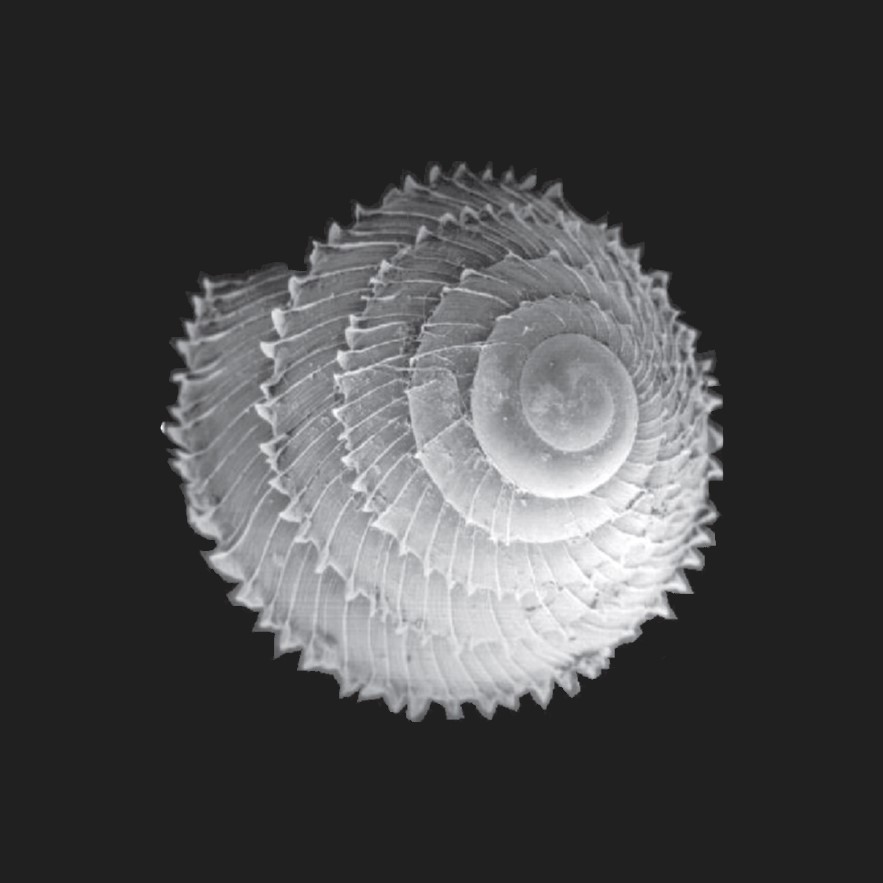
(Vargas-Almonacid & Stuardo, 2007): “Shell small, pyramidal, shiny light brown coloured with small axial bands of dark brown color regularly distributed among the ribs. Axial sculpture strong, projected by periostracal knife-like structures. Spire convex, with a basal angle of growth regular to rapid, base flat, umbilicated. Apex convex, moderately elevated above the protoconch. Shell with 5 1/2 to 6 1/8 whorls gradually developed in ascendant way. External and internal (umbilical) surfaces covered by 213 and 167 thick, slightly sigmoidal radial ribs, respectively, with basis presenting knife-like crests with an inclination of 45°. Ribs separated at regular intervals by a growth microsculpture formed by 4-11 fine, regularly spaced, secondary radial costellae.
Umbilicus narrow, deep, approximately equal to 1/4 of the largest shell diameter; apparently equivalent to the fecundation chamber of other species. Aperture wider than higher, diagonal, without callosities in the parietal union; peristoma sharp, keel-like resembling a siphostoma. Protoconch smooth, regular, with two whorls abruptly ending where the sculpture begins.”
Fotos: (1) Vargas-Almonacid, P. & Stuardo, J.R. (2007): Universidad de Concepción (UCCC), parátipo, lote não informado na publicação; (2) animal vivo: observação iNaturalist 314886473, Arauco Province, Bio Bio, Chile Edgardo Flores, 16.ix.2025
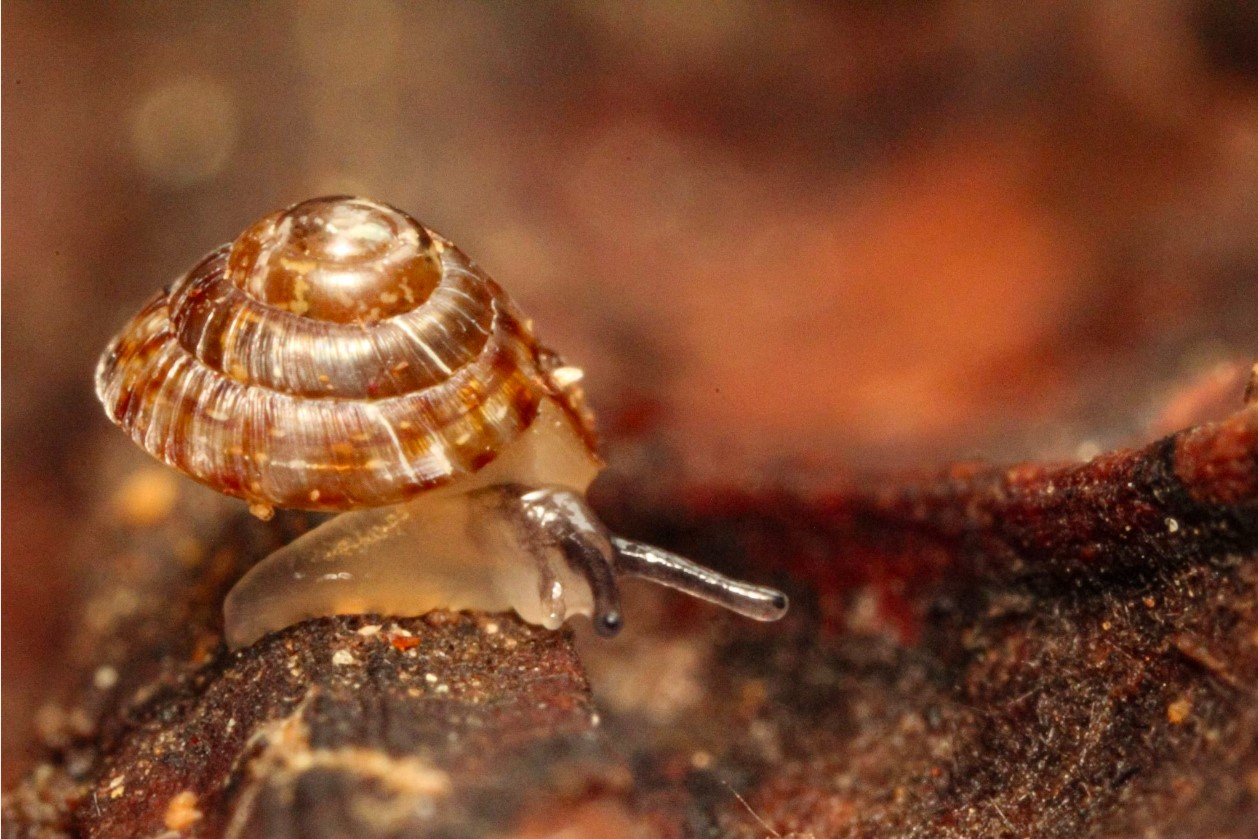
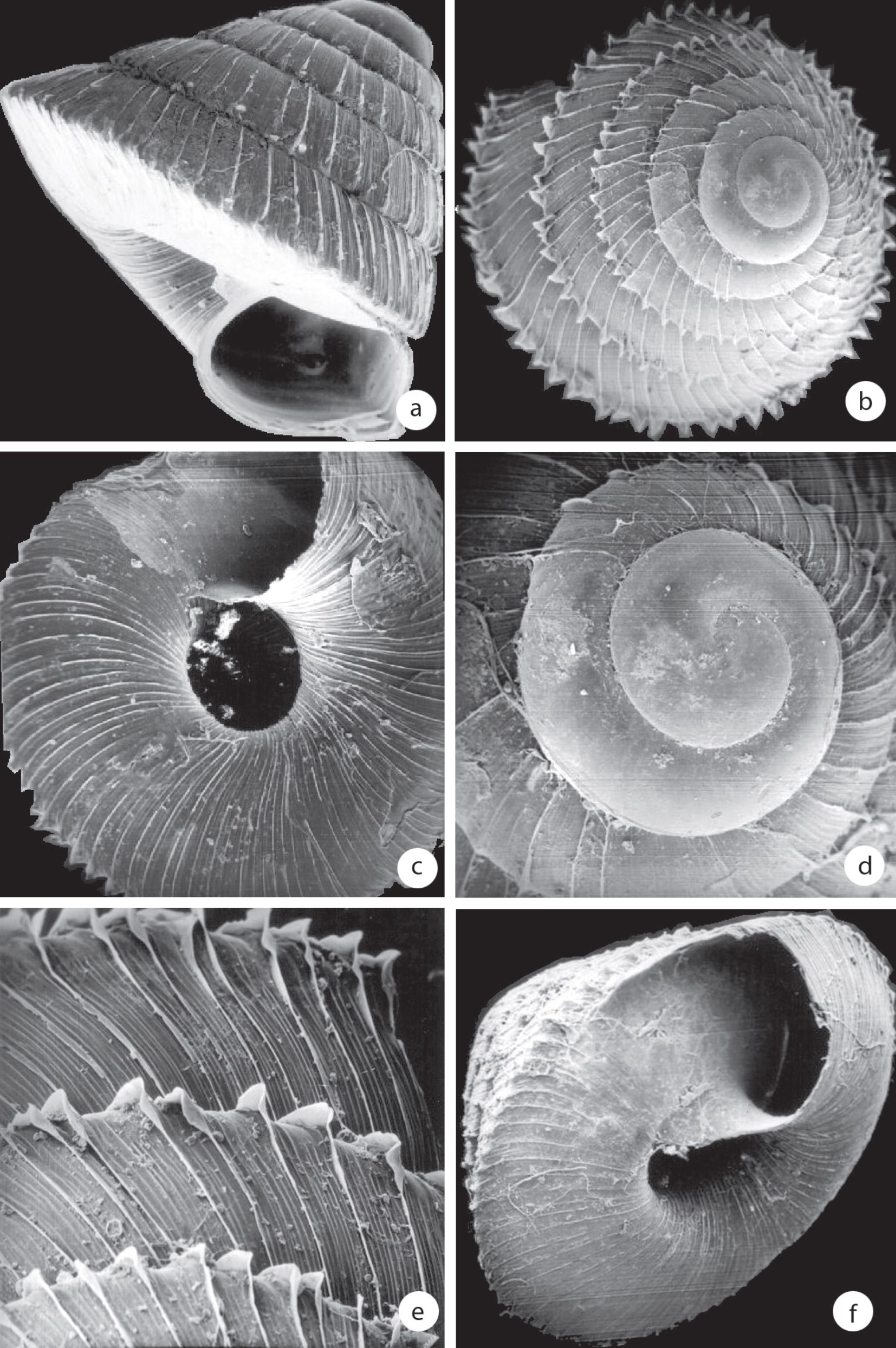
Figura: Vargas-Almonacid, P. & Stuardo, J.R. (2007): vistas de um PARATYPE
Fontes:
Descrição original: Vargas-Almonacid, P. & Stuardo, J.R. (2007). Dos géneros nuevos de caracoles terretres (Stylommatophora: Arionacea) de Chile. Revista de Biología Tropical, 55 (2): 693-708.
página(s): 703
Molluscabase: https://molluscabase.org/aphia.php?p=taxdetails&id=1506288

Vive em árvores e arbustos

Vive sob ou sobre pedras

Vive em corais ou recifes

Vive em algas marinhas

Vivem em fundos de cascalho de coral, pedra ou conchas

Vive no solo. Sob folhas ou enterada parte do tempo

Vive em fundos arenosos, enterrada ou sob ele.

Animais que nadam ou vivem livremente

Presos a certos animais ou parasitando

Vive em fundos lodosos

Vive em plantas de água doce

Seu habitat é desconhecido

Alimenta-se de plantas e algas

Alimenta-se de outros animais

Alimenta-se de qualquer fonte

Alimenta-se de animais mortos
Seu hábito alimentar é desconhecido


