
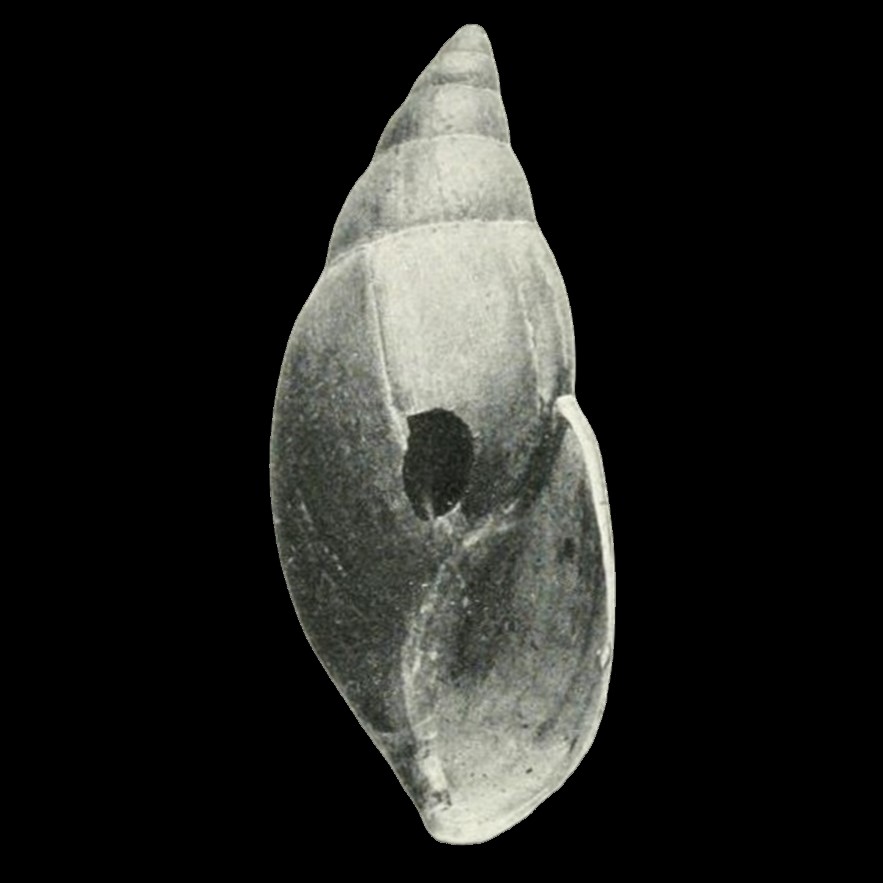
Euglandina chanchamayoensis (Preston, 1909)

CLASSE: GASTROPODA: TERRESTRE

FAMÍLIA: SPIRAXIDAE

ESPÉCIE: Euglandina chanchamayoensis (Preston, 1909)

Tamanho médio: 68 mm

Alimentação: carnívoro

Ocorrência: Peru

Localidade tipo: Peru, Chanchamayo

Nome original: Glandina chanchamayoensis Preston, 1909

Etimologia: o nome da espécie é uma referência à localidade tipo

Descrição original:

(Preston, 1909): “Shell fusiform, pale flesh-colour; whorls 64, somewhat flattened, regularly increasing in size, coarsely, transversely striate, with lines of growth and sculptured with fine, spiral strize, presenting a decussate appearance; sutures impressed, narrowly ‘margined, crenulate; columella curved, rather abruptly truncate; peristome simple, whitish ; aperture elongately, inversely auriform.”


Fotos: (1) Preston, H. B. (1909), plate 10, figura 7


Fontes:


Descrição original: (como Glandina chanchamayoensis Preston, 1909) Preston, H. B. (1909). New land, freshwater, and marine shells from South América. The Annals and Magazine of Natural History; zoology, botany, and geology; 8th series. 3: 507-513., disponível online em https://www.biodiversitylibrary.org/page/22071880#page/541/
página(s): 507, pl. 10, fig. 7


MolluscaBase: https://www.molluscabase.org/aphia.php?p=taxdetails&id=1451337

Legenda

Árvore

Vive em árvores e arbustos

Pedra

Vive sob ou sobre pedras

Coral

Vive em corais ou recifes

Algas

Vive em algas marinhas

Cascalho

Vivem em fundos de cascalho de coral, pedra ou conchas

Terra

Vive no solo. Sob folhas ou enterada parte do tempo

Areia

Vive em fundos arenosos, enterrada ou sob ele.

Plantônico

Animais que nadam ou vivem livremente

Associado

Presos a certos animais ou parasitando

Lodo

Vive em fundos lodosos

Plantas aquáticas

Vive em plantas de água doce

Desconhecido

Seu habitat é desconhecido

Herbívoro

Alimenta-se de plantas e algas

Carnívoro

Alimenta-se de outros animais

Onívoro

Alimenta-se de qualquer fonte

Necrófago

Alimenta-se de animais mortos

Desconhecido

Seu hábito alimentar é desconhecido

Abundante

Comum

Incomum

Raro

Ultra raro