
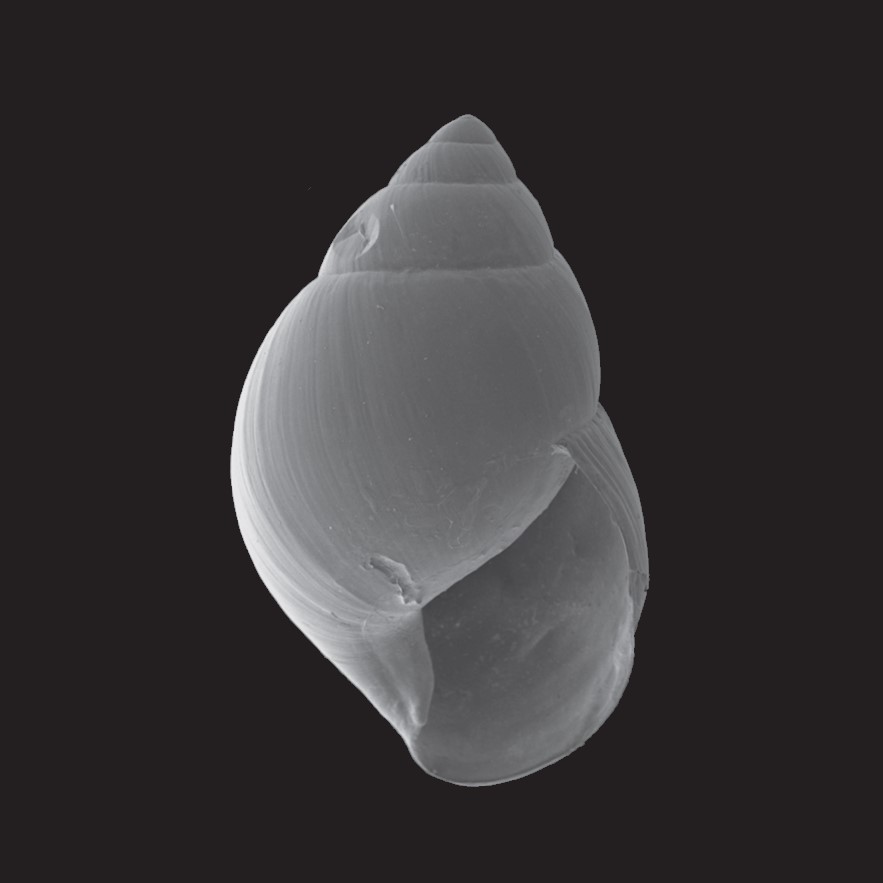
CLASSE: GASTROPODA: TERRESTRE
FAMÍLIA: ACHATINELLIDAE
ESPÉCIE: Fernandezia bulimoides (L. Pfeiffer, 1847)
Tamanho médio: 8.5 mm
Habitat: vive no solo, em serapilheira
Ocorrência: Chile (Arquipélago de Juan Fernandez, Ilha Robinson Crusoé (Masatierra))
Localidade tipo: Chile, Arquipélago de Juan Fernandez, Ilha Robinson Crusoé (Masatierra)
Nome original: Achatina bulimoides L. Pfeiffer, 1847
Descrição:
(Miquel & Araya, 2015): “Shell of medium size (up to 8.5 mm in examined specimens), ovate-conic, with five convex whorls thin; apex acute and smooth, corneous-buff periostracum; teleoconch sculptured irregularly with prosocline growth lines; spire conic and acute; suture crenulated; last whorl swollen, occupying about three fourths of total length; aperture broad, almost oval, slightly over half the shell height; columella twisted above, very slightly truncated above the base of the aperture; parietal callus thin, peristome simple and very thin.”
Fotos: (1) Miquel & Araya, 2015: Fernandezia bulimoides (Pfeiffer 1847), MNHNCL 201792: Juan Fernández Archipelago, Robinson Crusoe Island, El Yunque square
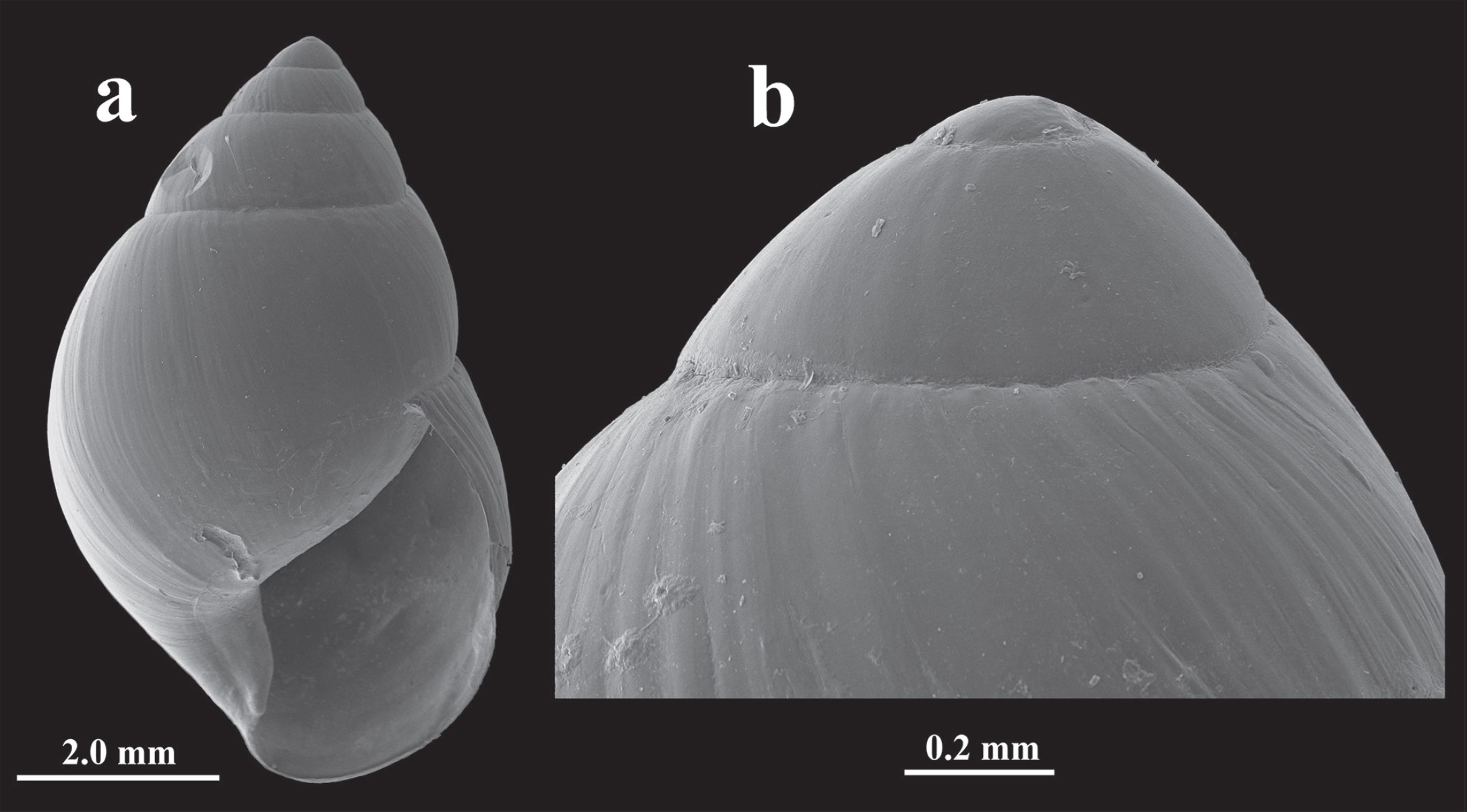
Figura: Miquel & Araya, 2015: Fernandezia bulimoides (Pfeiffer 1847), MNHNCL 201792: Juan Fernández Archipelago, Robinson Crusoe Island, El Yunque square: (a) vista da abertura; (b) detalhe da protoconcha
Fontes:
Descrição original: (como Achatina bulimoides L. Pfeiffer, 1847) Pfeiffer, L. (1847). Descriptions of 38 new species of land-shells, in the collection of Hugh Cuming, Esq. Proceedings of the Zoological Society of London. 14 (166) [“1846”]: 109–116. [26 January]., disponível online em https://biodiversitylibrary.org/page/12862759
página(s): 116
Miquel S.E. & Araya J.F. (2015). New records of terrestrial molluscs of the Juan Fernández Archipelago (Chile), with the description of a new genus and species of Charopidae (Gastropoda: Stylommatophora). Archiv für Molluskenkunde. 144(2): 155-167., disponível online em https://doi.org/10.1127/arch.moll/1869-0963/144/155-167
Cooke, C. M. & Kondo, Y. (1961). Revision of Tornatellinidae and Achatinellidae (Gastropoda, Pulmonata). Bernice P. Bishop Museum Bulletin. 221: 1–303 [“1960”]., disponível online em http://hbs.bishopmuseum.org/pubs-online/pdf/bull221.pdf
Hyatt, A. & Pilsbry, H. A. (1910-1911). Manual of conchology, structural and systematic, with illustrations of the species. Ser. 2, Pulmonata. Vol. 21: Achatinellidae (Amastrinae). pp i-xxii, 1-387, pls 1-56. Philadelphia, published by the Conchological Department, Academy of Natural Sciences. [pp. 1-64, pls 1-9, 30 July 1910; pp. 65-128, pls 10-23, 14 March 1911; pp. 129-240, pls 24-36, 23 August 1911; pp. i-xxii, 241-387, pls 37-56, 19 December 1911]. , disponível online em https://www.biodiversitylibrary.org/page/23701752
página(s): 94
Stuardo, José & Vega, René. (1985). Synopsis of the land mollusca of Chile. Studies on Neotropical Fauna and Environment. 20. 125-146
MolluscaBase: https://molluscabase.org/aphia.php?p=taxdetails&id=866739

Vive em árvores e arbustos

Vive sob ou sobre pedras

Vive em corais ou recifes

Vive em algas marinhas

Vivem em fundos de cascalho de coral, pedra ou conchas

Vive no solo. Sob folhas ou enterada parte do tempo

Vive em fundos arenosos, enterrada ou sob ele.

Animais que nadam ou vivem livremente

Presos a certos animais ou parasitando

Vive em fundos lodosos

Vive em plantas de água doce

Seu habitat é desconhecido

Alimenta-se de plantas e algas

Alimenta-se de outros animais

Alimenta-se de qualquer fonte

Alimenta-se de animais mortos
Seu hábito alimentar é desconhecido


