CLASSE: GASTROPODA: TERRESTRE
FAMÍLIA: CLAUSILIIDAE
ESPÉCIE: Incaglaia adusta (O. Boettger, 1880)
Tamanho médio: 21 mm
Ocorrência: Peru
Localidade tipo: Peru, sem localidade específica
Nome original: Clausilia (Nenia) adusta O. Boettger, 1880
Sinônimos: Incaglaia (Incaglaia) adusta (O. Boettger, 1880); Nenia (Neniatracta) adusta (O. Boettger, 1880); Temesa (Neniatracta) adusta (O. Boettger, 1880)
Subespécies:
(i) Incaglaia adusta adusta (O. Boettger, 1880)
(ii) Incaglaia adusta callistoglypta (Pilsbry, 1949)
(iii) Incaglaia adusta cuencaensis (Weyrauch, 1964)
(iv) Incaglaia adusta tumens (F. Haas, 1955)
Fotos:
(1) The Academy of Natural Sciences, Philadelphia: HOLOTYPE de Nenia callistoglypta Pilsbry, 1949, ANSP 184059, Peru, Mejorada (Rio Montaro) near Huancayo, coll. Weyrauch, W., 18.5mm
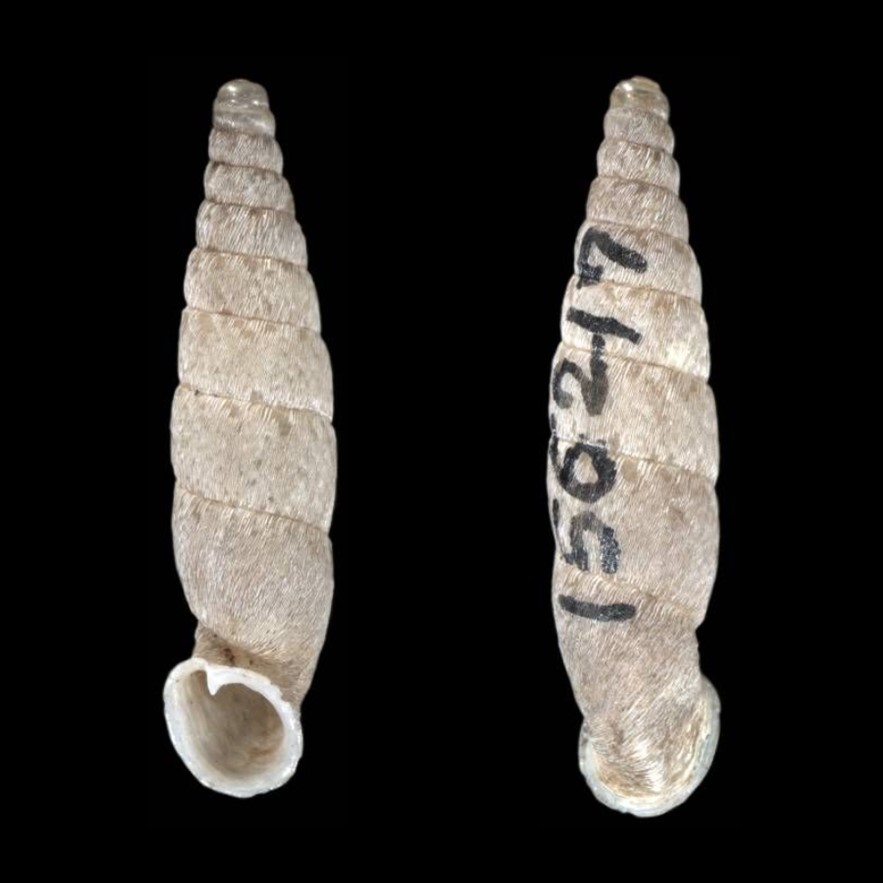
(2) Senckenberg. Collection Mollusca, Frankfurt: HOLOTYPE de Incaglaia adusta cuencaensis (Weyrauch, 1964), SMF 156217, Peru, Cuenca bei Mejorada (2960m), 15.4mm;
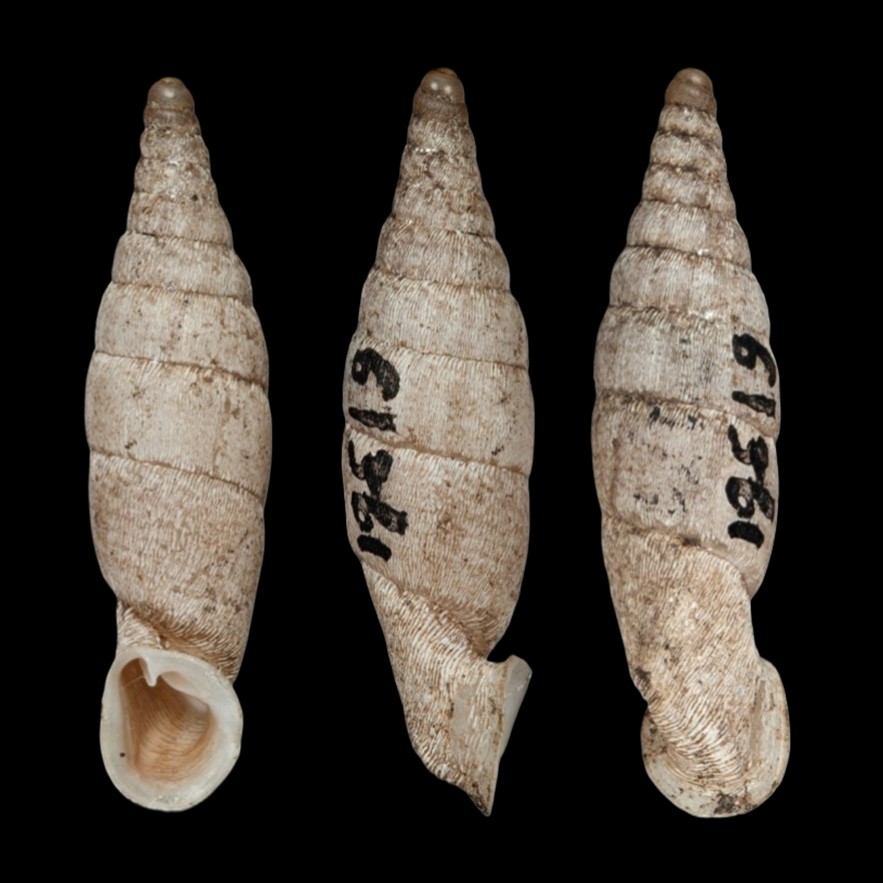
(3) Field Museum of Natural History: HOLOTYPE de Nenia adusta tumens F.Haas, 1955, FMNH 51361, Peru, Huancavelica, road Huancayo-Mejorada, Km. 62, coll. Celestino Kalinowski, 28.xii.1953
Fontes:
Descrição original: (como Clausilia (Nenia) adusta O. Boettger, 1880) Boettger, O. (1880). Clausiliae novae Peruvianae e collectione ill. P. Joly Algeriensis. Nachrichtsblatt der deutschen malakozoologischen Gesellschaft. 12(10): 111-114. Frankfurt am Main., disponível online em https://www.biodiversitylibrary.org/page/30976060
página(s): 111
Descrição original: (como Nenia callistoglypta Pilsbry, 1949) Pilsbry, H. A. (1949). Peruvian land mollusks of the genus Nenia (Clausiliidae). Proceedings of the Academy of Natural Sciences of Philadelphia. 101: 215‑232, pl. 17‑22.
página(s): 216
Descrição original: (como Temesa (Neniatracta) adusta cuencaensis Weyrauch, 1964) Weyrauch, W. K. (1964). Aporte al conocimiento de Temesa, II (Clausiliidae, Mollusca). Acta Zoológica Lilloana. 20: 145-162.
página(s): 152
Descrição original: (como Nenia (Neniatracta) adusta tumens F. Haas, 1955) Haas, F. (1955). On non-marine shells from northeastern Brazil and Peru. Fieldiana, Zoology. 37(10): 303-337., disponível online em https://www.biodiversitylibrary.org/page/2826578
página(s): 305
Rosenberg G (2026). Malacology Collection at the Academy of Natural Sciences of Philadelphia. Academy of Natural Sciences. Occurrence dataset https://doi.org/10.15468/xp1dhx accessed via GBIF.org on 2026-02-17. https://www.gbif.org/occurrence/215815251
Senckenberg. Collection Mollusca SMF. Occurrence dataset https://doi.org/10.15468/ohuexz accessed via GBIF.org on 2026-02-17. https://www.gbif.org/occurrence/207859562
Grant S, Webbink K, Keogh S (2025). Field Museum of Natural History (Zoology) Invertebrate Collection. Version 18.51. Field Museum. Occurrence dataset https://doi.org/10.15468/6q5vuc accessed via GBIF.org on 2026-02-17. https://www.gbif.org/occurrence/1065090838
Molluscabase: https://molluscabase.org/aphia.php?p=taxdetails&id=1291541