
CLASSE: GASTROPODA: TERRESTRE
FAMÍLIA: STROPHOCHEILIDAE
ESPÉCIE: Megalobulimus carrikeri (Pilsbry, 1930)
Tamanho médio: 82 mm
Habitat: vive no solo, sob folhas ou enterrada parte do tempo
Alimentação: provavelmente Herbívoro
Ocorrência: Peru (Junin)
Localidade tipo: Peru, Junin, Huacapistana
Altitude: 1800 – 2100 m
Nome original: Strophocheilus (Megalobulimus) carrikeri Pilsbry, 1930
Etimologia: o nome da espécie é uma homenagem ao ornitólogo e entomologista norte americano Melbourne Armstrong Carriker Jr (14.ii.1879 – 27.vii.1965) que realizou sua primeira Expedição ao Peru em 1929, onde coletou o material tipo desta espécie
Descrição original:
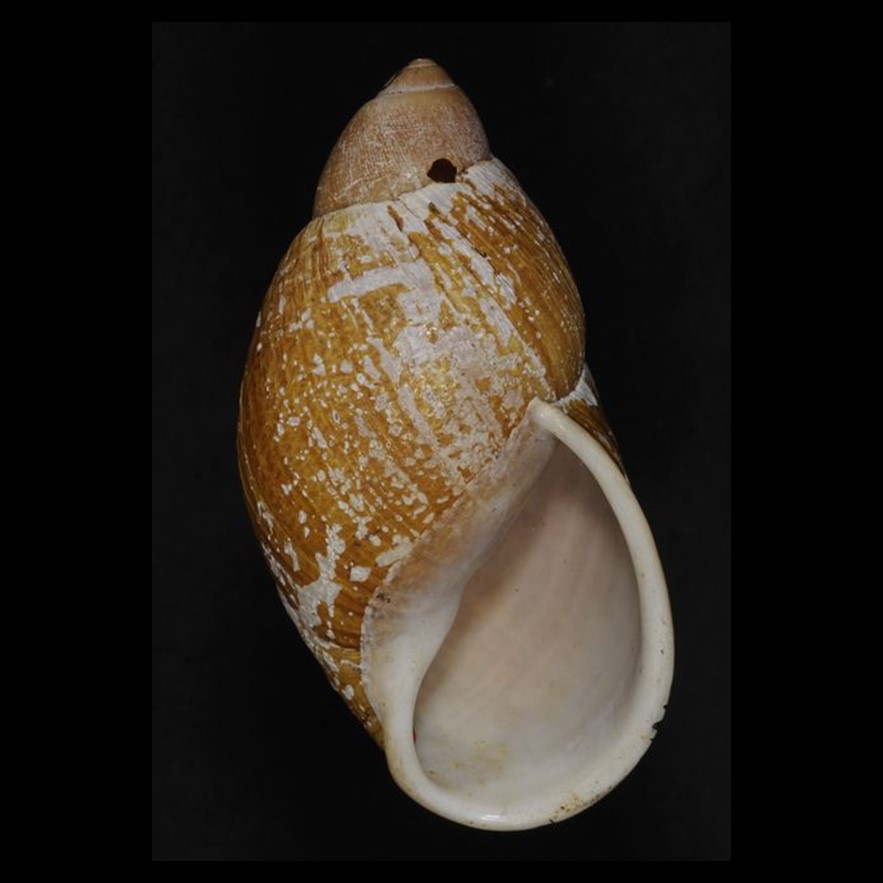
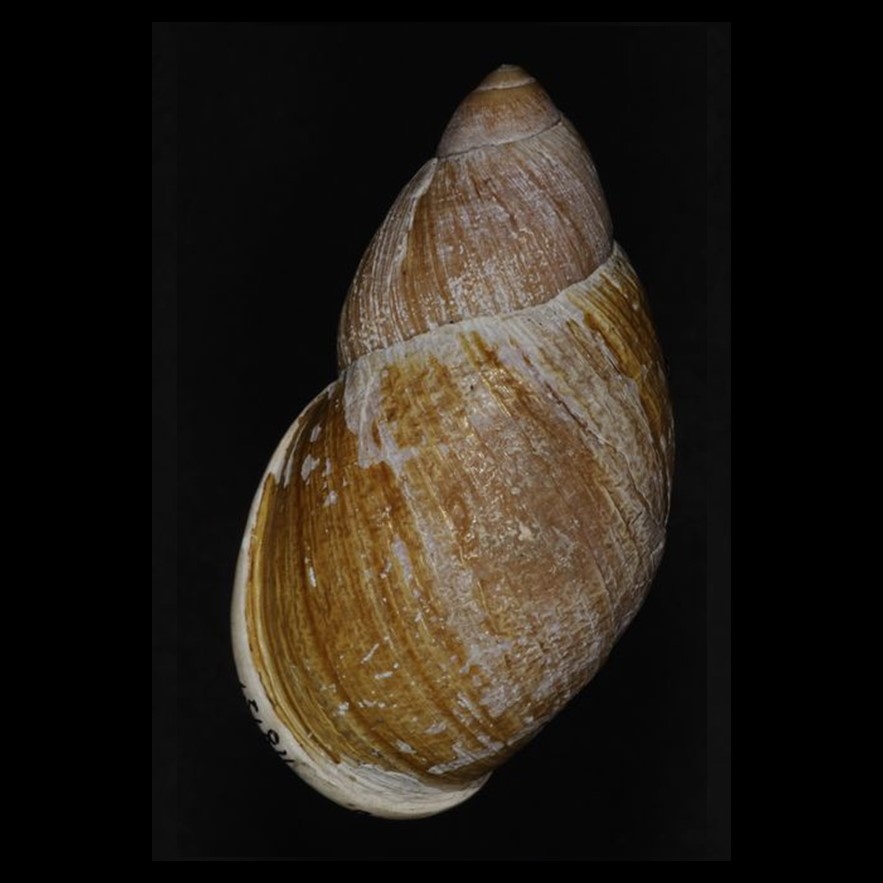
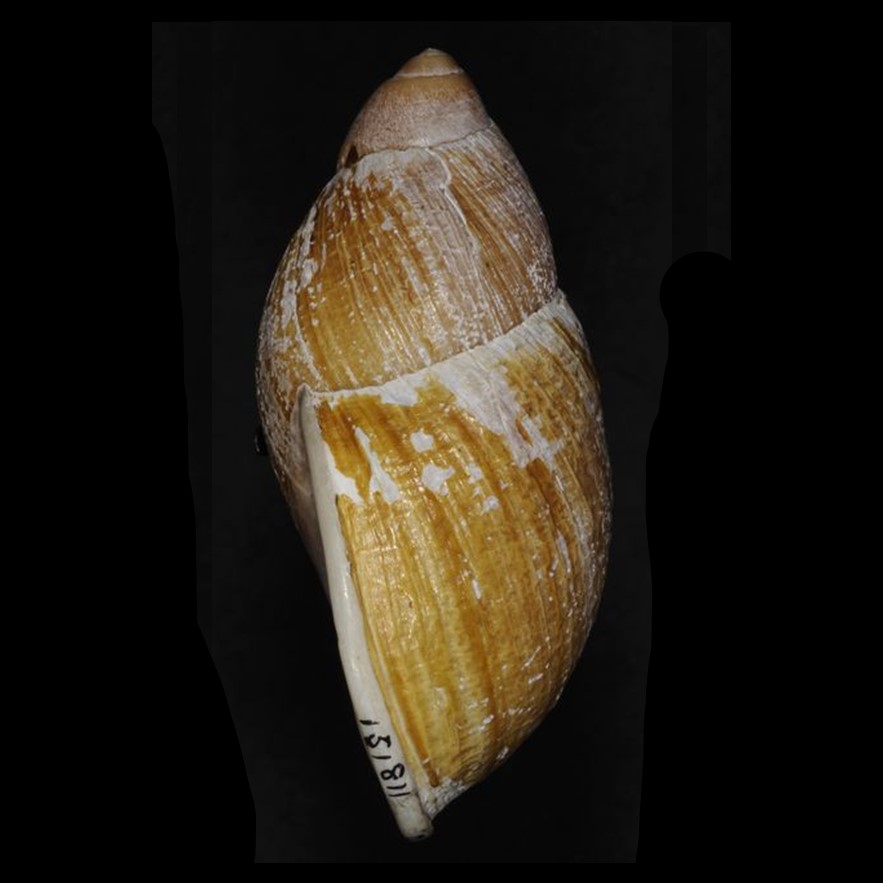
(Pilsbry, 1930): “The shell is imperforate, ovate, solid. Color, dull purplish vinaceous under a thin honey-yellow periostracum with some darker streaks, and wanting on the upper whorls. Sculpture: embryonic shell of 34 whorls, the first smooth, the rest closely, finely rib-striate, the striae cut by rather distant impressed spiral lines on the last half whorl of the embryonic shell.
Subsequent whorls have irregular unevenly spaced growth wrinkles and on the last 14 whorls a strong malleation throughout. The aperture is acutely ovate, dull pink within. Peristome white, thickened, reflected, the columella with a weak fold above, and in line with the parietal wall. Parietal wall with a rather heavy translucent-whitish callus. Length 82 mm., diam. 45 mm., length of aperture with peristome 48.5 mm.; 5 1/3 whorls.”
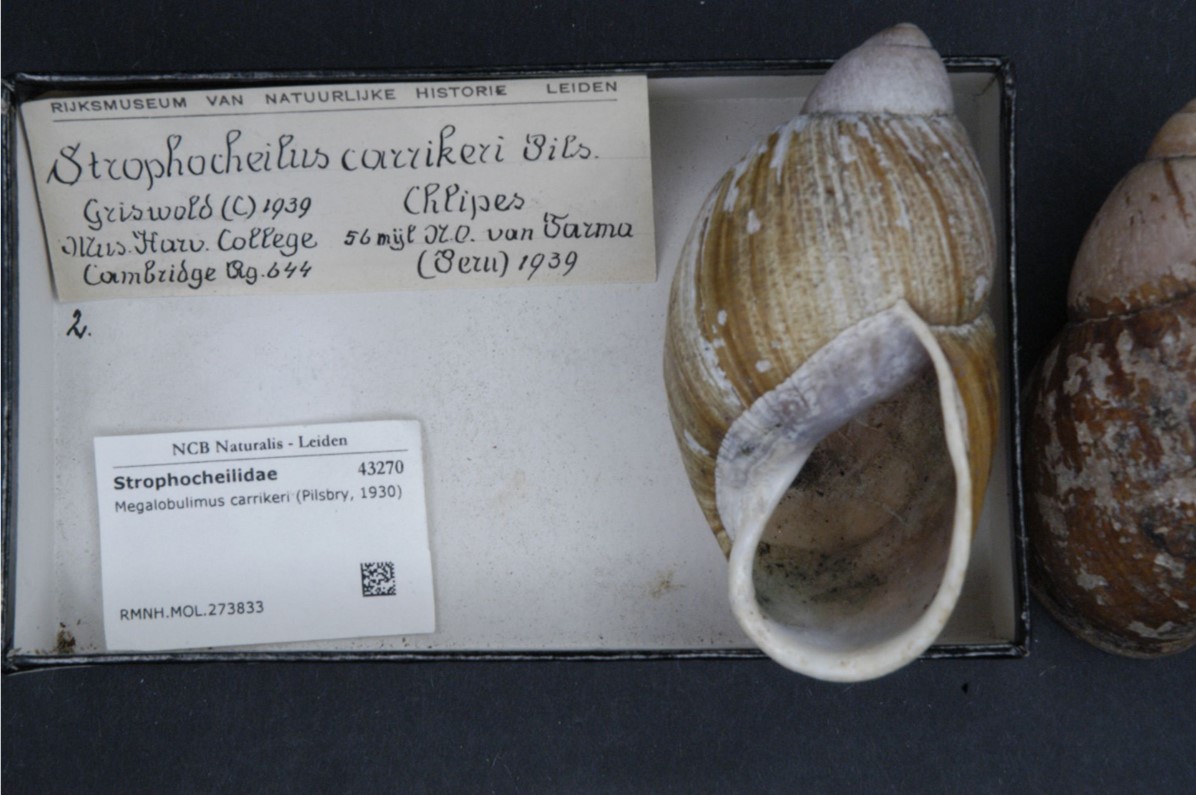
Fotos: (1-3) The Academy of Natural Sciences, Philadelphia; HOLOTYPE de Megalobulimus carrikeri (Pilsbry, 1930), ANSP 151811, Huacapistana, Junin, coll. Carriker, M. A., Jr.: Peru Expedition; (4) Rijksmuseum van Natuurlijke Historie, Leinde: RMNH.MOLL.273833, “56 miles NO from Tarma, Peru, 1939”
Fontes:
Descrição original: (como Strophocheilus (Megalobulimus) carrikeri Pilsbry, 1930) Pilsbry, H. A. (1930). South American land and freshwater mollusks. Notes and description, 7. Proceedings of the Academy of Natural Sciences of Philadelphia. 82: 355-365.
página(s): 355
Ramírez, R.; Paredes, C.; Arenas, J. (2003). Moluscos del Perú. Revista de Biologia Tropical. 51(supplement 3): página(s) 225-284
Rosenberg G (2026). Malacology Collection at the Academy of Natural Sciences of Philadelphia. Academy of Natural Sciences. Occurrence dataset https://doi.org/10.15468/xp1dhx accessed via GBIF.org on 2026-02-21. https://www.gbif.org/occurrence/215655338
Molluscabase: https://molluscabase.org/aphia.php?p=taxdetails&id=1451782

Vive em árvores e arbustos

Vive sob ou sobre pedras

Vive em corais ou recifes

Vive em algas marinhas

Vivem em fundos de cascalho de coral, pedra ou conchas

Vive no solo. Sob folhas ou enterada parte do tempo

Vive em fundos arenosos, enterrada ou sob ele.

Animais que nadam ou vivem livremente

Presos a certos animais ou parasitando

Vive em fundos lodosos

Vive em plantas de água doce

Seu habitat é desconhecido

Alimenta-se de plantas e algas

Alimenta-se de outros animais

Alimenta-se de qualquer fonte

Alimenta-se de animais mortos
Seu hábito alimentar é desconhecido


