CLASSE: GASTROPODA: TERRESTRE
FAMÍLIA: BULIMULIDAE
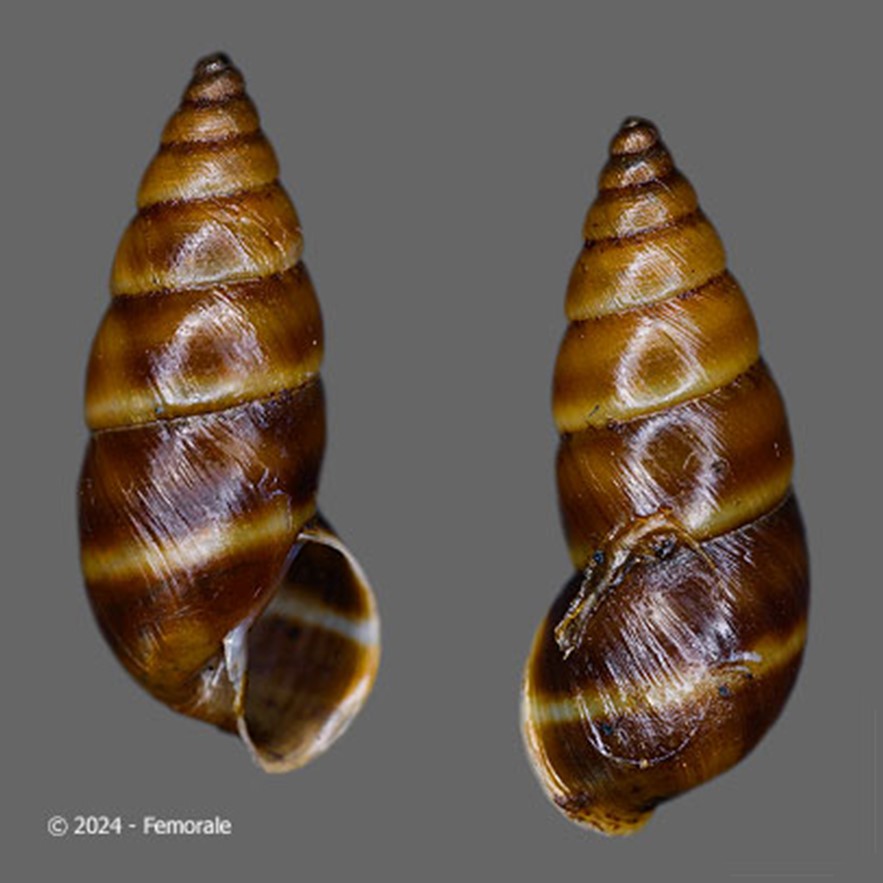
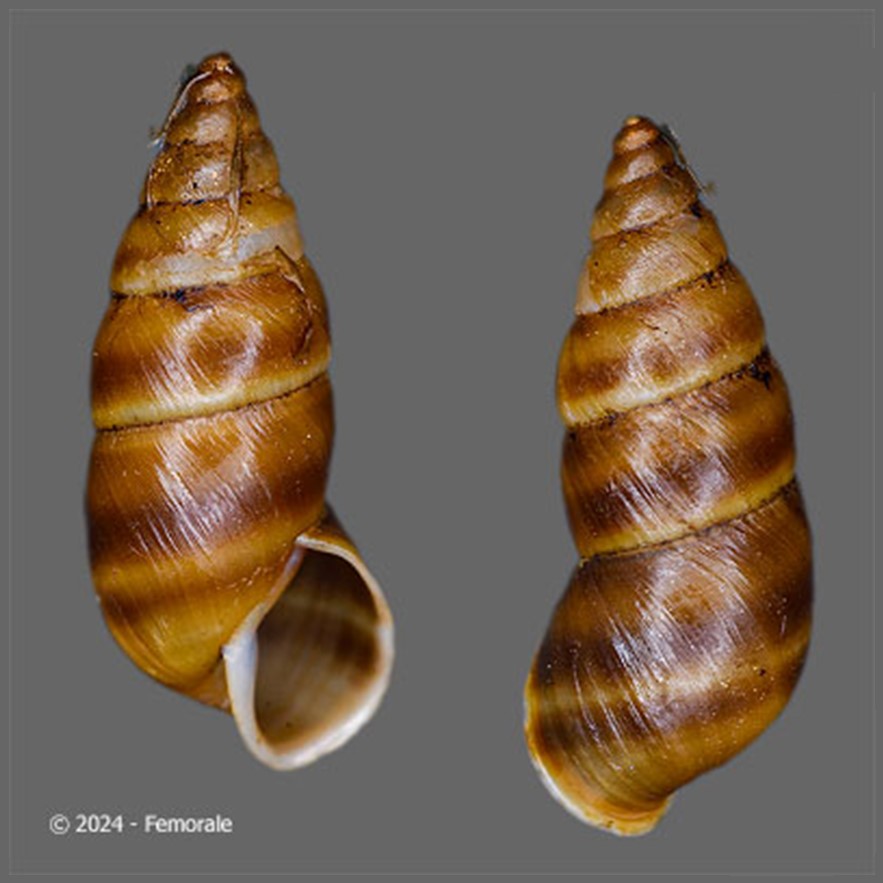
ESPÉCIE: Naesiotus snodgrassi (Dall, 1900)
Tamanho médio: 18 mm
Ocorrência: Equador (Arquipélago de Galápagos)
Localidade tipo: Arquipélago de Galápagos, Isla Española (Hood Island)
Nome original: Bulimulus snodgrassi Dall, 1900
Sinônimos: Bulimulus (Naesiotus) snodgrassi Dall, 1900; Naesiotus (Stemmodiscus) snodgrassi (Dall, 1900)
Etimologia: o nome da espécie é uma homenagem a Robert E. Snodgrass, que entre 1898-99, fez parte da Expedição da Universidade de Stanford Expedition que visitou Guadalupe, Cocos e as Ilhas Galápagos, explorando particularmente as ilhotas menos conhecidas deste último grupo
Descrição original:
(Dall, 1900) “Bulimulus Waving the general form of B. perspectivus Pfr., with a distinct suture and eight polished moderately convex whorls; apex attenuated, nucleus livid, with an apical dimple and fine regular ribbing which becomes obsolete on later whorls; there is also on the first four whorls more or less spiral sculpture of microscopically fine lines, which also disappear on later whorls;
Subsequent whorls smooth or with fine incremental lines; upper whorls dark purplish brown, later ones a little paler, with a narrow paler band just behind the suture, which on the last whorl becomes strongly marked, with a dark reddish narrower band on each side of it, and traces of another at the suture; in some specimens the dark coloration covers the whole surface on each side of the peripheral pale band, but inside the aperture the bands can always be distinguished;
Base rounded about a well-marked umbilicus ; aperture small, ovate, marginally thickened and slightly expanded, but not reflected; a narrow band of callus over the body connects the posterior ends of the lips; pillar broad, slightly swollen, external coloration visible in the throat.”
Fotos: (1,2) The Academy of Natural History, Philadelphia: Naesiotus snodgrassi (Dall, 1900), “1 mile inland from LOng White Beach, Gardner Bay, Española (Hood) Island, Galapagos, taken on limestone”, coll. by Dr Henry Pilsbry (Pinchot Expedition), iv. 1929, ex coll. James Ferry, 18.8 e 17.8mm respectivamente, foto: Femorale, 2024
Fontes:
Descrição original: (como Bulimulus snodgrassi Dall, 1900) Dall, W. H. (1900). Additions to the insular land-shell faunas of the Pacific coast, especially of the Galápagos and Cocos Islands. Proceedings of the Academy of the Natural Sciences of Philadelphia. 52: 88-106, plate 8., disponível online em https://www.biodiversitylibrary.org/page/24693968
página(s): 90
Breure, A. S. H. & Borrero, F. J. (2008). An annotated checklist of the land snail family Orthalicidae (Gastropoda: Pulmonata: Orthalicoidea) in Ecuador, with notes on the distribution of the mainland species. Zootaxa. 1768: 1-40., disponível online em https://www.biotaxa.org/Zootaxa/article/view/zootaxa.1768.1.1
página(s): 17
MolluscaBase: https://molluscabase.org/aphia.php?p=taxdetails&id=1758467