
CLASSE: GASTROPODA: TERRESTRE
FAMÍLIA: ODONTOSTOMIDAE
ESPÉCIE: Odontostomus paulista Pilsbry & Ihering, 1898
Tamanho médio: 37 mm
Ocorrência: Brasil (São Paulo, Paraná)
Localidade tipo: Brasil, São Paulo
Nome original: Odontostomus (Macrodontes) paulista Pilsbry & Ihering, 1898
Sinônimos: Macrodontes paulistus (Pilsbry & Ihering, 1898)
Descrição original:
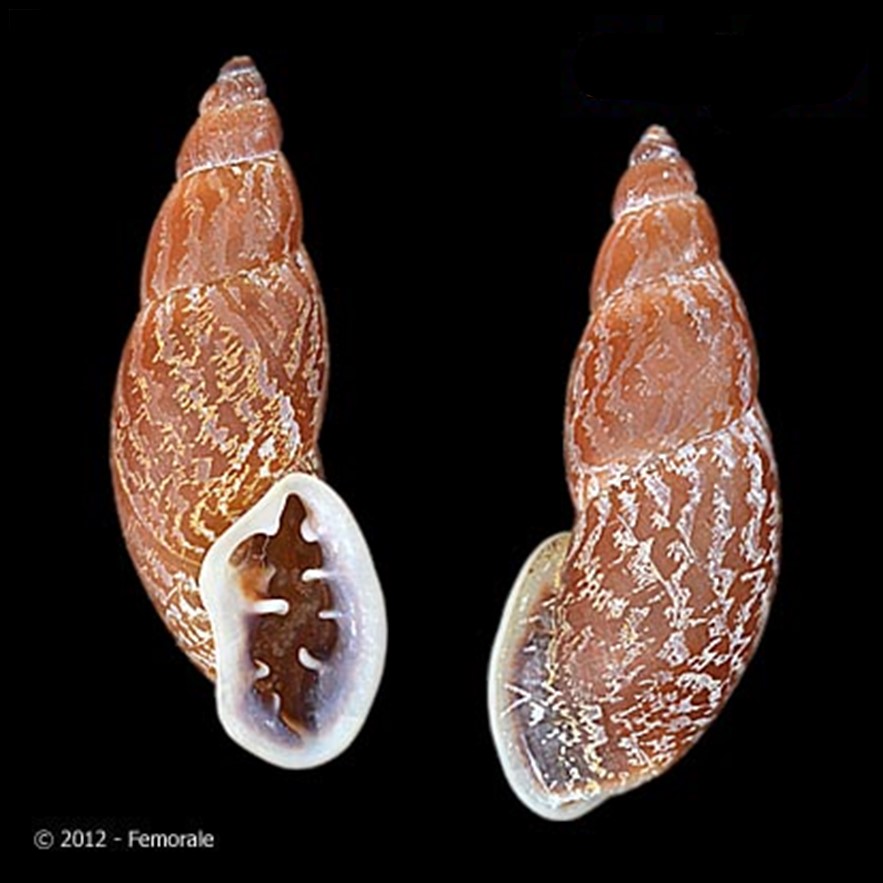
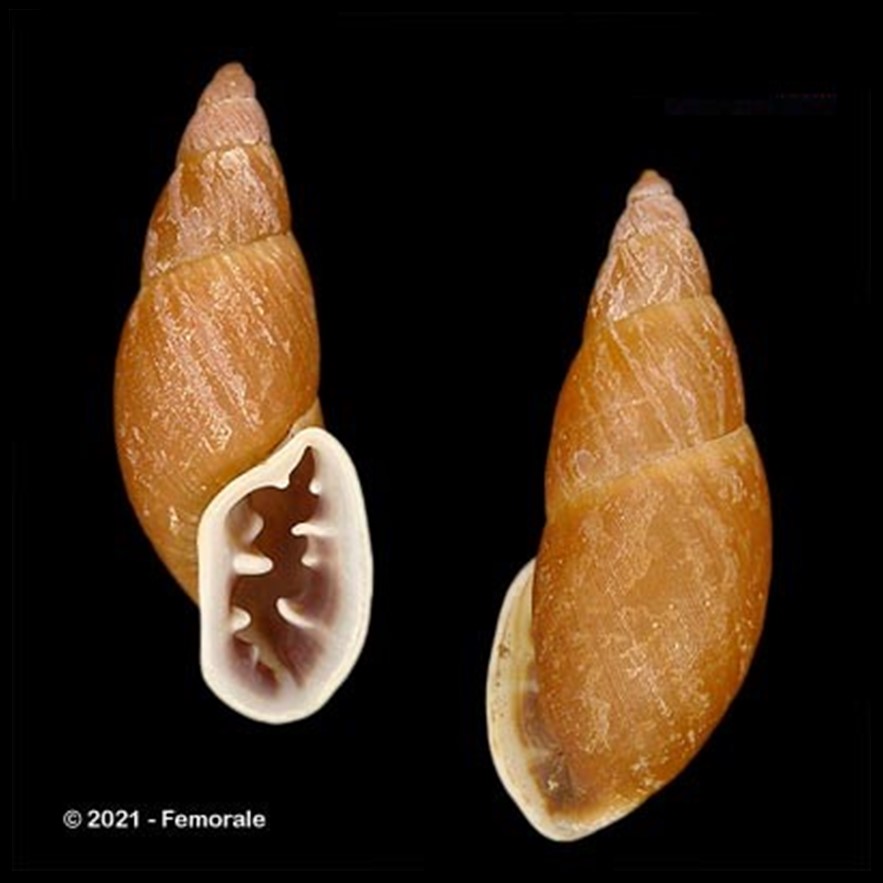
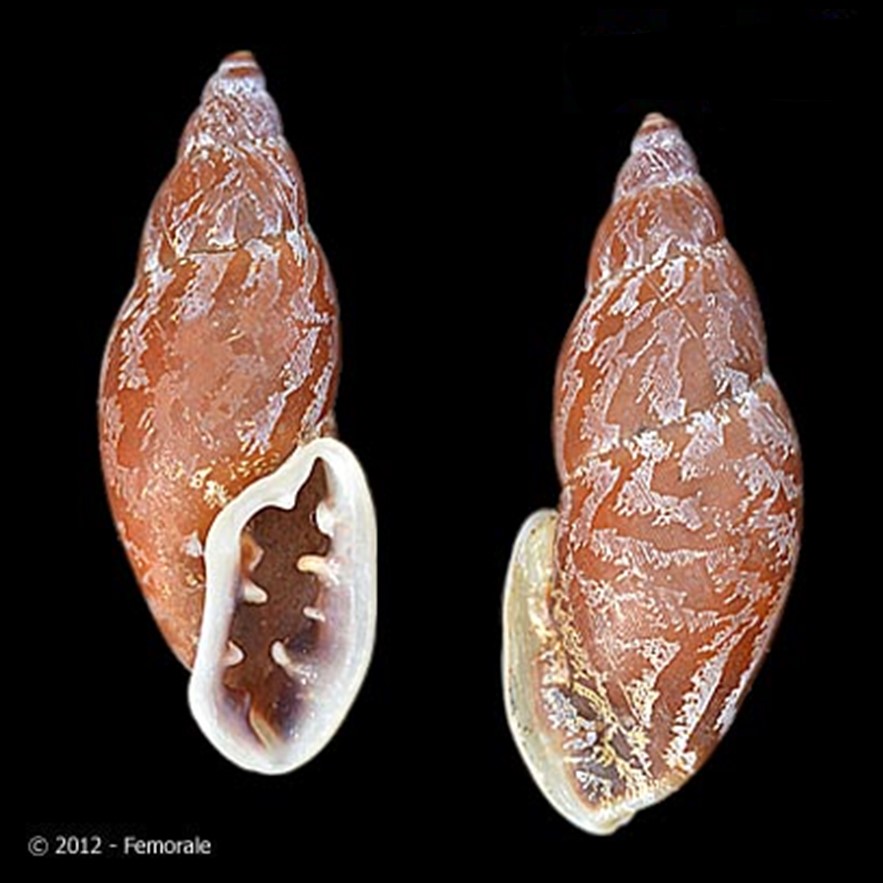
(Pilsbry & Ihering, 1898) ” Shell lengthened fusiform; rather solid; reddish-chestnut, with irregular, lacerated and somewhat zigzag, obliquely longitudinal, hydrophanous, cream-tinted streaks. Surface dull, very minutely but sharply striated in the direction of growth lines, a strong lens showing much more minute and superficial, dense, spiral striation, the apical whorls spirally lirate.
Whorls 6, the first turned in, the rest rather rapidly and regularly increasing, moderately convex, the last becoming free at the aperture, compressed behind the outer lip, the trench there impressed by five pits; base pinched into an acute, produced keel; and behinid the columellar lip there are two pits and a deep axial pit, with another shallow pit behind the elevated parietal wall.
Aperture slightly oblique, narrow, irregularly oblong, obstructed by eight pliciform teeth and a strong, deep-seated columellar lamina; peristome continuous, white, reflexed through-out, the outer lip with two large teeth situated like those in O. odontostomus, witlh smaller teeth betweein themn and an the upper one; the teeth llpon the columellar and parietal margins corresponding in position with those of O. odontostomus.”
Fotos: (1-3) Pedro de Toledo, São Paulo. 41-50mm, coleção C. Henckes; (4) The Academy of Natural Sciences, Philadelphia: LECTOTYPE de Odontostomus paulista, ANSP 78024, iii.1900, doador H. von Ihering, Iguape, São Paulo; (5) Animal vivo, observação iNaturalist, Matheus M. Santos, Bertioga, São Paulo, ii.2024


Fontes:
Descrição original: Pilsbry, H. A. (1898). New species of Odontostomus from Brazil and Argentina. Proceedings of the Academy of Natural Sciences of Philadelphia. 50: 471-474. página(s): 471 (sem figuras)
H. B. Baker, 1963. Proceedings of the Academy of Natural Sciences of Philadelphia 115 (8): 230
Simone, L. R. L. (2006). Land and Freshwater Molluscs of Brazil. Editora Gráfica Bernardi, FAPESP. São Paulo, 390 pp. página(s): 163
Salvador, R. B.; Silva, F. S.; Cavallari, D. C.; Köhler, F.; Slapcinsky, J.; Breure, A. S. H. (2023). Molecular phylogeny of the Orthalicoidea land snails: Further support and surprises. PlosOne. 18(7): e0288533., disponível online em https://doi.org/10.1371/journal.pone.0288533
página(s): 15
Molluscabase: https://www.molluscabase.org/aphia.php?p=taxdetails&id=1446898

Vive em árvores e arbustos

Vive sob ou sobre pedras

Vive em corais ou recifes

Vive em algas marinhas

Vivem em fundos de cascalho de coral, pedra ou conchas

Vive no solo. Sob folhas ou enterada parte do tempo

Vive em fundos arenosos, enterrada ou sob ele.

Animais que nadam ou vivem livremente

Presos a certos animais ou parasitando

Vive em fundos lodosos

Vive em plantas de água doce

Seu habitat é desconhecido

Alimenta-se de plantas e algas

Alimenta-se de outros animais

Alimenta-se de qualquer fonte

Alimenta-se de animais mortos
Seu hábito alimentar é desconhecido


