
CLASSE: GASTROPODA: TERRESTRE
FAMÍLIA: CLAUSILIIDAE
ESPÉCIE: Peruinia peruana (Troschel, 1847)
Tamanho médio: 24 – 30 mm
Ocorrência: Peru (Pasco, Junín)
Localidade tipo: Peru, sem localidade específica
Nome original: Clausilia peruana Troschel, 1847
Sinônimos: Clausilia granulosa Sykes, 1900; Peruinia granulosa (Sykes, 1900)
Etimologia: o nome da espécie é uma referência à localidade tipo
Subespécies:
(i) Peruinia peruana bradina Pilsbry, 1945;
(ii) Peruinia peruana erythrostoma H. Nordsieck, 2010
(iii) Peruinia peruana flachi (O. Boettger, 1889)
(ix) Peruinia peruana peruana (Troschel, 1847)
(v) Peruinia peruana rosenbergi (Preston, 1907)
(vi) Peruinia peruana superba Weyrauch, 1960
Fotos:
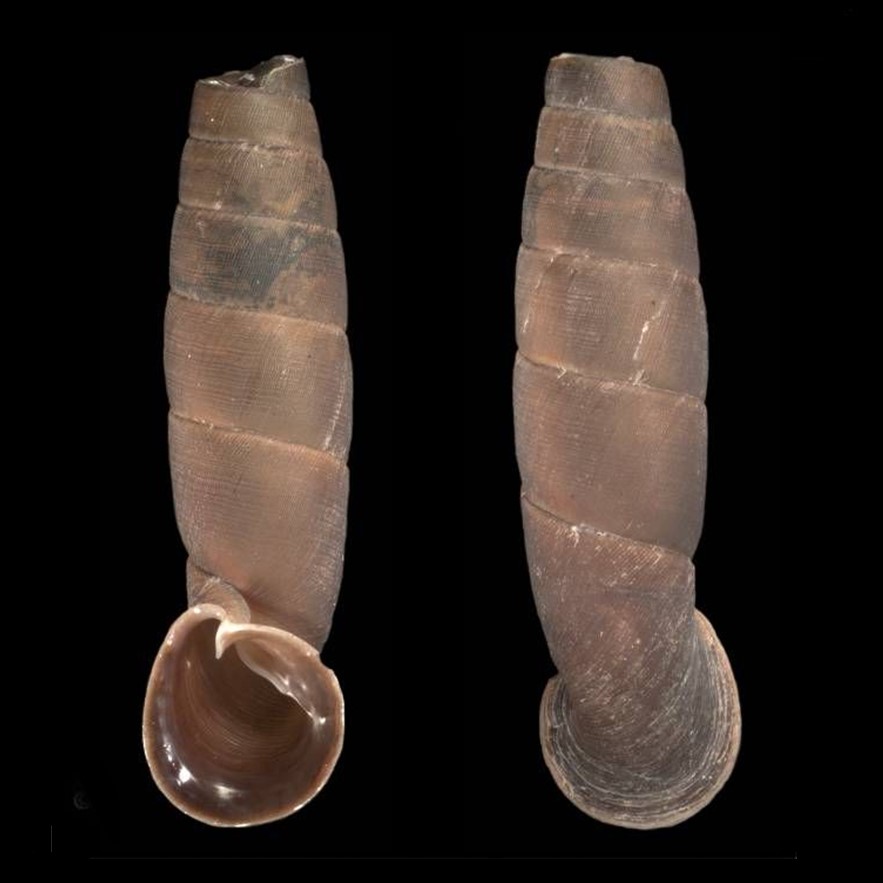
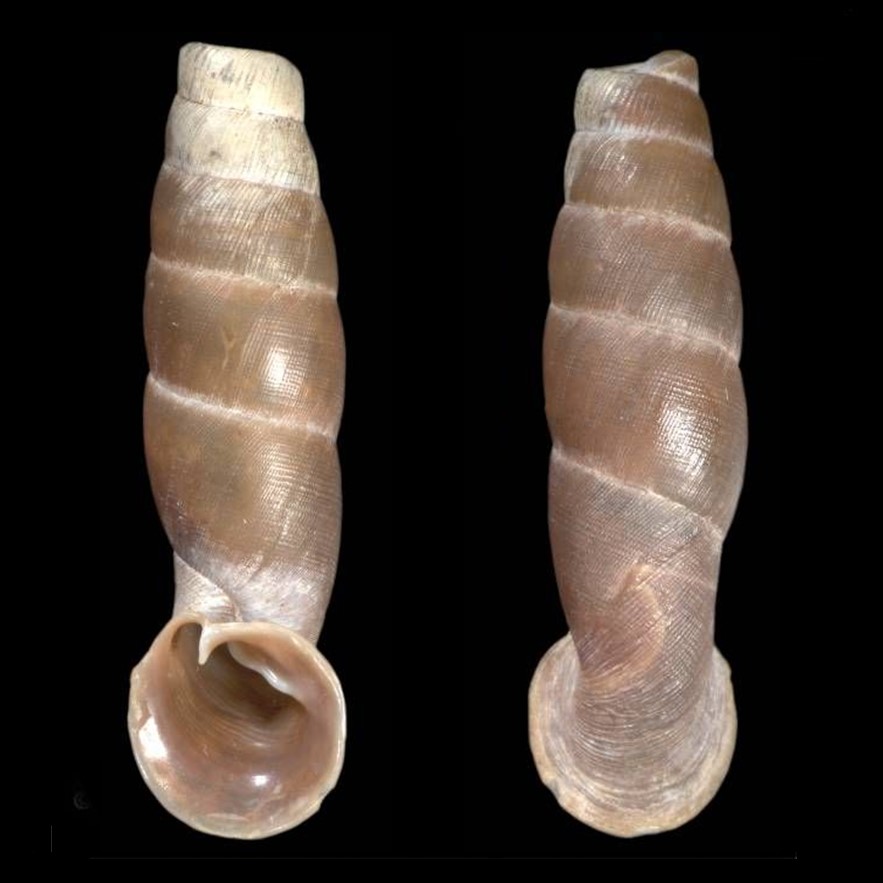
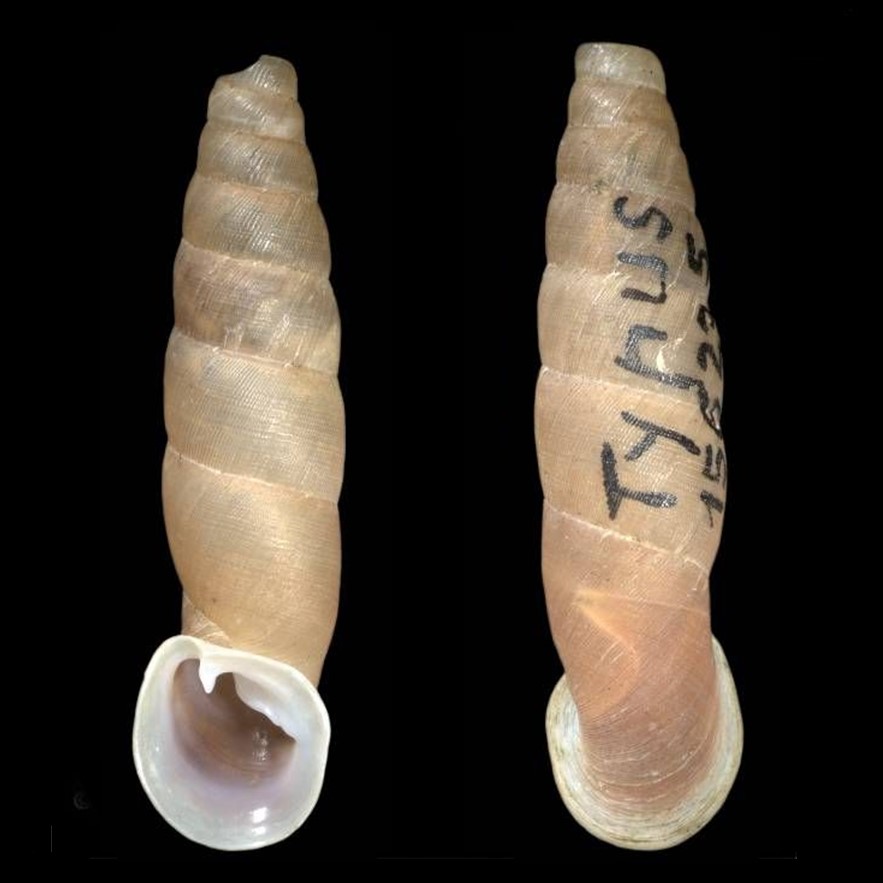
(1-3) Forschungsinstitut und Naturmuseum Senckenberg;
(1) HOLOTYPE de Peruinia peruana erythrostoma, SMF 330165, “Peru, Dept. Pasco, 2 km from Pozuzo to Santa Rosa N Pozuzo (740 m)”, 14.i.2007, leg. Hemmen, 28.15 mm;
(2) HOLOTYPE de Peruinia peruana flachi, SMF 62043, Chanchamayo (1000m)
(3) HOLOTYPE de Peruinia peruana superba, SMF 156235, Peru, ” Östl. M-Peru: Zuflußtal des Rio Chanchamayo: b. Bergwerk Pichita-Caluga (2200m)”
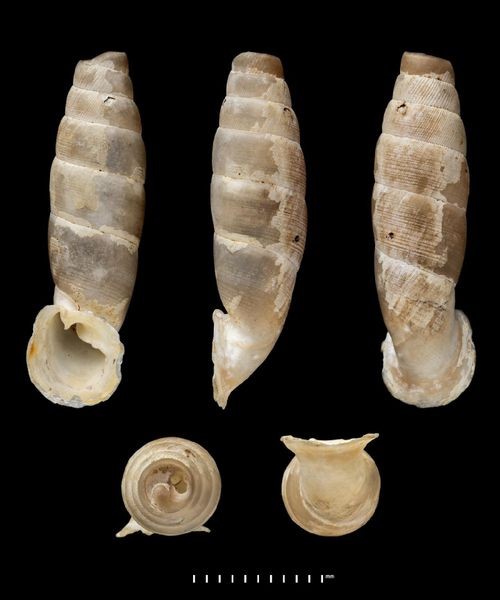
(4) SYNTYPE de Clausilia granulosa Sykes, 1900, Natural History Museum (London), NHMUK 1930.1.21.21, Peru
Fontes:
Descrição original: (como Clausilia peruana Troschel, 1847) Troschel, F. H. (1847). Zwei neue Peruanische Schnecken. Zeitschrift für Malakozoologie. 4: 49-52., disponível online em https://www.biodiversitylibrary.org/page/16292043
página(s): 51
Descrição original: (como Clausilia granulosa Sykes, 1900) Sykes, E. R. (1900). Malacological Notes. The Journal of Malacology. 7: 164-166., disponível online em https://www.biodiversitylibrary.org/page/16100233
página(s): 166
Descrição original: (como Peruinia flachi bradina Pilsbry, 1945) Pilsbry, H. A. (1945). Peruvian land Mollusca – IV. Clausiliidae. The Nautilus. 58(3): 79-84, pl. 3., disponível online em https://www.biodiversitylibrary.org/page/8517310
página(s): 84, pl. 3, fig. 6
Nordsieck, H. (2010). New taxa of the subfamilies Neniinae and Garnieriinae (Gastropoda: Stylommatophora: Clausiliidae). Archiv für Molluskenkunde, 139 (1): 45-69, 4 pls. Frankfurt am Main.
página(s): 54, fig. 13
Descrição original: (como Nenia flachi O. Boettger, 1889) Boettger, O. (1889). Neue Clausilie aus Peru. Nachrichtsblatt der Deutschen Malakozoologischen Gesellschaft. 21 (9/10): 166-167. Frankfurt am Main., disponível online em https://www.biodiversitylibrary.org/page/15600009
página(s): 166
Descrição original: (como Clausilia (Nenia) slosarskii var. rosenbergi Preston, 1907) Preston, H. B. (1907). Descriptions of new species of land and freshwater shells from Central and South America. The Annals and Magazine of Natural History, 7th series. 20(120): 490-498. London. [1 December]., disponível online em https://www.biodiversitylibrary.org/page/24254358
página(s): 495, fig. 13
Descrição original: (como Peruinia flachi superba Weyrauch, 1960) Weyrauch, W. K. (1960). Zwanzig neue Landschnecken aus Peru. Archiv für Molluskenkunde. 89 (1/3): 23-48, pl. 3-6. Frankfurt am Main.
página(s): 24
Breure, A. S. H. & Araujo, R. (2017). The Neotropical land snails (Mollusca, Gastropoda) collected by the “Comisión Científica del Pacífico.”. PeerJ. 5, e3065., disponível online em https://www.ncbi.nlm.nih.gov/pmc/articles/PMC5354113/#
página(s): 27, 13G
Nordsieck, H. (2007). Worldwide Door Snails (Clausiliidae), Recent and Fossil. ConchBooks, Hackenheim, 214 pp.
página(s): 40
Senckenberg. Collection Mollusca SMF. Occurrence dataset https://doi.org/10.15468/ohuexz accessed via GBIF.org on 2025-12-25. https://www.gbif.org/occurrence/207960303
Molluscabase: https://molluscabase.org/aphia.php?p=taxdetails&id=1291476

Vive em árvores e arbustos

Vive sob ou sobre pedras

Vive em corais ou recifes

Vive em algas marinhas

Vivem em fundos de cascalho de coral, pedra ou conchas

Vive no solo. Sob folhas ou enterada parte do tempo

Vive em fundos arenosos, enterrada ou sob ele.

Animais que nadam ou vivem livremente

Presos a certos animais ou parasitando

Vive em fundos lodosos

Vive em plantas de água doce

Seu habitat é desconhecido

Alimenta-se de plantas e algas

Alimenta-se de outros animais

Alimenta-se de qualquer fonte

Alimenta-se de animais mortos
Seu hábito alimentar é desconhecido


