CLASSE: GASTROPODA: TERRESTRE
FAMÍLIA: CLAUSILIIDAE
ESPÉCIE: Pseudogracilinenia pulchricosta H. Nordsieck, 2010
Tamanho médio: 11 – 13 mm
Ocorrência: Peru (Pasco)
Subespécies:
(1) Pseudogracilinenia pulchricosta pulchricosta H. Nordsieck, 2010
(2) Pseudogracilinenia pulchricosta lamellicosta H. Nordsieck, 2010
Localidade tipo: (1) Peru, Pasco, “ca. 28 km from Huancabamba to Pozuzo”; (2) Peru, Pasco, “ca. 11 km from Huancabamba to Pozuzo”
Nome original: Pseudogracilinenia pulchricosta H. Nordsieck, 2010
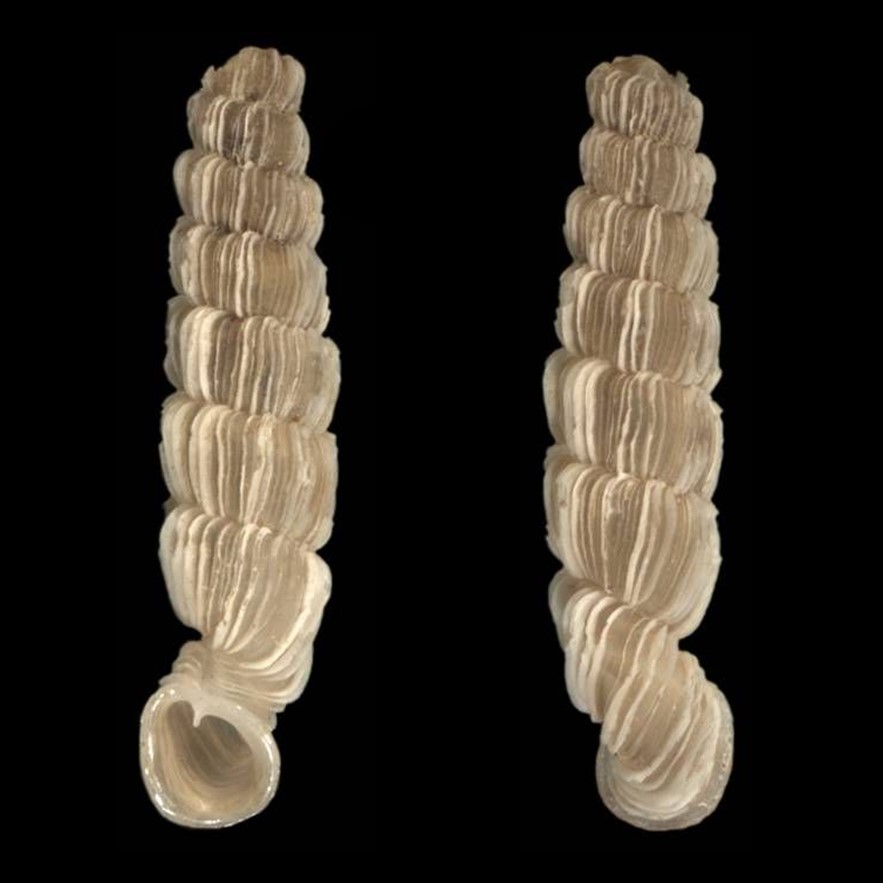
Etimologia: o nome da espécie é uma referência à escultura da concha. Do Latim, “pulchri” = Bonita (= beautiful); “costa” = costela (=rib)
Descrição original de P. pulchricosta pulchricosta:
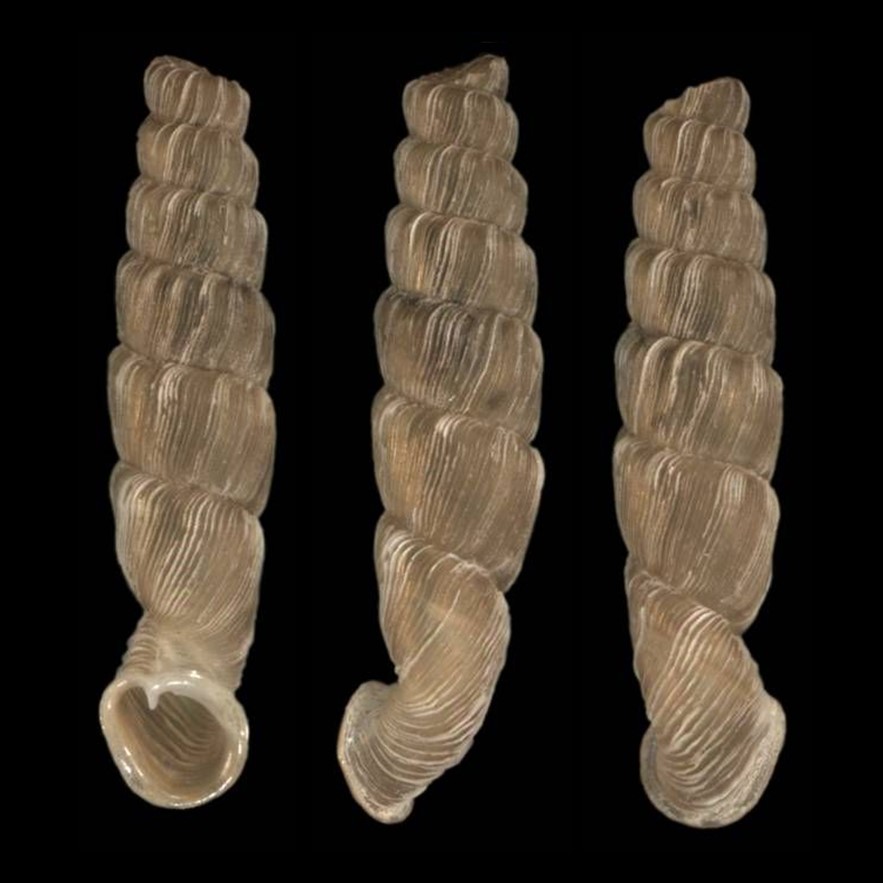
(Nordsieck, 2010): “Shell decollated (if entire, apical part much attenuated, uppermost whorls not broader than protoconch), whorls much rounded; lighter or darker yellowish-brown; teleoconch whorls ribbed, patches of 2–7 (–8) stronger ribs alternating with weaker ones, stronger ribs ± white, on the neck single white ribs; neck compressed below, flattened above, subsutural swelling distinct behind; aperture protruding, oblique, broadly oval to roundish-oval, in part more rhombic, yellowish-white or yellowish-brown within, peristome expanded;
superior lamella continuous with spiral lamella without a curve, lamellae at the connection not lowered, spiral lamella hardly lower; inferior lamella high in position (near superior and spiral lamella), spirally ascending, low to moderately high inwards, in front ending on the columellar edge; subcolumellar lamella descending to the lunellar, ± connected with lunella; lunellar dorsaldorsolateral in position, in part dorsolateral, principal plica ending dorsolateral-laterally or laterally; upper palatal plica connected with lunella by an angle, lunella of different strength, weakened especially above together with upper palatal plica, hardly curved; clausilium plate in oblique view fully visible, distally ± pointed, in part leaving gaps, especially at the palatal side.
Fotos:
(1,2) Forschungsinstitut und Naturmuseum Senckenberg:
(1) HOLOTYPE de P. pulchricosta pulchricosta, SMF 330163, Peru, “Dept. Pasco, ca. 28 km from Huancabamba to Pozuzo (ca.1285 m)”, 13.i.2007, leg. Hemmen, 11.45mm;
(2) HOLOTYPE de P. pulchricosta lamellicosta, SMF 330162, Peru, “Dept. Pasco, ca. 11 km from Huancabamba to Pozuzo (ca.1580 m)”, 13.i.2007, leg. Hemmen, 11.50mm
Fontes:
Descrição original: Nordsieck, H. (2010). New taxa of the subfamilies Neniinae and Garnieriinae (Gastropoda: Stylommatophora: Clausiliidae). Archiv für Molluskenkunde, 139 (1): 45-69, 4 pls. Frankfurt am Main.
página(s): 55
Senckenberg. Collection Mollusca SMF. Occurrence dataset https://doi.org/10.15468/ohuexz accessed via GBIF.org on 2025-12-12. https://www.gbif.org/occurrence/318506696
Molluscabase: https://molluscabase.org/aphia.php?p=taxdetails&id=1291556