
CLASSE: GASTROPODA: TERRESTRE
FAMÍLIA: STREPTAXIDAE
ESPÉCIE: Rectartemon piquetensis (Pilsbry, 1930)
Tamanho médio: 28 – 34 mm
Habitat: vive no solo, sob folhas, ou enterrado parte do tempo
Ocorrência: Brasil (São Paulo)
Localidade tipo: Brasil, São Paulo, Piquete
Nome original: Artemon intermedius piquetensis Pilsbry, 1930
Etimologia: o nome da espécie é uma referência à localidade tipo
Descrição original:
(Pilsbry, 1930): “The shell is perspectively umbilicate (the width of umbilicus contained about 43 times in that of the shell); depressed, with conoidal spire and indistinctly subangular periphery. Whorls barely 7, rather convex; the suture well impressed. Sculpture: the first 21 whorls smooth, following whorls with slightly curved, retractive rib-striae, fine on the earlier whorls, rather coarse on the last whorl, where they weaken at the periphery, leaving the base nearly smooth, but with some weak traces of the rib-striae in places.
It also shows linear brownish growth-rests, three in the type, two in a paratype. The aperture is moderately oblique, rotund-lunate. Peristome thin, unexpanded and arching forward above, the outer margin somewhat expanded, the basal decidedly so, subreflexed at the edge; insertions of peristome connected by a thin white callus.”
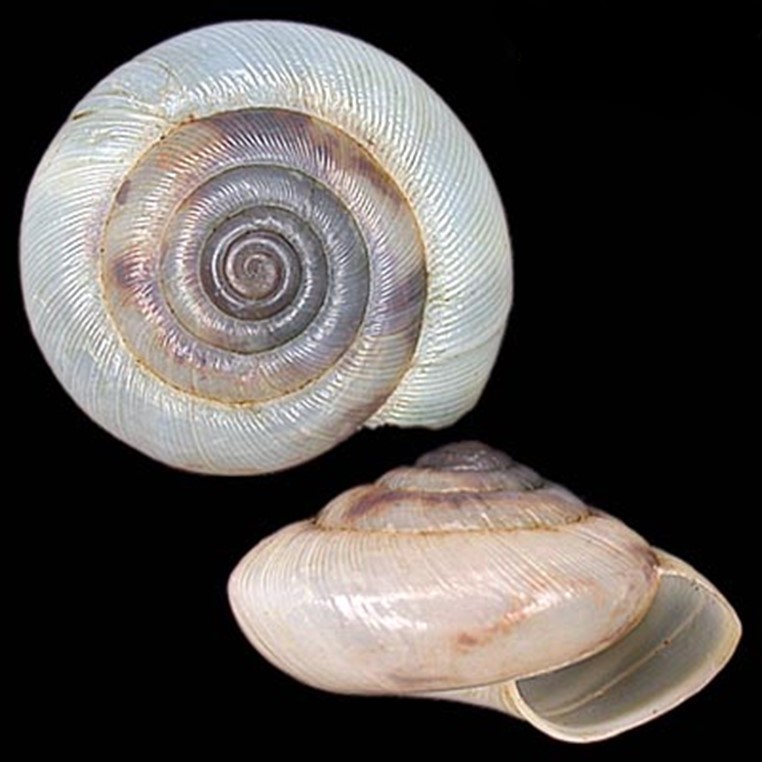
Fotos: (1) Rectartemon piquetensis, cortesia Femorale, São Paulo; (2) The Academy of Natural Sciences, Philadelphia: HOLOTYPE de Artemon intermedius piquetensis, ANSP 47581, proveniente de Piquete, São Paulo, doador: H. von Ihering, 1920
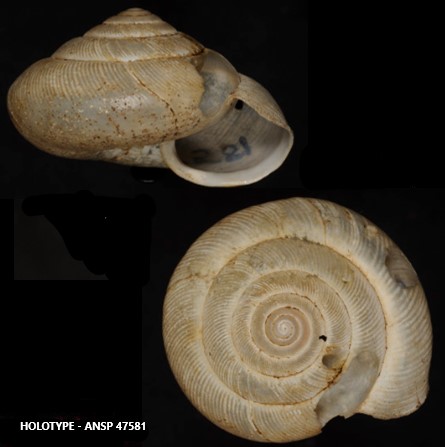
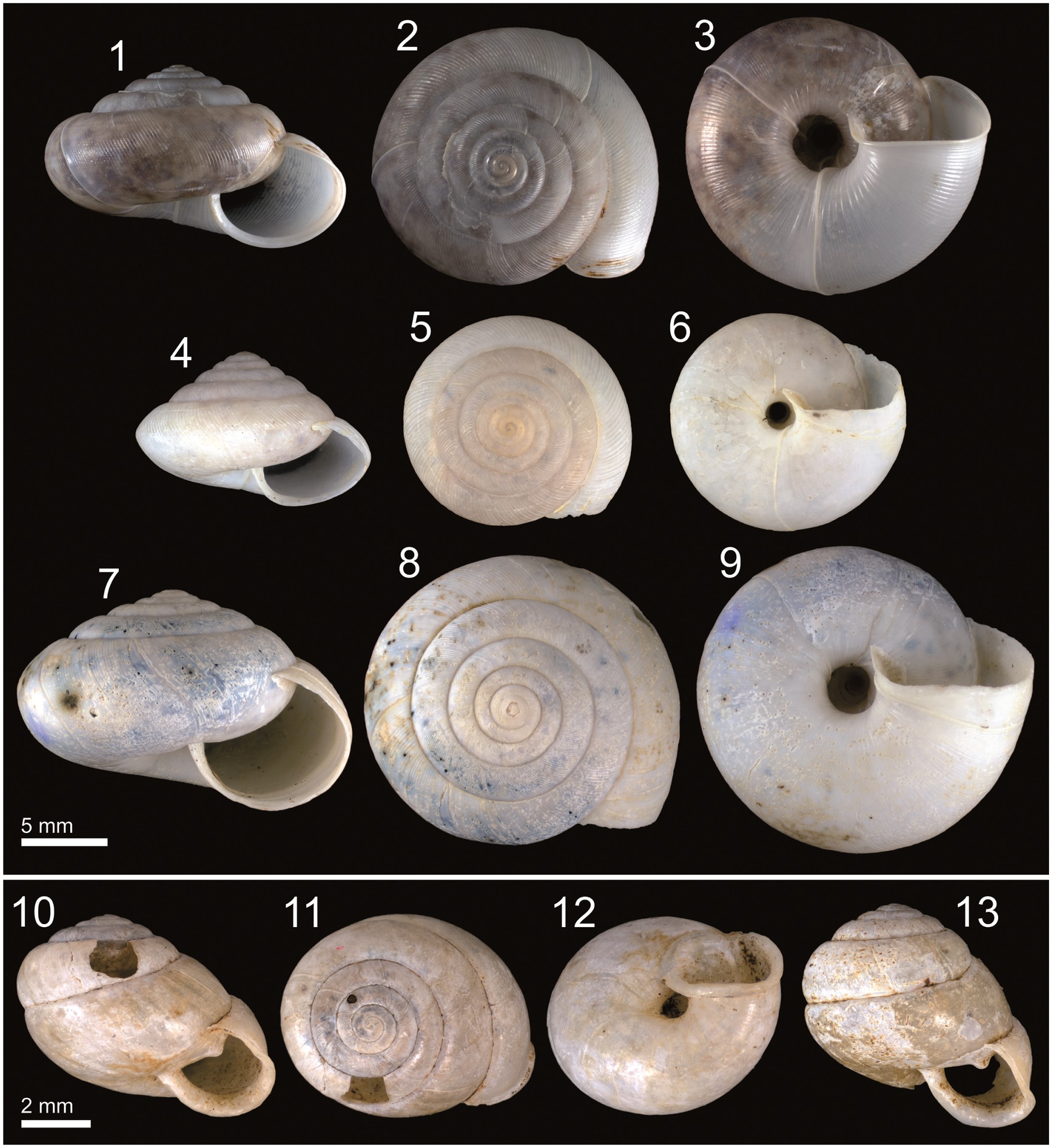
Figura: Salvador R.B. (2018): (1–3) Rectartemon depressus, MZSP 125447 (H = 11.7 mm, D = 18.7 mm); (4–6) Rectartemon iguapensis, MZSP 133139 (H = 9.8 mm, D = 14.8 mm); (7–9) Rectartemon piquetensis, MZSP 133139 (H = 14.2 mm, D = 21.0 mm); (10–12) Streptartemon extraneus, specimen #1, MZSP 123558 (H = 6.1 mm, D = 7.2 mm); (13) Streptartemon extraneus, specimen #2, MZSP 123558 (H = 6.6 mm, D = 6.7 mm)
Fontes:
Descrição original: (como Artemon intermedius piquetensis Pilsbry, 1930) Pilsbry, H. A. (1930). South American land and freshwater mollusks. Notes and description, 7. Proceedings of the Academy of Natural Sciences of Philadelphia. 82: 355-365.
página(s): 365, pl. 32, figs. 5a–b
Simone, L. R. L. (2006). Land and Freshwater Molluscs of Brazil. Editora Gráfica Bernardi, FAPESP. São Paulo, 390 pp.
página(s): 199
Brown, K. (2023). A guide to the hunter shells. Vol. 2. The Streptaxoidea. The Enneinae, Orthogibbinae, Marconiinae, Odontartemoninae, Streptaxinae and the Diapheridae. ConchBooks, Germany.
página: 334
Salvador R.B. (2018). Notes on a new collection of Streptaxidae (Gastropoda: Stylommatophora) from Brazil, with descriptions of two new species of Streptaxis. Integrative Systematics. 1: 25-33., disponível online em https://doi.org/10.18476/insy.v01.a4
página(s): 27, figs 7-9
MolluscaBase: https://www.molluscabase.org/aphia.php?p=taxdetails&id=1317076

Vive em árvores e arbustos

Vive sob ou sobre pedras

Vive em corais ou recifes

Vive em algas marinhas

Vivem em fundos de cascalho de coral, pedra ou conchas

Vive no solo. Sob folhas ou enterada parte do tempo

Vive em fundos arenosos, enterrada ou sob ele.

Animais que nadam ou vivem livremente

Presos a certos animais ou parasitando

Vive em fundos lodosos

Vive em plantas de água doce

Seu habitat é desconhecido

Alimenta-se de plantas e algas

Alimenta-se de outros animais

Alimenta-se de qualquer fonte

Alimenta-se de animais mortos
Seu hábito alimentar é desconhecido


