
CLASSE: BIVALVIA: ÁGUA DOCE
FAMÍLIA: HYRIIDAE
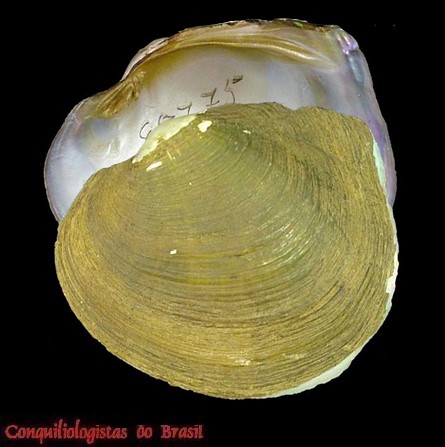
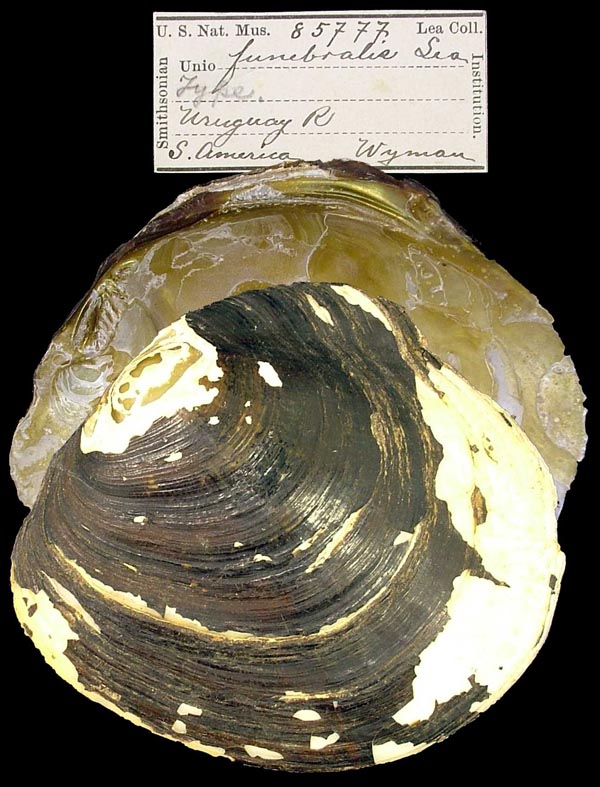
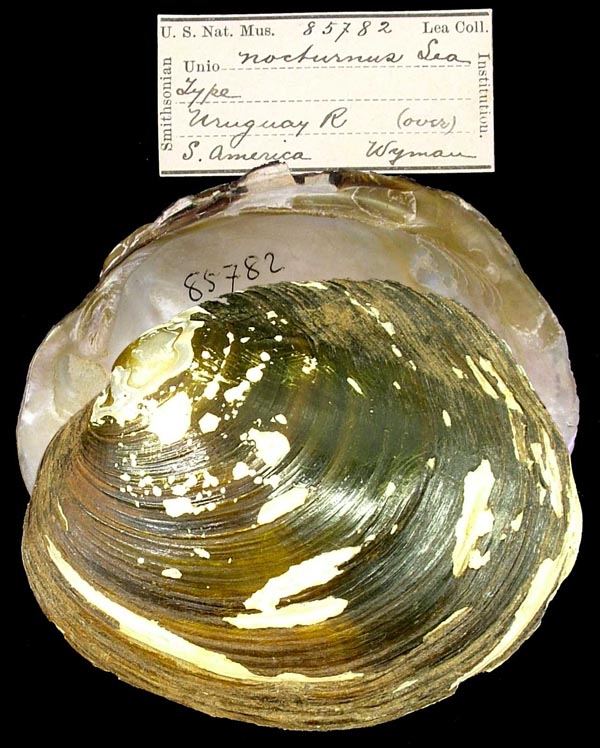
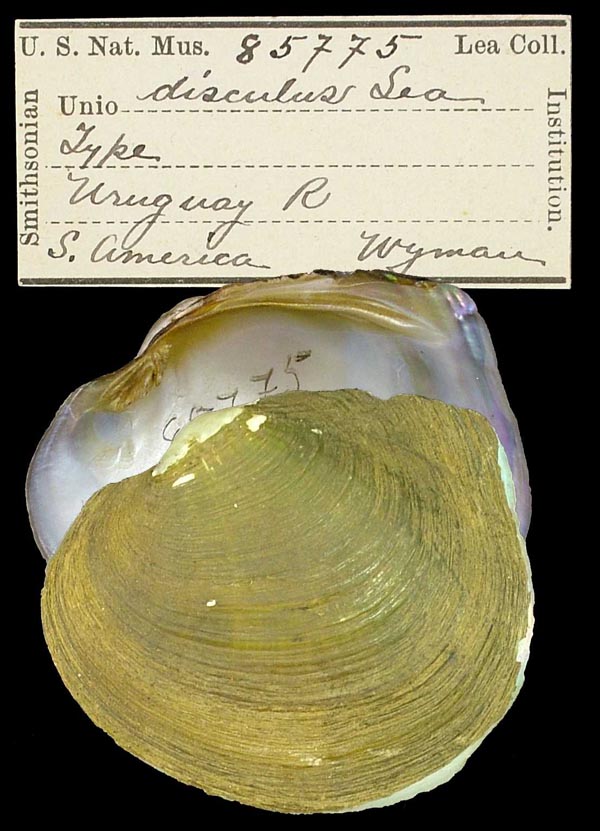
ESPÉCIE: Rhipidodonta funebralis (Lea, 1860)
Tamanho médio: 40 – 70 mm
Profundidade: 0 – 10 m
Habitat: vive em fundos arenosos, enterrada ou sob ele e sob ou sobre pedras
Ocorrência: Baixo Rio Paraná e Rio Uruguai, Sul do Brasil, Uruguai, até Argentina
Localidade Tipo: Rio Uruguai
Nome original: Unio funebralis I. Lea, 1860
Sinônimos: Unio disculus I. Lea, 1860; Unio nocturnis I. Lea, 1860; Unio nocturnus I. Lea, 1860
Fotos: (1-3) Smithsonian National Museum of Natural History: HOLOTYPE de Unio disculus I. Lea, 1860, USNM 85775, Rio Uruguai ; (2) HOLOTYPE de Unio funebralis I. Lea, 1860, USNM 85777 Rio Uruguai; (3) HOLOTYPE de Unio nocturnus I. Lea, 1860, USNM 85782
Fontes:
Descrição original: (como Unio funebralis I. Lea, 1860) Lea I. (1860). Descriptions of fifteen new species of Uruguayan Unionidæ. Proceedings of the Academy of Natural Sciences of Philadelphia. 12: 90-92 [after 13 March 1860; before 15 June 1860]., disponível online em https://biodiversitylibrary.org/page/26297237
página(s): 91
Descrição original: (como Unio nocturnis I. Lea, 1860) Lea I. (1860). Descriptions of fifteen new species of Uruguayan Unionidæ. Proceedings of the Academy of Natural Sciences of Philadelphia. 12: 90-92 [after 13 March 1860; before 15 June 1860]., disponível online em https://biodiversitylibrary.org/page/26297237
página(s): 91
Descrição original: (como Unio disculus I. Lea, 1860) Lea I. (1860). Descriptions of fifteen new species of Uruguayan Unionidæ. Proceedings of the Academy of Natural Sciences of Philadelphia. 12: 90-92 [after 13 March 1860; before 15 June 1860]., disponível online em https://biodiversitylibrary.org/page/26297237
página(s): 91
Pereira, D.; Mansur, M. C. D.; Duarte, L. D. S.; De Oliveira, A. S.; Pimpão, D. M.; Callil, C. T.; Ituarte, C.; Parada, E.; Peredo, S.; Darrigran, G.; Scarabino, F.; Clavijo, C.; Lara, G.; Miyahira, I. C.; Rodriguez, M. T. R.; Lasso, C. (2014). Bivalve distribution in hydrographic regions in South America: historical overview and conservation. Hydrobiologia. 735:15–44., disponível online em https://doi.org/10.1007/s10750-013-1639-x
Simone, L. R. L. (2006). Land and Freshwater Molluscs of Brazil. Editora Gráfica Bernardi, FAPESP. São Paulo, 390 pp. página(s): 267
Miyahira, I. C., Santos, S. B. dos ., & Mansur, M. C. D.. (2017). Freshwater mussels from South America: state of the art of Unionida, specially Rhipidodontini. Biota Neotropica, 17(4), e20170341. https://doi.org/10.1590/1676-0611-BN-2017-0341
Graf, D.L. & K.S. Cummings. [2024]. The Freshwater Mussels (Unionoida) of the World (and other less consequential bivalves). MUSSEL Project Web Site, http://www.mussel-project.net/. Accessed [30/06/2024]
Molluscabase: https://www.molluscabase.org/aphia.php?p=taxdetails&id=1373977

Vive em árvores e arbustos

Vive sob ou sobre pedras

Vive em corais ou recifes

Vive em algas marinhas

Vivem em fundos de cascalho de coral, pedra ou conchas

Vive no solo. Sob folhas ou enterada parte do tempo

Vive em fundos arenosos, enterrada ou sob ele.

Animais que nadam ou vivem livremente

Presos a certos animais ou parasitando

Vive em fundos lodosos

Vive em plantas de água doce

Seu habitat é desconhecido

Alimenta-se de plantas e algas

Alimenta-se de outros animais

Alimenta-se de qualquer fonte

Alimenta-se de animais mortos
Seu hábito alimentar é desconhecido


