
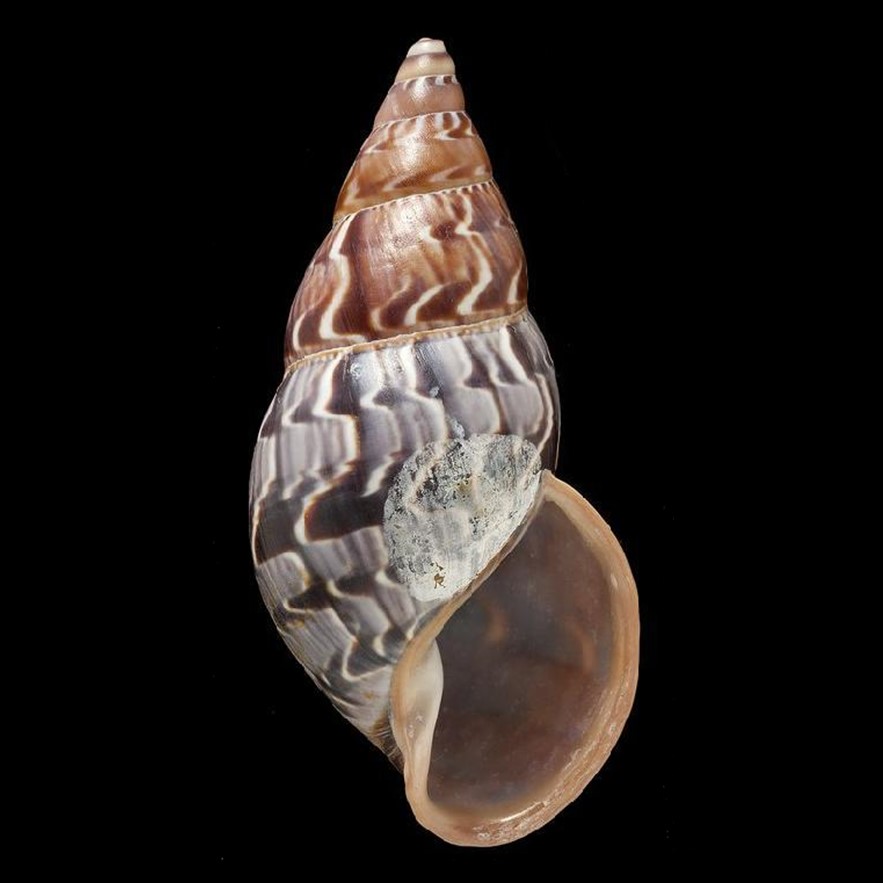

CLASSE: GASTROPODA: TERRESTRE
FAMÍLIA: ORTHALICIDAE
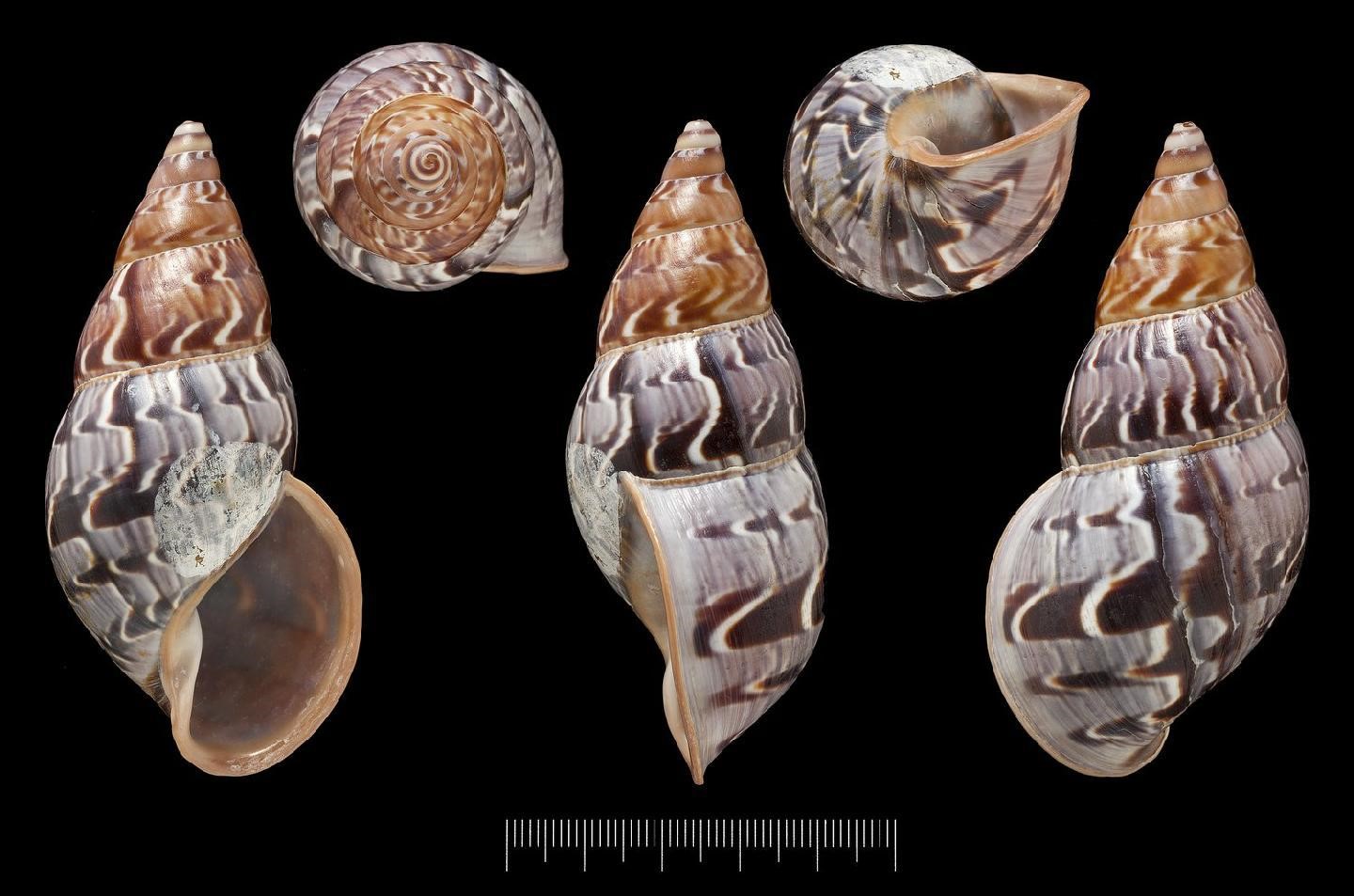
ESPÉCIE: Sultana yatesi (L. Pfeiffer, 1855)
Tamanho médio: 82 mm
Ocorrência: Peru, Meobamba
Localidade tipo: “Meobamba, Eastern Peru (Mr. Yates)”
Nome original: Bulimus yatesi L. Pfeiffer, 1855
Sinônimos: Sultana (Metorthalicus) yatesi (L. Pfeiffer, 1855); Porphyrobaphe grandis Rolle, 1902; Porphyrobaphe latevittata Shuttleworth, 1856; Porphyrobaphe sarcostoma Ancey, 1903; Porphyrobaphe sublabeo Ancey, 1890; Sultana (Metorthalicus) yatesi yatesi (L. Pfeiffer, 1855)
Subespécies:
(1) Sultana yatesi galactostomus (Ancey, 1890);
(2) Sultana yatesi vicaria (Fulton, 1896);
(3) Sultana yatesi yatesi (L. Pfeiffer, 1855)
Fotos:
(1,3) Natural History Museum, London: LECTOTYPE de Bulimus yatesi Pfeiffer, 1855, NHMUK 1975239, 84.3 mm, Peru (San Martín, Moyobamba), doador: Hugh Cuming;
(2) SYNTYPE de Porphyrobaphe galactostoma Ancey, 1890, Amgueddfa Cymru – National Museum Wales, Cardiff, NMW.1955.158.24079, “Habitat in Republica Aequatoris (‘Eastern Peru (fide Staudinger)’ in later ref. Ancey, 1903e: 89)”
(4) Natural History Museum, London: HOLOTYPE de Porphyrobaphe vicaria, HOLOTYPE NHMUK 20100507, Leimabamba, Peru, coll. Hugh Cuming, 82.2mm

Fontes:
Descrição original: (como Bulimus yatesi L. Pfeiffer, 1855) Pfeiffer, L. (1855). Descriptions of forty-seven new species of Helicea, from the collection of H. Cuming. Proceedings of the Zoological Society of London. 23 (290): 91–101, pl. 31. London [23 July]., disponível online em https://www.biodiversitylibrary.org/page/30747974
página(s): 93, pl. 31 fig. 5
Descrição original: (como Porphyrobaphe galactostoma Ancey, 1890) Ancey, C. F. (1890). Nouvelles contributions malacologiques. Bulletins de la Société Malacologique de France. 7: 145-163., disponível online em https://www.biodiversitylibrary.org/page/16122399
página(s): 153-154; nota: Original description based on juvenile shell. See Ancey (1903: 89-90)
Descrição original: (como Porphyrobaphe vicaria Fulton, 1896) Fulton, H. C. (1896). Description of new species of Nanina, Helix, Amphidromus, and Porphyrobaphe. The Annals and magazine of natural history; zoology, botany, and geology, Series 6. 18: 100-104., disponível online em https://www.biodiversitylibrary.org/page/15628287
página(s): 103
Descrição original: (como Porphyrobaphe grandis Rolle, 1902) Rolle, H. (1902). Neue Landschnecken. Nachrichtsblatt der Deutschen Malakozoologischen Gesellschaft. 34: 211-212., disponível online em https://www.biodiversitylibrary.org/page/15598934
página(s): 211
Breure, A. S. H. & Ablett, J. D. (2015). Annotated type catalogue of the Megaspiridae, Orthalicidae, and Simpulopsidae (Mollusca, Gastropoda, Orthalicoidea) in the Natural History Museum, London. ZooKeys. 470: 17-143., disponível online em https://doi.org/10.3897/zookeys.470.8548
Molluscabase: https://molluscabase.org/aphia.php?p=taxdetails&id=1431256

Vive em árvores e arbustos

Vive sob ou sobre pedras

Vive em corais ou recifes

Vive em algas marinhas

Vivem em fundos de cascalho de coral, pedra ou conchas

Vive no solo. Sob folhas ou enterada parte do tempo

Vive em fundos arenosos, enterrada ou sob ele.

Animais que nadam ou vivem livremente

Presos a certos animais ou parasitando

Vive em fundos lodosos

Vive em plantas de água doce

Seu habitat é desconhecido

Alimenta-se de plantas e algas

Alimenta-se de outros animais

Alimenta-se de qualquer fonte

Alimenta-se de animais mortos
Seu hábito alimentar é desconhecido


