
CLASSE: GASTROPODA: TERRESTRE
FAMÍLIA: ACHATINELLIDAE
ESPÉCIE: Tornatellides chathamensis (Dall, 1892)
Tamanho médio: 3 mm
Ocorrência: Equador, Arquipélago de Galápagos (Ilhas de Fernandina, Floreana, Isabela, Pinzón, San Cristóbal e Santa Cruz)
Localidade tipo: Equador, Arquipélago de Galápagos, Ilha de San Cristóbal
Altitude: 525 – 656 m
Nome original: Leptinaria chathamensis Dall, 1892
Sinônimos: Bulimulus (Pelecostoma) cymatoferus Reibisch, 1893; Tornatellina chathamensis (Dall, 1892)
Descrição original:
“Shell small, with a blunt apex and six rounded whorls; suture very distinct; horncolored; surface polished, delicately marked with lines of growth; base rounded, relatively rather widely umbilicated; aperture with the margin hardly thickened, rounded in front and at the suture; pillar broad, thin; body with a single elevated, thin, sharp lamina, extending spirally inward from a point a little behind the peristome and nearly equidistant from the inner and outer lips; 3.0 × 1.6 mm” (DALL, 1896; PILSBRY 1915)
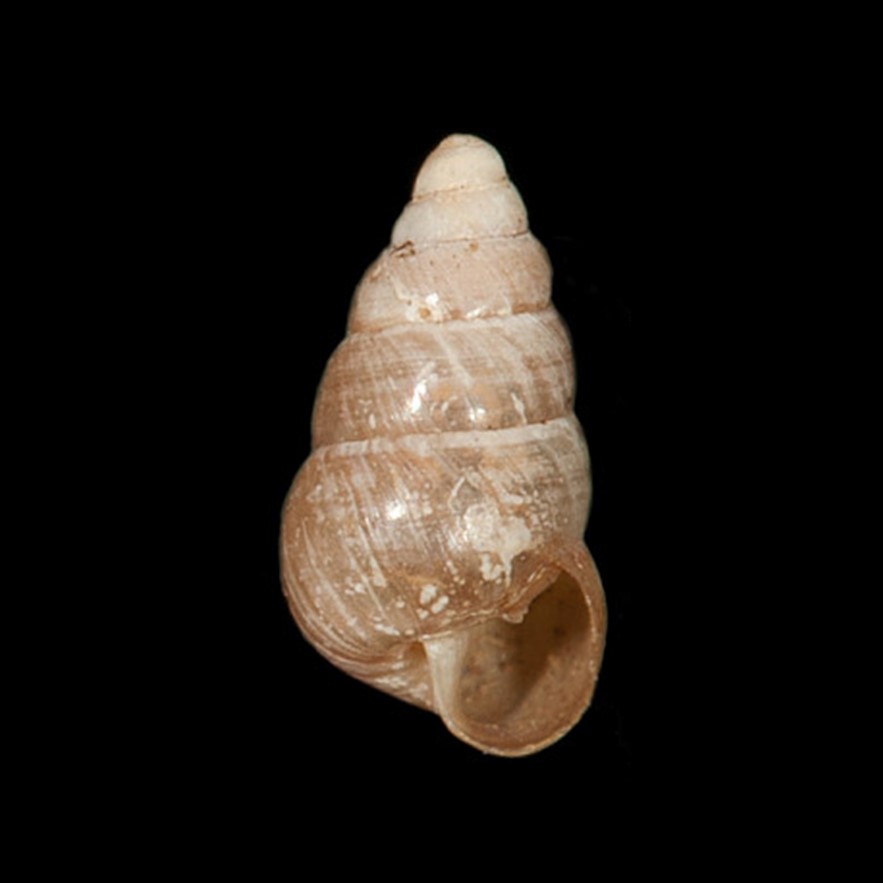
Fotos: (1) HOLOTYPE de Tornatellides chathamensis, USNM 107322, Chatham Island, SW end of Island, coletado em samambaias, 3mm
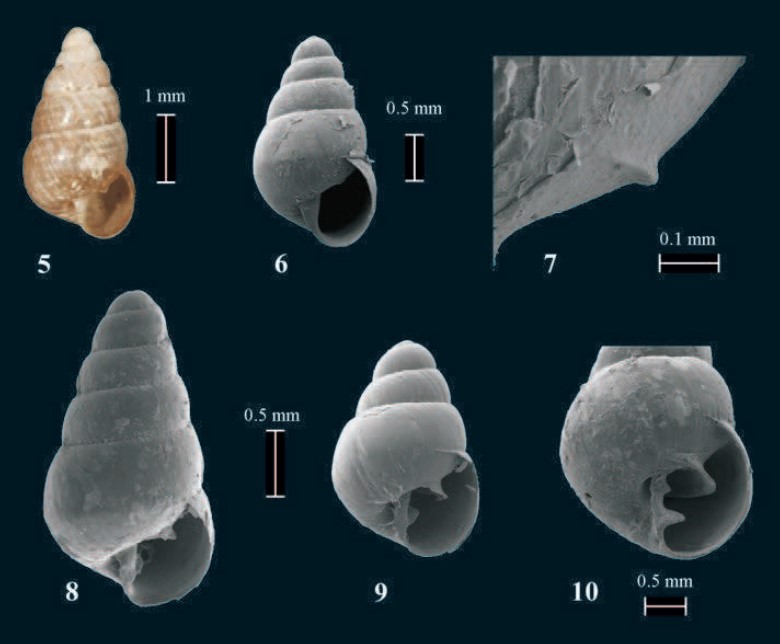
Figura: Miquel, S. E.; Herrera, H. W. (2014): (5–7) Tornatellides chathamensis Dall 1892; (5) USNM 107322, SYNTYPE, San Cristóbal Island; (6) ICCDRS 0036629, Isabela Island, Sierra Negra/Pampa; (7) ICCDRS 0036629, Isabela Island, Sierra Negra/Pampa, detail of a parietal rib; (8–10) Tornatellides floreanae; (8) HOLOTYPE ICCDRS 0036992, Ecuador, Galápagos, Floreana Island, Pampa de Alviar; (9) PARATYPE ICCDRS 0037050, Galápagos, Floreana Island, Cerro Alieri; (10) PARATYPE ICCDRS 0036932, Floreana Island, Pampa de Alviar, detalhe da abertura da concha
Fontes:
Descrição original: (como Leptinaria chathamensis Dall, 1892) Dall, W. H. (1892). On some types new to the fauna of the Galápagos Islands. The Nautilus. 5(9): 97–99., disponível online em https://www.biodiversitylibrary.org/page/42788893
página(s): 98
Descrição original: (como Bulimulus (Pelecostoma) cymatoferus Reibisch, 1893) Reibisch P. (1893 [“1892”]). Die conchyliologische Fauna der Galapagos-Inseln. Sitzungsberichte und Abhandlungen der Naturwissenschaftlichen Gesellschaft Isis in Dresden. 1892(3): 13-32., disponível online em https://www.biodiversitylibrary.org/page/53776884
página(s): 26, Taf. II, Fig. 7
Chambers, S. M. & Steadman, D. W. (1988). Holocene terrestrial gastropod faunas from Isla Santa Cruz and Isla Floreana, Galápagos: evidence for late Holocene declines. Transactions of the San Diego Society of Natural History. 21(6): 89-110, figs. 1, 2A-L, 3., disponível online em https://www.biodiversitylibrary.org/page/4287005
página(s): 94-95
Miquel, S. E.; Herrera, H. W. (2014). Catalogue of terrestrial gastropods from Galápagos (except Bulimulidae and Succineidae) with description of a new species of Ambrosiella Odhner (Achatinellidae) (Mollusca: Gastropoda). Archiv für Molluskenkunde. 143(2): 107-133., disponível online em https://doi.org/10.1127/arch.moll/1869-0963/143/107-133
página(s): 110, figs 5–7, map 3
MolluscaBase: https://molluscabase.org/aphia.php?p=taxdetails&id=1306912

Vive em árvores e arbustos

Vive sob ou sobre pedras

Vive em corais ou recifes

Vive em algas marinhas

Vivem em fundos de cascalho de coral, pedra ou conchas

Vive no solo. Sob folhas ou enterada parte do tempo

Vive em fundos arenosos, enterrada ou sob ele.

Animais que nadam ou vivem livremente

Presos a certos animais ou parasitando

Vive em fundos lodosos

Vive em plantas de água doce

Seu habitat é desconhecido

Alimenta-se de plantas e algas

Alimenta-se de outros animais

Alimenta-se de qualquer fonte

Alimenta-se de animais mortos
Seu hábito alimentar é desconhecido


