
CLASSE: GASTROPODA: TERRESTRE
FAMÍLIA: SCOLODONTINAE
ESPÉCIE: Happia ammonoceras (Reeve, 1854)
Tamanho médio: 4 mm
Distribuição: Colômbia, Brasil ? (São Paulo, Piquete)
Localidade tipo: Santa Anna, Colômbia
Nome original: Helix ammonoceras Reeve, 1854
Sinônimos: Drepanostomella ammonoceras (L. Pfeiffer, 1855)
Redescrição:
Roosen, M. T. & Breure, A. S. (2024): “Shell medium-sized, discoid, translucent, with a sunken spire. Embryonic whorl smooth. After one
whorl, eight slightly oblique spiral rows consisting of densely spaced punctuations develop on last quarter of shell between suture and periphery. Spiral rows visible on entire shell and continue over periphery and onto base, only to disappear on last quarter whorl in umbilicus. Flexuous growth striae also present on entire shell but stronger towards aperture. Aperture deflected, rounded-trapezoidal in shape, with a small incision at suture. Peristome simple. Umbilicus wide, up to 32% of shell width.”
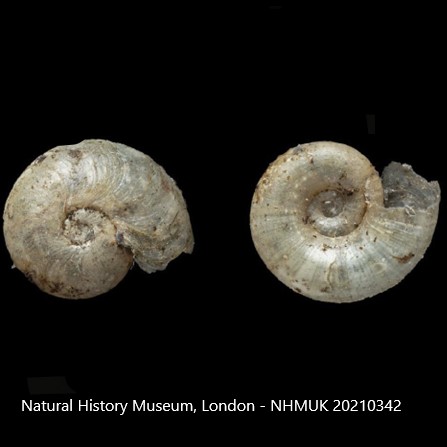
Fotos: (1) Natural History Museum, London: SYNTYPE de Happia ammonoceras (Reeve, 1854), NHMUK 20210342, 4 mm, “New Granada”
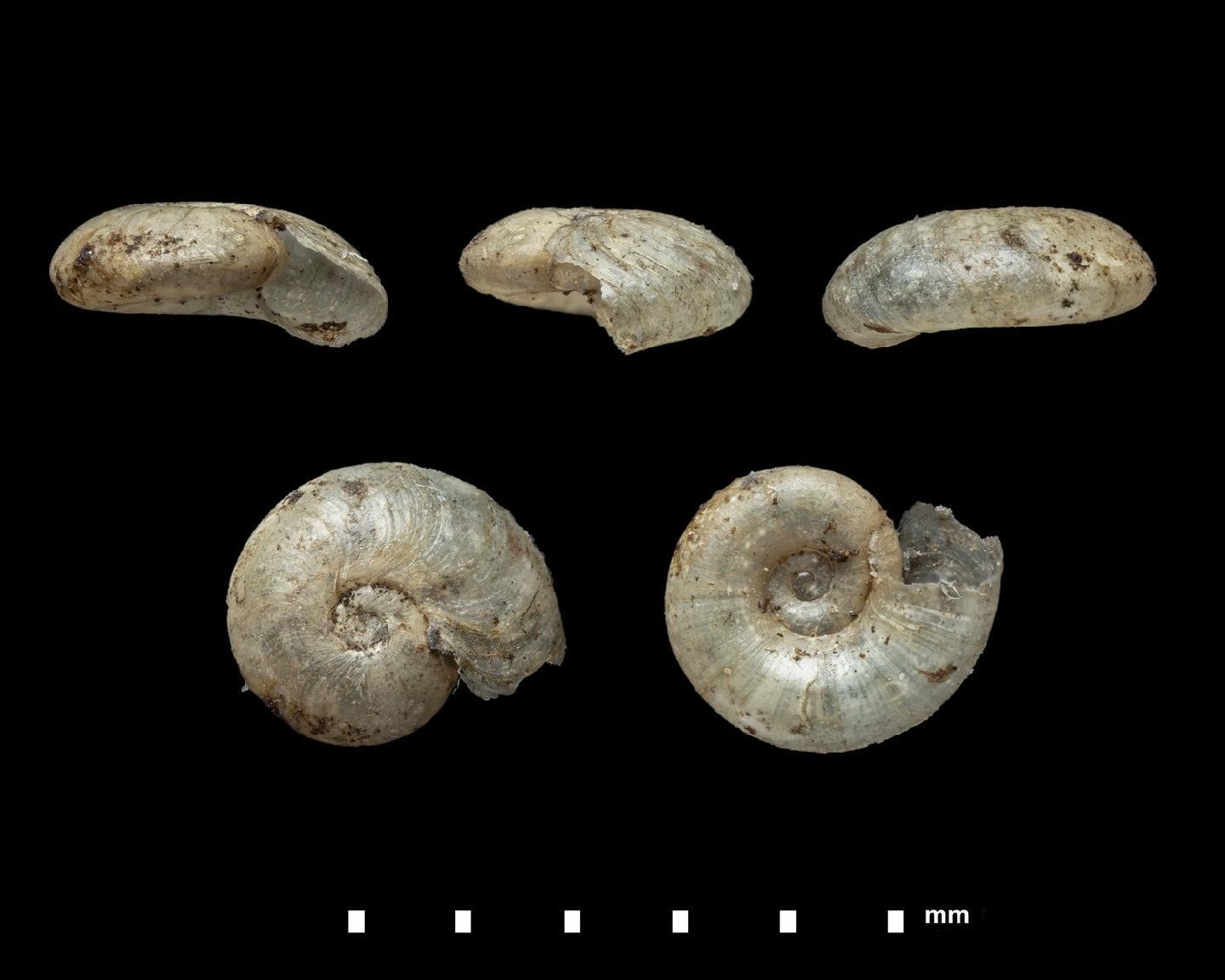
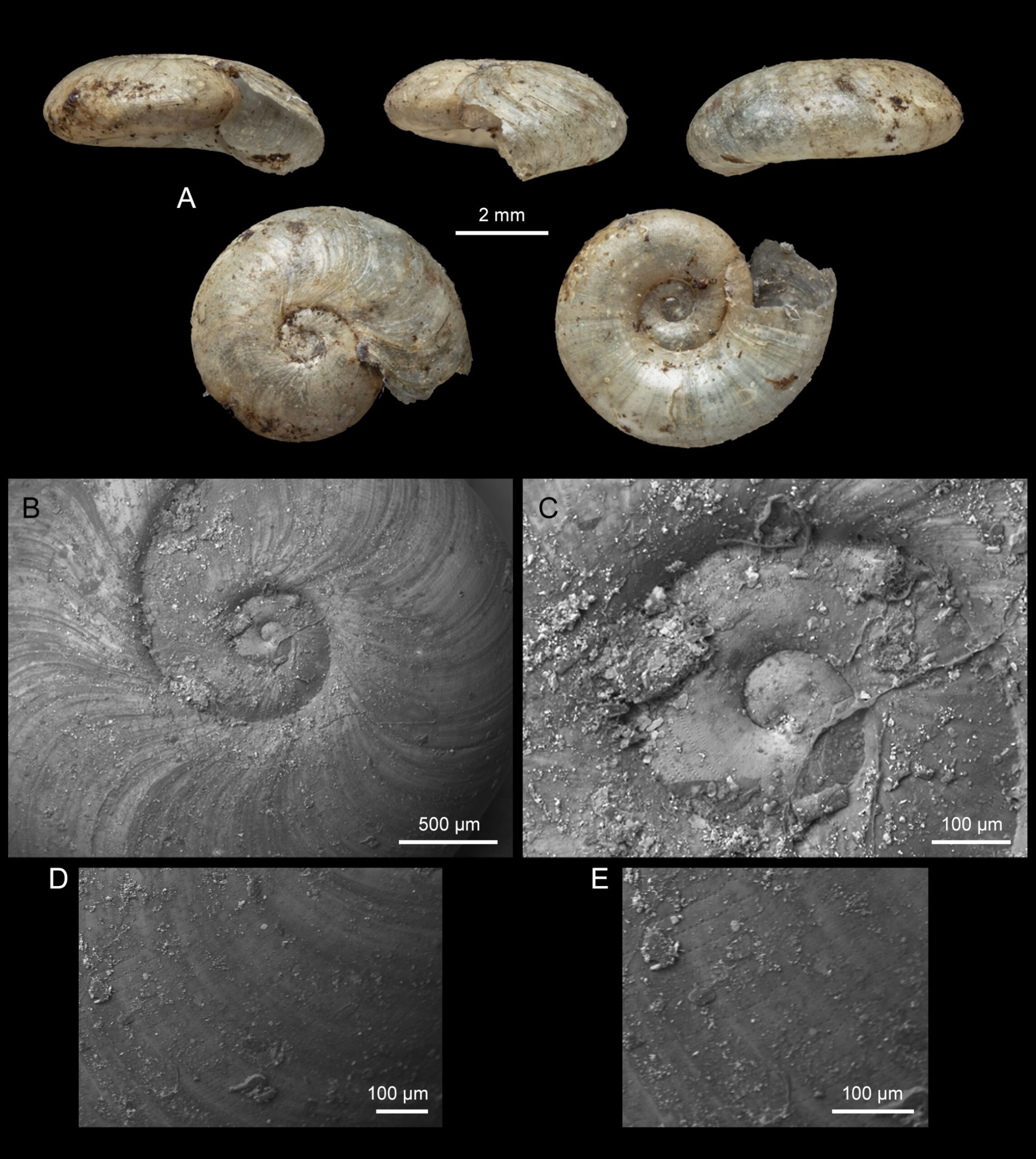
Figura: Roosen, M. T. & Breure, A. S. (2024): Happia ammonoceras (Reeve, 1854): (A–E) NHMUK 20210342, SYNTYPE; (B–E) apical surface of same shell
Fontes:
Descrição original: (como Helix ammonoceras Reeve, 1854) Reeve, L. A. (1851-1854). Monograph of the genus Helix. In: Conchologia iconica, or, illustrations of the shells of molluscous animals, vol. 7, pls. 1-210 and unpaginated text. L. Reeve & Co., London. [publication dates: pls. 1-6, Mar. 1851; 7-14, Apr. 1851; 15-22, May 1851; 23-30, Jun. 1851; 31-38, Jul. 1861; 39-46, Sept. 1851; 47-54, Oct. 1851; 55-62, Dec. 1851; 63-70, Jan. 1852; 71-78, Feb. 1852; 79-86, Mar. 1852; 87-94, Apr. 1852; 95-102, May 1852; 103-110, Jun. 1852; 111-126, Aug. 1852; 127-134, Oct. 1852 [pl. 133 as “Oct. 1851”]; 135-142, Nov. 1852; 143-146, Dec. 1852; 147-150, Feb. 1853; 151-154, Apr. 1853; 155-162, May 1853; 163-166, Jun. 1853; 167-170, Jul. 1853; 171-174, Oct. 1853; 175, 176, Apr. 1854; 177, May 1854; 178-185, Jun. 1854; 186-189, Jul. 1854; 190-193, Aug. 1854; 194, 195, Sept. 1854; 196-210, Dec. 1854]. , disponível online em https://biodiversitylibrary.org/page/11120877
página(s): pl. 191, species 1338
Simone, L. R. L. (2006). Land and Freshwater Molluscs of Brazil. Editora Gráfica Bernardi, FAPESP. São Paulo, 390 pp, página 226
Roosen, M. T. & Breure, A. S. (2024). Revision of the genera of Scolodontidae, part 1: disentangling Happia Bourguignat, 1890 from Austroselenites Kobelt, 1905, Drepanostomella Bourguignat, 1890, Hirtudiscus Hylton Scott, 1973, Luteostriatella gen. nov., and Systrophiella H.B. Baker, 1925. Journal of Conchology. 45(1): 91-110., disponível online em https://doi.org/10.61733/jconch/4511
página(s): 94, fig. 1
Florida Museum of Natural History: UF Invertebrate Zoology https://doi.org/10.15468/sm6qo6 accessed via GBIF.org on 2025-11-27. https://www.gbif.org/occurrence/3084161403
Molluscabase: https://www.molluscabase.org/aphia.php?p=taxdetails&id=1449069

Vive em árvores e arbustos

Vive sob ou sobre pedras

Vive em corais ou recifes

Vive em algas marinhas

Vivem em fundos de cascalho de coral, pedra ou conchas

Vive no solo. Sob folhas ou enterada parte do tempo

Vive em fundos arenosos, enterrada ou sob ele.

Animais que nadam ou vivem livremente

Presos a certos animais ou parasitando

Vive em fundos lodosos

Vive em plantas de água doce

Seu habitat é desconhecido

Alimenta-se de plantas e algas

Alimenta-se de outros animais

Alimenta-se de qualquer fonte

Alimenta-se de animais mortos
Seu hábito alimentar é desconhecido


