
CLASSE: GASTROPODA: TERRESTRE
FAMÍLIA: MEGASPIRIDAE
ESPÉCIE: Megaspira iheringi Pilsbry, 1925
Tamanho médio: 28 mm
Habitat: vive no solo, na serapilheira, na Mata Atlântica
Ocorrência: Brasil (Rio de Janeiro)
Localidade tipo: Macaé, Rio de Janeiro, Brasil
Nome original: Megaspira iheringi Pilsbry, 1925
Etimologia: o nome da espécie é uma homenagem ao zoólogo teuto-brasileiro Hermann von Ihering (9 de outubro de 1850 – 24 de fevereiro de 1930). Foi o fundador e primeiro diretor do Museu Paulista, em São Paulo, em 1894
Descrição original:
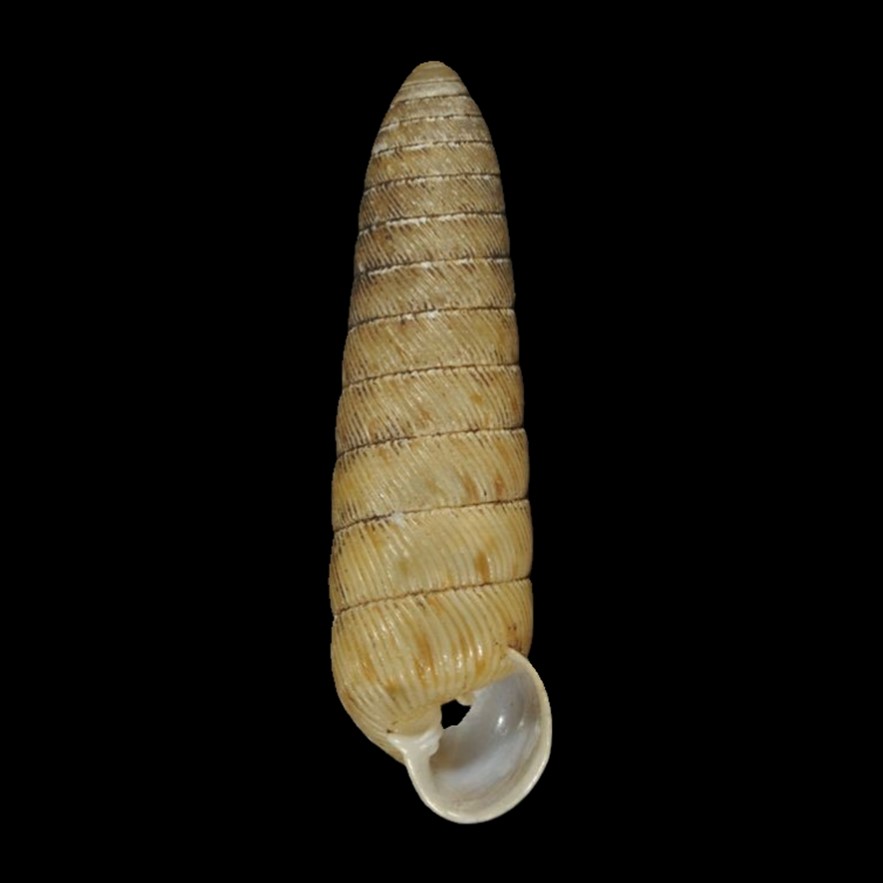
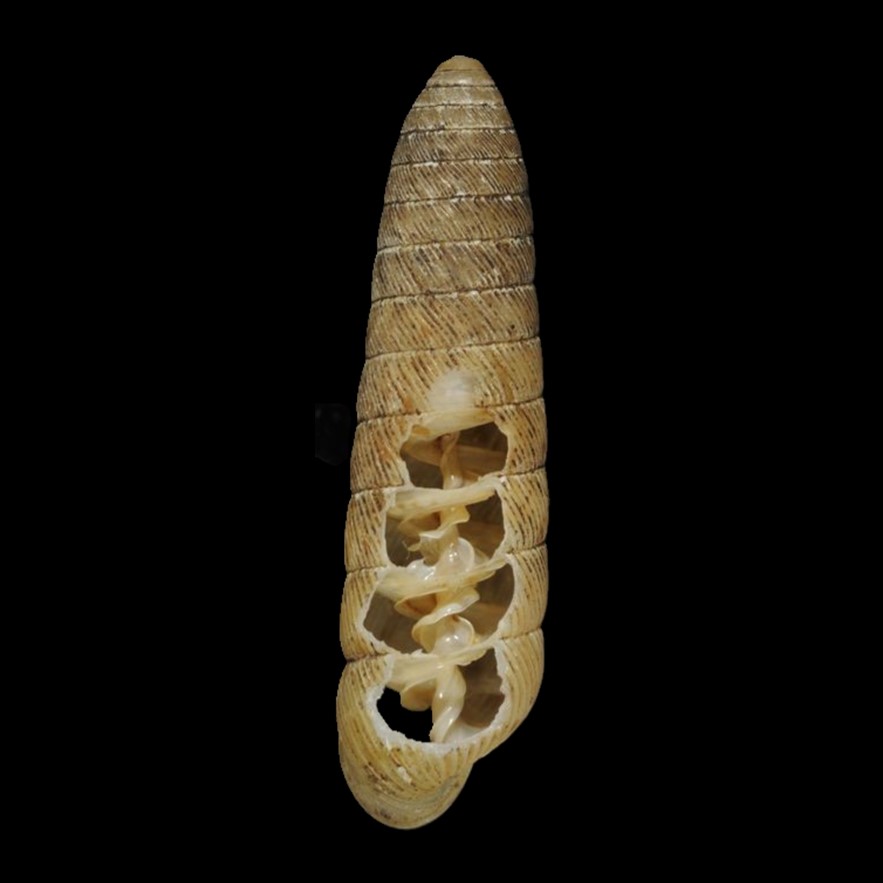
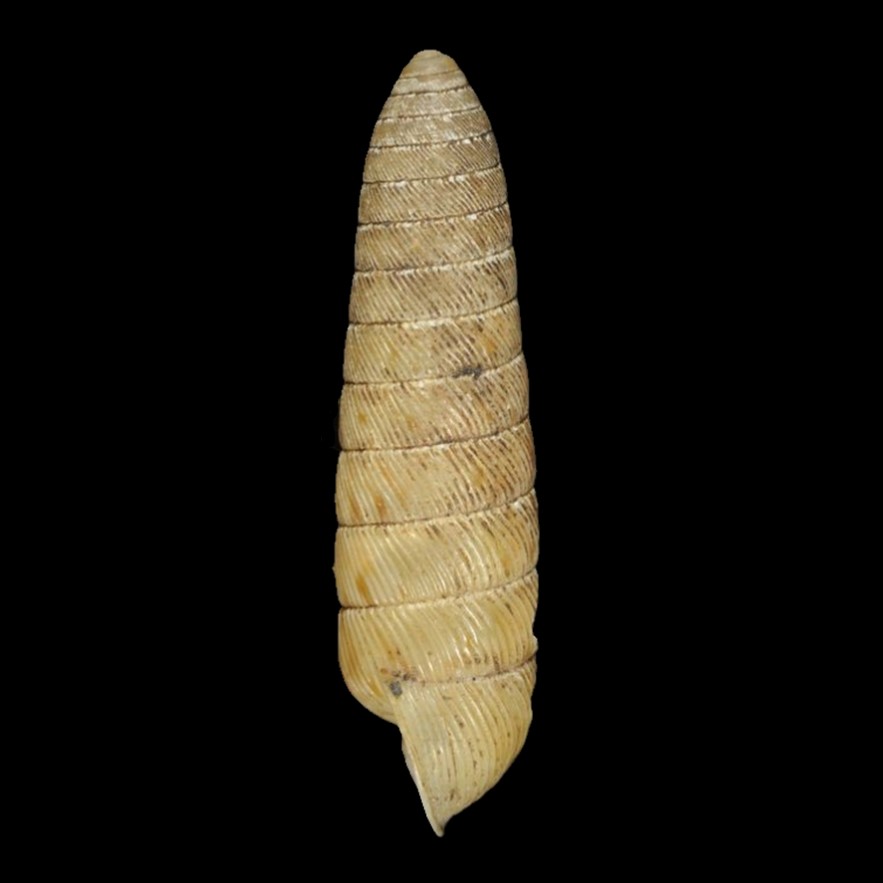
(Pilsbry, 1925): “A species related to Megaspira elatior (Spix), but shorter and stouter in figure. Warm buff, with small, sparsely scattered spots of chestnut brown. Closely sculptured with retractive strixe about equal to their intervals, 24 in 1 mm. on the face of the last whorl; the first 14 whorls smooth (worn). Umbilical cavity narrow, formed as in M. elatior. The whorls are nearly flat, the last convex, its latter part ascending a little. The aperture is ovate, the outer and basal margins of the peristome expanded, columellar margin dilated above and deeplv guttered at its insertion.
Columella with three small lamelle. The parietal lamella is rather small, oblique and enters deeply. Internallv the parietal lamella ascends 31 whorls. The columellar lamella is enlarged within the penult and antepenult whorls, its edge in the former being bent down and weakly waved, in the ante- penult undulating and lobed, but the lobes less strong than in M. elatior. The supracolumellar lamella enters about half a whorl and the infracolumellar slightly more than one whorl. The trans- verse (radial) laminae are high, with hooks at their summits directed towards the axis, as in M. elatior. Length 28 mm., diam. 8.3 mm., length of aperture 7 mm.; 14 1/2 whorls.”
Fotos: (1-3) The Academy of Natural Sciences, Philadelphia: LECTOTYPE de Megaspira iheringi, ANSP 100532, doador: Ihering, H. V., v.1910, Macaé, Estado do Rio de Janeiro

Figura: Daniel, V. R.; Ovando, X. M.; Santos, S. B. (2022) (5-6) LECTOTYPE de Megaspira pilsbryi (ANSP 25041); (7–9) LECTOTYPE de Megaspira iheringi (ANSP 100532); (10–12) LECTOTYPE de Megaspira elatior robusta (ANSP 71925)
Fontes:
Descrição original: Pilsbry, H. A. (1925). South American land and fresh water mollusks: notes and descriptions: V. Proceedings of the Academy of Natural Sciences of Philadelphia. 77: 311-315. página(s): 314, texto figs 6a-b
Daniel, V. R.; Ovando, X. M.; Santos, S. B. (2022). A new species of Megaspira (Stylommatophora: Megaspiridae) from Ilha Grande, Southeast Brazil. Zoologia (Curitiba). 39: e21022., disponível online em https://doi.org/10.1590/s1984-4689.v39.e21022
página(s): 5, figs 7-9
Simone, L. R. L. (2006). Land and Freshwater Molluscs of Brazil. Editora Gráfica Bernardi, FAPESP. São Paulo, 390 pp. página(s): 182
MolluscaBase: https://www.molluscabase.org/aphia.php?p=taxdetails&id=1448192

Vive em árvores e arbustos

Vive sob ou sobre pedras

Vive em corais ou recifes

Vive em algas marinhas

Vivem em fundos de cascalho de coral, pedra ou conchas

Vive no solo. Sob folhas ou enterada parte do tempo

Vive em fundos arenosos, enterrada ou sob ele.

Animais que nadam ou vivem livremente

Presos a certos animais ou parasitando

Vive em fundos lodosos

Vive em plantas de água doce

Seu habitat é desconhecido

Alimenta-se de plantas e algas

Alimenta-se de outros animais

Alimenta-se de qualquer fonte

Alimenta-se de animais mortos
Seu hábito alimentar é desconhecido


