
CLASSE: GASTROPODA: TERRESTRE
FAMÍLIA: BOTHRIEMBRYONTIDAE
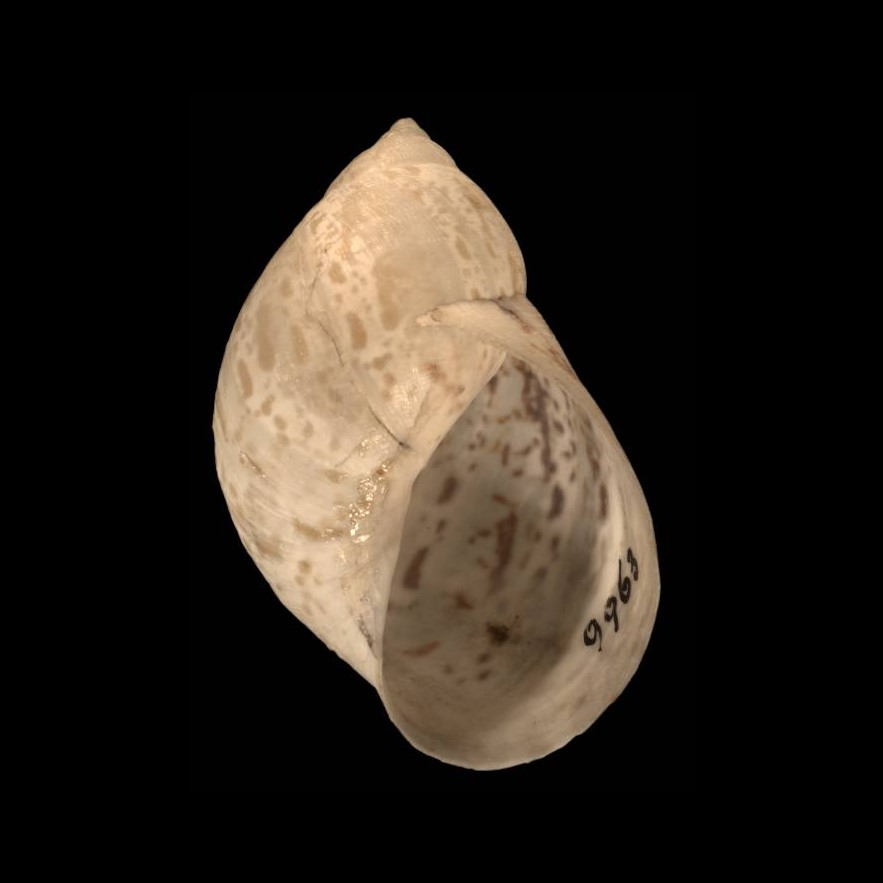
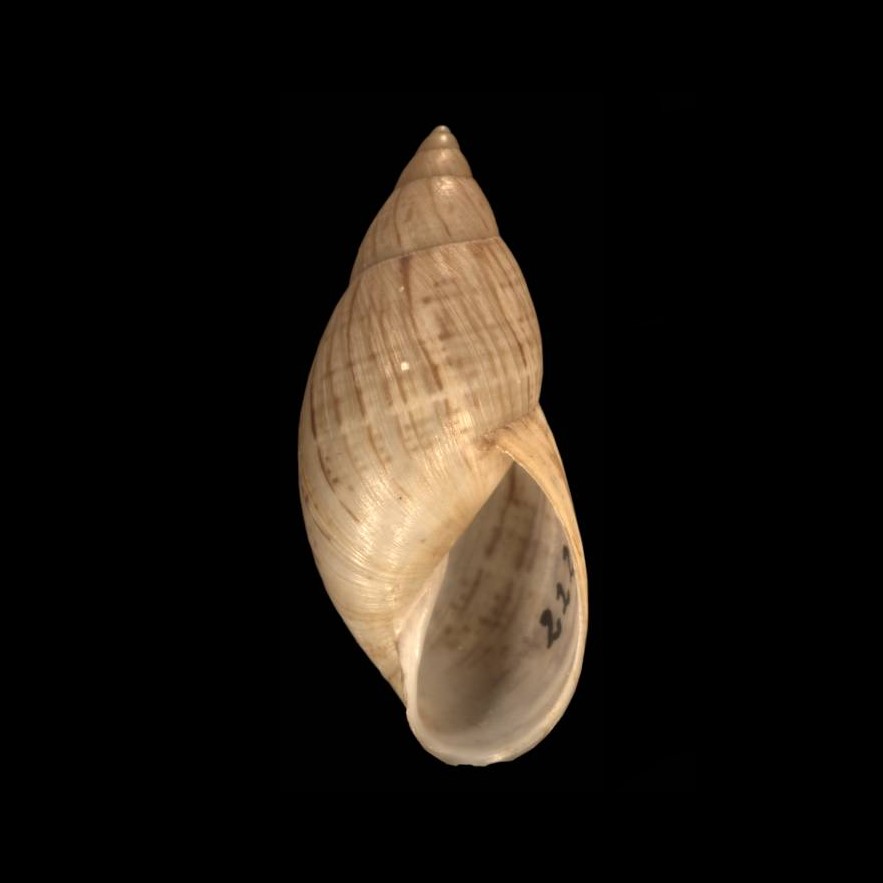
ESPÉCIE: Plectostylus broderipii (G. B. Sowerby I, 1832)
Tamanho médio: 41 mm
Ocorrência: Chile (Copiapó)
Localidade tipo: Chile, Copiapó (Copiapo Chilensium)
Nome original: Bulinus broderipii G. B. Sowerby I, 1832
Sinônimos: Bulimus broderipii (G. B. Sowerby I, 1832); Helix (Bulimus) broderipii (G. B. Sowerby I, 1832); Plectostylus variegatus (L. Pfeiffer, 1842); Succinea variegata L. Pfeiffer, 1842
Foto: (1) Senckenberg Natural History Museum, Frankfurt: (1) SMF 9963, 41.1 mm, Copiapó, Chile; (2) SYNTYPE de Plectostylus variegatus (L. Pfeiffer, 1842), 45.1mm
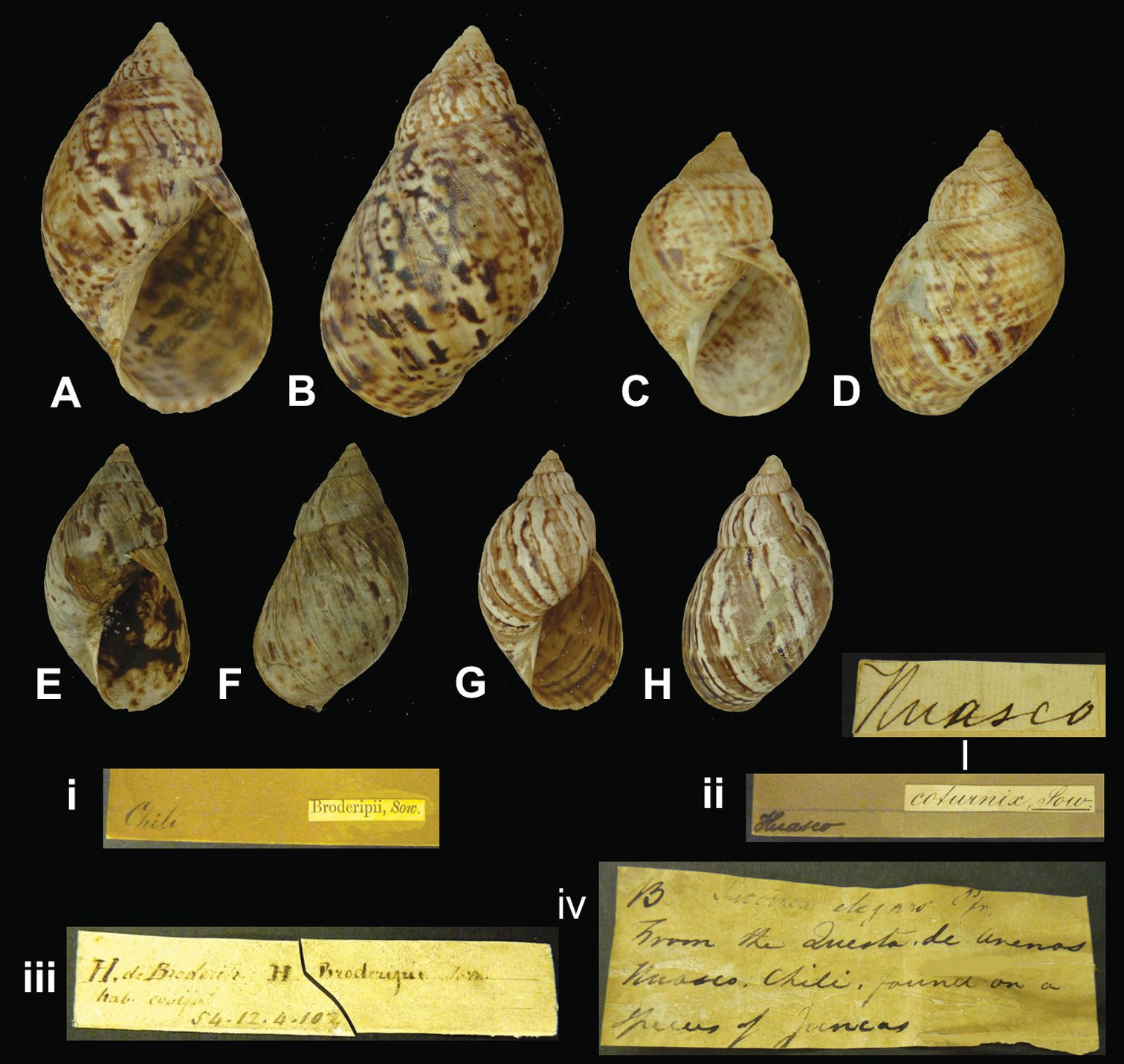
Figura: Breure & Ablett, 2012: (A–B, i) Plectostylus broderipii (Sowerby I, 1832), LECTOTYPE NHMUK 20100655 (H = 44.5mm); (C–D, ii) Plectostylus coturnix (Sowerby, 1832), possível SYNTYPE NHMUK 20100620 (H = 32.4mm); (E–H) Plectostylus broderipii (Sowerby I, 1832); (E–F, iii) LECTOTYPE de Bulimus broderipi var. elongata d’Orbigny, 1837 NHMUK 1854.12.4.102 (H = 30.5mm); (G–H, iv) LECTOTYPE de Succinea elegans Pfeiffer, 1842 NHMUK 1975360 (H = 30.0mm)
Fontes:
Descrição original: (como Bulinus broderipii G. B. Sowerby I, 1832) Broderip, W. J. & Sowerby, G. B. I. (1832-1833). [Descriptions of new species of shells from the collection formed by Mr. Cuming on the western coast of South America, and among the islands of the southern Pacific Ocean.]. Proceedings of the Committee of Science and correspondence of the Zoological Society of London. Part II for 1832: 25–33 [21 April 1832], 50-61 [5 June 1832], 104–108 [31 July 1832], 113–120 [14 August 1832]; 173–179 [14 Jan. 1833], 194–202 [13 March 1833]., disponível online em https://www.biodiversitylibrary.org/page/26730700
página(s): 30
Descrição original: (como Succinea variegata L. Pfeiffer, 1842) Pfeiffer, L. (1842). Symbolae ad historiam Heliceorum, Part II [Sectio altera.] Kassel (Th. Fischer). 147 pp. [< 21 December]. , disponível online em https://www.biodiversitylibrary.org/page/12254177
página(s): 56
Breure, A. S. H. & Ablett, J. D. (2012). Annotated type catalogue of the Bothriembryontidae and Odontostomidae (Mollusca, Gastropoda, Orthalicoidea) in the Natural History Museum, London. ZooKeys. 182: 1-70., disponível online em https://doi.org/10.3897/zookeys.182.2720
página(s): 8
Valdovinos, C. & Stuardo, J. R. (1988). Morfología, sistemática y distribución del género Plectostylus Beck 1837 (Pulmonata: Bulimulidae). Gayana, Zoologia. 52(1-2): 115–195., disponível online em https://www.biodiversitylibrary.org/page/28128676
página(s): 121
Araya, J. F.; Catalán, R. (2014). A review of the non-bulimulid terrestrial Mollusca from the Region of Atacama, northern Chile. ZooKeys. 398: 33-51., disponível online em https://zookeys.pensoft.net/articles.php?id=3694
Molluscabase: https://www.molluscabase.org/aphia.php?p=taxdetails&id=1328271

Vive em árvores e arbustos

Vive sob ou sobre pedras

Vive em corais ou recifes

Vive em algas marinhas

Vivem em fundos de cascalho de coral, pedra ou conchas

Vive no solo. Sob folhas ou enterada parte do tempo

Vive em fundos arenosos, enterrada ou sob ele.

Animais que nadam ou vivem livremente

Presos a certos animais ou parasitando

Vive em fundos lodosos

Vive em plantas de água doce

Seu habitat é desconhecido

Alimenta-se de plantas e algas

Alimenta-se de outros animais

Alimenta-se de qualquer fonte

Alimenta-se de animais mortos
Seu hábito alimentar é desconhecido


