

CLASSE: GASTROPODA: TERRESTRE
FAMÍLIA: STREPTAXIDAE
ESPÉCIE: Streptartemon glaber (L. Pfeiffer, 1850)
Tamanho médio: 5 mm
Habitat: vive no solo, sob folhas, ou enterrado parte do tempo
Ocorrência: Guiana, Venezuela
Localidade tipo: Demerara, Guiana
Comentários: (a) o material tipo é proveniente de Demerara, Guiana, mas posteriormente a espécie foi encontrada em ilhas do Caribe, incluindo Saint Martin, Guadalupe Saint Kitts e Nevis; (b) Simone, 2006 tratou esta espécie como sinônimo de Streptartemon deformis. Porém Molluscabase, 2024 e outras publicações posteriores não aceitaram essa sinonímia
Nome original: Streptaxis glabra L. Pfeiffer, 1850
Sinônimos: Streptaxis (Odontartemon) glaber L. Pfeiffer, 1850; Streptaxis (Streptartemon) glaber L. Pfeiffer, 1850; Streptaxis glaber L. Pfeiffer, 1850; Streptaxis glabra L. Pfeiffer, 1850
Subespécies:
(a) Streptartemon glaber aroae (H. B. Baker, 1925);
(b) Streptartemon glaber glaber (L. Pfeiffer, 1850);
(c) Streptartemon glaber normalis (Jousseaume, 1889)
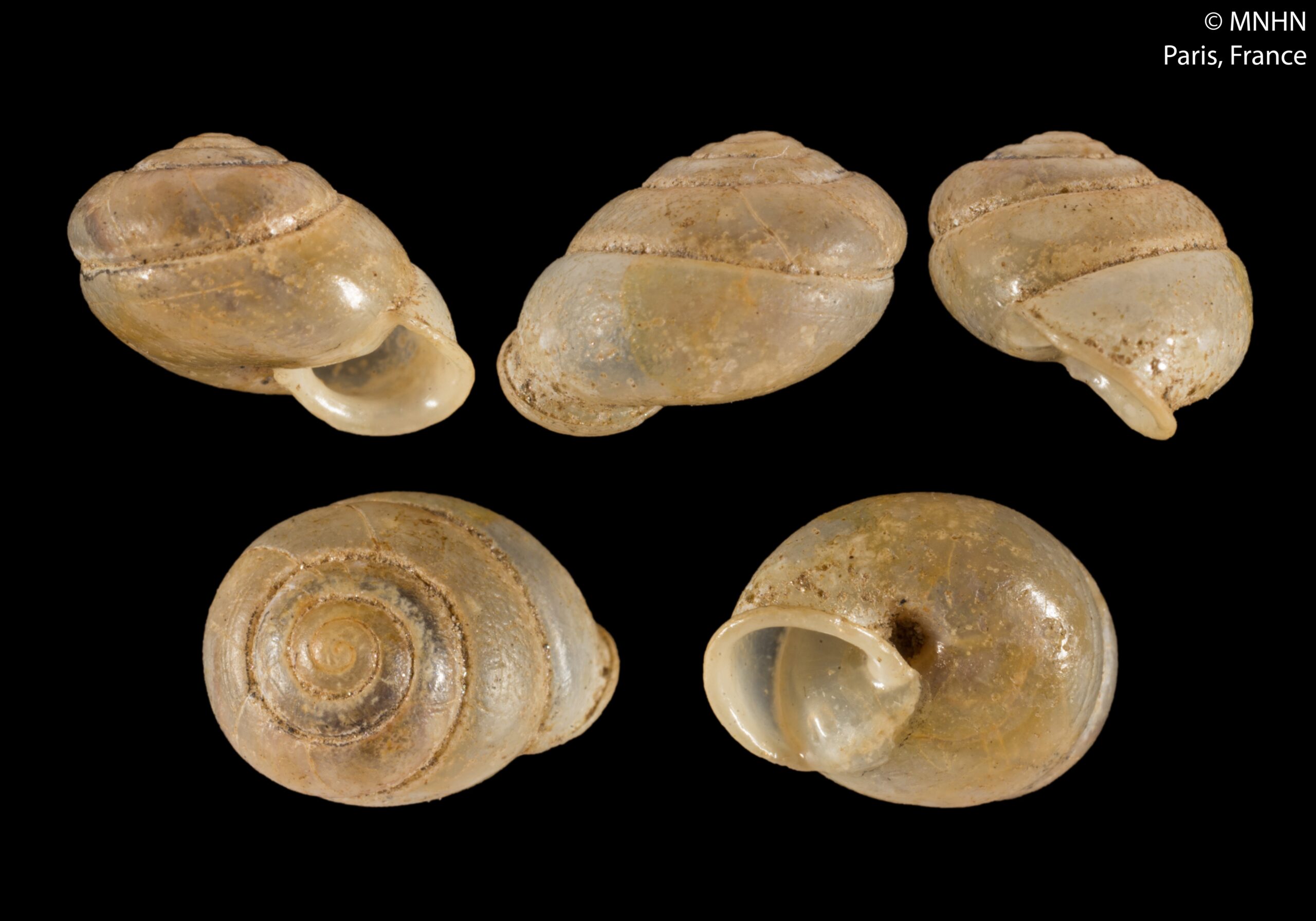
Fotos: (1) Museu Nacional de História Natural, Paris: SYNTYPE de Streptaxis normalis Jousseaume, 1889, MNHN-IM-2000-30967, Venezuela, “Cette espèce a été recueillie à Valencia et à San-Esteban; c’est de cette dernière localité que provient l’individu dont les diamètres sont de 5 et 7 mm …”, Coll. Jousseaume, Réc. Simon
Fontes:
Descrição original: (como Streptaxis glabra L. Pfeiffer, 1850) Pfeiffer, L. (1850). Descriptions of twenty-four new species of Helicea, from the collection of H. Cuming, Esq. Proceedings of the Zoological Society of London. 17 (197-198) [“1849”]: 126–131. London [30 June]., disponível online em https://www.biodiversitylibrary.org/page/12862210
página(s): 126
Descrição original: (como Streptaxis normalis Jousseaume, 1889) Jousseaume, F. (1889). Voyage de M. Eugène Simon au Venezuela (Décembre 1887 – Avril 1888). Mollusques. Mémoires de la Société Zoologique de France. 2: 232-259, pl. 9., disponível online em https://www.biodiversitylibrary.org/page/10048155
página(s): 247-248, pl. 9, figs. 19-21
Descrição original: (como Streptaxis (Odontartemon) glaber aroae H. B. Baker, 1925) Baker, H. B. (1925). The Mollusca collected by the University of Michigan-Williamson Expedition in Venezuela, Part III: Pupillidae to Oleacinidae. Occasional Papers of the Museum of Zoology, University of Michigan. 156: 1-56, pls. 6-11., disponível online em https://deepblue.lib.umich.edu/bitstream/handle/2027.42/56595/OP156.pdf?sequence=1&isAllowed=y
página(s): 40-41, text-figure 60
Hovestadt A. & Neckheim C. M. (2020). A critical checklist of the non-marine molluscs of St. Martin, with notes on the terrestrial malacofauna of Anguilla and Saint-Barthélemy, and the description of a new subspecies. Folia Conchyliologica. 57: 1-38., disponível online em http://cernuelle.com/file/Folia conchyliologica 57.pdf
página(s): 24
Brown, K. (2023). A guide to the hunter shells. Vol. 2. The Streptaxoidea. The Enneinae, Orthogibbinae, Marconiinae, Odontartemoninae, Streptaxinae and the Diapheridae. ConchBooks, Germany.
página(s): 344
Breure, A. S. H., Hovestadt, A., Fields, A. & Robinson, D. G. (2016). The land Mollusca (Gastropoda) of Saint Kitts and Nevis (Lesser Antilles), with description of a new species. The Nautilus. 130(2): 27-52.
página(s): 36, figs. 28, 36, 41
MolluscaBase: https://www.molluscabase.org/aphia.php?p=taxdetails&id=1433569

Vive em árvores e arbustos

Vive sob ou sobre pedras

Vive em corais ou recifes

Vive em algas marinhas

Vivem em fundos de cascalho de coral, pedra ou conchas

Vive no solo. Sob folhas ou enterada parte do tempo

Vive em fundos arenosos, enterrada ou sob ele.

Animais que nadam ou vivem livremente

Presos a certos animais ou parasitando

Vive em fundos lodosos

Vive em plantas de água doce

Seu habitat é desconhecido

Alimenta-se de plantas e algas

Alimenta-se de outros animais

Alimenta-se de qualquer fonte

Alimenta-se de animais mortos
Seu hábito alimentar é desconhecido


