

CLASSE: GASTROPODA: TERRESTRE
FAMÍLIA: ORTHALICIDAE
ESPÉCIE: Orthalicus bifulguratus (Reeve, 1849)
Tamanho médio: 57 mm
Ocorrência: Colômbia, Equador (El Oro, Pichincha, Tungurahua)
Localidade tipo: Colômbia (“Andes of Columbia”)
Habitat: vive em árvores e arbustos
Nome original: Bulimus bifulguratus Reeve, 1849
Fotos:
(1) Natural History Museum, London; LECTOTYPE de Orthalicus bifulguratus Reeve, 1849, NHMUK 20140082, “Andes of Colombia”, coleção: Hugh Cuming;
(2) animal vivo: Orthalicus bifulguratus, observação iNaturalist 467058792, Equador, crédito: Holger Sanchez, i.2025
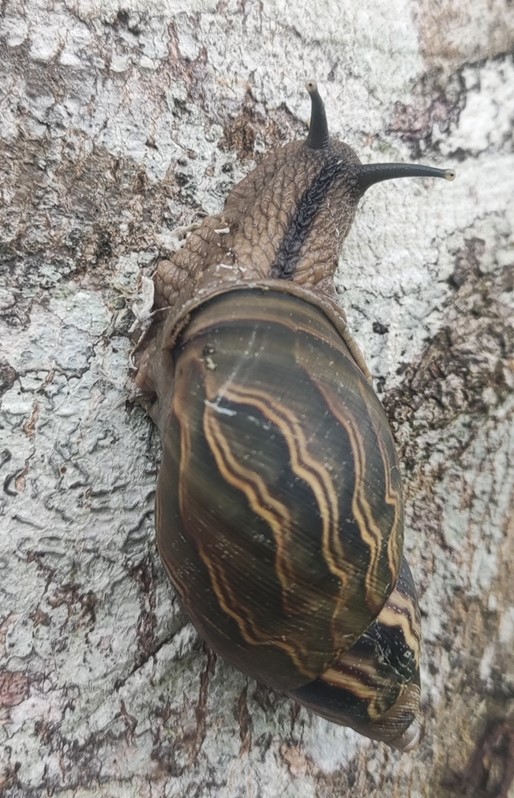
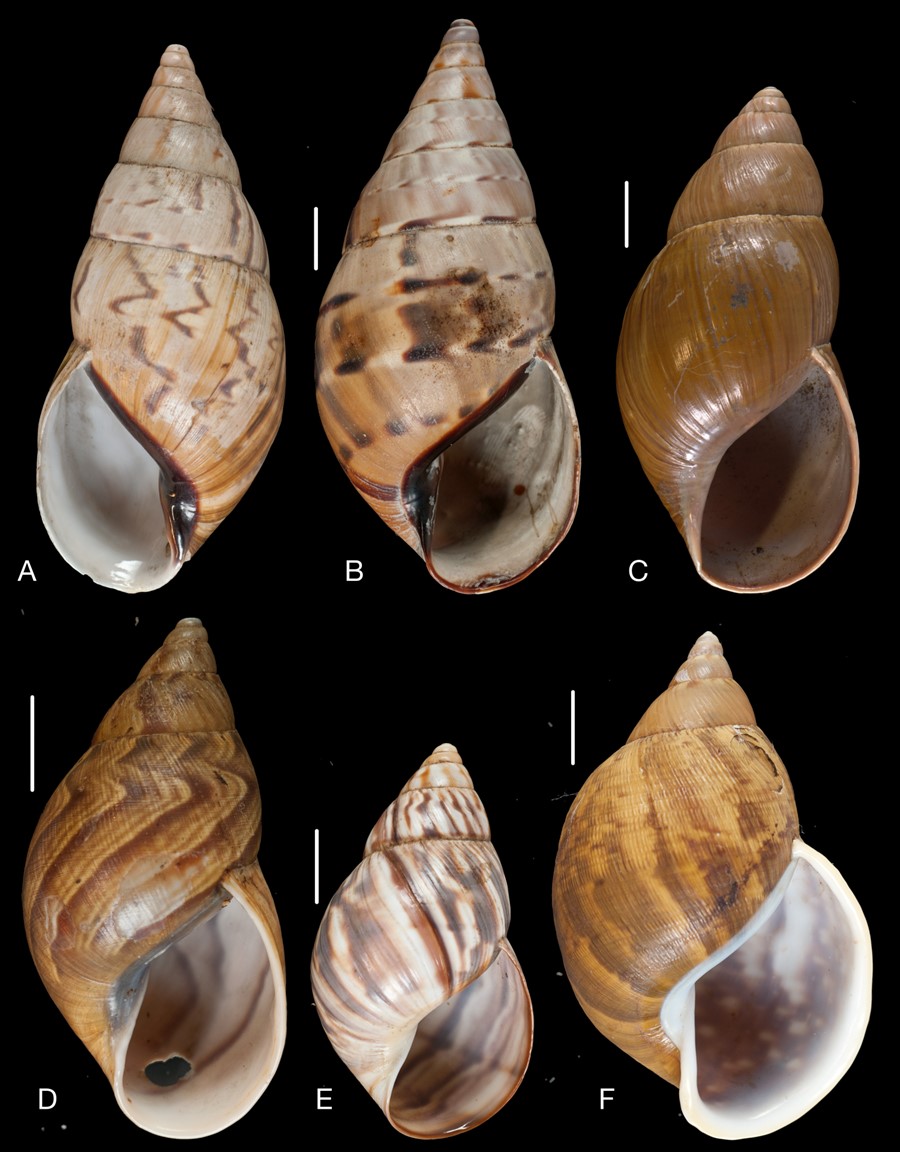
Figura: Breure, A. S. H. & Araujo, R. (2017): (A-B) Corona regalis (Hupé, 1857); (A) MNCN 15.05/1896; (B) MNCN 15.05/61001; (C) Kara thompsonii (Pfeiffer, 1845), MNCN 15.05/13701; (D) Orthalicus bifulguratus (Reeve, 1849), MNCN 15.05/15386; (E) Orthalicus princeps (Broderip in Sowerby I & II, 1833), MNCN 15.05/1898; (F) Porphyrobaphe irrorata (Reeve, 1849), MNCN 15.05/13287. Linha da escala = 1 cm
Fontes:
Descrição original: (como Bulimus bifulguratus Reeve, 1849) Reeve, L. A. (1848-1850). Monograph of the genus Bulimus. In: Conchologia Iconica, or, illustrations of the shells of molluscous animals, , vol. 5, pls. 1–89 and unpaginated text. L. Reeve & Co., London [pls. 1-9, Apr. 1848; 10-12, 15-19, May 1848; 13, 14, 20-25, Jun. 1848; 26-33, Jul. 1848; 34, 35, Aug. 1848; 36, 37, Sept. 1848; 38-45, Oct. 1848; 46-53, Nov. 1848; 54-57, Dec. 1848; 58-61, Jan. 1849; 62-64, Mar. 1849; 65-69, May 1849; 70-73, 75, Jul. 1849; 74, 76, 77, Aug. 1849; 78, 79, Sept. 1849 78-79; pls. 80-84, Dec. 1849; pls. 85-89, Feb. 1850]. , disponível online em https://www.biodiversitylibrary.org/page/8966758
página(s): pl. 82, fig. 606
Breure, A. S. H., Roosen, M. T. & Ablett, J. D. (2022). Land and freshwater molluscs of mainland Ecuador: an illustrated checklist. Iberus. 40(1): 1-290.
página(s): 125
Breure, A. S. H. & Araujo, R. (2017). The Neotropical land snails (Mollusca, Gastropoda) collected by the “Comisión Científica del Pacífico.”. PeerJ. 5, e3065., disponível online em https://www.ncbi.nlm.nih.gov/pmc/articles/PMC5354113/#
página(s): 41
Breure, A. S. H. & Ablett, J. D. (2015). Annotated type catalogue of the Megaspiridae, Orthalicidae, and Simpulopsidae (Mollusca, Gastropoda, Orthalicoidea) in the Natural History Museum, London. ZooKeys. 470: 17-143., disponível online em https://doi.org/10.3897/zookeys.470.8548
página(s): 24
Breure ASH, Mogollón Avila V (2016) Synopsis of Central Andean Orthalicoid land snails (Gastropoda, Stylommatophora), excluding Bulimulidae. ZooKeys 588: 1-199. disponível online em https://doi.org/10.3897/zookeys.588.7906
Breure, Bram & Schouten, J.. (1985). Notes on and descriptions of Bulimulidae (Mollusca, Gastropoda), III. Zoologische Verhandelingen. 216
Linares, E. L. & Vera M. L. (2012). Catálogo de los Moluscos Continentales de Colombia. Bogotá: Universidad Nacional de Colombia. 360 pp.
página(s): 151
Natural History Museum (2026). Natural History Museum (London) Collection Specimens. Occurrence dataset https://doi.org/10.5519/qd.4fmbrm00 accessed via GBIF.org on 2026-03-18. https://www.gbif.org/occurrence/1057331719
Molluscabase: https://www.molluscabase.org/aphia.php?p=taxdetails&id=1431188

Vive em árvores e arbustos

Vive sob ou sobre pedras

Vive em corais ou recifes

Vive em algas marinhas

Vivem em fundos de cascalho de coral, pedra ou conchas

Vive no solo. Sob folhas ou enterada parte do tempo

Vive em fundos arenosos, enterrada ou sob ele.

Animais que nadam ou vivem livremente

Presos a certos animais ou parasitando

Vive em fundos lodosos

Vive em plantas de água doce

Seu habitat é desconhecido

Alimenta-se de plantas e algas

Alimenta-se de outros animais

Alimenta-se de qualquer fonte

Alimenta-se de animais mortos
Seu hábito alimentar é desconhecido


