
CLASSE: GASTROPODA: TERRESTRE
FAMÍLIA: ACHATINIDAE
ESPÉCIE: Rhodea gigantea Mousson, 1873
Tamanho médio: 53 – 64 mm
Ocorrência: Colômbia (Antioquia, Cauca, Cundimarca, Tolima, Valle del Cauca), Venezuela
Localidade tipo: Colômbia, Bogotá (Wallis)
Nome original: Rhodea gigantea Mousson, 1873
Sinônimos: Rhodea maxima Mousson
Comentários: (i) De acordo com Pilsbry (1906: 235) o gênero Rhodea é vivíparo; (ii) Grego, Šteffek & Infante, 2007 relacionam ocorrência para o Brasil, “uncertain locality (BMNH 1761)”
Descrição:
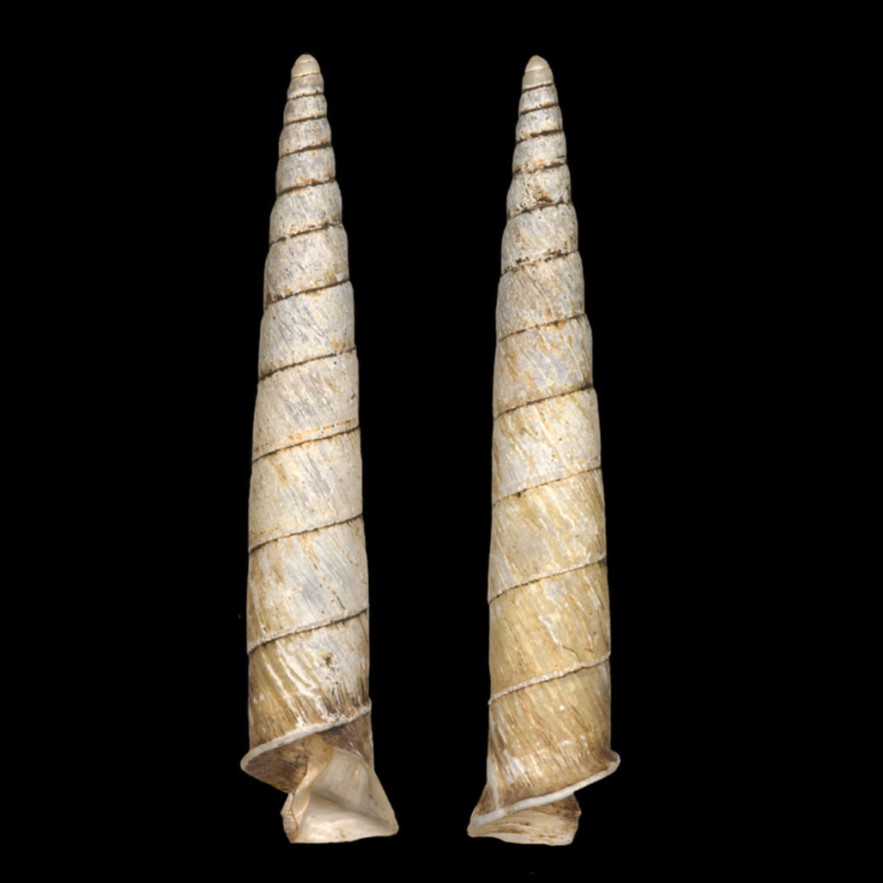
(Grego, Šteffek & Infante, 2007): “Shell imperforate, lower 2-4 whorls cylindrical and following ones gradually tapering, obliquely and narrowly striated; surface dull, with an easily loosening, corneous gray cuticule. Spire slowly tapering; the apex rather obtuse, nucleus hyaline.
Whorls 14, the initial ones glossy, moderately convex and separated by an indented suture; the following whorls more flattened and separated by a suture which may be accompanied by a thread-like ridge. Last whorl with conspicuously concave sides, encircled by a very prominent, erect, acute keel, and a second keel around the umbilical region.
Aperture at 40° with the columellar axis, measuring one seventh of the shell height, triangular, with one angle at the periphery, the third angle at the subvertical, twisted, truncate columella. Peristome rather obtuse, narrowly expanded, somewhat reflexed; the oblique upper right margin straight, apart from a concave part near the carina; the basal margin straight and nearly horizontal, joining the columella at 50º; columellar margin narrowly
reflexed.”
Fotos: (1) Grego J., Šteffek J. & Infante A.P. (2007): The Academy of Natural Sciences, Philadelphia: ANSP 189393, Colômbia, 62 mm, foto Paul Callomon; (2) Museu Nacional de História Natural, Paris: MNHN 2000-4639, “Bogota, Sonson, provinciae Antioquia dictae, et in Valle Cauca, Novae Granadae (Wallis)”
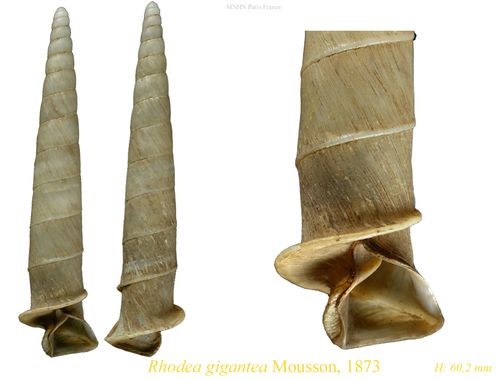
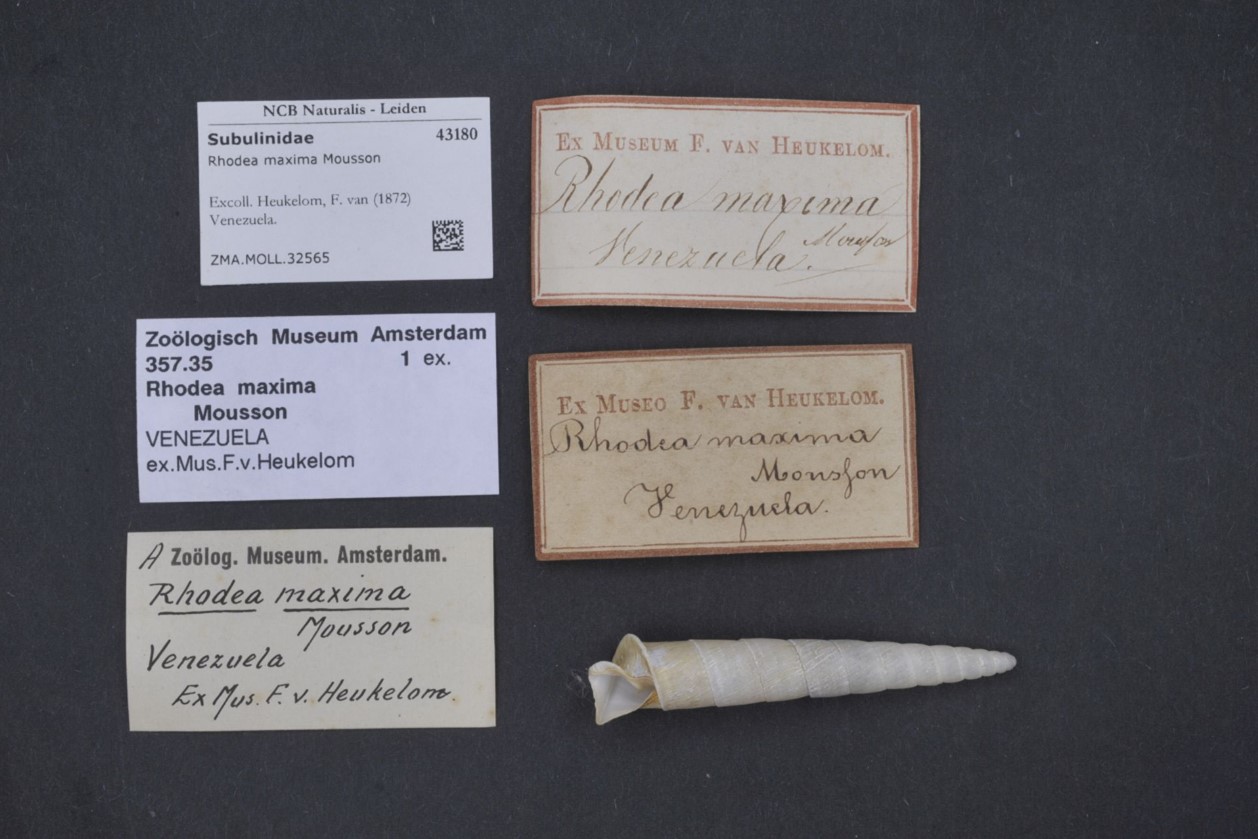
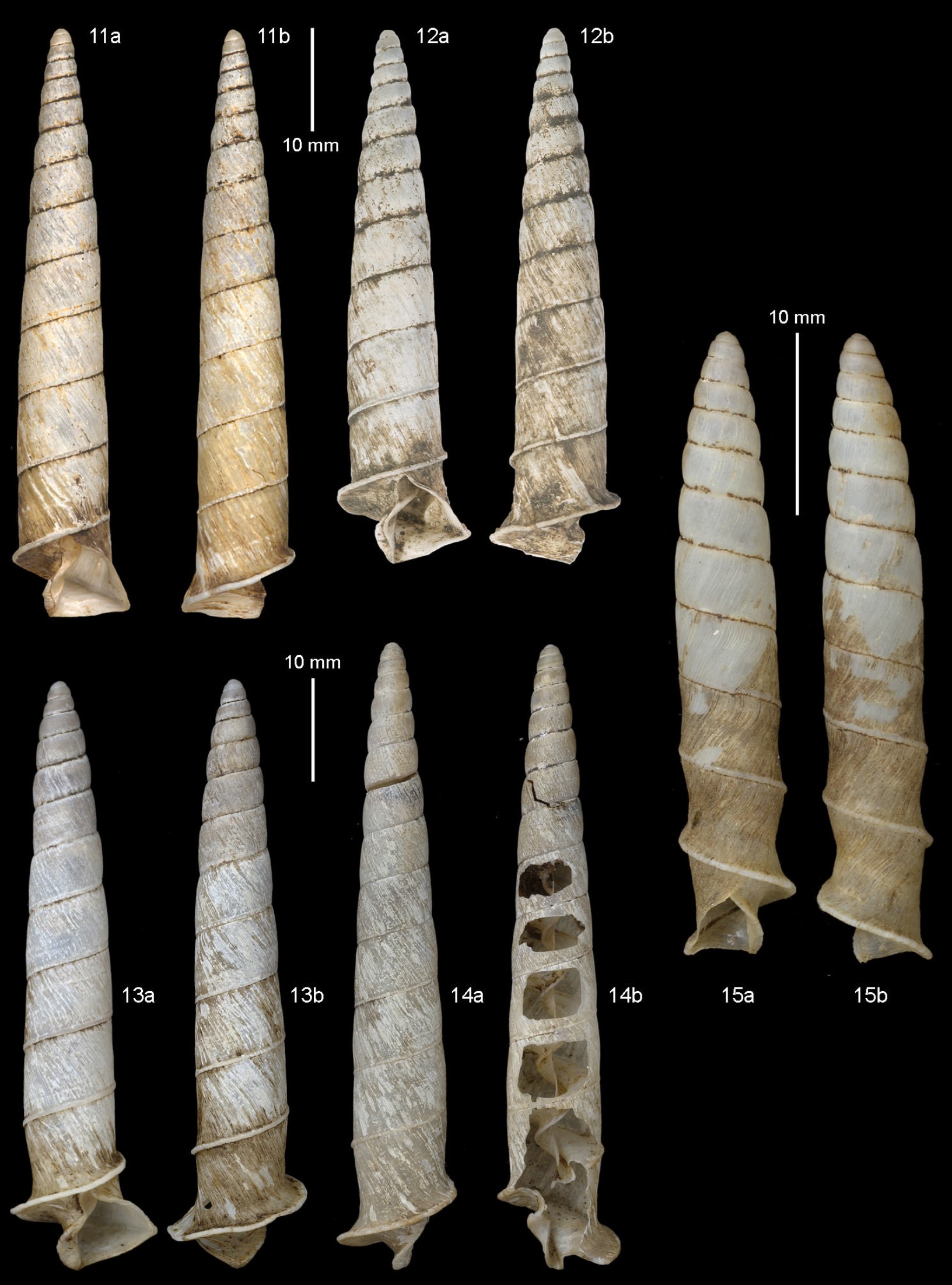
Figura: Grego J., Šteffek J. & Infante A.P. (2007): (11-14) Rhodea gigantea Mousson, 1873; (11) Colômbia, H=62 mm, ANSP 189393, foto Paul Callomon; (12) SYNTYPE 2, “Bogotá”, Colômbia, H=53 mm, ZMZ 11855, foto: Juerg Stauffer; (13) “New Granada”, H=60,0 mm, NHMUK 1875121, foto Phil Crabb; (14) “Colombia”, NHMUK 1907111540, foto Phil Crabb; (15) Rhodea wallisiana Dohrn, 1875, “Columbia, H=35,3 mm, coll NHMUK acc. 2176, foto Phil Crabb
Fontes:
Descrição original: (como Rhodea gigantea Mousson, 1873) Mousson, A. (1873). Zweite Notiz über einige von Herrn Gustav Wallis aus dem nördlichen Süd-Amerika zurückgebrachte Mollusken. Malakozoologische Blätter, 21: 1-19. Cassel., disponível online em https://biodiversitylibrary.org/page/15918653
página(s): 15–16
Neubert, E.; Gosteli, M.; Bank, R. A. (2023). The molluscan species (Gastropoda; Bivalvia) described by Albert Mousson (1805–1890) and his collection in Zurich. Vita Malacologica. 21: 1-165 [31 May 2023].
página(s): 18, figs 11-14, 20
Grego J., Šteffek J. & Infante A.P. (2007). Review of the genus Rhodea (Gastropoda, Pulmonata, Subulinidae) with description of two new species from Colombia. Basteria. 19, figs 9-10, 15
Linares, E. L., & Vera, M. L. (2012). Catálogo de los moluscos continentales de Colombia (Biblioteca José Jerónimo Triana No. 23). Bogotá, D.C., Colombia: Universidad Nacional de Colombia, Instituto de Ciencias Naturales
Pilsbry, H.A., 1906, 1907. Achatinidae: Stenogyrinae and Coeliaxinae (part.). — Manual of Conchology (second series: Pulmonata) 18: 161-272 (1906), 273-357 (1907). Philadelphia
MolluscaBase: https://molluscabase.org/aphia.php?p=taxdetails&id=1427802

Vive em árvores e arbustos

Vive sob ou sobre pedras

Vive em corais ou recifes

Vive em algas marinhas

Vivem em fundos de cascalho de coral, pedra ou conchas

Vive no solo. Sob folhas ou enterada parte do tempo

Vive em fundos arenosos, enterrada ou sob ele.

Animais que nadam ou vivem livremente

Presos a certos animais ou parasitando

Vive em fundos lodosos

Vive em plantas de água doce

Seu habitat é desconhecido

Alimenta-se de plantas e algas

Alimenta-se de outros animais

Alimenta-se de qualquer fonte

Alimenta-se de animais mortos
Seu hábito alimentar é desconhecido


