
CLASSE: GASTROPODA: TERRESTRE
FAMÍLIA: TOMOGERIDAE
ESPÉCIE: Anostoma rossi A. Weber, 1925
Tamanho médio: 30 mm
Distribuição: Brasil (Bahia, Goiás, Tocantins)
Localidade tipo: dentro de uma gruta calcária (70m de profundidade) em São Desidério, Bahia
Habitat: vive no solo, sob folhas ou enterrada parte do tempo
Nome original: Anostoma rossi A. Weber, 1925
Sinônimos: Anostoma (Anostoma) rossi
Comentários: Cavallari et al. 2024 considera que Anostoma luetzelburgi Weber, 1925 é um sinônimo desta espécie, porém mantidas as duas espécies para a comparação
Redescrição:
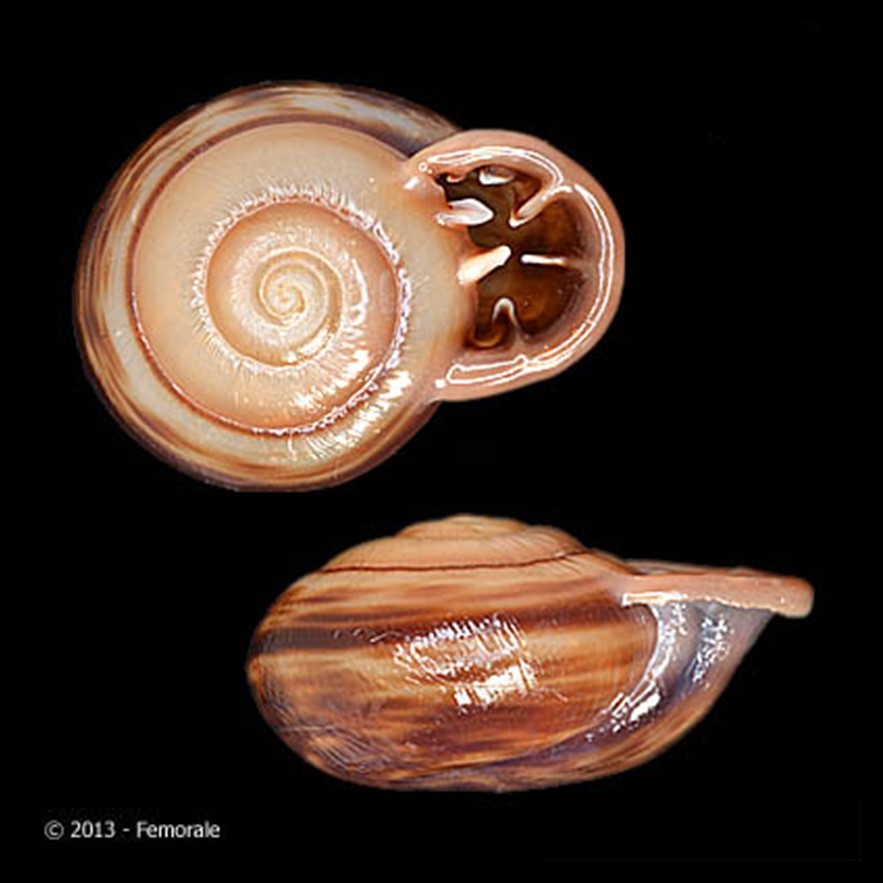
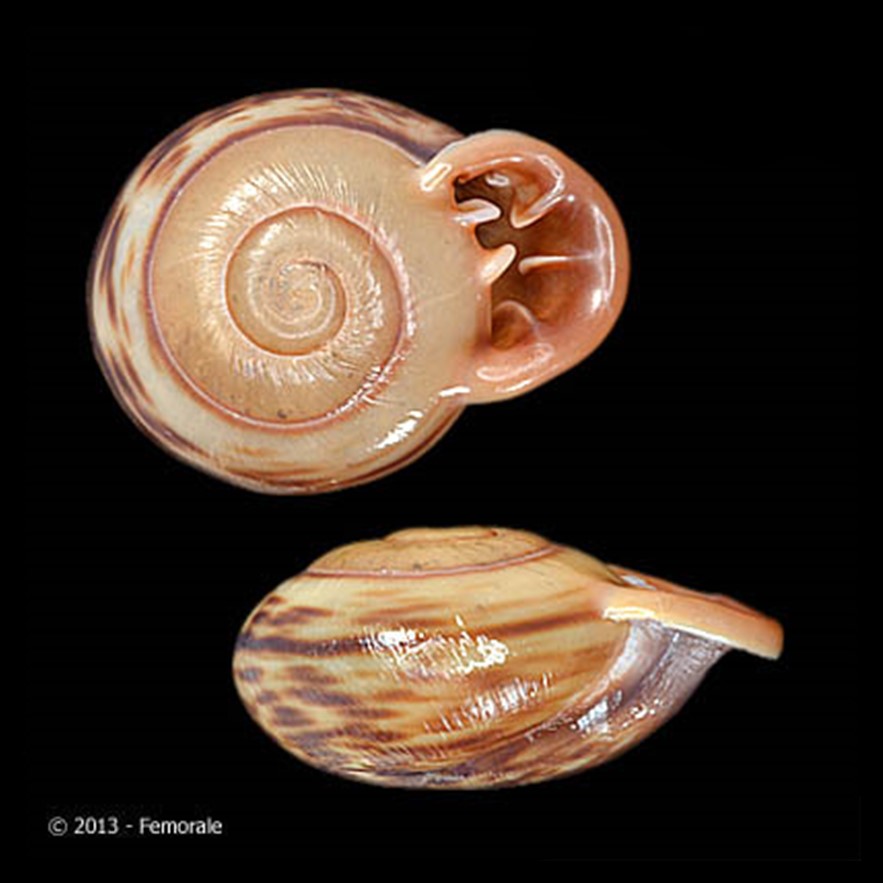
(Breure, 1985): “Shell up to 16.0 mm, 0.51 times as long as wide, biconvex, rimate; rather solid. Colour light brown or roseate to whitish, the last whorl with dark brown spots and more or less with spiral streaks. A continuous dark brown band is present below the suture and on the periphery. The surface is bands; the penultimate and last whorl with fine spiral striae and striolation in between. The lower side of the last whorl with malleated pits (“vertieften Punkten” in Weber’s description).
Whorls 4.3, rather convex, the last whorl slightly acute at the periphery; suture hardly impressed. Aperture subhorizontal, semicircular. Peristome expanded and reflected, rather thick; parietal callus whitish, spreading over the penultimate whorl. Parietal region with three lamellae: a small angularis, a large and slightly curved parietalis and a straight infraparietalis. Outer lip with five straight lamellae: a rather small columellaris and palatalis inferior, a large palatalis superior and small suprapalatalis and suturalis. The angularis and suturalis form a broad fissure in the peristome.”
Fotos: (1-2) cortesia Femorale, 2009, 31 mm; (3) Salvador, Cavallari & Simone (2015): Museu de Zoologia de São Paulo – MZSP 114870 (H = 14.7mm, D = 28.7mm)
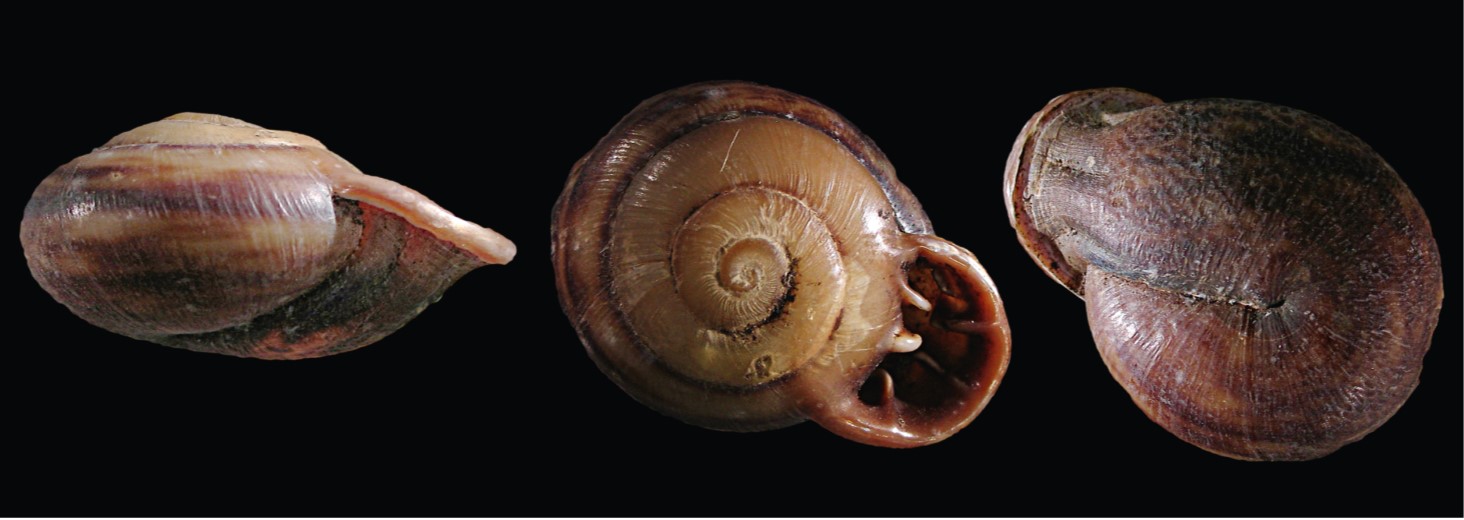

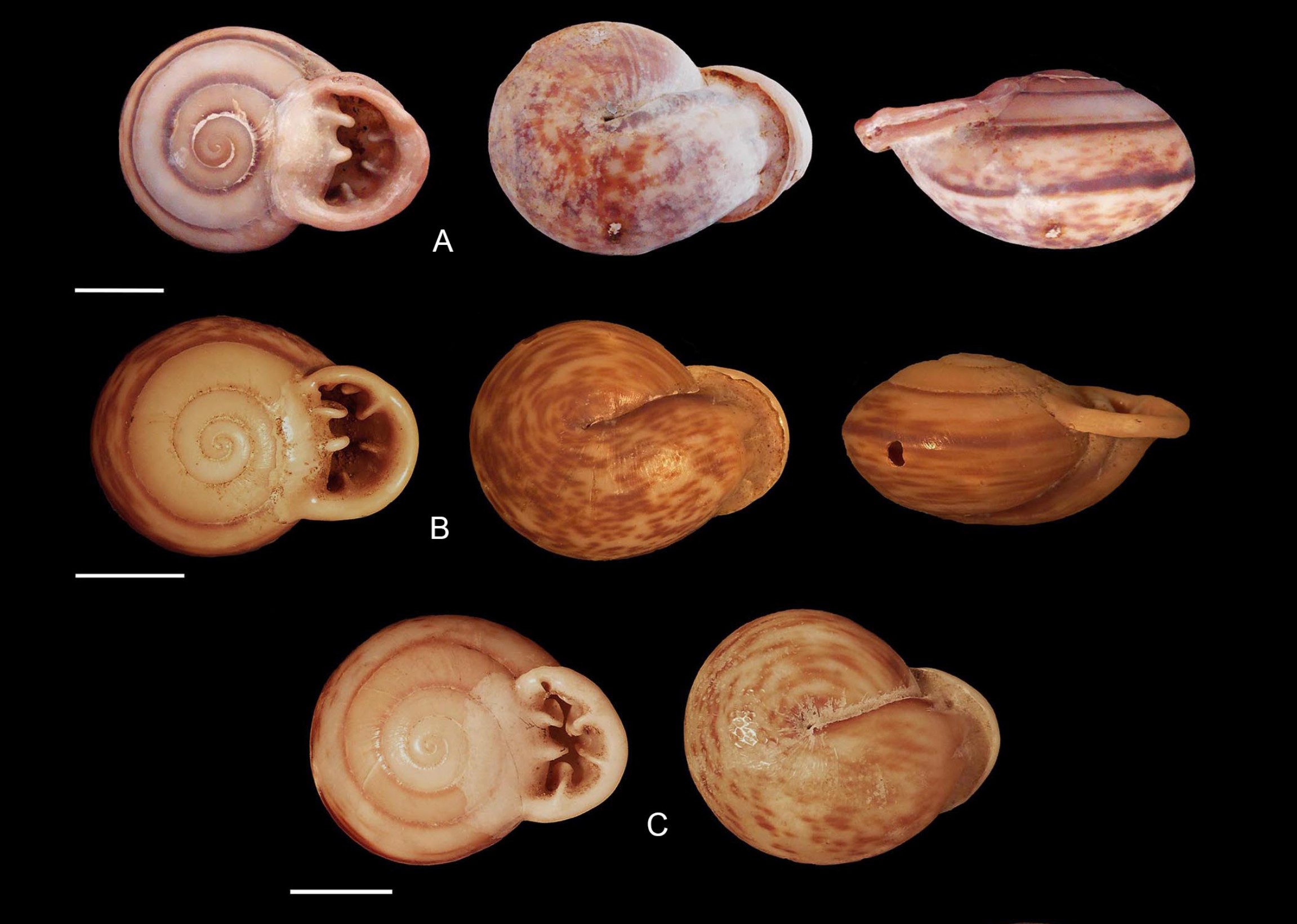
Figura: Cavallari et al. 2024: (A) Anostoma rossi Weber, 1925: Goiás, São Domingos, “between caves Terra Ronca 1 and Terra Ronca”, iv.2022, CMRP 1006; (B) Anostoma rossi, LECTOTYPE ZSM 20020169; (C) Anostoma luetzelburgi Weber, 1925, PARALECTOTYPE ZSM 20020163
Fontes:
Descrição original: Weber, A. (1925). Konchyliologische Ergebnisse einer Forschungsreise Dr. v. Lützelburg’s in Brasilien. Zoologische Jahrbücher Abteilung für Systematik, Geographie und Biologie der Tiere. 50: 273-283, pl. 5, figs. 1-6
Descrição original: (como Anostoma luetzelburgi A. Weber, 1925) Weber, A. (1925). Konchyliologische Ergebnisse einer Forschungsreise Dr. v. Lützelburg’s in Brasilien. Zoologische Jahrbücher Abteilung für Systematik, Geographie und Biologie der Tiere. 50: 273-283, pl. 5, figs. 1-6
Simone, L. R. L. (2006). Land and Freshwater Molluscs of Brazil. Editora Gráfica Bernardi, FAPESP. São Paulo, 390 pp. página(s): 175
Salvador, Rodrigo & Cavallari, Daniel & Simone, Luiz. (2015). Taxonomical study on a sample of land snails from Southeastern Tocantins State, Brazil, with description of a new species. Journal of Conchology. 42. 67-78. 10.15496/publikation-11712
Cavallari, Daniel & Rosa, Rafael & De Luca, Andre & Santos, Fernanda & Ribeiro, Felipe & Salvador, Rodrigo. (2024). Taxonomic synopsis of land snails (Mollusca: Gastropoda) from the Brazilian Midwest deposited in the Coleção Malacológica de Ribeirão Preto, University of São Paulo, Brazil. Journal of Conchology. 45. página(s) 368-381, disponível online em https://doi.org/10.61733/jconch/4531
Molluscabase: https://www.molluscabase.org/aphia.php?p=taxdetails&id=1448135

Vive em árvores e arbustos

Vive sob ou sobre pedras

Vive em corais ou recifes

Vive em algas marinhas

Vivem em fundos de cascalho de coral, pedra ou conchas

Vive no solo. Sob folhas ou enterada parte do tempo

Vive em fundos arenosos, enterrada ou sob ele.

Animais que nadam ou vivem livremente

Presos a certos animais ou parasitando

Vive em fundos lodosos

Vive em plantas de água doce

Seu habitat é desconhecido

Alimenta-se de plantas e algas

Alimenta-se de outros animais

Alimenta-se de qualquer fonte

Alimenta-se de animais mortos
Seu hábito alimentar é desconhecido


