
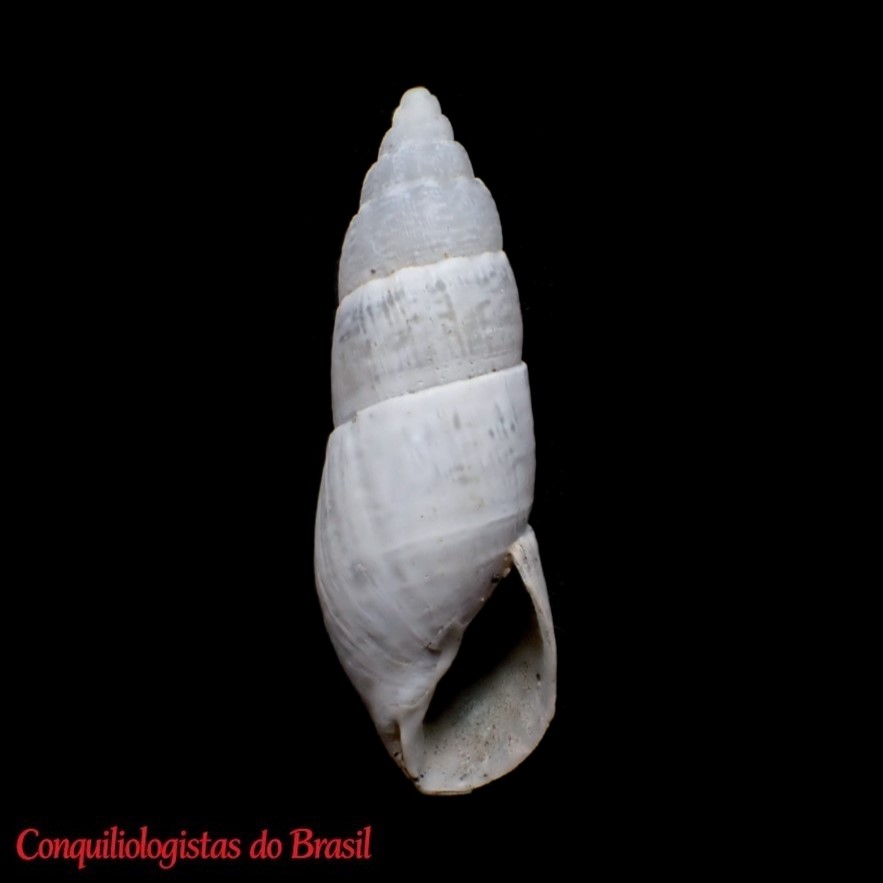
CLASSE: GASTROPODA: TERRESTRE
FAMÍLIA: ACHATINIDAE
ESPÉCIE: Chilonopsis subplicata (G. B. Sowerby I, 1844)
Tamanho médio: 17.4 – 25 mm
Ocorrência: Santa Helena, considerado Extinto
Localidade tipo: Santa Helena
Comentários: o material tipo não foi localizado por Gerlach et al 2025, coletado por Charles Darwin, “Flagstaff hill” (Darwin 1836)
Nome original: Cochlicopa subplicata G. B. Sowerby I, 1844
Sinônimos: Cochlicopa terebellum G. B. Sowerby I, 1844
Fotos: (1) Gerlach, J.; Griffiths, O.; Hume, J. P.; Louchart, A.; Sorrel, P.; Cairns-Wicks, R. (2025): típico espécime de Chilonopsis subplicata, NHMUK 20240182
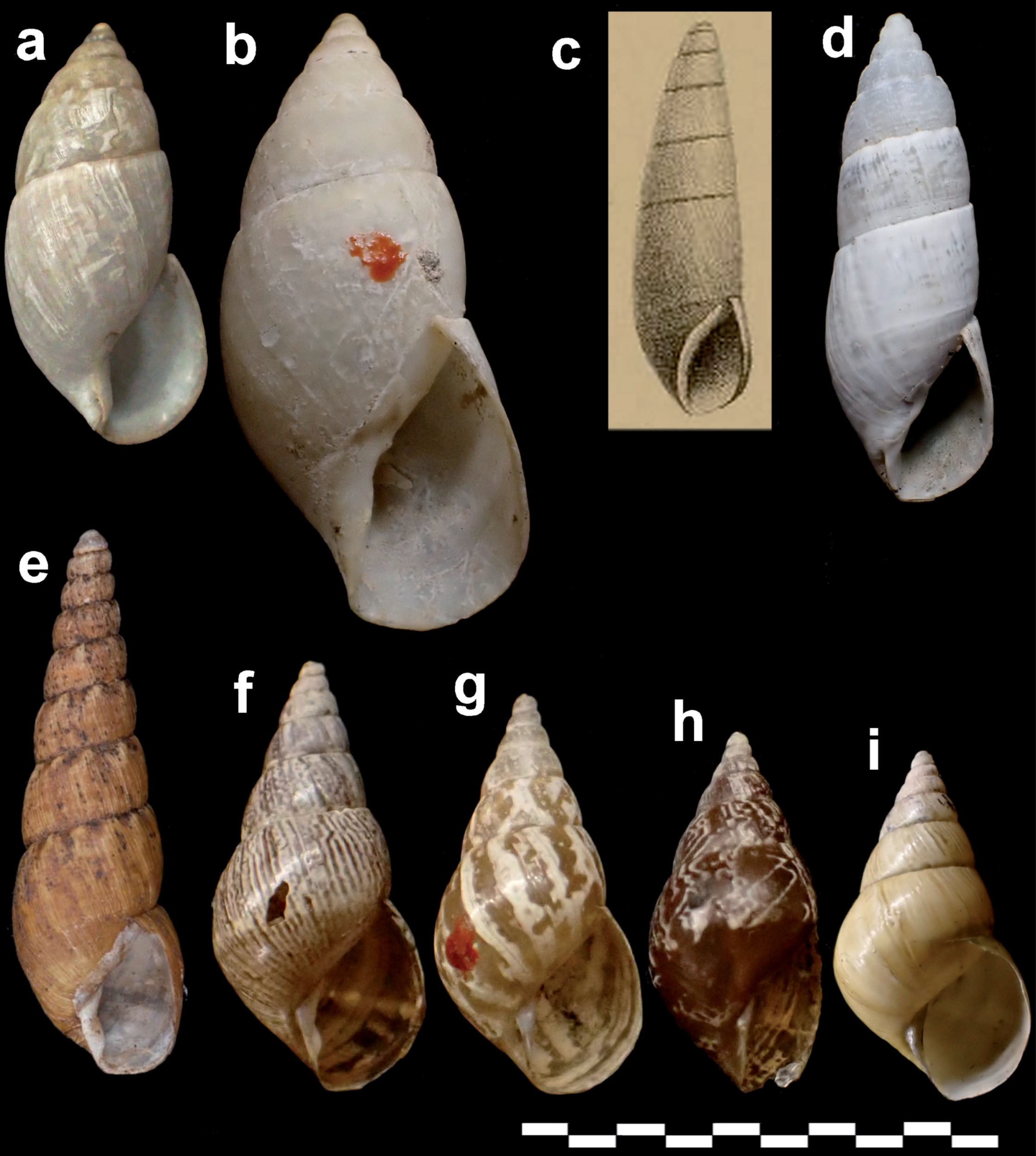
Figura: Gerlach, J.; Griffiths, O.; Hume, J. P.; Louchart, A.; Sorrel, P.; Cairns-Wicks, R. (2025): (a) Chilonopsis exulatus (Reeve, 1849), possível HOLOTYPE UMZC I.105095; (b) Chilonopsis subtruncatus (E.A. Smith, 1892), LECTOTYPE NMHUK 92.2.24.224-8; (c–d) Chilonopsis subplicatus (G.B. Sowerby I, 1844); (c) Cochlicopa terebellum G.B. Sowerby I, 1844 figura (Forbes 1892); (d) espécime típico de Chilonopsis subplicata, NHMUK 20240182; (e) Chilonopsis melanioides (Wollaston, 1878), SYNTYPE ANSP 97326; (f–i) Chilonopsis turtoni (E.A. Smith, 1892), SYNTYPES; (f–h) NHMUK 1892.2.24.209-218; (i) NHMUK 1860.1.23.49; escala = 20 mm
Fontes:
Descrição original: (como Cochlicopa terebellum G. B. Sowerby I, 1844) Sowerby, G. B. I. (1844). Description of fossil shells. Appendix to Part I, 153–160. In: Darwin, C. R., Geological observations on the volcanic islands, visited during the voyage of H.M.S. Beagle, together with some brief notices on the geology of Australia and the Cape of Good Hope. Being the second part of the geology of the voyage of the Beagle, under the command of Capt. Fitzroy, R.N. during the years 1832–1836. Smith, Elder and Co., London. i–vii, 1–175. [Reprinted 1851, 1876, 1897]., disponível online em https://archive.org/details/geologicalobser01darwgoog/page/n158/mode/1up
página(s): 156
Descrição original: (como Cochlicopa subplicata G. B. Sowerby I, 1844) Sowerby, G. B. I. (1844). Description of fossil shells. Appendix to Part I, 153–160. In: Darwin, C. R., Geological observations on the volcanic islands, visited during the voyage of H.M.S. Beagle, together with some brief notices on the geology of Australia and the Cape of Good Hope. Being the second part of the geology of the voyage of the Beagle, under the command of Capt. Fitzroy, R.N. during the years 1832–1836. Smith, Elder and Co., London. i–vii, 1–175. [Reprinted 1851, 1876, 1897]., disponível online em https://archive.org/details/geologicalobser01darwgoog/page/n158/mode/1up
página(s): 156
Gerlach, J.; Griffiths, O.; Hume, J. P.; Louchart, A.; Sorrel, P.; Cairns-Wicks, R. (2025). Diversity of the extinct land snail genus Chilonopsis of St Helena (Mollusca: Gastropoda: Achatinidae). European Journal of Taxonomy. 1007: 176-210., disponível online em https://doi.org/10.5852/ejt.2025.1007.3007
página(s): 200, figs 4g, 7g–h, 10c–d; note: as Chilonopsis subplicatus
MolluscaBase: https://molluscabase.org/aphia.php?p=taxdetails&id=1828622

Vive em árvores e arbustos

Vive sob ou sobre pedras

Vive em corais ou recifes

Vive em algas marinhas

Vivem em fundos de cascalho de coral, pedra ou conchas

Vive no solo. Sob folhas ou enterada parte do tempo

Vive em fundos arenosos, enterrada ou sob ele.

Animais que nadam ou vivem livremente

Presos a certos animais ou parasitando

Vive em fundos lodosos

Vive em plantas de água doce

Seu habitat é desconhecido

Alimenta-se de plantas e algas

Alimenta-se de outros animais

Alimenta-se de qualquer fonte

Alimenta-se de animais mortos
Seu hábito alimentar é desconhecido


