
CLASSE: GASTROPODA: TERRESTRE
FAMÍLIA: STREPTAXIDAE
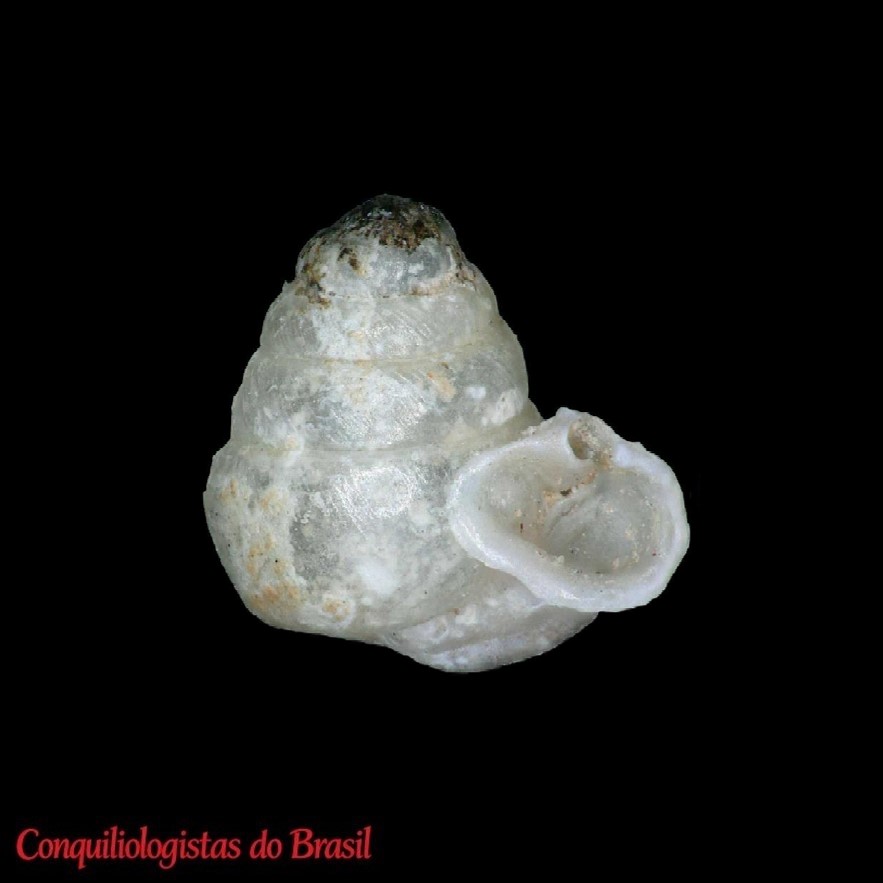
ESPÉCIE: Campolaemus perexilis (E. A. Smith, 1892)
Tamanho médio: ~1.5 mm
Ocorrência: Santa Helena, considerado Extinto
Localidade tipo: Santa Helena, “Side Path, and the sinistral form from Sugarloaf Ridge (Turton). Extinct”
Nome original: Tomigerus ? perexilis E. A. Smith, 1892
Nomes sinonimizados: Tomigerus perexilis E. A. Smith, 1892
Fotos: (1) Páll-Gergely, B. (2020): Natural History Museum , London: SYNTYPE de Campolaemus perexilis (E. A. Smith, 1892), NHMUK 1892.2.24.150-170
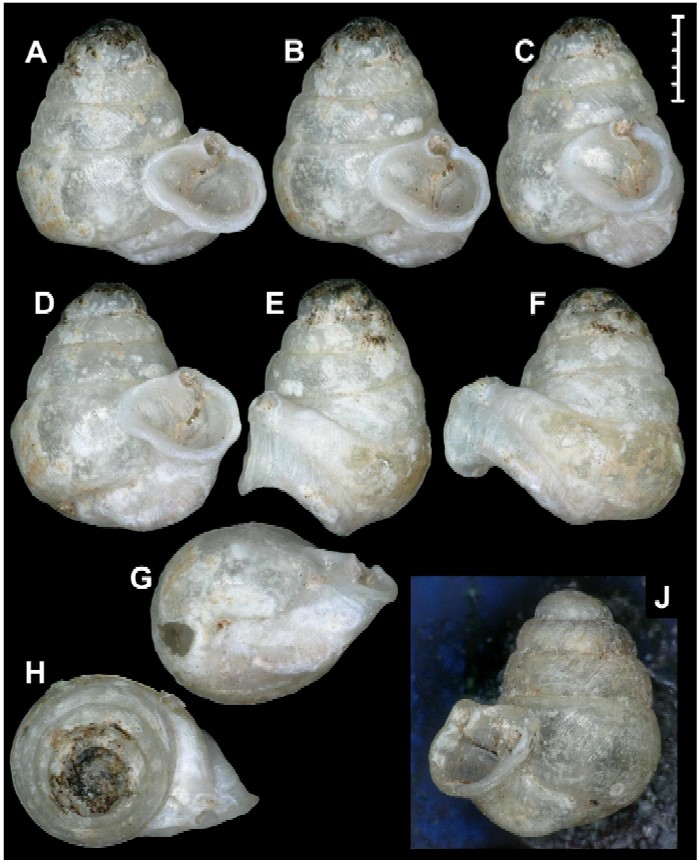
Figura: Páll-Gergely, B. (2020): SYNTYPE de Campolaemus perexilis (E.A. Smith, 1892), NHMUK 1892.2.24.150–161: (A–H) dextral shell, St. Helena, Sugarloaf Ridge (specimen 1): (J) Sinistral shell, St. Helena, Side Path. Escala = 0.5 mm. crédito fotos: B. Páll-Gergel
Fontes:
Descrição original: (como Tomigerus perexilis E. A. Smith, 1892) Smith, E. A. (1892). On the Land Shells of St. Helena. (1892). Proceedings of the Zoological Society of London, 1892, página(s) 258–270, disponível online em https://www.biodiversitylibrary.org/part/70233
Páll-Gergely, B. (2020). Campolaemus Pilsbry, 1892 is not a hypselostomatid, but a streptaxid (Gastropoda: Eupulmonata). Ruthenica. 30 (1): 69–71., disponível online em https://doi.org/10.35885/ruthenica.2021.30(1).8
página(s): 71, figs 1-2
Pilsbry, H. A. & Cooke, C. M. (1918-1920). Manual of conchology, structural and systematic, with illustrations of the species. Ser. 2, Pulmonata. Vol. 25: Pupillidae (Gastrocoptinae, Vertigininae). pp i-ix, 1-404, pls 1-34. Philadelphia, published by the Conchological Section, Academy of Natural Sciences. [pp. 1-64, pls. 1-5, Nov. 5, 1918; pp. 65-144, figs. 1-9 + 2, pls. 6-10, Feb. 20, 1919; pp. 145-224, pls. 11-18, Jun. 30, 1919; pp. 225-404, i-ix, figs. 1-8 + 1, pls. 19-34, May 28, 1920]. Manual of Conchology, structural and systematic. 1-401, pl. 1-34., disponível online em https://www.biodiversitylibrary.org/page/23703860
page(s): 365-366, pl. 33, figs. 13, 16-19; note: With mutatio ascendens Pilsbry, 1920: 366, pl. 33, figs. 16, 18-19 and mutatio contrarius Pilsbry, 1920: 366, pl. 33, fig. 13
Natural History Museum (2026). Natural History Museum (London) Collection Specimens. Occurrence dataset https://doi.org/10.5519/qd.wy3pnifq accessed via GBIF.org on 2026-06-05. https://www.gbif.org/occurrence/1826207332
MolluscaBase: https://molluscabase.org/aphia.php?p=taxdetails&id=1355346

Vive em árvores e arbustos

Vive sob ou sobre pedras

Vive em corais ou recifes

Vive em algas marinhas

Vivem em fundos de cascalho de coral, pedra ou conchas

Vive no solo. Sob folhas ou enterada parte do tempo

Vive em fundos arenosos, enterrada ou sob ele.

Animais que nadam ou vivem livremente

Presos a certos animais ou parasitando

Vive em fundos lodosos

Vive em plantas de água doce

Seu habitat é desconhecido

Alimenta-se de plantas e algas

Alimenta-se de outros animais

Alimenta-se de qualquer fonte

Alimenta-se de animais mortos
Seu hábito alimentar é desconhecido


