
CLASSE: GASTROPODA: TERRESTRE
FAMÍLIA: ACHATINIDAE
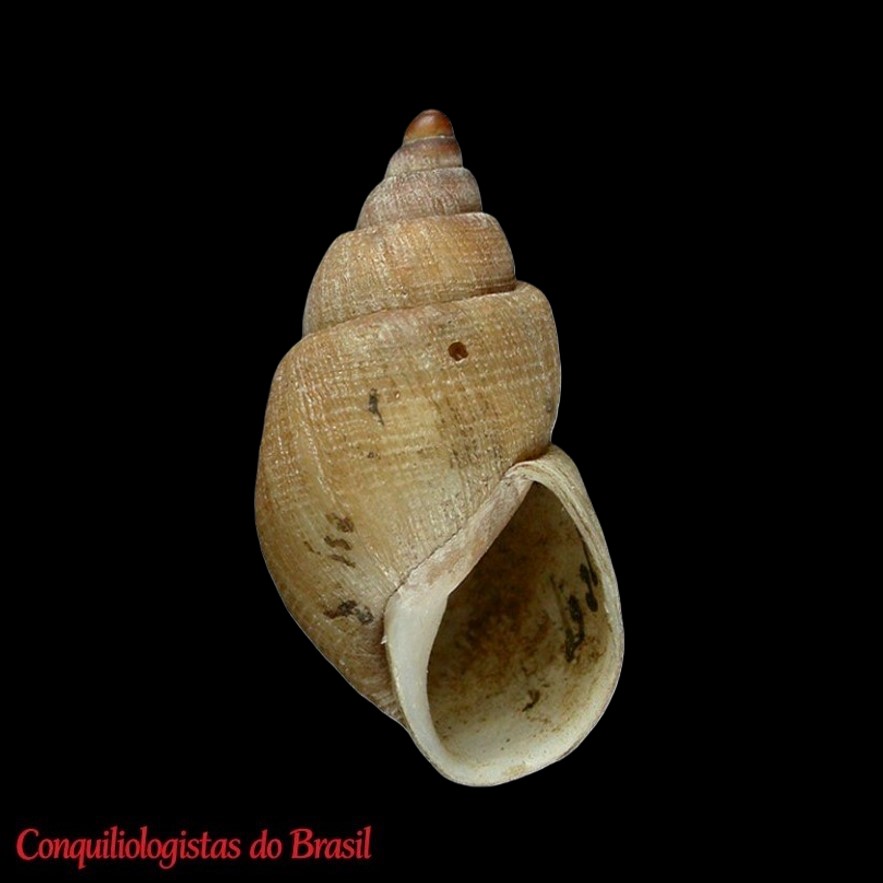
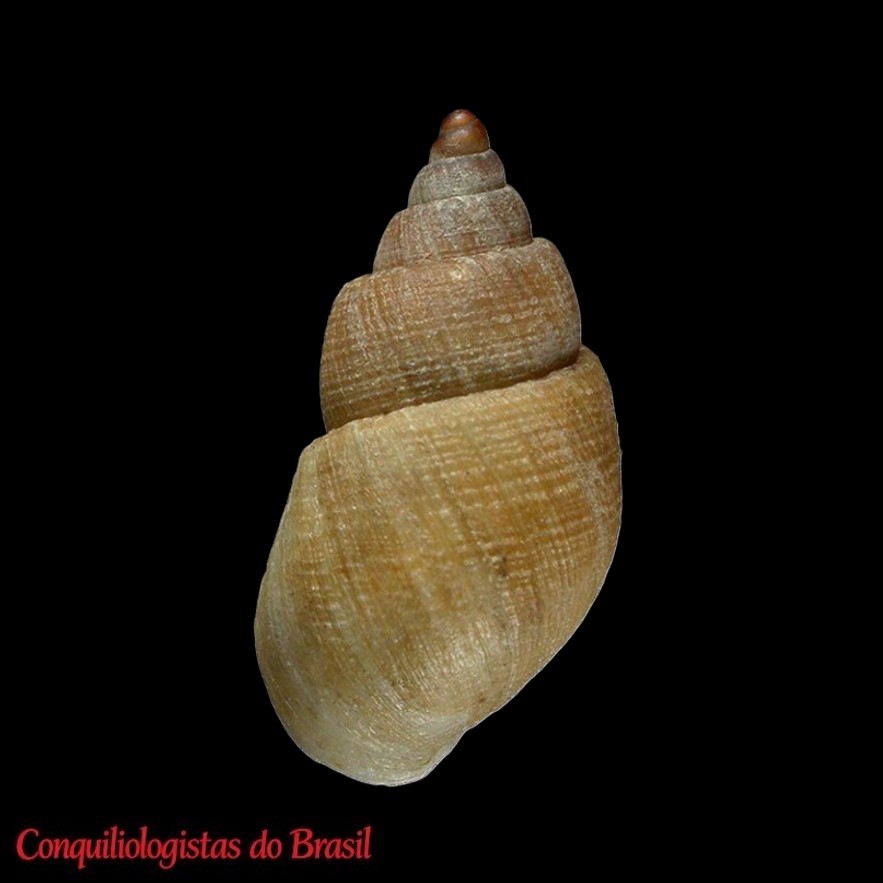
ESPÉCIE: Chilonopsis helena (Quoy & Gaimard, 1832)
Tamanho médio: 25.9 – 30.2 mm
Ocorrência: Santa Helena, considerado Extinto
Localidade tipo: não localizado,
Nome original: Helix helena Quoy & Gaimard, 1832
Nomes sinonimizados: Bulimus digitale Reeve, 1849; Bulimus digitalis Reeve, 1849; Bulimus fossilis G. B. Sowerby I, 1844; Bulimus sealeianus Forbes, 1852; Cochlogena fossilis G. B. Sowerby I, 1844; Nesobia helena (Quoy & Gaimard, 1832)
Etimologia: o nome da espécie é uma referência à localidade tipo
Fotos: (1,2) Museu Nacional de História Natural, Paris: SYNTYPE de Chilonopsis helena (Quoy & Gaimard, 1832), MNHN 2000-4649, Saint Helena; M. Seel [= Seale]
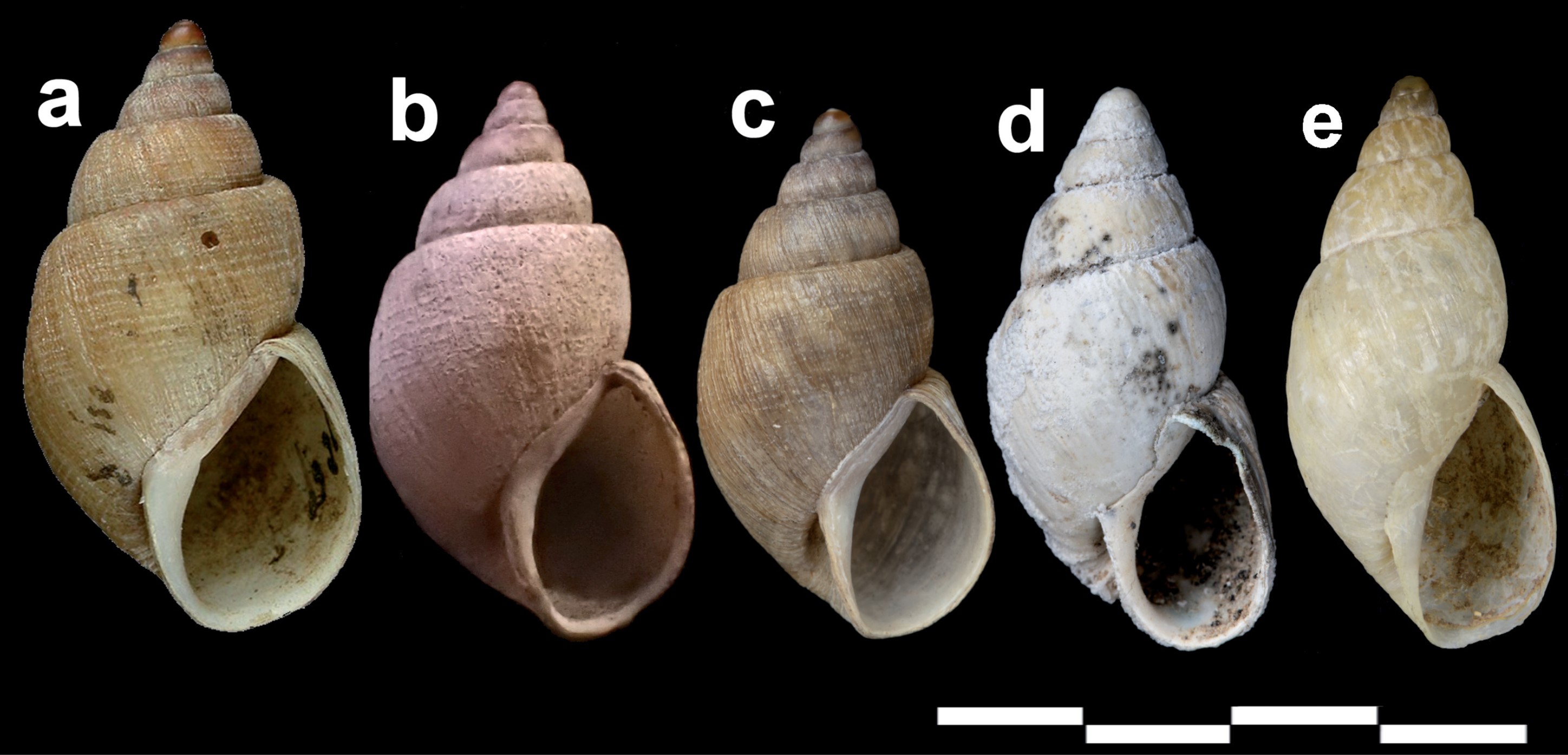
Figura: Gerlach, J.; Griffiths, O.; Hume, J. P.; Louchart, A.; Sorrel, P.; Cairns-Wicks, R. (2025): Chilonopsis helena (Quoy & Gaimard, 1832): (a) Helix helena Quoy & Gaimard 1832, SYNTYPE MNHN-IM-2000-4649; (b) Bulimus fossilis G.E. Sowerby I, 1844 (NHMUK PI G 25270-2); (c) Bulimus digitale Reeve, 1849, SYNTYPE (NHMUK 20240185); (d–e) Bulimus sealeianus Forbes, 1852, SYNTYPE NHMUK 1857.10.16.33; (e) espécime alongada NMW.1955.158.27974; escala = 25 mm
Fontes:
Descrição original: (como Cochlogena fossilis G. B. Sowerby I, 1844) Sowerby, G. B. I. (1844). Description of fossil shells. Appendix to Part I, 153–160. In: Darwin, C. R., Geological observations on the volcanic islands, visited during the voyage of H.M.S. Beagle, together with some brief notices on the geology of Australia and the Cape of Good Hope. Being the second part of the geology of the voyage of the Beagle, under the command of Capt. Fitzroy, R.N. during the years 1832–1836. Smith, Elder and Co., London. i–vii, 1–175. [Reprinted 1851, 1876, 1897]., disponível online em https://archive.org/details/geologicalobser01darwgoog/page/n158/mode/1up
página(s): 156
Descrição original: (como Helix helena Quoy & Gaimard, 1832) Quoy, J. R. C.; Gaimard, J. P. (1832-1835). Voyage de la corvette l’Astrolabe: exécuté par ordre du roi, pendant les années 1826-1827-1828-1829, sous le commandement de M. J. Dumont d’Urville. Zoologie. 1: i-l, 1-264; 2(1): 1-321 [1832]; 2(2): 321-686 [1833]; 3(1): 1-366 [1834]; 3(2): 367-954 [1835]; 4 [1833]; Atlas (Mollusques): pls 1-93 [1833] …etc. In: Dumont d’Urville, J.; 1834, Voyage de Découvertes de l’Astrolabe. Paris, J. Tastu, Éditeur-Imprimeur., disponível online em https://doi.org/10.5962/bhl.title.2132
página(s): 2: 111, pl. 9 figs 8-9
Descrição original: (como Bulimus sealeianus Forbes, 1852) Forbes, E. (1852). On the extinct land-shells of St. Helena. Quarterly Journal of the Geological Society. 8: 197-199., disponível online em https://www.biodiversitylibrary.org/page/35461205
página(s): 198, pl. 5 fig. 3
Descrição original: (como Bulimus digitale Reeve, 1849) Reeve, L. A. (1848-1850). Monograph of the genus Bulimus. In: Conchologia Iconica, or, illustrations of the shells of molluscous animals, 5: Pls 1–89 and unpaginated text. L. Reeve & Co., London [pls 1-9, Apr 1848; 10-12, 15-19, May 1848; 13, 14, 20-25, Jun 1848; 26-33, Jul 1848; 34, 35, Aug 1848; 36, 37, Sep 1848; 38-45, Oct 1848; 46-53, Nov 1848; 54-57, Dec 1848; 58-61, Jan 1849; 62-64, Mar 1849; 65-69, May 1849; 70-73, 75, Jul 1849; 74, 76, 77, Aug 1849; 78, 79, Sep 1849; 80-84, Dec 1849; 85-89, Feb 1850]., disponível online em https://www.biodiversitylibrary.org/page/8966758
página(s): pl. 47 fig. 308
Cowie R.H., Régnier C., Fontaine B. & Bouchet P. (2017). Measuring the Sixth Extinction: what do mollusks tell us?. The Nautilus. 131(1): 3-41.
página(s): 31
Gerlach, J.; Griffiths, O.; Hume, J. P.; Louchart, A.; Sorrel, P.; Cairns-Wicks, R. (2025). Diversity of the extinct land snail genus Chilonopsis of St Helena (Mollusca: Gastropoda: Achatinidae). European Journal of Taxonomy. 1007: 176-210., disponível online em https://doi.org/10.5852/ejt.2025.1007.3007
página(s): 191, figs 4b, 8a–e, 7c–d
MNHN, Chagnoux S (2025). The molluscs collection (IM) of the Muséum national d’Histoire naturelle (MNHN – Paris). Version 70.420. MNHN – Museum national d’Histoire naturelle. Occurrence dataset https://doi.org/10.15468/xgoxap accessed via GBIF.org on 2026-06-05. https://www.gbif.org/occurrence/1019696631
MolluscaBase: https://molluscabase.org/aphia.php?p=taxdetails&id=1461884

Vive em árvores e arbustos

Vive sob ou sobre pedras

Vive em corais ou recifes

Vive em algas marinhas

Vivem em fundos de cascalho de coral, pedra ou conchas

Vive no solo. Sob folhas ou enterada parte do tempo

Vive em fundos arenosos, enterrada ou sob ele.

Animais que nadam ou vivem livremente

Presos a certos animais ou parasitando

Vive em fundos lodosos

Vive em plantas de água doce

Seu habitat é desconhecido

Alimenta-se de plantas e algas

Alimenta-se de outros animais

Alimenta-se de qualquer fonte

Alimenta-se de animais mortos
Seu hábito alimentar é desconhecido


