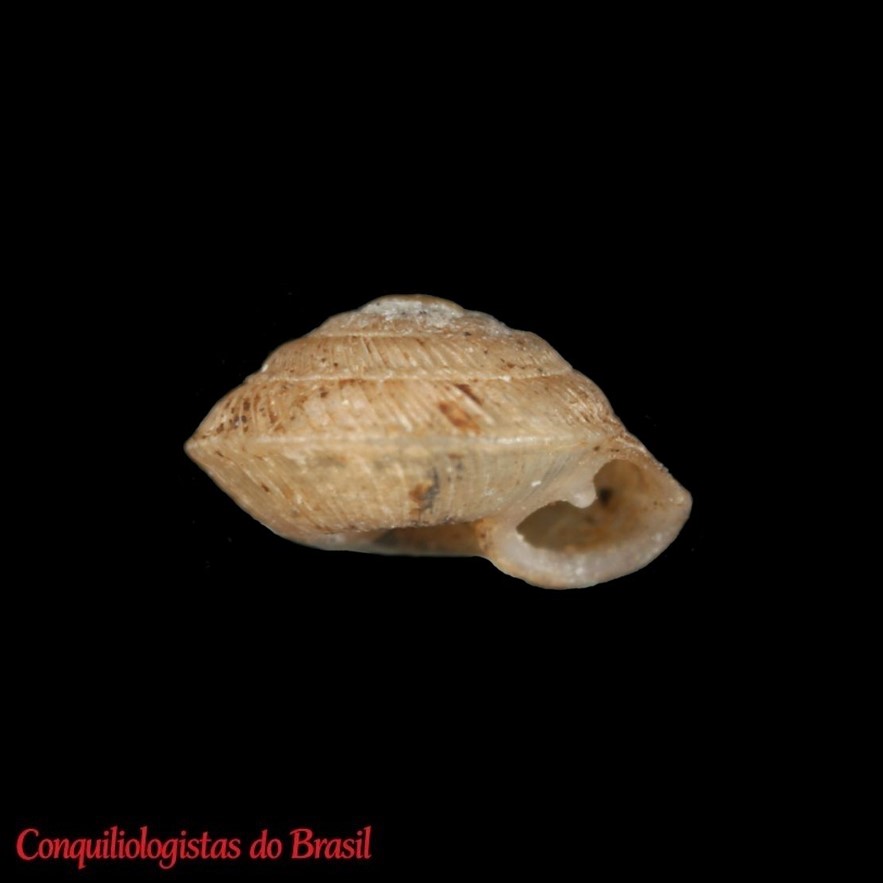
CLASSE: GASTROPODA: TERRESTRE
FAMÍLIA: STROBILOPSIDAE
ESPÉCIE: Nesostrobilops helleri (Dall, 1900)
Tamanho médio: ~3 mm
Ocorrência: Equador, Arquipélago de Galápagos (Ilhas: Fernardina, Isabela, Santiago e Santa Cruz)
Localidade tipo: “Albemarle Is., near Iguana Cove, at an elevation of 2,000 feet” (Dall, 1900) (Ilha Isabela, 656 m de altitude)
Nome original: Endodonta helleri Dall, 1900
Sinônimos: Strobilops (Nesostrobilops) helleri (Dall, 1900); Strobilops helleri (Dall, 1900)
Etimologia: o nome da espécie é uma homenagem ao zoólogo e naturalista norte-americano Edmund Heller (1875–1939). Heller participou da famosa Expedição Hopkins-Stanford às Ilhas Galápagos (1898–1899), como coletor de espécimes biológicos enquanto ainda era estudante na Universidade de Stanford
Fotos: (1) National Museum of Natural History, Smithsonian Institution: LECTOTYPE USNM 108515, Galapagos Ids., Albemarle Id., near Iguana Cove, 610 m de altitude, coll. Snodgrass
Fontes:
Descrição original: (como Endodonta helleri Dall, 1900) Dall, W. H. (1900). Additions to the insular land-shell faunas of the Pacific coast, especially of the Galápagos and Cocos Islands. Proceedings of the Academy of the Natural Sciences of Philadelphia. 52: 88-106, plate 8., disponível online em https://www.biodiversitylibrary.org/page/24693968
página(s): 93, pl. VIII, figs. 7–9
Miquel, S. E.; Herrera, H. W. (2014). Catalogue of terrestrial gastropods from Galápagos (except Bulimulidae and Succineidae) with description of a new species of Ambrosiella Odhner (Achatinellidae) (Mollusca: Gastropoda). Archiv für Molluskenkunde. 143(2): 107-133., disponível online em https://doi.org/10.1127/arch.moll/1869-0963/143/107-133
página(s): 116
Pilsbry, H. A. (1927-1935). Manual of conchology, structural and systematic, with illustrations of the species. Ser. 2, Pulmonata. Vol. 28: Geographic distribution of Pupillidae; Strobilopsidae, Valloniidae and Pleurodiscidae. pp 1-226, pls 1-31. Philadelphia, published by the Conchological Department, Academy of Natural Sciences. [pp. 1-48, figs. 1, 2, pls. 1-8, Nov. 11, 1927; pp. 49-96, pls. 9-12, Apr. 2, 1931; pp. 97-160, figs. 3-8, pls. 13-23, Jun. 14, 1934; pp. 161-226, i-xii, figs. 9-12, pls. 24-31, Nov. 7, 1935]., disponível online em https://www.biodiversitylibrary.org/page/5935964
página(s): 62
Schileyko, A. A. (1998). Treatise on Recent terrestrial pulmonate molluscs. Part 1. Achatinellidae, Amastridae, Orculidae, Strobilopsidae, Spelaeodiscidae, Valloniidae, Cochlicopidae, Pupillidae, Chondrinidae, Pyramidulidae. Ruthenica. Supplement 2: 1-127. Moskva [April].
página(s): 88, fig. 97
Orrell T, Informatics and Data Science Center – Digital Stewardship (2026). NMNH Extant Specimen Records (USNM, US). Version 1.110. National Museum of Natural History, Smithsonian Institution. Occurrence dataset https://doi.org/10.15468/hnhrg3 accessed via GBIF.org on 2026-07-04. https://gbif.org/occurrence/1322494660
MolluscaBase: https://molluscabase.org/aphia.php?p=taxdetails&id=1446296