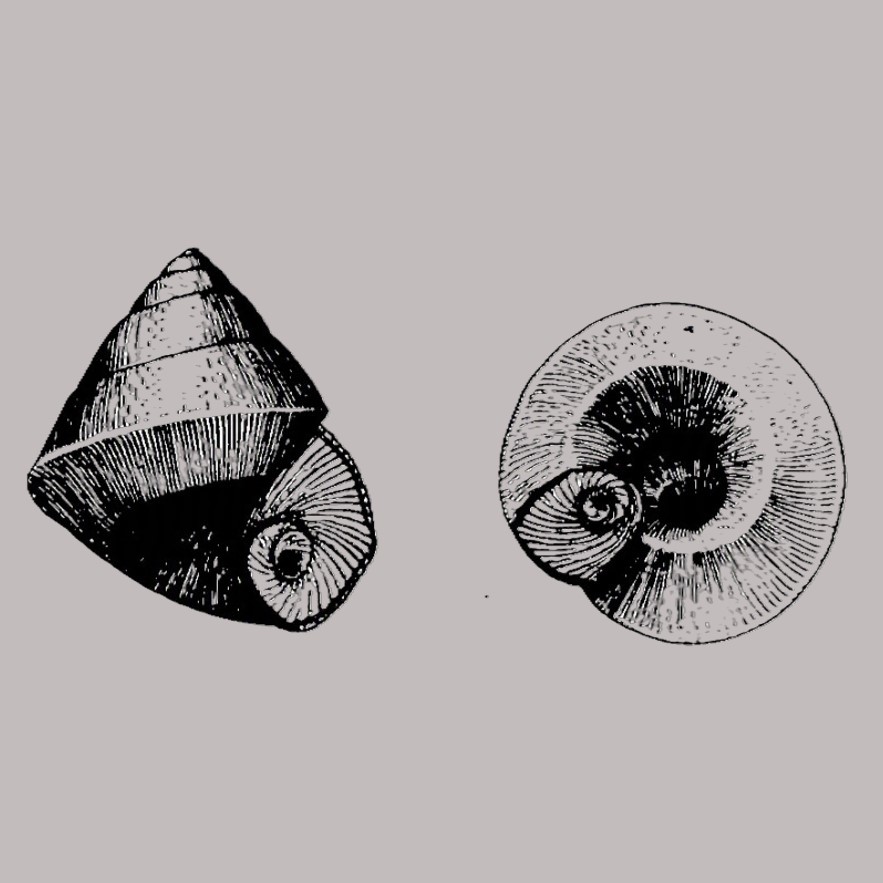
CLASSE: GASTROPODA: ÁGUA DOCE
FAMÍLIA: COCHLIOPIDAE
ESPÉCIE: Limnothauma crawfordi F. Haas, 1955
Tamanho médio: 3.5 mm
Profundidade: 1 m
Ocorrência: Bolívia (Lago Titicaca)
Localidade tipo: Lake Titicaca, at Isla Titicaca
Comentários: “Não é de modo algum impossível que a concha aqui descrita, um espécime único, não esteja totalmente desenvolvida. Qualquer crescimento adicional, contudo, não poderia alterar as características listadas acima, exceto que a abertura poderia adquirir um peristômio um pouco mais largo ou mesmo com formato diferente; todas as outras características da concha não poderiam ser mascaradas ou alteradas. O único espécime desta nova e estranha espécie contém as partes moles e está conservado em álcool.” (Hass 1955)
Nome original: Limnothauma crawfordi F. Haas, 1955
Etimologia: o nome da espécie é uma homenagem a George Ivor Crawford. Foi curador e chefe da Seção de Mollusca do Museu de História Natural de Londres (British Museum of Natural History), tendo assumido o posto em 1935. Crawford participou ativamente da célebre Percy Sladen Trust Expedition ao Lago Titicaca em 1937
Descrição original:
(Hass, 1955): “Shell elongately trochiform, thin, covered with a light-brown periostracum, perforate-umbilicate. Whorls about 5, regularly increasing, the first ones slightly swollen, the later one8 flatter, the last one with straight outline above and below the blunt peripheral keel, concavely hollowed almost funnel-shaped and perforated by the pervious umbilicus below the basal keel; apex lighter in colour, depressedly globular, smooth; suture well marked. Surface of the shell almost smooth, showing a weak striation, the thin striae being of a somewhat darker brown than the much wider spaces.
Aperture elliptical with slightly broadened margins which show two definite projections, where the peripheral and basal keels end ; columellar and palatal margins apparently united by a thin parietal callus. Operculum horny, thin and transparent, rather stiff, large, projecting over the margins and not drawn into the aperture; paucispiral with about 2 1/2 whorls and with a sunken centre”
Fotos: (1) Haas, F. (1955): figura 28 original editada
Fontes:
Descrição original: Haas, F. (1955). Mollusca: Gastropoda. In: The Percy Sladen Trust Expedition to Lake Titicaca in 1937. Transactions of the Linnean Society of London. 3(1): 275-308. London., disponível online em https://doi.org/10.1111/j.1096-3642.1955.tb00017.x
página(s): 302, fig. 28
Kroll, O., R. Hershler, C. Albrecht, E. M. Terrazas, R. Apaza, C. Fuentealba, C. Wolff and T. Wilke. 2012. The endemic gastropod fauna of Lake Titicaca: correlation between molecular evolution and hydrographic history. Ecology and Evolution 2(7):1517–1530, disponível online em https://doi.org/10.1002/ece3.280
MolluscaBase: https://molluscabase.org/aphia.php?p=taxdetails&id=1451690