

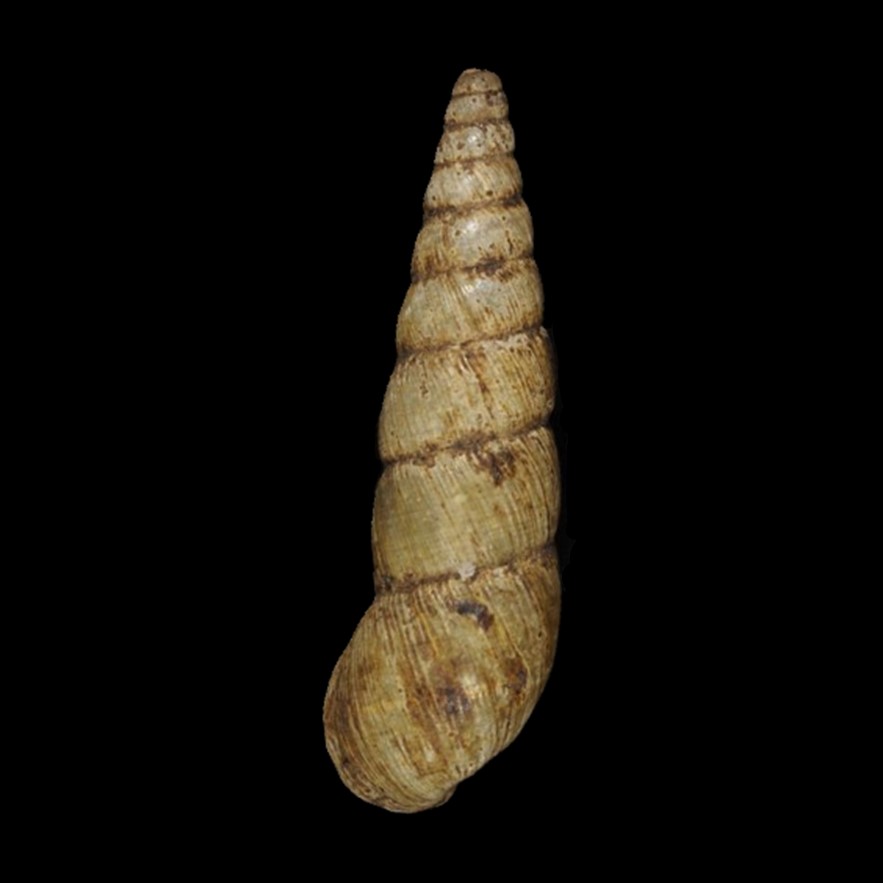
CLASSE: GASTROPODA: TERRESTRE FAMÍLIA: MEGASPIRIDAE ESPÉCIE: Callionepion iheringi Pilsbry & Vanatta, 1899 Tamanho médio: 24 mm Habitat: vive no solo, na serapilheira, na Mata Atlântica Ocorrência: Brasil (São Paulo) Localidade tipo: Brasil, São Paulo, Município de Piquete Nome original: Callionepion iheringi Pilsbry & Vanatta, 1899 Sinônimos: Callinepion iheringi Pilsbry & Vanatta, 1899 [sic] (Simone, 2006) Etimologia: o nome da espécie é uma homenagem ao zoólogo teuto-brasileiro Hermann von Ihering (9 de outubro de 1850 – 24 de fevereiro de 1930). Foi o fundador e primeiro diretor do Museu Paulista, em São Paulo, em 1894 Descrição original: (Pilsbry & Vanatta, 1899): "Shell rimate, turreted, narrow, subregularly tapering; surface glossy, covered with a greenish cuticle, somewhat irregularly plicatulate, decussated by numerous minute spiral strite or...
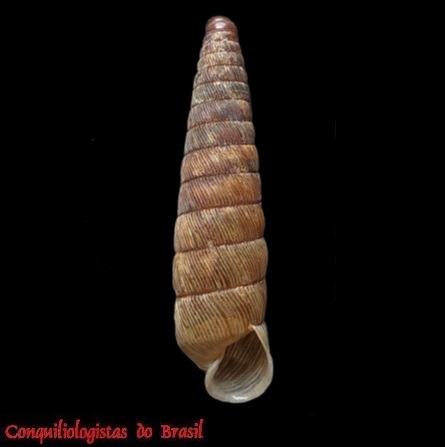
CLASSE: GASTROPODA: TERRESTRE FAMÍLIA: MEGASPIRIDAE ESPÉCIE: Megaspira adenticulata Daniel, Ovando & S. B. Santos, 2022 Tamanho médio: 18 - 32 mm Habitat: vive no solo na Mata Atlântica Ocorrência: Brasil, Rio de Janeiro, Ilha Grande Localidade tipo: Ilha Grande, Angra dos Reis, Rio de Janeiro Nome original: Megaspira adenticulata Daniel, Ovando & S. B. Santos, 2022 Diagnosis: (Daniel, Ovando & S. B. Santos, 2022): "Shell with 16 whorls and 27 mm in height, on average. Aperture with no lamella folded on inner lip of smooth aperture. Columella sculpture with a rough texture over entire surface." Zoobank: http://zoobank.org/08B4C9CF-8909-474B-9C3E-798A197DA331 Fotos: (1) Daniel, Ovando, Santos, 2022 Figura: Daniel, Ovando, Santos, 2022: espécimes vivos e morfologia da concha, crédito das fotos: Regiana...


CLASSE: GASTROPODA: TERRESTRE FAMÍLIA: MEGASPIRIDAE ESPÉCIE: Megaspira elata (A. Gould, 1847) Tamanho médio: 38 - 40 mm Habitat: vive no solo, na serapilheira, na Mata Atlântica Ocorrência: Brasil (Rio de Janeiro) Localidade tipo: Brasil, Rio de Janeiro Nome original: Pupa (Megaspira) elata A. Gould, 1847 Redescrição: (Pilsbry, 1904): "Shell minutely rimate, cylindric-tapering, terminating above in a very obtuse, rounded apex; thin but moderately strong. Faintly yellowish corneous, sparsely streaked with reddish; sculptured with fine, close, oblique rib-stria, the intervals somewhat wrinkled across. Whorls 19 to 21, slightly convex. Aperture somewhat oblique, irregularly ovate ; outer and basal margins narrowly expanded, columellar margin dilated above. Columella with two folds, the lower one bifid; parietal lamella small, penetrating about 6 whorls. Interior as in Megaspira elatior, but the scalloped columellar lamella is somewhat longer,...

CLASSE: GASTROPODA: TERRESTRE FAMÍLIA: MEGASPIRIDAE ESPÉCIE: Megaspira elatior (Spix, 1827) Tamanho médio: 33 mm Habitat: vive no solo, na serapilheira, na Mata Atlântica Frequência: Raro, conhecido apenas por antigos exemplares de coleção Ocorrência: Brasil (Rio de Janeiro, Minas Gerais) Localidade tipo: Brasil, ‘‘cum praecedentibus [in Provinciis mediis orientalibus]’’ Nome original: Pupa elatior Spix, 1827 Sinônimos: Megaspira ruschenbergiana I. Lea, 1836 (vide comentário 03 abaixo) Comentários: (1) Megaspira elatior var. gracilis Pilsbry, 1904 foi aceita em Simone, 2006 como Megaspira gracilis Pilsbry, 1904; (2) Megaspira elatior var. robusta Pilsbry, 1904 foi aceita em Simone, 2006 como Megaspira robusta Pilsbry, 1904 (3) Segundo Daniel, Ovando & Santos, 2022: Simone, 2006 não forneceu uma justificativa para elevar as espécies acima (comentários 01 e 02), bem como...
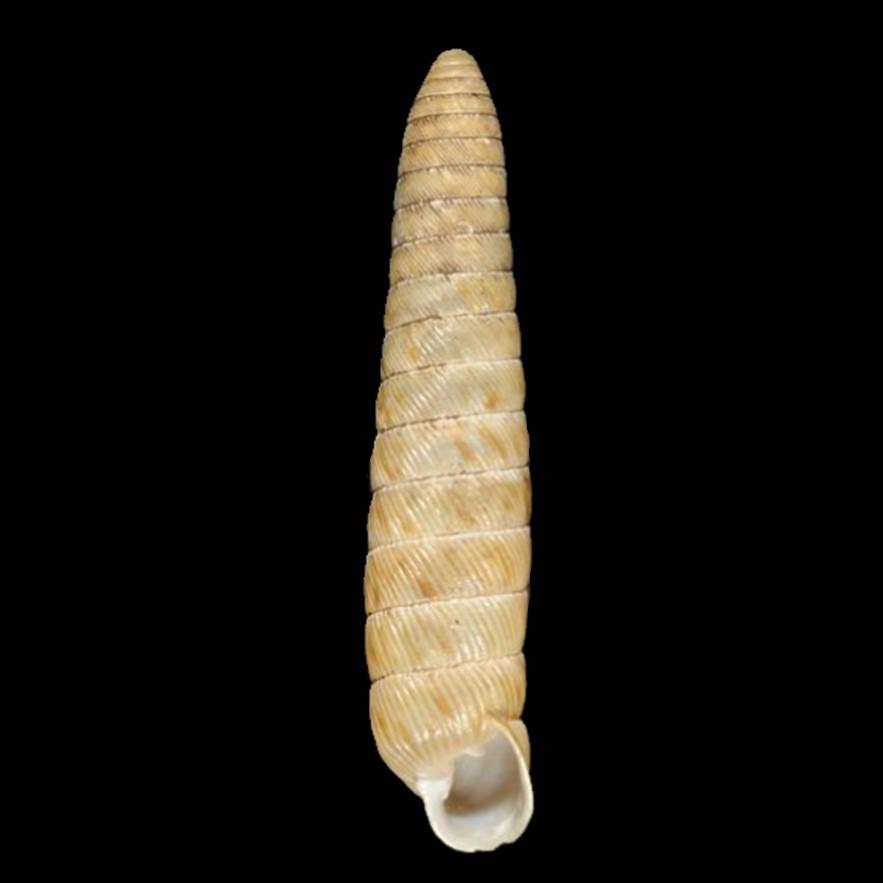
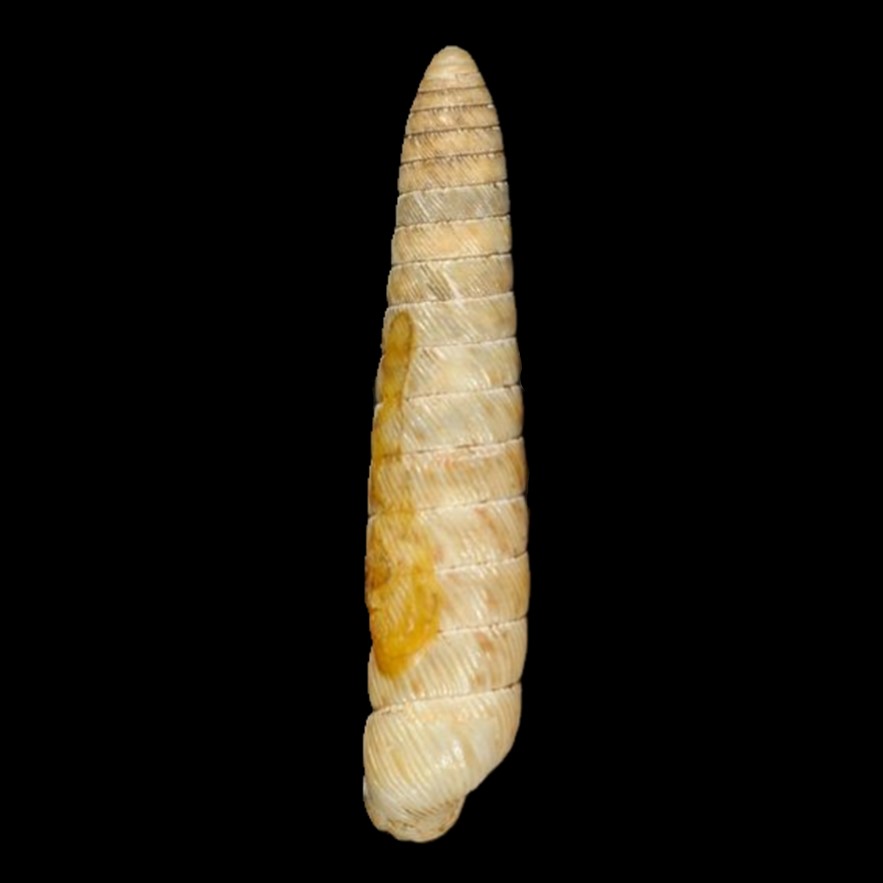
CLASSE: GASTROPODA: TERRESTRE FAMÍLIA: MEGASPIRIDAE ESPÉCIE: Megaspira gracilis Pilsbry, 1904 Tamanho médio: 36 - 39 mm Habitat: vive no solo, na serapilheira, na Mata Atlântica Ocorrência: Brasil Localidade tipo: Brasil, sem localidade específica Nome original: Megaspira elatior var. gracilis Pilsbry, 1904 Descrição original: (Pilsbry, 1904): "With the typical form there are specimens in the collection of the Academy which differ by their more slender and cylindric shape, more numerous whorls and slightly smaller mouth. The sculpture and the internal structure seem to be substantially the same. Specimens measure 36 to 36.5 mm. long, 7 wide above the aperture, with 18 1/2 to 19 1/2 whorls." Fotos: (1-3) The Academy of Natural Sciences, Philadelphia; LECTOTYPE de Megaspira elatior gracilis, lote ANSP 25039, Swift Collection, 39mm Figura:...
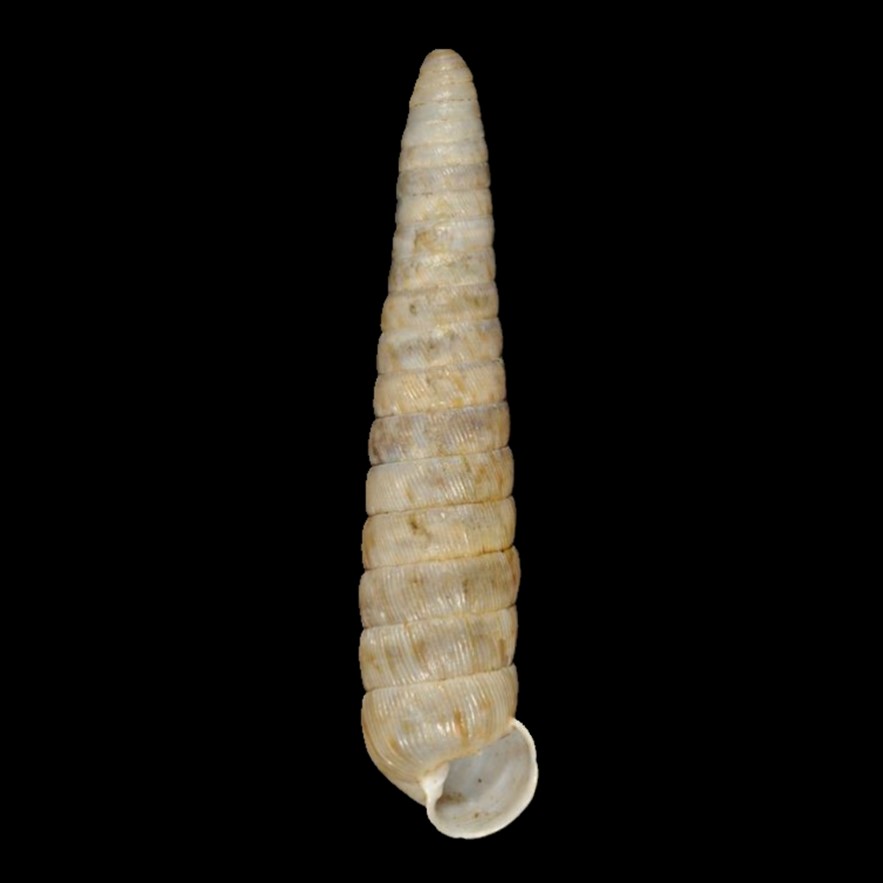

CLASSE: GASTROPODA: TERRESTRE FAMÍLIA: MEGASPIRIDAE ESPÉCIE: Megaspira pilsbryi Rehder, 1945 Tamanho médio: 35 - 40 mm Habitat: Mata Atlântica Ocorrência: Brasil (Rio de Janeiro) Localidade tipo: Rio de Janeiro Nome original: Megaspira pilsbryi Rehder, 1945 Etimologia: o nome da espécie é uma homenagem a Henry Augustus Pilsbry (Iowa 1862 – Flórida 1957). Pilsbry foi um biólogo, malacólogo e carcinólogo. Notabilizou-se mundialmente pelo seu estudo dos moluscos (Mollusca), em particular dos Polyplacophora e dos gastrópodes terrestres Descrição original: (Rehder, 1945): "A Note on Megaspira elata Gould.* — On critically examining the type of Megaspira elata Gould 1847 (U.S.N.M. 5503), collected in Brazil by the United States Exploring Expedition, I discovered that it is Megaspira elatior Spix 1827, agreeing with it in sculpture...
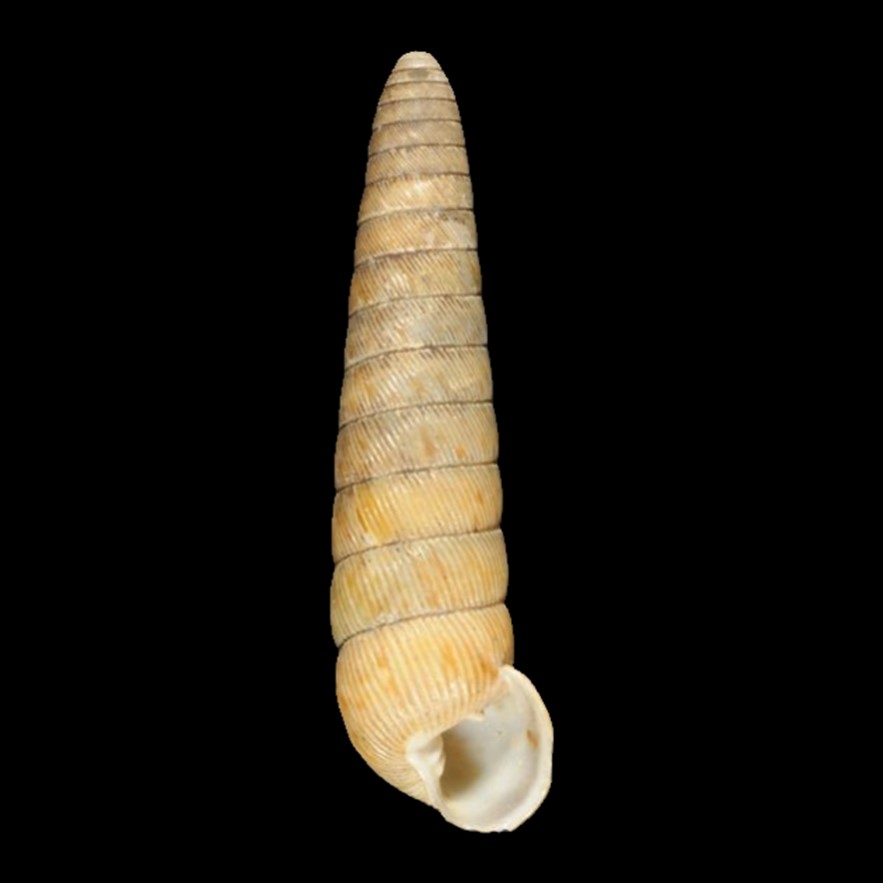
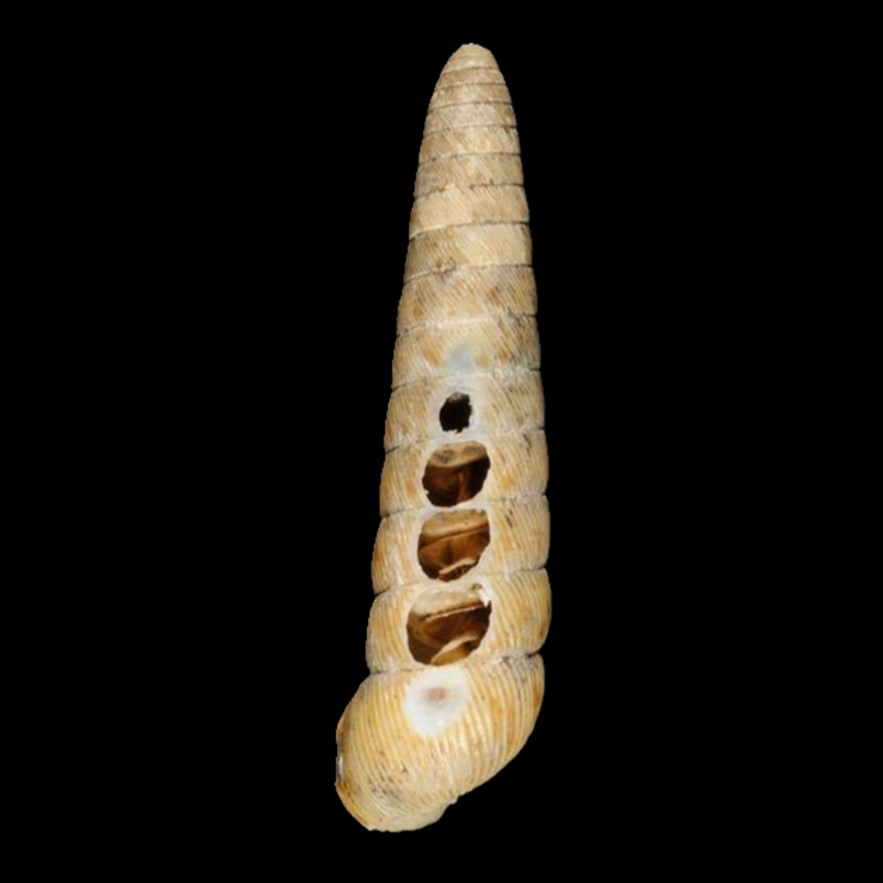
CLASSE: GASTROPODA: TERRESTRE FAMÍLIA: MEGASPIRIDAE ESPÉCIE: Megaspira robusta Pilsbry, 1904 Tamanho médio: 44 mm Habitat: vive no solo, na serapilheira, na Mata Atlântica Ocorrência: Brasil, sem localidade definida Localidade tipo: não informada na descrição Nome original: Megaspira elatior var. robusta Pilsbry, 1904 Descrição original: (Pilsbry, 1904): "Shell larger, with much more widely open umbilicus; columella distinctly trilamellate; scallops of the columellar lamella bent downward somewhat. Sculpture as in typical elatior. Length 44, diam. above aperture 9 mm., whorls 19 ; length 38, diam. 8.6 mm., whorls 16 2/3. This variety approaches Megaspira ruschenbergiana in size and in its open umbilical chink, but differs in internal structure. The teeth of one of our specimens were figured under the name Megaspira elata Gould, in Proc. Acad. Nat. Sci....

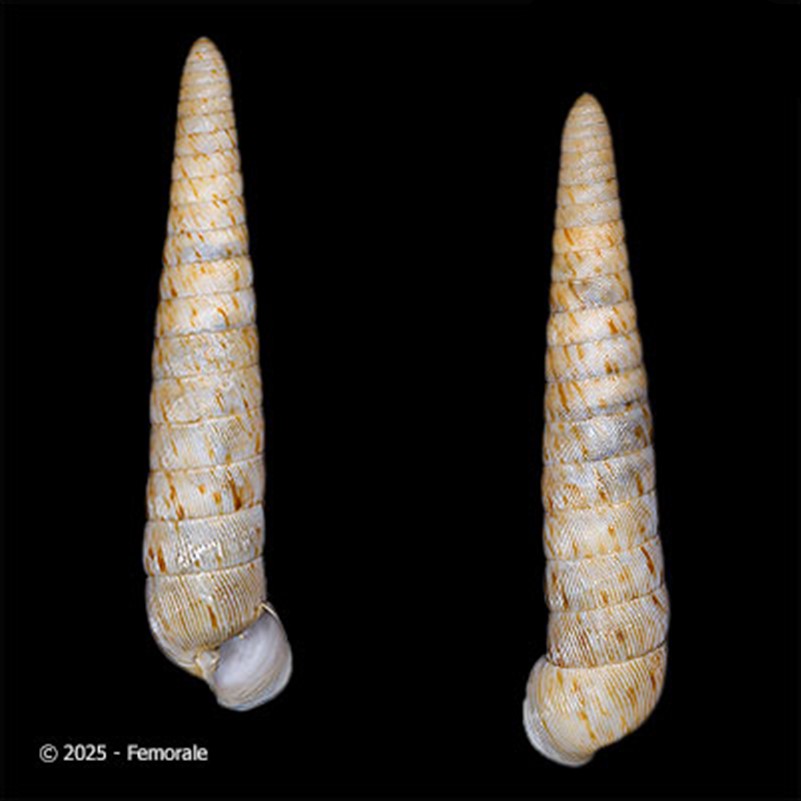
CLASSE: GASTROPODA: TERRESTRE FAMÍLIA: MEGASPIRIDAE ESPÉCIE: Megaspira ruschenbergiana I. Lea, 1836 Tamanho médio: 63 - 73 mm Habitat: vive no solo, na serapilheira, na Mata Atlântica Frequência: Raro, conhecido apenas por antigos exemplares de coleção Ocorrência: Brasil (Rio de Janeiro, Minas Gerais) Localidade tipo: Brasil, ‘‘cum praecedentibus [in Provinciis mediis orientalibus]’’ Nome original: Megaspira ruschenbergiana I. Lea, 1836 Etimologia: o nome da espécie é uma homenagem a William Samuel Waithman Ruschenberger (1807–1895). Ruschenberger foi cirurgião da Marinha norte americana, naturalista, presidente da Academy of Natural Sciences of Philadelphia (ANSP) de 1870 até 1882 Comentários: (1) Simone, 2006 e Molluscabase (2025) consideram como sinônimo de Megaspira elatior (2) Segundo Daniel, Ovando & Santos, 2022: Simone, 2006 não forneceu uma justificativa para sinonimizar Megaspira...