
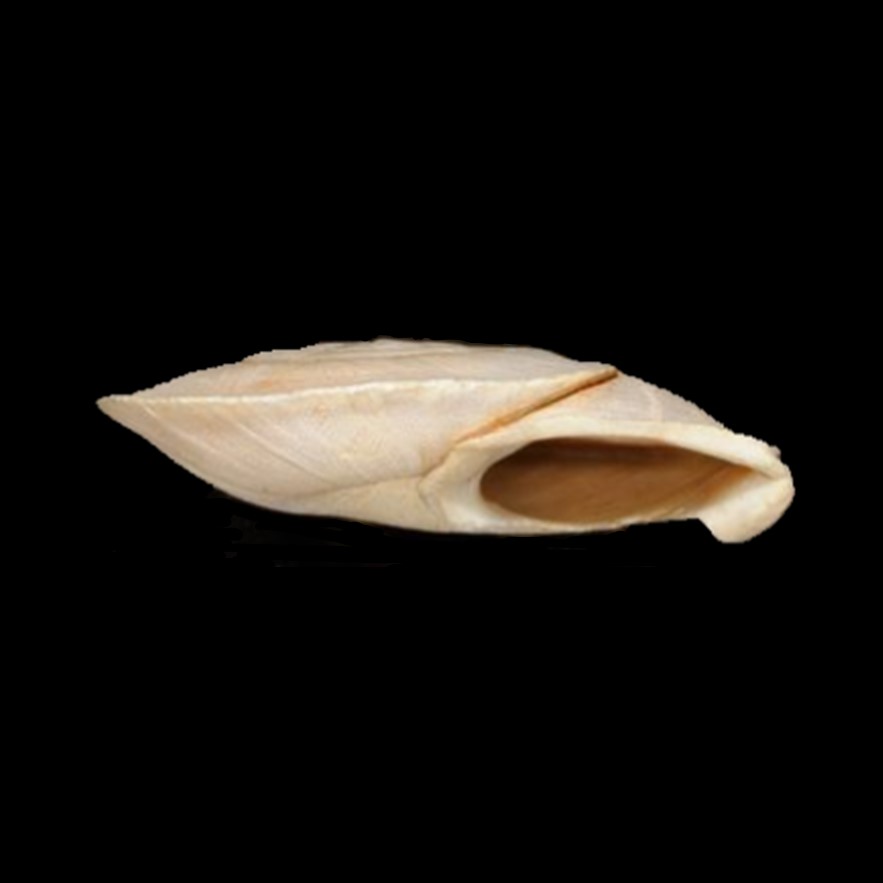
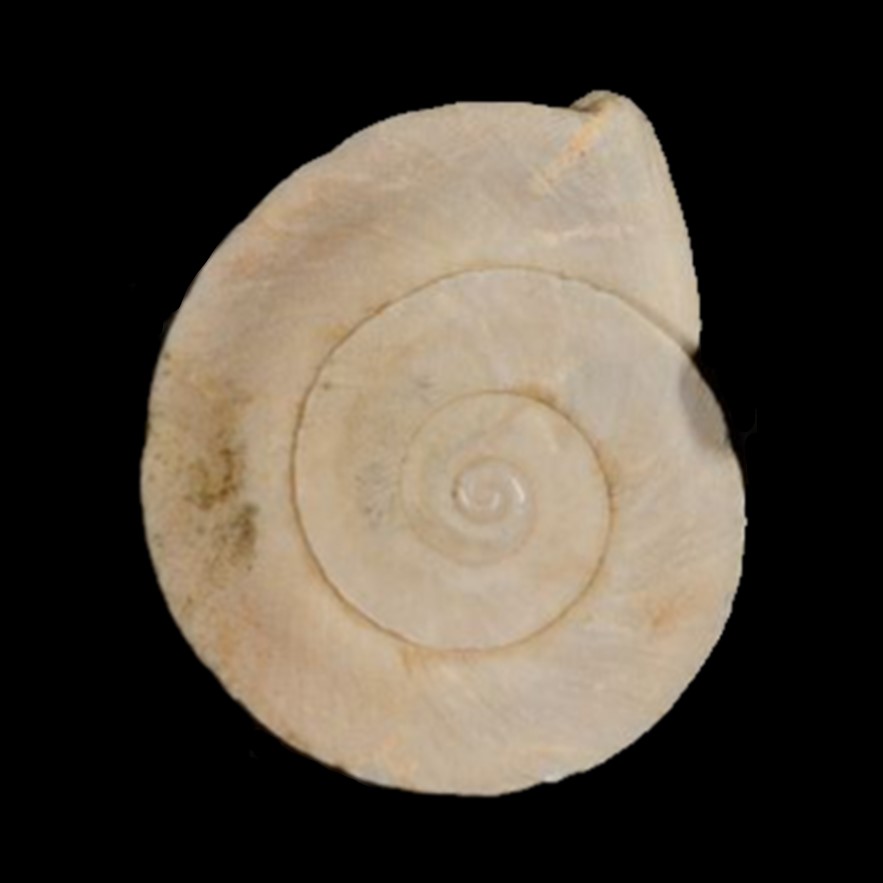
CLASSE: GASTROPODA: TERRESTRE FAMÍLIA: EPIPHRAGMOPHORIDAE ESPÉCIE: Dinotropis harringtoni Pilsbry & T. D. A. Cockerell, 1937 Tamanho médio: 27 mm Habitat: "near a limey horizon" Ocorrência: Bolívia Localidade tipo: Bolívia, "Rio Iguembe, two or three miles above junction with Rio Ingre" Nome original: Dinotropis harringtoni Pilsbry & T. D. A. Cockerell, 1937 Etimologia: o nome da espécie é uma homenagem a George L. Harrington, quem coletou o material tipo na Bolívia Descrição original: (Pilsbry & Cockrell, 1937): "The umbilicus is contained about six times in diameter. The spire is only slightly convex. The whorls are weakly convex in the inner, concave in the outer half, the last whorl descending slowly below the very acute peripheral keel, the base being concave below the keel,...

CLASSE: GASTROPODA: TERRESTRE FAMÍLIA: EPIPHRAGMOPHORIDAE ESPÉCIE: Epiphragmophora anceyana Preston, 1909 Tamanho médio: 25 mm Ocorrência: Argentina Localidade tipo: Argentina, sem localidade específica Nome original: Epiphragmophora anceyana Preston, 1909 Comentários: a espécie não consta na publicação de Cuezzo, 2006 Fotos: nd Fontes: Descrição original: Preston, H. B. (1909). New land, freshwater, and marine shells from South América. The Annals and Magazine of Natural History; zoology, botany, and geology; 8th series. 3: 507-513., disponível online em https://www.biodiversitylibrary.org/page/22071880#page/541/ página(s): 508, pl. 10, fig. 14A, B Natural History Museum (2026). Natural History Museum (London) Collection Specimens. Occurrence dataset https://doi.org/10.5519/qd.4fmbrm00 accessed via GBIF.org on 2026-03-17. https://www.gbif.org/occurrence/1135499976 Molluscabase: https://www.molluscabase.org/aphia.php?p=taxdetails&id=1434683
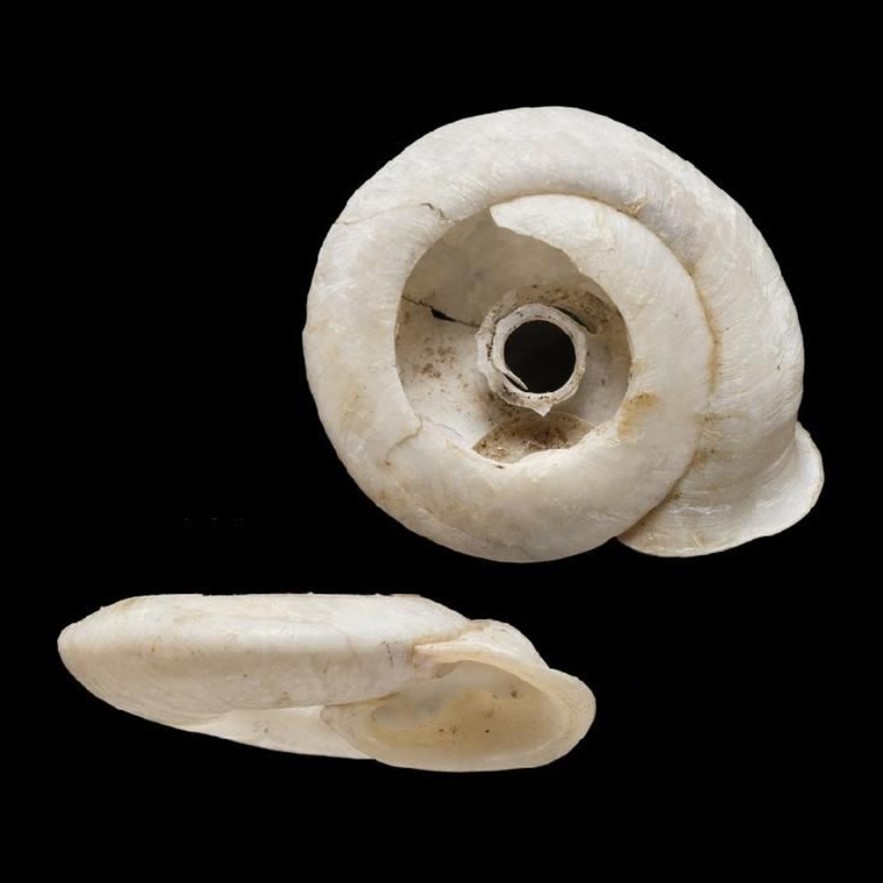
CLASSE: GASTROPODA: TERRESTRE FAMÍLIA: EPIPHRAGMOPHORIDAE ESPÉCIE: Epiphragmophora angrandi (Morelet, 1863) Tamanho médio: 29 mm Ocorrência: Peru Localidade tipo: Peru Nome original: Helix angrandi Morelet, 1863 Sinônimos: Epiphragmophora (Angrandiella) angrandi (Morelet, 1863) Fotos: (1,2) Natural History Museum, London: SYNTYPE NHMUK 1893.2.4.454, Peru Fontes: Descrição original: (como Helix angrandi Morelet, 1863) Morelet, A. (1863). Séries conchyliologiques comprenant l'énumération de mollusques terrestres et fluviatiles recueillis pendant le cours de différents voyages ainsi que la description de plusieurs espèces nouvelles. 3: 131-221, pls. 7-11. Paris: Klincksieck., disponível online em https://www.biodiversitylibrary.org/page/11913497 página(s): 168, pl. 7, fig. 3 Ramírez, R.; Paredes, C.; Arenas, J. (2003). Moluscos del Perú. Revista de Biologia Tropical. 51(supplement 3): 225-284 Natural History Museum (2026). Natural History Museum (London) Collection Specimens....
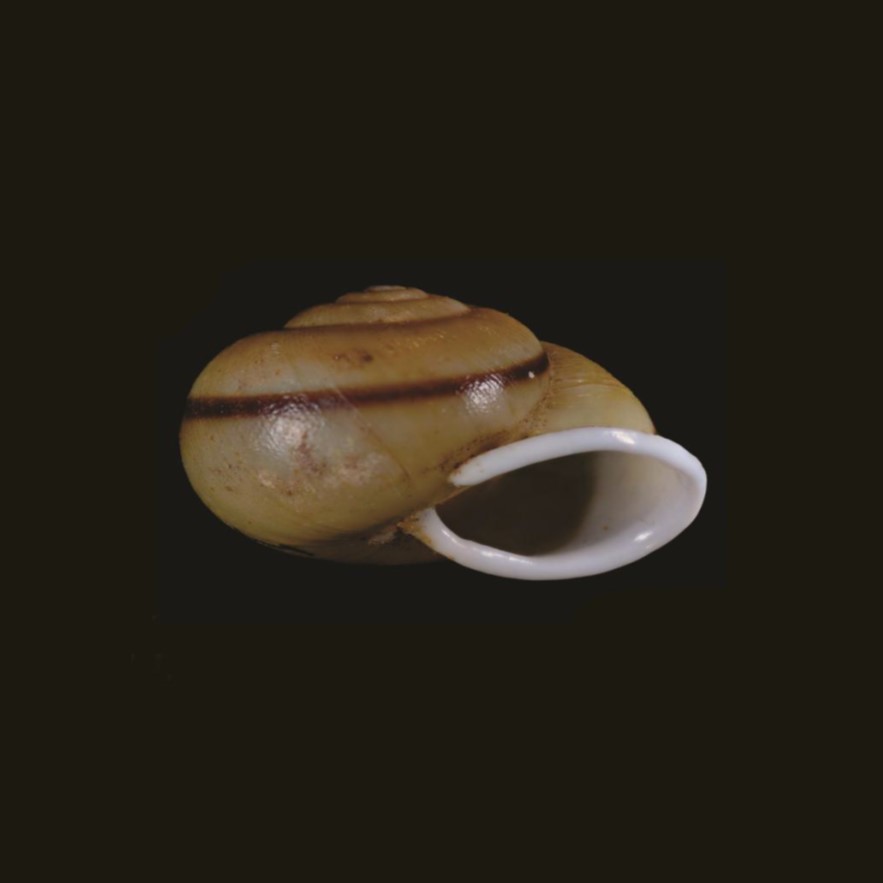
CLASSE: GASTROPODA: TERRESTRE FAMÍLIA: EPIPHRAGMOPHORIDAE ESPÉCIE: Epiphragmophora argentina (Holmberg, 1909) Tamanho médio: 20 mm Ocorrência: Argentina (Catamarca?, Salta y Tucumán) Localidade tipo: Argentina Habitat: Ecorregião de bosques úmidos de Yungas, até 1500 m.s.n.m. Nome original: Helix argentina Holmberg, 1909 Descrição: (Cuezzo, 2025): "La concha es globosa, de paredes sólidas a semisólidas, con 4 1/2 a 5 vueltas, con un tamaño mediano respecto a la media de las especies del género. La coloración es crema a castaño claro. Primera vuelta o protoconcha lisa, restantes con líneas de crecimiento y escultura maleada muy marcada en la vuelta corporal. La concha presenta una única banda espiral pigmentada de color pardo en posición media en la última vuelta, pero visible también en la sutura. Abertura de...
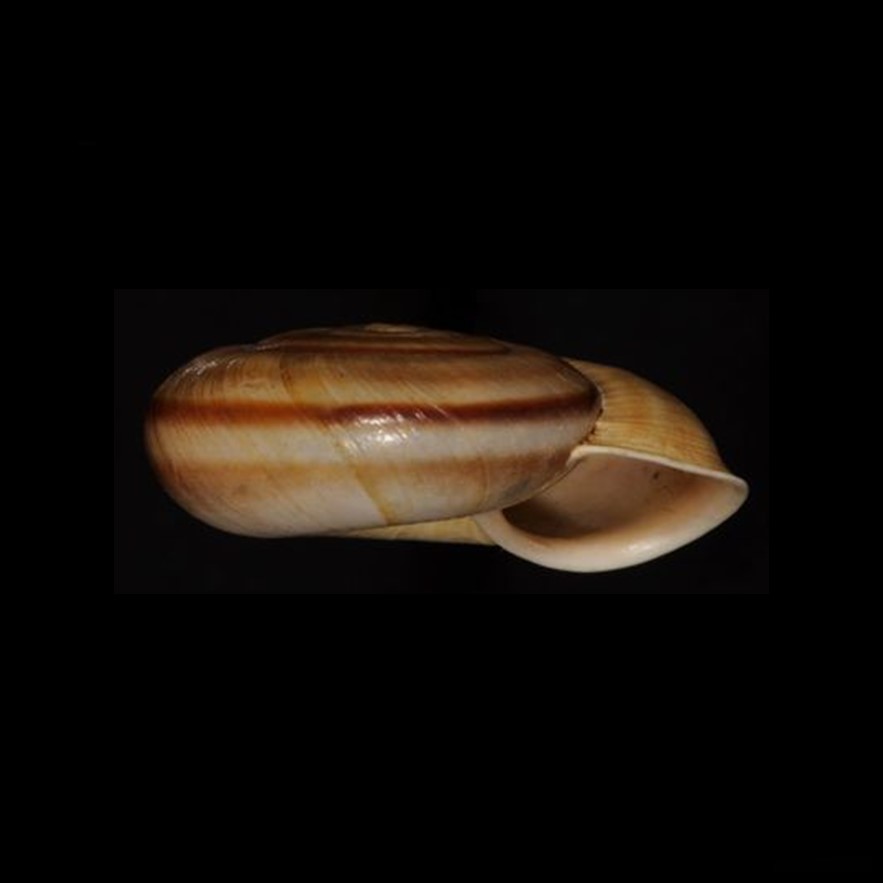
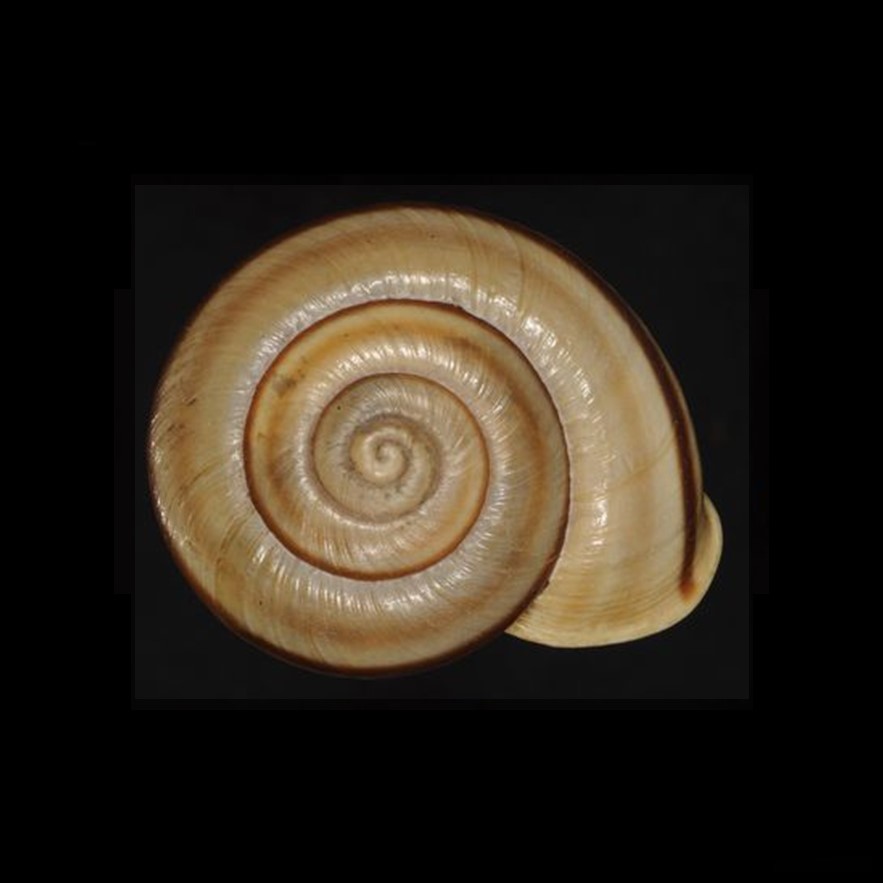
CLASSE: GASTROPODA: TERRESTRE FAMÍLIA: EPIPHRAGMOPHORIDAE ESPÉCIE: Epiphragmophora atahualpa Pilsbry, 1944 Tamanho médio: 29 mm Ocorrência: Peru (Apurimac) Localidade tipo: Peru, Apurimac, Andahuaylas Altitude: 3100 m Nome original: Epiphragmophora atahualpa Pilsbry, 1944 Sinônimos: Epiphragmophora (Epiphragmophora) atahualpa Pilsbry, 1944 Fotos: (1-3) The Academy of Natural Sciences of Philadelphia: HOLOTYPE ANSP 180206, Peru, Apurimac, Andahuaylas, coll. Weyrauch, W., 1943, 29.5mm Fontes: Descrição original: Pilsbry, H. A. (1944). Peruvian land Mollusca – II. The Nautilus. 57(4): 118-129, pl. 11., disponível online em https://www.biodiversitylibrary.org/page/8515578 página(s): 119-120, pl. 11, figs. 4-4a, 5 Ramírez, R.; Paredes, C.; Arenas, J. (2003). Moluscos del Perú. Revista de Biologia Tropical. 51(supplement 3): 225-284 Rosenberg G (2026). Malacology Collection at the Academy of Natural Sciences of Philadelphia. Academy of Natural...
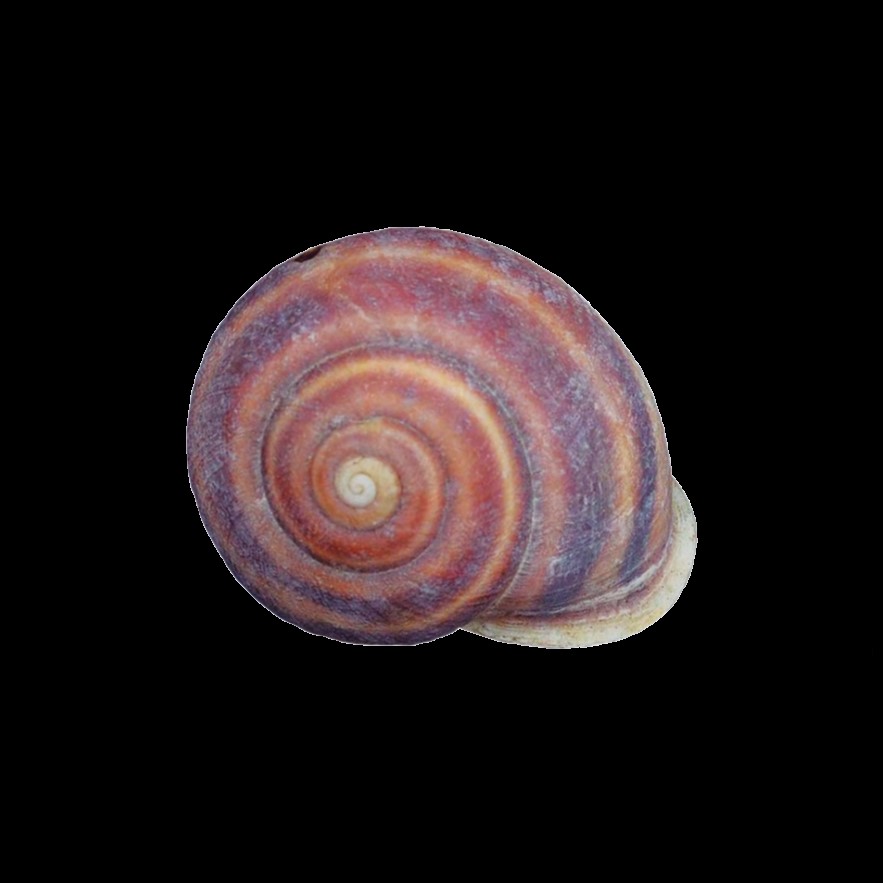
CLASSE: GASTROPODA: TERRESTRE FAMÍLIA: EPIPHRAGMOPHORIDAE ESPÉCIE: Epiphragmophora audouinii (A. d'Orbigny, 1835) Tamanho médio: 58 mm Ocorrência: Bolívia, Paraguai Localidade tipo: Bolívia, "La Paz Dept., Yungas and Inquisivi Prov., between the villages of Chirca and Chulumani, environments of Circuata, Carcuata and Suri" Nome original: Helix audouinii A. d'Orbigny, 1835 Descrição: (Cuezzo, 2006): "Dextral, helicoidal, globose, solid, subcarinated with conical spire; large size, 4 ¾ convex whorls, dark brown, no peripheral band evident in the body whorl; protoconch smooth; teleoconch surface malleated with diagonal ribs on body whorl; suture deep impressed; aperture elliptical, peristome white, strongly expanded, with strong callus in parietal wall; body whorl distinctly descending towards the aperture; umbilicus narrow, almost totally overlapped by ventral columelar fold of the peristome" Fotos...


CLASSE: GASTROPODA: TERRESTRE FAMÍLIA: EPIPHRAGMOPHORIDAE ESPÉCIE: Epiphragmophora bernardius Pilsbry, 1900 Tamanho médio: 30 mm Ocorrência: Brasil, São Paulo (Serra da Bocaina e Campos do Jordão) Localidade tipo: Brasil, São Paulo, Serra da Bocaina Nome original: Epiphragmophora oresigena var. bernardius Pilsbry, 1900 Descrição original: (Pilsbry, 1900): "Shell similar to E. oresigena (Orb.), but smaller, and lighter colored, yellow or greenish-yellow, with three blackish-brown bands, two above the periphery, one wider band on the base. Whorls 44, the last subangular at the periphery; surface lirate-malleate, the wrinkles tangential to the last whorl of the suture. Aperture white or purplish, and banded within, the lip white; umbilicus partly or nearly covered." Fotos: (1-3) The Academy of Natural Sciences of Philadelphia: LECTOTYPE de Epiphragmophora oresigma...
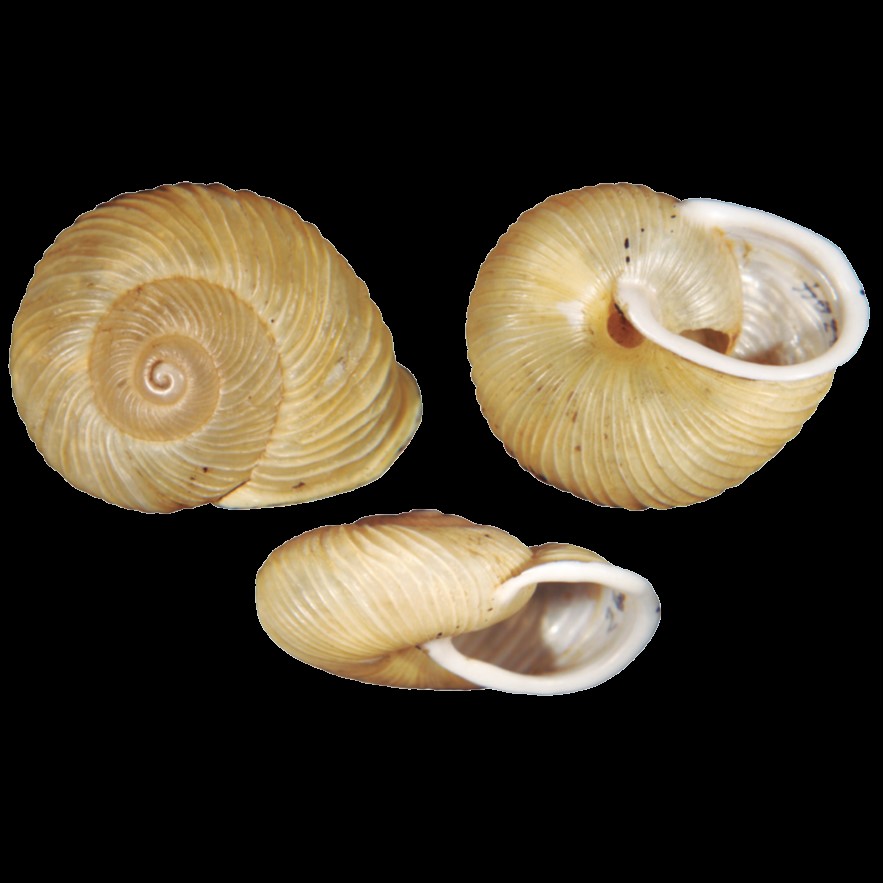
CLASSE: GASTROPODA: TERRESTRE FAMÍLIA: EPIPHRAGMOPHORIDAE ESPÉCIE: Epiphragmophora birabeni Parodiz, 1955 Tamanho médio: 23 - 26 mm Ocorrência: Argentina (Catamarca) Localidade tipo: Argentina, "Catamarca Prov., Quebrada de La Hoyada. R. Schreiter leg., 1936" Nome original: Epiphragmophora birabeni Parodiz, 1955 Descrição: (Cuezzo, 2006): "Dextral, helicoidal, globose, translucent, delicate, spire shallowly elevated, medium size, 3 ½ convex whorls, yellowish to golden; peripheral pigmented band in body whorl absent; protoconch smooth; sculpture of teleoconch with delicate axial whitish ribs regularly distributed, more spaced and thicken in body whorl, thin axial undulated or concentric lines between ribs giving the appearance of fingerprints; suture sinuous, well impressed; aperture transverse oval, peristome white, thick, reflexed; body whorl abruptly descending behind aperture; umbilicus deeply perforated and partially overlapped by columelar...
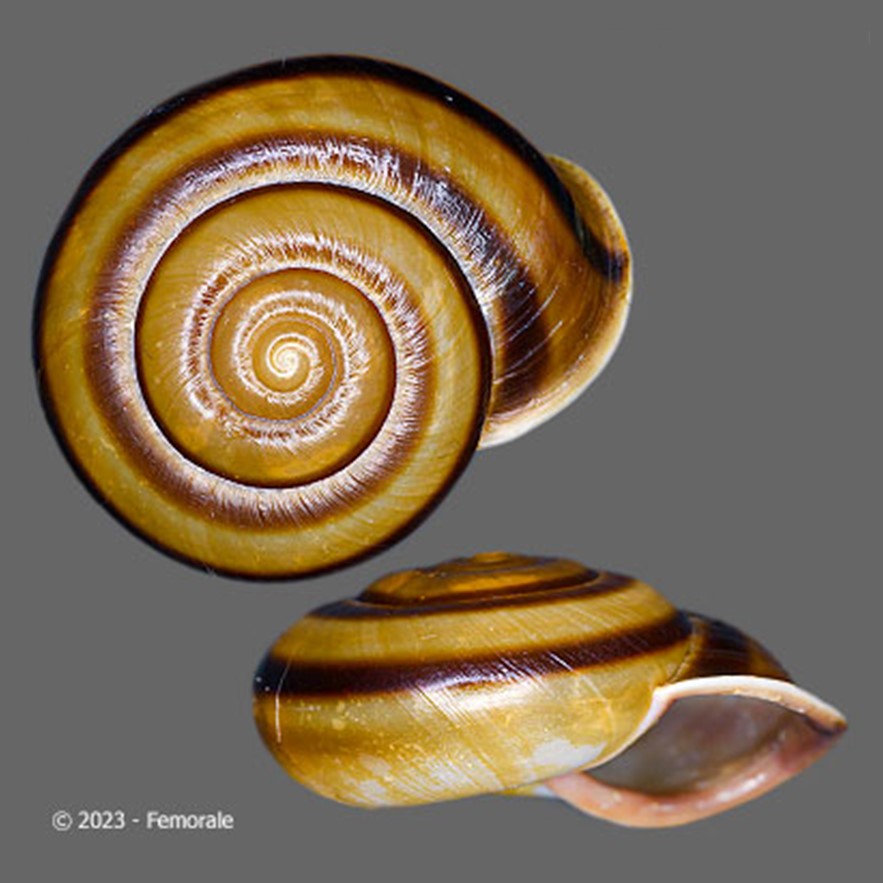

CLASSE: GASTROPODA: TERRESTRE FAMÍLIA: EPIPHRAGMOPHORIDAE ESPÉCIE: Epiphragmophora claromphalos (Deville & Hupé, 1850) Tamanho médio: 19 - 21 mm Ocorrência: Peru (Apurimac) Localidade tipo: Peru, Departamento de Apurimac, Abancay, Curahuasi: "Peru, zwischen Limatambo und Cucahuani und bei Abancay, 1500–2000 Meter hoch" Nome original: Helix claromphalos Deville & Hupé, 1850 Sinônimos: Epiphragmophora (Epiphragmophora) claromphalos (Deville & Hupé, 1850); Helix hettneriana E. von Martens, 1897; Helix tschudiana R. A. Philippi, 1867; Helix mesomphalos Morelet, 1860 Subespécies: (1) Epiphragmophora claromphalos claromphalos (Deville & Hupé, 1850) (2) Epiphragmophora claromphalos mesomphalos (Morelet, 1860) Fotos: (1,2): cortesia Femorale, 2023: Peru, 29.3 e 28.5 mm respectivamente Figura: Breure & Ablett, 2024: Museum für Naturkunde Berlin: Epiphragmophora claromphalos (Deville & Hupé, 1850): (A–D) SYNTYPE de Helix hettneriana E. von...
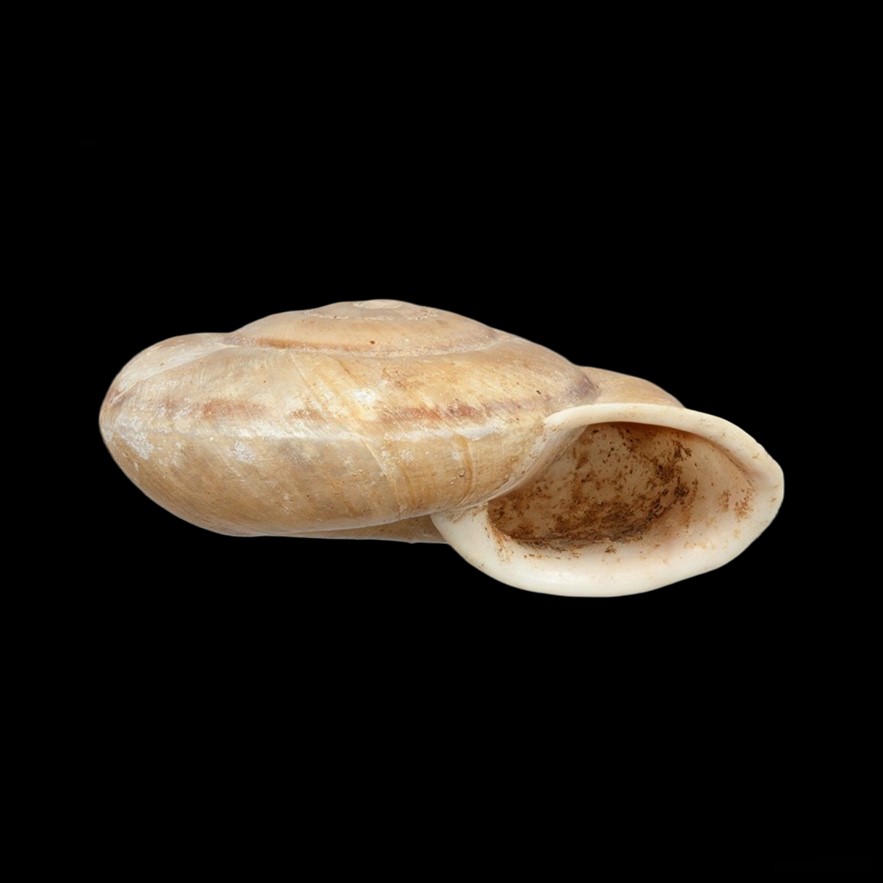
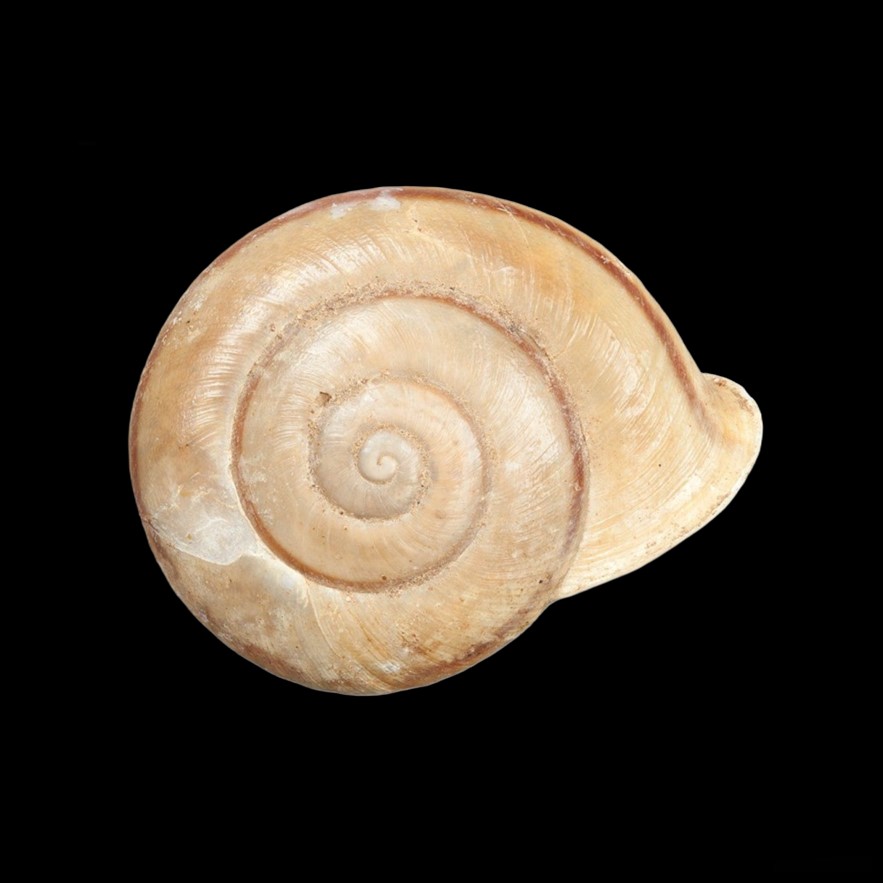
CLASSE: GASTROPODA: TERRESTRE FAMÍLIA: EPIPHRAGMOPHORIDAE ESPÉCIE: Epiphragmophora connectens F. Haas, 1959 Tamanho médio: 27 mm Ocorrência: Peru (Lambayeque) Localidade tipo: Peru, "Lambayeque, near Chongoyape, Cambache" Altitude: 460 m Nome original: Epiphragmophora (Epiphragmophora) connectens F. Haas, 1959 Fotos: (1-3) Field Museum of Natural History: HOLOTYPE FMNH 51919, coll. Celestino Kalinowski, 19.iii.1954, "Perú, 460m: Lambayaque, Cambache nr. Chongayape", 26.9mm Fontes: Descrição original: Haas, F. (1959). Inland mollusks from Venezuela, southern Brazil, and Peru. Fieldiana: Zoology. 39 (31): 363-371., disponível online em https://biodiversitylibrary.org/page/2860397 página(s): 368 Simone, L. R. L. (2006). Land and Freshwater Molluscs of Brazil. Editora Gráfica Bernardi, FAPESP. São Paulo, 390 pp. página(s): 247 Ramírez, R.; Paredes, C.; Arenas, J. (2003). Moluscos del Perú. Revista de Biologia Tropical. 51(supplement 3):...
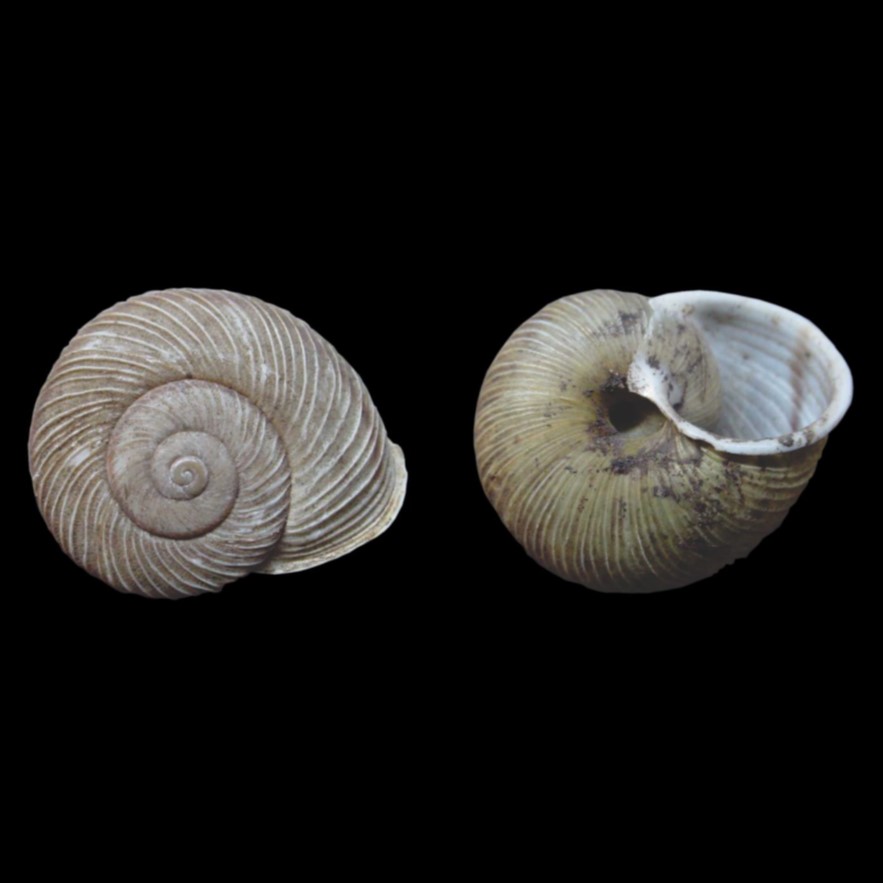
CLASSE: GASTROPODA: TERRESTRE FAMÍLIA: EPIPHRAGMOPHORIDAE ESPÉCIE: Epiphragmophora costellata D. Fernández & Rumi, 1974 Tamanho médio: 16 mm Ocorrência: Argentina (Salta) Localidade tipo: Argentina, Salta Habitat: os registros de Epiphragmophora costellata são de altitudes superiores a 1.800 m.s.n.m. por isso, embora a zona habitada corresponda à Selva de Yungas, é provável que esta espécie habite em áreas rochosas de zonas por perto dos bosques. Não existem dados publicados sobre seu ciclo biológico Nome original: Epiphragmophora costellata D. Fernández & Rumi, 1974 Descrição: (Cuezzo, 2025): "Concha planorboide a discoidal, gruesa, con 4 3/4 vueltas, tamaño mediano a grande respecto a la media de las especies del género. Color crema a castaño claro. Protoconcha lisa, restantes vueltas o teleoconcha con costillas axiales marcadas y separadas...
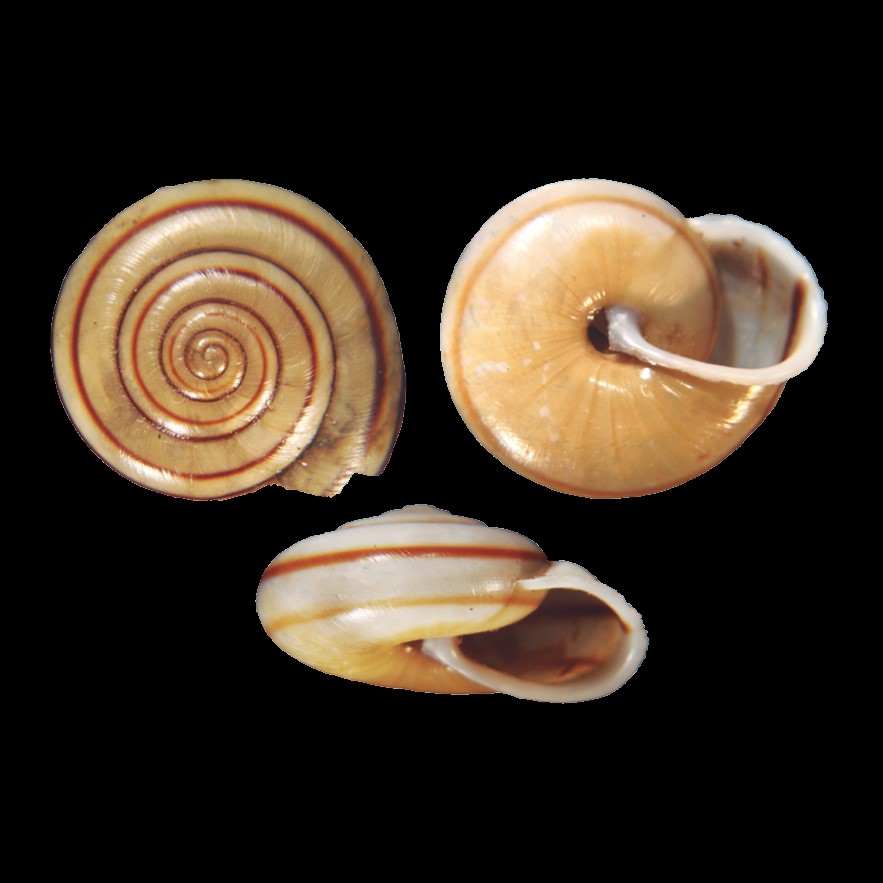
CLASSE: GASTROPODA: TERRESTRE FAMÍLIA: EPIPHRAGMOPHORIDAE ESPÉCIE: Epiphragmophora cryptomphala Ancey, 1897 Tamanho médio: 22 - 28 mm Ocorrência: Argentina (Salta, Jujuy) Localidade tipo: Argentina Nome original: Epiphragmophora cryptomphala Ancey, 1897 Descrição: (Cuezzo, 2006): "Dextral, helicoidal, subglobose, semisolid to solid, with conical spire, usually high; medium size, 4½ convex whorls; whitish, pale cream to yellowish; three peripheral thin, darker brown bands clearly visible on spire and body whorl, usually ventral band wider than others; protoconch smooth, first whorls with thin growth lines; teleoconch surface malleated with diagonal ribs on body whorl; suture deep impressed; aperture subquadrangular or subovoidal, peristome white, wide, expanded, slightly reflexed; body whorl abruptly descending towards aperture; umbilicus completely overlapped by ventral columelar fold of peristome; in some specimens peristome partially...


CLASSE: GASTROPODA: TERRESTRE FAMÍLIA: EPIPHRAGMOPHORIDAE ESPÉCIE: Epiphragmophora diluta (L. Pfeiffer, 1842) Tamanho médio: 22 mm Ocorrência: Peru (Cuzco) Localidade tipo: Peru, Cuzco, Urubamba Nome original: Helix diluta L. Pfeiffer, 1842 Sinônimos: Epiphragmophora (Epiphragmophora) diluta (L. Pfeiffer, 1842) Subespécies: (i) Epiphragmophora diluta diluta (L. Pfeiffer, 1842) (ii) Epiphragmophora diluta semiaperta Weyrauch, 1964 (iii) Epiphragmophora diluta urubambensis Pilsbry, 1926 Fotos: (1-3) The Academy of Natural Sciences, Philadelphia: HOLOTYPE ANSP 83555, Peru, Urubamba, (4,5) Natural History Museum, London: SYNTYPE NHMUK 20210315, Cuzco, Peru Fontes: Descrição original: (como Helix diluta L. Pfeiffer, 1842) Pfeiffer, L. (1842). Symbolae ad historiam Heliceorum, Part II [Sectio altera.] Kassel (Th. Fischer). 147 pp. [< 21 December]. , disponível online em https://www.biodiversitylibrary.org/page/12254177 página(s): 27 Descrição original: (como Epiphragmophora urubambensis Pilsbry, 1926) Pilsbry, H....
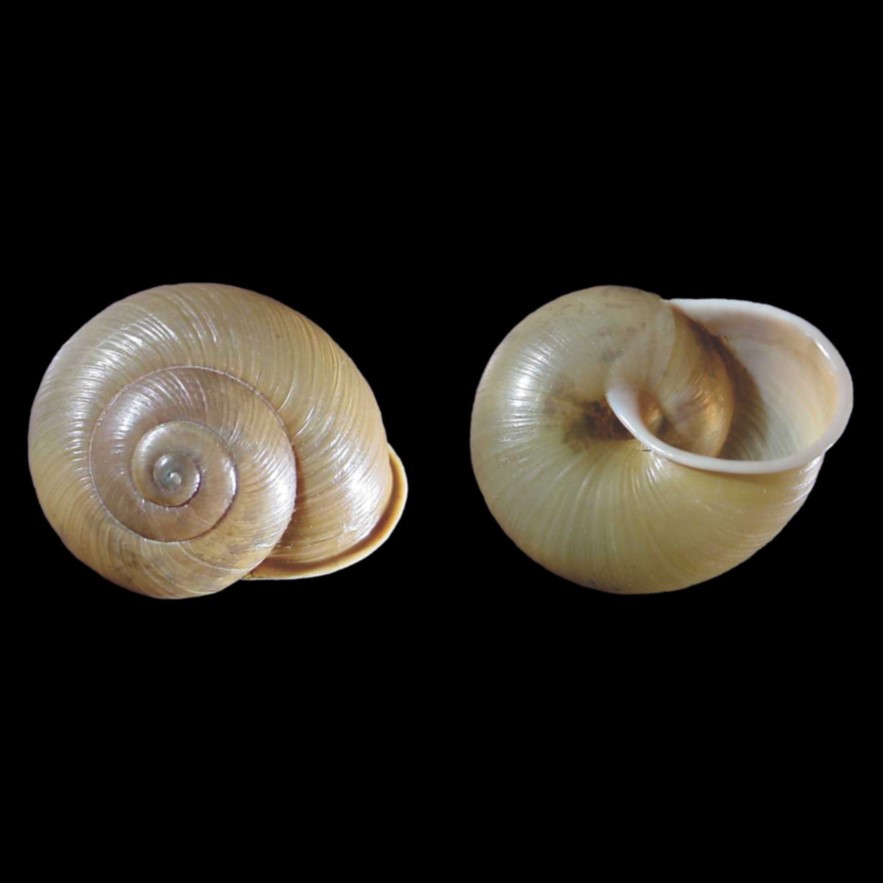
CLASSE: GASTROPODA: TERRESTRE FAMÍLIA: EPIPHRAGMOPHORIDAE ESPÉCIE: Epiphragmophora escoipensis Cuezzo, 1996 Tamanho médio: 20 mm Ocorrência: Argentina (Salta) Localidade tipo: Argentina, Salta, Quebrada de Escoipe Habitat: "Seu habitat é o ambiente xerófilo, podendo estar aderido a cactos ou à sombra de arbustos no largo da Quebrada de Escoipe em Salta" Nome original: Epiphragmophora escoipensis Cuezzo, 1996 Descrição: (Cuezzo, 2025): "Concha de paredes frágiles, se puede ver a través de la misma la pigmentación del pulmón en la masa visceral. De tamaño general pequeño a mediano, con 4 1/4 anfractos convexos con una coloración amarillento pálido a amarronado. Puede presentar una banda periférica muy delgada de color más oscuro que el resto de la concha, la cual es notoria en la vuelta corporal. La...
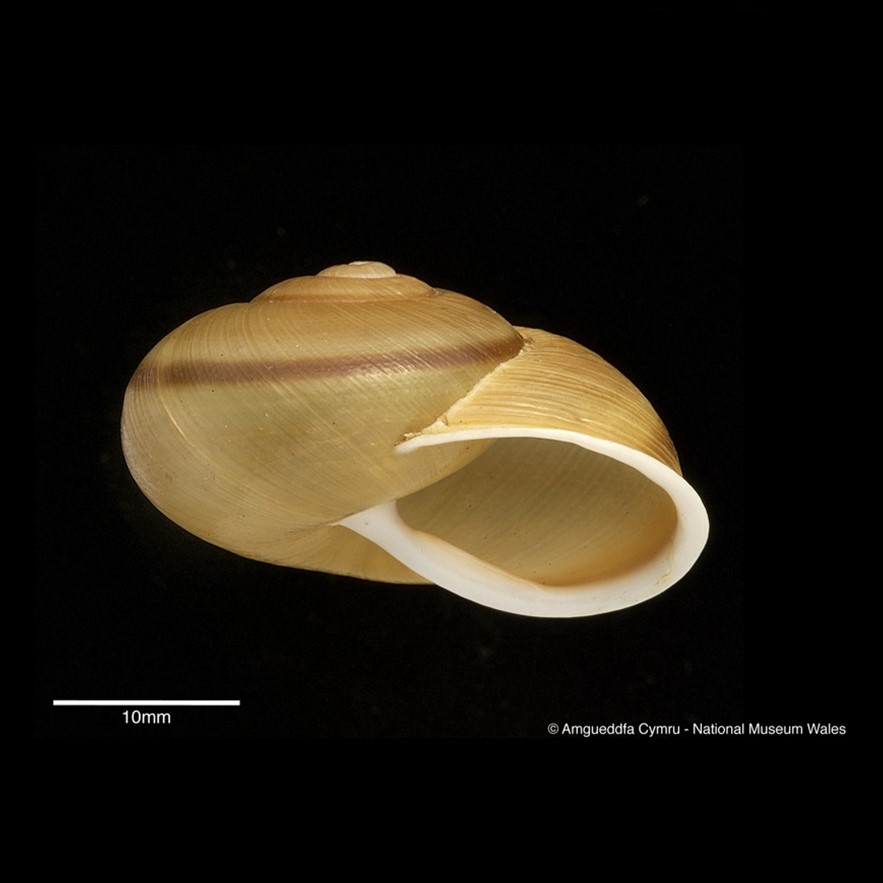
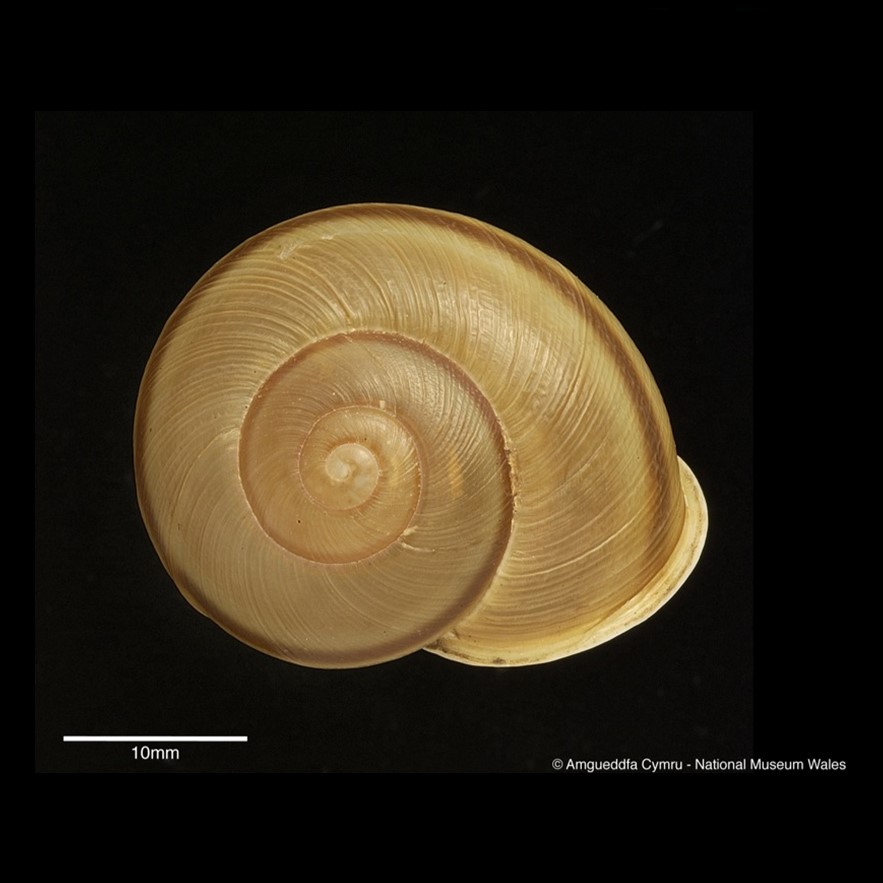
CLASSE: GASTROPODA: TERRESTRE FAMÍLIA: EPIPHRAGMOPHORIDAE ESPÉCIE: Epiphragmophora estella (A. d'Orbigny, 1835) Tamanho médio: 30 mm Ocorrência: Bolívia (La Paz, Santa Cruz, Chuquisaca) Localidade tipo: Bolívia, "Valle Grande, close to the village of Tasajos" Nome original: Helix estella A. d'Orbigny, 1835 Sinônimos: Epiphragmophora estella var. centralis Ancey, 1901 Descrição: (Cuezzo, 2006): "Dextral, helicoidal, globose, fragile not translucent, with conical spire, medium size, 4 ¾ convex whorls; pale cream to yellowish; with peripheral equatorial thin, darker brown band; protoconch smooth; teleoconch surface malleated with diagonal ribs on body whorl; suture deep impressed; aperture elliptical to subcircular, peristome whitish, thin, slightly expanded; body whorl distinctly descending towards aperture; umbilicus narrow partly overlapped by ventral columelar fold of peristome." Fotos (1-3): National Museum of Wales, HOLOTYPE...
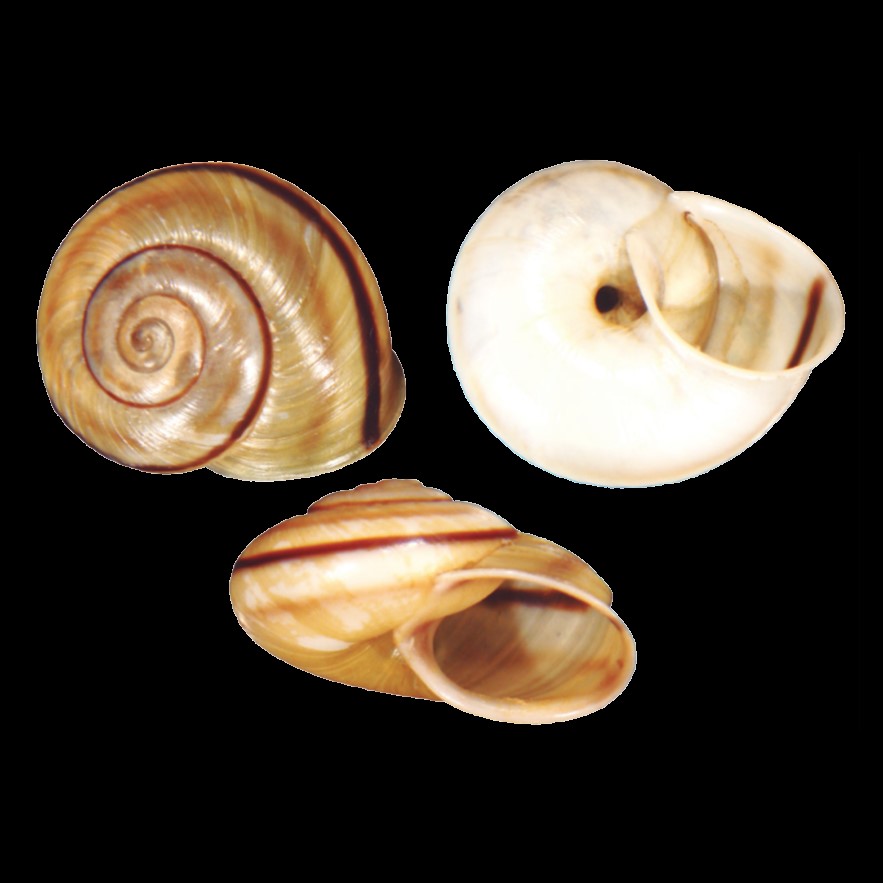
CLASSE: GASTROPODA: TERRESTRE FAMÍLIA: EPIPHRAGMOPHORIDAE ESPÉCIE: Epiphragmophora guevarai Cuezzo, 2006 Tamanho médio: 22 - 24.6 mm Ocorrência: Argentina (Santiago del Estero, Cordoba) Localidade tipo: Argentina, Argentina, Santiago del Estero, 20 km S from Ojo de Agua, 570 m Nome original: Epiphragmophora guevarai Cuezzo, 2006 Etimologia: o nome da espécie é uma homenagem ao argentino Ernesto "Che" Guevara (1938-1967) Descrição original: (Cuezzo, 2006): "Dextral, subglobose, fragile, not translucent, spire medium elevated, conical, medium size with 4 convex whorls; pale brown; body whorl with three thin, continuous peripheral bands, central one darker and well marked close to aperture, dorsal and ventral bands wider at body whorl, both tenuous close to aperture, darker central band overlapping with suture; protoconch smooth; teleoconch surface with thin axial...
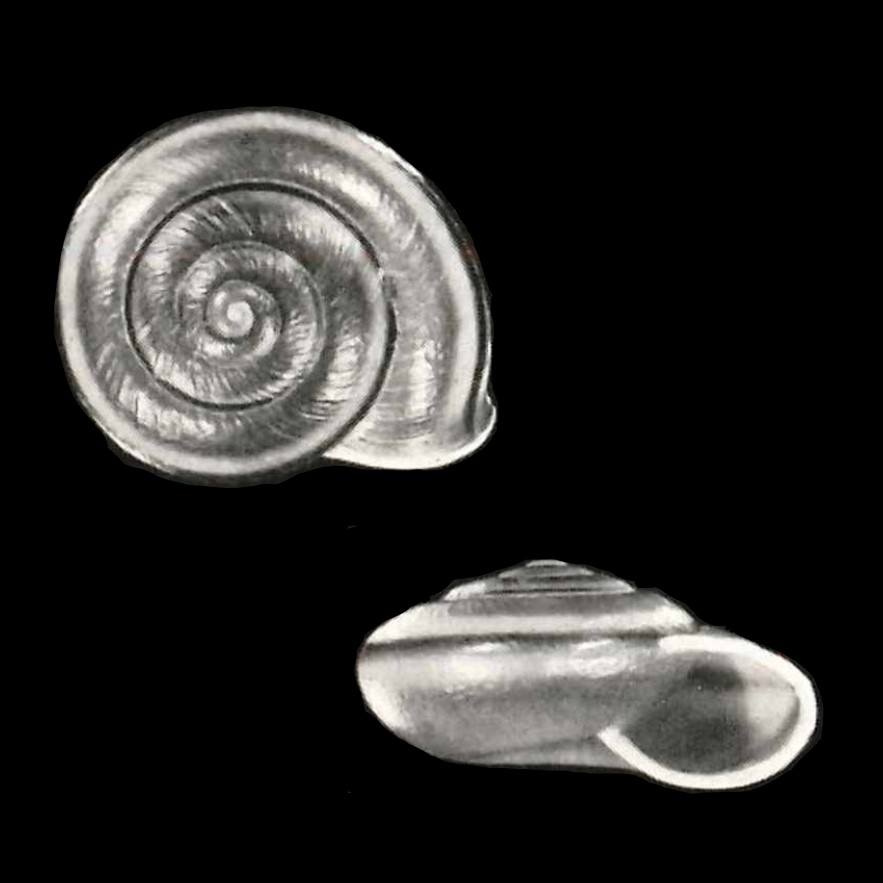
CLASSE: GASTROPODA: TERRESTRE FAMÍLIA: EPIPHRAGMOPHORIDAE ESPÉCIE: Epiphragmophora haasi Zilch, 1953 Tamanho médio: 14.4 - 17.4 mm Ocorrência: Peru Habitat: floresta tropical de montanha a 1500–2000 m de altitude, composta por árvores e arbustos Localidade tipo: Peru, "Hacienda Taulis (ca. 6°50' S, 79° 10' W)" Altitude: 1500 - 2000 m Nome original: Epiphragmophora haasi Zilch, 1953 Sinônimos: Epiphragmophora (Epiphragmophora) haasi Zilch, 1953 Etimologia: o nome da espécie é uma homenagem ao malacologista alemão radicado nos EUA, Fritz Haas (1886–1969) Fotos: (1) Zilch, 1953: Senckenberg. Collection Mollusca, HOLOTYPE SMF 108544, H. W. Koepcke leg., 1952 Fontes: Descrição original: Zilch, A. (1953). Landschnecken aus Peru. Archiv für Molluskenkunde, 82 (1/3): 49-61, pl. 14-15. Frankfurt am Main. página(s): 58, plate 14, fig. 6, + figs...
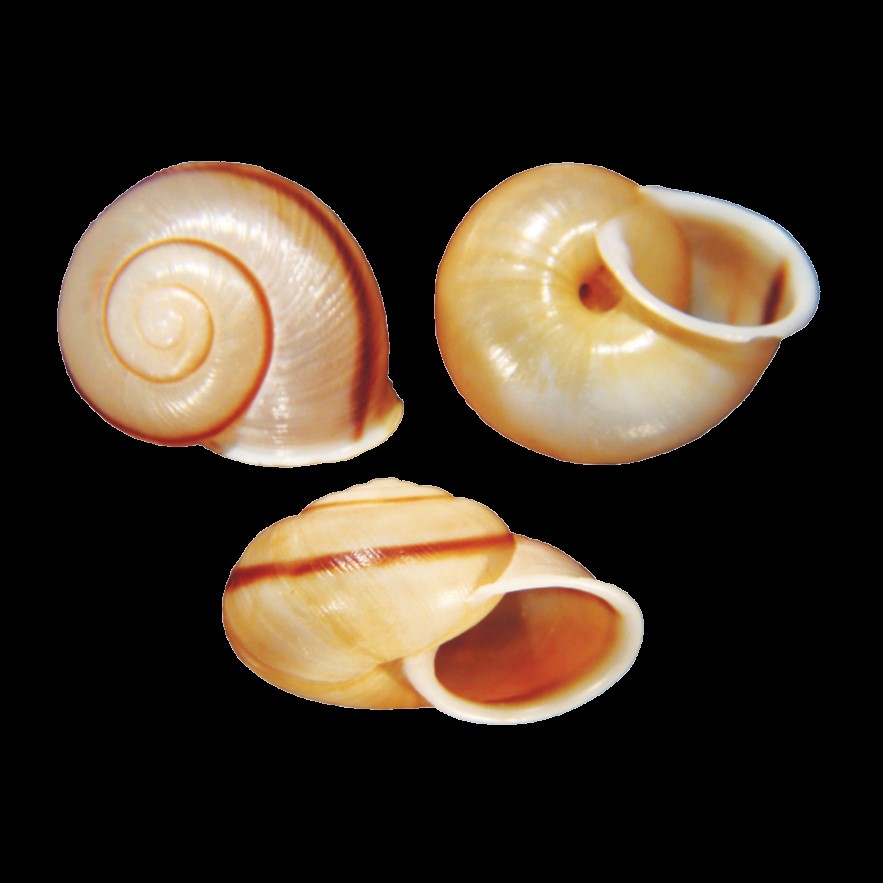
CLASSE: GASTROPODA: TERRESTRE FAMÍLIA: EPIPHRAGMOPHORIDAE ESPÉCIE: Epiphragmophora hemiclausa Hylton Scott, 1957 Tamanho médio: 27 mm Ocorrência: Argentina (Catamarca) Localidade tipo: Argentina, "Catamarca Prov., Cuestecilla de La Viña, 9.iii.1950, Gladys Biraben leg" Nome original: Epiphragmophora hemiclausa Hylton Scott, 1957 Descrição: (Cuezzo, 2006): "Dextral, helicoidal, globose, semisolid to fragile, with conical spire; small to medium size, 4 ¼ convex whorls; light yellowish to pale brown, with single peripheral equatorial, dark brown even band more evident in body whorl periphery but running over suture of spire; protoconch smooth; teleoconch surface with thin axial growth lines and body whorl malleated, both dorsal and ventrally; suture deep impressed; aperture subcircular, peristome whitish, thin, slightly expanded, reflexed; body whorl distinctly descending towards aperture; umbilicus narrow, partly overlapped by...
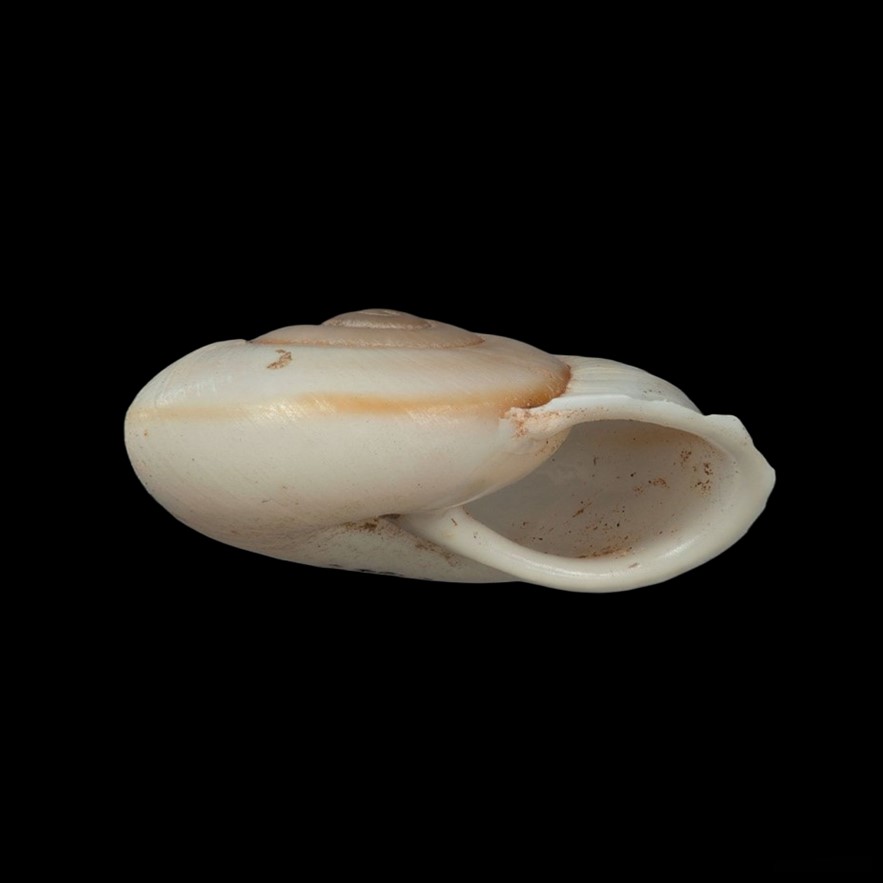

CLASSE: GASTROPODA: TERRESTRE FAMÍLIA: EPIPHRAGMOPHORIDAE ESPÉCIE: Epiphragmophora hemiomphalos F. Haas, 1951 Tamanho médio: 22 mm Ocorrência: Peru Localidade tipo: Peru, sem localidade específica Nome original: Epiphragmophora (Epiphragmophora) hemiomphalos F. Haas, 1951 Fotos: (1) The Field Museum of Natural History: HOLOTYPE FMNH 30902, Peru, sem localidade específica,ex Museu Hist Natural Lima, 1949, 21.8mm Fontes: Descrição original: (como Epiphragmophora (Epiphragmophora) hemiomphalos F. Haas, 1951) Haas, F. (1951). Remarks on and descriptions of South American non-marine shells. Fieldiana: Zoology. 31(46): 503-545., disponível online em https://www.biodiversitylibrary.org/page/2784155 página(s): 526-527, figs. 112A-C Ramírez, R.; Paredes, C.; Arenas, J. (2003). Moluscos del Perú. Revista de Biologia Tropical. 51(supplement 3): 225-284. page(s): 284; note: misspelled as E. hemiophalus Weyrauch, W. K. (1960). Zwanzig neue Landschnecken aus Peru. Archiv für Molluskenkunde. 89...
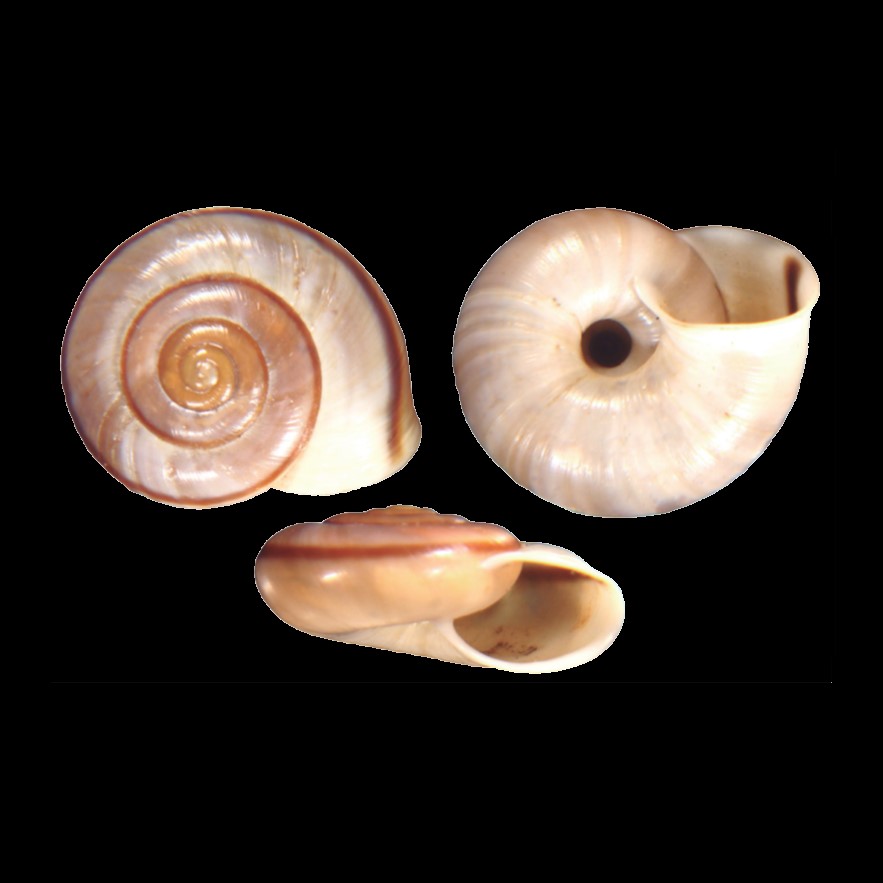
CLASSE: GASTROPODA: TERRESTRE FAMÍLIA: EPIPHRAGMOPHORIDAE ESPÉCIE: Epiphragmophora hieronymi (Doering, 1875) Tamanho médio: 18 - 24 mm Ocorrência: Argentina (Catamarca, Tucumán, Salta, Formosa, San Luis, La Rioja) Localidade tipo: Argentina, "Catamarca, Quebrada del Tala, Hieronymus leg" Nome original: Helix (Epiphragmophora) hieronymi Doering, 1875 Sinônimos: Helix (Aglaja) yocotulana Doering, 1875 Descrição: (Cuezzo, 2006): "Dextral, helicoidal, semisolid to fragile, with low conical to flat spire; small to medium size, 4 ¼ convex whorls; pale yellowish to whitish; single peripheral supraequatorial, brownish, thin, even band running in body whorl periphery and on suture between third and fourth whorl; protoconch smooth; teleoconch surface with thin axial growth lines; suture shallowly impressed; aperture subcircular, peristome usually whitish, thin, slightly expanded; wall sculpture inside aperture with small irregularly distributed pustules;...


CLASSE: GASTROPODA: TERRESTRE FAMÍLIA: EPIPHRAGMOPHORIDAE ESPÉCIE: Epiphragmophora higginsi (K. Miller, 1878) Tamanho médio: 28 - 29 mm Ocorrência: Peru (Cajamarca) Localidade tipo: Peru, sem localidade específica Nome original: Aglaja higginsi K. Miller, 1878 Sinônimos: Epiphragmophora (Epiphragmophora) higginsi (K. Miller, 1878) Fotos: (1,2) cortesia Femorale, Peru, 29.1 e 28.7 mm respectivamente; (3) Naturalis Biodiversity Center, RMNH.MOL.296051, "Andes van Peru nabij Cajamarca" Fontes: Descrição original: (como Aglaja higginsi K. Miller, 1878) Miller, K. (1878). Die Binnenmollusken von Ecuador. Malakozoologische Blätter. 25: 153-199., disponível online em https://www.biodiversitylibrary.org/page/15855524 Ramírez, R.; Paredes, C.; Arenas, J. (2003). Moluscos del Perú. Revista de Biologia Tropical. 51(supplement 3): 225-284 Bakker H, Gill A, Creuwels J (2026). Naturalis Biodiversity Center (NL) - Mollusca. Naturalis Biodiversity Center. Occurrence dataset https://doi.org/10.15468/yefvnk accessed via GBIF.org on 2026-02-09....
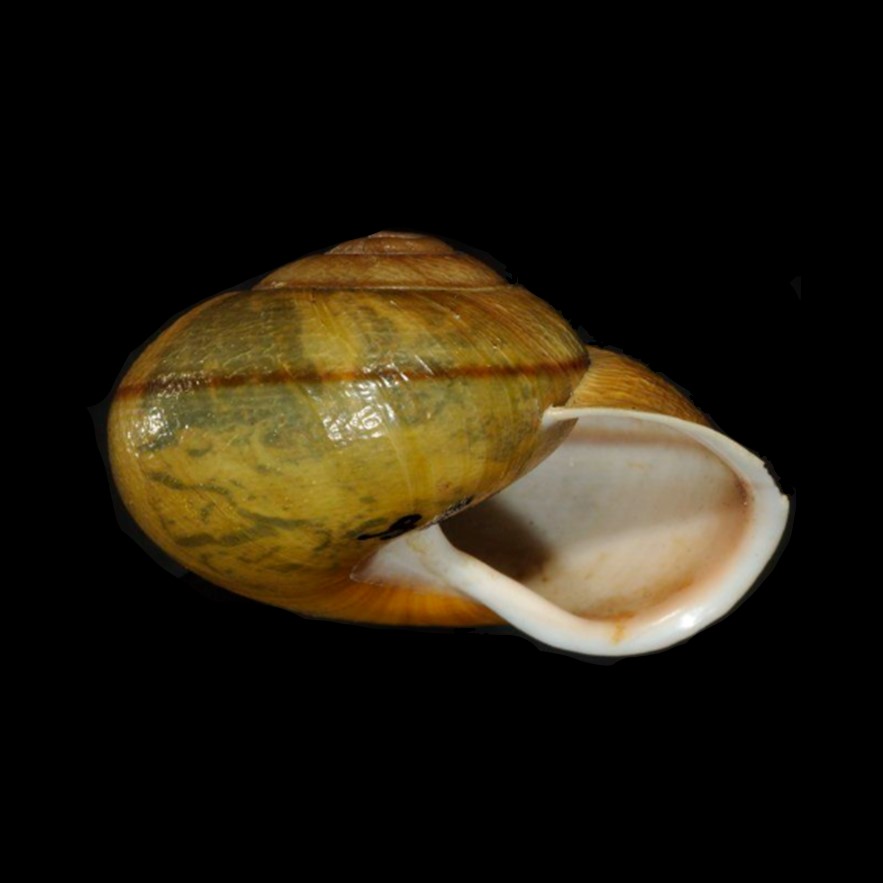
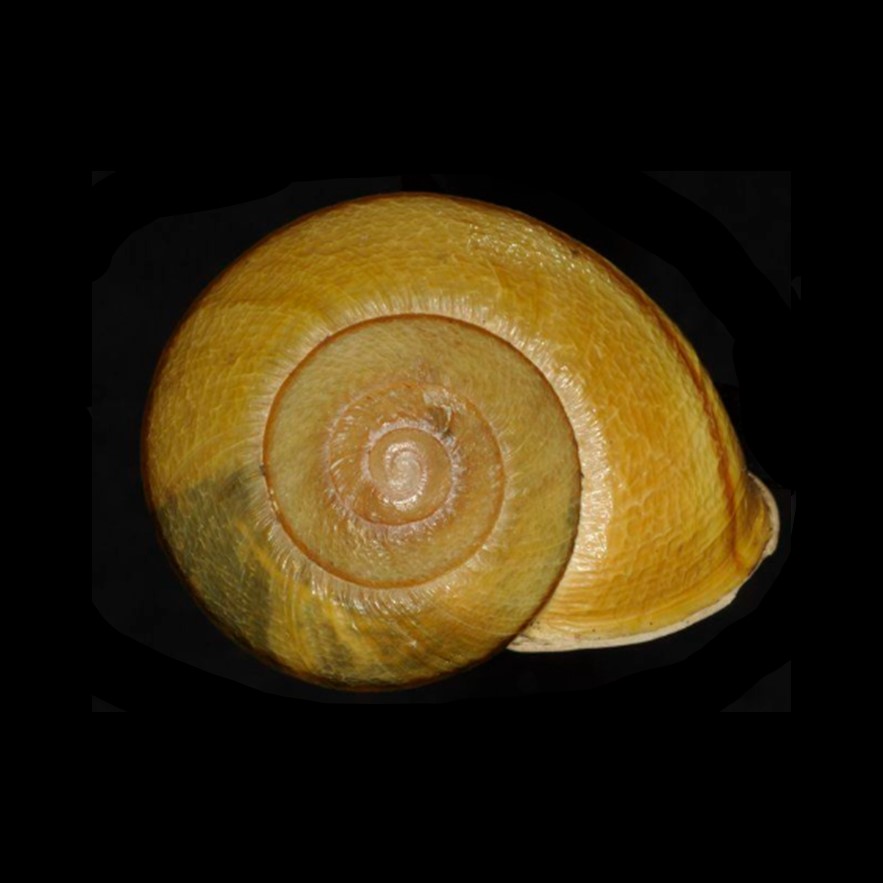
CLASSE: GASTROPODA: TERRESTRE FAMÍLIA: EPIPHRAGMOPHORIDAE ESPÉCIE: Epiphragmophora huancabambensis Pilsbry, 1926 Tamanho médio: 35 mm Ocorrência: Peru (Piura) Localidade tipo: Peru, Piura, "top of Huancabamba Mount" Altitude: 3050 m Nome original: Epiphragmophora huancabambensis Pilsbry, 1926 Sinônimos: Epiphragmophora (Epiphragmophora) huancabambensis Pilsbry, 1926 Fotos: (1-3) The Academy of Natural Sciences, Philadelphia: HOLOTYPE ANSP 140098, "top of Mount Huancabamba", coll. A.A. Olson Fontes: Descrição original: Pilsbry, H. A. (1926). South American land and fresh water mollusks: Notes and descriptions,- VI. Proceedings of the Academy of Natural Sciences of Philadelphia. 78: 1-15. página(s): 4 Ramírez, R.; Paredes, C.; Arenas, J. (2003). Moluscos del Perú. Revista de Biologia Tropical. 51(supplement 3): 225-284 Rosenberg G (2026). Malacology Collection at the Academy of Natural Sciences of Philadelphia. Academy of Natural Sciences....

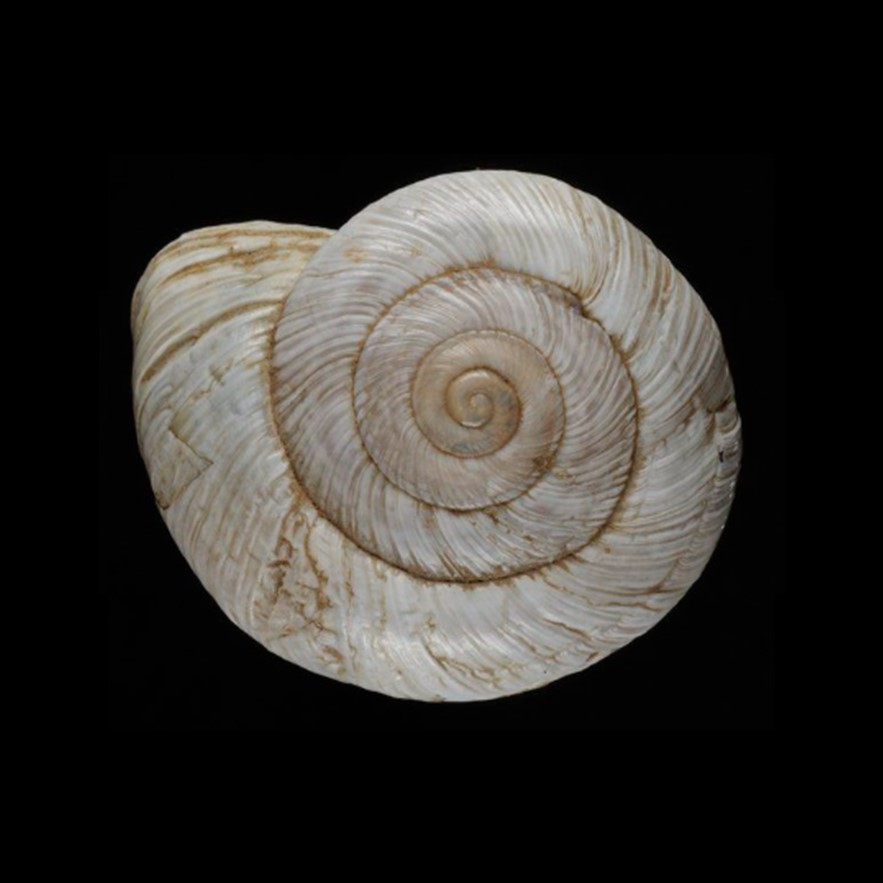
CLASSE: GASTROPODA: TERRESTRE FAMÍLIA: EPIPHRAGMOPHORIDAE ESPÉCIE: Epiphragmophora jaspidea (L. Pfeiffer, 1859) Tamanho médio: 31 mm Ocorrência: Peru (La Libertad) Localidade tipo: Peru, "Patas, Andes of Peru" Nome original: Helix jaspidea L. Pfeiffer, 1859 Sinônimos: Epiphragmophora (Epiphragmophora) jaspidea (L. Pfeiffer, 1859) Fotos: (1-3) The Academy of Natural Sciences, Philadelphia: ANSP 31823, Peru, coll. John Ford; (4) Natural History Museum, London: SYNTYPE de Helix jaspidea, NHMUK 20210311, " Patas; Andes of Peru, Andes of Peru", coll. Dr Faris, 31mm Fontes: Descrição original: (como Helix jaspidea L. Pfeiffer, 1859) Pfeiffer, L. (1859). Descriptions of twenty-seven new species of land-shells, from the collection of H. Cuming, Esq. Proceedings of the Zoological Society of London. 27 (385): 23–29, pls 43–44. London [30 June]., disponível online em https://www.biodiversitylibrary.org/page/32274429...
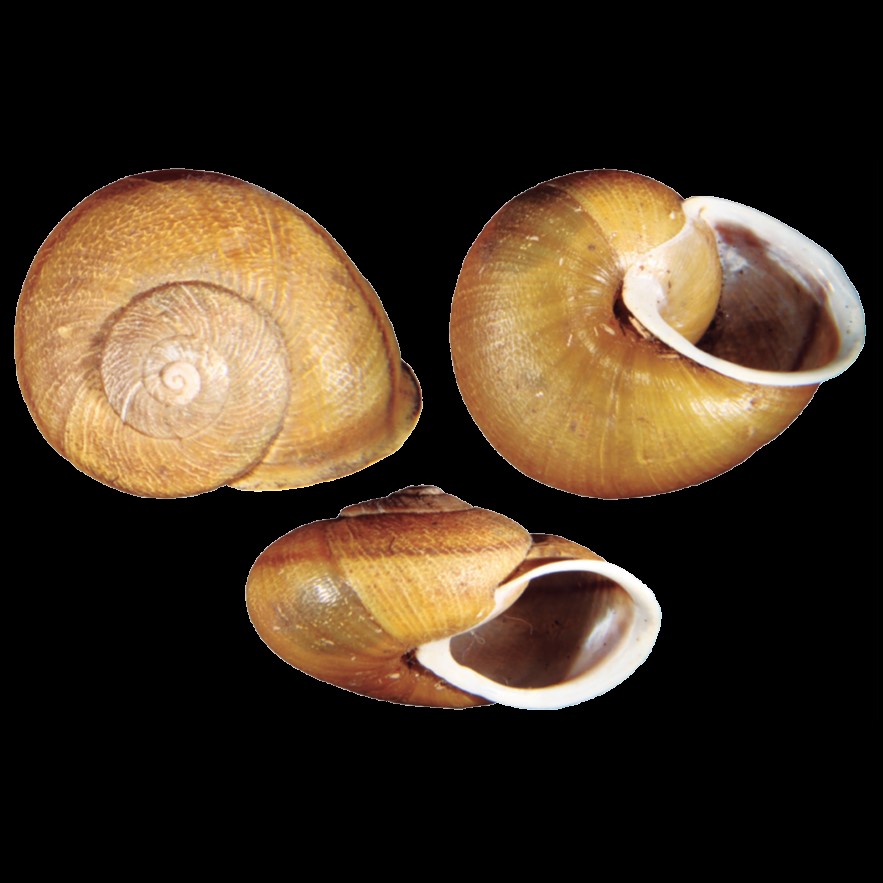
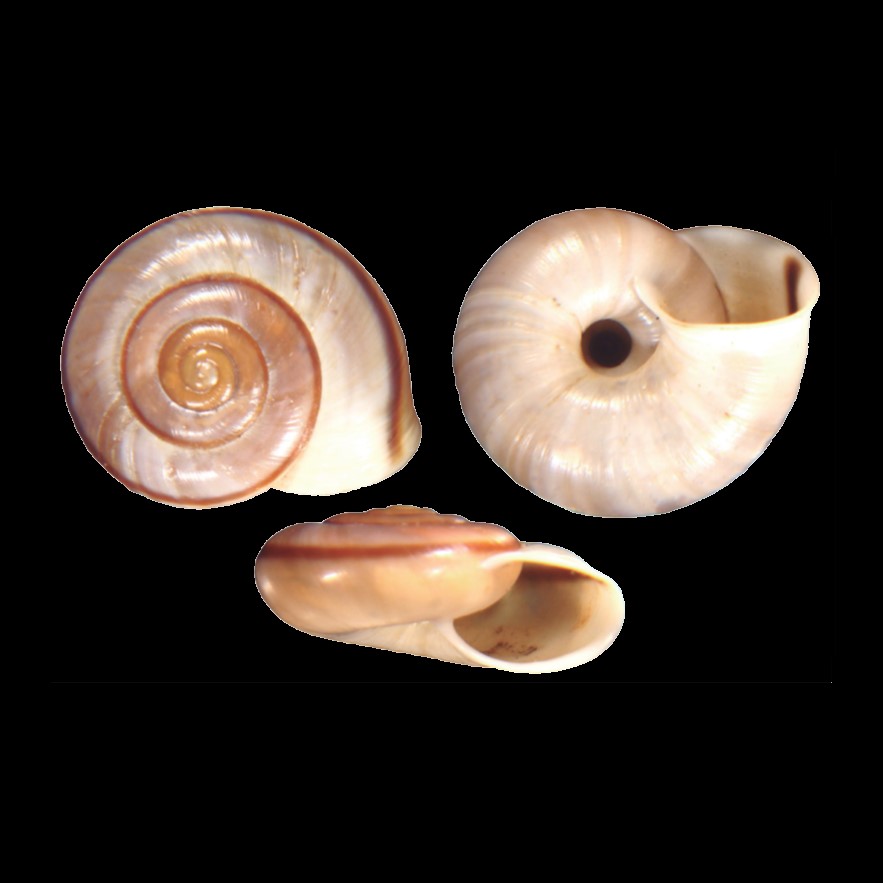
CLASSE: GASTROPODA: TERRESTRE FAMÍLIA: EPIPHRAGMOPHORIDAE ESPÉCIE: Epiphragmophora jujuyensis Hylton Scott, 1962 Tamanho médio: 40 mm Habitat: geralmente encontrado sob a serapilheira e troncos de árvores caídos em florestas úmidas Ocorrência: Argentina (Jujuy, Salta) Localidade tipo: Argentina, Jujuy, Las Capillas Nome original: Epiphragmophora jujuyensis Hylton Scott, 1962 Descrição: (Cuezzo, 2006): "Dextral, helicoidal, globose, solid, with elevated conical spire; medium to large size, 4 ½ convex whorls; dark to light brown, with thin, peripheral supraequatorial dark brown band more evident in body whorl; protoconch smooth; teleoconch surface malleated with diagonal ribs on body whorl; suture deeply impressed; aperture elliptical, peristome whitish slightly reflected, with callous lower margin; body whorl distinctly descending towards aperture; umbilicus narrow, overlapped by ventral columelar fold of peristome...
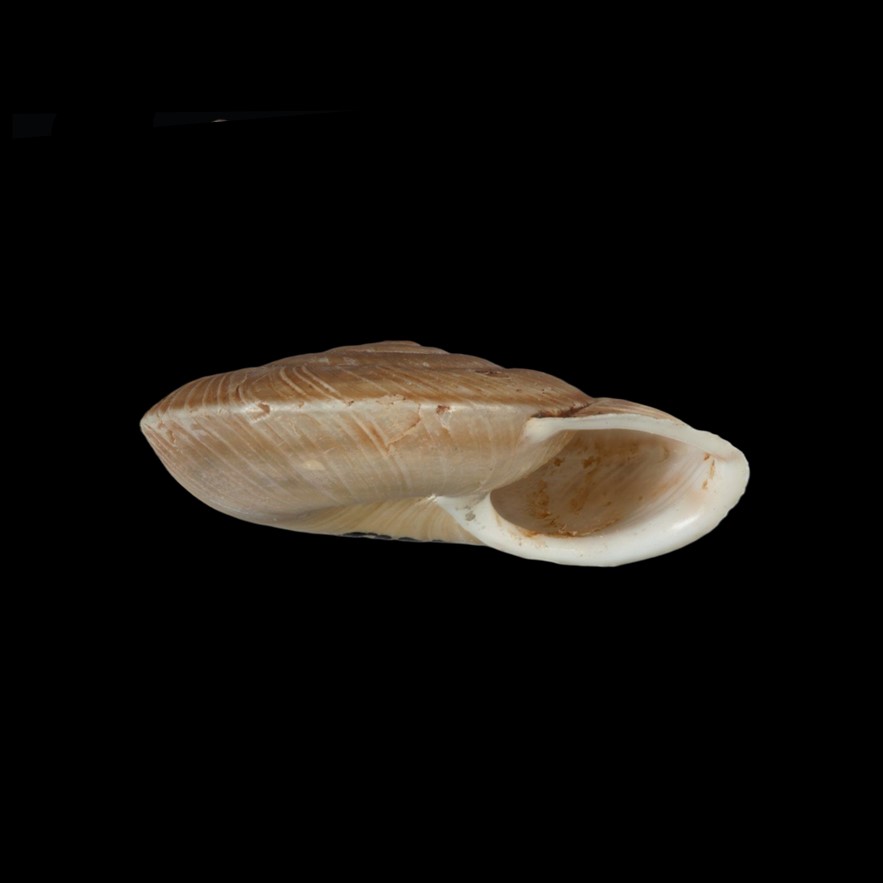
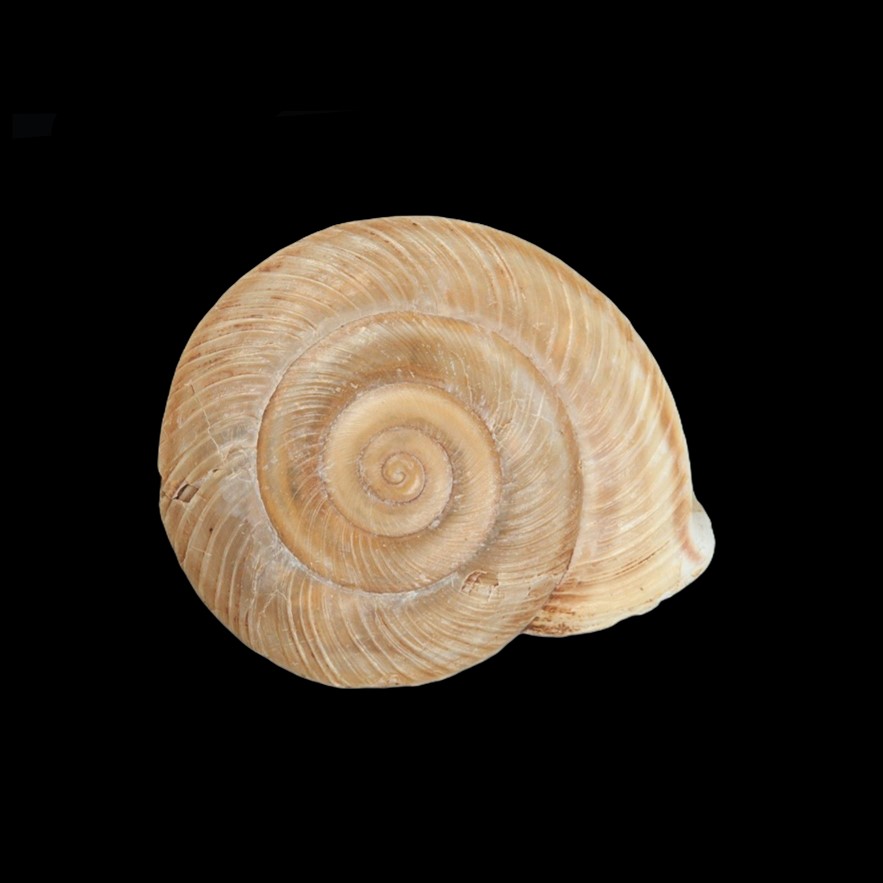
CLASSE: GASTROPODA: TERRESTRE FAMÍLIA: EPIPHRAGMOPHORIDAE ESPÉCIE: Epiphragmophora lentiformis (F. Haas, 1955) Tamanho médio: 26 mm Ocorrência: Peru (Apurímac) Localidade tipo: Peru, " Apurímac department, Andahuaylas, Hacienda Mozobamba" Nome original: Karlschmidtia lentiformis F. Haas, 1955 Sinônimos: Epiphragmophora (Karlschmidtia) lentiformis (F. Haas, 1955) Etimologia: o nome da espécie é uma referência ao formato da concha Fotos: (1-3) Field Museum of Natural History: HOLOTYPE FMNH 51271, Andahuaylas, Ongoy, Hacienda Mozobamba, coll. Celestino Kalinowski, x.1953 Figura: Salvador et al. 2023: (A–C) Isomeria cymatodes, AM MA104139, (H = 28.2 mm, D = 49.2 mm); (E–F) Isomeria juno, AM MA104143, Equador, Pastaza, (H = 18.9mm, D = 33.3mm); (G–I) Epiphragmophora lentiformis, PARATYPE AM MA73551, (H = 11.2 mm, D = 26.5 mm). barra da escala: 5 mm...
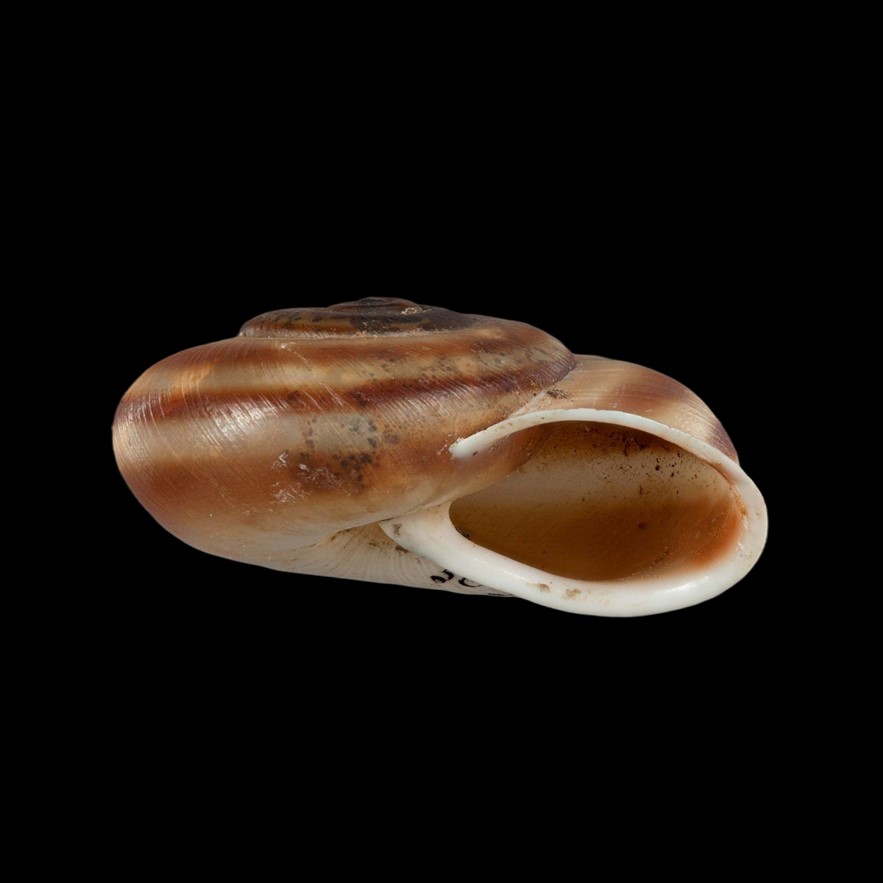
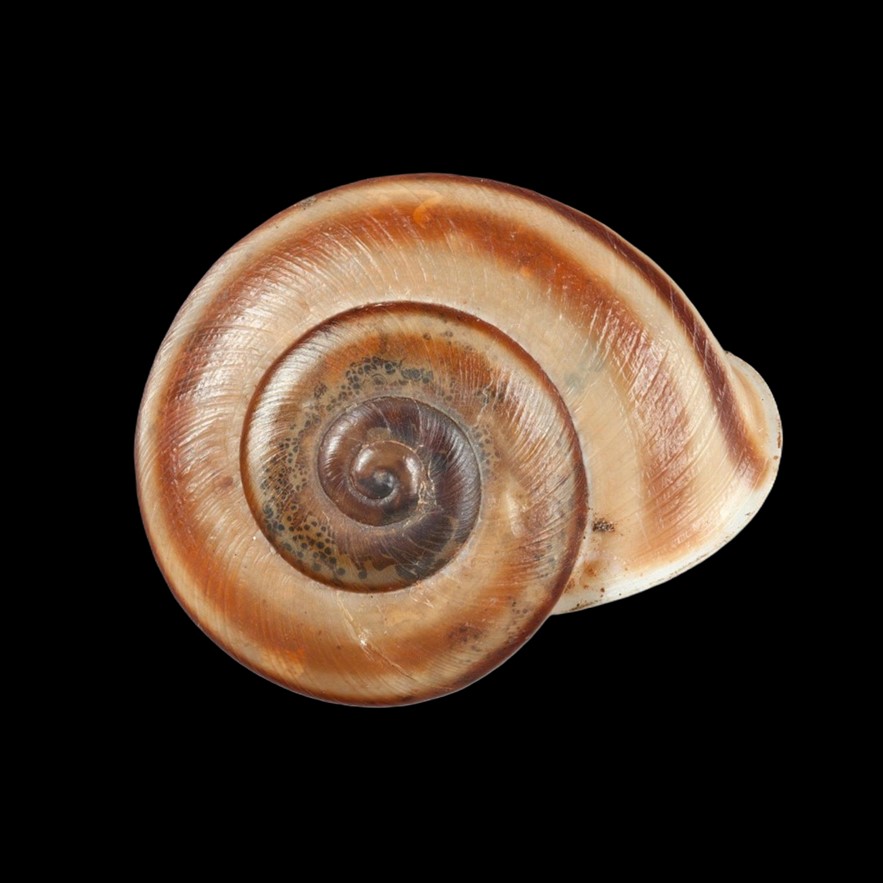
CLASSE: GASTROPODA: TERRESTRE FAMÍLIA: EPIPHRAGMOPHORIDAE ESPÉCIE: Epiphragmophora leucobasis F. Haas, 1951 Tamanho médio: 27 mm Ocorrência: Peru Localidade tipo: Peru, "above Chincheros, near Rio Pampas" Altitude: 3000 m Nome original: Epiphragmophora (Epiphragmophora) leucobasis F. Haas, 1951 Fotos: (1-3) Field Museum of Natural History: HOLOTYPE FMNH 30923, Peru, "above Chincheros, near Rio Pampas", coll. W. Weyrauch, 1949, 27.3mm Fontes: Descrição original: (como Epiphragmophora (Epiphragmophora) leucobasis F. Haas, 1951) Haas, F. (1951). Remarks on and descriptions of South American non-marine shells. Fieldiana: Zoology. 31(46): 503-545., disponível online em https://www.biodiversitylibrary.org/page/2784155 page(s): 525-526, figs. 111A-C Ramírez, R.; Paredes, C.; Arenas, J. (2003). Moluscos del Perú. Revista de Biologia Tropical. 51(supplement 3): 225-284 Grant S, Webbink K, Keogh S (2025). Field Museum of Natural History (Zoology) Invertebrate Collection. Version 18.51....
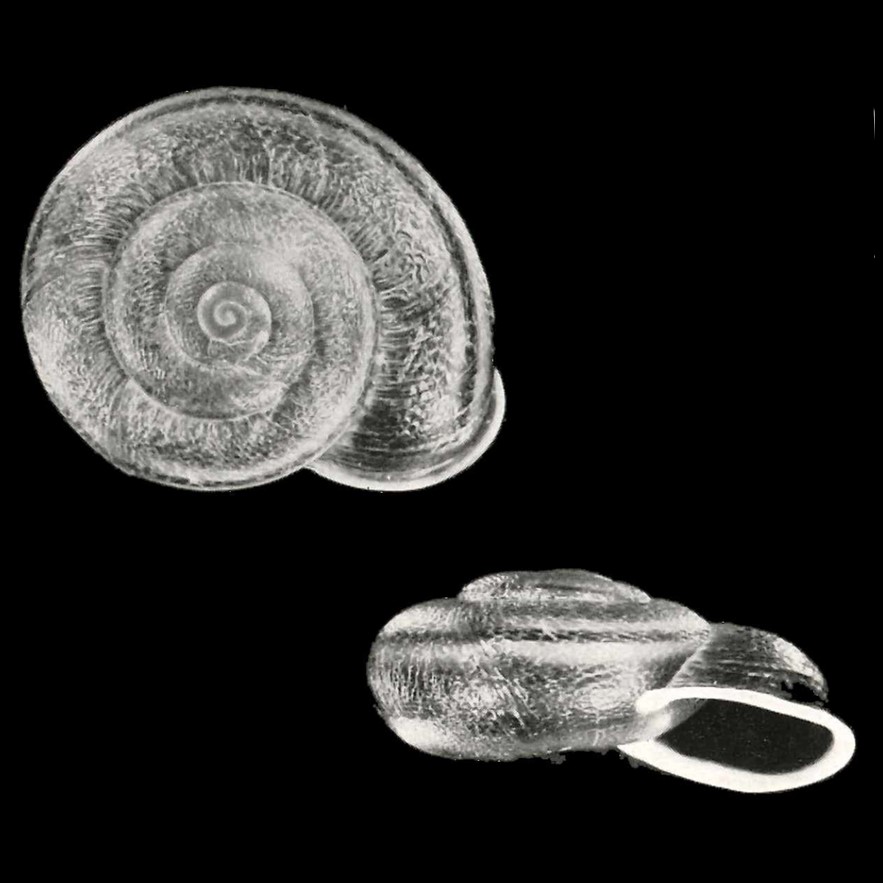
CLASSE: GASTROPODA: TERRESTRE FAMÍLIA: EPIPHRAGMOPHORIDAE ESPÉCIE: Epiphragmophora llaguenica Zilch, 1953 Tamanho médio: 19 - 20 mm Ocorrência: Peru Habitat: transição de floresta montana aberta para floresta montana primitiva sob serapilheira, madeira e pedras no chão Localidade tipo: Peru, "Fazenda Llaguen (aprox. 7°40' S, 78°40' W), Floresta Rejo Cargaruay" Altitude: 2660 m Nome original: Epiphragmophora llaguenica Zilch, 1953 Sinônimos: Epiphragmophora (Epiphragmophora) llaguenica Zilch, 1953 Etimologia: o nome da espécie é uma referência à locallidade tipo Fotos: (1) Zilch, 1953: Senckenberg. Collection Mollusca, HOLOTYPE SMF 108559, H. W. Koepcke leg. 14.xii.1952, 20.0 mm Figura: Zilch, 1953: (7) Epiphragmophora llagnenica, Peru, "Wald von Rejo Cargaray der Hacienda Llaguen", 2660 m, HOLOTYPE SMF 108559; (8-9) Epiphragmophora (Pilshrya) taulisensis, Peru, "Bergurwald der Hacienda Taulis,...
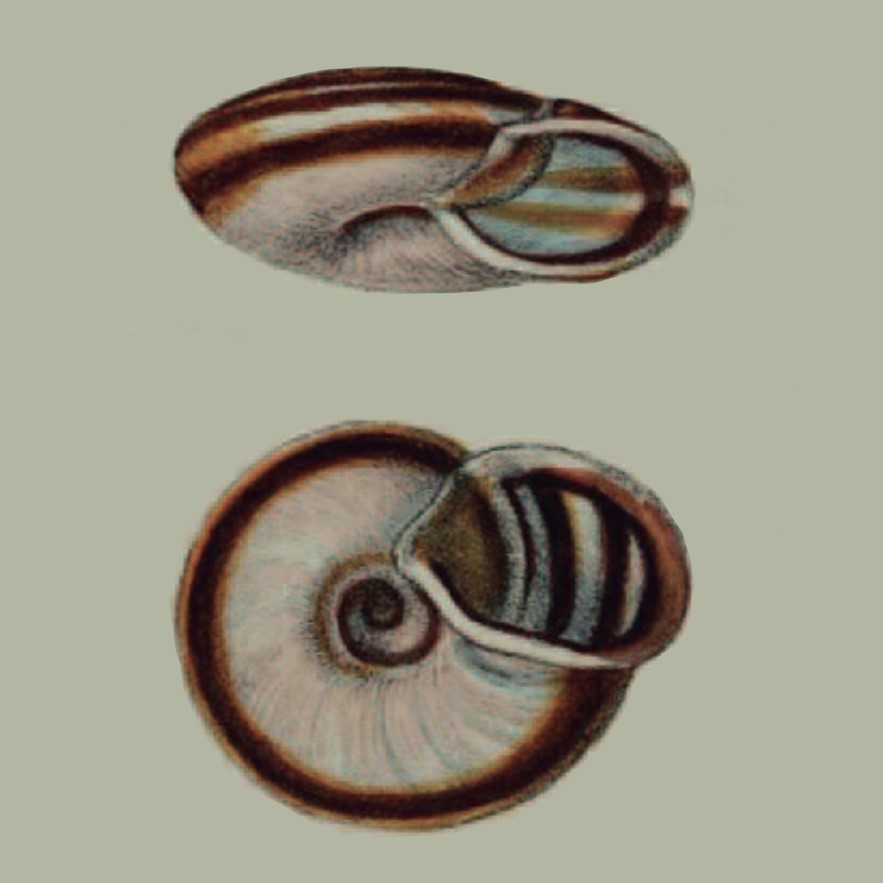
CLASSE: GASTROPODA: TERRESTRE FAMÍLIA: EPIPHRAGMOPHORIDAE ESPÉCIE: Epiphragmophora macasi (E. T. Higgins, 1872) Tamanho médio: 35 mm Ocorrência: Equador (Morona-Santiago) Localidade tipo: Equador, Morona-Santiago, Macas Nome original: Helix (Aglaja) macasi E. T. Higgins, 1872 Sinônimos: Epiphragmophora (Epiphragmophora) macasi (E. T. Higgins, 1872) Etimologia: o nome da espécie é uma referência à localidade tipo Comentários: não há registros da espécie após sua descrição Fotos: nd, figura original de Epiphragmophora macasi (Higgins, 1872). Morona-Santiago: Macas, em HIGGINS (1872): pl. 56 fig. 6-6a, 35 mm Fontes: Descrição original: (como Helix (Aglaja) macasi E. T. Higgins, 1872) Higgins, E. T. (1872). Description of new species of shells collected by Mr. Clarence Buckley in Ecuador. Proceedings of the Zoological Society of London. (1872): 685-687, pl. 56., disponível online em https://biodiversitylibrary.org/page/28612139 página(s): 686, pl....

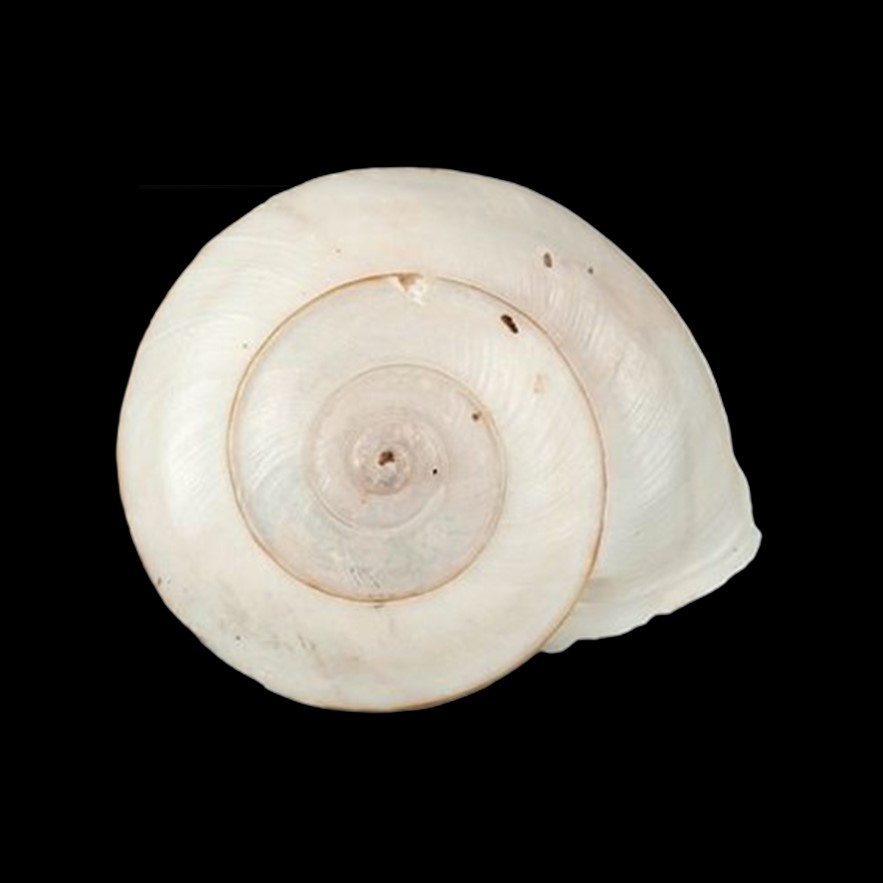
CLASSE: GASTROPODA: TERRESTRE FAMÍLIA: EPIPHRAGMOPHORIDAE ESPÉCIE: Epiphragmophora malkini F. Haas, 1962 Tamanho médio: 26 mm Ocorrência: Bolívia (Santa Cruz) Localidade tipo: Bolívia, Santa Cruz, "San Francisco near Tarenda" Altitude: 2000 m Nome original: Epiphragmophora (Epiphragmophora) malkini F. Haas, 1962 Etimomolgia: o nome da espécie é uma homenagem ao antropólogo, entomólogo e herpetologista polonês, Boris Malkin (1917-2009) Fotos: (1-3) Field Museum of Natural History: HOLOTYPE FMNH 112122, Bolívia, Santa Cruz, coll. Boris Malkin, ix.1960, 26.1mm Fontes: Descrição original: (como Epiphragmophora (Epiphragmophora) malkini F. Haas, 1962) Haas, F. (1962). A new species of land snail from Bolivia. Fieldiana, Zoology. 44(10): 67-68., disponível online em https://biodiversitylibrary.org/page/2769204 Grant S, Webbink K, Keogh S (2025). Field Museum of Natural History (Zoology) Invertebrate Collection. Version 18.51. Field Museum. Occurrence...
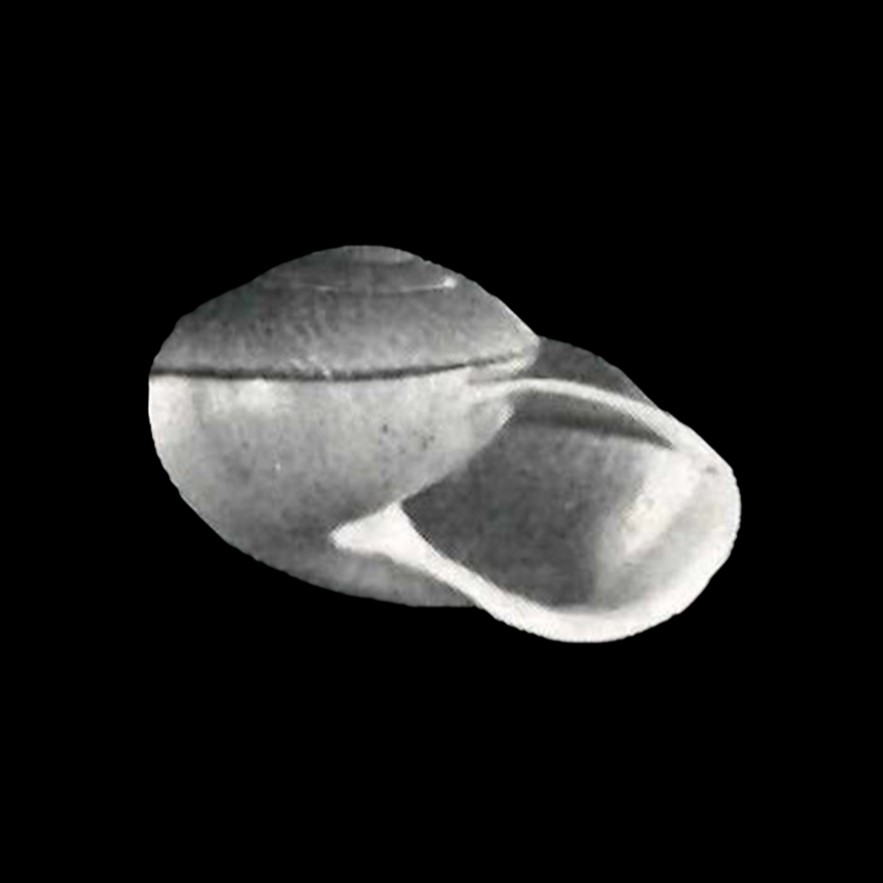
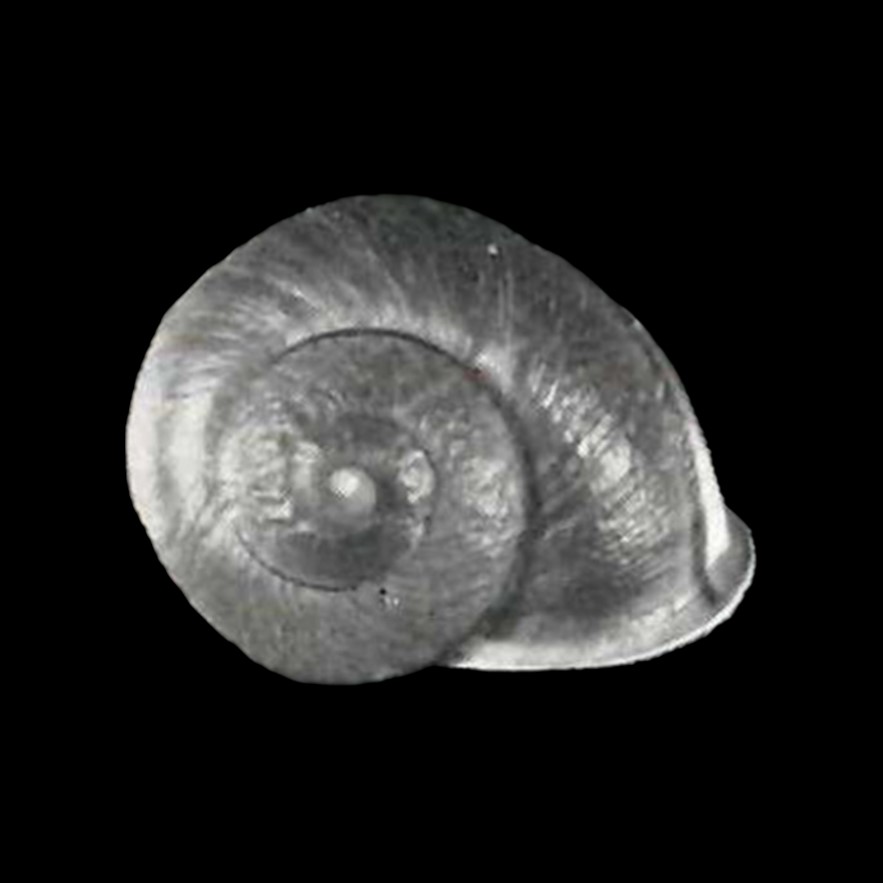
CLASSE: GASTROPODA: TERRESTRE FAMÍLIA: EPIPHRAGMOPHORIDAE ESPÉCIE: Epiphragmophora mirabilis Weyrauch, 1960 Tamanho médio: 25 mm Ocorrência: Peru Localidade tipo: Peru, "Norte do Peru, na Bacia Amazônica: Na entrada da Caverna Guacharo, acima de San Andrés, 30 km a nordeste de Cutervo, 2650 m, em floresta subtropical perene, sobre um tronco de árvore apodrecido no solo da floresta, perto de uma parede rochosa" Altitude: 2650 m Nome original: Epiphragmophora mirabilis Weyrauch, 1960 Sinônimos: Epiphragmophora (Epiphragmophora) mirabilis Weyrauch, 1960 Fotos: (1-3) Weyrauch, W. K. (1960): Senckenberg Museum, Frankfurt am Main, HOLOTYPE SMF 162064, W. Weyrauch leg., 20.i.1959 Fontes: Descrição original: Weyrauch, W. K. (1960). Siebzehn neue Landschnecken aus Peru. Archiv für Molluskenkunde. 89 (4/6): 117-132, pl. 11-12. Frankfurt am Main. página(s): 129 Ramírez, R.; Paredes,...
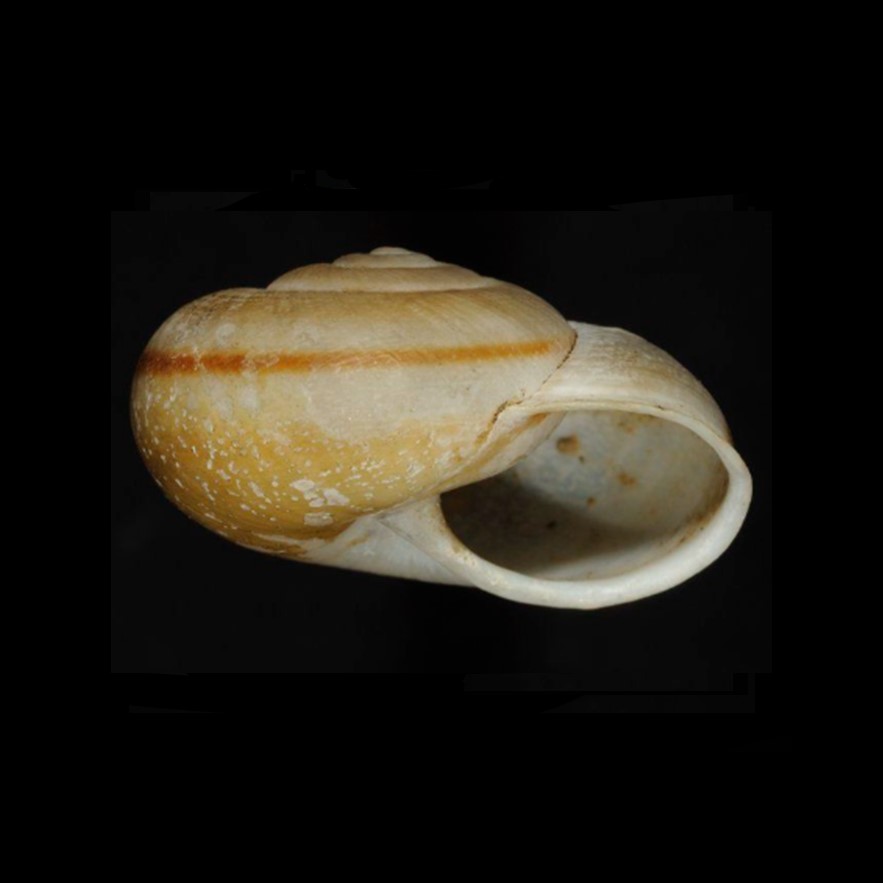
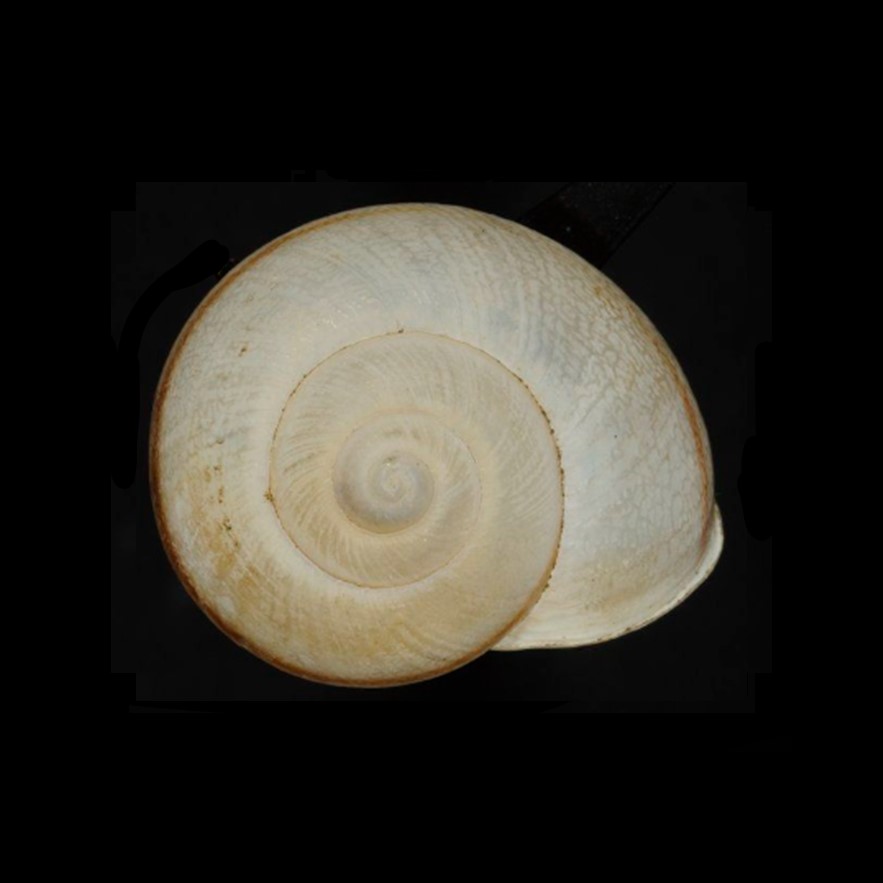
CLASSE: GASTROPODA: TERRESTRE FAMÍLIA: EPIPHRAGMOPHORIDAE ESPÉCIE: Epiphragmophora multesima Pilsbry, 1926 Tamanho médio: 26 mm Ocorrência: Bolívia (Santa Cruz) Localidade tipo: Bolívia, Departamento de Santa Cruz, "near Saipina" Altitude: 2000 m Nome original: Epiphragmophora multesima Pilsbry, 1926 Fotos: (1-3) The Academy of Natural Sciences, Philadelphia: HOLOTYPE ANSP 129674, Bolívia, Santa Cruz, coll. José Steinback, 26mm Fontes: Descrição original: Pilsbry, H. A. (1926). South American land and fresh water mollusks: Notes and descriptions,- VI. Proceedings of the Academy of Natural Sciences of Philadelphia. 78: 1-15. página(s): 1 Ramírez, R.; Paredes, C.; Arenas, J. (2003). Moluscos del Perú. Revista de Biologia Tropical. 51(supplement 3): 225-284 Rosenberg G (2026). Malacology Collection at the Academy of Natural Sciences of Philadelphia. Academy of Natural Sciences. Occurrence dataset...


CLASSE: GASTROPODA: TERRESTRE FAMÍLIA: EPIPHRAGMOPHORIDAE ESPÉCIE: Epiphragmophora olssoni Pilsbry, 1926 Tamanho médio: 28 mm Ocorrência: Peru (Piura) Localidade tipo: Peru, "top of Huamcabamba" Altitude: 3050 m Nome original: Epiphragmophora olssoni Pilsbry, 1926 Etimologia: o nome da espécie é uma homenagem ao geólogo e malacologista norte americano Axel Adolf Olsson (1889-1977) Fotos: (1-3) The Academy of Natural Sciences, Philadelphia: HOLOTYPE ANSP 140100, coll. A.A. Olson, 28.3mm Fontes: Descrição original: Pilsbry, H. A. (1926). South American land and fresh water mollusks: Notes and descriptions,- VI. Proceedings of the Academy of Natural Sciences of Philadelphia. 78: 1-15. página(s): 4 Ramírez, R.; Paredes, C.; Arenas, J. (2003). Moluscos del Perú. Revista de Biologia Tropical. 51(supplement 3): 225-284 Rosenberg G (2026). Malacology Collection at the Academy...
CLASSE: GASTROPODA: TERRESTRE FAMÍLIA: EPIPHRAGMOPHORIDAE ESPÉCIE: Epiphragmophora oresigena (A. d'Orbigny, 1835) Tamanho médio: 37 - 42 mm Habitat: geralmente encontrado sob a serapilheira e troncos de árvores caídos em florestas úmidas Ocorrência: Bolívia (La Paz) Localidade tipo: Bolívia, "Provincia Yungasensi, republica Boliviana, prés du confluent du Rio Meguilla et du Rio de La Paz" Nome original: Helix oresigena A. d'Orbigny, 1835 Descrição: (Cuezzo, 2006): "Dextral, helicoidal, globose, very solid with conical, obtuse spire; large size, 5 1/3 convex whorls; dark to light brown; three peripheral dark brown bands more evident in body whorl, ventral pigmented band usually wider, central and dorsal supraequatorial, only central and dorsal bands in spire; protoconch smooth; teleoconch surface malleated with diagonal ribs on body whorl; suture deep...


CLASSE: GASTROPODA: TERRESTRE FAMÍLIA: EPIPHRAGMOPHORIDAE ESPÉCIE: Epiphragmophora oroyensis Pilsbry, 1926 Tamanho médio: 29 mm Ocorrência: Peru (Junin) Localidade tipo: Peru, Junin, Oroya Altitude: 3650 m Nome original: Epiphragmophora oroyensis Pilsbry, 1926 Etimologia: o nome da espécie é uma referência à localidade tipo Fotos: (1-3) The Academy of Natural Sciences, Philadelphia: ANSP 140099, coll. R.W. Hendee, 1926, 29mm Fontes: Descrição original: Pilsbry, H. A. (1926). South American land and fresh water mollusks: Notes and descriptions,- VI. Proceedings of the Academy of Natural Sciences of Philadelphia. 78: 1-15. página(s): 2 Ramírez, R.; Paredes, C.; Arenas, J. (2003). Moluscos del Perú. Revista de Biologia Tropical. 51(supplement 3): 225-284 Rosenberg G (2026). Malacology Collection at the Academy of Natural Sciences of Philadelphia. Academy of Natural...
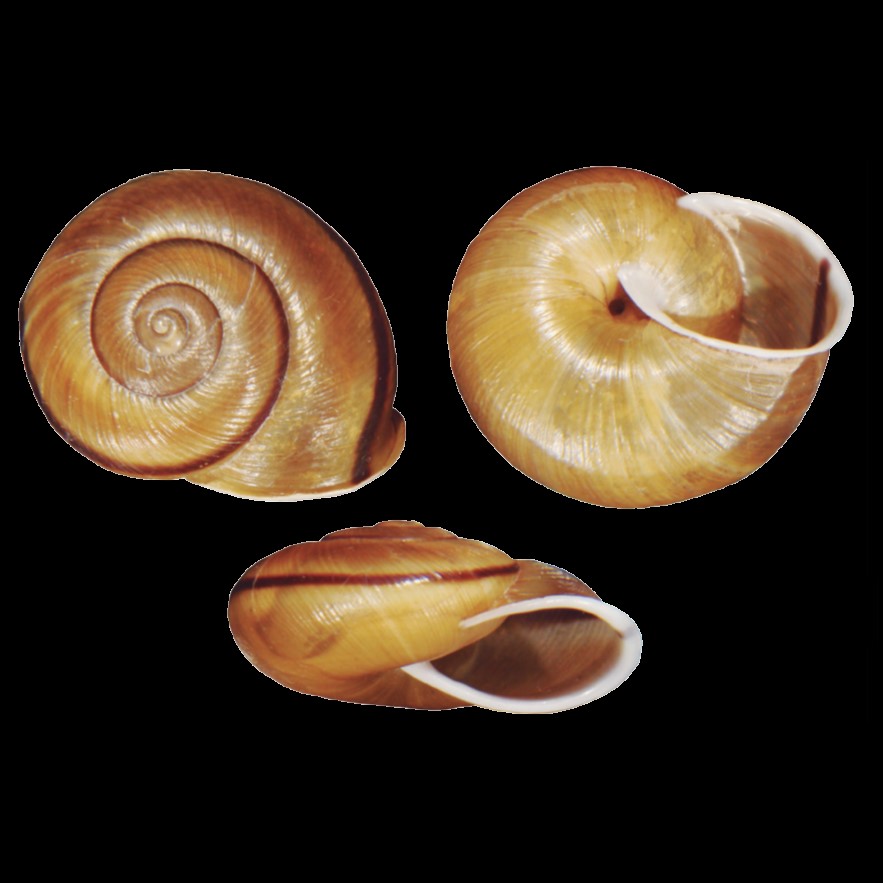
CLASSE: GASTROPODA: TERRESTRE FAMÍLIA: EPIPHRAGMOPHORIDAE ESPÉCIE: Epiphragmophora parodizi D. Fernández & Rumi, 1984 Tamanho médio: 19 - 24 mm Habitat: encontrada tanto na província biogeográfica de Yungas quanto na pré-Puna, embora espécimes vivos só tenham sido encontrados na floresta tropical de Yungas, principalmente sob troncos no chão em contato com o solo Ocorrência: Argentina (Tucumán) Localidade tipo: Argentina, "Tucumán Prov., Tafi del Valle Dept., Infiernillo. W. Weyrauch leg., 5.iv.1965 Nome original: Epiphragmophora parodizi D. Fernández & Rumi, 1984 Descrição: (Cuezzo, 2006): Dextral, helicoidal, semisolid to fragile, with conical shallow spire; small size, 4 1/4 convex whorls; light yellowish to golden brown, with peripheral supraequatorial, dark brown band progressively becoming thicker towards body whorl, band running above suture in spire; protoconch smooth; teleoconch...
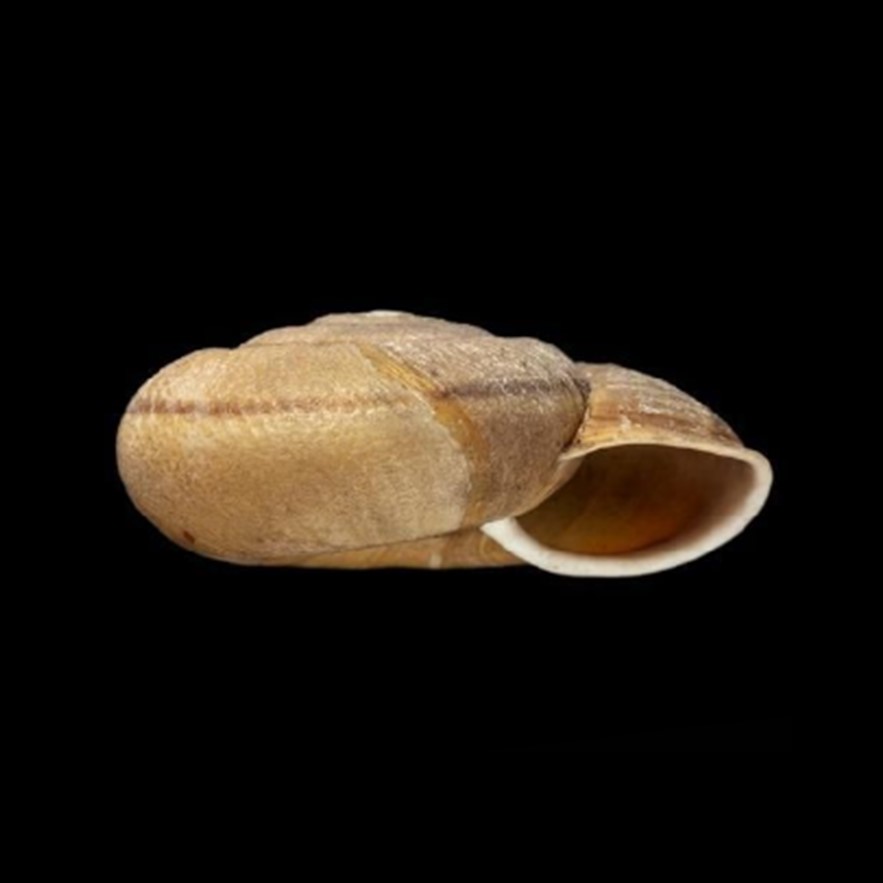
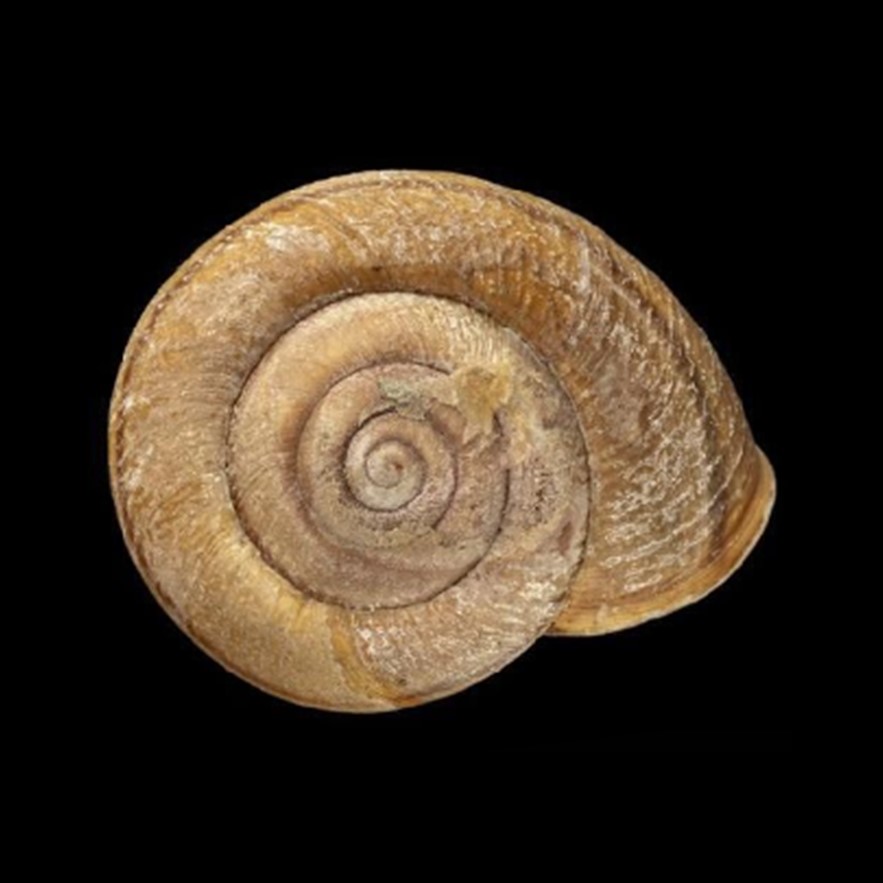
CLASSE: GASTROPODA: TERRESTRE FAMÍLIA: EPIPHRAGMOPHORIDAE ESPÉCIE: Epiphragmophora patasensis (L. Pfeiffer, 1859) Tamanho médio: 36 mm Ocorrência: Peru (La Libertad) Localidade tipo: Peru, "Province of Patas, Andes of Peru (Dr. Farris)" Nome original: Helix patasensis L. Pfeiffer, 1859 Sinônimos: Helix patesensis L. Pfeiffer, 1859 [sic] (Molluscabase, 2026) Etimologia: o nome da espécie é uma referência à localidade tipo, a província de Pataz Fotos: (1-3) Natural History Museum, London: SYNTYPE de Epiphragmophora patasensis, NHMUK 20210313, "Patas; Andes of Peru, Andes of Peru", 36mm; (4) idem, SYNTYPE NHMUK 20210314 Fontes: Descrição original: (como Helix patesensis L. Pfeiffer, 1859) Pfeiffer, L. (1859). Descriptions of twenty-seven new species of land-shells, from the collection of H. Cuming, Esq. Proceedings of the Zoological Society of London. 27 (385):...


CLASSE: GASTROPODA: TERRESTRE FAMÍLIA: EPIPHRAGMOPHORIDAE ESPÉCIE: Epiphragmophora pilsbryi F. Haas, 1934 Tamanho médio: 18 mm Ocorrência: Colômbia Localidade tipo: Colômbia Nome original: Epiphragmophora (Epiphragmophora) pilsbryi F. Haas, 1934 Etimologia: o nome da espécie é uma homenagem a Henry Augustus Pilsbry (Iowa 1862 – Flórida 1957). Pilsbry foi um biólogo, malacólogo e carcinólogo. Notabilizou-se mundialmente pelo seu estudo dos moluscos (Mollusca), em particular dos Polyplacophora e dos gastrópodes terrestres Fotos: (1-3) Senckenberg. Collection Mollusca SMF: HOLOTYPE SMF 7752, Colômbia Fontes: Descrição original: (como Epiphragmophora (Epiphragmophora) pilsbryi F. Haas, 1934) Haas, F. (1934). Neue Landschnecken des Senckenberg-Museums. Senckenbergiana. 16 (2/3): 94-98. página(s): 95, figs 6-10 Simone, L. R. L. (2006). Land and Freshwater Molluscs of Brazil. Editora Gráfica Bernardi, FAPESP. São Paulo, 390 pp. página(s):...
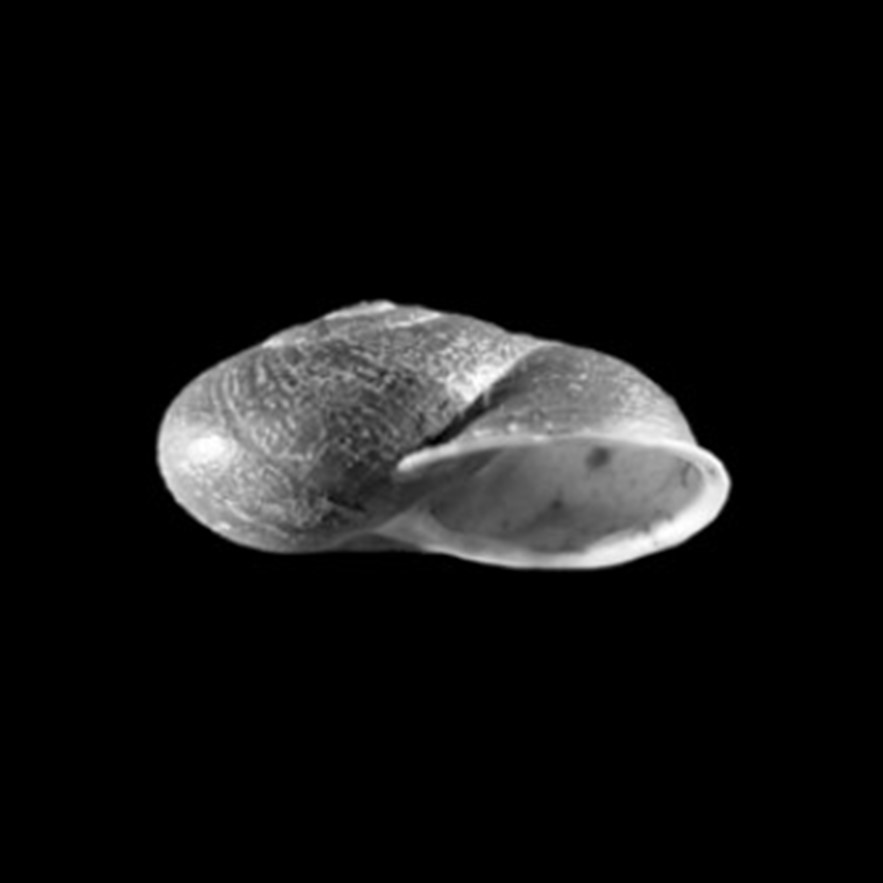
CLASSE: GASTROPODA: TERRESTRE FAMÍLIA: EPIPHRAGMOPHORIDAE ESPÉCIE: Epiphragmophora proseni Hylton Scott, 1951 Tamanho médio: 30 mm Ocorrência: Argentina (Jujuy), conhecida apenas na localidade tipo Localidade tipo: Argentina, Jujuy, Departamento de Tumbaya, Quebrada de Humahuaca Nome original: Epiphragmophora proseni Hylton Scott, 1951 Etimologia: o nome da espécie é uma homenagem ao entomologista argentino Alberto F. Prosen (1902 – 1972) Descrição: (Cuezzo, 2006): "Dextral, globose, solid; conic spire fairly elevated; medium size; with 4 ¼ convex whorls; dark brown to chestnut homogeneous color; peripheral band on body whorl absent; protoconch smooth; first spire whorls with axial ribs, body whorl malleated with axial to diagonal ribs, ventrally fine spiral lines well marked around umbilicus; suture well impressed; oval transversal aperture with peristome white, fine narrowly reflexed,...
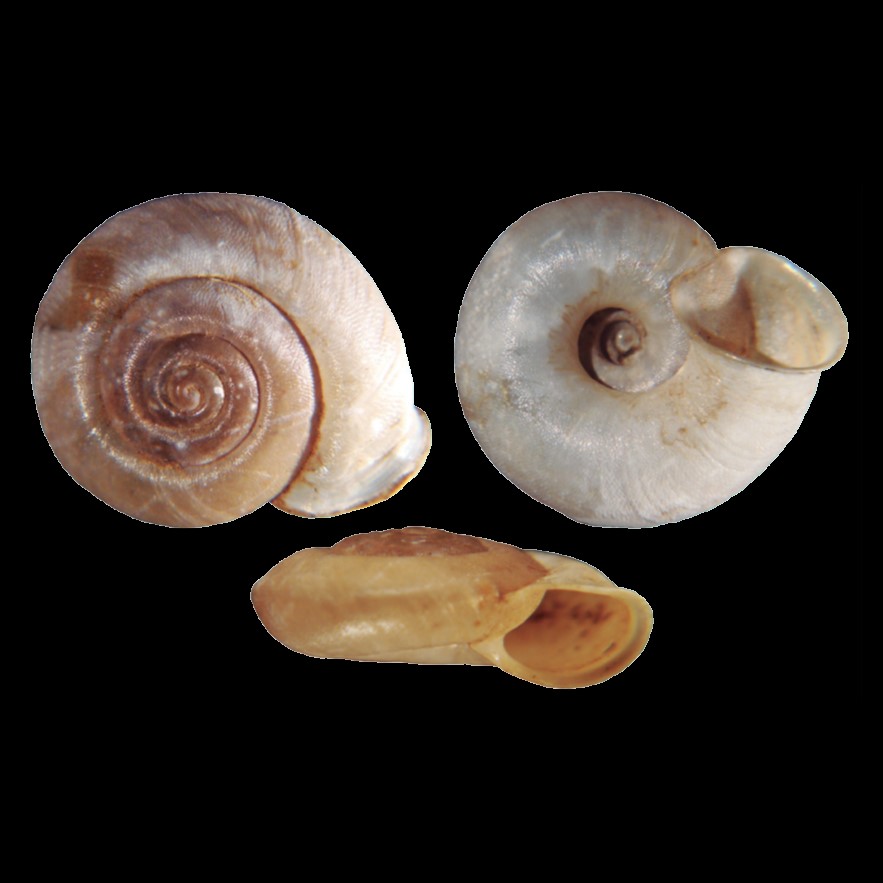
CLASSE: GASTROPODA: TERRESTRE FAMÍLIA: EPIPHRAGMOPHORIDAE ESPÉCIE: Epiphragmophora puella Hylton Scott, 1951 Tamanho médio: 18 mm Ocorrência: Argentina (Catamarca), "Southern Catamarca Prov., Argentina. Monte biogeographic province" Localidade tipo: Argentina, Catamarca, Capayán Dept., Quebrada de La Cébila Nome original: Epiphragmophora proseni Hylton Scott, 1951 Descrição: (Cuezzo, 2006): "Dextral, helicoidal, fragile; low to flat spire; small; 4 ¾ whorls equatorially subcarinated; pale yellowish to pale brownish; peripheral band absent; protoconch smooth; first whorl with axial growth lines, rest of teleoconch surface with tiny, oval pustules giving appearance of wrinkled surface; suture deeply impressed; aperture subcircular to subovoid; peristome whitish, thin, well expanded; body whorl not descending towards aperture or scarcely descending; umbilicus wide, perspective not overlapped by ventral columelar fold of peristome " Fotos...
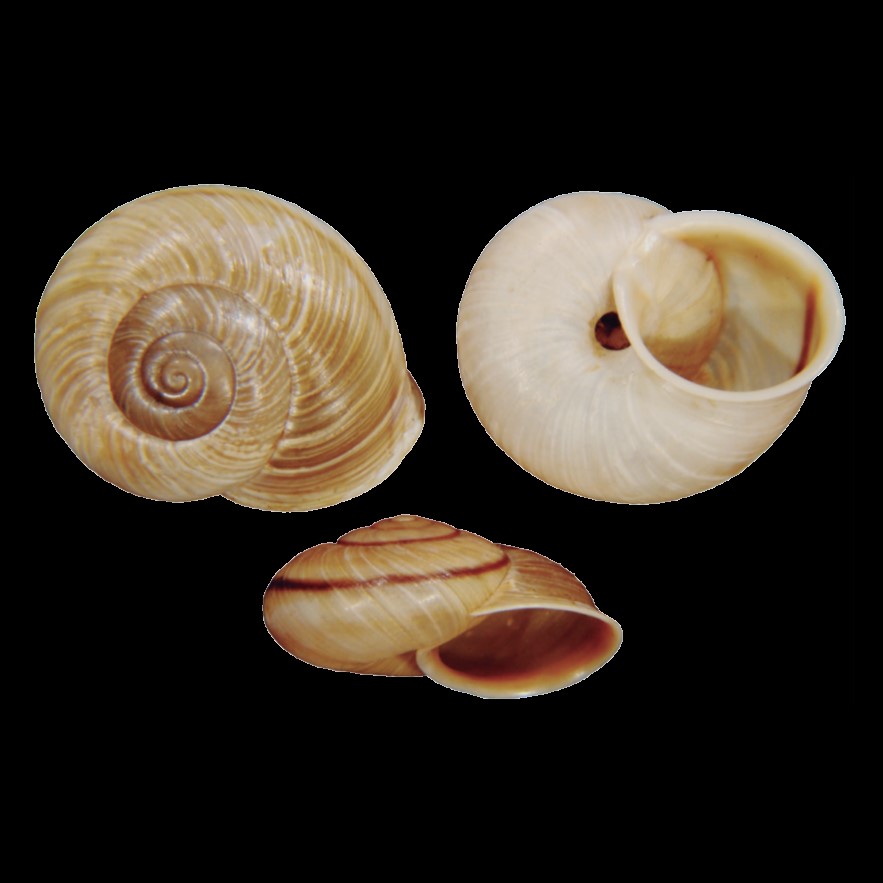
CLASSE: GASTROPODA: TERRESTRE FAMÍLIA: EPIPHRAGMOPHORIDAE ESPÉCIE: Epiphragmophora puntana (Holmberg, 1909) Tamanho médio: 26.3 - 30 mm Ocorrência: Argentina (San Luis, Cordoba): "Epiphragmophora puntana is known to live in central and northeastern San Luis Province, Argentina, and occasionally have been found in southern Córdoba Province" Localidade tipo: Argentina, San Luis, Cerro del Volcán Nome original: Helix puntana Holmberg, 1909 Descrição: (Cuezzo, 2006): "Dextral, helicoidal, fragile; low to flat spire; small; 4 ¾ whorls equatorially subcarinated; pale yellowish to pale brownish; peripheral band absent; protoconch smooth; first whorl with axial growth lines, rest of teleoconch surface with tiny, oval pustules giving appearance of wrinkled surface; suture deeply impressed; aperture subcircular to subovoid; peristome whitish, thin, well expanded; body whorl not descending towards aperture or...
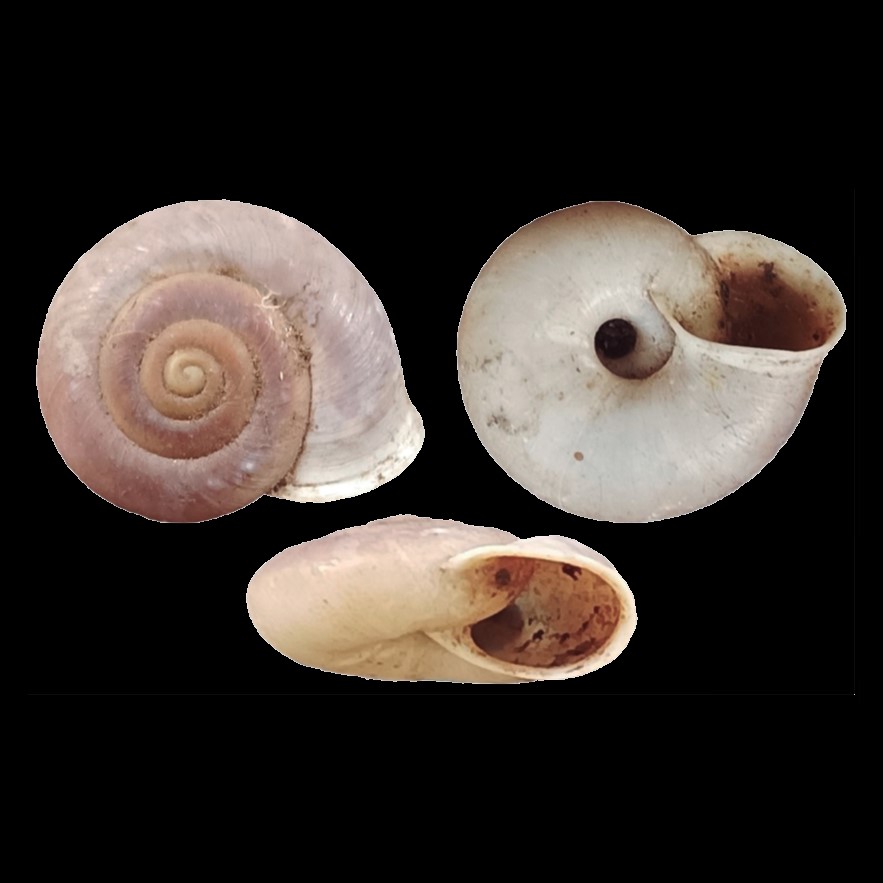
CLASSE: GASTROPODA: TERRESTRE FAMÍLIA: EPIPHRAGMOPHORIDAE ESPÉCIE: Epiphragmophora quirogai Cuezzo, 2006 Tamanho médio: 22 - 24.6 mm Ocorrência: Argentina (Catamarca, La Rioja) Localidade tipo: Argentina, La Rioja, Sierra de Velazco, Anillaco Nome original: Epiphragmophora quirogai Cuezzo, 2006 Etimologia: o nome da espécie é uma homenagem ao argentino Juan Facundo Quiroga (1788-1835), também conhecido como “Tigre de Los Llanos”, que lutou pela independência pela independência das províncias argentinas Descrição original: (Cuezzo, 2006): "Dextral, helicoidal, depressed, semisolid; spire low, conical; small to medium size; 4 ¼ convex whorls; bright cream to bright pink; peripheral pigmented band absent; protoconch smooth; teleoconch surface with thin axial growth lines; body whorl surface with thin axial growth lines crossed by irregular peripheral lines, giving malleated appearance in some specimens;...
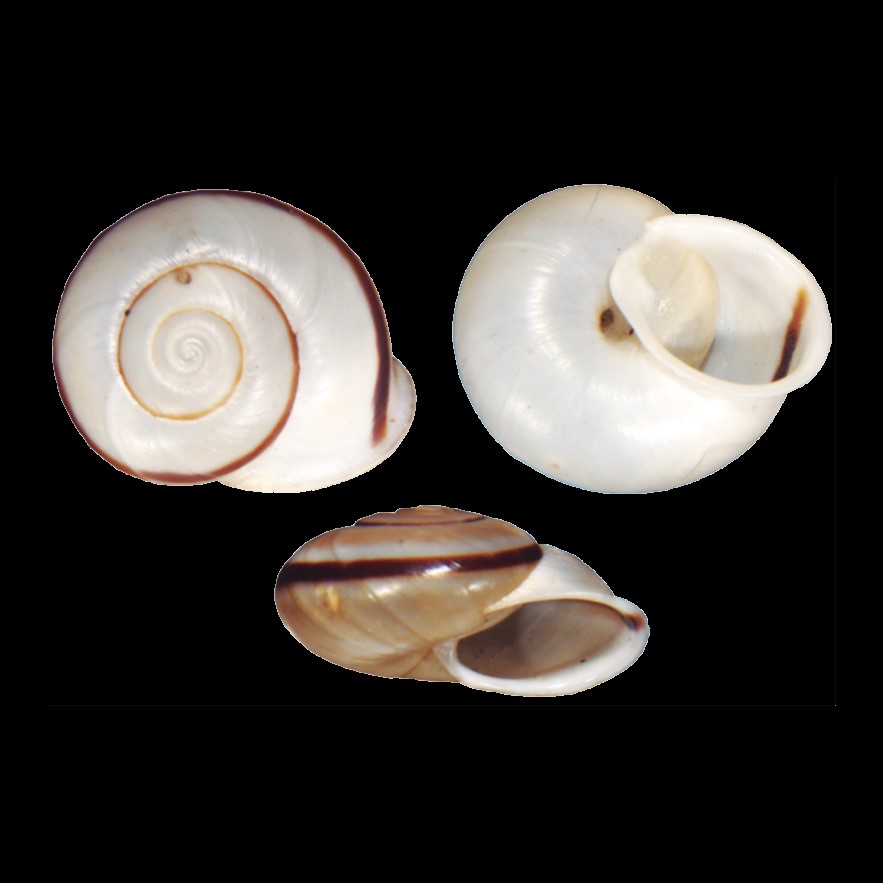
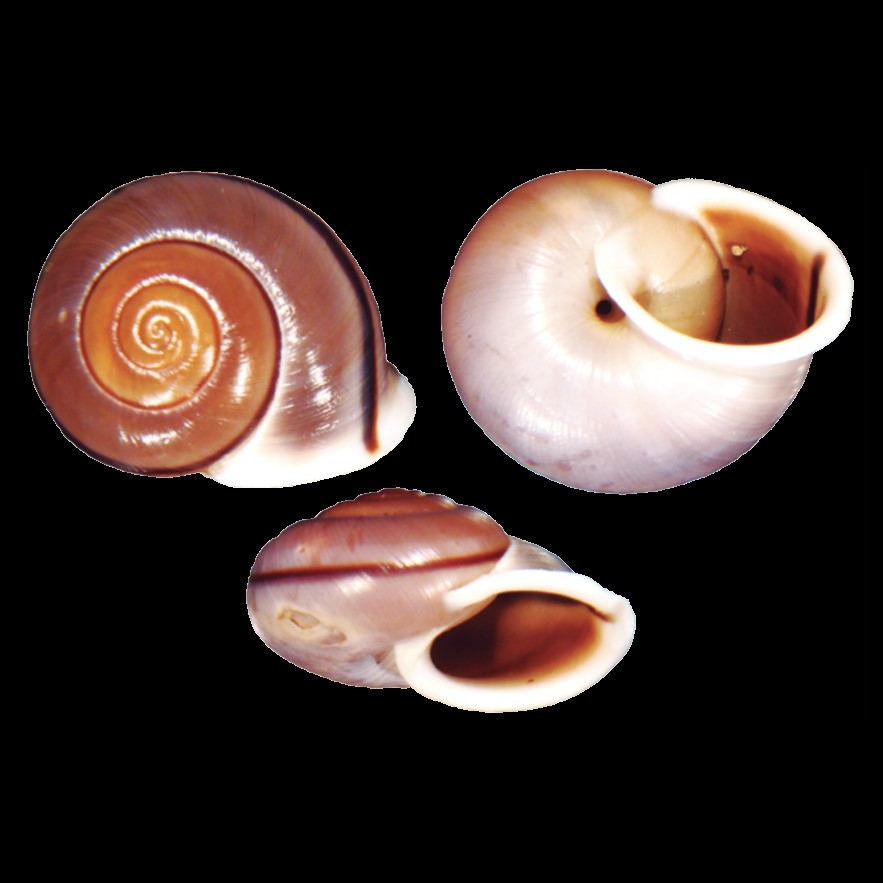
CLASSE: GASTROPODA: TERRESTRE FAMÍLIA: EPIPHRAGMOPHORIDAE ESPÉCIE: Epiphragmophora rhathymos (Holmberg, 1912) Tamanho médio: 26.7 - 30.8 mm Ocorrência: Argentina (Catamarca, Salta, Tucumán, Córdoba): "Epiphragmophora rhathymos is more abundant in Catamarca Province, but it is also found in some localities of Salta, Tucumán and Córdoba provinces, northwestern and central Argentina. Although is distributed mainly in the Chaco biogeographic province, there are some localities in Salta and Tucumán, where the vegetation is a transition to Yungas rainforest" Localidade tipo: Argentina, Quebrada del Tola, Sierra de Catamarca, Hieronymus leg., Doering, det. (Zilch, 1971) Nome original: Helix rhathymos Holmberg, 1912 Descrição: (Cuezzo, 2006): "Dextral, subglobose, semisolid; spire shallow conical; medium to large size; 4 ½ convex whorls; pale brown to pale chestnut; body whorl with one equatorial...
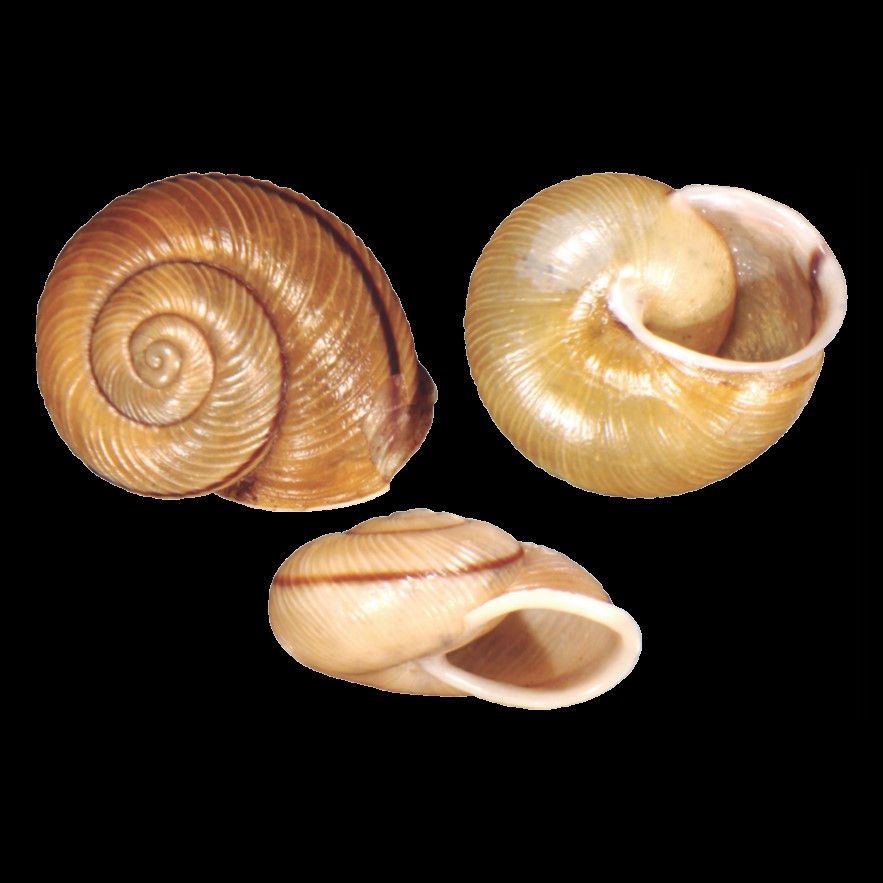
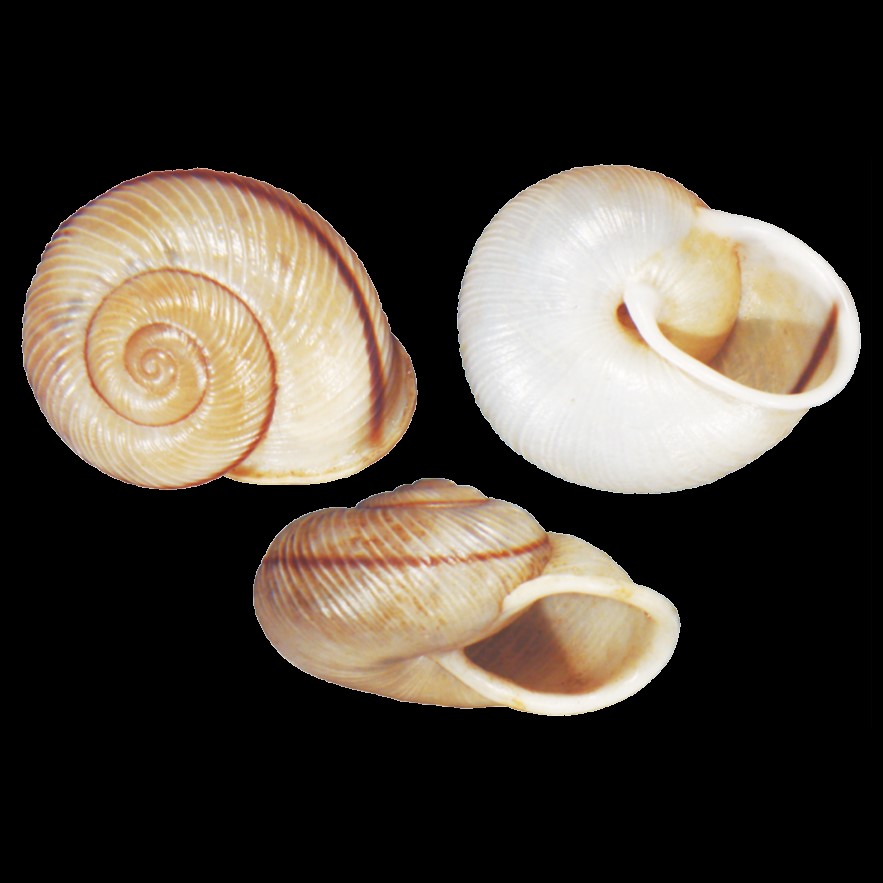
CLASSE: GASTROPODA: TERRESTRE FAMÍLIA: EPIPHRAGMOPHORIDAE ESPÉCIE: Epiphragmophora saltana Ancey, 1897 Tamanho médio: 24 - 29 mm Ocorrência: Argentina (Salta) Localidade tipo: Argentina, Salta Habitat: Floresta subtropical úmida na província biogeográfica de Yungas, noroeste da Argentina. Espécimes vivos geralmente encontrados abaixo de troncos de árvores úmidos no chão em contato com o solo Nome original: Epiphragmophora saltana Ancey, 1897 Descrição: (Cuezzo, 2025): "Dextral, helicoidal, depressed globose, solid; spire shallow conic; medium size; 4 ½ convex whorls; yellowish to golden; thin pigmented dark brown spiral band on body whorl; protoconch smooth; axial pale ribs regularly distributed in all whorls, surface between ribs strongly malleated; suture well impressed; aperture transverse, oval; peristome white, thick, reflexed; parietal callus usually raised, whitish, thin; body whorl abruptly descending towards aperture;...
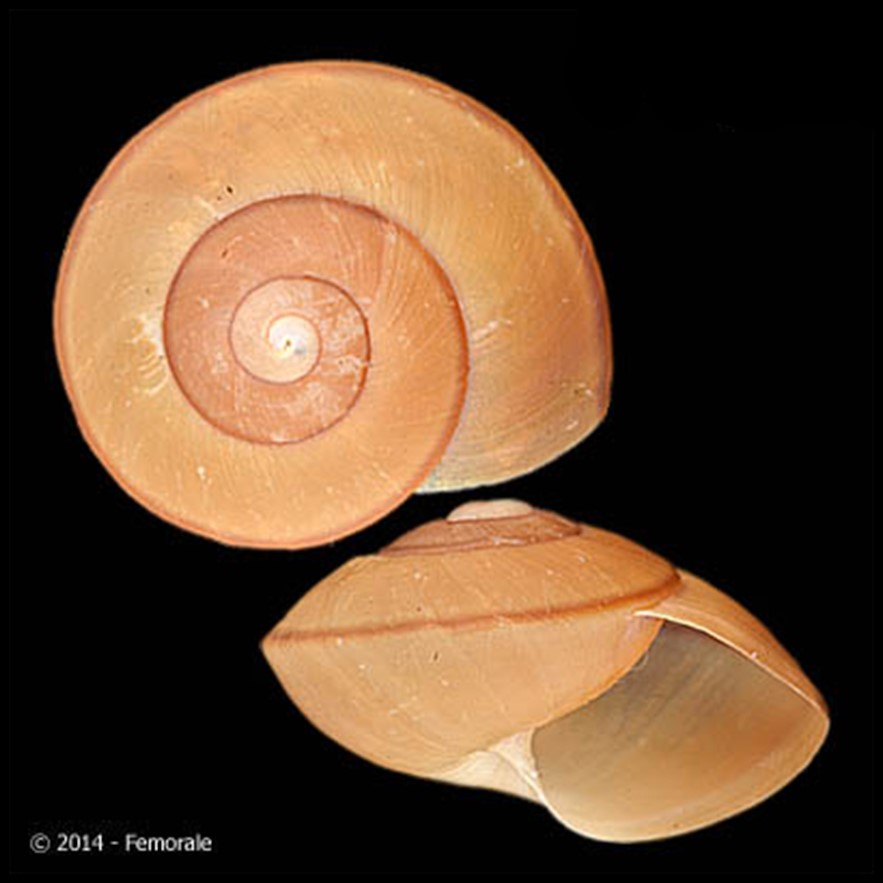
CLASSE: GASTROPODA: TERRESTRE FAMÍLIA: EPIPHRAGMOPHORIDAE ESPÉCIE: Epiphragmophora semiclausa (E. von Martens, 1868) Tamanho médio: 37 mm Ocorrência: Brasil (Rio Grande do Sul) Localidade tipo: Brasil, Rio Grande do Sul, São Leopoldo, Rödersberg Nome original: Helix semiclausa E. von Martens, 1868 Comentários: a espécie foi coletada pelo naturalista e geógrafo alemão Reinhold Friedrich Hensel, que esteve no Brasil no período de 1863 a 1866. Hensel foi enviado às colônias alemãs instaladas na Província de São Pedro do Rio Grande do Sul (atual estado do Rio Grande do Sul) onde coletou entre outros organismos, moluscos Fotos: (1) cortesia Femorale, 2014, 28.3mm, Rio Grande do Sul, Brasil, espécime juvenil; (2) reprodução da ilustração de von Martens, plate 88, figuras 10-12 ...
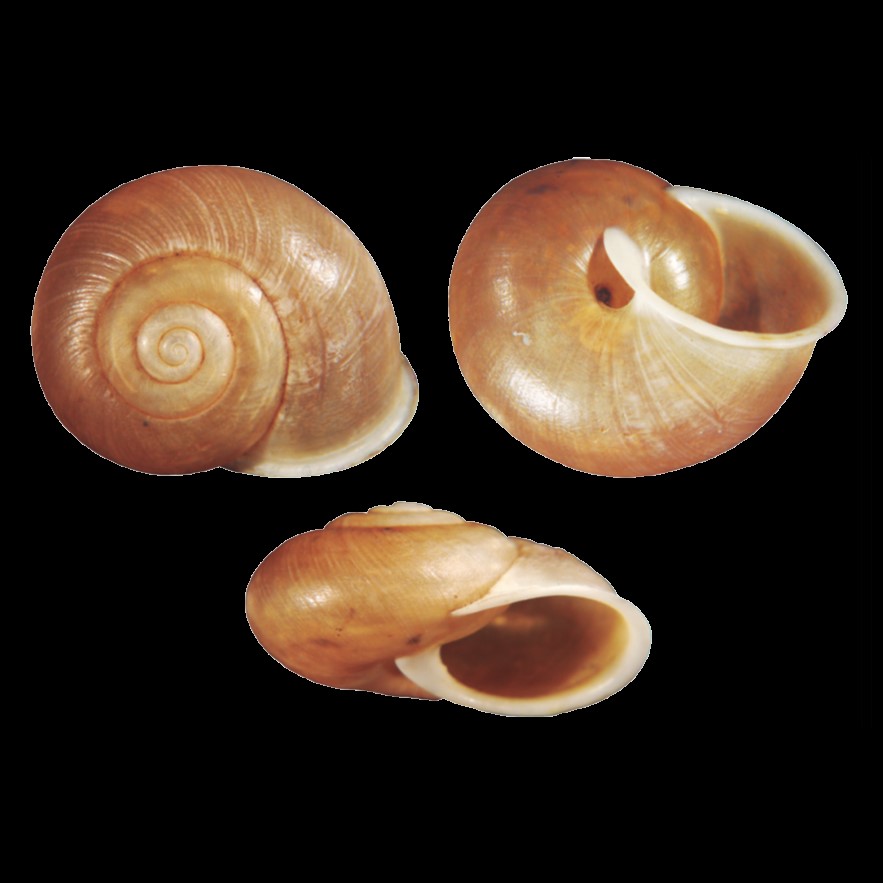
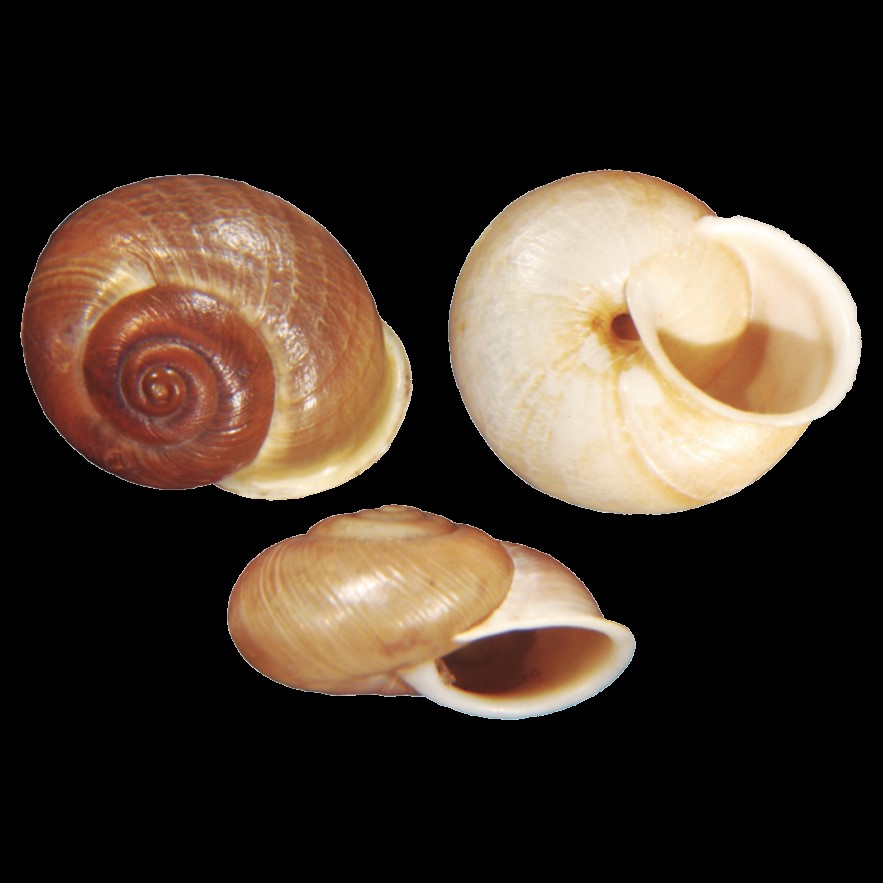
CLASSE: GASTROPODA: TERRESTRE FAMÍLIA: EPIPHRAGMOPHORIDAE ESPÉCIE: Epiphragmophora tomsici D. Fernández & Rumi, 1984 Tamanho médio: 24 - 27 mm Ocorrência: Argentina (Catamarca) Localidade tipo: Argentina, Catamarca, "Dept. Andalgalá, 20 km from Andalgalá, road to Cafayate, 1,800 m, 26/II/1962, W. Weyrauch Col." Habitat: Epiphragmophora tomsici é encontrada em ambientes xerofílicos, geralmente escondida em fendas de rochas ou sob cactus caídos Nome original: Epiphragmophora tomsici D. Fernández & Rumi, 1984 Descrição: (Cuezzo, 2025): "Dextral, helicoidal, globose, solid; spire shallow conic, with thin axial growth lines; medium size with 4 ½ convex whorls; light brown to light chestnut; peripheral band absent; protoconch smooth; axial whitish ribs regularly distributed on body whorl; surface between ribs in body whorl strongly malleated, forming distinctive white reticulated pattern; suture...
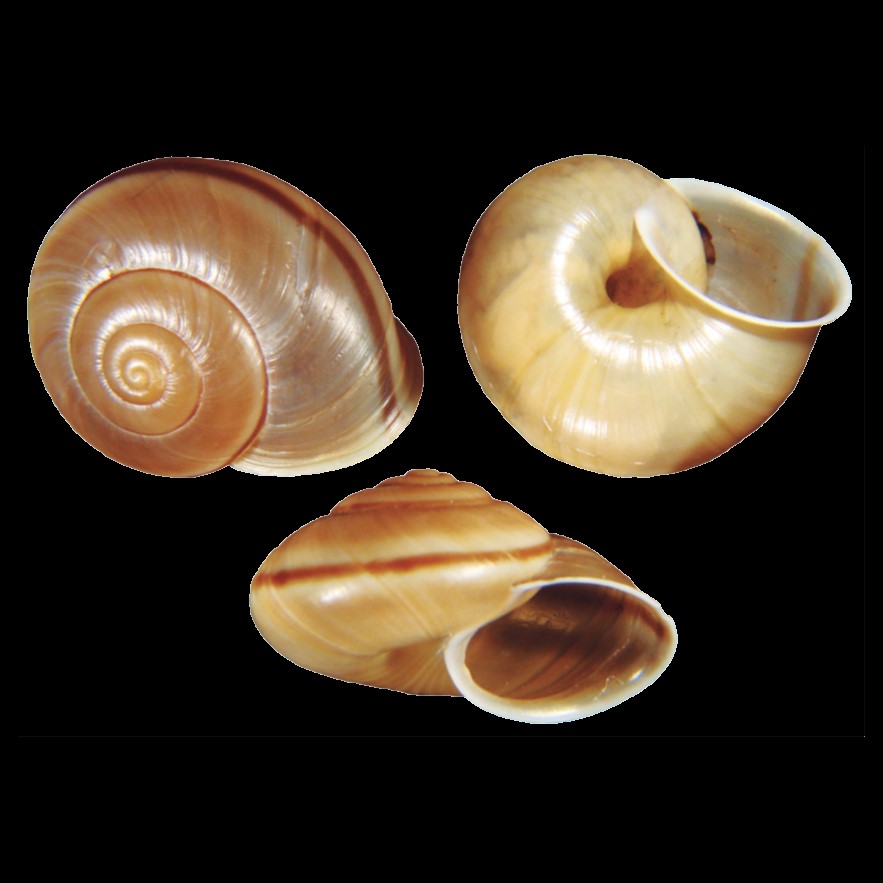
CLASSE: GASTROPODA: TERRESTRE FAMÍLIA: EPIPHRAGMOPHORIDAE ESPÉCIE: Epiphragmophora trenquelleonis (L. Pfeiffer, 1850) Tamanho médio: 23 - 30 mm Ocorrência: Argentina (Cordoba, Santiago del Estero, San Luis, Catamarca, La Rioja, Chaco and Formosa), Bolívia Localidade tipo: Argentina, Córdoba, "Vorberge der Sierra de Cordoba, namentlich die Sierra Chica und die Sierra de Pocho. A. Doering." Habitat: sob ou abaixo de troncos de árvores ou sob rochas Nome original: Helix trenquelleonis L. Pfeiffer, 1850 Sinônimos: Eurycampta hidalgonis Döring, 1875; Helix hidalgonis Doering, 1877 Descrição: (Cuezzo, 2006): "Dextral, helicoidal, subglobose, semisolid; spire shallow conical; medium size; 4 ½ convex whorls; yellowish to dark brown or chestnut; body whorl usually with one equatorial brown periphery band that also lines suture, absent on spire; shells from some localities can has...
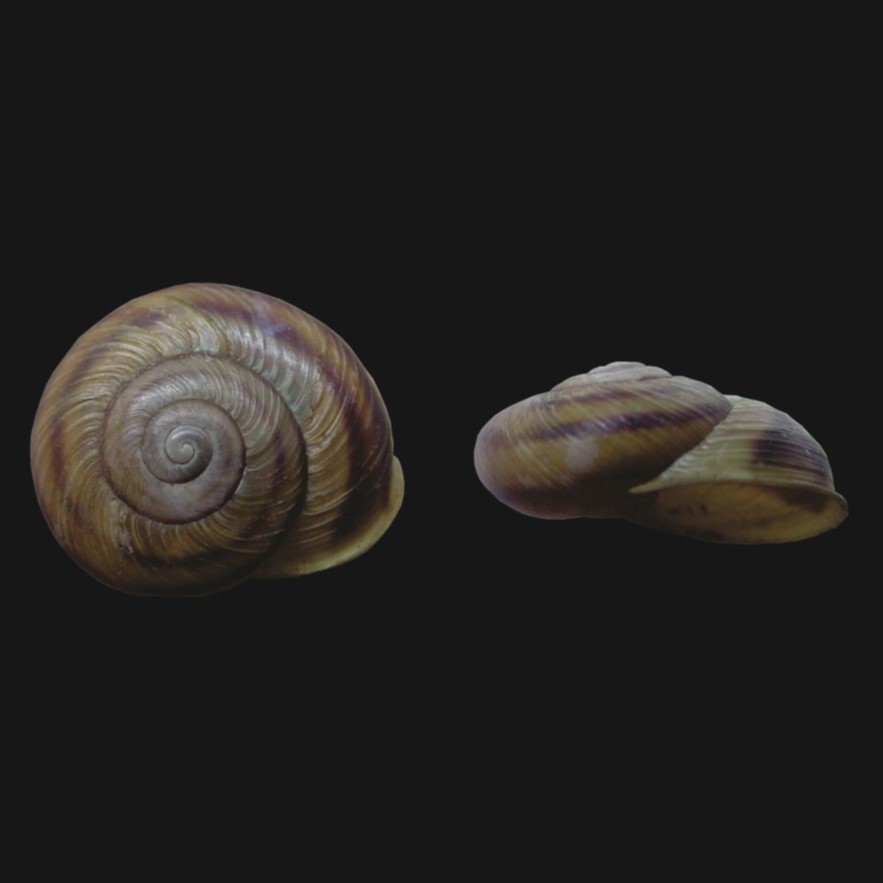
CLASSE: GASTROPODA: TERRESTRE FAMÍLIA: EPIPHRAGMOPHORIDAE ESPÉCIE: Epiphragmophora trifasciata D. Fernández & Rumi, 1984 Tamanho médio: 26.7 - 31.5 mm Ocorrência: Argentina (Córdoba), "Córdoba, en los departamentos de Colón, Ischilín, Punilla y Totoral" Localidade tipo: Argentina, Córdoba, "Agua de Oro, East Side of Sierra chica mountain, 1940, leg. José A. de Carlo" Habitat: Ecorregião do Chaco, subecoregião Chaco semiárido; é encontrada em estreita associação com rochas ou dentro de fendas finas entre rochas Nome original: Epiphragmophora trifasciata D. Fernández & Rumi, 1984 Descrição: (Cuezzo, 2025): "Concha helicoidal, semi globosa, de paredes solidas; espira cónica; con 4 1/2 vueltas de contorno convexo; color amarillento a pardo oscuro. Tamaño de la concha entre 26 y 31 mm de diámetro. Presenta tres bandas pigmentadas evidentes en...
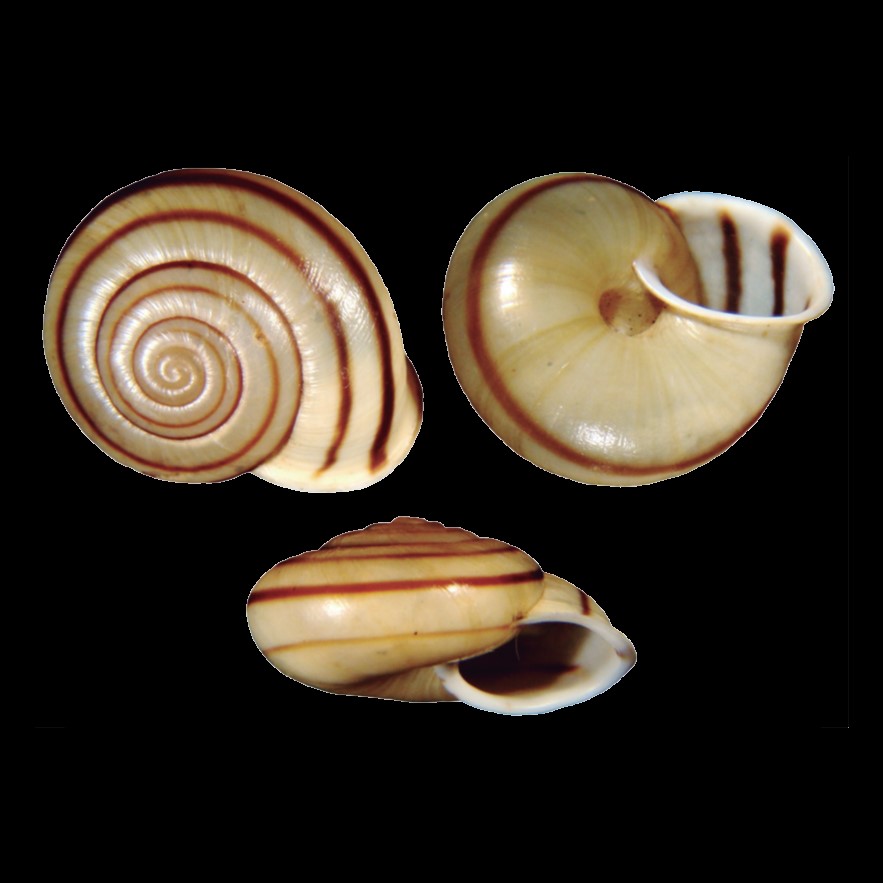
CLASSE: GASTROPODA: TERRESTRE FAMÍLIA: EPIPHRAGMOPHORIDAE ESPÉCIE: Epiphragmophora trigrammephora (A. d'Orbigny, 1835) Tamanho médio: 23.6 - 24.6 mm Ocorrência: Bolívia (Santa Cruz), Argentina (Jujuy, Salta, Formosa, Chaco, and Santiago del Estero), Paraguai Localidade tipo: Bolívia, Santa Cruz Dept., Pampa Grande Habitat: Sob ou abaixo de troncos de árvores ou sob rochas Nome original: Helix trigrammephora A. d'Orbigny, 1835 Subespécies: (1) Epiphragmophora trigrammephora f. bizona Ancey, 1897; (2) Epiphragmophora trigrammephora f. monozona Ancey, 1897; (3) Epiphragmophora trigrammephora f. obsolescens Ancey, 1897 Descrição: (Cuezzo, 2006): "Dextral, helicoidal, subglobose, semisolid; usually with high conical spire; medium size; 4 ¾ to 5 ¾ convex whorls; pale cream to yellow; three peripheral thin, darker brown bands clearly delimited on body whorl, upper band running centrally in each anfractum of...
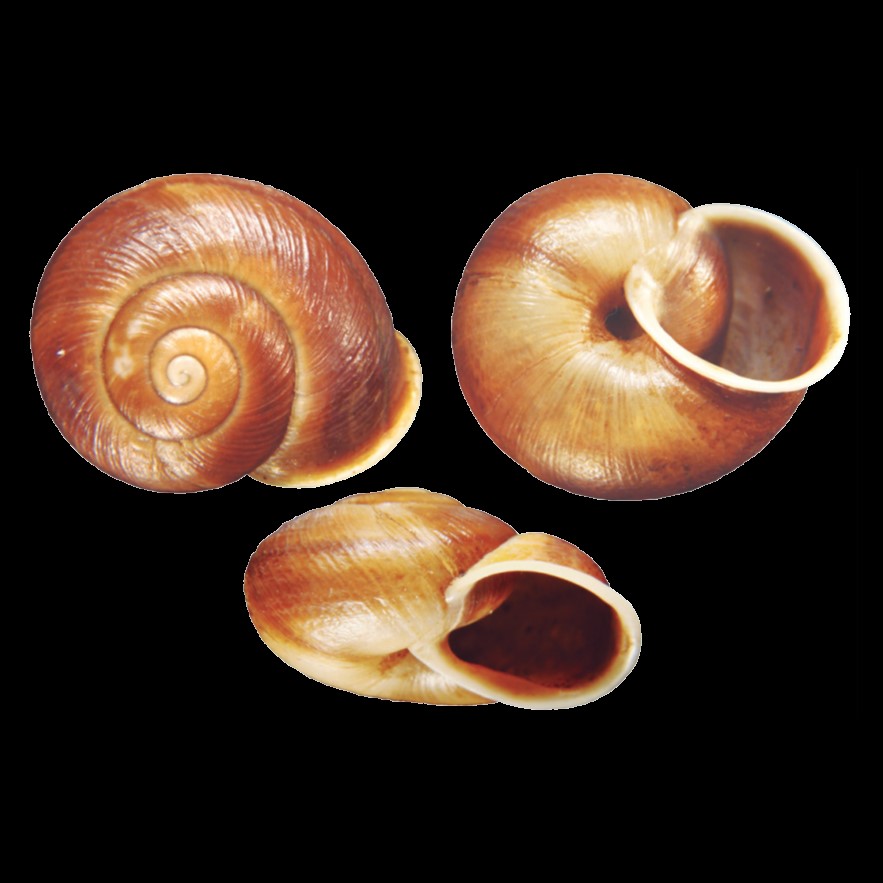
CLASSE: GASTROPODA: TERRESTRE FAMÍLIA: EPIPHRAGMOPHORIDAE ESPÉCIE: Epiphragmophora tucumanensis (Doering, 1875) Tamanho médio: 29.6 - 33.7 mm Ocorrência: Argentina (Córdoba, Santiago del Estero, San Luis, Catamarca, La Rioja, Chaco and Formosa), Bolívia Localidade tipo: Argentina, Tucumán, "[en la pendiente del Oeste de la Sierra de Tucumán, en bosques exuberantes, a 500−900 mts. de altura]. Stelzner leg. Doering det" Habitat: sob ou abaixo de troncos de árvores ou sob rochas Nome original: Helix estella var. tucumanensis Doering, 1875 Sinônimos: Helicigona catamarcana Ihering, 1910 Descrição: (Cuezzo, 2006): "Dextral, helicoidal, globose, solid; elevated conical spire; medium to large size; 4 ¾ to 5 convex whorls; color variable from yellowish to dark brown; presence of single thick supraequatorial, dark brown, even, band most notable in body whorl...
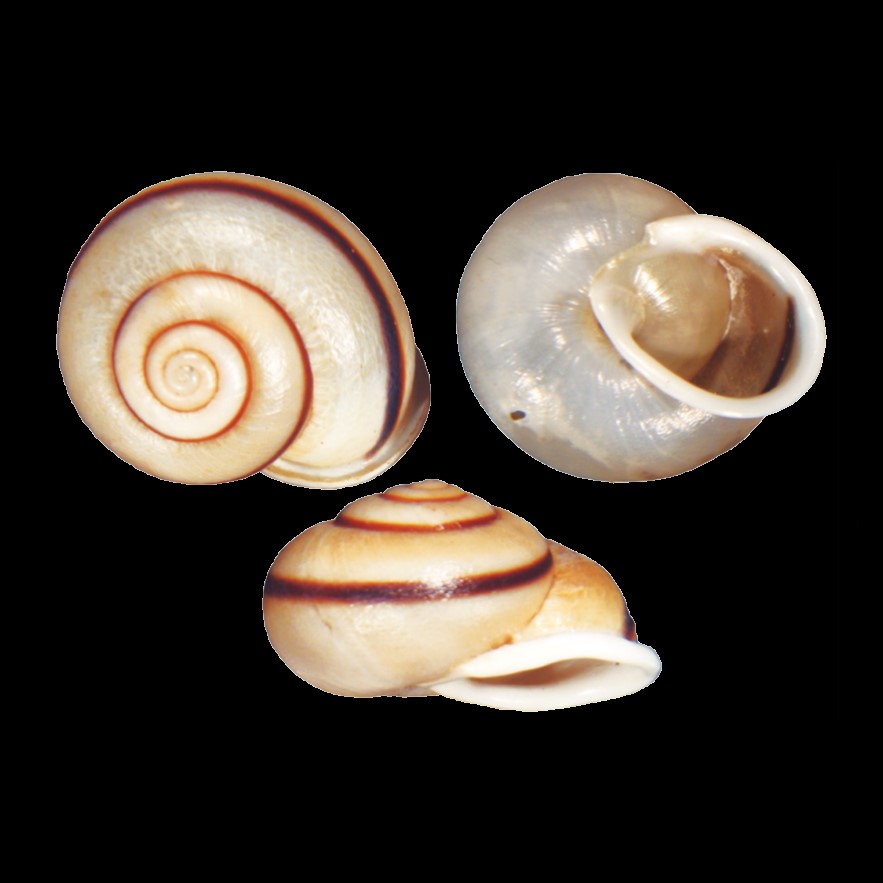
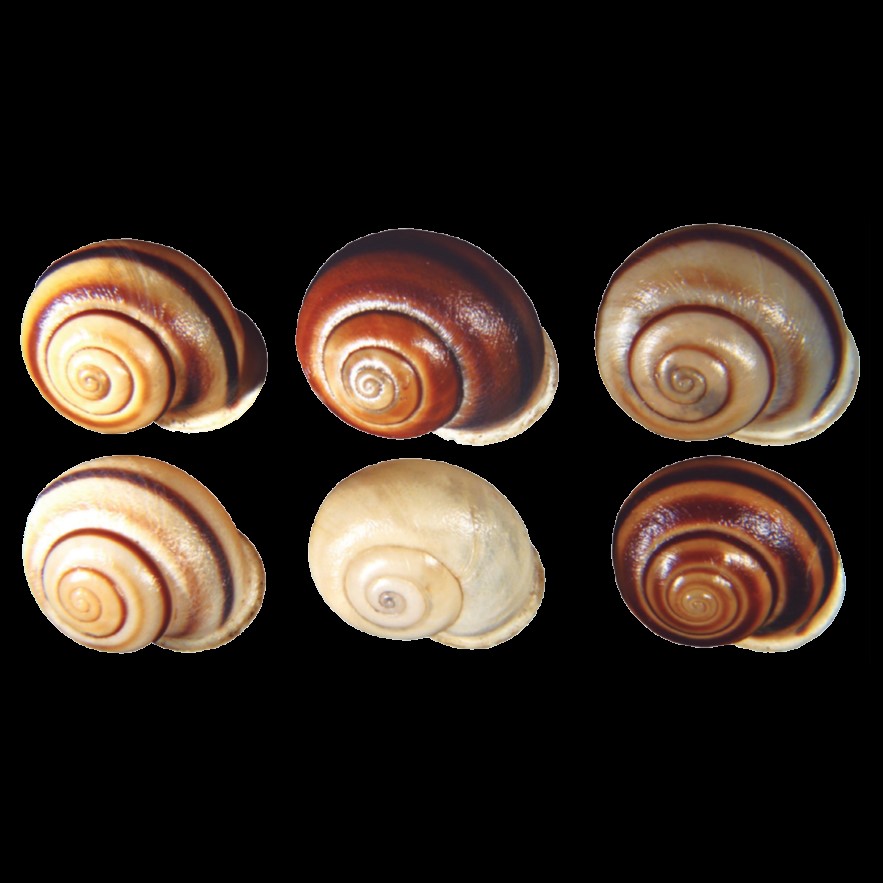
CLASSE: GASTROPODA: TERRESTRE FAMÍLIA: EPIPHRAGMOPHORIDAE ESPÉCIE: Epiphragmophora variegata Hylton Scott, 1962 Tamanho médio: 22.1 - 25.5 mm Ocorrência: Argentina (Tucuman, Catamarca) Localidade tipo: Argentina, Catamarca, "Dept. Belén, Agua de Dionisio, Farallón Negro, 1953" Habitat: em paredes rochosas nas montanhas ou entre a grama nas porções sul da região da floresta nublada, província biogeográfica de Yungas Nome original: Epiphragmophora variegata Hylton Scott, 1962 Descrição: (Cuezzo, 2006): "Dextral, helicoidal, globose, solid; medium to small; with high conical spire; 4 ½ convex whorls delimited by a wellimpressed suture; shell color highly variable, from uniform pale yellow to dark brown; generally with three pigmented peripheral bands, dorsal and ventral bands wider than equatorial, about 2 mm in thickness, dark brown, neatly delimited, bands evident in body...
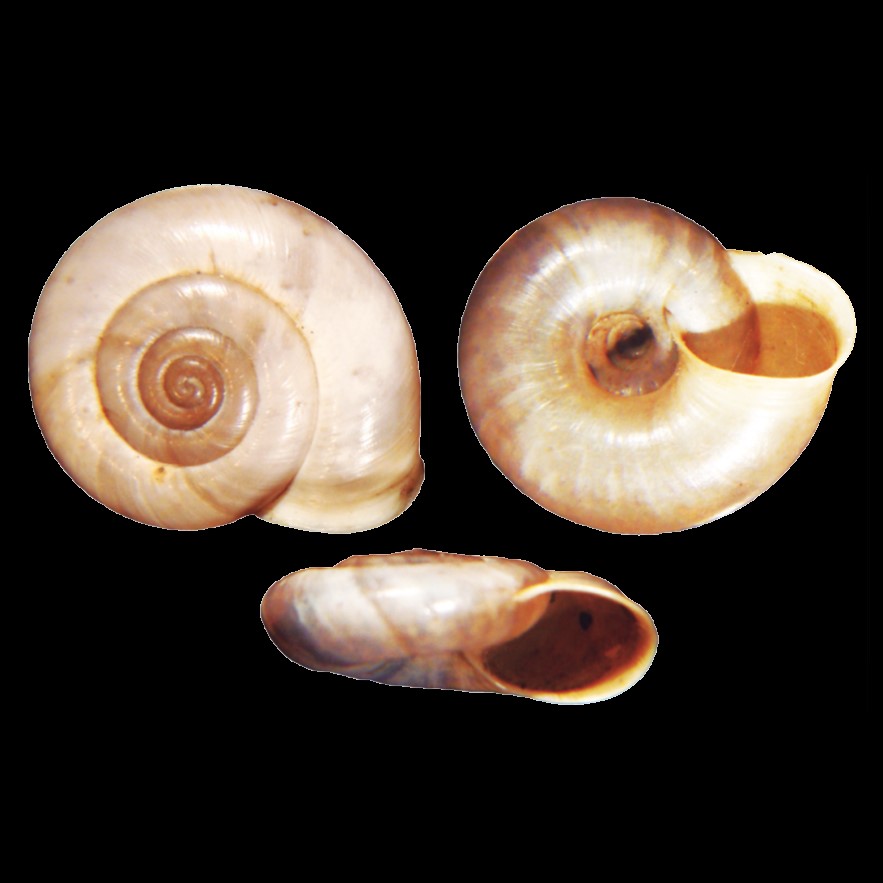
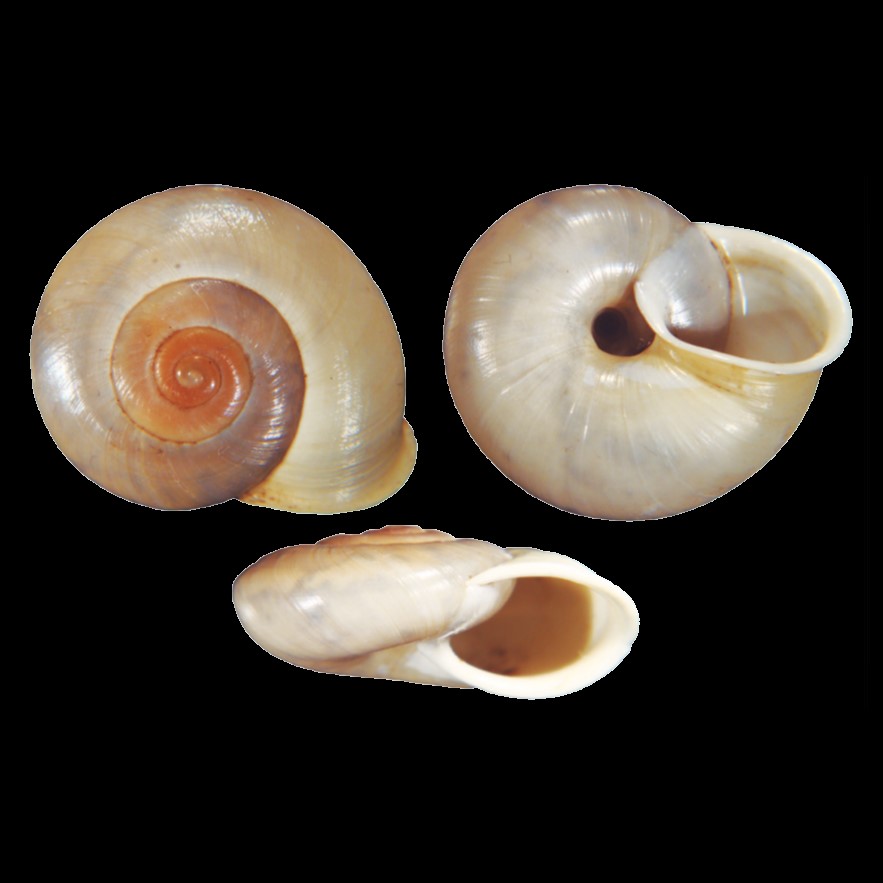
CLASSE: GASTROPODA: TERRESTRE FAMÍLIA: EPIPHRAGMOPHORIDAE ESPÉCIE: Epiphragmophora villavilensis Parodiz, 1955 Tamanho médio: 23 - 27.7 mm Ocorrência: Argentina (Catamarca) Localidade tipo: Argentina, "Catamarca, Dept. Andalgalá, Villavil 1933, M. Gomez leg." Habitat: Espécimes são encontrados em habitats xerofílicos sob rochas ou em fendas profundas de rochas. Embora conchas vazias sejam fáceis de encontrar em rochas ou no solo perto de fendas, espécimes vivos são muito difíceis de encontrar. Eles vivem a maior parte do dia no fundo de fendas estreitas e provavelmente estão ativos apenas durante parte da noite ou em dias chuvosos Nome original: Epiphragmophora villavilensis Parodiz, 1955 Descrição: (Cuezzo, 2006): "Dextral, helicoidal, depressed, semisolid; spire highly depressed; with 4 ½ whorls; body whorl periphery with supraequatorial angle delimiting dorsal and ventral...
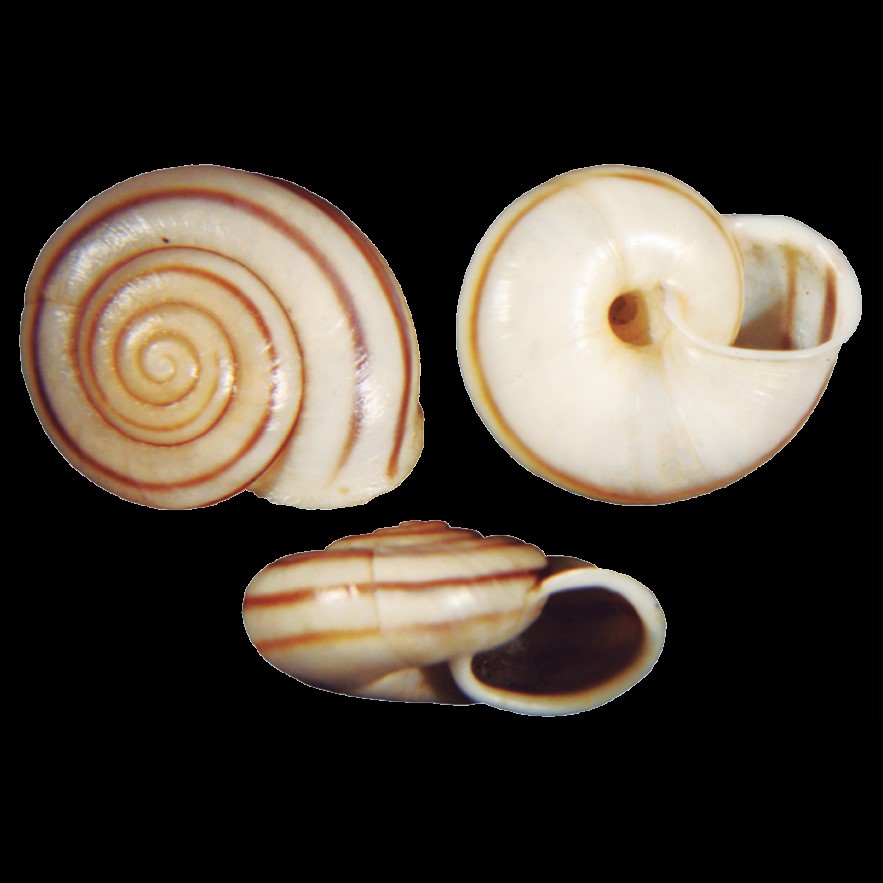
CLASSE: GASTROPODA: TERRESTRE FAMÍLIA: EPIPHRAGMOPHORIDAE ESPÉCIE: Epiphragmophora walshi Cuezzo, 2006 Tamanho médio: 20 - 25 mm Ocorrência: Argentina (Salta) Localidade tipo: Argentina, Salta, "Metán Dept., route 5 road from Lumbrera to Las Víboras, 750 m" Nome original: Epiphragmophora walshi Cuezzo, 2006 Etimologia: o nome da espécie é uma homenagem ao escritor e jornalista argentino Rodolfo Walsh (1927 - 1977) Descrição original: (Cuezzo, 2006): "Dextral, helicoidal, depressed, semisolid; spire highly depressed; with 4 ½ whorls; body whorl periphery with supraequatorial angle delimiting dorsal and ventral regions; periostracum pale yellow brilliant; peripheral pigmented band absent; protoconch smooth; teleochonch with fine axial growth lines, in body whorl more spaced with spiral stria; aperture subquadrate with reflexed thin, peristome; body whorl not descending behind aperture; umbilicus...
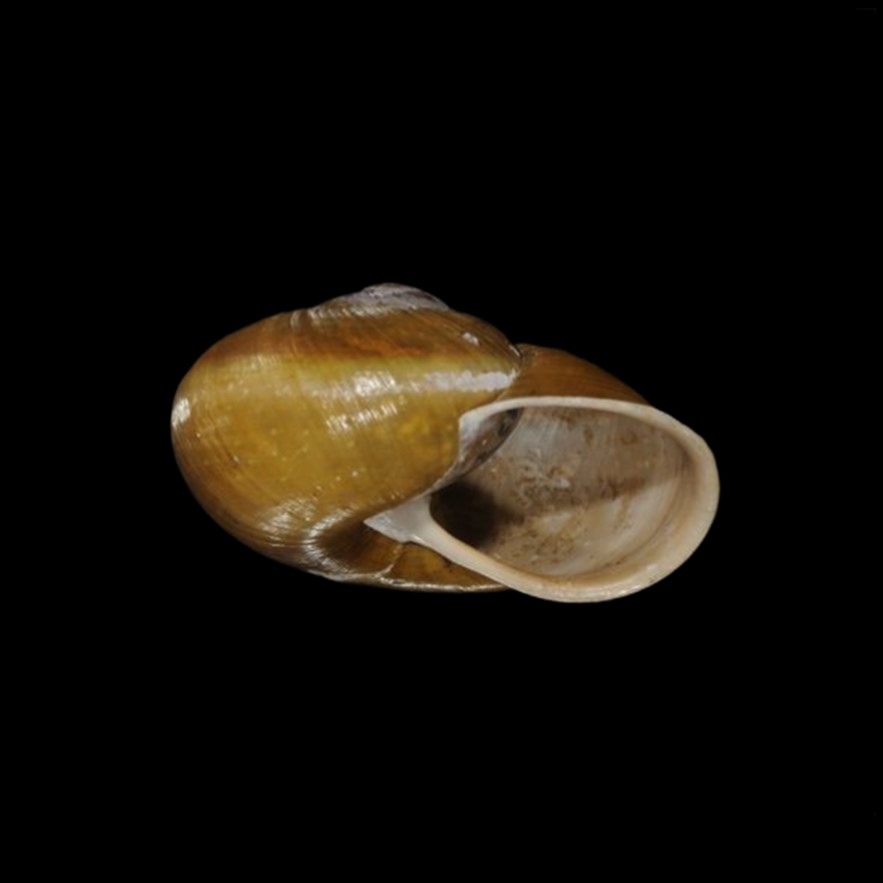

CLASSE: GASTROPODA: TERRESTRE FAMÍLIA: EPIPHRAGMOPHORIDAE ESPÉCIE: Epiphragmophora webbi Pilsbry, 1932 Tamanho médio: 35 mm Ocorrência: Peru (Jauja) Localidade tipo: Peru, Jauja, Maraynioc Altitude: 3000 m Nome original: Epiphragmophora webbi Pilsbry, 1932 Sinônimos: Epiphragmophora (Epiphragmophora) webbi Pilsbry, 1932 Etimologia: o nome da espécie é uma homenagem ao ornitologista e malacólogo norte americano Walter Freeman Webb (1869 – 1957) Fotos: (1-3): The Academy of Natural Sciences, Philadelphia: HOLOTYPE de Epiphragmophora webbi, ANSP 159752, Peru, Jauja, Maraynioc, 10000 ft, near Tarma, eastern Cordillera, coll. Walter F. Webb Fontes: Descrição original: Pilsbry, H. A. (1932). South American land and freshwater mollusks, 8. Collections of the Carriker-Roberts Peruvian expedition of 1932. Proceedings of the Academy of Natural Sciences of Philadelphia. 84: 387-402. página(s): 388 Ramírez, R.; Paredes,...
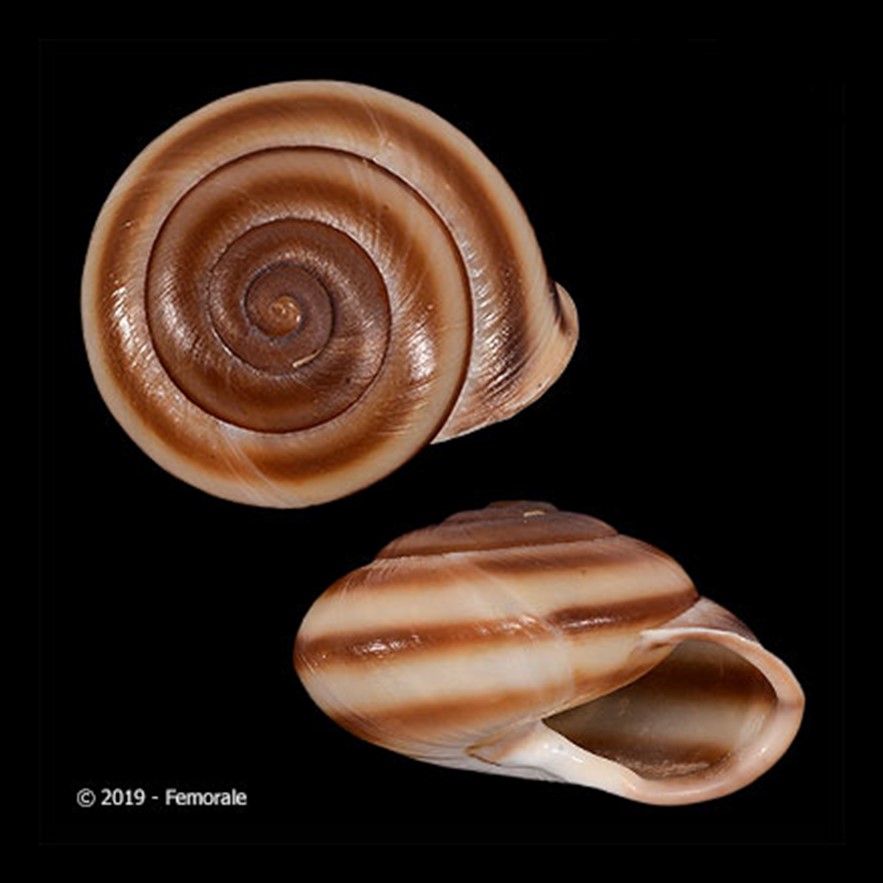
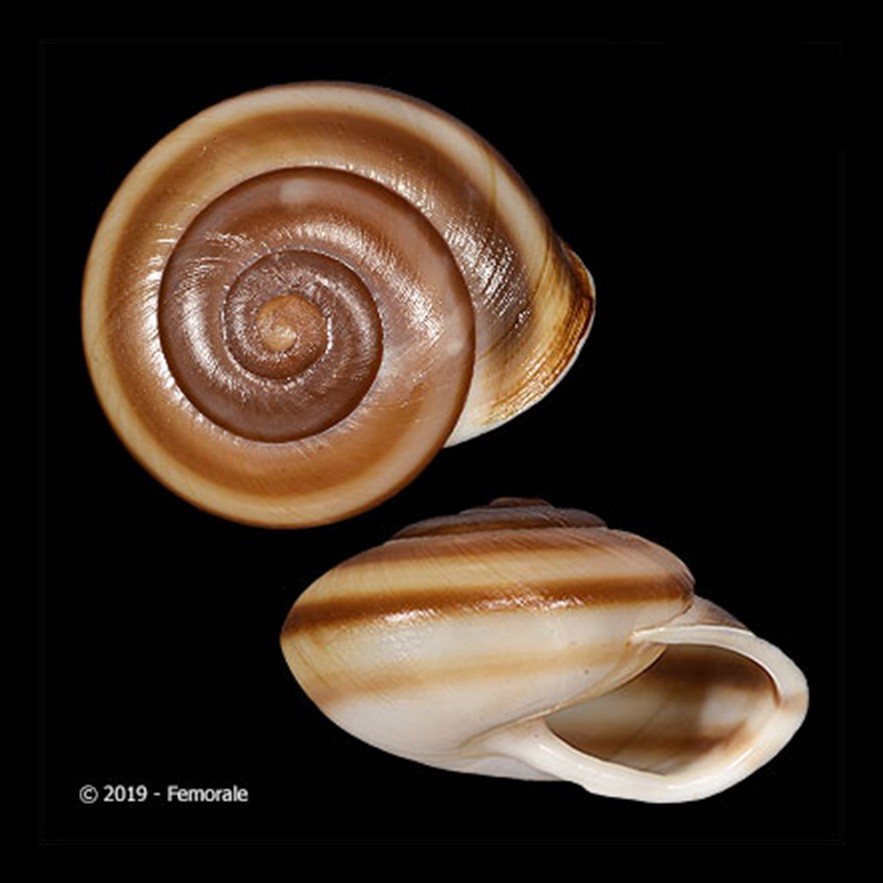
CLASSE: GASTROPODA: TERRESTRE FAMÍLIA: EPIPHRAGMOPHORIDAE ESPÉCIE: Minaselates paradoxa Cuezzo & Pena, 2017 Tamanho médio: 26 - 29 mm Habitat: formações calcárias, entre a vegetação, numa região de transição entre Caatinga e Cerrado Ocorrência: Brasil (Minas Gerais) Localidade tipo: Itacarambi, Parque Nacional Cavernas do Peruaçu, Minas Gerais Etimologia: o nome da espécie deriva do grego "paradoxos" que significa "estranho, contrário do esperado", como uma espécie da família Epiphragmophoridae que não era esperada no Estado de Minas Gerais, no Brasil Zoobank: urn:lsid:zoobank.org:act:9AACED00-8AFB-4736-85DC-14A3399A04CB Fotos: cortesia Femorale, 2019. TOPOTYPE, Minas Gerais, 27mm Figura: Cuezzo & Pena, 2017: (2-3) HOLOTYPE Museu Nacional do Rio de Janeiro, MNRJ 34.580; (4-6) PARATYPE MNRJ; (7) Animal vivo Fontes: Descrição original: Cuezzo, M....
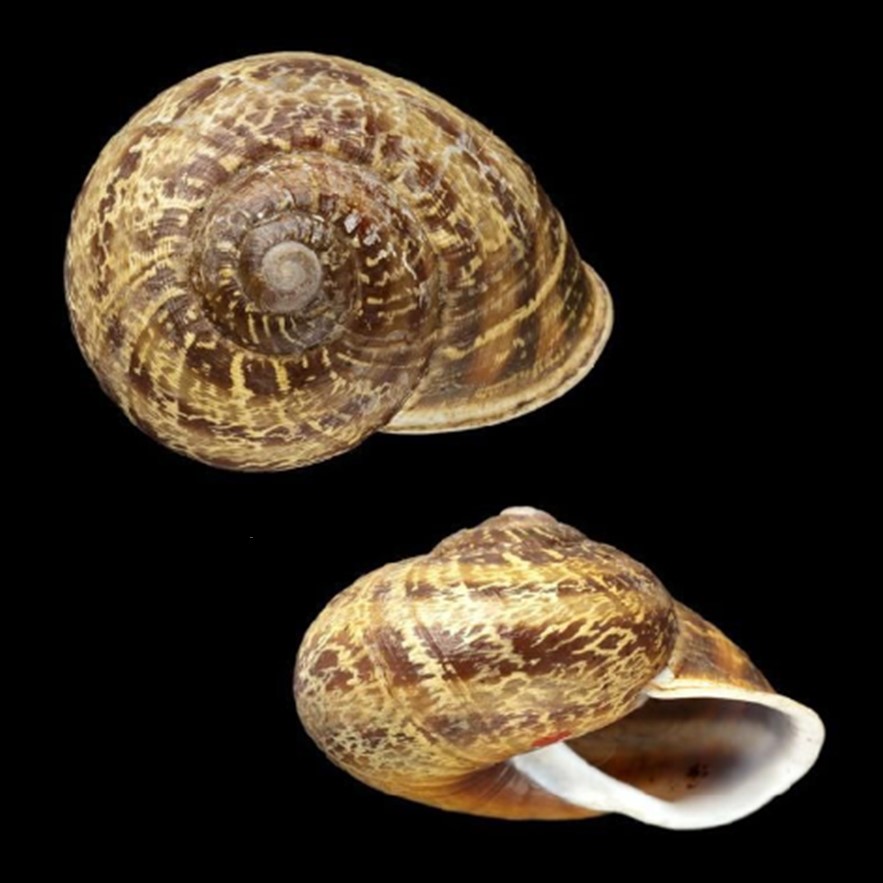
CLASSE: GASTROPODA: TERRESTRE FAMÍLIA: EPIPHRAGMOPHORIDAE ESPÉCIE: Pilsbrya farrisi (L. Pfeiffer, 1859) Tamanho médio: 35 mm Ocorrência: Peru Localidade tipo: Peru, "Patas, Andes of Peru" (Dr. Farris) Nome original: Helix farrisi L. Pfeiffer, 1859 Sinônimos: Epiphragmophora (Pilsbrya) farrisi (L. Pfeiffer, 1859) Fotos: (1,2) Natural History Museum, London: SYNTYPE NHMUK 20210312, Peru, Patas, Dr Farris, 35mm Fontes: Descrição original: (como Helix farrisi L. Pfeiffer, 1859) Pfeiffer, L. (1859). Descriptions of twenty-seven new species of land-shells, from the collection of H. Cuming, Esq. Proceedings of the Zoological Society of London. 27 (385): 23–29, pls 43–44. London [30 June]., disponível online em https://www.biodiversitylibrary.org/page/32274429 página(s): 23, pl. 44, fig. 3 Natural History Museum (2025). Natural History Museum (London) Collection Specimens. Occurrence dataset https://doi.org/10.5519/qd.cv5d8yso accessed via GBIF.org...
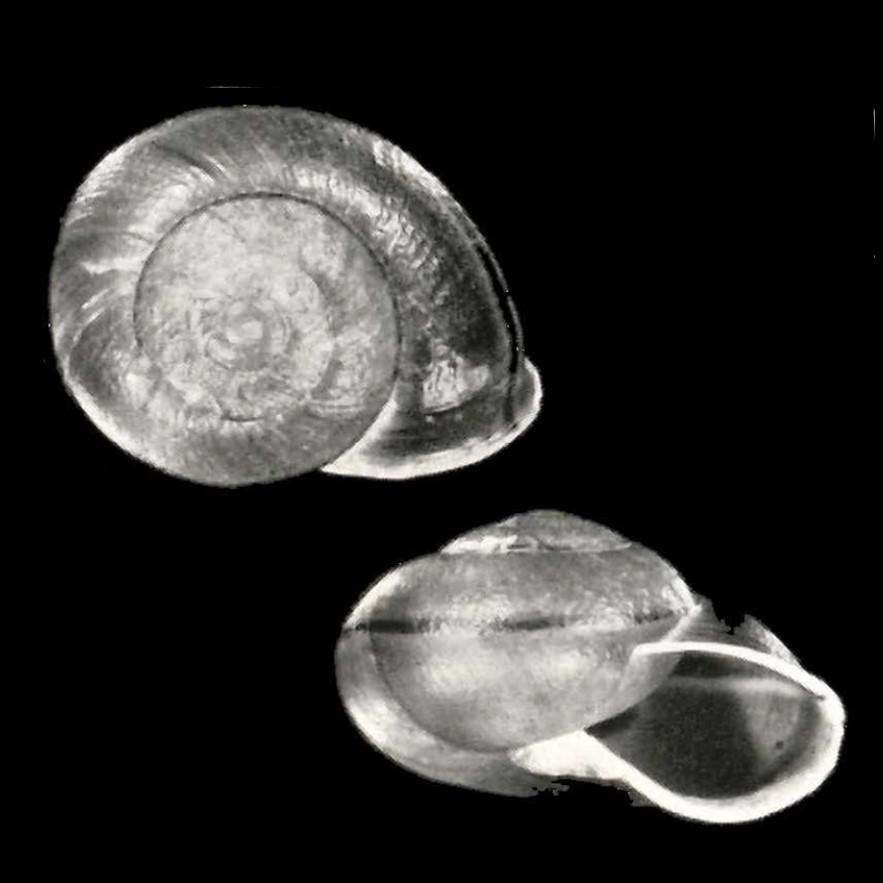
CLASSE: GASTROPODA: TERRESTRE FAMÍLIA: EPIPHRAGMOPHORIDAE ESPÉCIE: Pilsbrya taulisensis (Zilch, 1953) Tamanho médio: 30 mm Ocorrência: Peru Localidade tipo: Peru, "Hacienda Taulis (Quebrada Pajonal), "selva montanhosa" Altitude: 2700 m Nome original: Epiphragmophora (Pilsbrya) taulisensis Zilch, 1953 Sinônimos: Epiphragmophora taulisensis Zilch, 1953 Fotos: (1) Zilch, 1953: Senckenberg. Collection Mollusca, HOLOTYPE SMF 108562, H. W. Koepcke leg. 27.XII.1952 Figura: Zilch, 1953: (7) Epiphragmophora llagnenica, Peru, “Wald von Rejo Cargaray der Hacienda Llaguen”, 2660 m, HOLOTYPE SMF 108559; (8-9) Epiphragmophora (Pilshrya) taulisensis, Peru, “Bergurwald der Hacienda Taulis, 2700 m (Quebrada Pajonal)”; (8) HOLOTYPE SMF 108562; (9) PARATYPE SMF 108563 Fontes: Descrição original: (como Epiphragmophora (Pilsbrya) taulisensis Zilch, 1953) Zilch, A. (1953). Landschnecken aus Peru. Archiv für Molluskenkunde, 82 (1/3): 49-61, pl. 14-15. Frankfurt...