
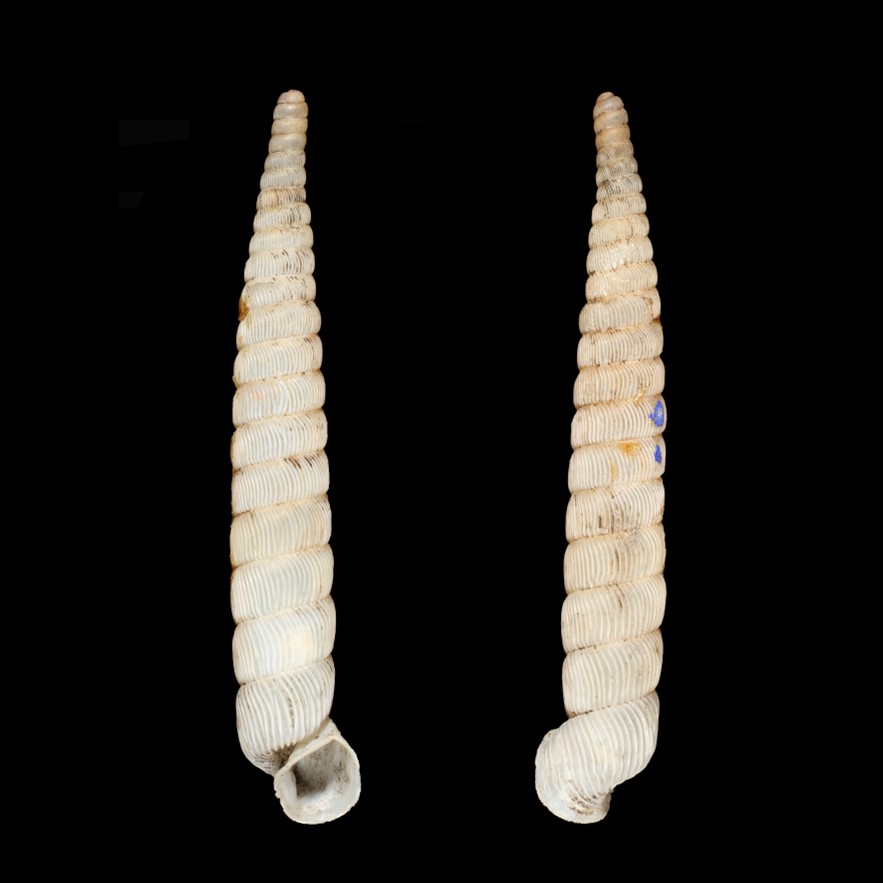
CLASSE: GASTROPODA: TERRESTRE FAMÍLIA: BULIMULIDAE ESPÉCIE: Spartocentrum digueti (Mabille, 1895) Tamanho médio: 33 mm Ocorrência: México, Baja California Localidade tipo: "Plateau de San Zavier, vers 25° degré de latitude: recueillie dans le charbon provenant des anciens campements d'Indiens (Diguet)" Nome original: Berendtia digueti Mabille, 1895 Redescrição: (Breure, 1978): "Shell cylindrical, tapering towards the apex, subrimateperforate, rather thin. Colour (grayish-) whitish. Surface lustreless, sculptured with obtuse axial riblets (the interstices about as broad as the riblets), 50 riblets on the penultimate whorl. Protoconch slightly club-shaped, the third whorl narrower than the first two whorls; first 2 1/2 whorls with axial riblets (the interstices about as broad as the riblets) and numerous fine spiral lines in between, the riblets more closely set at...

CLASSE: GASTROPODA: TERRESTRE FAMÍLIA: BULIMULIDAE ESPÉCIE: Spartocentrum eisenianum (Pilsbry, 1900) Tamanho médio: 23 mm Ocorrência: México, Baja Califórnia Localidade tipo: Baja Califórnia Sul Nome original: Coelocentrum eisenianum Pilsbry, 1900 Fotos: (1) The Academy of Natural Sciences, Philadelphia: LECTOTYPE de Coelocentrum eisenianum, ANSP 77888 , coll Button, F. L., 27.ii.1900 Fontes: Descrição original: (como Coelocentrum eisenianum Pilsbry, 1900) Pilsbry, H. A. (1900). Lower Californian species of Coelocentrum and Berendtia. Proceedings of the Academy of Natural Sciences of Philadelphia. 52: 550-555., disponível online em https://www.biodiversitylibrary.org/page/24694430 página(s): 553, fig. 2 Thompson, F. G. (2011). An annotated checklist and bibliography of the land and freshwater snails of México and Central America. Florida Museum of Natural History Bulletin. 50(1): 1-299 MolluscaBase: https://www.molluscabase.org/aphia.php?p=taxdetails&id=1064273
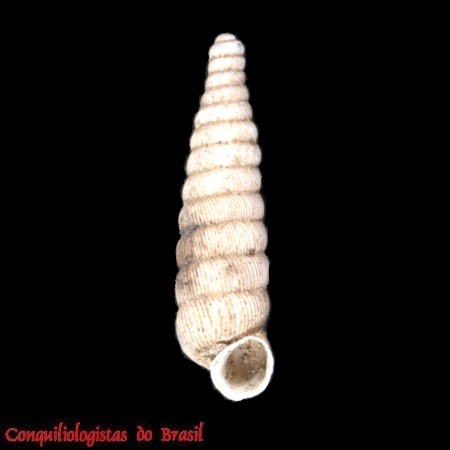
CLASSE: GASTROPODA: TERRESTRE FAMÍLIA: BULIMULIDAE ESPÉCIE: Spartocentrum insulare (G. D. Hanna, 1923) Tamanho médio: 24 - 25 mm Ocorrência: México, Baja California, Carmen Island Localidade tipo: "Puerto Bellandra, Carmen Island, Gulf of California" Nome original: Coelocentrum insulare Hanna, 1923 Descrição original: (Hanna, 1923): "Shell, similar in shape to C. ozveni but much more variable; type a shell of average size and shape, a little more slender than the above mentioned species; umbilicus of about the same diameter, but axis narrower and spiral cord less developed and less rounded in cross section; whorls 14 1/2 in type but only 11% in a paratype; all intergradations between are found in the type lot; Last half of second whorl and all of third...
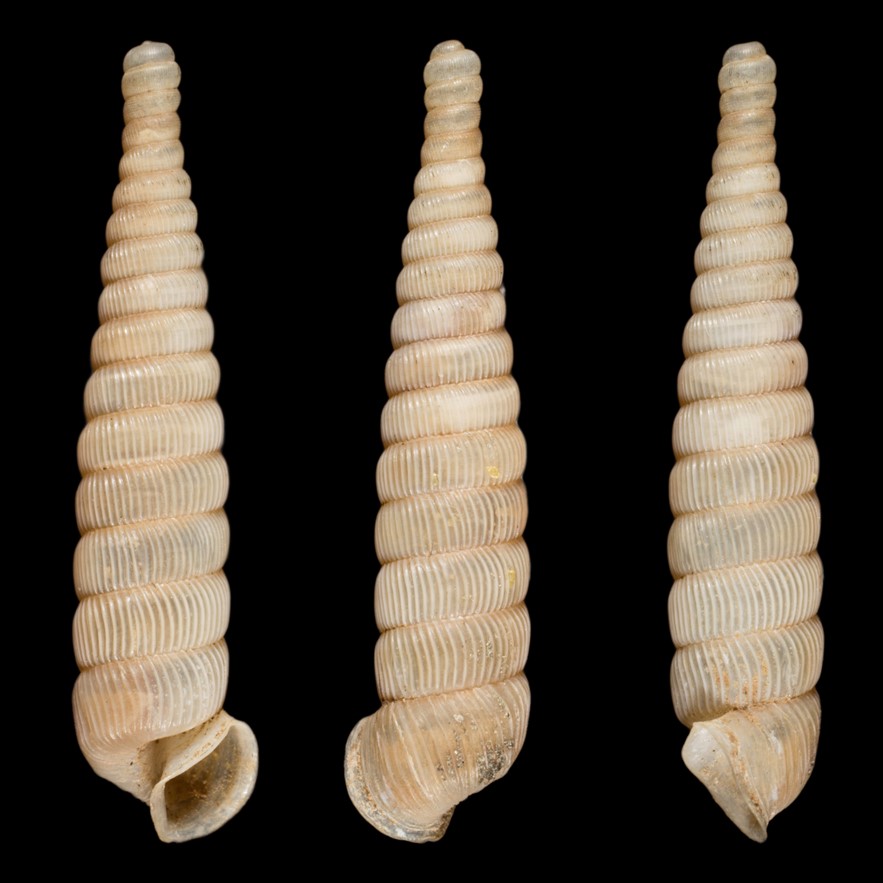
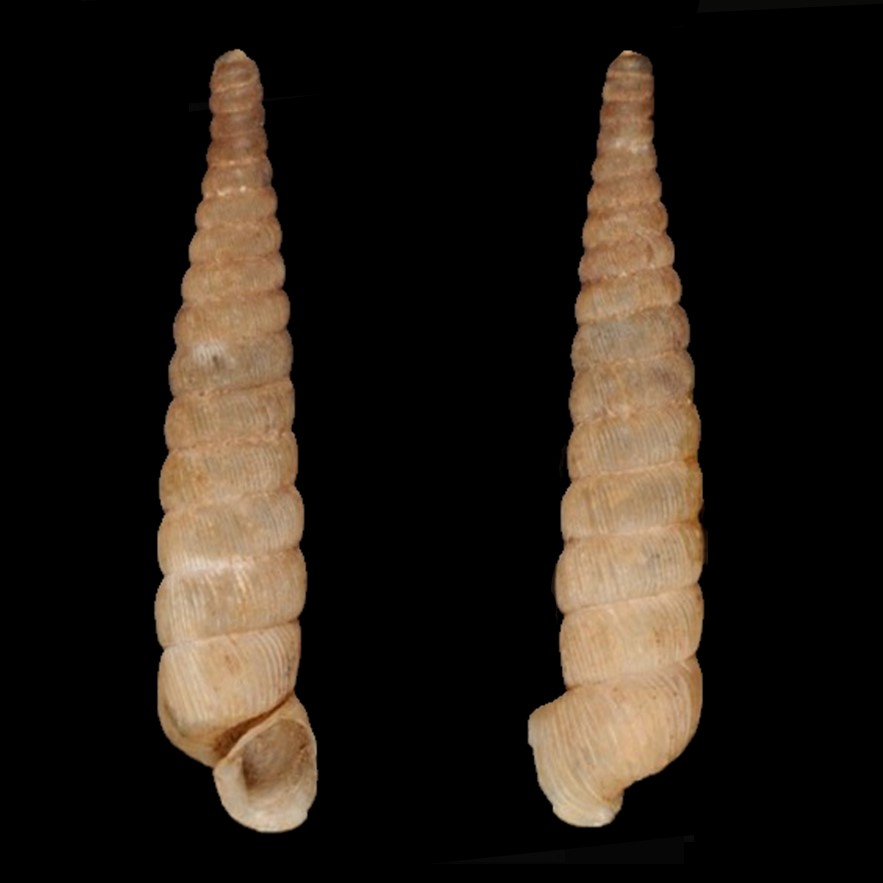
CLASSE: GASTROPODA: TERRESTRE FAMÍLIA: BULIMULIDAE ESPÉCIE: Spartocentrum irregulare (Gabb, 1868) Tamanho médio: 20 mm Ocorrência: México, Baja California Localidade tipo: Baja Califórnia Sur Nome original: Cylindrella (Urocoptis) irregularis Gabb, 1868 Sinônimos: Berendtia minorina Mabille, 1895; Coelocentrum irregulare (Gabb, 1868); Coelocentrum minorinum (Mabille, 1895); Coelocentrum minorinum var. gabbi Pilsbry, 1900; Spartocentrum gabbii Pilsbry; Spartocentrum minorina (Mabille, 1895) Fotos: (1,4) Museu Nacional de História Natural, Paris: SYNTYPE de Berendtia minorina Mabille, 1895, MNHN-IM-2000-28097, México, Arroyo de la Purisima, "Plateaux situés au-dessus de l'Arroyo de la Purissima (Diguet)"; (2) The Academy of Natural Sciences of Philadelphia: LECTOTYPE de Coelocentrum minorinum var. gabbi Pilsbry, 1900, ANSP 25077, "Near Muleji, Lower California", México, coll. Gabb, W. M.; (3) The Academy of Natural Sciences of Philadelphia: LECTOTYPE de Spartocentrum irregulare,...
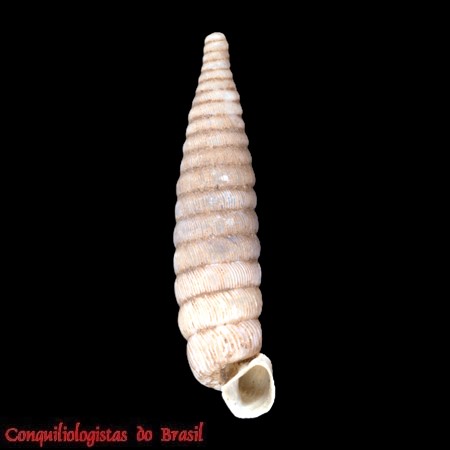
CLASSE: GASTROPODA: TERRESTRE FAMÍLIA: BULIMULIDAE ESPÉCIE: Spartocentrum vanduzeei (G. D. Hanna, 1923) Tamanho médio: 24 - 25 mm Ocorrência: México, Baja California Localidade tipo: Baja Califórnia Sur, "W side of Porto Escondido" Nome original: Coelocentrum vanduzeei G. D. Hanna, 1923 Descrição original: (Hanna, 1923): "Shell larger than C. irregulare, bullet-shaped, composed of 17 rounded whorls; suture deeply impressed ; first three whorls of almost equal diameter, the third being slightly less than the one above; from the third to the fourteenth the diameter increases slightly, then decreases to the last; all whorls sculptured with coarse ribbing except the third; this one only has the vertical ribs cut by about nine deep spiral grooves, making the surface beaded; penultimate whorl with 86...


CLASSE: GASTROPODA: TERRESTRE FAMÍLIA: STROPHOCHEILIDAE ESPÉCIE: Speironepion iguapensis (Pilsbry, 1901) Tamanho médio: 63 - 70 mm Habitat: vive no solo, sob folhas ou enterrada parte do tempo Alimentação: provavelmente Herbívoro Ocorrência: Brasil (São Paulo) Localidade tipo: Brasil, São Paulo, Iguape Nome original: Strophocheilus (Speironepion) milleri iguapensis Pilsbry, 1901 Etimologia: o nome da espécie é uma referência à localidade tipo Fotos: (1,2) cortesia Femorale, 2009, Iguape, São Paulo; (3-5) The Academy of Natural Sciences, Philadelphia: ANSP 30343, São Paulo, Iguape, coll. H. von Ihering, 50 mm Fontes: Descrição original: (como Strophocheilus milleri var. iguapensis Pilsbry, 1901) Pilsbry, H. A. (1901-1902). Manual of conchology, structural and systematic, with illustrations of the species. Ser. 2, Pulmonata. Vol. 14: Oriental bulimoid Helicidae; Odontostominae; Cerionidae. pp...
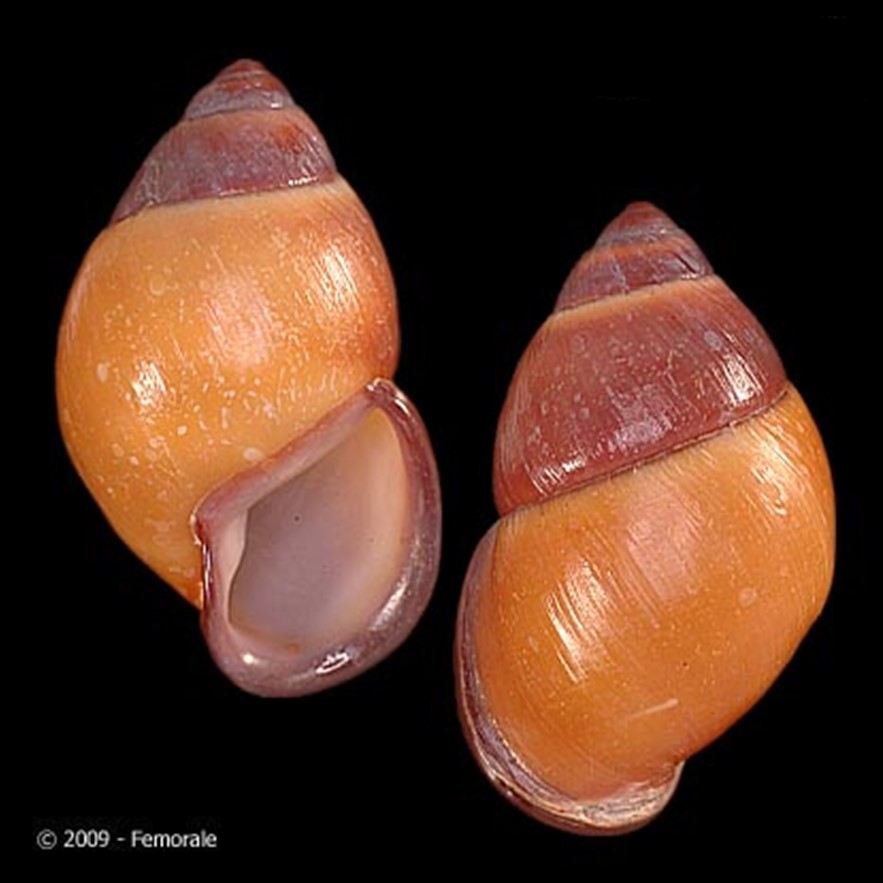
CLASSE: GASTROPODA: TERRESTRE FAMÍLIA: STROPHOCHEILIDAE ESPÉCIE: Speironepion kronei (Ihering, 1901) Tamanho médio: 63 mm Habitat: vive no solo, sob folhas ou enterrada parte do tempo Alimentação: provavelmente Herbívoro Ocorrência: Brasil (São Paulo) Localidade tipo: Rio Grande, São Paulo, Brasil Nome original: Strophocheilus (Speironepion) milleri kronei Ihering, 1901 Fotos: cortesia: (1) cortesia Femorale, 2009, 64.3mm; (2) Iporanga, São Paulo. 62mm Fontes: Descrição original (como Strophocheilus milleri var. kronei Ihering, 1901) Pilsbry, H. A. (1901-1902). Manual of conchology, structural and systematic, with illustrations of the species. Ser. 2, Pulmonata. Vol. 14: Oriental bulimoid Helicidae; Odontostominae; Cerionidae. pp 1-302, pls 1-62. Philadelphia, published by the Conchological Section, Academy of Natural Sciences. [pp. 1-64, Pl. 1-15, 07 Jun 1901; pp. 65-128, Pl. 16-21, 06...
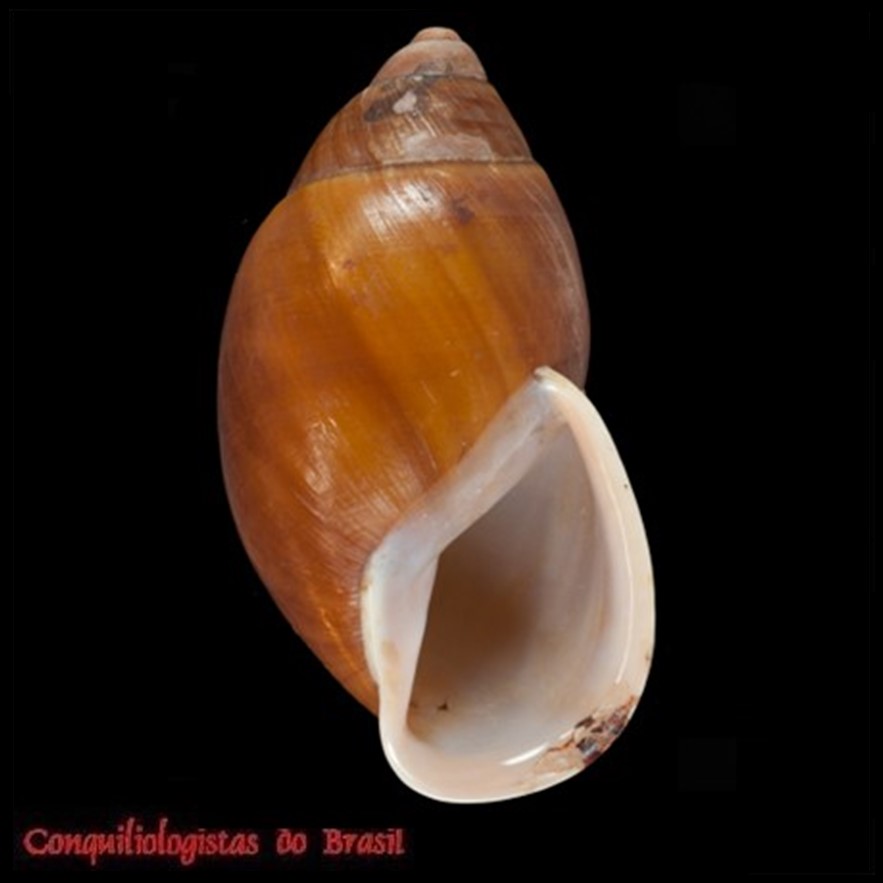
CLASSE: GASTROPODA: TERRESTRE FAMÍLIA: STROPHOCHEILIDAE ESPÉCIE: Speironepion milleri (G. B. Sowerby I, 1838) Tamanho médio: 65 mm Habitat: vive no solo, sob folhas ou enterrada parte do tempo Alimentação: provavelmente Herbívoro Ocorrência: Brasil (Rio de Janeiro, São Paulo) Localidade tipo: nd Nome original: Bulinus milleri G. B. Sowerby I, 1838 Sinônimos: Strophocheilus (Speironepion) milleri (G. B. Sowerby I, 1838); Strophocheilus milleri (G. B. Sowerby I, 1838) Fotos: (1) Breure, A. S. H. & Araujo, R. (2017): Speironepion milleri (Sowerby I in Sowerby I & II, 1838), MNCN 15.05/13298; (2) NCB Naturalis, ex Zoölogisch Museum Amsterdam, ZNA.MOLL,388742, Brasil, ex coll Schepman, 1920 Fontes: Descrição original: (como Bulinus milleri G. B. Sowerby I, 1838) Sowerby, G. B. I; Sowerby, G. B. II....

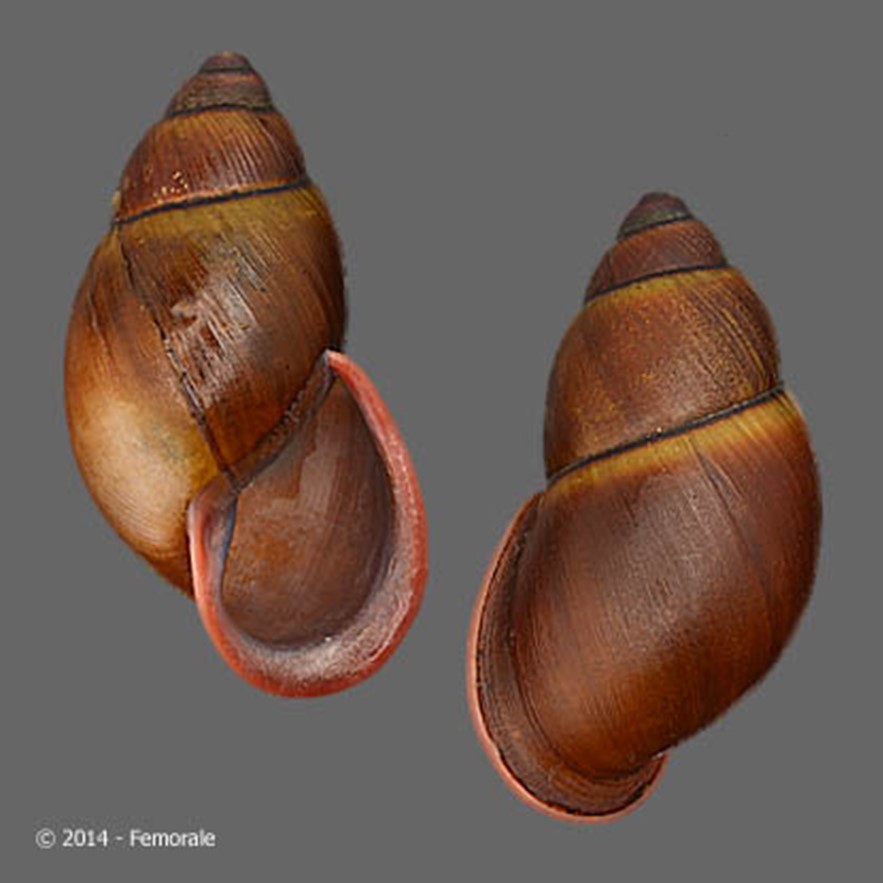
CLASSE: GASTROPODA: TERRESTRE FAMÍLIA: STROPHOCHEILIDAE ESPÉCIE: Speironepion pilsbryi (Ihering, 1900) Tamanho médio: 47 - 62 mm Habitat: vive no solo, sob folhas ou enterrada parte do tempo Alimentação: provavelmente Herbívoro Ocorrência: Brasil (São Paulo, Minas Gerais) Localidade tipo: Piquete, Serra da Mantiqueira, São Paulo Nome original: Strophocheilus pilsbryi Ihering, 1900 Etimologia: o nome da espécie é uma homenagem a Henry Augustus Pilsbry (Iowa 1862 – Flórida 1957). Pilsbry foi um biólogo, malacólogo e carcinólogo. Notabilizou-se mundialmente pelo seu estudo dos moluscos (Mollusca), em particular dos Polyplacophora e dos gastrópodes terrestres Fotos: (1,2) cortesia Femorale: (1) Campos do Jordão, São Paulo, 2014, 71 mm; (2) Camanducaia, Minas Gerais, 2017, 70 mm; (3-4) The Academy of Natural Sciences, Philadelphia: LECTOTYPE de Speironepion pilsbryi, ANSP 71230,...
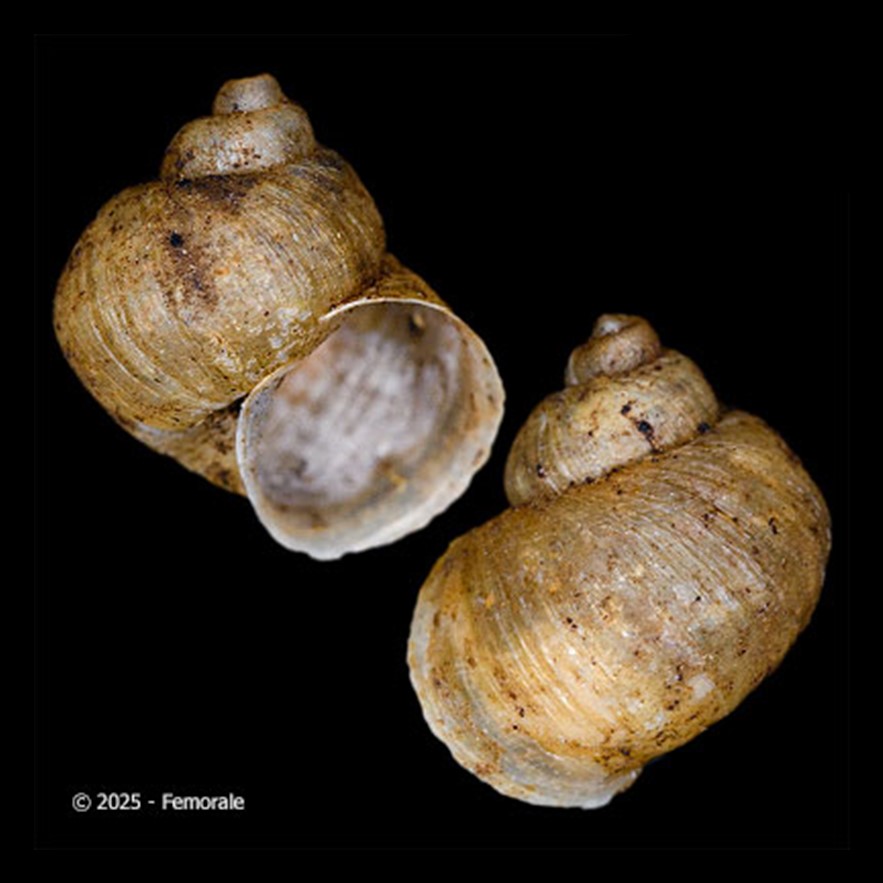
CLASSE: GASTROPODA: TERRESTRE FAMÍLIA: BULIMULIDAE ESPÉCIE: Sphaeroconcha araozi (Weyrauch, 1956) Tamanho médio: 6.5 mm Ocorrência: Peru (Huánuco, San Martin) Localidade tipo: "Tingo Maria, 670 m, auf der linken Seite des Río Huallaga, an der Autostraße zwischen der Brücke über den Fluß und dem Flughafen" Nome original: Bulimulus (Bulimulus) araozi Weyrauch, 1956 Etimologia: o nome da espécie é uma homenagem ao entomologista Pedro Araoz Fotos: (1) cortesia Femorale, Peru, 7.7mm; (2) Senckenberg Natural History Museum, Frankfurt: HOLOTYPE de Sphaeroconcha araozi (Weyrauch, 1956), SMF 155304, Peru, Tingo Maria, 670 m, na margem esquerda do Rio Huallaga, na estrada entre a ponte sobre o rio e o aeroporto, 6.5mm; (3) animal vivo: cortesia Carles Dorado (Allspira), Departamento San Martin, Peru ...
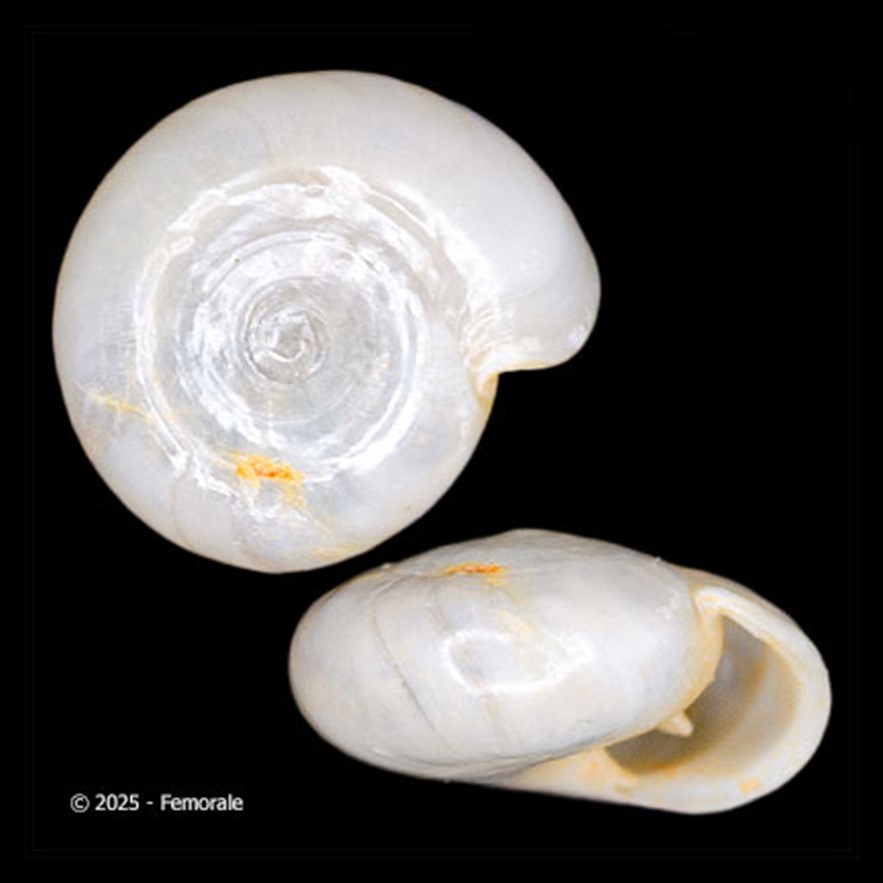
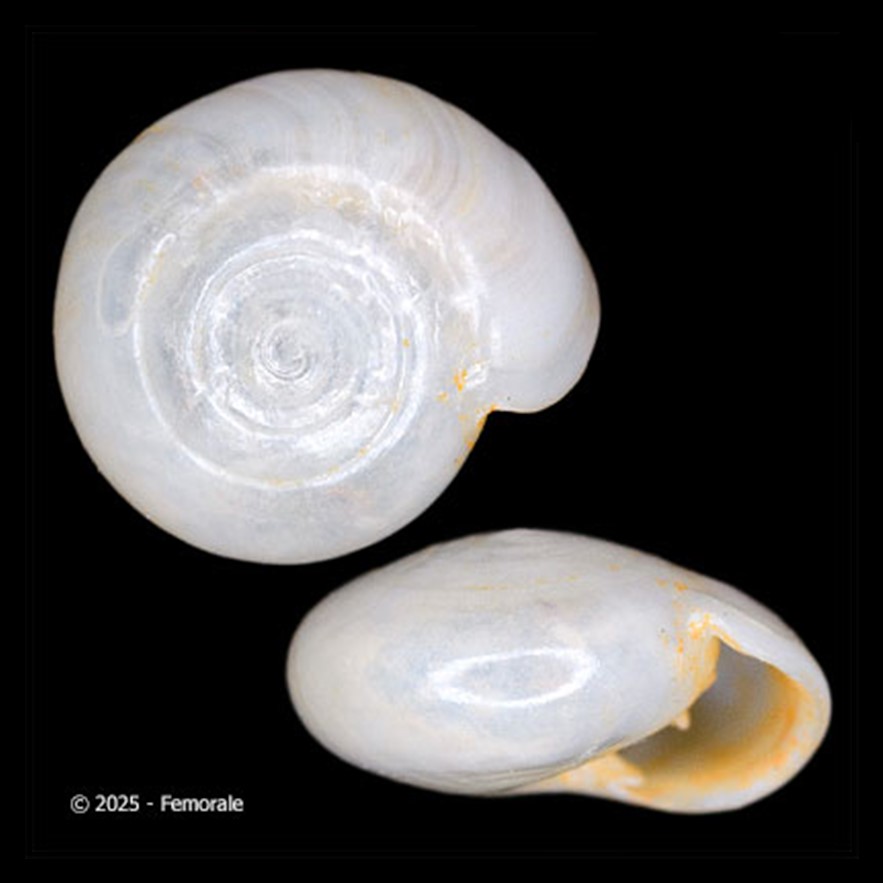
CLASSE: GASTROPODA: TERRESTRE FAMÍLIA: PROSERPINIDAE ESPÉCIE: Staffola derbyi (Dall, 1905) Tamanho médio: 5.0 mm Ocorrência: Brasil (Bahia) Localidade tipo: Paraguassú, Bahia ("from the calcareous banks of the arroyo of the Rio Chico at Paraguassú, State of Bahia") Nome original: Proserpina (Staffola) derbyi Dall, 1905 Sinônimos: Proserpina derbyi Dall, 1905 Etimologia: o nome da espécie é uma homenagem ao geólogo e geógrafo norte americano, naturalizado brasileiro, Orville Adalbert Derby (Kelloggsville, Nova Iorque, 1851 – Rio de Janeiro, 1915). Derby foi fundador do Serviço Geológico e Mineralógico do Brasil e um dos pioneiros da paleontologia brasileira Fotos: (1,2) cortesia Femorale, 2022, Staffola derbyi, Bahia, 5.6mm Fontes: Descrição original: (como Proserpina (Staffola) derbyi Dall, 1905) Dall, W.H., 1905. A new Proserpinoid land...
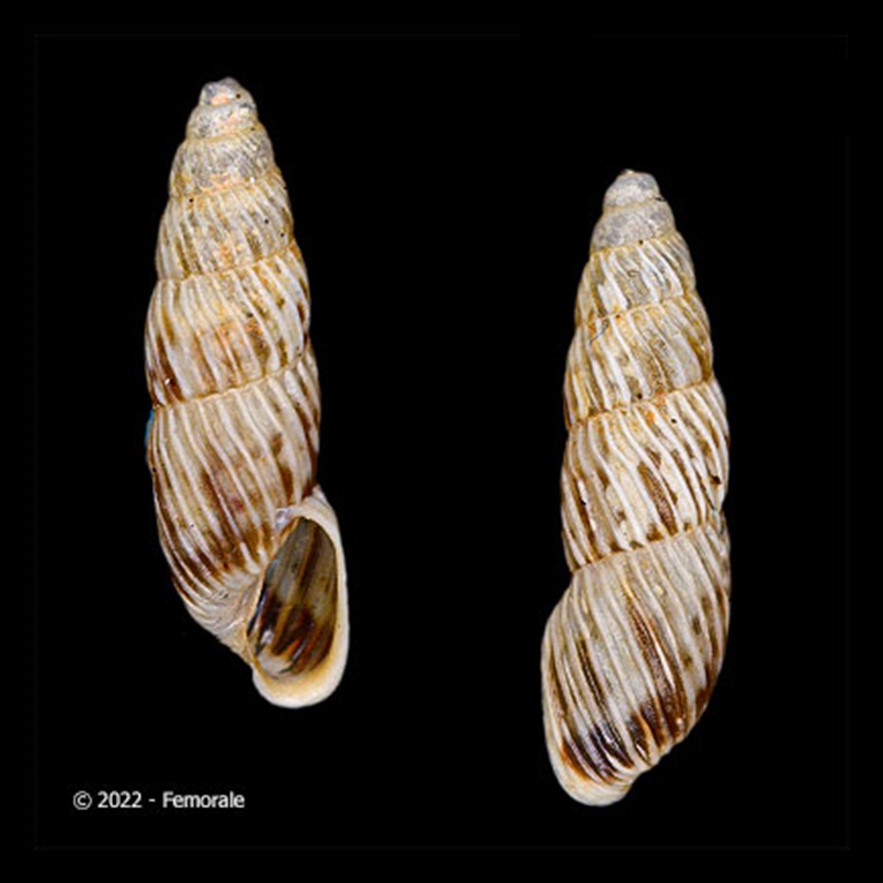
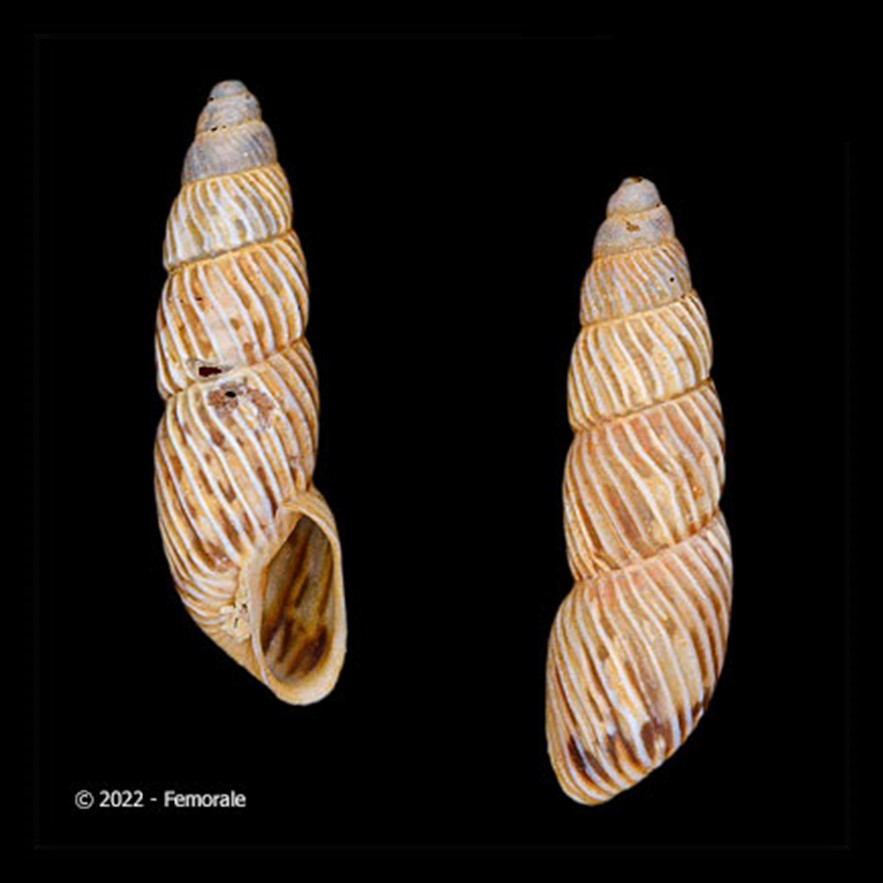
CLASSE: GASTROPODA: TERRESTRE FAMÍLIA: BULIMULIDAE ESPÉCIE: Stapafurdius costiferus Simone, 2021 Tamanho médio: 12 mm Ocorrência: Brasil (Bahia) Localidade tipo: Bahia, Andaraí, Ubiraitá Habitat: ambiente de Caatinga e Mata Atlântica seca Altitude: ~ 575 m Nome original: Stapafurdius costiferus Simone, 2021 Etimologia: o nome da espécie é uma alusão à escultura axial da concha Comentário: o nome do gênero é a latinização do palavra portuguesa "estapafúrdio", que significa algo estranho, estranho ou absurdo, uma alusão ao estranho formato da concha. Zoobank: urn:lsid:zoobank.org:act:4AEDCA60-4A2A-4F04-9CC4-6517F1303B78 Fotos: cortesia Femorale, 2022, TOPOTYPE, Bahia, 11 mm Figura: Simone, 2021: (13-17) HOLOTYPE Museu de Zoologia de São Paulo - MZSP 154046 (L 12.0 mm); (19-20) PARATYPE MZSP 153882#1 (L 11.1 mm); (22-23) PARATYPE MZSP 153882#3 (L 9.8...
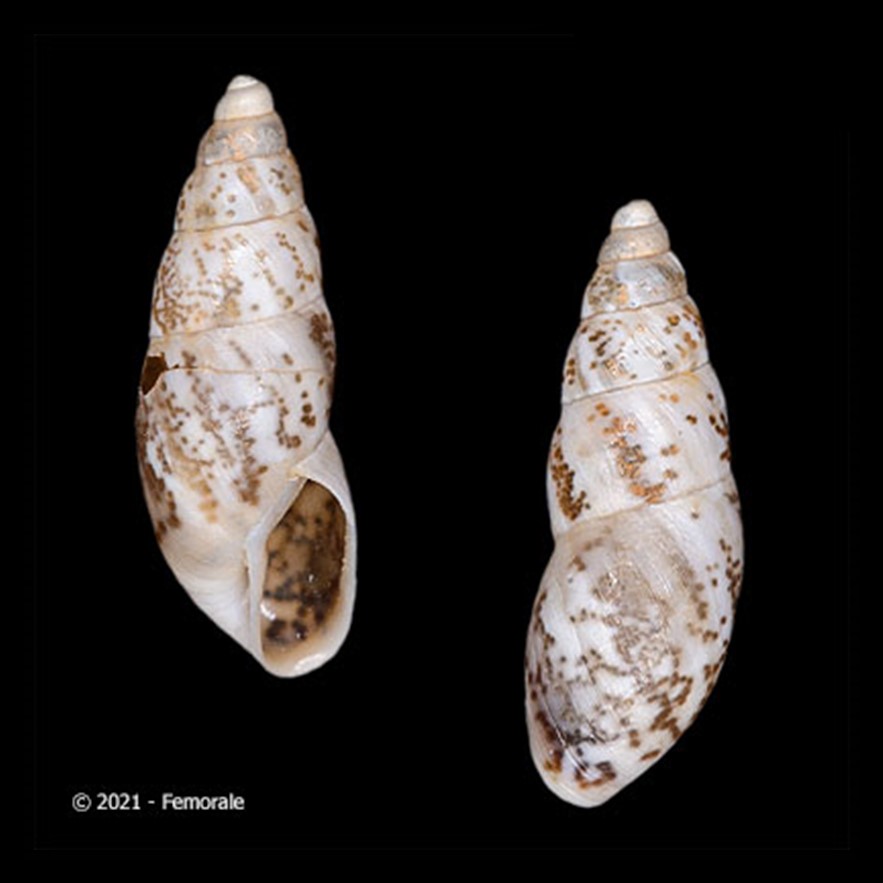

CLASSE: GASTROPODA: TERRESTRE FAMÍLIA: BULIMULIDAE ESPÉCIE: Stapafurdius glaber Simone, 2021 Tamanho médio: 10 - 11 mm Habitat: ambiente de Caatinga e Mata Atlântica seca Altitude: ~ 500 m Ocorrência: Brasil (Bahia) Localidade tipo: Brasil, Bahia, "Ibicoara; Ituaçu, Tanhaçu" Nome original: Stapafurdius glaber Simone, 2021 Etimologia: o nome da espécie vem do latim "glaber", que significa liso, uma alusão à falta da escultura em concha Comentário: o nome do gênero é a latinização do palavra portuguesa "estapafúrdio", que significa algo estranho, estranho ou absurdo, uma alusão ao estranho formato da concha Zoobank: urn:lsid:zoobank.org:act:B21ABE18-E5FE-4B08-AC63-FA4B51085F64 Fotos: cortesia Femorale, 2021, TOPOTYPE, 10.5 e 10.8 mm Figura: Simone, 2021: (1-6) HOLOTYPE Museu de Zoologia de São Paulo - MZSP 154048 (L 10.5 mm);...
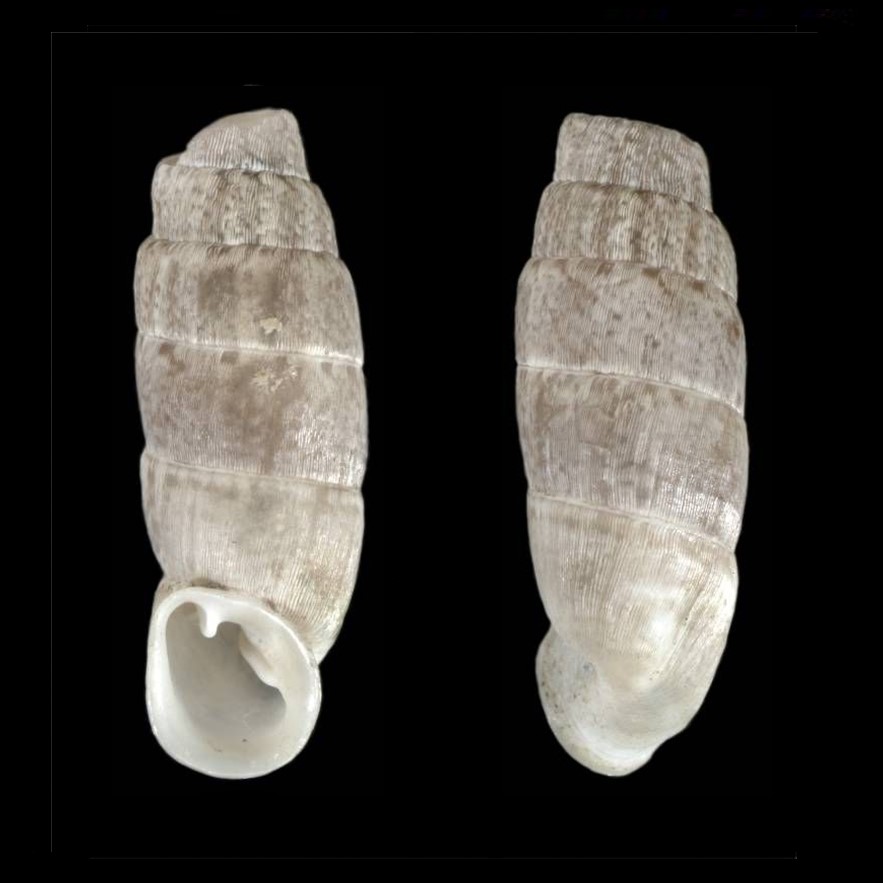
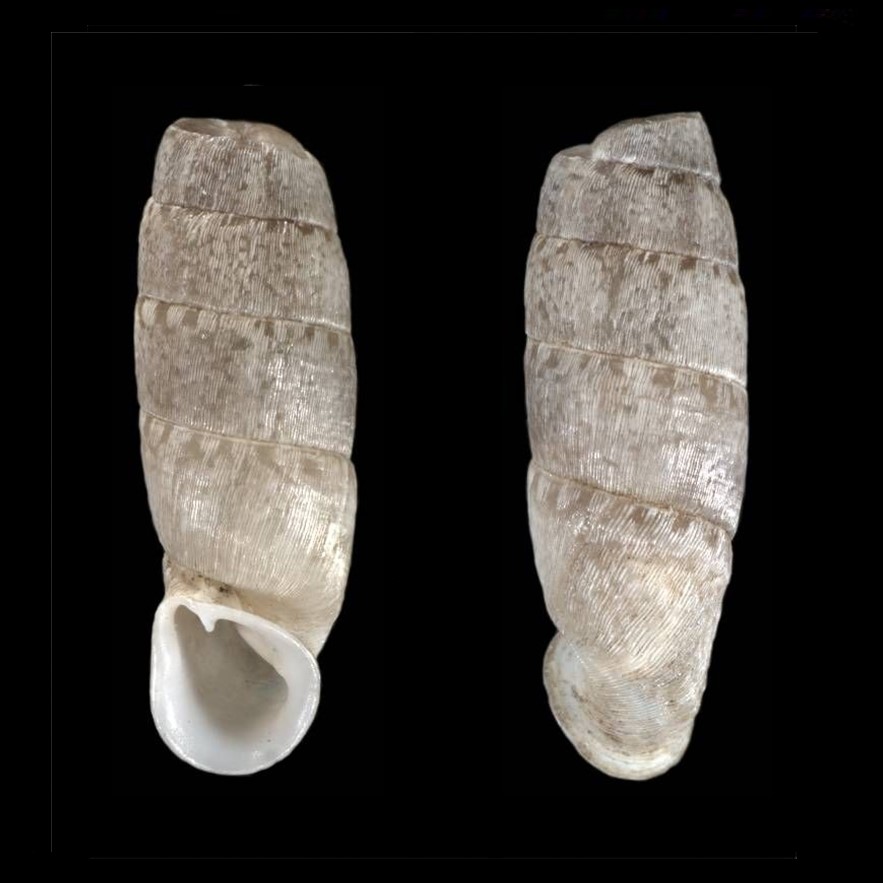
CLASSE: GASTROPODA: TERRESTRE FAMÍLIA: CLAUSILIIDAE ESPÉCIE: Steeriana cajamarcana Weyrauch & Zilch, 1954 Tamanho médio: 12 mm Ocorrência: Peru (Cajamarca) Localidade tipo: Peru, Cajamarca, "Hacienda Cochambul, 18 km von Cajamarca" Altitude: 2850 m Nome original: Steeriana cajamarcana Weyrauch & Zilch, 1954 Etimologia: o nome da espécie é uma referência à localidade tipo Subespécies: (i) Steeriana cajamarcana cajamarcana Weyrauch & Zilch, 1954 (ii) Steeriana cajamarcana pomabambensis (Loosjes & Loosjes-van Bemmel, 1989) (iii) Steeriana cajamarcana solutilabrum H. Nordsieck, 2005 (iv) Steeriana cajamarcana sororminor Neubert & H. Nordsieck, 2005 Sinônimos: Andiniella pomabambensis Loosjes & Loosjes-van Bemmel, 1989 Fotos: (1) Forschungsinstitut und Naturmuseum Senckenberg: HOLOTYPE de Steeriana cajamarcana cajamarcana, SMF 135516, Peru, "Hacienda Cochambul, 18 km von Cajamarca (2850m)" (2) Forschungsinstitut und Naturmuseum Senckenberg:HOLOTYPE de Steeriana cajamarcana solutilabrum H. Nordsieck,...
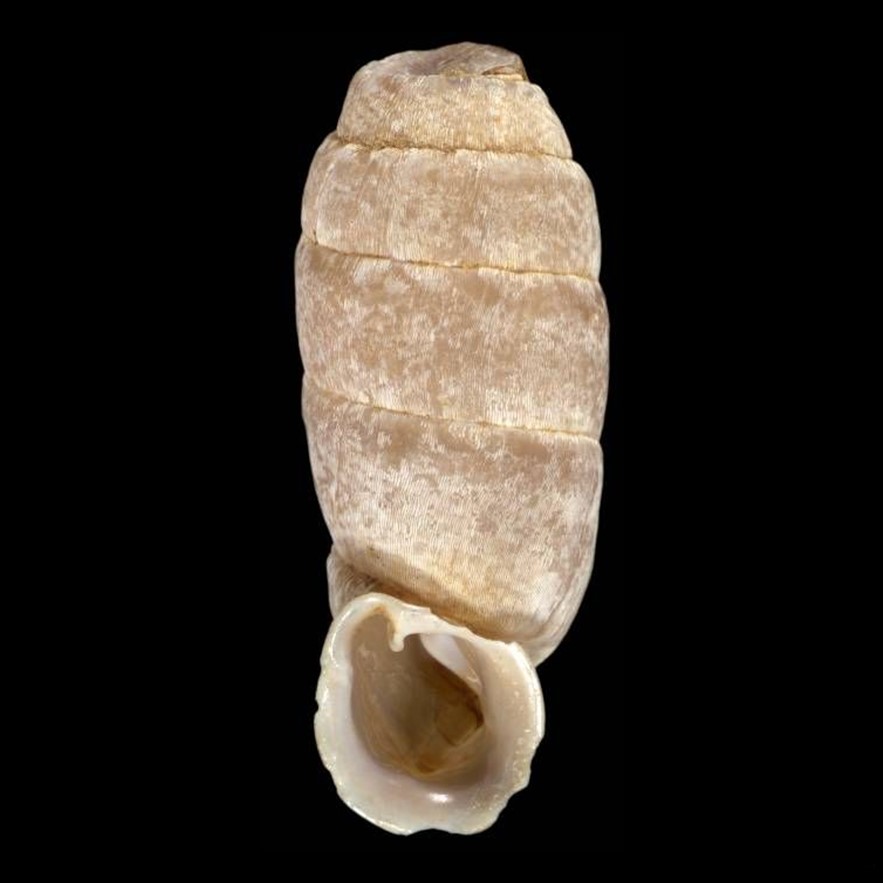
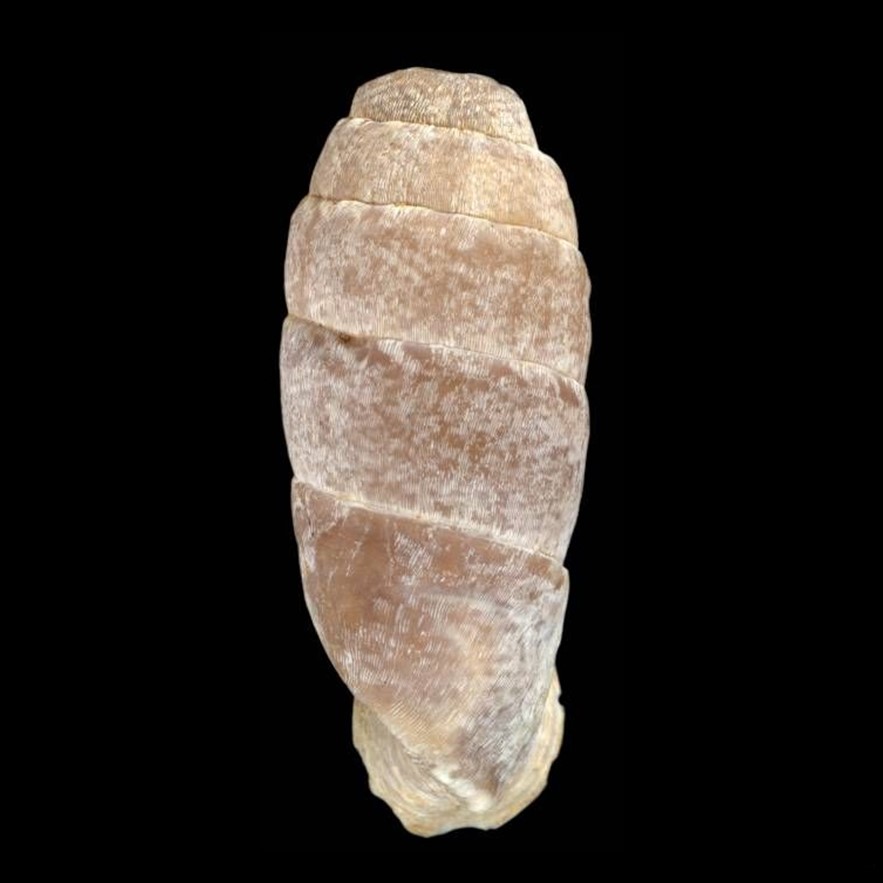
CLASSE: GASTROPODA: TERRESTRE FAMÍLIA: CLAUSILIIDAE ESPÉCIE: Steeriana celendinensis Weyrauch & Zilch, 1954 Tamanho médio: 14 - 19 mm Ocorrência: Peru (Cajamarca) Localidade tipo: Peru, Cajamarca: "3 km SE Celendin: km 113 d. Str. Celendin nach Balsas (Maranon)" Altitude: 2700 m Nome original: Steeriana celendinensis Weyrauch & Zilch, 1954 Sinônimos: Steeriana (Steeriana) celendinensis Weyrauch & Zilch, 1954 Etimologia: o nome da espécie é uma referência à localidade tipo Subespécies: (i) Steeriana celendinensis celendinensis Weyrauch & Zilch, 1954 (ii) Steeriana celendinensis isidroensis Weyrauch & Zilch, 1954 (iii) Steeriana celendinensis minor Weyrauch, 1958 Fotos: (1,2) Forschungsinstitut und Naturmuseum Senckenberg: HOLOTYPE de S. celendinensis celendinensis, Peru, Cajamarca, "3 km SE Celendin: km 113 d. Str. Celendin nach Balsas (Maranon)", coll.Weyrauch, W., 19.25 mm; (3) HOLOTYPE de S. celendinensis isidroensis Weyrauch...
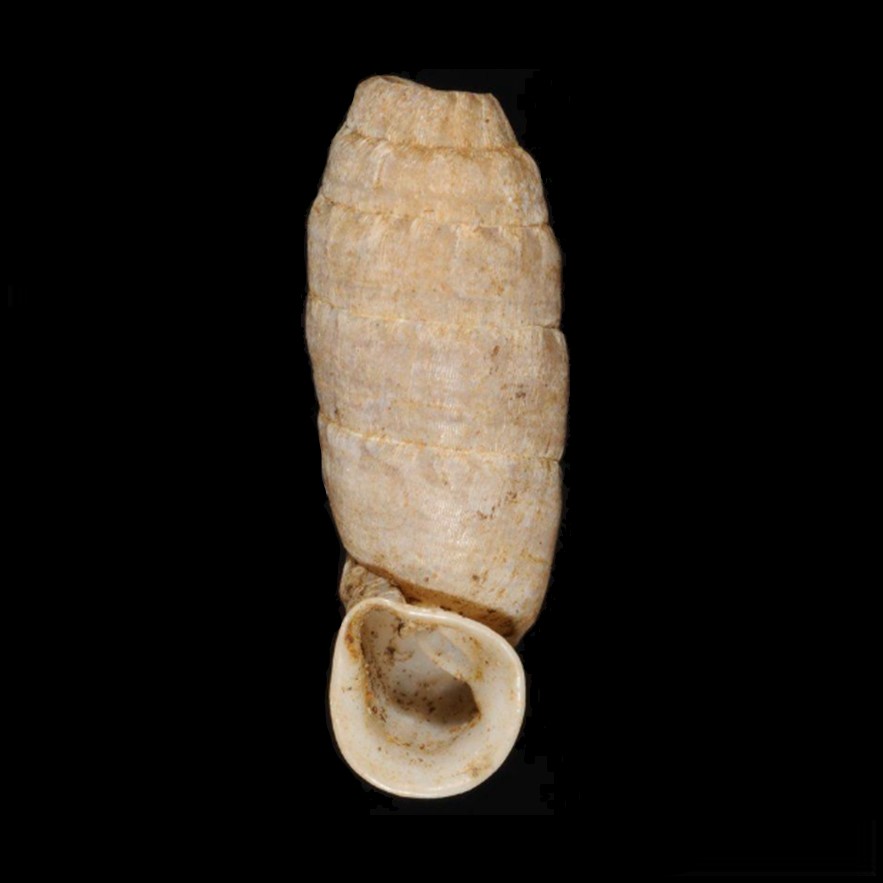
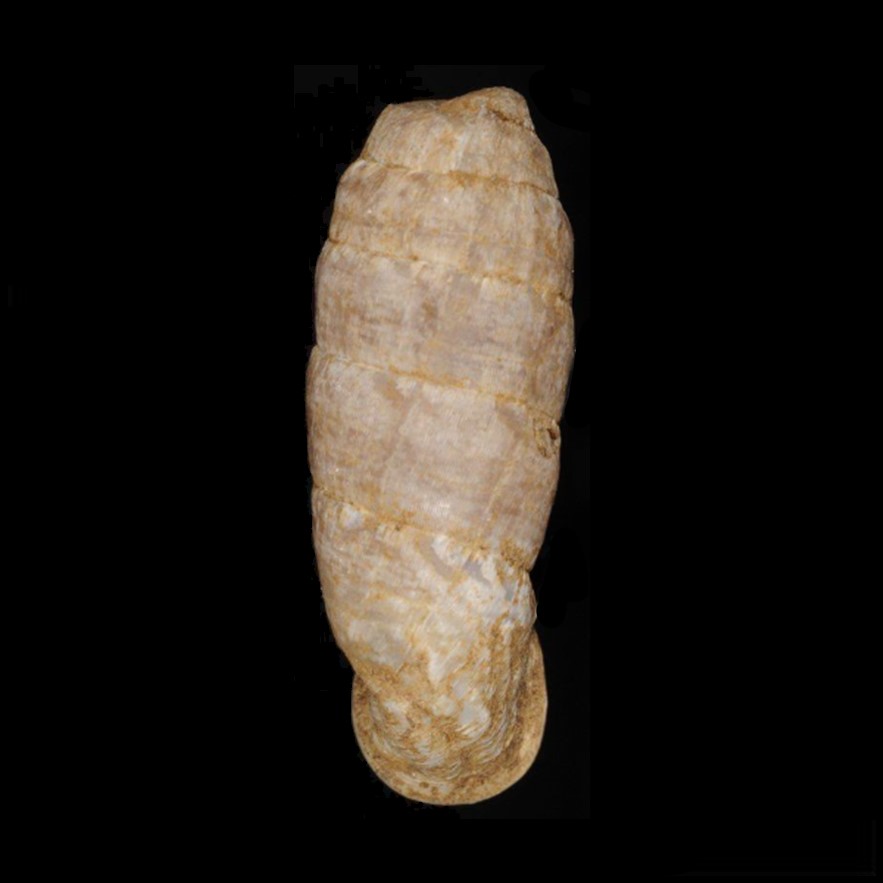
CLASSE: GASTROPODA: TERRESTRE FAMÍLIA: CLAUSILIIDAE ESPÉCIE: Steeriana malleolata (R. A. Philippi, 1867) Tamanho médio: 22.5 mm Ocorrência: Peru (Cajamarca) Localidade tipo: Peru, "habitat in Andibus peruanis editioribus inter Contumaza et Cajamarca" Nome original: Clausilia malleolata R. A. Philippi, 1867 Sinônimos: Nenia (Steeriana) malleolata (R. A. Philippi, 1867) Fotos: (1) The Academy of Natural Sciences, Philadelphia: PARALECTOTYPE de Steeriana malleolata, ANSP 183968, 28 k. east of Cajamarca on road to Celendin, Cordillera de Cumulloa Fontes: Descrição original: (como Clausilia malleolata R. A. Philippi, 1867) Philippi, R. A. (1867). Beschreibung zweier neuen peruanischen Clausilien. Malakozoologische Blätter. 14(6): 194–195., disponível online em https://www.biodiversitylibrary.org/page/15855995 página(s): 194, pl. 2, figs 3-4 Nordsieck, H. (2007). Worldwide Door Snails (Clausiliidae), Recent and Fossil. ConchBooks, Hackenheim, 214 pp. página(s): 42 ...
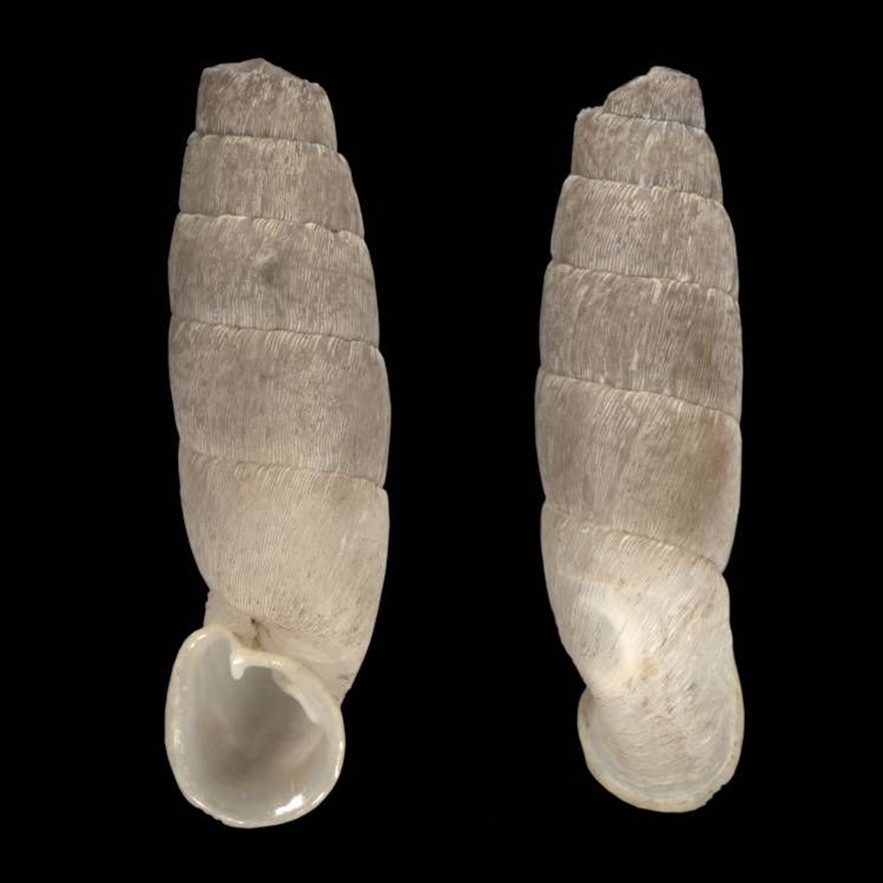
CLASSE: GASTROPODA: TERRESTRE FAMÍLIA: CLAUSILIIDAE ESPÉCIE: Steeriana nivea H. Nordsieck, 2005 Tamanho médio: 15.4 - 18.5 mm Ocorrência: Peru (La Libertad) Localidade tipo: Peru, "Dept. La Libertad, ca. 25 km from Cajabamba to Huamachuco" Altitude: 3200 m Nome original: Steeriana nivea H. Nordsieck, 2005 Etimologia: o nome da espécie é uma referência à concha, do Latim "niveus", nevado (=snowy) Descrição original: (Nordsieck, 2005): "Shell decollated, whorls less rounded; whitish-grey to grey; teleoconch whorls densely ribbed, riblets undulating, lengthwise or incompletely white, below the suture groups of stronger white riblets alternating with non-white weakly sculptured ones, on the neck, especially the dorsal keel, riblets ± coarser; neck with weak broad basal keel and ± distinct dorsal keel, mostly higher than basal keel, ±...
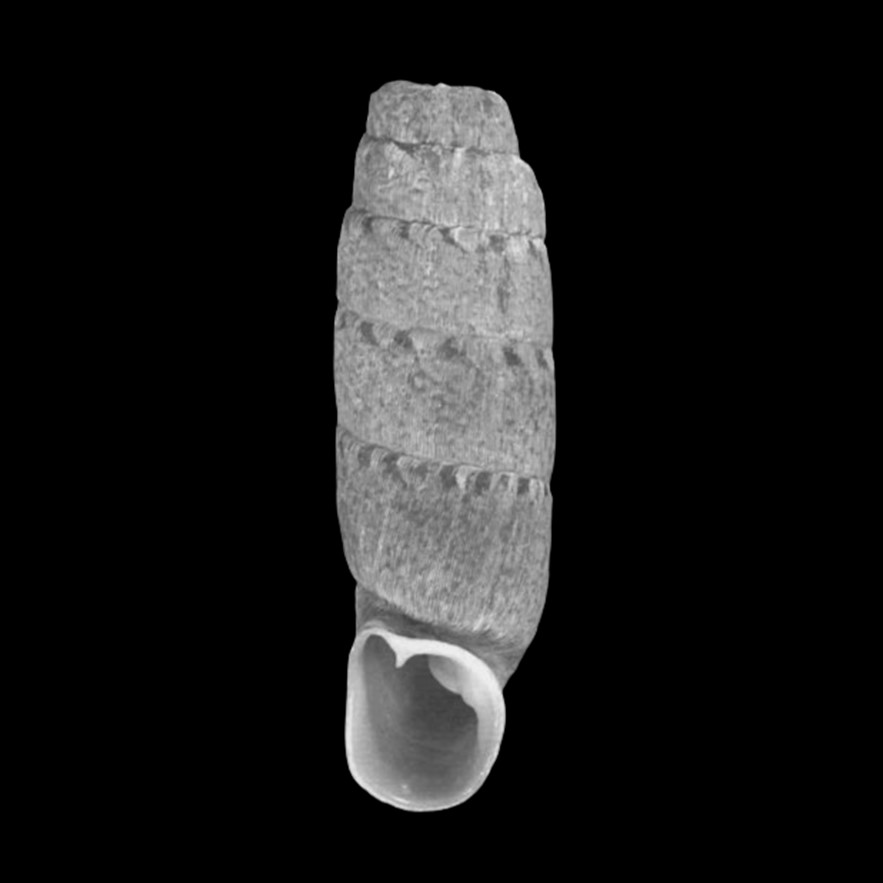
CLASSE: GASTROPODA: TERRESTRE FAMÍLIA: CLAUSILIIDAE ESPÉCIE: Steeriana sorormajor Neubert & H. Nordsieck, 2005 Tamanho médio: 17.3 - 19.6 mm Ocorrência: Peru (Cajamarca) Localidade tipo: Peru, Departamento de Cajamarca, 2 km NE of Encafiada Altitude: 3200 m Nome original: Steeriana sorormajor Neubert & H. Nordsieck, 2005 Etimologia: o nome da espécie é uma combinação de duas palavras em Latim: "soror" = irmã, e "major" = maior; uma referência ao tamanho da concha, a irmã maior de Steeriana cajamarcana Fotos: (1) Neubert, E. & Nordsieck, H. (2005): HOLOTYPE de Steeriana sorormajor, UF 268787, Peru, Cajamarca, 2 km NE of Encafiada, F. G. Thompson leg., 21.iv.1972, 18.4mm Fontes: Descrição original: Neubert, E. & Nordsieck, H. (2005). New Southamerican Clausiliidae from the...
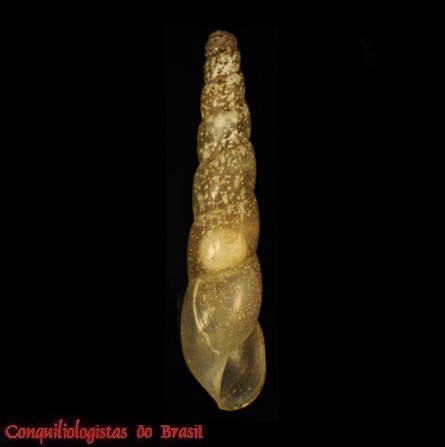
CLASSE: GASTROPODA: TERRESTRE FAMÍLIA: ACHATINIDAE ESPÉCIE: Stenogyra amazonica (Pilsbry, 1906) Tamanho médio: 10 mm Habitat: vive no solo, sob folhas ou enterrada parte do tempo Ocorrência: Brasil (Pará) Localidade tipo: Pará, sem localidade específica Nome original: Opeas octogyrum var. amazonicum Pilsbry, 1906 Fotos: The Academy of Natural Sciences, Philadelphia: HOLOTYPE de Opeas octogyrum amazonicum, ANSP 24181, Pará, Brasil, doador: Thomas Bland, coletor: Dr Hubbard Fontes: Descrição original: (como Bulimus octogyrus L. Pfeiffer, 1856) Pfeiffer, L. (1856). Diagnosen neuer Landschnecken. Malakozoologische Blätter. Cassel (Theodor Fischer). 3 (12): 43-48 [April 1856]; 3 (13): 49-52 [Juli 1856]; 3 (16): 206-209 [Dezember 1856]., disponível online em https://www.biodiversitylibrary.org/page/15865010 página(s): 45 Simone, L. R. L. (2006). Land and Freshwater Molluscs of Brazil. Editora Gráfica Bernardi, FAPESP....

CLASSE: GASTROPODA: TERRESTRE FAMÍLIA: ACHATINIDAE ESPÉCIE: Stenogyra bacillus (L. Pfeiffer, 1862) Tamanho médio: 18 mm Habitat: vive no solo, sob folhas ou enterrada parte do tempo Ocorrência: Cuba, Brasil (Ceará, Paraíba) Localidade tipo: Guantanamo, Cuba Nome original: Bulimus bacillus L. Pfeiffer, 1862 Foto: nd Fontes: Descrição original (como Bulimus bacillus L. Pfeiffer, 1862) Pfeiffer, L. (1862). Neue Landschnecken von Cuba. Malakozoologische Blätter. 8(5): 220-224. ["1861"; January 1862]., disponível online em https://www.biodiversitylibrary.org/page/15920033 página(s): 221 Simone, L. R. L. (2006). Land and Freshwater Molluscs of Brazil. Editora Gráfica Bernardi, FAPESP. São Paulo, 390 pp. página(s): 188 Molluscabase: https://www.molluscabase.org/aphia.php?p=taxdetails&id=1448232

CLASSE: GASTROPODA: TERRESTRE FAMÍLIA: ACHATINIDAE ESPÉCIE: Stenogyra colombiana Preston, 1907 Tamanho médio: nd Ocorrência: Colômbia (Cundimarca) Localidade tipo: Colômbia, Bogotá Altitude: 2600 m Nome original: Stenogyra colombiana Preston, 1907 Sinônimos: Obeliscus colombianus (Preston, 1907) Fotos: nd Fontes: Descrição original: Preston, H. B. (1907). Descriptions of new species of land and freshwater shells from Central and South America. The Annals and Magazine of Natural History, 7th series. 20(120): 490-498. London. [1 December]., disponível online em https://www.biodiversitylibrary.org/page/24254358 página(s): 496, fig. 14 Orrell T, Informatics and Data Science Center - Digital Stewardship (2026). NMNH Extant Specimen Records (USNM, US). Version 1.106. National Museum of Natural History, Smithsonian Institution. Occurrence dataset https://doi.org/10.15468/hnhrg3 accessed via GBIF.org on 2026-03-14. https://www.gbif.org/occurrence/1319978215 MolluscaBase: https://www.molluscabase.org/aphia.php?p=taxdetails&id=1451763
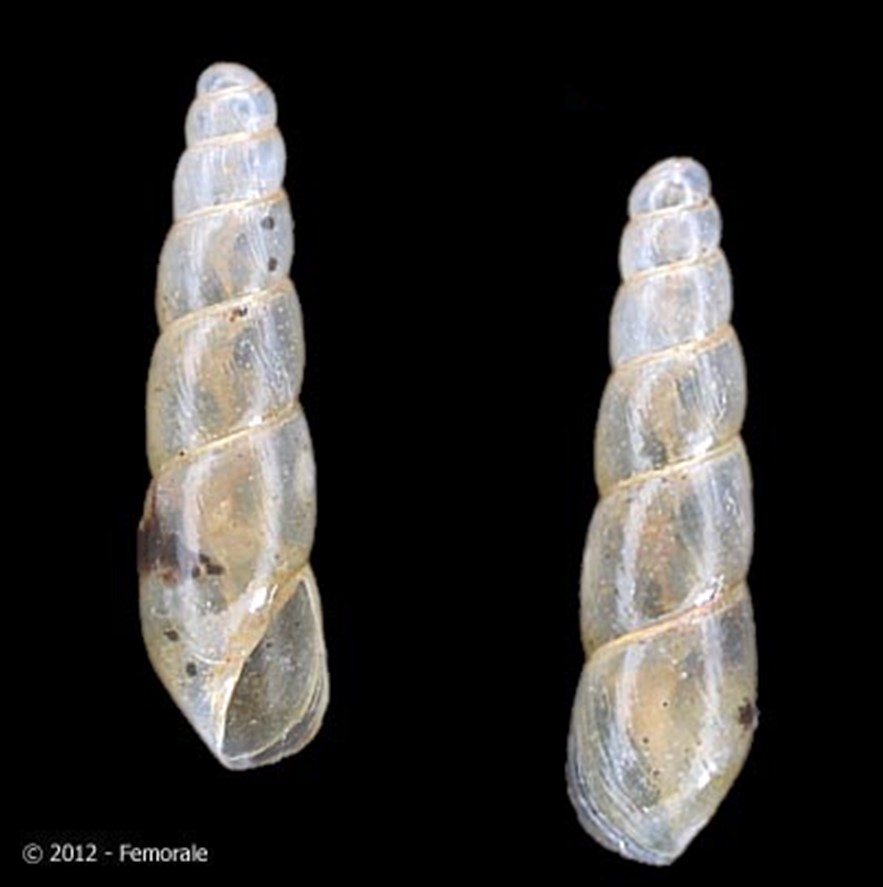
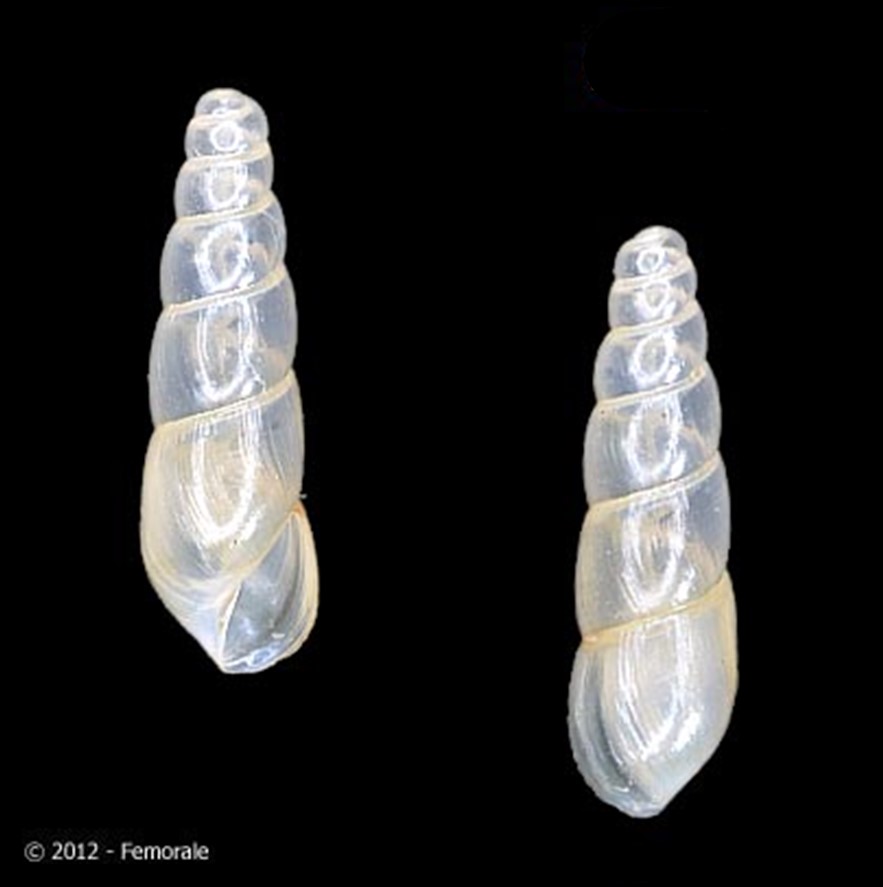
CLASSE: GASTROPODA: TERRESTRE FAMÍLIA: ACHATINIDAE ESPÉCIE: Stenogyra octogyra (L. Pfeiffer, 1856) Tamanho médio: 12 mm Habitat: vive no solo, sob folhas ou enterrada parte do tempo Ocorrência: Venezuela, Brasil (Pará, Mato Grosso, Alagoas, Ceará, Rio Grande do Norte) Localidade tipo: Venezuela, Caracas Sinônimos: Bulimus octogyrus L. Pfeiffer, 1856; Obeliscus octogyrus (L. Pfeiffer, 1856); Opeas octogyrum (L. Pfeiffer, 1856) Fotos: (1) cortesia Femorale, 2012, Brasil, ~8 mm Figura: Salvador et al. 2018: (A) Leptinaria cf. mamoreensis (MNHN; H = 7.1 mm); (B–D) Leptinaria ritchiei; (B) MZSP 133929 (H = 11.9 mm); (C) MZSP 133905 (H = 9.5 mm); (D) animal vivo; (E, F) Leptinaria lamellata; (E) animal vivo; (F) MNHN (H = 9.8 mm); (G, H) Obeliscus agassizi; (G) animal vivo; (H) MZSP 133507 (H = 34.0 mm);...
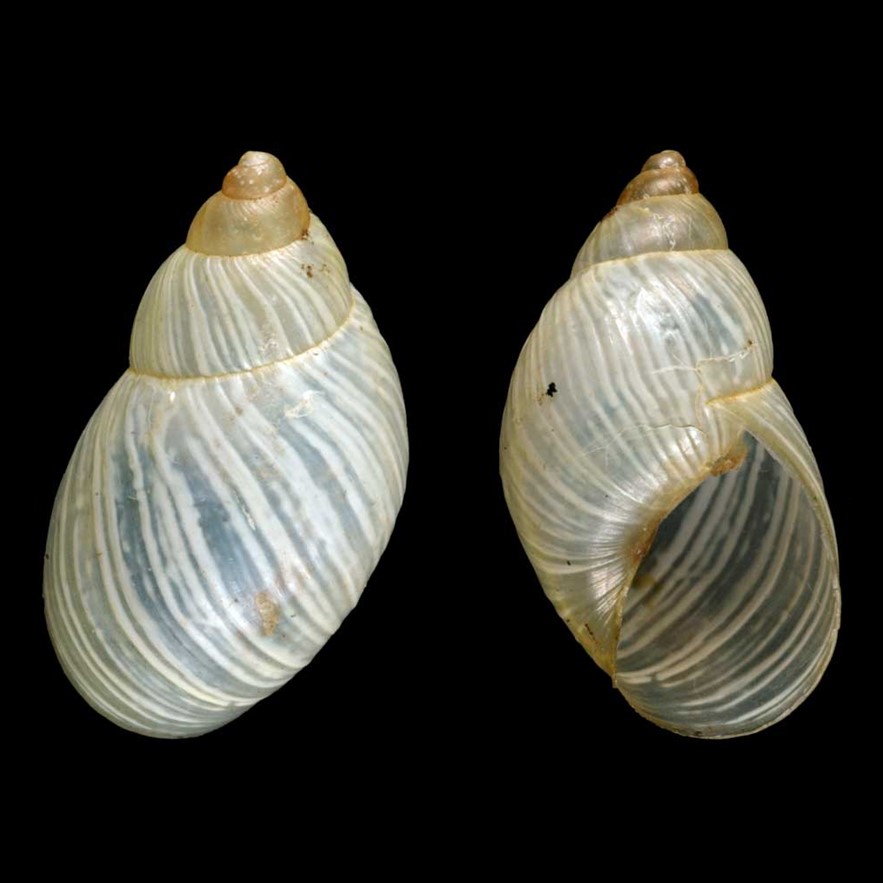
CLASSE: GASTROPODA: TERRESTRE FAMÍLIA: BULIMULIDAE ESPÉCIE: Stenostylus colmeiroi (Hidalgo, 1872) Tamanho médio: 15 - 17 mm Habitat: vive em árvores e arbustos Ocorrência: Equador, Colômbia Localidade tipo: "Baeza, République de l'Equateur (Martinez)" Altitude: 1500 - 2000 m Nome original: Bulimus colmeiroi Hidalgo, 1872 Etimologia: o nome da espécie é uma homenagem a Miguel Colmeiro y Penido (1816–1901), diretor do Jardín Botánico em Madrid de 1868 a 1901, e primeiro presidente da Sociedad Española de Historia Natural Fotos: (1) Museu Nacional de História Natural, Paris: LECTOTYPE MNHN-IM-2000-20822, 17mm, Baeza, Equador; (2) animal vivo: cortesia Carlos Dorado (Allspira), Mospa, Província de Mapo, Equador Fontes: Descrição original: (como Bulimus colmeiroi Hidalgo, 1872) Hidalgo, J.G. (1872). Moluscos del Viaje al Pacífico verificado de 1862 a...

CLASSE: GASTROPODA: TERRESTRE FAMÍLIA: BULIMULIDAE ESPÉCIE: Stenostylus meleagris (L. Pfeiffer, 1853) Tamanho médio: 31 mm Ocorrência: Colômbia, Equador Localidade tipo: "Andibus Novae Granadae" Nome original: Bulimus meleagris L. Pfeiffer, 1853 Comentários: Segundo Breure & Ablett, 2014: "um dos exemplares corresponde às medidas originais e à figura de Pfeiffer, sendo designado LECTOTYPE. ... Ao reexaminar estes exemplares, fica claro que os exemplares referidos por Breure (1978: 219, pl. 7 fig. 18) não são desta espécie. Se a localidade-tipo estiver correta, esta espécie pode ser esperada no sul da Colômbia ou na região adjacente no Equador" Fotos: (1) Breure & Ablett, 2014: Natural History Museum, London: LECTOTYPE NHMUK 20100583, 31.3 mm Fontes: Descrição original: (como Bulimus meleagris L. Pfeiffer, 1853) Pfeiffer, L. (1853). Description...


CLASSE: GASTROPODA: TERRESTRE FAMÍLIA: BULIMULIDAE ESPÉCIE: Stenostylus nigrolimbatus (L. Pfeiffer, 1853) Tamanho médio: 30-35 mm Habitat: Vive em árvores e arbustos Ocorrência: Colômbia, Santander Localidade tipo: “Andes of New Granada” Comentários: Segundo Breure, 2008, esta espécie está confinada à ecoregião "Northern Andean páramo. The species was found on calcareous ridges" Nome original: Bulimus nigrolimbatus L. Pfeiffer, 1853 Sinônimos: Drymaeus cleefi Breure & Eskens, 1981 Fotos: (1) Natural History Museum, London: LECTOTYPE NHMUK 1975549, "Andes, New Granada" Fontes: Descrição original: (como Bulimus nigrolimbatus L. Pfeiffer, 1853) Pfeiffer, L. (1853). Description of fifty-four new species of Helicea, from the collection of Hugh Cuming, Esq. Proceedings of the Zoological Society of London. 19: 252-256 [16 July 1853]; 257-263 [7 December 1853] [stated publication date: 1851]., disponível online em...
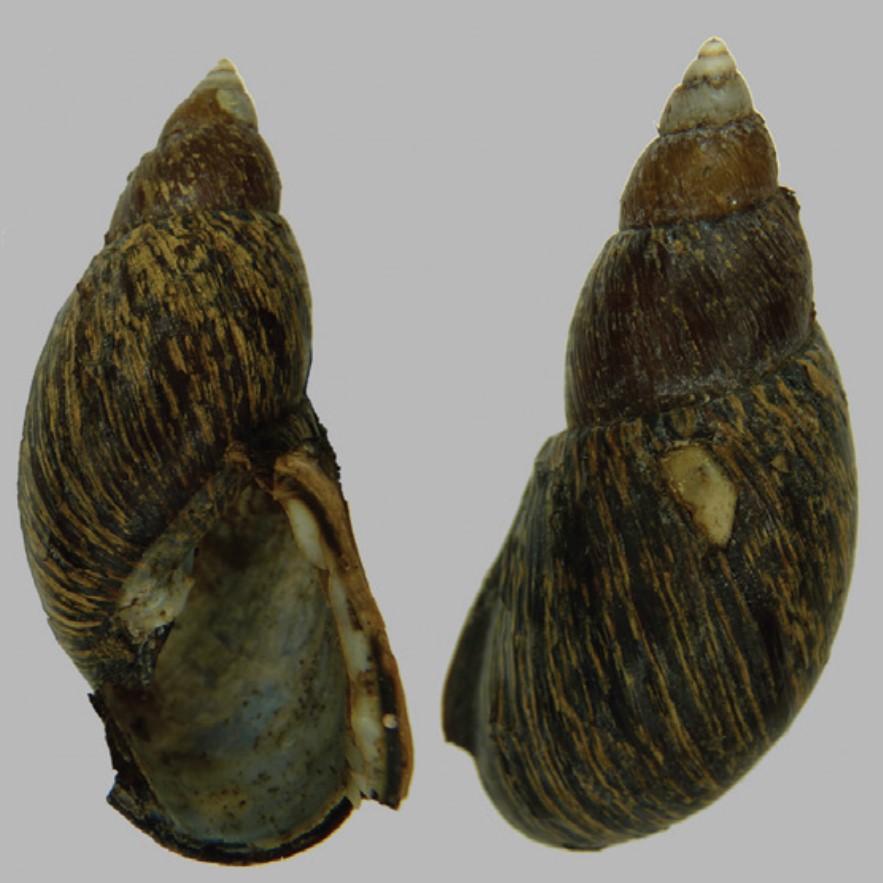
CLASSE: GASTROPODA: TERRESTRE FAMÍLIA: BULIMULIDAE ESPÉCIE: Stenostylus perturbatus Breure, 2011 Tamanho médio: 56 mm Ocorrência: Peru, Departamento de Pasco Localidade tipo: Peru, Departamento de Pasco, Huancabamba Nome original: Stenostylus perturbatus Breure, 2011 Etimologia: o nome da espécie derivada da palavra em Latim "perturbatus", inquieto; uma referência ao padrão distinto da concha Zoobank: urn:lsid:zoobank.org:act:D4D62ABB-D38C-458C-99CD-506CC09E3BB3 Descrição original: (Breure, 2011): "Shell 56.5 mm, 2.0 times as long as wide, elongate, with straight sides, imperforate; rather thin. Colour dark-brown to blackish, with axially oriented, yellowish lines, varying from small to somewhat broader, in some places forming patches, but always irregular, never from suture to suture; upper whorls light-brown, the first ones denuded of the periostracum. Surface rather shining, with thickened growth striae where the colour...

CLASSE: GASTROPODA: TERRESTRE FAMÍLIA: BULIMULIDAE ESPÉCIE: Stenostylus tapadoides (R. A. Philippi, 1867) Tamanho médio: 18 mm Ocorrência: Peru (Junín) Localidade tipo: Peru, Tarma Nome original: Bulimus tapadoides R. A. Philippi, 1867 Descrição original: (Philippi, 1867); "B. testa subimperforata, oblonga, tenuissima, subplicata, olivaceo-viridi, plicis albidis; anfractibus 4 1/2, ultimo spiram paullo superante; apertura semiovata; columella filari recedente; peristomate recto, tenuissimo, columellari supra paullulum ailatato, perforationem fere omnino oceultante, tenuissimo." Fotos: (1) nd Fontes: Descrição original: (como Bulimus tapadoides R. A. Philippi, 1867) Philippi, R. A. (1867). Descriptio brevis molluscorum quorundam terrestrium a clarissimo viro Antonio Raimondi in Peruvia lectorum. Malakozoologische Blätter. 14: 65-79. Cassel., disponível online em https://www.biodiversitylibrary.org/page/15855866 página(s): 71 Ramírez, R.; Paredes, C.; Arenas, J. (2003). Moluscos del Perú. Revista de...
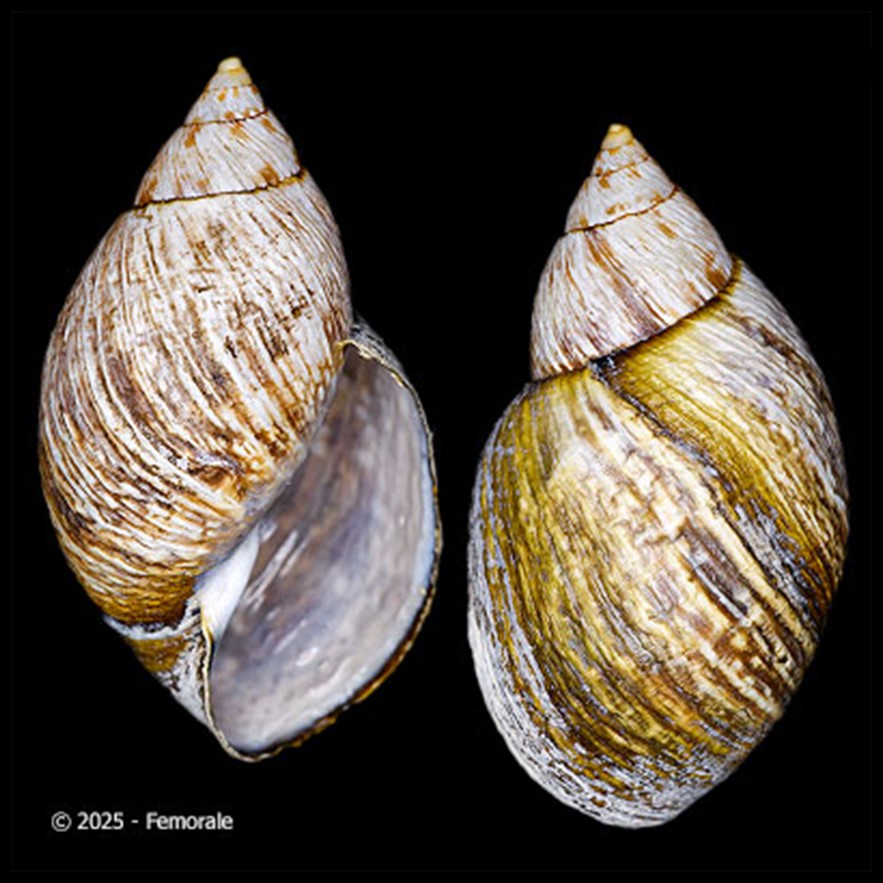

CLASSE: GASTROPODA: TERRESTRE FAMÍLIA: BULIMULIDAE ESPÉCIE: Stenostylus zilchi Weyrauch, 1956 Tamanho médio: 52 mm Ocorrência: Peru Localidade tipo: "Tapacocha, 3250 m, am Westhang der Anden, 280 km n Lima, an der Autostraße von Barranca nach Huaraz, auf der linken Seite des Río Fortaleza" Altitude: 3250 m Nome original: Stenostylus zilchi Weyrauch, 1956 Fotos: (1) cortesia Femorale, 2025, Peru, 45mm; (2) Senckenberg Natural History Museum, Frankfurt: HOLOTYPE SMF 155314, Tapacocha, na encosta oeste da Cordilheira dos Andes, 280 km ao norte de Lima, na estrada de Barranca a Huaraz, na margem esquerda do Rio Fortaleza, 52mm Fontes: Descrição original: Weyrauch, W. K. (1956). Neue Landschnecken aus Peru. Archiv für Molluskenkunde. 85 (4/6): 145-164, pl. 11. Frankfurt am Main. página(s): 156,...
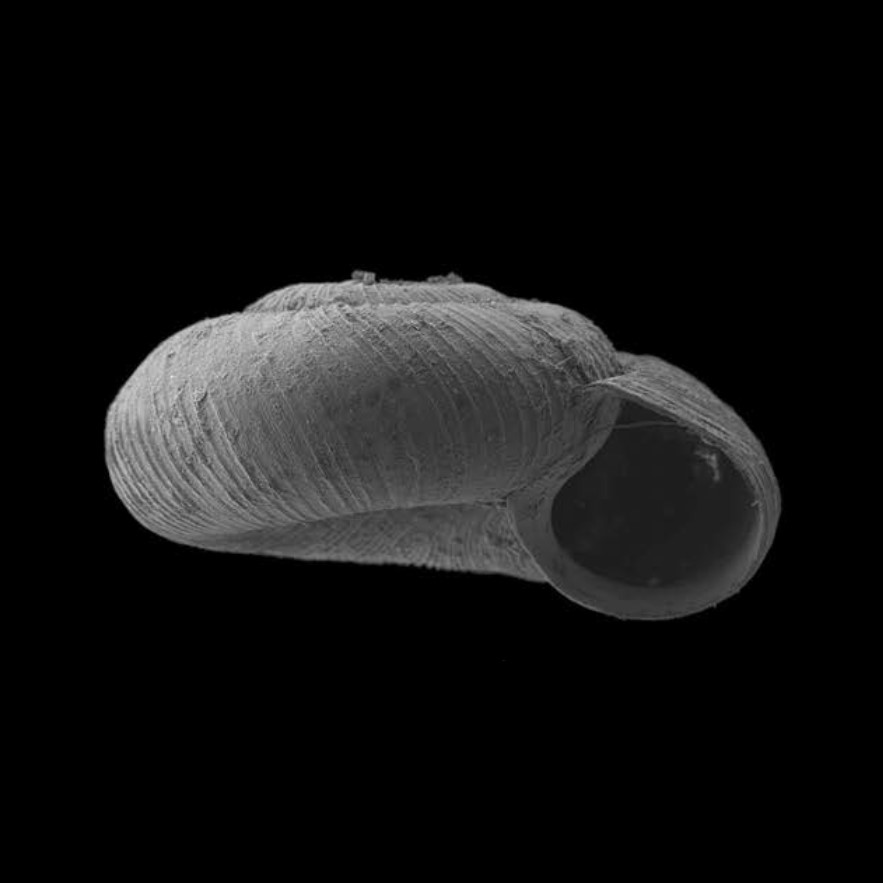
CLASSE: GASTROPODA: TERRESTRE FAMÍLIA: CHAROPIDAE ESPÉCIE: Stephacharopa calderaensis Miquel & Araya, 2013 Tamanho médio: 2.1 - 3.0 mm Distribuição: Chile (Atacama) Localidade tipo: Chile, Região de Atacama, "Quebrada del León, about 15 km NE of Caldera, Province of Copiapó" Nome original: Stephacharopa calderaensis Miquel & Araya, 2013 Etimologia: o nome da espécie é uma referência à localidade tipo Descrição original: (Miquel & Araya, 2013): "Shell orbicular, discoidal, moderately thick, 2.10–3.00 mm width, with 4.5 convex whorls; widely umbilicate; spire low, with protoconch of 1.75 whorls, sculptured with 40–60 thin and smooth radial ribs, interspaces almost smooth; teleoconch of 2.75 whorls, sculptured with 90–95 prominent, wide, prosocline nodulose radial ribs, with interspaces filled by about ten nodulose costulae, some of these small nodulae seem...
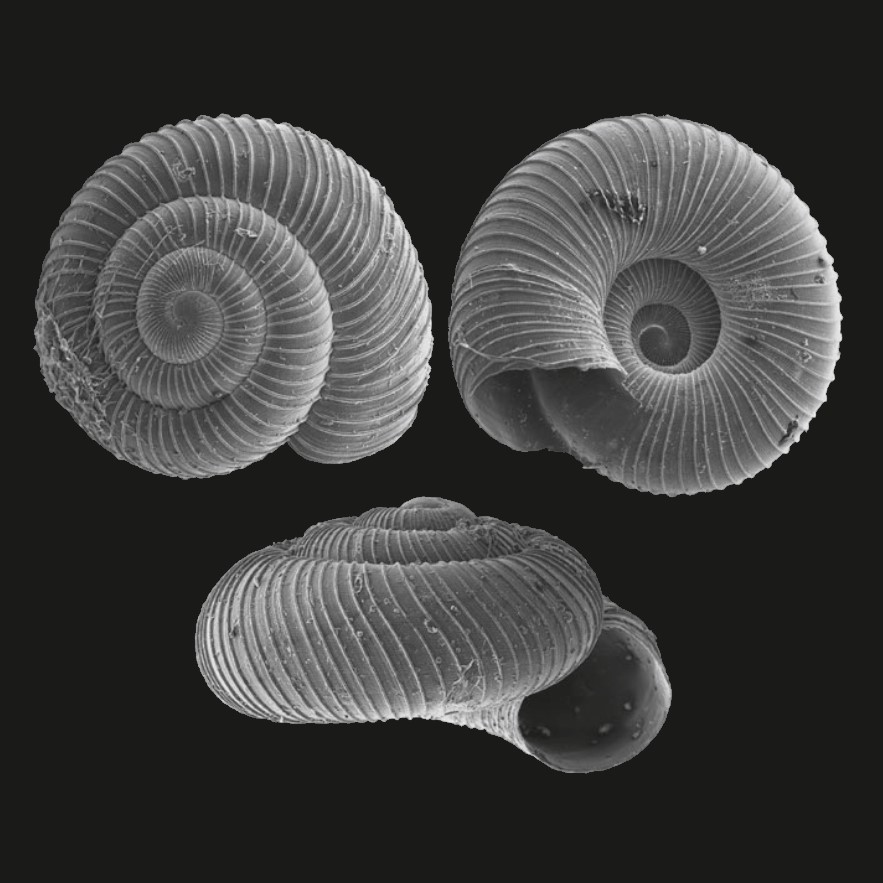
CLASSE: GASTROPODA: TERRESTRE FAMÍLIA: CHAROPIDAE ESPÉCIE: Stephacharopa paposoensis Araya & Miquel, 2018 Tamanho médio: 2.1 mm Distribuição: Chile (Antofagasta) Localidade tipo: Chile, Região de Antofagasta, "La Rinconada, Paposo" Habitat: "as conchas foram encontradas enterradas em areia grossa e sob bromélias e cactos nativos" Nome original: Stephacharopa paposoensis Araya & Miquel, 2018 Sinônimos: Stephacharopa paposensis [sic] Etimologia: o nome da espécie é uma referência à localidade tipo Descrição original: (Araya & Miquel, 2018): "Shell minute, orbicular, up to 2.1mm in maximum diameter, moderately thick-shelled, with up to 4 whorls (average of 3.75, n = 25), umbilicate, spire slightly elevated. Shell colour uniform cream-yellow. Protoconch of 1.5 whorls; with 53–55 ribblets and smooth interspaces; teleoconch of 2.25 convex whorls, sculptured with 120–125 prosocline strong axial ribs...
CLASSE: GASTROPODA: TERRESTRE FAMÍLIA: CHAROPIDAE ESPÉCIE: Stephadiscus rumbolli (Hylton Scott, 1973) Tamanho médio: nd Habitat: nd Distribuição: Argentina (Ilhas Malvinas) Localidade tipo: Argentina, Ilhas Malvinas Nome original: Stephanoda rumbolli Hylton Scott, 1973 Fotos: nd Fontes: Descrição original: (como Stephanoda rumbolli Hylton Scott, 1973) Hylton Scott, M. I. (1973). Endodóntidos neotropicales IV (sic) (Gastropoda Pulmonata). Neotropica. 19 (59): 104-109 Hylton Scott, M. I. (1981). Referencia al género Stephanoda Albers, 1860 y la creación del género Stephadiscus n. gen. (Mollusca Endodontidae). Neotropica. 27 (78): 123-126 Molluscabase: https://www.molluscabase.org/aphia.php?p=taxdetails&id=1518625
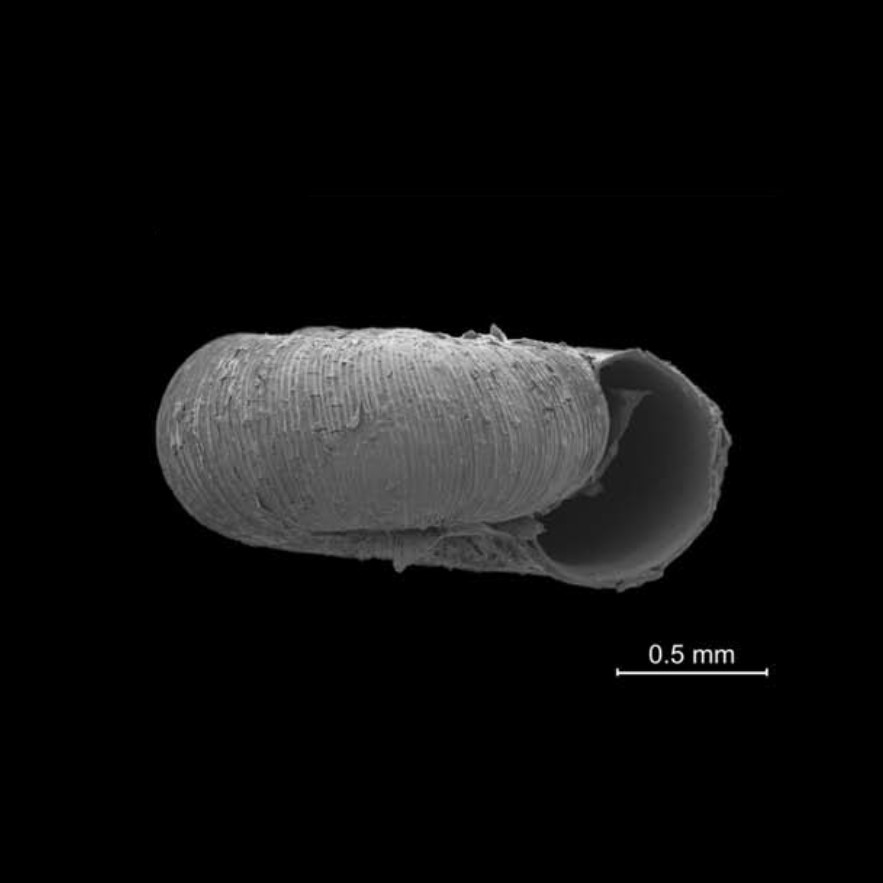
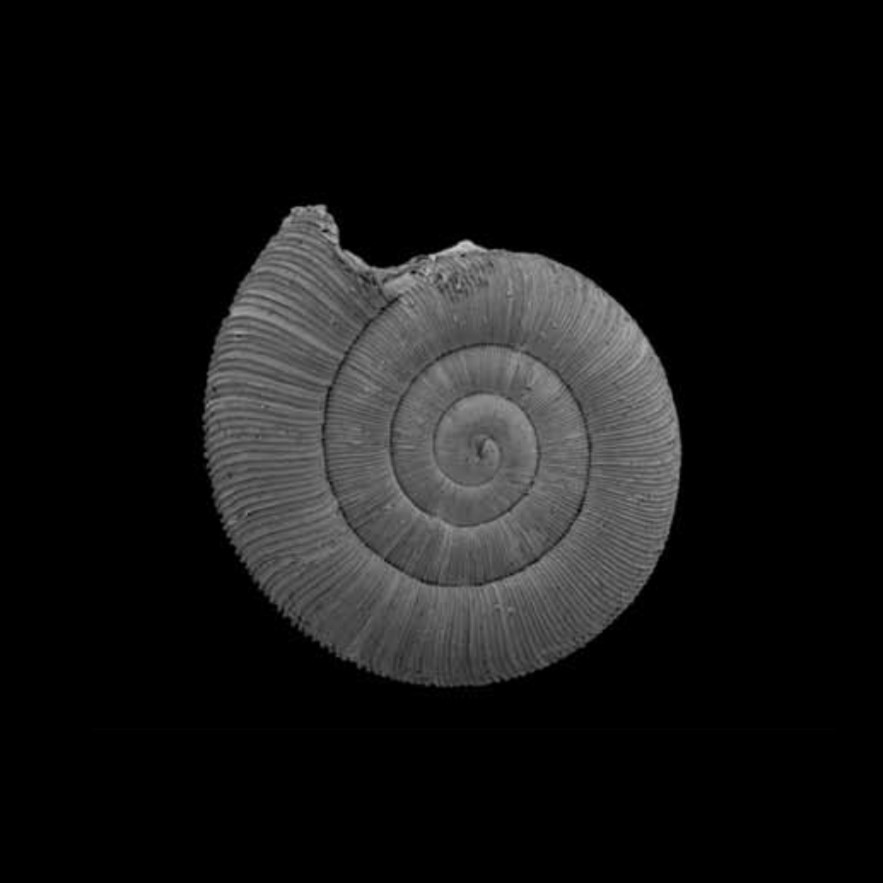
CLASSE: GASTROPODA: TERRESTRE FAMÍLIA: CHAROPIDAE ESPÉCIE: Stephadiscus stuardoi Miquel & G. M. Barker, 2009 Tamanho médio: 2.0 - 2.1 mm Distribuição: Chile (Concepción) Localidade tipo: Chile, Concepción, Hualpén Botanical Park Nome original: Stephadiscus stuardoi Miquel & G. M. Barker, 2009 Etimologia: o nome da espécie é uma homenagem ao malacologista chileno José R. Stuardo da Universidade de Concepción (Chile) Descrição original: (Miquel & G. M. Barker, 2009): "Shell small (2.0–2.1 mm diameter) discoidal, almost planispiral as apex very slightly elevated; 4.25–4.5 regularly expanding whorls; protoconch indistinct from teleoconch when viewed at low magnification but at high magnification showing only axial ribs, lacking spiral threads; teleoconch sculptured with slightly sigmoidial, weakly prosocline axial ribs, approximately 190 on the body whorl, and weak spiral threads;...
CLASSE: GASTROPODA: TERRESTRE FAMÍLIA: CHAROPIDAE ESPÉCIE: Stephanoda antarctica Hylton Scott, 1973 Tamanho médio: nd Habitat: nd Distribuição: Argentina (Ilhas Malvinas) Localidade tipo: Argentina, Ilhas Malvinas, Puerto San Carlos, al O Nome original: Stephanoda antarctica Hylton Scott, 1973 Comentários: o Holótipo está depositado no Museo Argentino de Ciencias Naturales, MACN 27820, Puerto San Carlos, al O, Islas Malvinas Fotos: nd Fontes: Descrição original: Hylton Scott, M. I. (1973). Endodóntidos neotropicales IV (sic) (Gastropoda Pulmonata). Neotropica. 19 (59): 104-109 Tablado A, Rodríguez D (2021). Museo Argentino de Ciencias Naturales "Bernardino Rivadavia" (MACN). Invertebrates National Collection (MACNIn). Museo Argentino de Ciencias Naturales. Occurrence dataset https://doi.org/10.15468/uuz636 accessed via GBIF.org on 2026-03-13. https://www.gbif.org/occurrence/231052979 Molluscabase: https://www.molluscabase.org/aphia.php?p=taxdetails&id=1656112
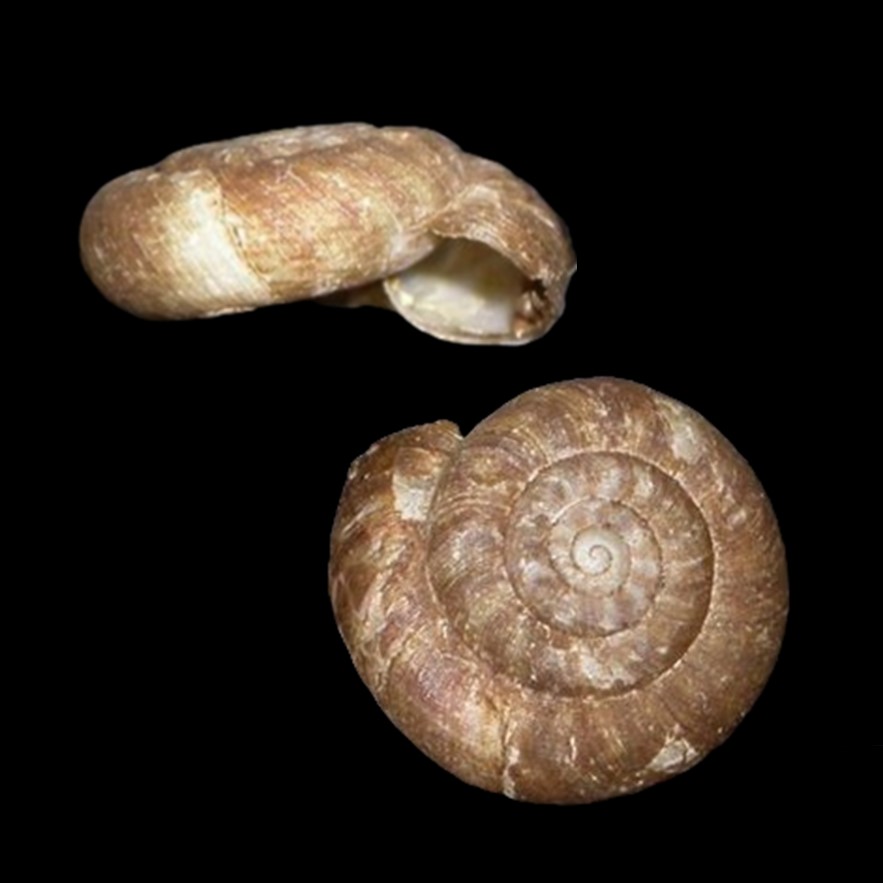
CLASSE: GASTROPODA: TERRESTRE FAMÍLIA: CHAROPIDAE ESPÉCIE: Stephanoda binneyana (L. Pfeiffer, 1847) Tamanho médio: 15 mm Habitat: vive no solo, na serapilheira Distribuição: Chile (Los Lagos) Localidade tipo: Chiloe Island Nome original: Helix binneyana L. Pfeiffer, 1847 Fotos: (1) Smithsonian National Museum of Natural History: HOLOTYPE de Stephanoda binneyana, FMNH 50789, Chile, 20km East of Temuco, Chiloe island, 07.viii.1951 Figura: Breure, A. S. H. & Araujo, R. (2017): (A–C) Lilloiconcha pazi (Philippi, 1866), MNCN 15.05/76220; (D-F) Ptychodon amancaezensis (Hidalgo, 1869), MNCN 15.05/3173; (G-I) Stephanoda binneyana (Pfeiffer, 1847), MNCN 15.05/12956; (J-L) Zilchogyra costellata (d’Orbigny, 1835), MNCN 15.05/76209. Linha da escala: 500 μm (D–F), 1 mm (A–C), 5 mm (G–L) Fontes: Descrição original: (como Helix binneyana L. Pfeiffer,...
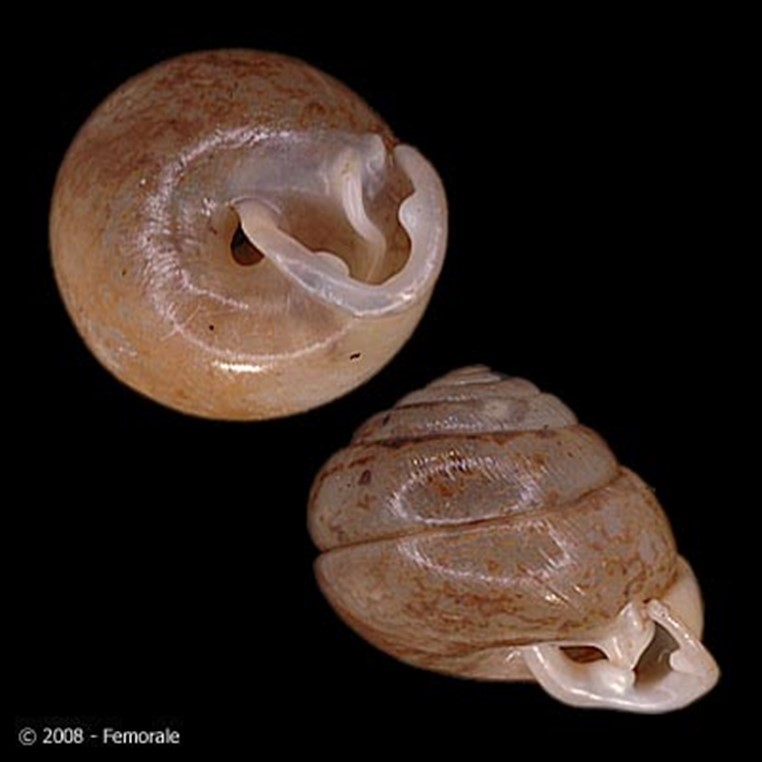
CLASSE: GASTROPODA: TERRESTRE FAMÍLIA: STREPTAXIDAE ESPÉCIE: Streptartemon abunaensis (F. Baker, 1914) Tamanho médio: 8 mm Habitat: vive no solo, sob folhas ou enterrada parte do tempo Ocorrência: Brasil (Rondônia, Mato Grosso) Localidade tipo: Abunã, distrito de Porto Velho, Rondônia, às margens do Rio Madeira Fotos: (1) cortesia Femorale, 2008, 9mm; (2) The Academy of Natural Sciences, Philadelphia: LECTOTYPE de Streptaxis abunaensis, ANSP 109313, "Camp 39, Madeira and Mamore Railroad, Brazil", 8mm Fontes: Descrição original: (como Streptaxis abunaensis F. Baker, 1914) Baker, F. (1914). The land and fresh-water mollusks of the Stanford Expedition to Brazil. Proceedings of the Academy of Natural Sciences of Philadelphia. 65(3): 618-672., disponível online em https://www.biodiversitylibrary.org/page/26307597 página(s): 629, pl 22, figs 8-10 Simone, L. R. L. (2006). Land and...

CLASSE: GASTROPODA: TERRESTRE FAMÍLIA: STREPTAXIDAE ESPÉCIE: Streptartemon comboides (d'Orbigny, 1835) Tamanho médio: 10 mm Habitat: vive no solo, sob folhas ou enterrada parte do tempo Ocorrência: Bolívia, Paraguai, Brasil (Mato Grosso do Sul) Localidade tipo: "Provincia Chiquitos (republiqua Boliviana)" Sinônimos: Helix comboides d'Orbigny, 1835; Helix comboides var. brasiliensis S. Moricand, 1836; Helix comboides var. edentula S. Moricand, 1846 (not Draparnaud, 1805); Helix comboides var. elata S. Moricand, 1846; Helix comboides var. laevigata d'Orbigny, 1837; Streptartemon elatus (S. Moricand, 1846); Streptartemon laevigatus (d'Orbigny, 1837); Streptaxis comboides (d'Orbigny, 1835) Fotos: (1,2) Museu Nacional de História Natural, Paris: SYNTYPE de Streptartemon comboides (d'Orbigny, 1835), MNHN-IM-2000-30914, 10mm; (3) Field Museum: Streptartemon comboides (d'Orbigny, 1835), FMNH 57055, Brasil, coleção M. A. Klappenbach ...
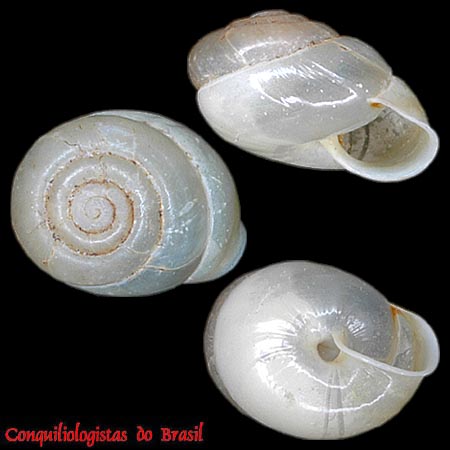
CLASSE: GASTROPODA: TERRESTRE FAMÍLIA: STREPTAXIDAE ESPÉCIE: Streptartemon cookeanus (F. Baker, 1914) Tamanho médio: 6 - 9 mm Habitat: vive no solo, sob folhas ou enterrada parte do tempo. Ocorrência: Brasil (Ceará, Rio Grande do Norte, Paraíba) Localidade tipo: Ceará-Mirim, Rio Grande do Norte Nome original: Streptaxis cookeana F. Baker, 1914 Fotos: (1) município de Luís Correia, Piauí, 9mm, coll. Carlos Henckes; (2) The Academy of Natural Sciences, Philadelphia: LECTOTYPE de Streptaxis cookeana, ANSP 109304, coletado por F. Baker, 1911 Fontes: Descrição original: (como Streptaxis cookeana F. Baker, 1914) Baker, F. (1914). The land and fresh-water mollusks of the Stanford Expedition to Brazil. Proceedings of the Academy of Natural Sciences of Philadelphia. 65(3): 618-672., disponível online em https://www.biodiversitylibrary.org/page/26307597 página(s): 628, pl. 22 figs 5-7 ...

CLASSE: GASTROPODA: TERRESTRE FAMÍLIA: STREPTAXIDAE ESPÉCIE: Streptartemon cumingianus (L. Pfeiffer, 1850) Tamanho médio: 6 mm Habitat: vive no solo, sob folhas, ou enterrado parte do tempo Ocorrência: Brasil (Ceará, Rio Grande do Norte, Paraíba, Pernambuco) Localidade tipo: "Brasil" Comentário: a localidade tipo é listada como desconhecida por Pfeiffer, mas conchas do Naturalis Museum in Leiden trazem o registro como "Brasil" para a localidade tipo Nome original: Streptaxis cumingiana L. Pfeiffer, 1850 Etimologia: nome da espécie é uma homenagem ao colecionador inglês H. Cuming (1791 – 1865) Fotos: Natural History Museum, London: SYNTYPE, 6mm, cortesia Prof. Luiz Ricardo L. Simone, MZSP Fontes: Descrição original: (como Streptaxis cumingiana L. Pfeiffer, 1850) Pfeiffer, L. (1850). Descriptions of twenty-four new species of Helicea,...
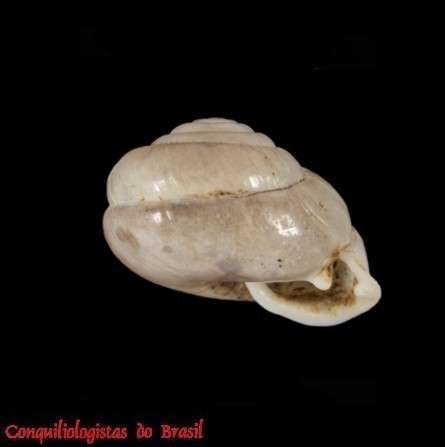
CLASSE: GASTROPODA: TERRESTRE FAMÍLIA: STREPTAXIDAE ESPÉCIE: Streptartemon decipiens (Crosse, 1865) Tamanho médio: 14 mm Habitat: vive no solo, sob folhas ou enterrada parte do tempo Ocorrência: Nordeste do Brasil, Mato Grosso do Sul Localidade tipo: "Chili (teste B. Wright)?" Comentários: a localidade tipo no Chile é altamente questionável, e subsequentemente houve registro para a região de Corumbá, Estado do Mato Grosso do Sul Nome original: Streptaxis decipiens Crosse, 1865 Fotos: (1,2) Museu Nacional de História Natural, Paris. SYNTYPE de Streptaxis decipiens Crosse, 1865; MNHN-IM-2000-30925; 13.3mm; (3) Field Museum of Natural History; MK-57054. coleção: M. A. Klappenbach, Corumbá, Mato Grosso do Sul, 1955 Fontes: Descrição original: (como Streptaxis decipiens Crosse, 1865) Crosse, H. (1865). Diagnoses molluscorum novorum. Journal de Conchyliologie. 13(2):...

CLASSE: GASTROPODA: TERRESTRE FAMÍLIA: STREPTAXIDAE ESPÉCIE: Streptartemon deformis (A. Férussac, 1821) Tamanho médio: 6 mm Habitat: vive no solo, sob folhas, ou enterrado parte do tempo Ocorrência: Trindade, Barbados, Venezuela, Brasil (Manaus e Itaticoara) Localidade tipo: Trindade Comentário: a localidade tipo é a Ilha de Trindade (Trinidad), com conchas sendo encontradas também em Barbados, Venezuela e Brasil Nome original: Streptaxis deformis A. Férussac, 1821 Fotos: (1) cortesia Guido & Philippe Poppe, Venzeuela, 5.9mm; (2) Natural History Museum, London: NHMUK 20190566, Trinidad & Tobago Fontes: Descrição original: nd Simone, L. R. L. (2006). Land and Freshwater Molluscs of Brazil. Editora Gráfica Bernardi, FAPESP. São Paulo, 390 pp. página(s): 196 Brown, K. (2023). A guide to the...
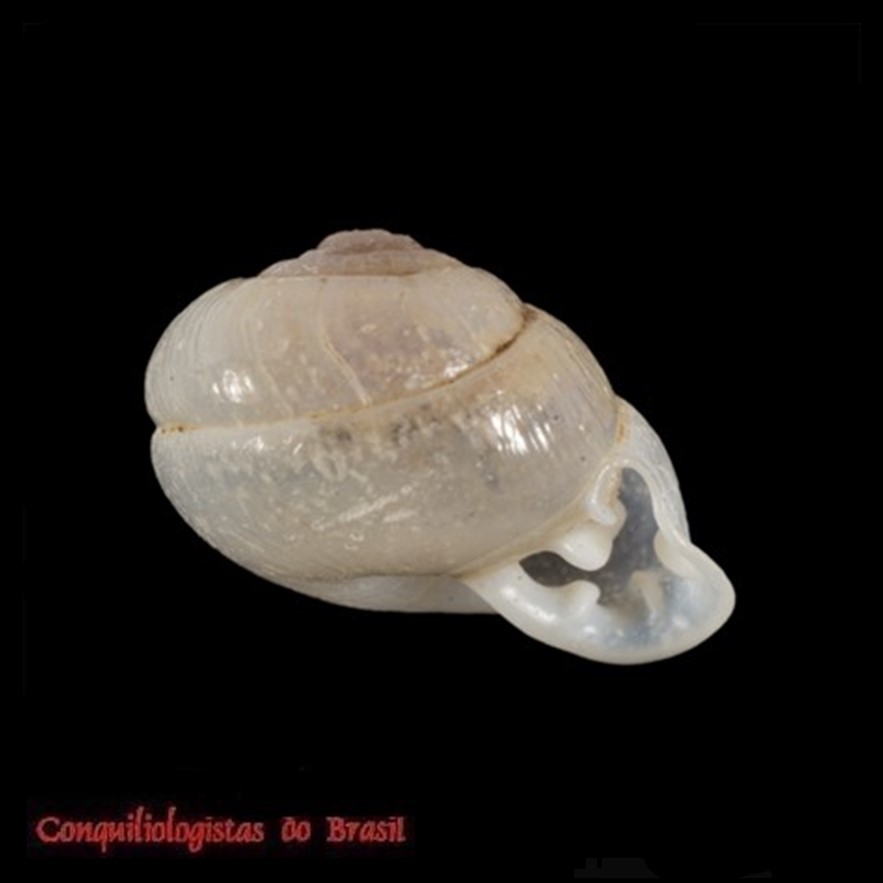
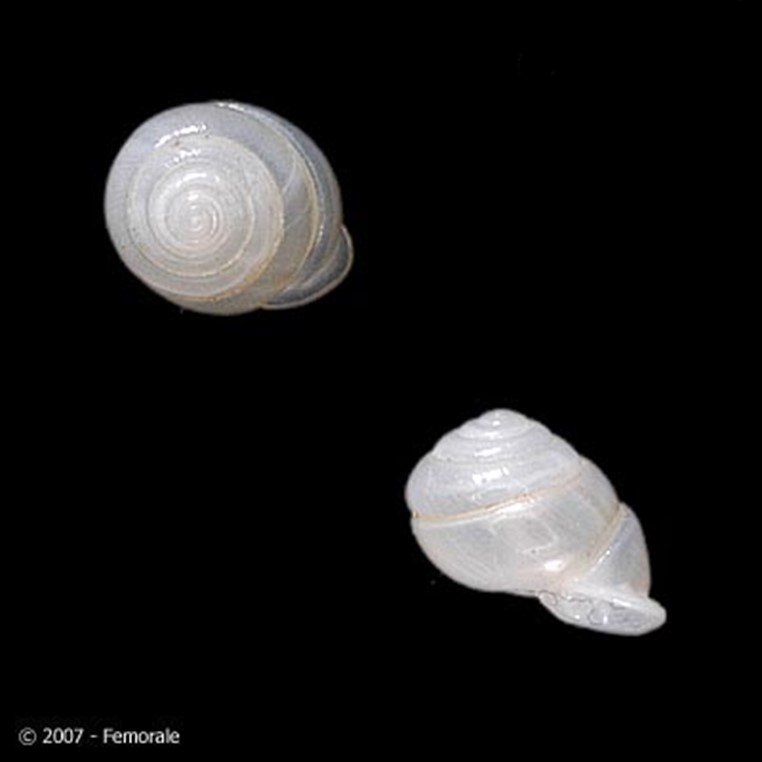
CLASSE: GASTROPODA: TERRESTRE FAMÍLIA: STREPTAXIDAE ESPÉCIE: Streptartemon dejectus (S. Moricand, 1836) Tamanho médio: 7 mm Habitat: vive no solo, sob folhas, ou enterrado parte do tempo Ocorrência: Brasil (Bahia, Paraíba) Localidade tipo: "La caractéristique de l'Helice de Bahia serait celle-ci:" Nome original: Helix dejecta S. Moricand, 1836 Sinônimos: Odontartemon dejectus (S. Moricand, 1836); Streptartemon dejectus (Petit de la Saussaye, 1842); Helix dejecta Petit de la Saussaye, 1842 Comentário: (a) Helix dejecta tem sido tradicionalmente atribuída a Petit de la Saussaye (1842), no entanto Hausdorf (2013) mostra que o nome foi originado em (1836); (b) Molluscabase, 2024 considera espécie como Odontartemon dejectus (S. Moricand, 1836) (única espécie para o gênero). Consideramos aqui como em Salvador et al. 2024 Fotos: (1,3) Museu...
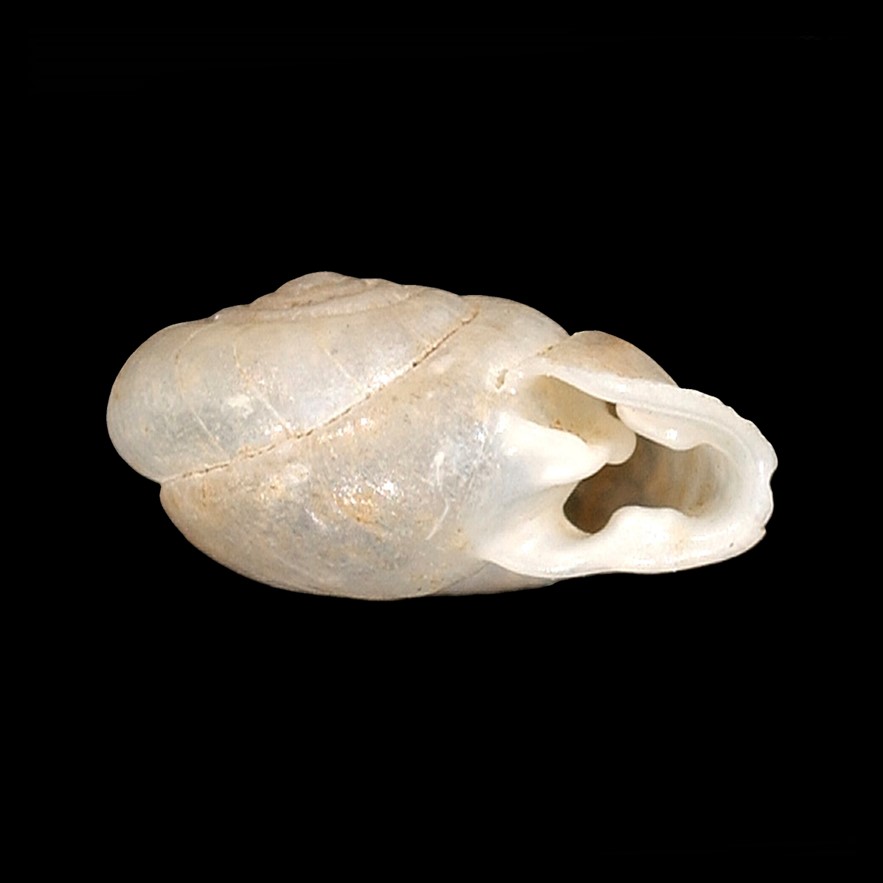
CLASSE: GASTROPODA: TERRESTRE FAMÍLIA: STREPTAXIDAE ESPÉCIE: Streptartemon demerarensis (Venmans, 1963) Tamanho médio: 2 mm Habitat: vive no solo, sob folhas, ou enterrado parte do tempo Ocorrência: Guiana Localidade tipo: Demerara, Guiana Nome original: Streptaxis (Streptartemon) demerarensis Venmans, 1963 Fotos: (1) American Museum of Natural History: HOLOTYPE de Streptartemon demerarensis, AMNH 65474a Fontes: Descrição original: (como Streptaxis (Streptartemon) demerarensis Venmans, 1963) Venmans, L. A. W. C. (1963). Caribbean land molluscs: Streptaxidae. Studies on the Fauna of Curaçao and other Caribbean Islands: no. 61. 41-76, pls. 2-5. página(s): 73-74, figura 21, pl. 5 Brown, K. (2023). A guide to the hunter shells. Vol. 2. The Streptaxoidea. The Enneinae, Orthogibbinae, Marconiinae, Odontartemoninae, Streptaxinae and the Diapheridae. ConchBooks, Germany, página 342 MolluscaBase: https://www.molluscabase.org/aphia.php?p=taxdetails&id=1518005
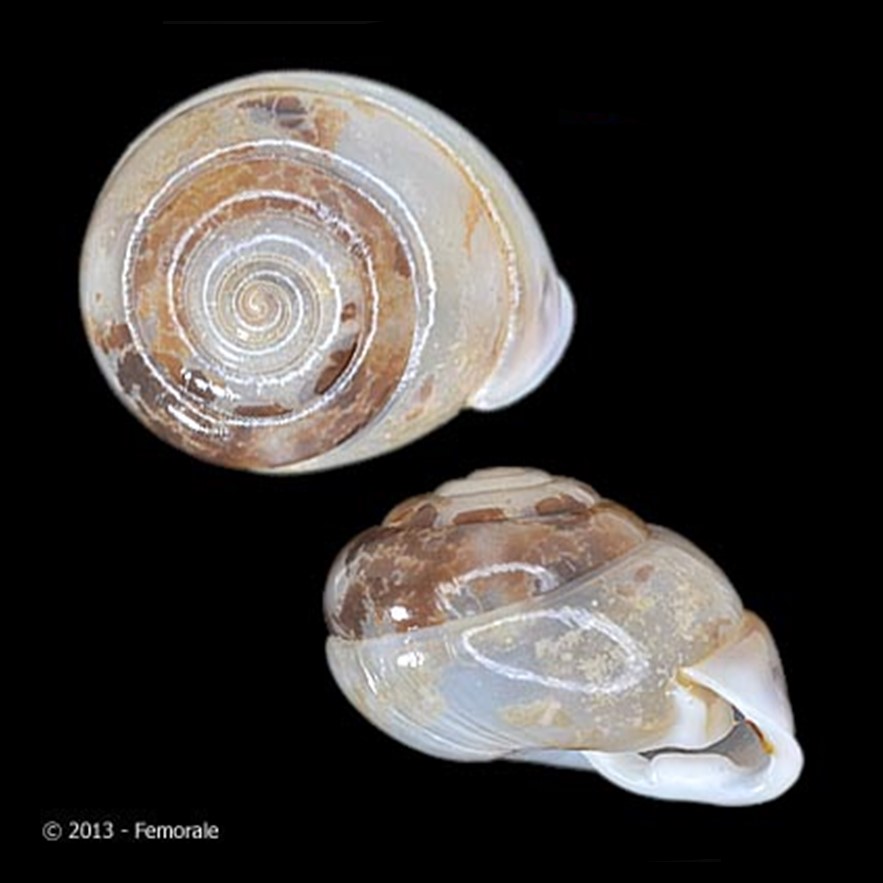

CLASSE: GASTROPODA: TERRESTRE FAMÍLIA: STREPTAXIDAE ESPÉCIE: Streptartemon deplanchei (Drouët, 1859) Tamanho médio: 10 mm Habitat: vive no solo, sob folhas ou enterrada parte do tempo Ocorrência: Saint Martin, Guiana, Brasil (Ceará, Rio Grande do Norte) (Simone, 2006) Localidade tipo: Saint Martin (Antilhas Holandesas, Caribe) Nome original: Streptaxis deplanchei Drouët, 1859 Sinônimos: Streptartemon deplanchei f. martiniana (Venmans, 1963); Streptartemon deplanchei var. martiniana (Venmans, 1963); Streptaxis (Streptartemon) deplanchei Drouët, 1859; Streptaxis (Streptartemon) deplanchei var. martiniana Venmans, 1963 Etimologia: o nome da espécie é uma homenagem ao colecionador E. De Planche Fotos: (1,2) cortesia Femorale, 2017, Ceará, 6.7 mm Fontes: Descrição original: (como Streptaxis deplanchei Drouët, 1859) Drouët, H. (1859). Essai sur les mollusques terrestres et fluviatiles de la Guyane française. Mémoires de la Société Académique...
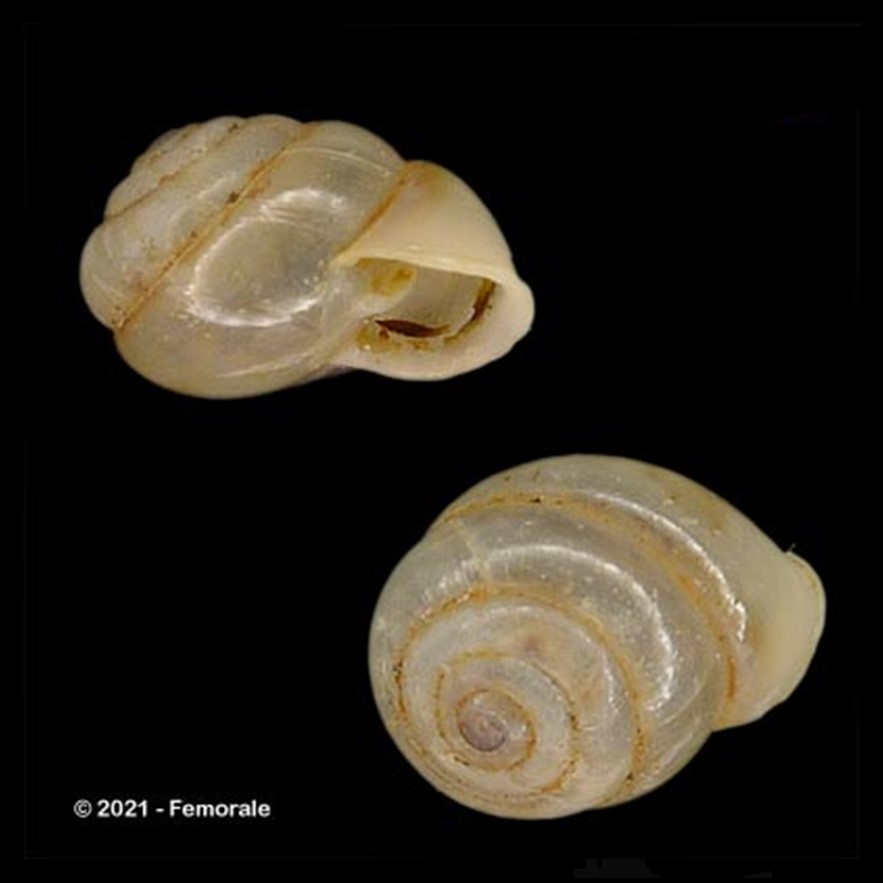
CLASSE: GASTROPODA: TERRESTRE FAMÍLIA: STREPTAXIDAE ESPÉCIE: Streptartemon extraneus (F. Haas, 1955) Tamanho médio: 6 mm Habitat: vive no solo, sob folhas ou enterrada parte do tempo Ocorrência: Brasil (Pará) Localidade tipo: Monte Alegre, Serra Formosa (próximo a Mulata), Estado do Pará Sinônimos: Streptaxis (Streptartemon) extraneus F. Haas, 1955 Fotos: (1) cortesia Femorale, 2021, 6.9mm Figura: Salvador R.B. (2018): (1–3) Rectartemon depressus, MZSP 125447 (H = 11.7 mm, D = 18.7 mm); (4–6) Rectartemon iguapensis, MZSP 133139 (H = 9.8 mm, D = 14.8 mm); (7–9) Rectartemon piquetensis, MZSP 133139 (H = 14.2 mm, D = 21.0 mm); (10–12) Streptartemon extraneus, specimen #1, MZSP 123558 (H = 6.1 mm, D = 7.2 mm); (13) Streptartemon extraneus, specimen #2, MZSP 123558...

CLASSE: GASTROPODA: TERRESTRE FAMÍLIA: STREPTAXIDAE ESPÉCIE: Streptartemon glaber (L. Pfeiffer, 1850) Tamanho médio: 5 mm Habitat: vive no solo, sob folhas, ou enterrado parte do tempo Ocorrência: Guiana, Venezuela Localidade tipo: Demerara, Guiana Comentários: (a) o material tipo é proveniente de Demerara, Guiana, mas posteriormente a espécie foi encontrada em ilhas do Caribe, incluindo Saint Martin, Guadalupe Saint Kitts e Nevis; (b) Simone, 2006 tratou esta espécie como sinônimo de Streptartemon deformis. Porém Molluscabase, 2024 e outras publicações posteriores não aceitaram essa sinonímia Nome original: Streptaxis glabra L. Pfeiffer, 1850 Sinônimos: Streptaxis (Odontartemon) glaber L. Pfeiffer, 1850; Streptaxis (Streptartemon) glaber L. Pfeiffer, 1850; Streptaxis glaber L. Pfeiffer, 1850; Streptaxis glabra L. Pfeiffer, 1850 Subespécies: (a) Streptartemon glaber aroae (H. B. Baker, 1925); (b) Streptartemon glaber...
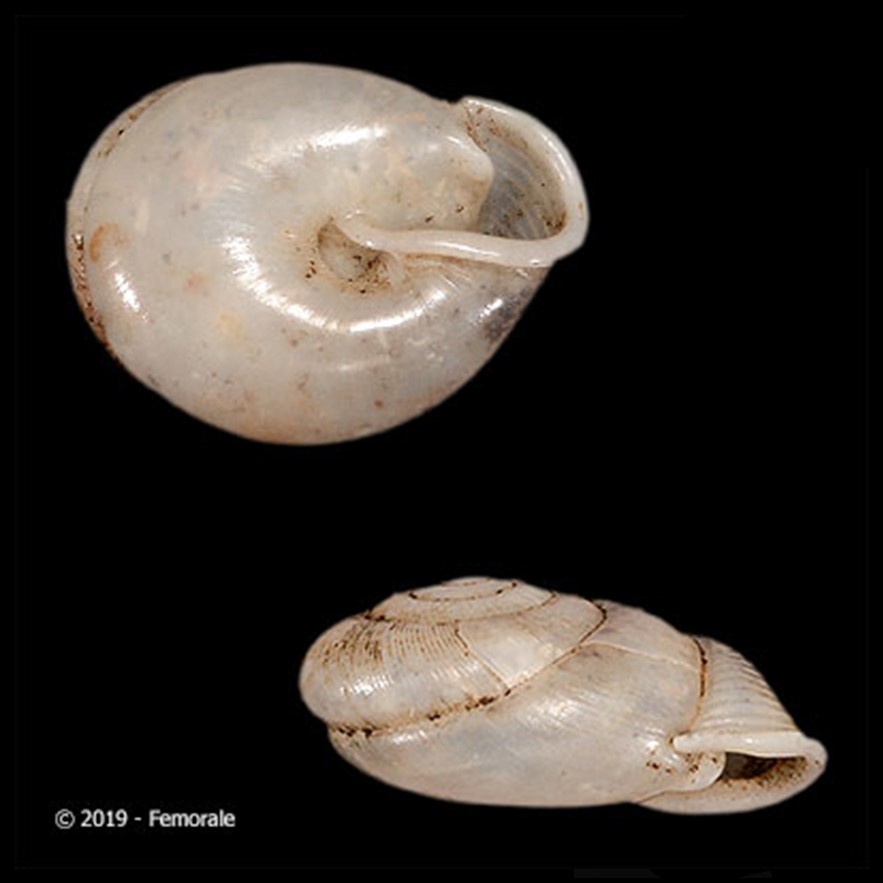
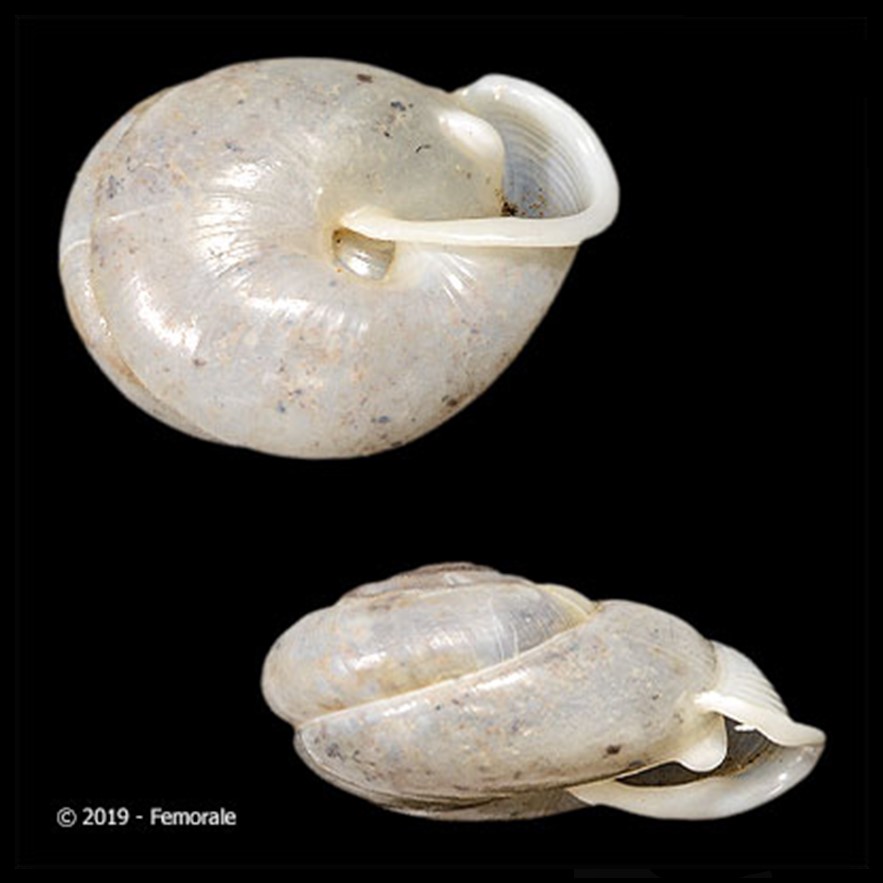
CLASSE: GASTROPODA: TERRESTRE FAMÍLIA: STREPTAXIDAE ESPÉCIE: Streptartemon molaris Simone & Casati, 2013 Tamanho médio: 9 mm Habitat: Caatinga, ambiente semi árido Comentário: o material tipo foi coletado no interior de cavernas Ocorrência: Brasil (Piauí) Localidade tipo: Serra da Capivara, município de Coronel José Dias, Piauí Nome original: Streptartemon molaris Simone & Casati, 2013 Etimologia: o nome da espécie refere-se à palavra em Latim "molaris" (dente molar, "grinder tooth"), uma alusão ao dente espiral desenvolvido no peristoma. Fotos: (1) cortesia Femorale, 2019, TOPOTYPE Piauí, 10.1 mm Figura: Simone, L.R.L. & Casati, R. (2013): (35-41) Anctus prolatus (35-39) HOLOTYPE Museu de Zoologia de São Paulo - MZSP 112450 (L 25.2 mm); (40-41) PARATYPE MZSP 111826 (L 24.1 mm); (42–45) Streptartemon molaris , concha...


CLASSE: GASTROPODA: TERRESTRE FAMÍLIA: STREPTAXIDAE ESPÉCIE: Streptartemon quixadaensis (F. Baker, 1914) Tamanho médio: 7 mm Habitat: Caatinga, ambiente semi árido Ocorrência: Brasil (Ceará) Localidade tipo: Quixadá, Ceará Sinônimos: Streptartemon quixadensis [sic] (erro de grafia em Simone, 2006); Streptaxis deplanchei quixadaensis F. Baker, 1914 Fotos: (1) The Academy of Natural Sciences, Philadelphia: HOLOTYPE de Streptaxis deplanchei quixadaensis; ANSP 109305 ; "About a mile below Quixada"; doador Baker, F. em 1913 Fontes: Descrição original: (como Streptaxis deplanchei quixadaensis F. Baker, 1914) Baker, F. (1914). The land and fresh-water mollusks of the Stanford Expedition to Brazil. Proceedings of the Academy of Natural Sciences of Philadelphia. 65(3): 618-672., disponível online em https://www.biodiversitylibrary.org/page/26307597 página(s): 628; nota: sem figura Simone, L. R. L. (2006). Land and Freshwater Molluscs of Brazil....
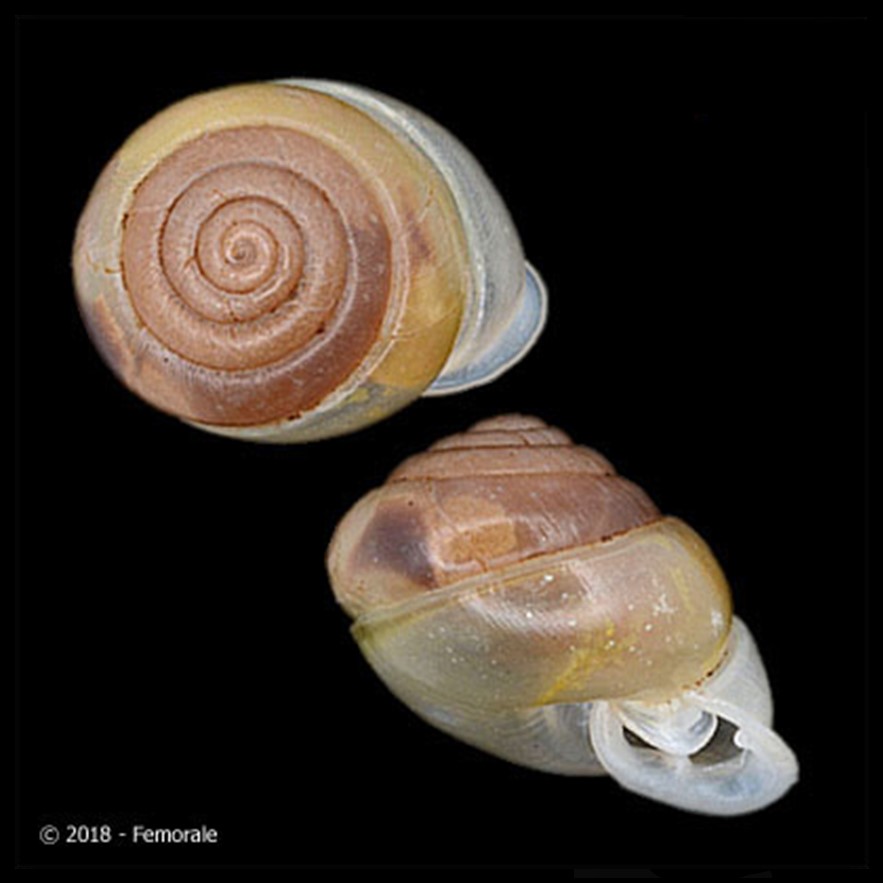
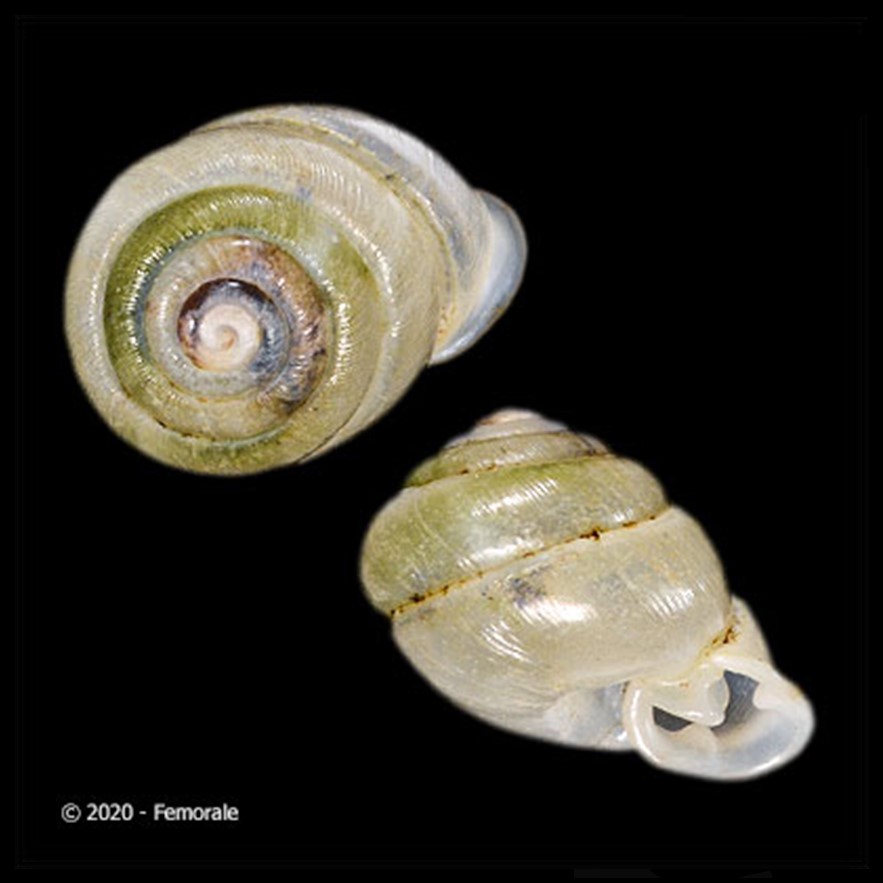
CLASSE: GASTROPODA: TERRESTRE FAMÍLIA: STREPTAXIDAE ESPÉCIE: Streptartemon streptodon (S. Moricand, 1851) Tamanho médio: 9 mm Habitat: vive no solo, sob folhas, ou enterrado parte do tempo. Ocorrência: Brasil (Bahia) Localidade tipo: "La province de Bahia (Brésil)" Nome original: Helix (Streptaxis) streptodon S. Moricand, 1851 Fotos: (1,2) cortesia Femorale, Bahia, 6.2mm e 6.7mm respectivamente; (3) abaixo: Breure & Tardy, 2020: SYNTYPE de Helix (Streptaxis) streptodon: Museu de História Natural de Genebra: MHNG-INVE-68696, 8.86 mm Fontes: Descrição original: (como Helix (Streptaxis) streptodon S. Moricand, 1851) Moricand S. (1851). Description de deux espèces d'Hélices (S.G. Streptaxis). Journal de Conchyliologie. 2: 369-371., disponível online em https://www.biodiversitylibrary.org/page/15855244 página(s): 369, pl. 10 fi gs 1a-c Simone, L. R. L. (2006). Land and Freshwater Molluscs of Brazil. Editora...
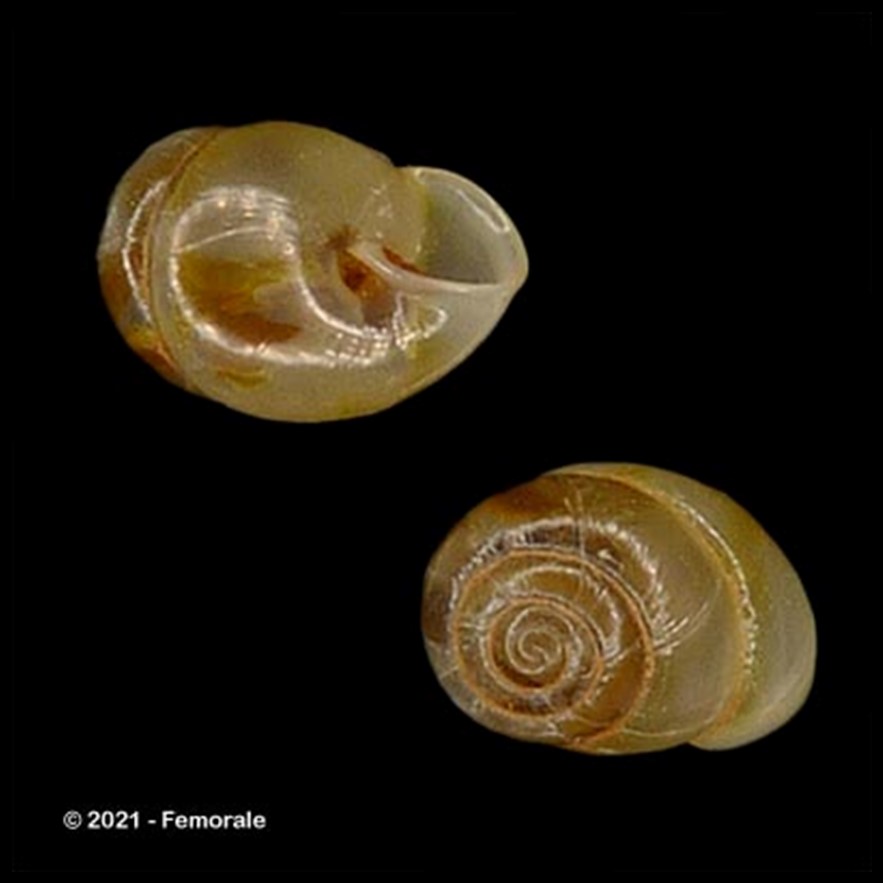
CLASSE: GASTROPODA: TERRESTRE FAMÍLIA: STREPTAXIDAE ESPÉCIE: Streptartemon waukeen Salvador & C. Cunha, 2020 Tamanho médio: ~5 mm Habitat: vive no solo, sob folhas ou enterrada parte do tempo Ocorrência: Brasil (São Paulo, Rio de Janeiro, Espírito Santo) Localidade tipo: Ponta da Praia, Santos, São Paulo (jardim urbano) Etimologia: nome da espécie é uma referência à deusa da ficcção de "Dungeons & Dragons", jogo de RPG. Waukeen é a patrona do comércio e civilização. O nome é uma alusão ao fato da nova espécie ter sido encontrada no coração da cidade de Santos, a principal cidade portuária da América Latina ZooBank: EB5A1CED- C842- 4A44- 841B- 66F27B8C0810 Fotos: (1) cortesia Femorale, 2021, Santos, São Paulo, 5.4 mm; (2) animal vivo, cortesia: Carlos Magenta...

CLASSE: GASTROPODA: TERRESTRE FAMÍLIA: STREPTAXIDAE ESPÉCIE: Streptartemon zischkai (F. Haas, 1952) Tamanho médio: 9 mm Habitat: vive no solo, sob folhas, ou enterrado parte do tempo Ocorrência: Bolívia, Brasil (?) Localidade tipo: Magdalena, Bolívia, Região Amazônica, ~250 m Nome original: Streptaxis (Streptartemon) zischkai F. Haas, 1952 Comentário: (1) Simone, 2006 traz como ocorrência para Peru, porém etiqueta do HOLOTYPE traz como Magdalena, Bolívia; Brown, 2023 incluiu a ocorrência para o Estado do Pará (como se fosse a localidade tipo) Etimologia: nome da espécie é uma homenagem ao tcheco Rudolf Zischka (1885-1980), malacólogo que viveu na Bolívia e quem coletou o material tipo Fotos: Chicago Natural History Museum, HOLOTYPE FNHM 39427, coletado por Rud. Zischka, 1950, Magdalena, Bolívia ...
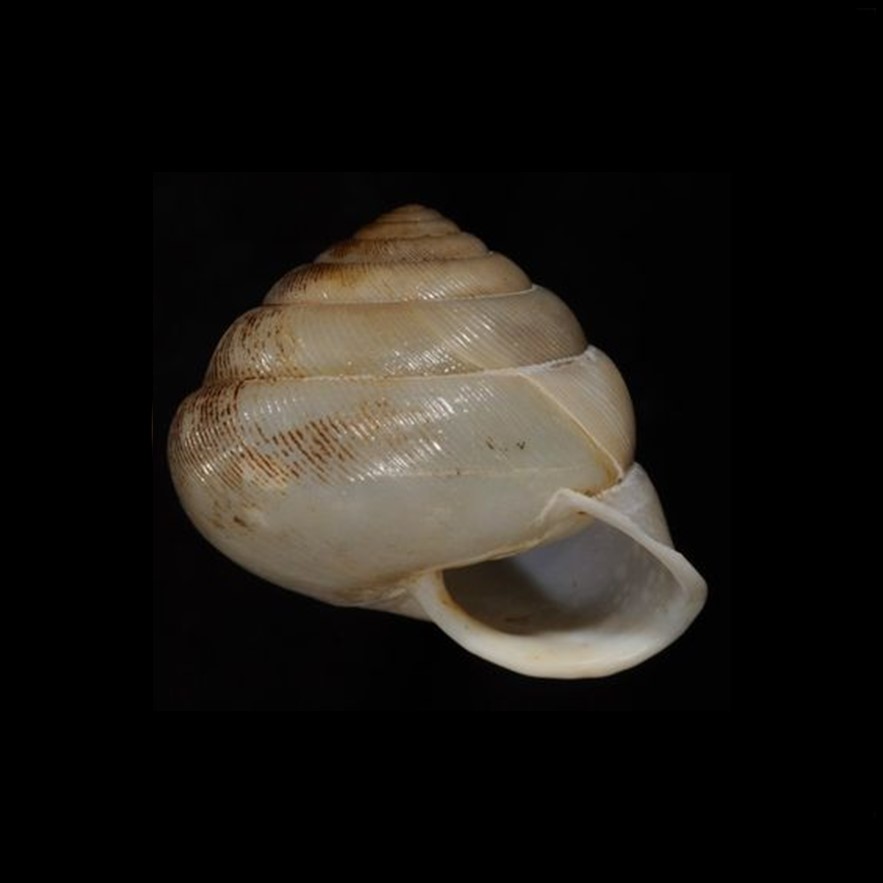
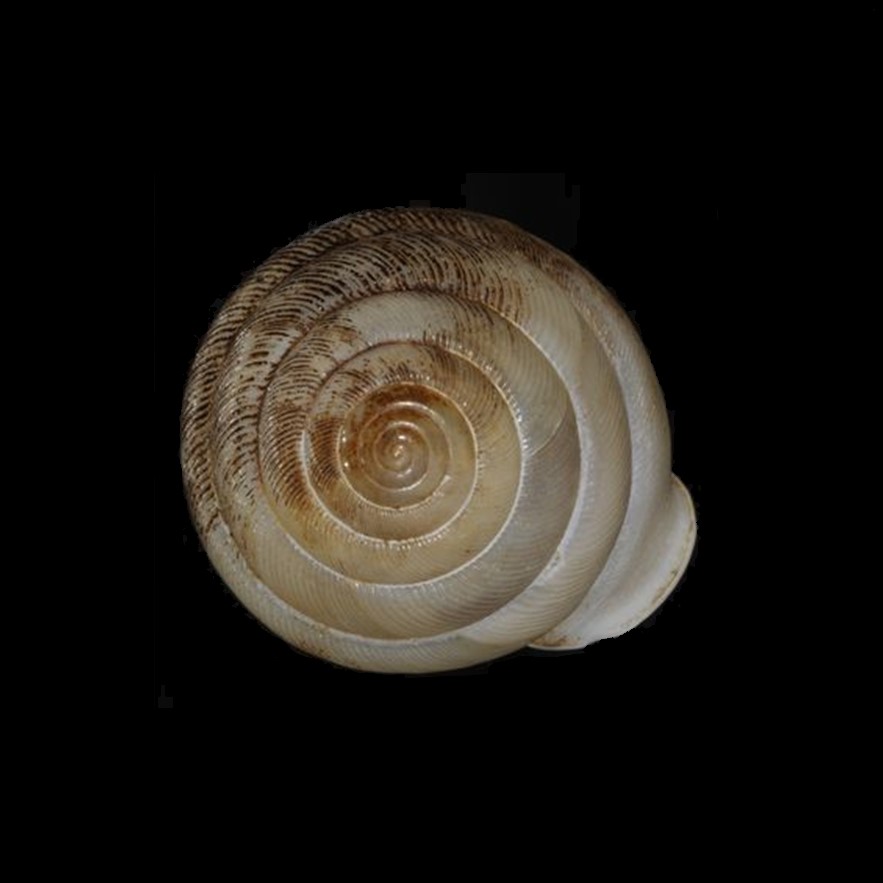
CLASSE: GASTROPODA: TERRESTRE FAMÍLIA: STREPTAXIDAE ESPÉCIE: Streptaxis anomphalus Pilsbry, 1935 Tamanho médio: 24 mm Alimentação: carnívoro Habitat: vive no solo, sob folhas, ou enterrado parte do tempo Ocorrência: Colômbia (Cundimarca, Meta, Norte de Santander, Villavicencio) Localidade tipo: Colômbia, Villavicencio Nome original: Streptaxis anomphalus Pilsbry, 1935 Comentários: Molluscabase (2025) considera como taxon inquirendum Fotos: (1-3) The Academy of Natural Sciences, Philadelphia: HOLOTYPE ANSP 164579, Colômbia, "Region of Villa Vicencio, coll. Vicente Guevara, 23.8mm Fontes: Descrição original: Pilsbry, H. A. (1935). South American land and freshwater mollusks. 9. Colombian species. Proceedings of the Academy of Natural Sciences of Philadelphia. 87: 83-88. página(s): 86, pl. 6, figs. 11-11a Linares, E. L. & Vera M. L. (2012). Catálogo de los Moluscos Continentales de Colombia....
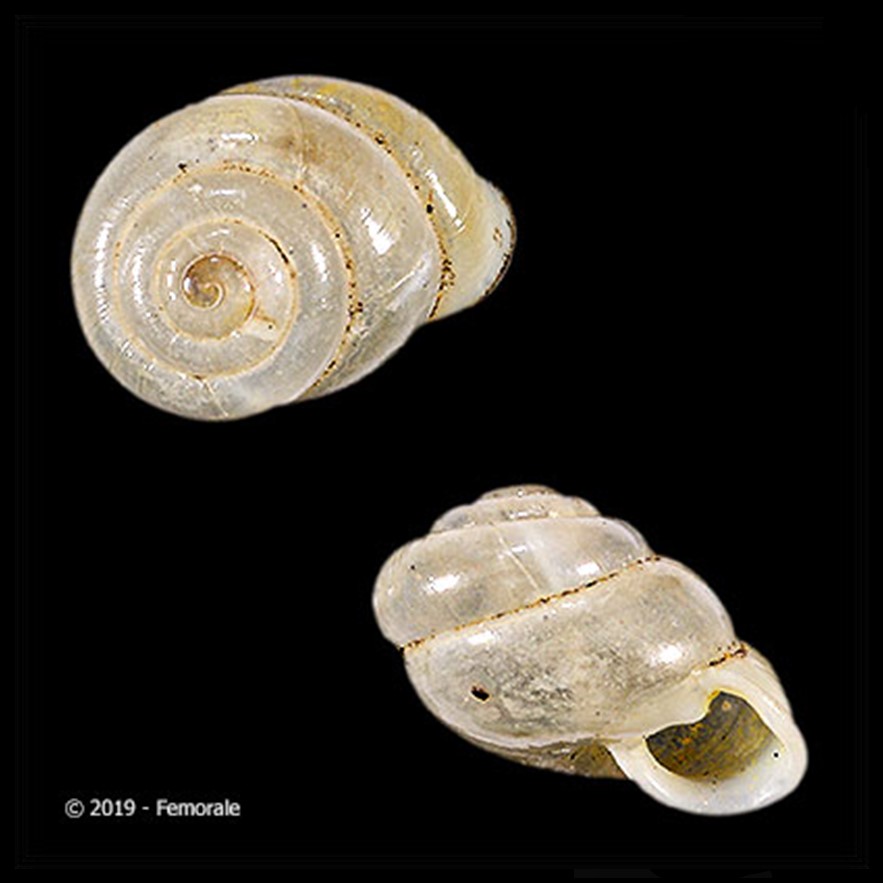
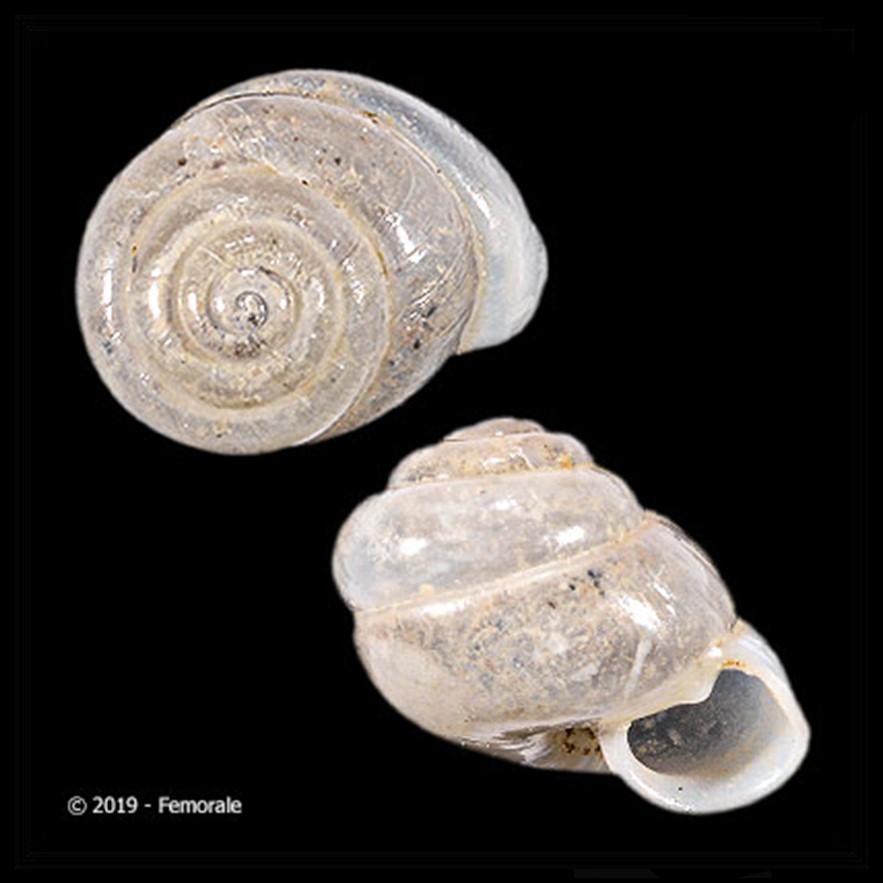
CLASSE: GASTROPODA: TERRESTRE FAMÍLIA: STREPTAXIDAE ESPÉCIE: Streptaxis candei Petit de la Saussaye, 1842 Tamanho médio: 5 mm Habitat: vive no solo, sob folhas ou enterrada parte do tempo Ocorrência: Venezuela, Brasil (Bahia, Pernambuco, São Paulo), Colômbia (Atlántico, Bolívar) Localidade tipo: Brasil, Bahia Nome original: Helix (Streptaxis) candei Petit de la Saussaye, 1842 Etimologia: o nome da espécie é uma homenagem a M. Cande que descobriu o material tipo Fotos: (1) cortesia Femorale, 2019, Streptaxis candei, Venezuela, 6 mm Fontes: Descrição original: (como Helix (Streptaxis) candei Petit de la Saussaye, 1842) Petit, de la Saussaye. (1842). Description de coquilles du G. Helix, S. -G. Streptaxis de M. Gray. Revue Zoologique par la Société Cuvierienne. 1842(6): 175-177., disponível online em https://www.biodiversitylibrary.org/page/14714704 página(s): 177 Linares, E. L. & Vera...
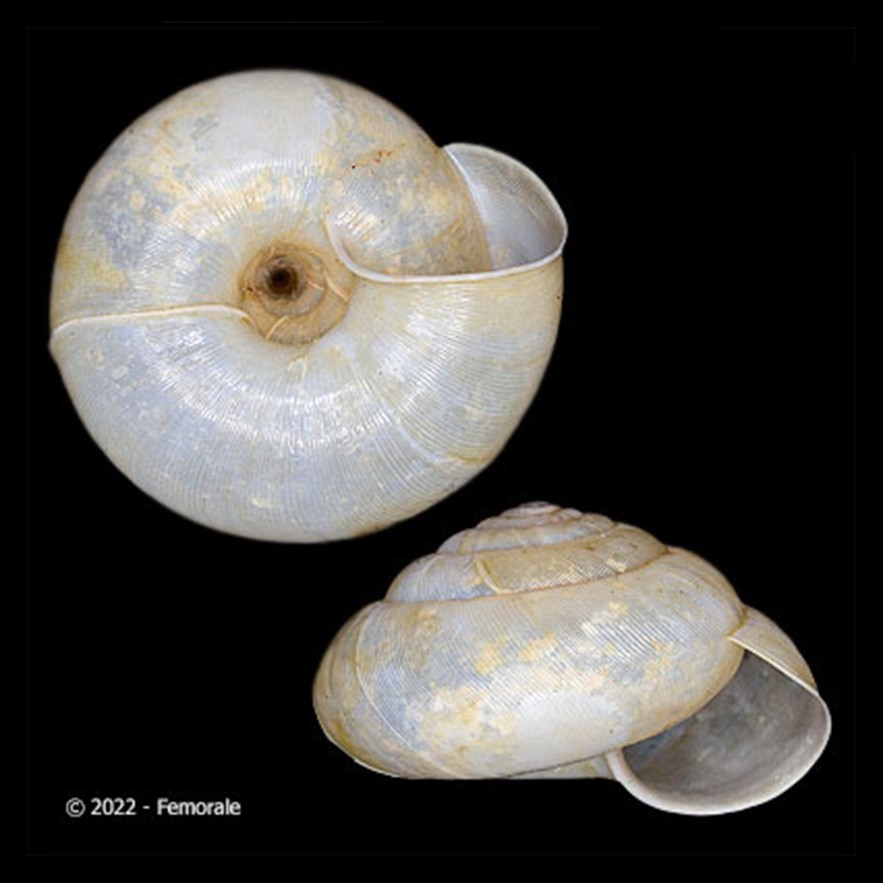
CLASSE: GASTROPODA: TERRESTRE FAMÍLIA: STREPTAXIDAE ESPÉCIE: Streptaxis capillosus Pilsbry, 1897 Tamanho médio: 23 mm Habitat: vive no solo, sob folhas ou enterrada parte do tempo Ocorrência: Brasil (Bahia) Localidade tipo: Brasil, Bahia, sem localidade específica Nome original: Streptaxis capillosus Pilsbry, 1897 Etimologia: o nome da espécie deriva do latim, possivelmente devido às finas estrias na concha Fotos: (1) cortesia Femorale, 2019. Bahia, 22mm; (2) The Academy of Natural Sciences, Philadelphia: LECTOTYPE ANSP 23758, Bahia, Swift Collection, 20.5mm Fontes: Descrição original: Pilsbry, H. A. (1897). New Brazilian Streptaxidae. Proceedings of the Academy of Natural Sciences of Philadelphia. 49: 477-479., disponível online em https://www.biodiversitylibrary.org/page/26284624 página(s): 478 Brown, K. (2023). A guide to the hunter shells. Vol. 2. The Streptaxoidea. The...
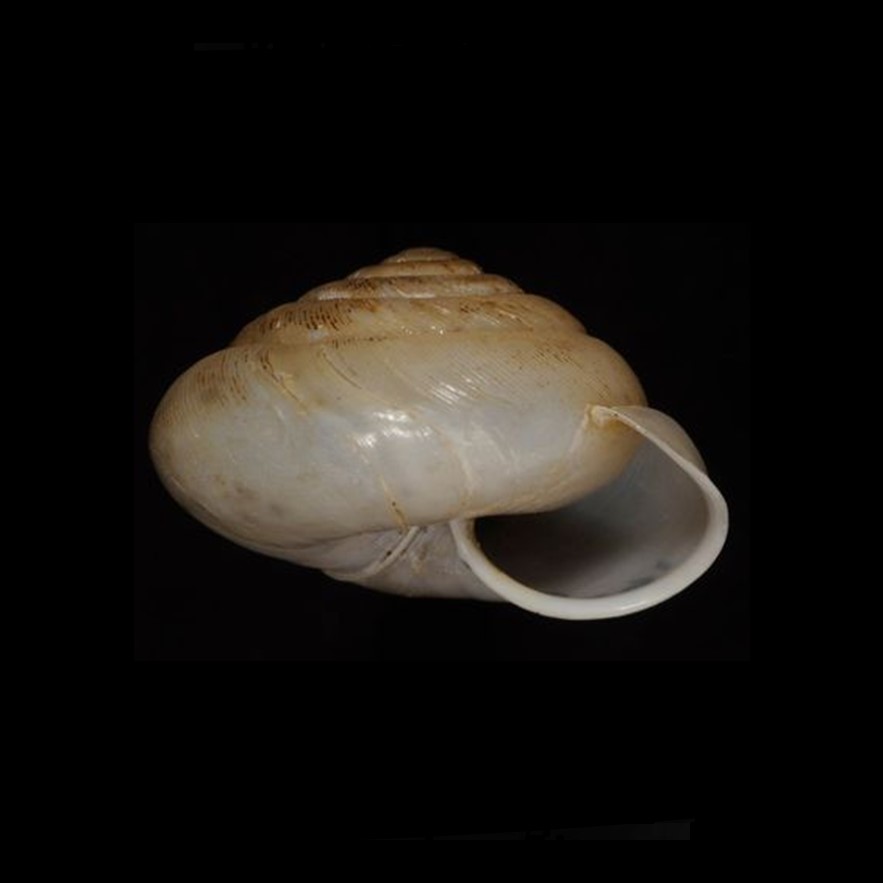
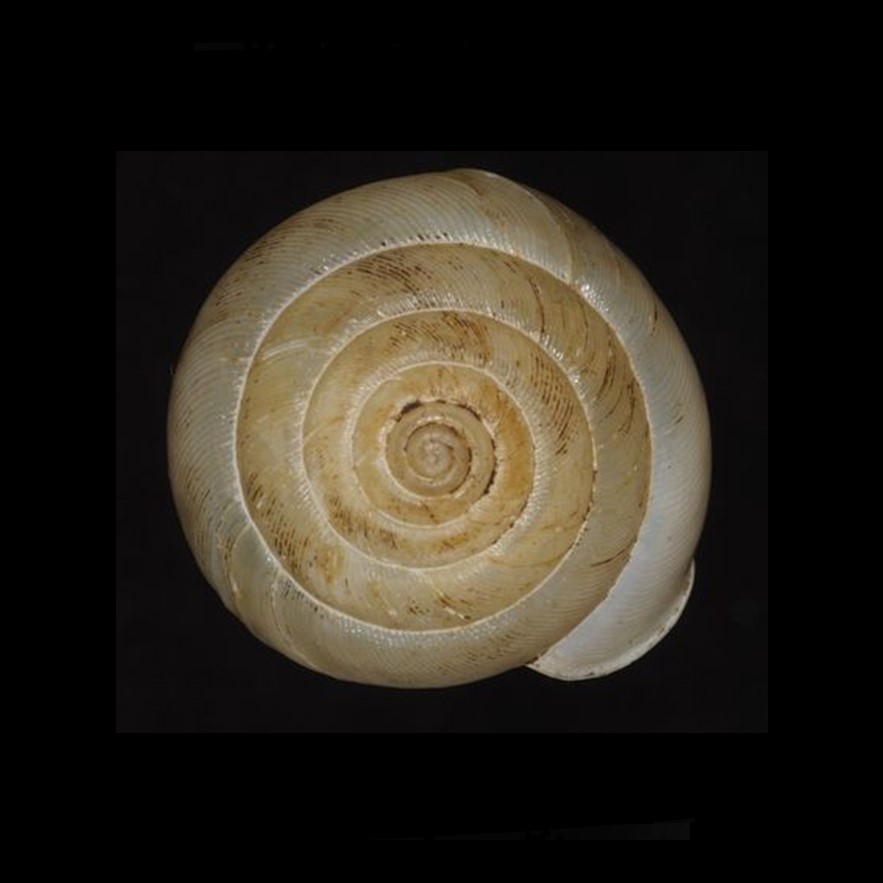
CLASSE: GASTROPODA: TERRESTRE FAMÍLIA: STREPTAXIDAE ESPÉCIE: Streptaxis colombianus (Pilsbry, 1935) Tamanho médio: 23.6 - 24.8 mm Alimentação: carnívoro Habitat: vive no solo, sob folhas, ou enterrado parte do tempo Ocorrência: Colômbia (Boyacá, Cesar, Meta, Norte de Santander) Localidade tipo: Colômbia, Region of Villavicencio Nome original: Artemon colombianus Pilsbry, 1935 Fotos: (1-4) The Academy of Natural Sciences, Philadelphia: HOLOTYPE de Streptaxis colombianus, ANSP 451738 (Split from holotype ANSP 164578; provenance history: Maria, H. A), Colômbia, região de Villa Vicencio, coll. Vicente Guevara, 24.8 mm Fontes: Descrição original: (como Artemon colombianus Pilsbry, 1935) Pilsbry, H. A. (1935). South American land and freshwater mollusks. 9. Colombian species. Proceedings of the Academy of Natural Sciences of Philadelphia. 87: 83-88., disponível online em http://www.jstor.org/stable/4064211 página(s): 86, pl. 6 figs...

CLASSE: GASTROPODA: TERRESTRE FAMÍLIA: STREPTAXIDAE ESPÉCIE: Streptaxis contusus (Férussac, 1821) Tamanho médio: 21 mm Habitat: vive no solo, sob folhas ou enterrada parte do tempo Ocorrência: Brasil (Ceará, Rio de Janeiro, São Paulo, Santa Catarina) Localidade tipo: "Le Brésil; Comm. Taunay" Nome original: Helix (Helicogena) contusa Férussac, 1821 Sinônimos: Helix (Helicogena) contundata Férussac, 1821 Etimologia: o nome da espécie "contusa" deriva do Latim: esmagado ou machucado Fotos: (1,2) Museu Nacional de História Natural, Paris: SYNTYPE de Helix (Helicogena) contusa Férussac, 1821, MNHN-IM-2000-30916, 27mm; (3) Animal vivo, Streptaxis contusus, observação iNaturalist, Victor Farjalla Pontes, Rio de Janeiro, abril 2021 Figura: Breure & Araujo, 2017: (A-C) Streptaxis contusus (Férussac, 1821), MNCN 15.05/20178; (D-F) Streptaxis crossei (Pfeiffer,1867), MNCN 15.05/20177; (G-I) Streptaxis...
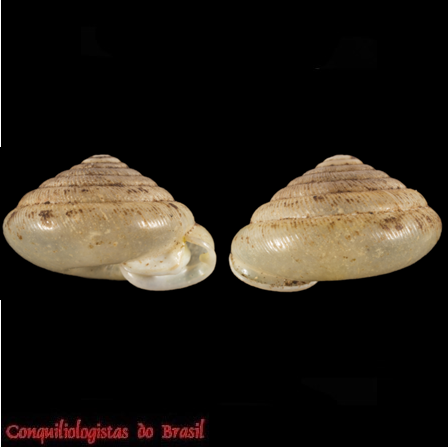
CLASSE: GASTROPODA: TERRESTRE FAMÍLIA: STREPTAXIDAE ESPÉCIE: Streptaxis crossei L. Pfeiffer, 1867 Tamanho médio: 8 mm Habitat: vive no solo, sob folhas ou enterrada parte do tempo Ocorrência: Brasil (Rio de Janeiro) Localidade tipo: "Hab. Corcobado, prope Rio Janeiro Brasiliae" foot note "cette espèce et la suivante se trouvent également dans les collections Paz et Hidalgo: elles ont été recueillies par Paz. H.C." Etimologia: o nome da espécie é uma homenagem ao conquilogista francês Joseph Charles Hippolyte Crosse (10/1826 – 08/1898) Sinônimos: Roosen, Salvador & Breure, 2025 considera esta espécie como sinônimo de Smenodonta janeirensis (Pfeiffer, 1852), na Família Scolodontidae Fotos: (1) Museu Nacional de História Natural, Paris. SYNTYPE de Streptaxis crossei L. Pfeiffer, 1867; MNHN-IM-2000-30920 Figura: Breure &...
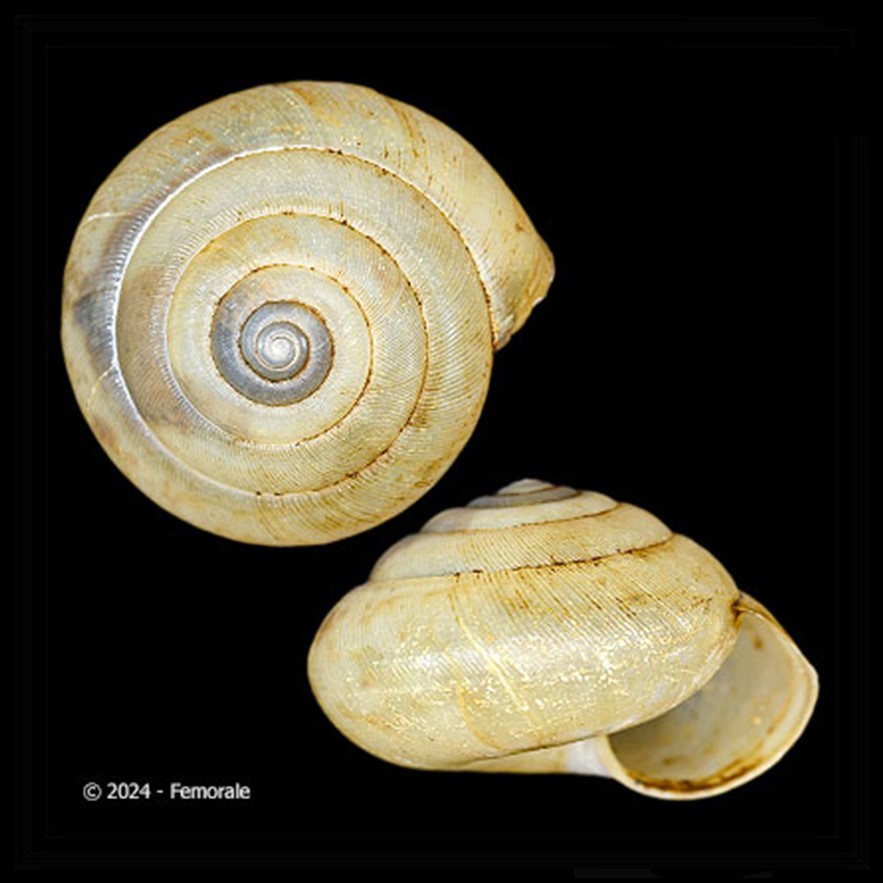
CLASSE: GASTROPODA: TERRESTRE FAMÍLIA: STREPTAXIDAE ESPÉCIE: Streptaxis cypsele (L. Pfeiffer, 1849) Tamanho médio: 9 mm Habitat: vive no solo, sob folhas, ou enterrado parte do tempo Ocorrência: Brasil (Santa Catarina) Localidade tipo: "Brasil" Nome original: Helix cypsele L. Pfeiffer, 1849 Etimologia: o nome da espécie é derivado do Grego: vaso oco ("hollow vessel") Comentários: o PARATYPE de Streptaxis cypsele está depositado no Museu de Zoologia da Universidade de São Paulo - MZSP 1418 Fotos: (1) cortesia Femorale, 2024, 19mm Fontes: Descrição original: (como Helix cypsele L. Pfeiffer, 1849) Pfeiffer, L. (1849). Nachträge zu L. Pfeiffer Monographia Heliceorum. Zeitschrift für Malakozoologie. Cassel (Theodor Fischer). 6 (4): 66-79 [30 November 1849]; 6 (6): 81-95 [30 November 1849]; 6 (7): 106-112 [31 Dezember 1849]., disponível online em...
CLASSE: GASTROPODA: TERRESTRE FAMÍLIA: STREPTAXIDAE ESPÉCIE: Streptaxis dacostae Gude, 1903 Tamanho médio: 15 mm Alimentação: carnívoro Habitat: vive no solo, sob folhas, ou enterrado parte do tempo Ocorrência: Colômbia ("en una localidade indeterminada de la cuenca del río Cuenca) Localidade tipo: "Cauca, New Granada" Nome original: Streptaxis dacostae Gude, 1903 Etimologia: o nome da espécie é uma homenagem ao malacologista britânico Solomon Israel Da Costa (1827–1907) Comentários: o material tipo está depositado no Natural History Museum, London: NHMUK 1907.11.21.104-106 (3), coll. Da Costa Fotos: nd Fontes: Descrição original: Gude, G. K. (1903). Additions to the genus Streptaxis. Proceedings of the Malacological Society of London. 5: 322-327., disponível online em https://www.biodiversitylibrary.org/page/15168681 página(s): 322 Linares, E. L. & Vera M. L. (2012)....

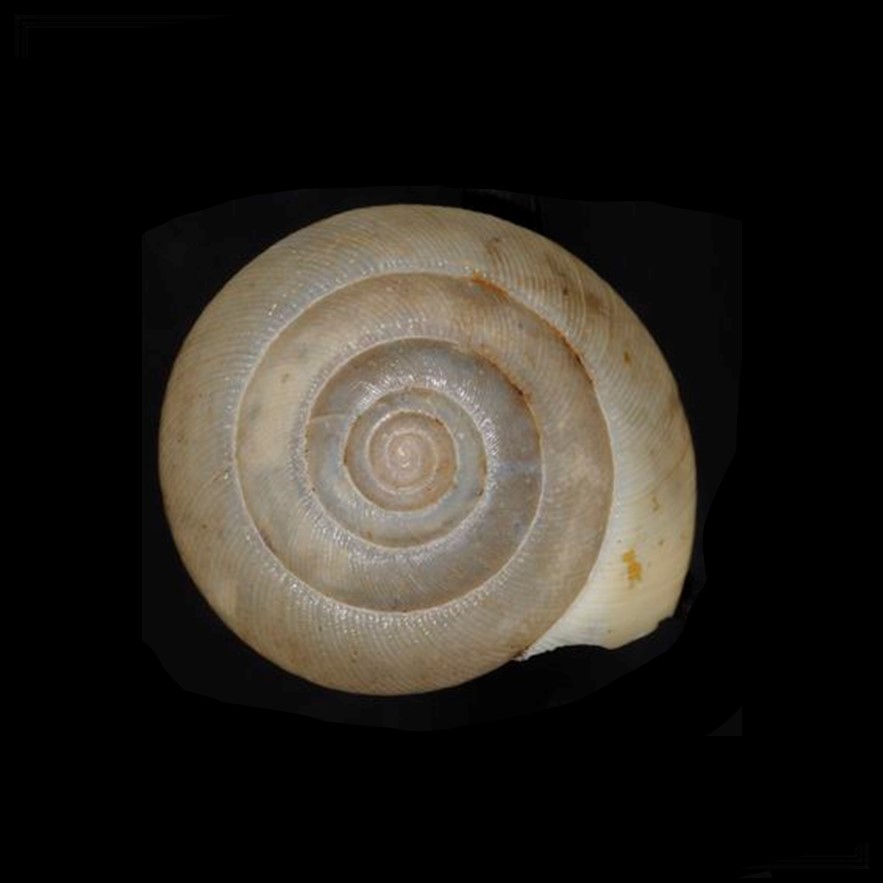
CLASSE: GASTROPODA: TERRESTRE FAMÍLIA: STREPTAXIDAE ESPÉCIE: Streptaxis decussatus Pilsbry, 1897 Tamanho médio: 22 mm Habitat: vive no solo, sob folhas ou enterrada parte do tempo Ocorrência: Brasil (Rio de Janeiro) Localidade tipo: Brasil, sem localidade específica Nome original: Streptaxis decussatus Pilsbry, 1897 Fotos: (1-4) The Academy of Natural Sciences, Philadelphia: LECTOTYPE ANSP 23764, doador Phillips, J. S., "Brasil", 22mm Fontes: Descrição original: Pilsbry, H. A. (1897). New Brazilian Streptaxidae. Proceedings of the Academy of Natural Sciences of Philadelphia. 49: 477-479., disponível online em https://www.biodiversitylibrary.org/page/26284624 página(s): 479 Simone, L. R. L. (2006). Land and Freshwater Molluscs of Brazil. Editora Gráfica Bernardi, FAPESP. São Paulo, 390 pp. página(s): 191 Brown, K. (2023). A guide to the hunter shells. Vol. 2. The Streptaxoidea. The...
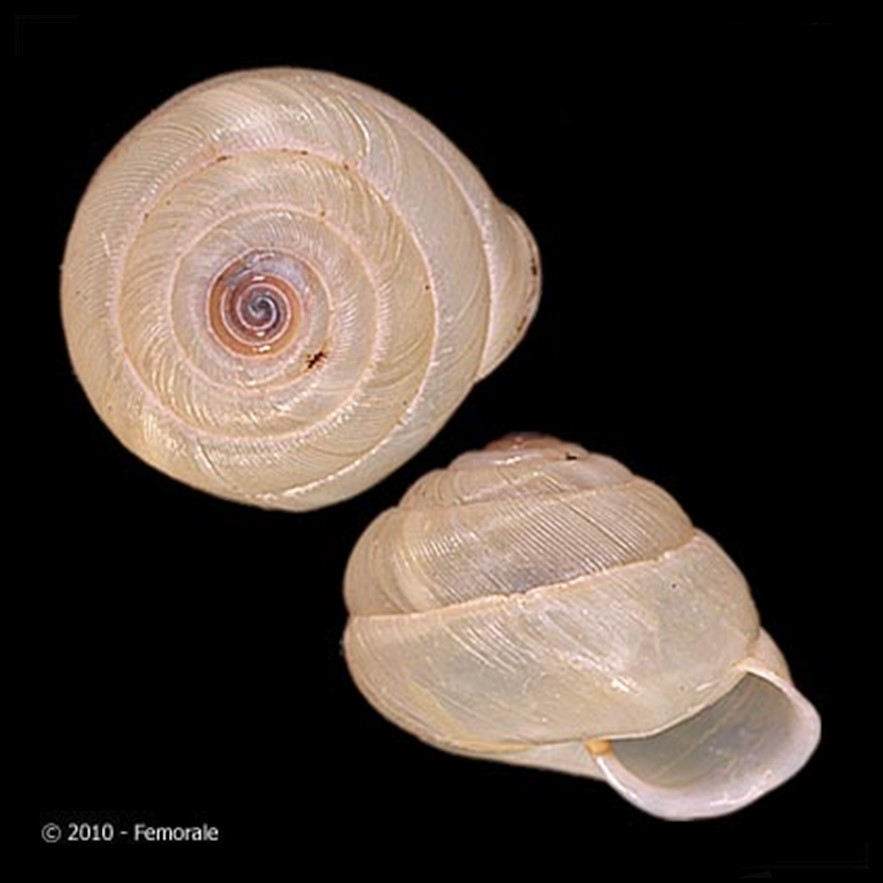

CLASSE: GASTROPODA: TERRESTRE FAMÍLIA: STREPTAXIDAE ESPÉCIE: Streptaxis dunkeri L. Pfeiffer, 1845 Tamanho médio: 25 mm Habitat: vive no solo, sob folhas ou enterrada parte do tempo Ocorrência: Brasil (Rio de Janeiro), Colômbia (Vichada) Localidade tipo: Brasil, Rio de Janeiro, Nova Friburgo Etimologia: o nome da espécie é uma homenagem ao paleontólogo, geólogo e malacólogo alemão Wilhelm Bernhard Rudolph Hadrian Dunker (1809-1885) Comentários: o HOLOTYPE de Streptaxis dunkeri está depositado na coleção do Museo Nacional de Ciencias Naturales, Madrid, MNCN 15.05/20117 Fotos: (1,2) cortesia Femorale, 18.7mm, Rio de Janeiro Figura: Breure & Araujo, 2017: (A-C) Streptaxis contusus (Férussac, 1821), MNCN 15.05/20178; (D-F) Streptaxis crossei (Pfeiffer,1867), MNCN 15.05/20177; (G-I) Streptaxis dunkeri (Pfeiffer in Philippi, 1845), MNCN 15.05/20117; (J-L) Streptaxis uberiformis (Pfeiffer, 1848), MNCN 15.05/20125. Linha da escala = 5...
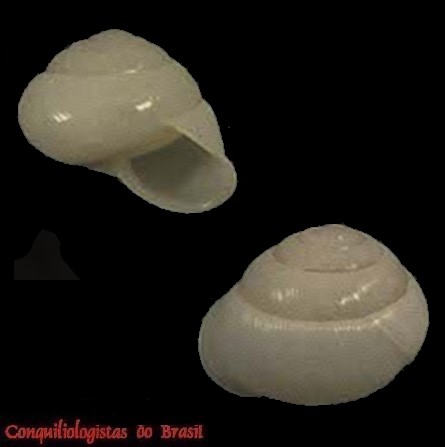
CLASSE: GASTROPODA: TERRESTRE FAMÍLIA: STREPTAXIDAE ESPÉCIE: Streptaxis giovannalimae (M. A. Lima & T. Cossignani, 2021) Tamanho médio: nd Habitat: vive no solo, sob folhas, ou enterrado parte do tempo Ocorrência: Brasil (Ceará) Localidade tipo: Tururu, Ceará Nome original: Bradybaena giovannalimae M. A. Lima & T. Cossignani, 2021 Etimologia: o nome da espécie é uma homenagem à Giovanna de Andrade Lima, neta do primeiro autor Comentários: Segundo Salvador et al., 2024: "Bradybaena giovannalimae Lima & Cossignani, 2021 não pertence a Bradybaena Férussac, 1822, um gênero asiático. Seu rolamento de cor homogênea indica que pertence aos Streptaxidae, e seu formato de concha globosa e abertura alongada o colocam no gênero Streptaxis Gray, 1837, que é bastante específico no Brasil (Simone 2006). Assim, reclassificamos as espécies...
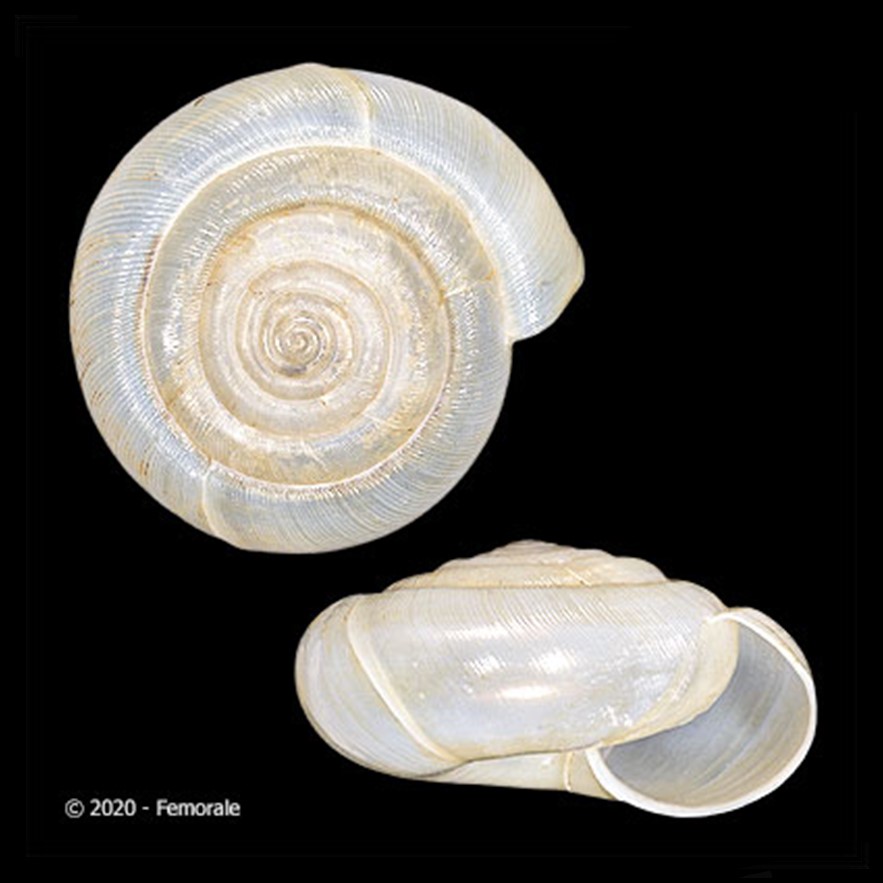
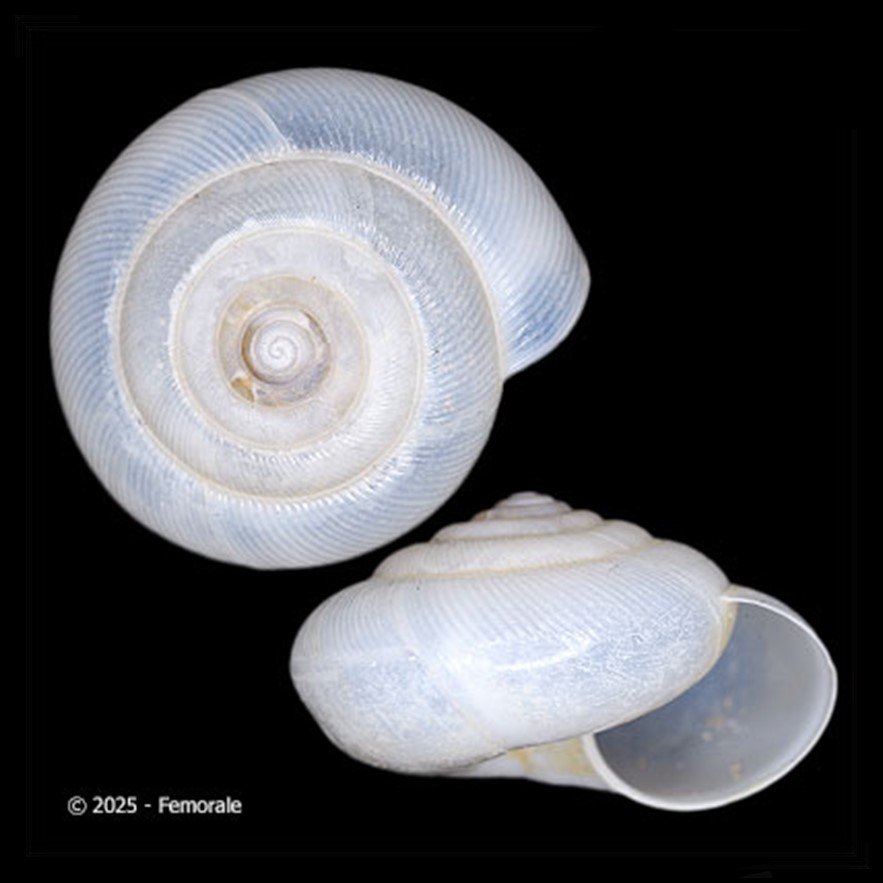
CLASSE: GASTROPODA: TERRESTRE FAMÍLIA: STREPTAXIDAE ESPÉCIE: Streptaxis helios Pilsbry, 1897 Tamanho médio: 26 mm Habitat: vive no solo, sob folhas ou enterrada parte do tempo Ocorrência: Brasil Localidade tipo: "Brasil", sem localização específica Nome original: Streptaxis helios Pilsbry, 1897 Etimologia: o nome da espécie é derivado da palavra grega "helios" que significa Sol Fotos: (1) cortesia Femorale, 25.3mm; (2) The Academy of Natural Sciences, Philadelphia: LECTOTYPE ANSP 23765; Swift Collection, "Brasil", 24mm Fontes: Descrição original: Pilsbry, H. A. (1897). New Brazilian Streptaxidae. Proceedings of the Academy of Natural Sciences of Philadelphia. 49: 477-479., disponível online em https://www.biodiversitylibrary.org/page/26284624 página(s): 477 Simone, L. R. L. (2006). Land and Freshwater Molluscs of Brazil. Editora Gráfica Bernardi, FAPESP. São Paulo, 390...

CLASSE: GASTROPODA: TERRESTRE FAMÍLIA: STREPTAXIDAE ESPÉCIE: Streptaxis hylephilus (A. d'Orbigny, 1835) Tamanho médio: 8 mm Habitat: vive no solo, sob folhas, ou enterrado parte do tempo Ocorrência: Bolívia, Paraguai, Argentina, Brasil (Mato Grosso) Localidade tipo: Bolívia Nome original: Helix hylephila A. d'Orbigny, 1835 Fotos: (1) Natural History Museum, London: SYNTYPE de Helix hylephila, NHMUK 1854.12.4.76, doador: Alcide Dessalines d'Orbigny, Bolívia, 8mm Fontes: Descrição original: (como Helix hylephila A. d'Orbigny, 1835) Orbigny, A. d'. (1835). Synopsis terrestrium et fluviatilium molluscorum, in suo per Americam meridionalem itinere collectorum. Magasin de Zoologie. 5(61): 1-44., disponível online em https://www.biodiversitylibrary.org/page/2633132 página(s): 7 Simone, L. R. L. (2006). Land and Freshwater Molluscs of Brazil. Editora Gráfica Bernardi, FAPESP. São Paulo, 390 pp. página(s): 192 Brown, K. (2023)....

CLASSE: GASTROPODA: TERRESTRE FAMÍLIA: STREPTAXIDAE ESPÉCIE: Streptaxis iheringi (Pilsbry, 1930) Tamanho médio: 21 mm Habitat: vive no solo, sob folhas, ou enterrado parte do tempo Ocorrência: Brasil (São Paulo ?, Alagoas) Localidade tipo: Brasil, sem localidade específica ("probably from the state of Sao Paulo or southward") Nome original: Artemon iheringi Pilsbry, 1930 Etimologia: o nome da espécie é uma homenagem ao zoólogo teuto-brasileiro Hermann von Ihering (9 de outubro de 1850 – 24 de fevereiro de 1930). Foi o fundador e primeiro diretor do Museu Paulista, em São Paulo, em 1894 Descrição original: (Pilsbry, 1930): "The shell is umbilicate (the width of umbilicus contained about five and one-fourth times in that of the shell), Sagda-shaped, thin but moderatel strong. Periostracum ivory-yellow, very glossy....
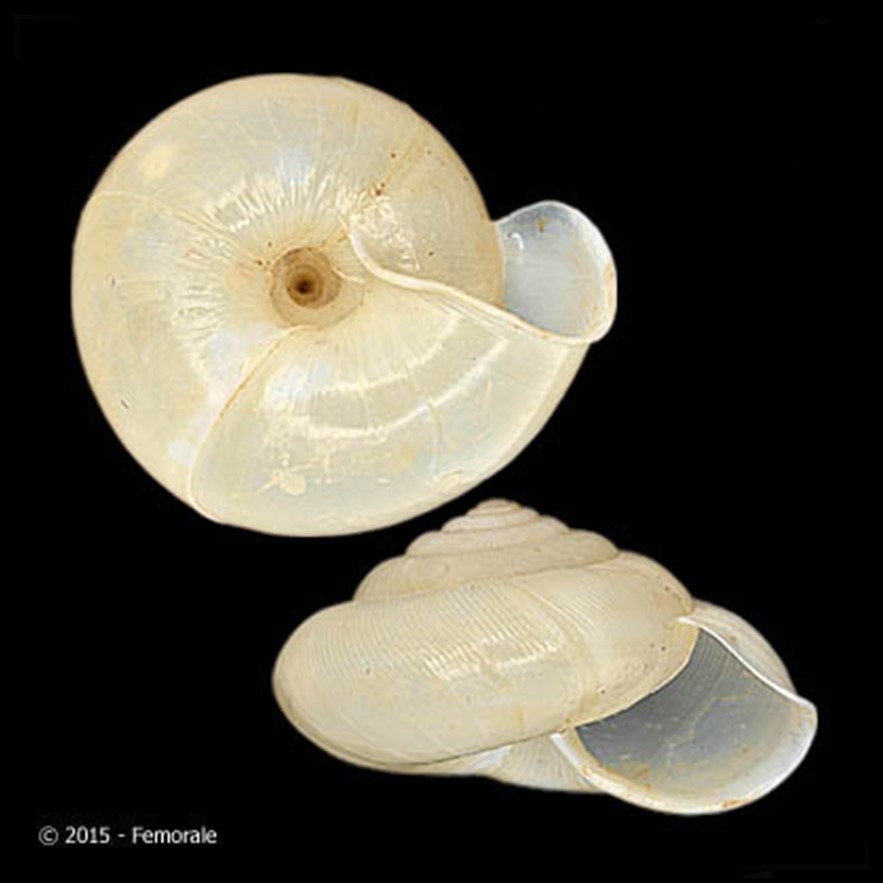
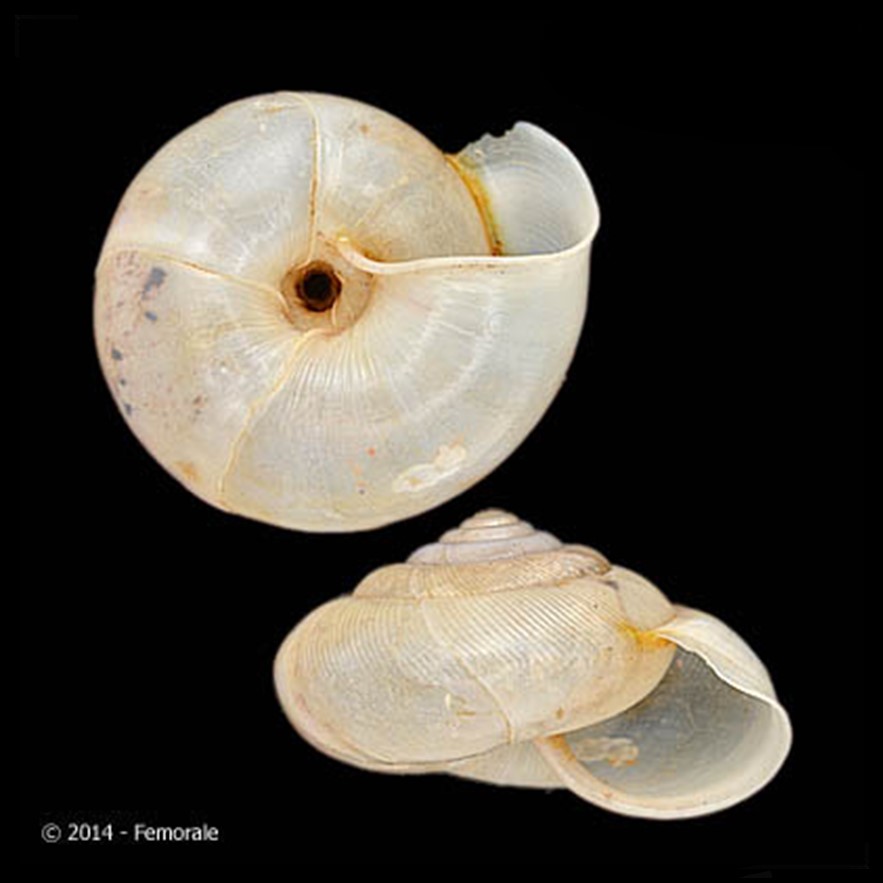
CLASSE: GASTROPODA: TERRESTRE FAMÍLIA: STREPTAXIDAE ESPÉCIE: Streptaxis intermedius Albers, 1857 Tamanho médio: 34 mm Habitat: vive no solo, sob folhas ou enterrada parte do tempo Ocorrência: Brasil (Bahia, Minas Gerais, Espírito Santo) Localidade tipo: Brasil Nome original: Streptaxis intermedius Albers, 1857 Sinônimos: Artemon intermedius (Albers, 1857) Fotos: (1,2) cortesia Femorale, 2015, 33.3 e 24.6 mm respectivamente Fontes: Descrição original: Albers, J. C. (1857). Diagnosen neuer Heliceen mit gelegentlicher Berichtigung einiger älteren Arten. Malakozoologische Blätter. 4(5): 89-100, pl. 1-2. Cassel [May]., disponível online em https://www.biodiversitylibrary.org/page/15865334 página(s): 95 Simone, L. R. L. (2006). Land and Freshwater Molluscs of Brazil. Editora Gráfica Bernardi, FAPESP. São Paulo, 390 pp. página(s): 192 Brown, K. (2023). A guide to the hunter shells. Vol. 2. The Streptaxoidea. The Enneinae, Orthogibbinae,...

CLASSE: GASTROPODA: TERRESTRE FAMÍLIA: STREPTAXIDAE ESPÉCIE: Streptaxis laevissimus (S. Moricand, 1836) Tamanho médio: nd Habitat: vive no solo, sob folhas, ou enterrado parte do tempo Ocorrência: Brasil (Bahia) Localidade tipo: Brasil, Bahia Nome original: Helix (Helicella) candida var. laevissima S. Moricand, 1836 Sinônimos: Streptaxis candidus var. laevissima (S. Moricand, 1836) Fotos: nd Fontes: Descrição original: (como Helix (Helicella) candida var. laevissima S. Moricand, 1836) Moricand, S. (1836). Mémoire sur les coquilles terrestres et fluviatiles de la province de Bahia, envoyée par. M. Blanchet. Mémoires de la Société de Physique et d'Histoire Naturelle de Genève. 7 (2): 415-446, pl. 2. Genève., disponível online em https://www.biodiversitylibrary.org/page/10404196 página(s): 421 Simone, L. R. L. (2006). Land and Freshwater Molluscs of Brazil. Editora Gráfica Bernardi, FAPESP. São Paulo, 390...
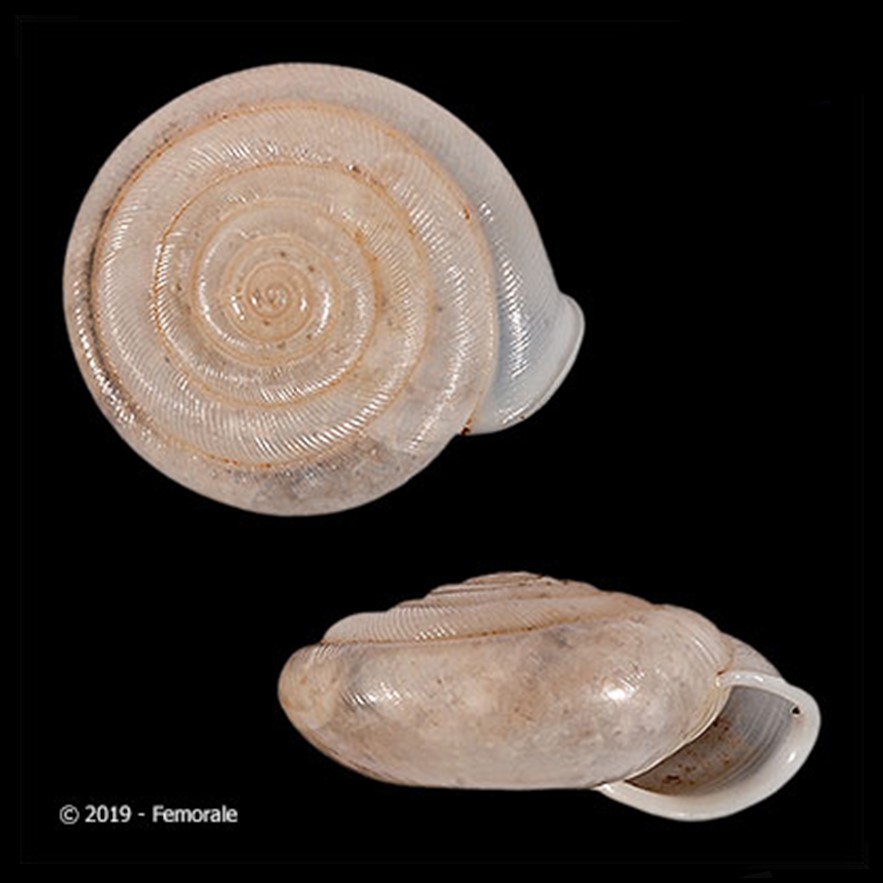
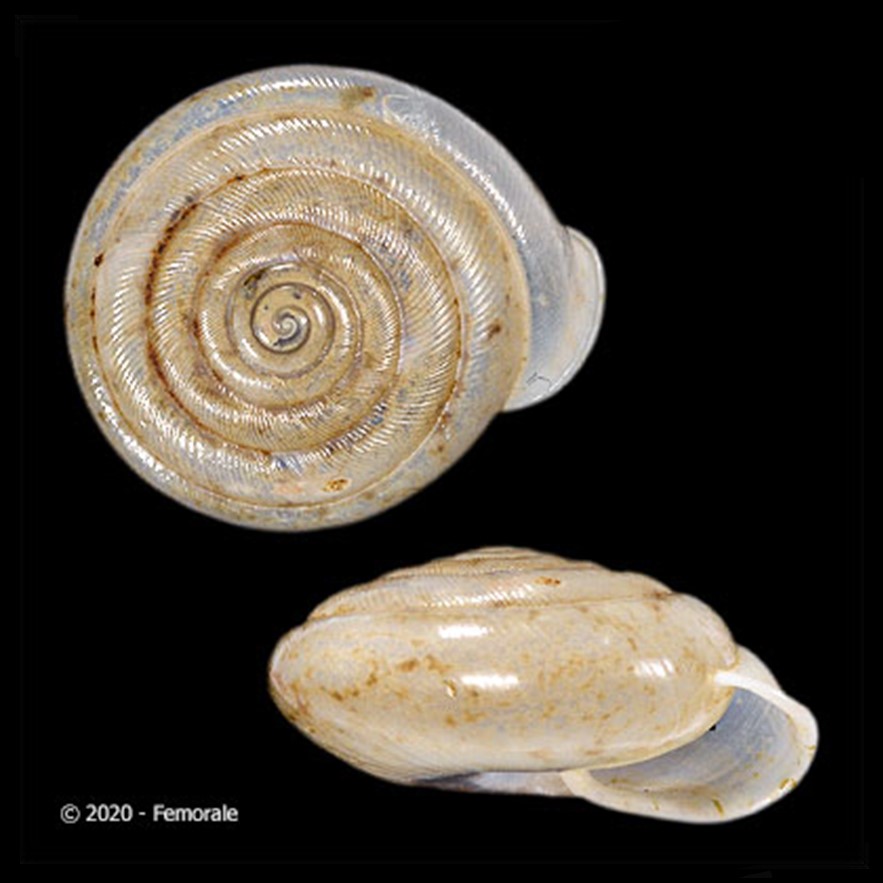
CLASSE: GASTROPODA: TERRESTRE FAMÍLIA: STREPTAXIDAE ESPÉCIE: Streptaxis leirae Salvador, 2018 Tamanho médio: 13 mm Habitat: vive no solo, sob folhas ou enterrada parte do tempo Ocorrência: Brasil (Bahia) Localidade tipo: município de Brumado, Bahia Etimologia: O nome refere-se a Leira, personagem fictício de jogo de RPG "Dungeons & Dragons". Leira é a deusa da ilusão e da névoa do panteão "Forgotten Realms". Também é uma alusão à Localidade tipo: "brumado", que significa névoa na língua portuguesa. Fotos: (1) cortesia Femorale, 2020, Bahia, 13.2mm Figura: Salvador R.B. (2018): (14–18) Streptaxis leirae, HOLOTYPE, MZSP 129247 (H = 6.8 mm, D = 13.5 mm) Fontes: Descrição original: Salvador R.B. (2018). Notes on a new collection of Streptaxidae (Gastropoda:...

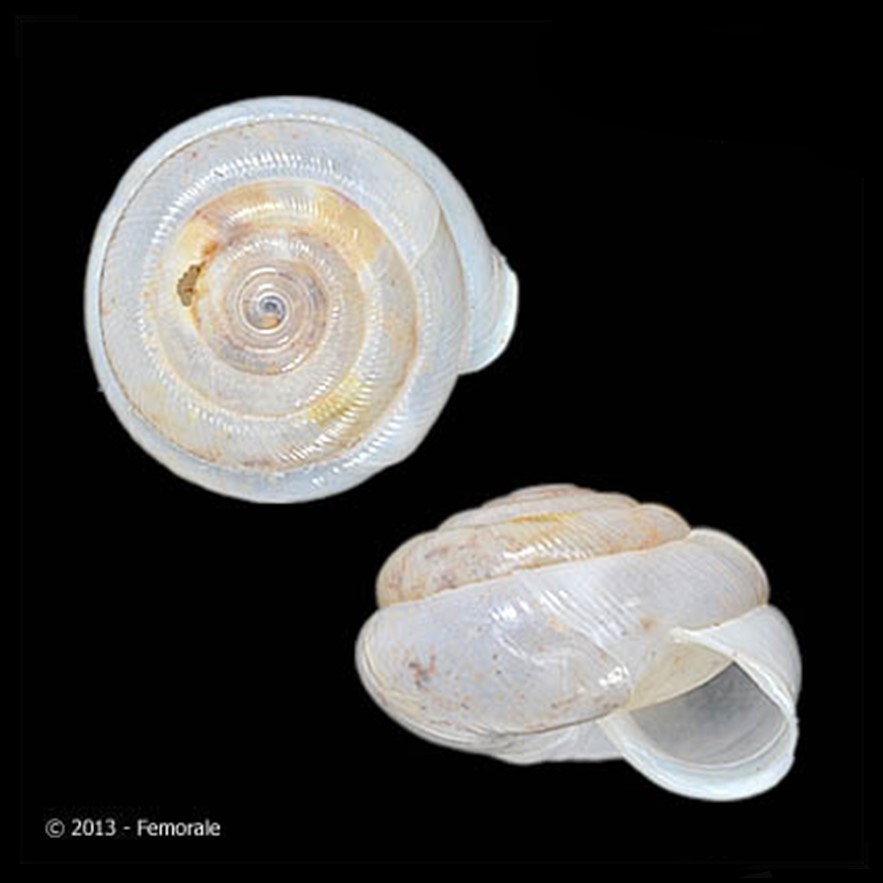
CLASSE: GASTROPODA: TERRESTRE FAMÍLIA: STREPTAXIDAE ESPÉCIE: Streptaxis luetzelburgi A. Weber, 1925 Tamanho médio: 13 mm Habitat: vive no solo, sob folhas ou enterrada parte do tempo Ocorrência: Brasil (Bahia, Tocantins) Localidade tipo: São Desidério, Bahia Nome original: Streptaxis luetzelburgi A. Weber, 1925 Etimologia: o nome da espécie é uma homenagem ao engenheiro, botânico, fitogeógrafo e explorador alemão Philipp von Luetzelburg (1880 — 1948), que realizou extensas explorações botânicas no Nordeste do Brasil Fotos: (1,2) cortesia Femorale, 13.0mm; (3) Salvador, Cavallari & Simone (2015): Museu de Zoologia de São Paulo, lote MZSP 114873 (D = 14.9mm), Taguatinga, Tocantins Fontes: Descrição original: Weber, A. (1925). Konchyliologische Ergebnisse einer Forschungsreise Dr. v. Lützelburg's in Brasilien. Zoologische Jahrbücher Abteilung für Systematik, Geographie und...
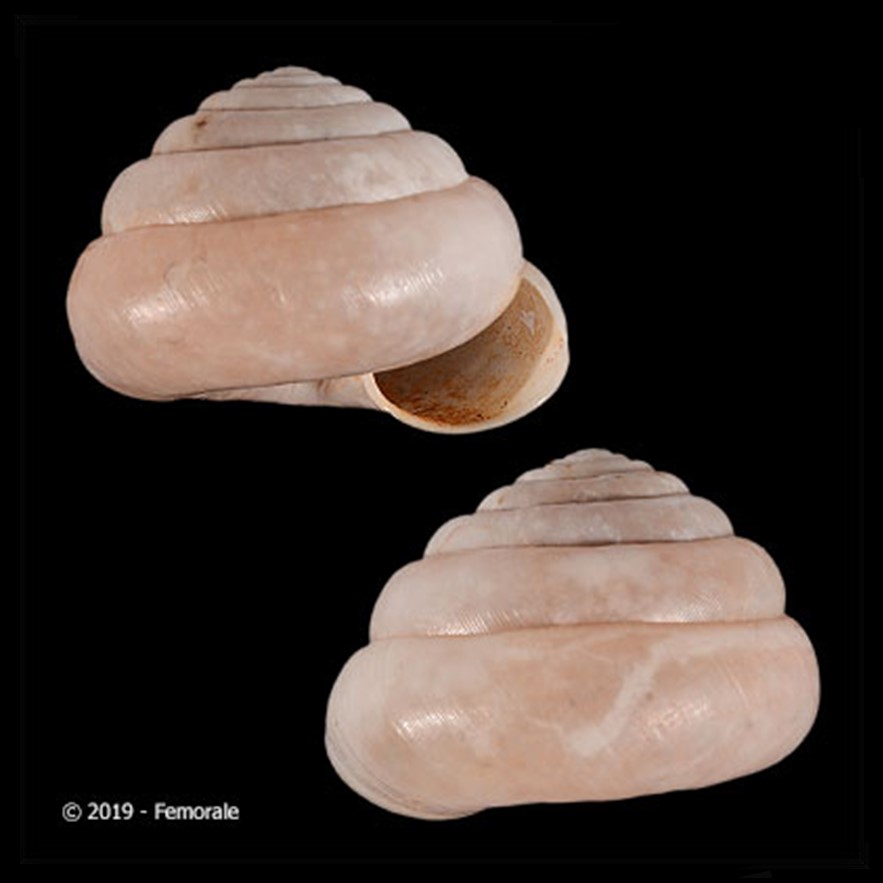

CLASSE: GASTROPODA: TERRESTRE FAMÍLIA: STREPTAXIDAE ESPÉCIE: Streptaxis megahelix Salvador, 2018 Tamanho médio: 18 mm Habitat: Mata Atlântica, vive no solo, sob folhas ou na serapilheira Ocorrência: Brasil (Rio de Janeiro) Localidade tipo: São Fidélis, Serra do Sapateiro, Rio de Janeiro Nome orginal: Streptaxis megahelix Salvador, 2018 Etimologia: o nome composto em aposição se refere à concha com muitas espirais Fotos: (1) cortesia Femorale, 2019, Rio de Janeiro, 18mm Figura: Salvador R.B. (2018): (19–23) Museu de Zoologia de São Paulo, HOLOTYPE MZSP 124024 (H = 13.5 mm, D = 18.1 mm); (24) PARATYPE (fragmento) MZSP 124024 (H = 16.0 mm, D = 15.8 mm) Fontes: Descrição original: Salvador R.B. (2018). Notes on a new collection of Streptaxidae...

CLASSE: GASTROPODA: TERRESTRE FAMÍLIA: STREPTAXIDAE ESPÉCIE: Streptaxis pilsbryi (Solem, 1956) Tamanho médio: diâmetro 10,3mm Habitat: vive no solo, sob folhas ou enterrada parte do tempo Ocorrência: Brasil (Mato Grosso do Sul) Localidade tipo: Salobra, Mato Grosso do Sul Nome original: Artemon pilsbryi Solem, 1956 Comentários: o HOLOTYPE de Streptaxis pilsbryi está depositado na The Academy of Natural Sciences, Philadelphia - ANSP 194286 Etimologia: o nome da espécie é uma homenagem a Henry Augustus Pilsbry (Iowa 1862 – Flórida 1957). Pilsbry foi um biólogo, malacólogo e carcinólogo. Notabilizou-se mundialmente pelo seu estudo dos moluscos (Mollusca), em particular dos Polyplacophora e dos gastrópodes terrestres Fotos: (1) Salvador, R. B.; Colley, E.; Simone, L. R. L. (2018): espécime juvenil, coletado em Corumbá, Mato Grosso do Sul;...


CLASSE: GASTROPODA: TERRESTRE FAMÍLIA: STREPTAXIDAE ESPÉCIE: Streptaxis politus Fulton, 1899 Tamanho médio: 23 - 38 mm Habitat: vive no solo, sob folhas ou enterrada parte do tempo Ocorrência: Brasil (Bahia) Localidade tipo: Brasil, Bahia Nome original: Streptaxis politus Fulton, 1899 Fotos: (1,2) cortesia Femorale, 2020, Bahia, 20.5 e 29.4 mm respectivamente Fontes: Descrição original: Fulton, H. (1899). Descriptions of supposed new species of Streptaxis and Amphidromus. Proceedings of the Malacological Society of London. 3: 302–303., disponível online em https://www.biodiversitylibrary.org/page/32075665 página(s): 302, fig. 1 Simone, L. R. L. (2006). Land and Freshwater Molluscs of Brazil. Editora Gráfica Bernardi, FAPESP. São Paulo, 390 pp. página(s): 193 Brown, K. (2023). A guide to the hunter shells. Vol. 2. The Streptaxoidea. The Enneinae,...
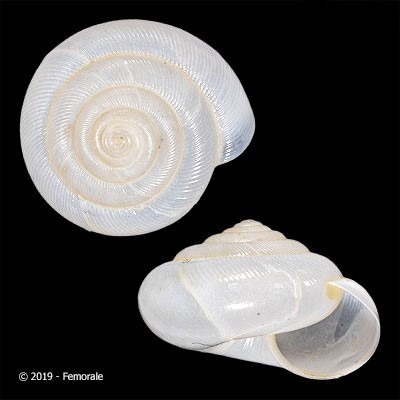
CLASSE: GASTROPODA: TERRESTRE FAMÍLIA: STREPTAXIDAE ESPÉCIE: Streptaxis rollandii (Bernardi, 1857) Tamanho médio: 20 mm Habitat: vive no solo, sob folhas ou enterrada parte do tempo Ocorrência: Brasil Localidade tipo: "Brésil probablement. (Coll. du Journal)" Nome original: Helix rollandii Bernardi, 1857 Sinônimos: Streptaxis rollandi (Bernardi, 1857) Etimologia: nome da espécie é uma homenagem ao conquiologista francês M. Rolland du Roquan Comentários: em Simone, 2006 e Brown, 2023 a grafia da espécie é Streptaxis rolandi (somente um "i"), seguindo corretamente o nome de M. Rolland, porém no original de Bernardi, 1857 e em Molluscabase, 2024 a grafia é rolandii Fotos: (1) cortesia Femorale; 19,5 mm; (2) Museu Nacional de História Natural, Paris. SYNTYPE de Helix rollandii Bernardi, 1857; MNHN-IM-2000-30978; 20mm Fontes: Descrição...
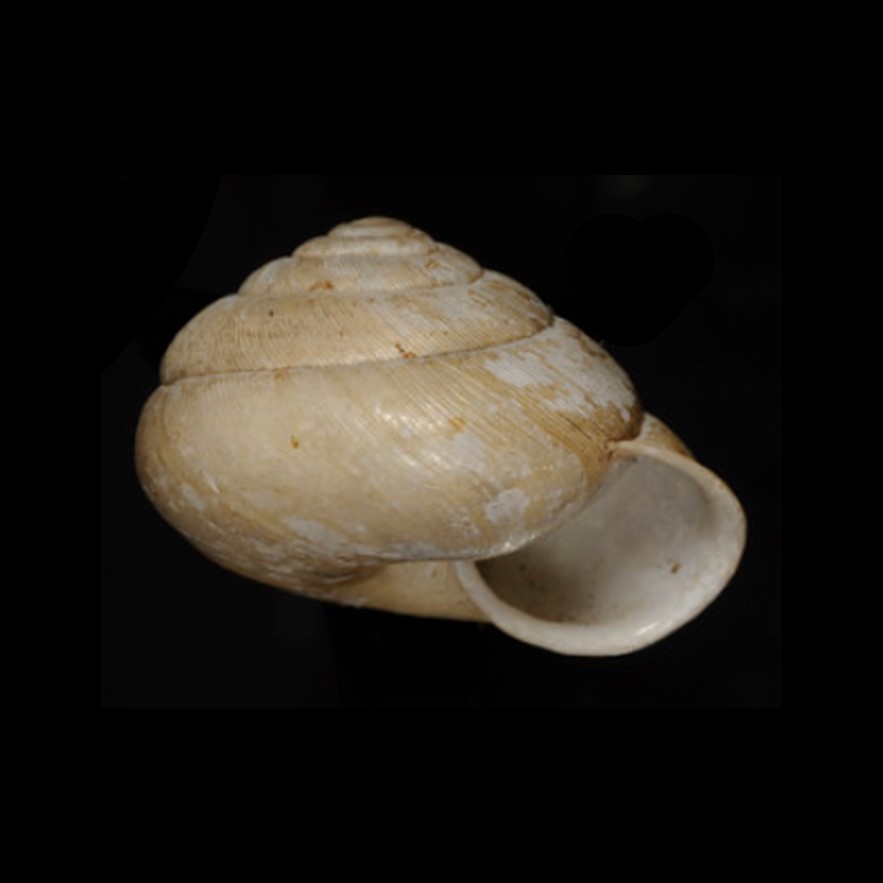
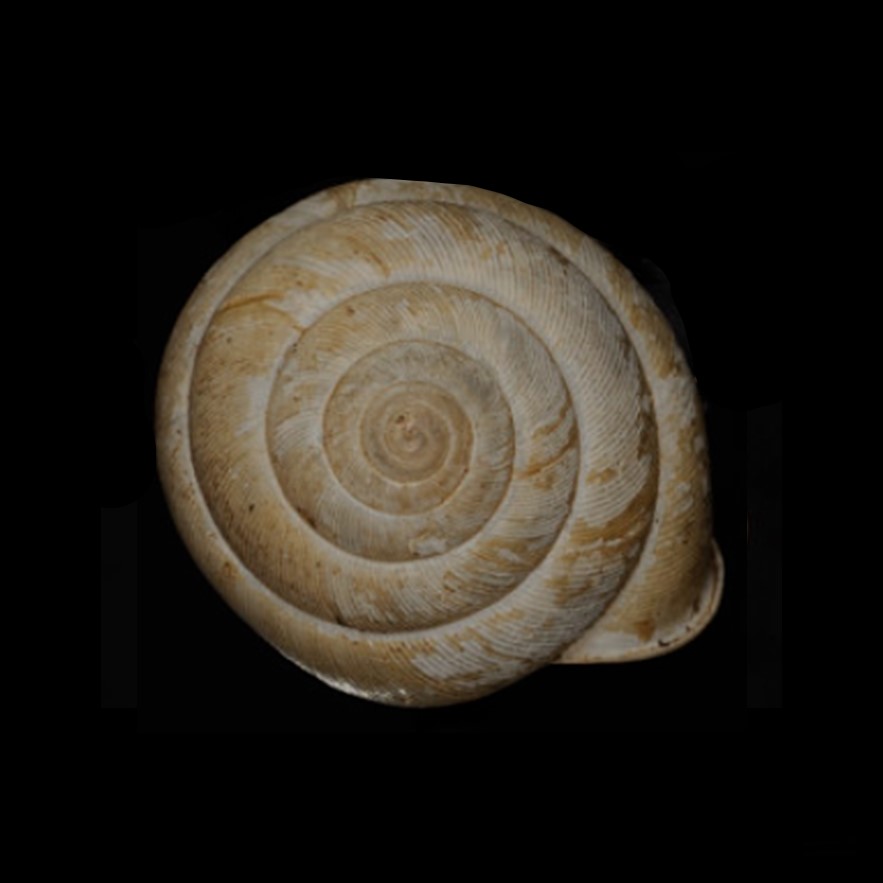
CLASSE: GASTROPODA: TERRESTRE FAMÍLIA: STREPTAXIDAE ESPÉCIE: Streptaxis saopaulensis Pilsbry, 1930 Tamanho médio: 18 mm Habitat: vive no solo, sob folhas ou enterrada parte do tempo Ocorrência: Brasil (São Paulo) Localidade tipo: São Sebastião, São Paulo Nome original: Streptaxis contusus saopaulensis Pilsbry, 1930 Etimologia: o nome da espécie é uma referência a São Paulo, Estado em que foi encontrado o material tipo Comentários: o HOLOTYPE está depositado no Museu de Zoologia da Universidade de São Paulo - MZSP 26976 Descrição original: (Pilsbry, 1930): "The shell is smaller than Streptaxis contusus Fer. The right outline of the conic spire is about straight, the left outline somewhat convex, but the penult whorl projects on the left side much less than in contusus. The left ventral half...

CLASSE: GASTROPODA: TERRESTRE FAMÍLIA: STREPTAXIDAE ESPÉCIE: Streptaxis subregularis R. A. Philippi, 1846 Tamanho médio: 21 mm Habitat: vive no solo, sob folhas ou enterrada parte do tempo Ocorrência: Brasil (Ceará, Rio de Janeiro), Colômbia (Boyacá, Cundimarca) Nome original: Streptaxis subregularis R. A. Philippi, 1846 Comentários: Molluscabase, 2024 considera validade da espécie "incerta"; The Academy of Natural Sciences, Philadelphia tem registro ANSP 109301, para a costa do Ceará (coll. F. Baker) Fotos: (1) cortesia Femorale, 2019, Rio de Janeiro, 18 mm Fontes: Descrição original: nd Simone, L. R. L. (2006). Land and Freshwater Molluscs of Brazil. Editora Gráfica Bernardi, FAPESP. São Paulo, 390 pp. página(s): 194 Brown, K. (2023). A guide to the hunter shells. Vol. 2....
CLASSE: GASTROPODA: TERRESTRE FAMÍLIA: STREPTAXIDAE ESPÉCIE: Streptaxis suturalis E. von Martens, 1859 Tamanho médio: 28 mm Alimentação: carnívoro Habitat: vive no solo, sob folhas, ou enterrado parte do tempo Ocorrência: Colômbia, Venezuela (sem localidade definida) Localidade tipo: "in Nova Granada" Nome original: Streptaxis suturalis E. von Martens, 1859 Comentários: o material tipo está depositado no Museum für Naturkunde, Berlin, ZMB MOLL 69176 Fotos: nd Fontes: Descrição original: Martens, E. von. (1859). Neue Heliceen von Mittelamerika. Malakozoologische Blätter. 6: 17–19., disponível online em https://www.biodiversitylibrary.org/page/16014115 página(s): 19 Baker, H. B. (1925). The Mollusca collected by the University of Michigan-Williamson Expedition in Venezuela, Part III: Pupillidae to Oleacinidae. Occasional Papers of the Museum of Zoology, University of Michigan. 156: 1-56, pls. 6-11., disponível online em...
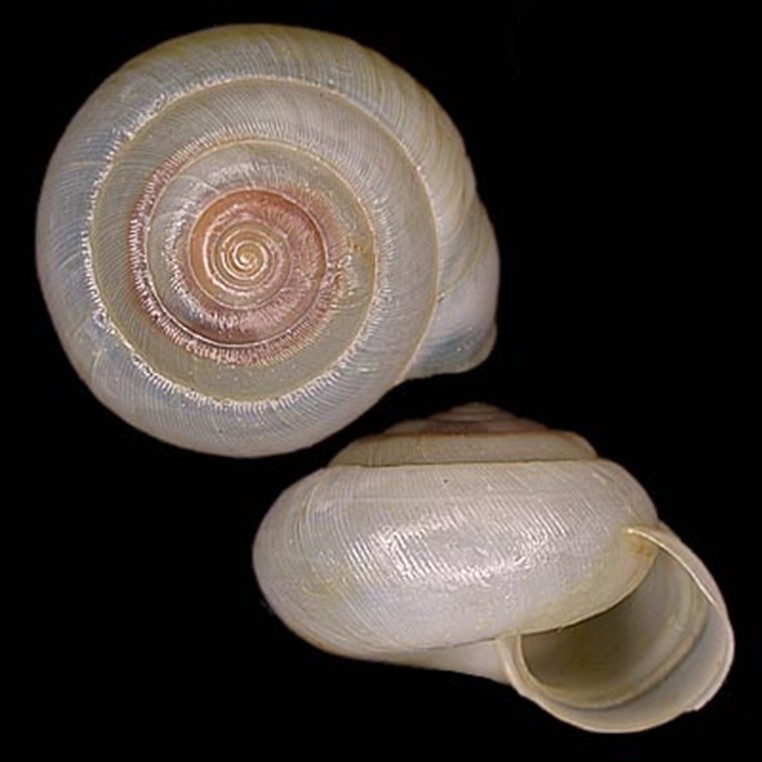
CLASSE: GASTROPODA: TERRESTRE FAMÍLIA: STREPTAXIDAE ESPÉCIE: Streptaxis tumulus Pilsbry, 1897 Tamanho médio: 30 mm Habitat: vive no solo, sob folhas ou enterrada parte do tempo Ocorrência: Brasil Localidade tipo: "Brasil" Nome original: Streptaxis tumulus Pilsbry, 1897 Fotos: (1) cortesia Femorale; 21 mm; (2) The Academy of Natural Sciences, Philadelphia: LECTOTYPE de Streptaxis tumulus; ANSP 23766 ; 30mm doador: Phillips, J. S., 25 mm Fontes: Descrição original: Pilsbry, H. A. (1897). New Brazilian Streptaxidae. Proceedings of the Academy of Natural Sciences of Philadelphia. 49: 477-479., disponível online em https://www.biodiversitylibrary.org/page/26284624 página(s): 478 Simone, L. R. L. (2006). Land and Freshwater Molluscs of Brazil. Editora Gráfica Bernardi, FAPESP. São Paulo, 390 pp. página(s): 194 Brown, K. (2023). A guide to the hunter shells....
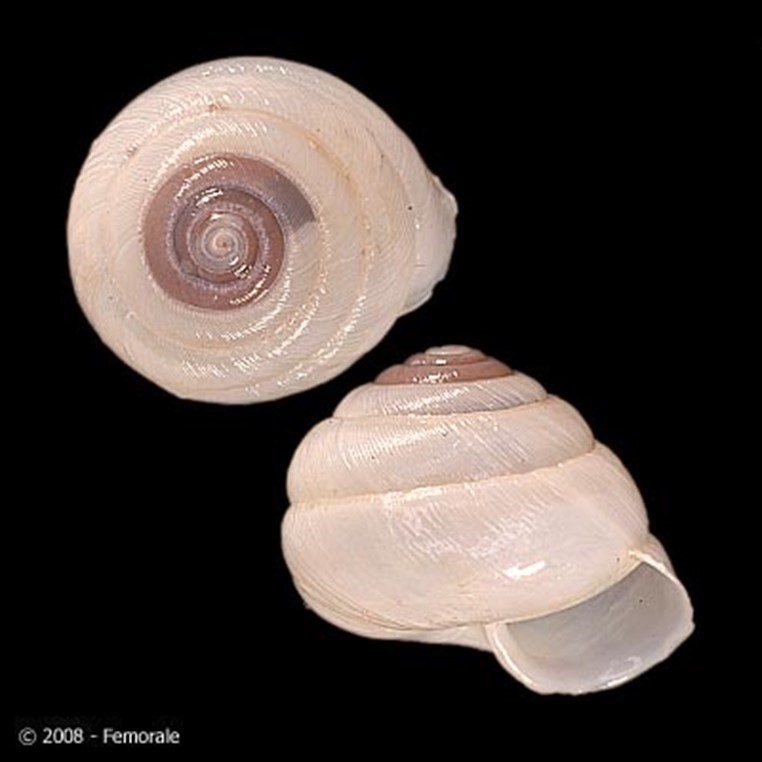
CLASSE: GASTROPODA: TERRESTRE FAMÍLIA: STREPTAXIDAE ESPÉCIE: Streptaxis uberiformis L. Pfeiffer, 1848 Tamanho médio: 15 mm Habitat: vive no solo, sob folhas ou enterrada parte do tempo Ocorrência: Brasil (Rio de Janeiro) Localidade tipo: Corcovado, na cidade do Rio de Janeiro Nome original: Streptaxis uberiformis L. Pfeiffer, 1848 Comentários: o HOLOTYPE está depositado no Natural History Museum, London Fotos: (1) cortesia Femorale; Rio de Janeiro, 18 mm Figura: Breure & Araujo, 2017: (A-C) Streptaxis contusus (Férussac, 1821), MNCN 15.05/20178; (D-F) Streptaxis crossei (Pfeiffer,1867), MNCN 15.05/20177; (G-I) Streptaxis dunkeri (Pfeiffer in Philippi, 1845), MNCN 15.05/20117; (J-L) Streptaxis uberiformis (Pfeiffer, 1848), MNCN 15.05/20125. Linha da escala = 5 mm Fontes: Descrição original: Pfeiffer, L. (1848). Nachträge zu L. Pfeiffer Monographia Heliceorum viventium. Zeitschrift für Malakozoologie. 5: 89–94., disponível online em...
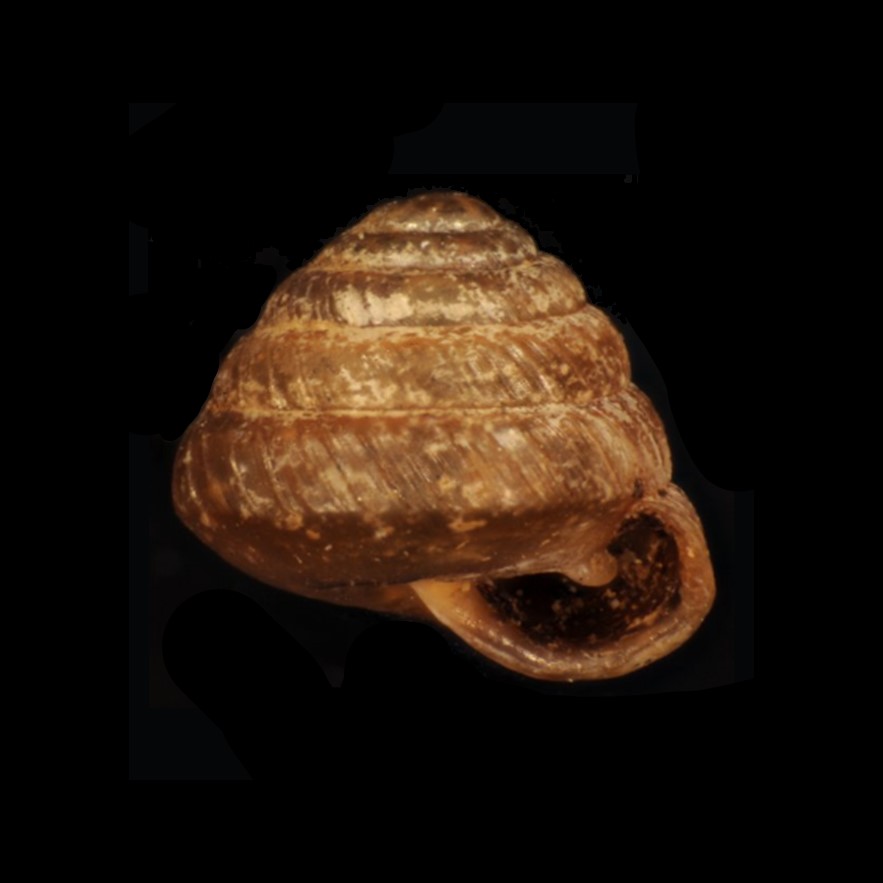
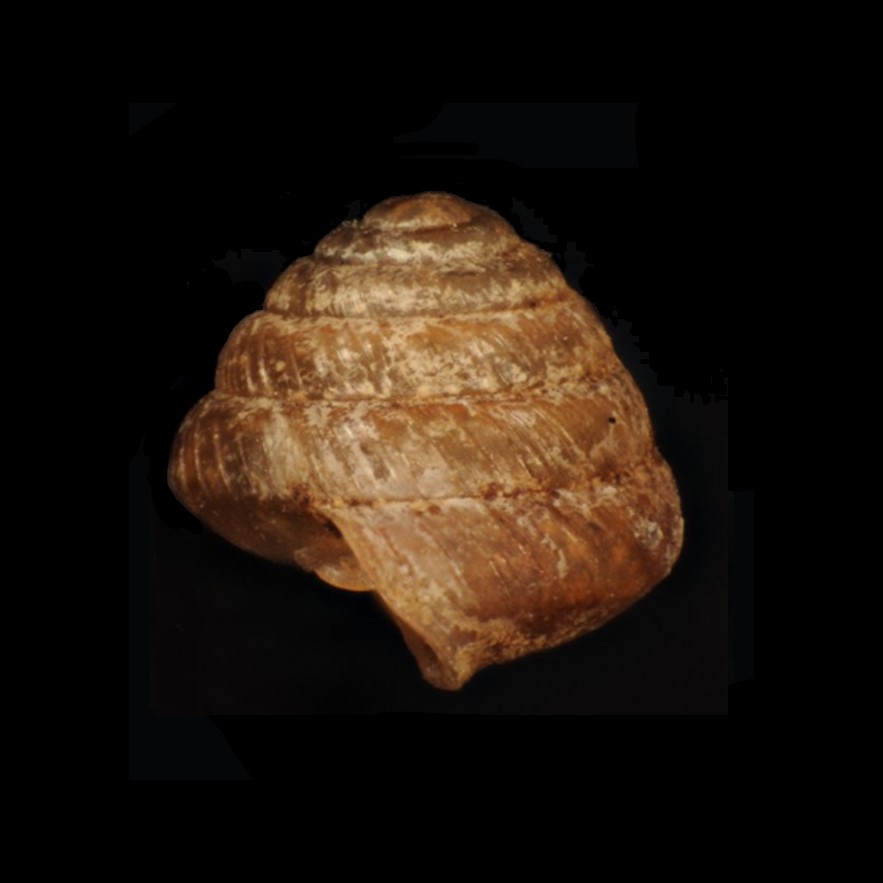
CLASSE: GASTROPODA: TERRESTRE FAMÍLIA: STROBILOPSIDAE ESPÉCIE: Strobilops brasilianus F. Baker, 1914 Tamanho médio: ~2 mm Ocorrência: Brasil (Pará) Localidade tipo: Brasil, Pará Nome original: Strobilops brasilianus F. Baker, 1914 Sinônimos: Strobilops brasiliana Baker Fotos: (1-3) The Academy of Natural Sciences of Philadelphia: LECTOTYPE de Strobilops brasilianus, ANSP 109310, Brasil, Pará, coletor: Baker, F., 1911 Fontes: Descrição original: Baker, F. (1914). The land and fresh-water mollusks of the Stanford Expedition to Brazil. Proceedings of the Academy of Natural Sciences of Philadelphia. 65(3): 618-672 ["1913"]., disponível online em https://www.biodiversitylibrary.org/page/26307597 página(s): 647, pl. 21, figs 8-9 Pilsbry, H. A. (1927-1935). Manual of conchology, structural and systematic, with illustrations of the species. Ser. 2, Pulmonata. Vol. 28: Geographic distribution of Pupillidae;...
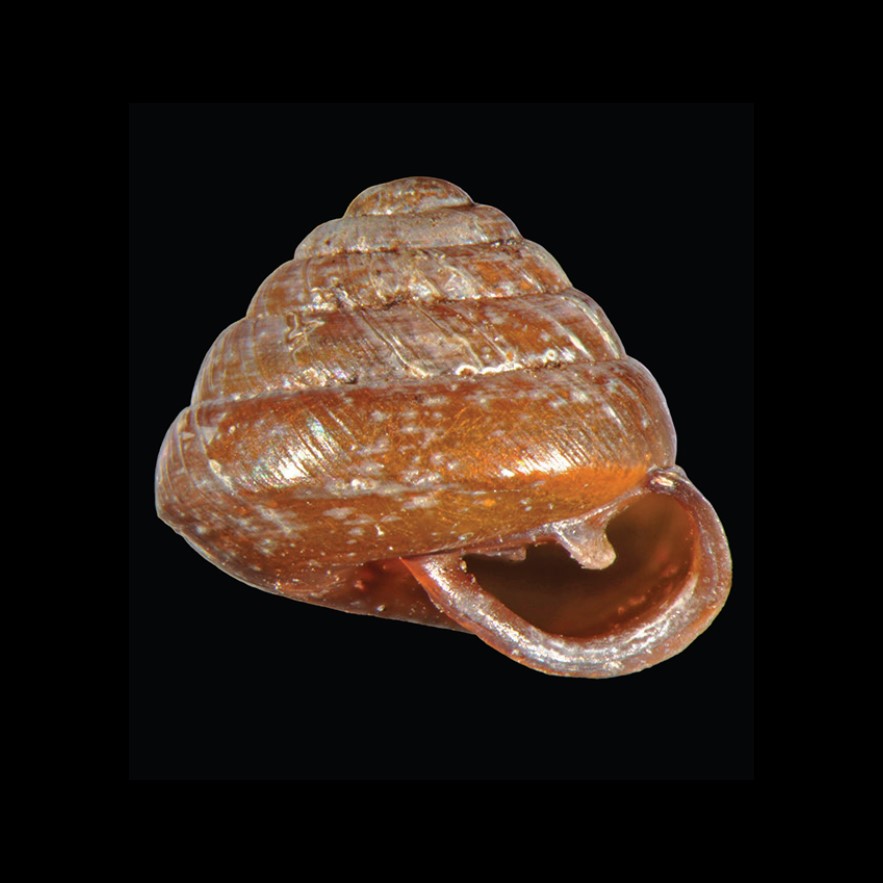
CLASSE: GASTROPODA: TERRESTRE FAMÍLIA: STROBILOPSIDAE ESPÉCIE: Strobilops morsei (Dall, 1885) Tamanho médio: ~3 mm Ocorrência: Venezuela, Suriname, Guiana Francesa (Massif du Mitaraka), Brasil? Localidade tipo: Venezuela Nome original: Strobila labyrinthica var. morsei Dall, 1885 Sinônimos: Strobilops labyrinthica morsei (Dall, 1885) Comentário: o Maciço do Mitaraka onde foi encontrada essa espécie (Gargominy et al. 2025) fica na fronteira entre Brasil (Amapá) e a Guiana Francesa Fotos: Gargominy et al. 2025: (1,2) Strobilops morsei proveniente de Mitaraka, Museu Nacional de História Natural, Paris: MNHN-IM-2012-21265, "Maripasoula, Massif du Mitaraka, Sommet en Cloche", "Forêt sommitale", 586 m de altitude, 24.iii. 2015, OG leg.; barra da escala: 2 mm; (3) animal vivo, Strobilops morsei from Mitaraka, MNHN-IM-2012-21266 ...

CLASSE: GASTROPODA: TERRESTRE FAMÍLIA: STROPHOCHEILIDAE ESPÉCIE: Strophocheilus calus Pilsbry, 1901 Tamanho médio: 62 mm Ocorrência: Bolívia (?), Brasil (Rio de Janeiro, Bahia, Paraná) Localidade tipo: Brasil, Rio de Janeiro, Petrópolis Descrição original: (Pilsbry, 1901): "Shell deeply rimate, oblong, solid and strong; rose colored, fading to white in some places, under a thin yellow cuticle (which is in large part wanting in the type). Surface densely sculptured with waved stria?, which on the last whorl anastomose to form a netted pattern ; conspicuously malleated. Whorls 5 1/3, the first obtuse above, the earlier 3 composing the conic, closely obliquely striate nepionic shell. Sutures moderately impressed, beyond the nepionic shell becoming progressively more oblique to the last half turn, which is about parallel...
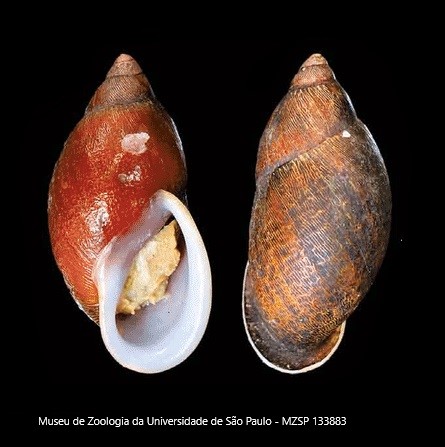
CLASSE: GASTROPODA: TERRESTRE FAMÍLIA: STROPHOCHEILIDAE ESPÉCIE: Strophocheilus debilis Bequaert, 1948 Tamanho médio: 50 mm Habitat: vive no solo, sob folhas ou enterrada parte do tempo. Tipicamente ocorre na Floresta Atlântica e, na Bahia, pode ocorrer no bioma Caatinga Alimentação: Herbívoro Ocorrência: Brasil (Alagoas, Bahia) Localidade tipo: Rio Itapicuru, Bahia Nome original: Strophocheilus pudicus debilis Bequaert, 1948 Fotos: Salvador, Charles, Simone & Maestrati (2018): (1) Museu de Zoologia de São Paulo MZSP 133883, 51.1 mm; (2) animais vivos: Salvador, Charles, Simone & Maestrati (2018): Pedra Talhada, Alagoas; (3) Claude and Amandine EVANNO, 2018 Fontes: Descrição original: Bequaert, J.C., 1948. Monograph of the Strophocheilidae, a neotropical family of terrestrial mollusks: 34, pl 16 fig 1 e...

CLASSE: GASTROPODA: TERRESTRE FAMÍLIA: STROPHOCHEILIDAE ESPÉCIE: Strophocheilus miersi Da Costa, 1904 Tamanho médio: 70 - 76 mm Ocorrência: Brasil [Minas Gerais (Da Costa 1904); Espírito Santo (Lange-de-Morretes 1949, 1952), Vale do Rio Doce (Haas 1929), Linhares, Fundão e Santa Tereza] Localidade tipo: Brasil (Minas Gerais) Nome original: Strophocheilus miersi Da Costa, 1904 Comentários: Bequaert (1948) sugere que o tipo da espécie está no British Museum, com 72 mm e "foi coletado provavelmente em Minas Gerais, na fronteira com Espírito Santo". HOLOTYPE depositado no lote NHMUK 1907.11.21.113 Etimologia: o nome da espécie é uma homenagem a Jonhn Miers, (1789-1879). O Holótipo foi adquirido por Da Costa na venda da coleção Miers Fotos: (1) Da Costa, S.I. 1904, Plate I, figura 2 ...
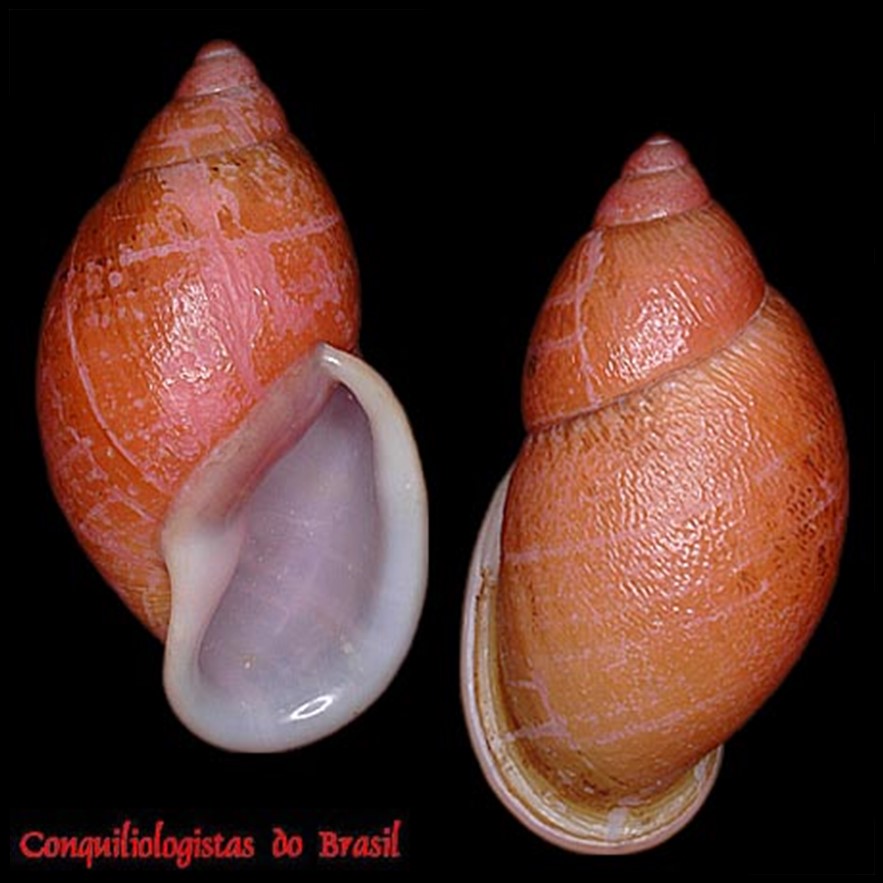
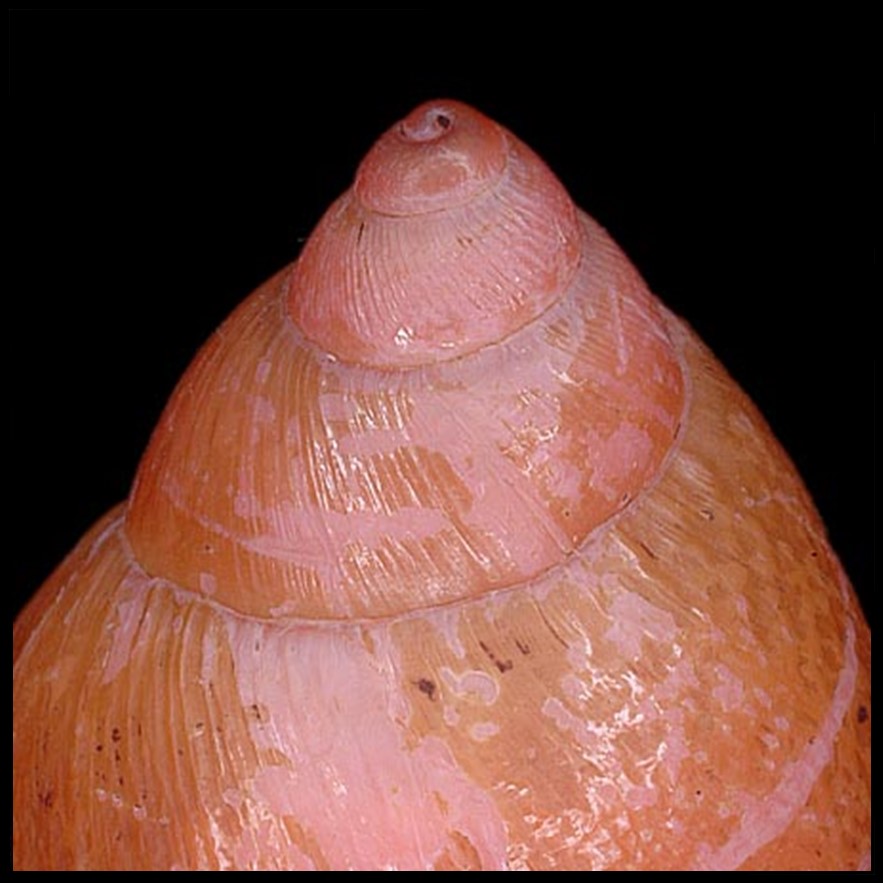
CLASSE: GASTROPODA: TERRESTRE FAMÍLIA: STROPHOCHEILIDAE ESPÉCIE: Strophocheilus pudicus (O.F. Müller, 1773) Tamanho médio: 51 - 63 mm Habitat: vive no solo, sob folhas ou enterrada parte do tempo Alimentação: provavelmente Herbívoro Ocorrência: Brasil (Bahia, Paraíba) Localidade tipo: sem localidade específica Nome original: Helix pudica O. F. Müller, 1774 Sinônimos: Bulimus almeida (Spix, 1827); Bulimus virgineus Bruguière, 1789; Bulinus perplexus G. B. Sowerby I, 1838; Helix erubescens Solander, 1786; Partula australis Bowdich, 1822; Strophocheilus almeida Spix, 1827; Voluta aurisvirginis Dllwyn, 1817 Fotos: (1,2) Strophocheilus pudicus, Ilhéus, Bahia, 51mm, coll. Carlos Henckes; (3) RMNH 11891, Naturalis Biodiversity Center (3) Animal vivo: Strophocheilus sp., registro de @peterkr, iNaturalist, março de 2022 em Itacaré, Bahia Figura:...
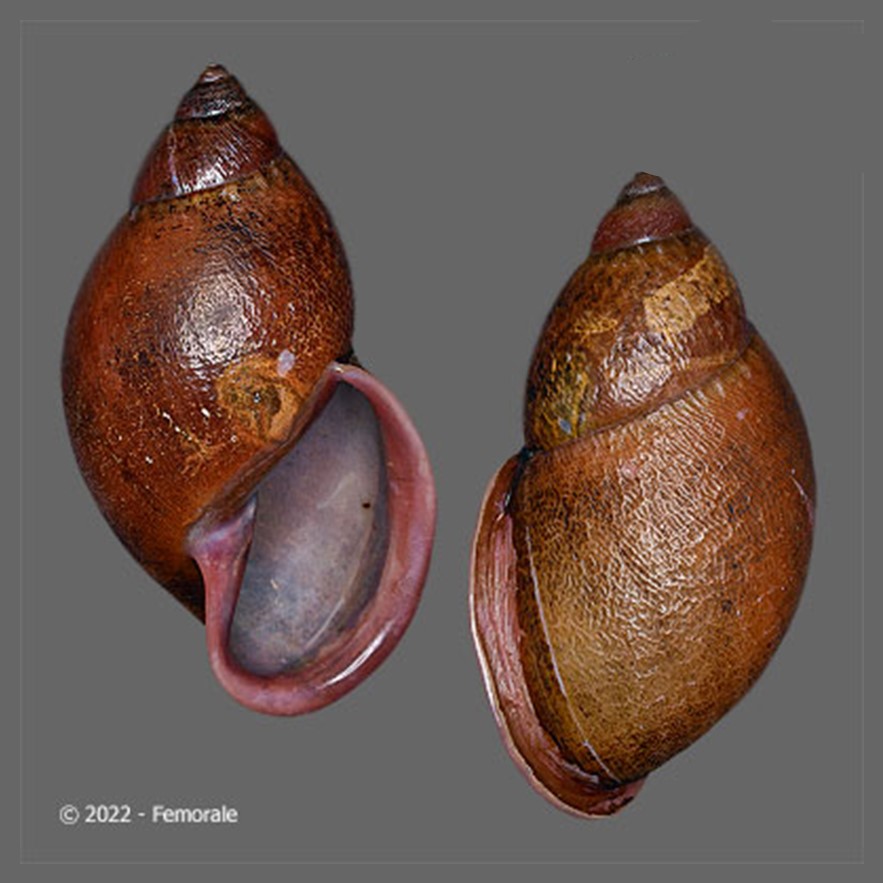
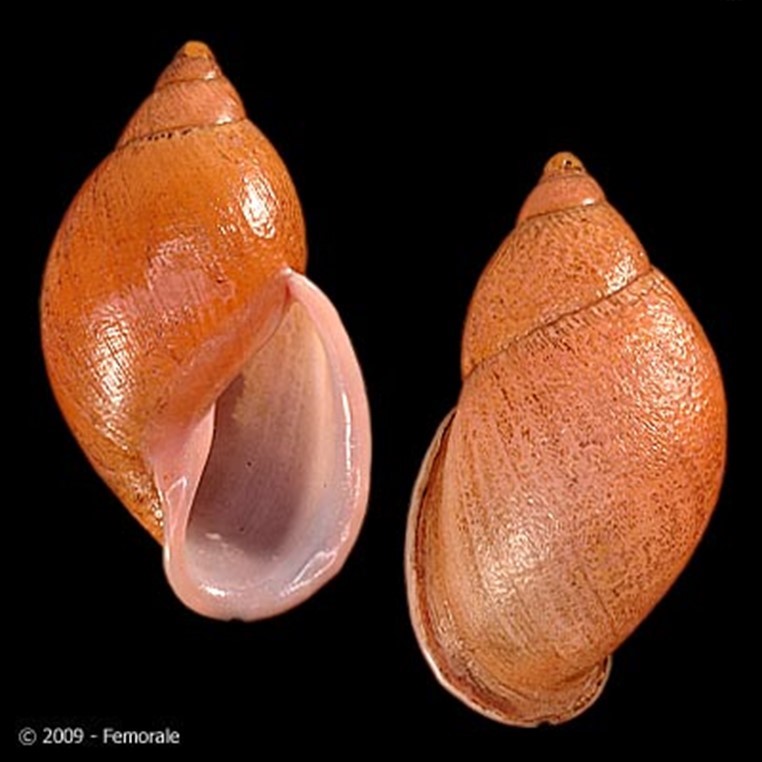
CLASSE: GASTROPODA: TERRESTRE FAMÍLIA: STROPHOCHEILIDAE ESPÉCIE: Strophocheilus roseolabris Bequaert, 1948 Tamanho médio: 46 - 56 mm Habitat: vive no solo, sob folhas ou enterrada parte do tempo Alimentação: provavelmente Herbívoro Ocorrência: Brasil (Bahia) Localidade tipo: Brasil, Bahia (HOLOTYPE MCZ 177681) Nome original: Strophocheilus pudicus roseolabris Bequaert, 1948 Comentários: Bequaert, 1948 descreveu Strophocheilus roseolabris como uma subespécie de Strophocheilus pudicus. Lange de Morretes, 1952 relaciona como uma espécie da família Strophochelidae. Simone, 2006 traz como sinônimo de Strophocheilus pudicus (pág 201, figura 756 B). Mantido aqui para comparação Fotos: cortesia Femorale, 2022, Bahia, 55mm Fontes: Descrição original: Bequaert, J. C. (1948). Monograph of the Strophocheilidae, a Neotropical family of terrestrial mollusks. Bulletin of the Museum of Comparative Zoology. 100: 1–210., disponível online em https://www.biodiversitylibrary.org/page/28865640...
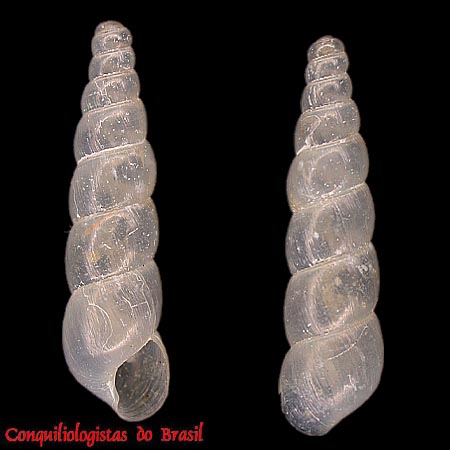
CLASSE: GASTROPODA: TERRESTRE FAMÍLIA: ACHATINIDAE ESPÉCIE: Subulina octona (Bruguière, 1789) Tamanho médio: 12 - 15 mm Ocorrência: ESPÉCIE INVASORA, registrada em diversos Estados do Brasil (Amazonas, Acre, Amapá, Pará, Ceará, Paraíba, Pernambuco, Alagoas, Sergipe, Bahia, Mato Grosso, Goiás, Distrito Federal, Minas Gerais, São Paulo, Rio de Janeiro, Paraná, Santa Catarina) Sinônimos: Bulimus octonus Bruguière, 1789; Bulimus octona Bruguière, 1789 Fotos: (1) Guarapari, Espírito Santo, 14mm, coll. Eduardo Schirrmeister Fontes: Descrição original: (como Bulimus octona Bruguière, 1789) Bruguière, J. G. (1789-1792). Encyclopédie méthodique ou par ordre de matières. Histoire naturelle des vers, volume 1. Paris: Pancoucke. Pp. i-xviii, 1-344 [Livraison 32, June 1789]; 345-757 [Livraison 48, 13 Feb. 1792] [Dates after Evenhuis, 2003, Zootaxa, 166: 37; Zootaxa, 207, some modified by...

CLASSE: GASTROPODA: TERRESTRE FAMÍLIA: ACHATINIDAE ESPÉCIE: Subulina parana Pilsbry, 1906 Tamanho médio: 9 mm Habitat: vive no solo, embaixo de folhas ou enterrada parte do tempo Ocorrência: Brasil (Pará) Localidade tipo: 32 km ao Sul de Belém, Pará (Simone & Martins, 2020) Nome original: Subulina parana Pilsbry, 1906 Fotos: (1) The Academy of Natural Sciences, Philadelphia: LECTOTYPE de Subulina parana, ANSP 91127, doador: J. Ritchie, 12.ii.1906, " twenty miles below Para" Fontes: Descrição original: Pilsbry, H. A. (1906-1907). Manual of conchology, structural and systematic, with illustrations of the species. Ser. 2, Pulmonata. Vol. 18: Achatinidae: Stenogyrinae and Coeliaxinae. pp i-xiii, 1-357, pls 1-51. Philadelphia, published by the Conchological Department, Academy of Natural Sciences. [pp. 1-64, pls. 1-10, Jan. 20, 1906;...
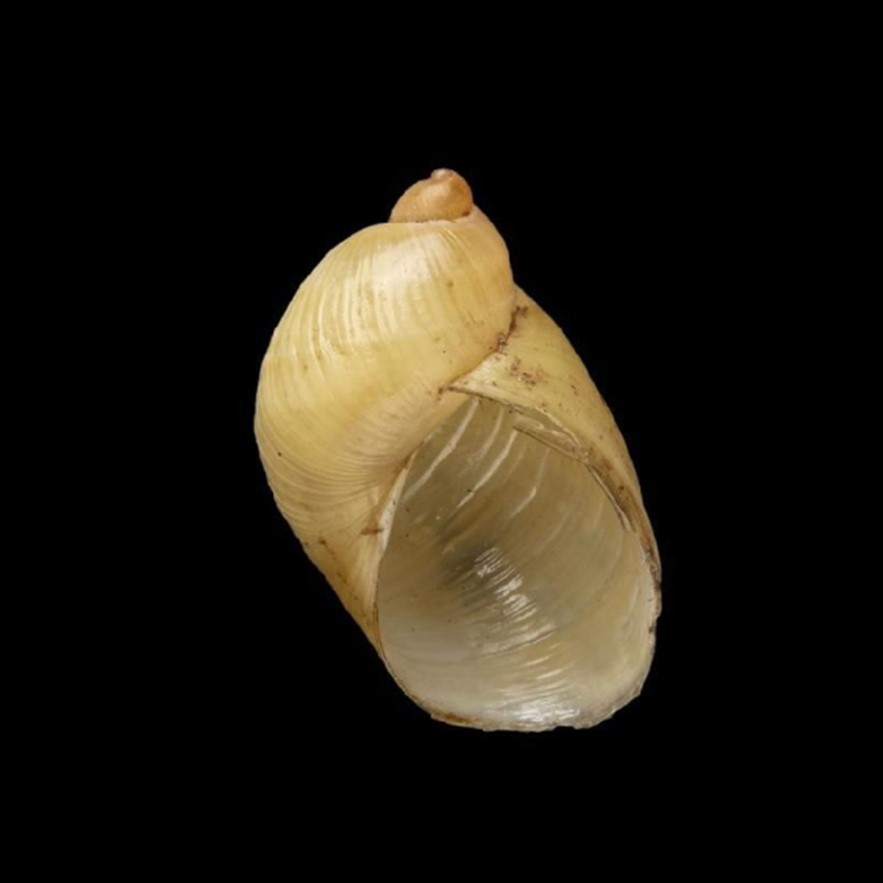
CLASSE: GASTROPODA: TERRESTRE FAMÍLIA: SUCCINEIDAE ESPÉCIE: Succinea andecola Crawford, 1939 Tamanho médio: 11 mm Ocorrência: Peru (Cuzco) Localidade tipo: Peru, Capachica Nome original: Succinea andecola Crawford, 1939 Fotos: (1,2) Natural History Museum, London: HOLOTYPE NHMUK 1939.4.17.265, "Capachica, Capachica near Puno", 16.iv.1937, 11 mm Fontes: Descrição original: Crawford, G. I. (1939). Report on the terrestrial Mollusca collected by the Percy Sladen Expedition to Lake Titicaca, 1937. Proceedings of the Malacological Society of London. 23(6): 318–332., disponível online em https://doi.org/10.1093/oxfordjournals.mollus.a064373 página(s): 320, pl. 19, figs 15-16 Ramírez, R.; Paredes, C.; Arenas, J. (2003). Moluscos del Perú. Revista de Biologia Tropical. 51(supplement 3): 225-284 Quick, H. E. (1939). On Succinea andecola Crawford. Proceedings of the Malacological Society of London. 23 (6):...
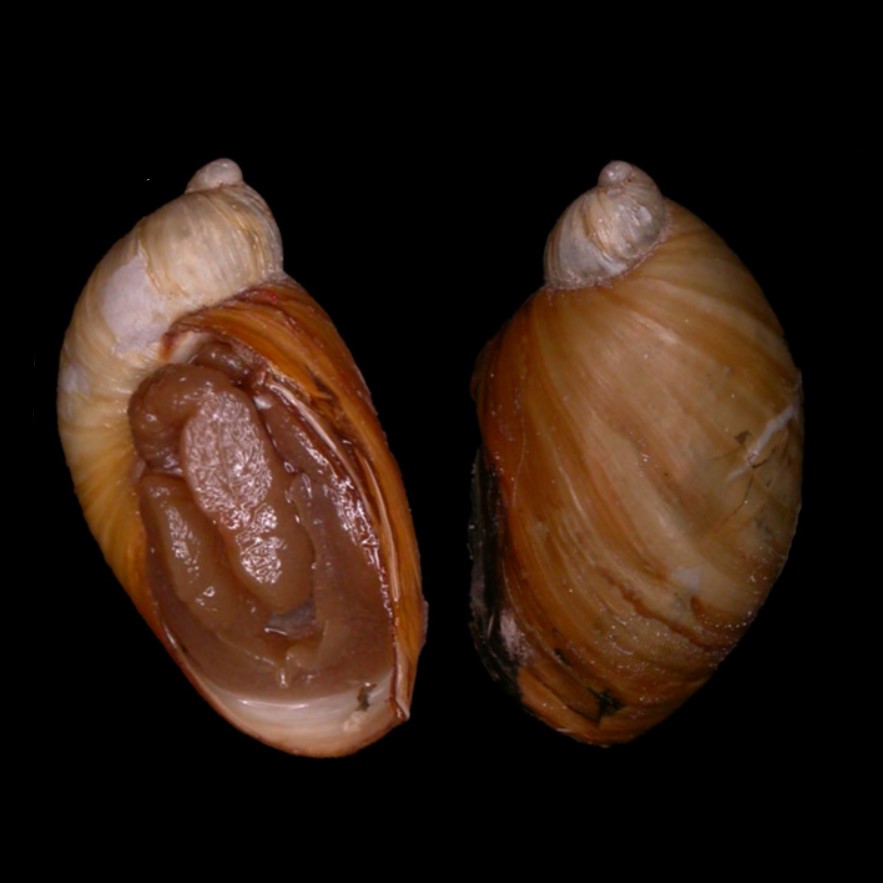
CLASSE: GASTROPODA: TERRESTRE FAMÍLIA: SUCCINEIDAE ESPÉCIE: Succinea lopesi Lanzieri, 1966 Tamanho médio: 9 - 13 mm Ocorrência: Brasil (Ilha de Trindade) Localidade tipo: Brasil, Ilha de Trindade, Pico do Desejado Nome original: Succinea lopesi Lanzieri, 1966 Etimologia: o nome da espécie em homenagem a Hugo de Souza Lopes, entomólogo, pesquisador e professor universitário brasileiro (1909-1991) Comentários: (i) espécime endêmica, ameaçada de extinção; (ii) o material tipo está depositado no Museu Nacional do Rio de Janeiro, HOLOTYPE MNRJ 3176, Pico do Desejado, Ilha da Trindade, coll. J. Becker, i.1959 Fotos: (1) Pimenta et al. 2014: Museu Nacional do Rio de Janeiro, PARATYPE MNRJ 3176, 11.2mm Figura: Salvador et al. 2014: (2) animal vivo de Succinea lopesi em ambiente artificial; (3-4)...

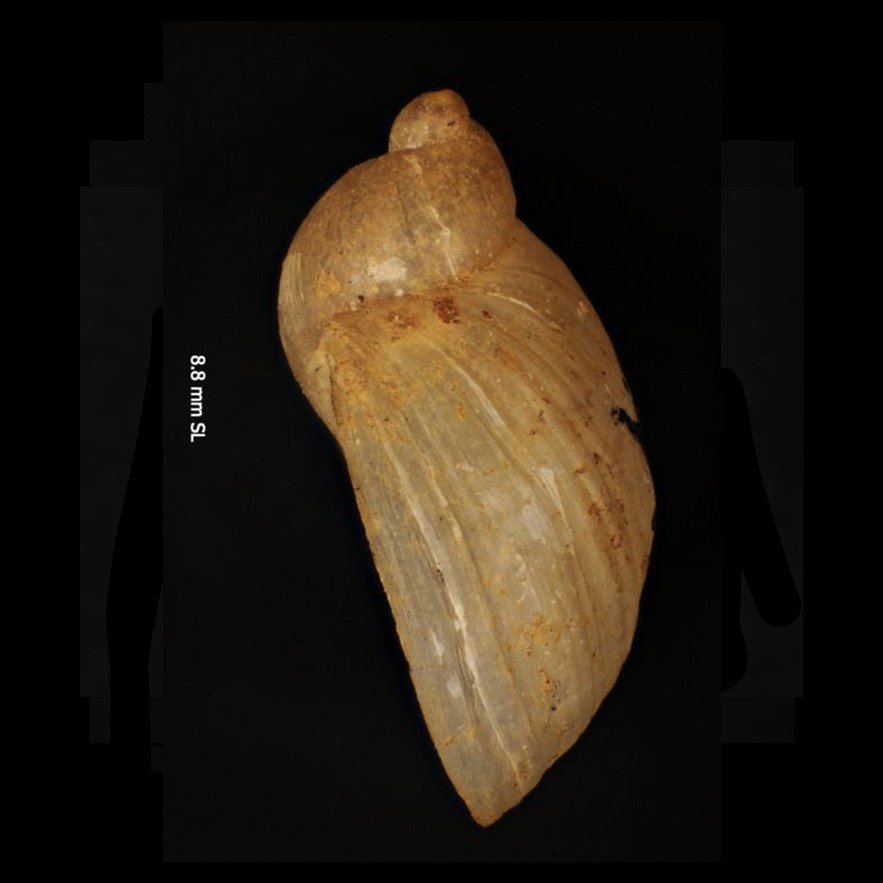
CLASSE: GASTROPODA: TERRESTRE FAMÍLIA: SUCCINEIDAE ESPÉCIE: Succinea manaosensis Pilsbry, 1926 Tamanho médio: 9 mm Ocorrência: Brasil (Amazonas) Localidade tipo: Brasil, Amazonas, Manaus Nome original: Succinea manaosensis Pilsbry, 1926 Etimologia: o nome da espécie é uma referência à localidade tipo, o município de Manaus (Manaos) Fotos: The Academy of Natural Sciences, Philadelphia: HOLOTYPE ANSP 135042, Manaus, Amazonas, coll. Bequaert, 02.viii.1924 Fontes: Descrição original: Pilsbry, H. A. (1926). Brazilian mollusks collected by Dr. Jos. Bequaert. The Nautilus. 39(3): 78-80., disponível online em https://www.biodiversitylibrary.org/page/8524711 página(s): 79, Pl. IV, Fig. 3 Simone, L. R. L. (2006). Land and Freshwater Molluscs of Brazil. Editora Grafíca Bernardi, FAPESP. São Paulo, 390 pp. página(s): 236 Molluscabase: https://www.molluscabase.org/aphia.php?p=taxdetails&id=1449114
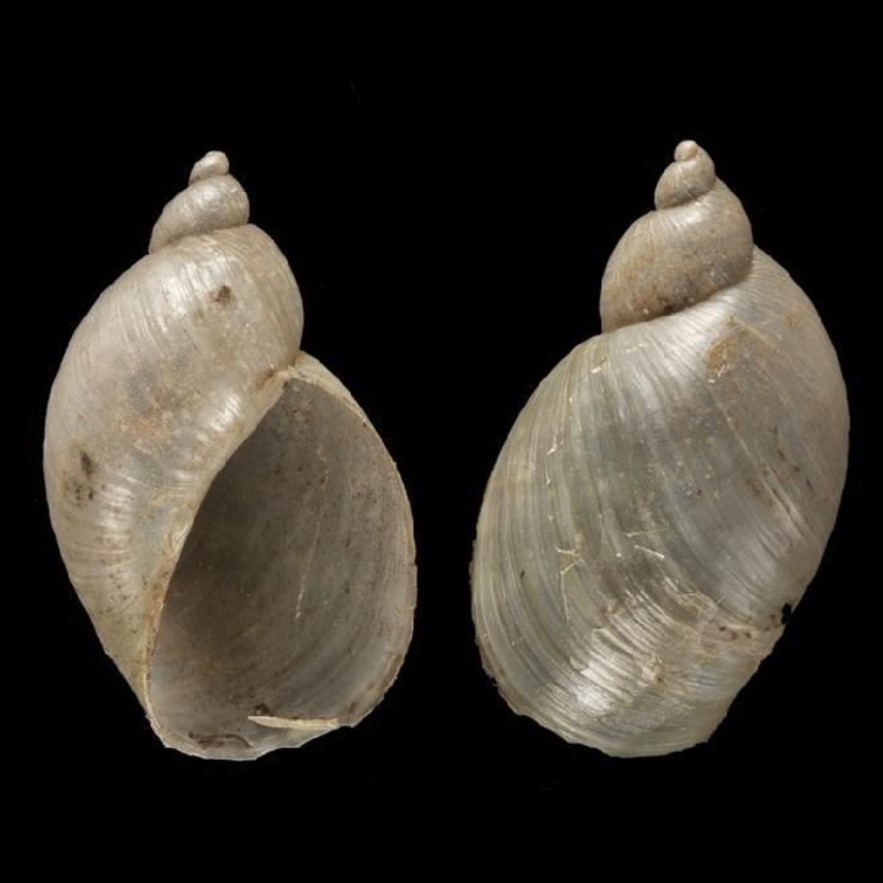
CLASSE: GASTROPODA: TERRESTRE FAMÍLIA: SUCCINEIDAE ESPÉCIE: Succinea meridionalis A. d'Orbigny, 1846 Tamanho médio: 18 mm Ocorrência: Peru, Brasil, Bolívia, Paraguai, Uruguai, Argentina Localidade tipo: Rio de La Plata (restringida por Parodiz, 1957) Nome original: Succinea meridionalis A. d'Orbigny, 1846 Subespécies: (i) Succinea meridionalis cornea Döring, 1873 (ii) Succinea meridionalis meridionalis A. d'Orbigny, 1846 Fotos: (1-3) Natural History Museum, London: (1,2) SYNTYPE NHMUK 1854.12.4.49, "Patagonia; Township: La Baia de San Blas"; (3) SYNTYPE NHMUK 1854.12.4.50, Uruguai, Montevidéu; (4) animal vivo: observação iNaturalist 113086268, Brasil, Santa Catarina, município de Dr. Pedrinho, crédito: Douglas Meyer, 27.iv.2022 Fontes: Descrição original: Orbigny, A. D. d'. (1834-1847). Voyage dans l'Amérique méridionale (le Brésil, la république orientale de l'Uruguay, la République argentine, la...
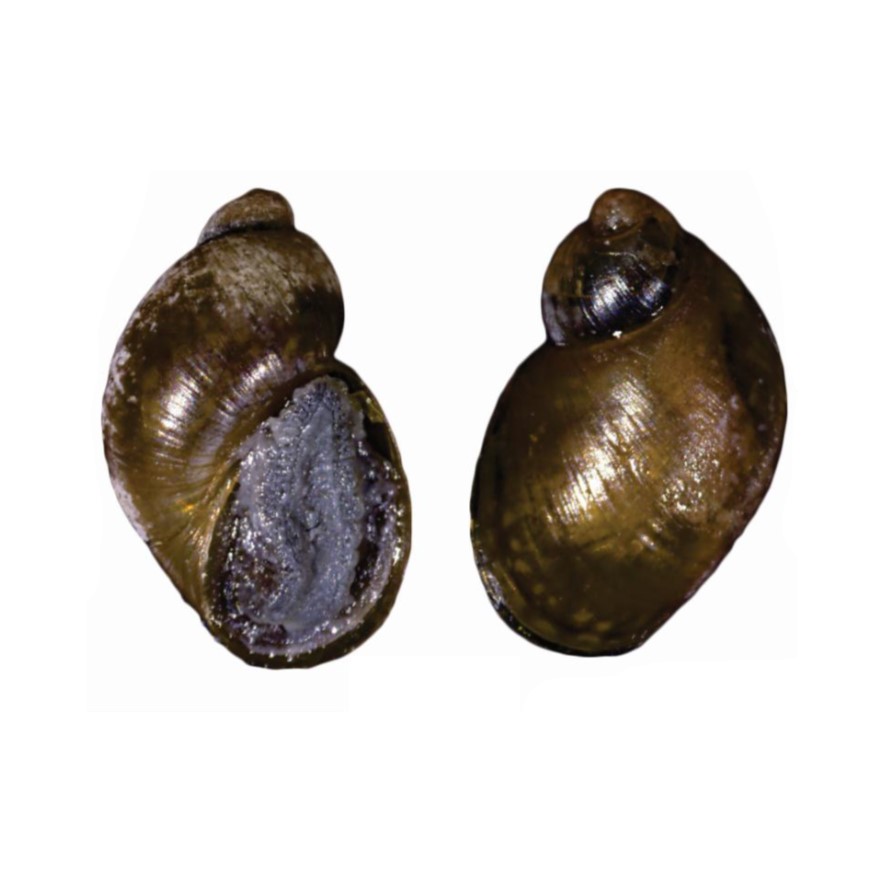
CLASSE: GASTROPODA: TERRESTRE FAMÍLIA: SUCCINEIDAE ESPÉCIE: Succinea puna Tomassi & Cuezzo, 2021 Tamanho médio: 8 mm Ocorrência: Argentina (Catamarca), nas ecorregiões Altos Andes (na localidade de Antofalla, departamento de Antofagasta de la Sierra) e na Puna (nas localidades de El Peñón, departamento Antofagasta de la Sierra e no Rio Guanchín, departamento Tinogasta) Altitude: 3100 - 3600 m Localidade tipo: Argentina, Catamarca, Rio Guanchin, Tinogasta Nome original: Succinea puna Tomassi & Cuezzo, 2021 Descrição: (): "Concha delgada, oval alargada, de espira corta, con suturas profundas, de 2 1/2 a 3 vueltas, tamaño pequeño en comparación con otras especies del género, la vuelta corporal ocupa 3/4 de la longitud total; abertura oval 1/2 el tamaño total. Color castaño oscuro a negro. Coloración del cuerpo del...
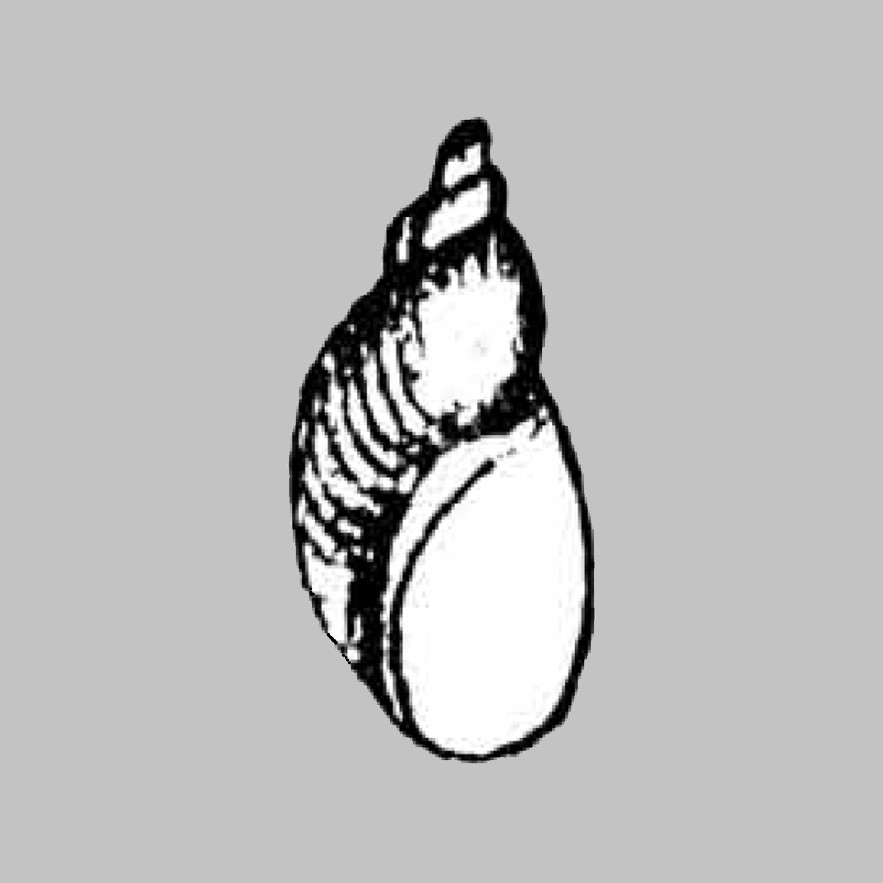
CLASSE: GASTROPODA: TERRESTRE FAMÍLIA: SUCCINEIDAE ESPÉCIE: Succinea rosariensis Doering, 1873 Tamanho médio: 11 mm Ocorrência: Argentina (Buenos Aires, Córdoba, Mendoza, Santa Fe) Localidade tipo: Argentina Nome original: Succinea rosariensis Doering, 1873 Comentários: material tipo não identificado pelo autor (Miquel, 2011) Fotos: (1) Miquel & Aguirre, 2011: figura original editada a partir de Doering, 1873 Fontes: Descrição original: Döring, A. [Doering, A.]. (1873). Bemerkungen über die Mollusken-Fauna der Argentinischen Republik und über einige neue argentinische Succineen. Malakozoologische Blätter. 21: 49-67, pls 2-3., disponível online em https://www.biodiversitylibrary.org/page/15918682 página(s): 63, figs 20-23 Doering, A. (1875). Apuntes sobre la fauna de moluscos de la República Argentina (Segunda parte). Boletín de la Academia Nacional de Ciencias Exactas en Córdoba, Buenos Aires. 1(4) ["1874"]: 424-460., disponível...

CLASSE: GASTROPODA: TERRESTRE FAMÍLIA: ORTHALICIDAE ESPÉCIE: Sultana adamsonii (Gray, 1833) Tamanho médio: 71 - 75 mm Ocorrência: Colômbia (Caldas, Cundimarca, Tolima) Localidade tipo: "the base of the Parremo, near the Volcano of Tolyma, on the east slope of the Andes" Nome original: Bulinus adamsonii Gray, 1833 Etimologia: a espécie foi descrita a partir da coleção do "Mr. Adamson in Newcastle". Material tipo não encontrado no Museu de História Natural de Londres (Breure & Ablett, 2015) Sinônimos: Sultana adamsoni (Gray, 1833); Sultana (Metorthalicus) adamsonii (Gray, 1833); Porphyrobaphe (Corona) adamsoni Descrição original: (Gray, 1833): "Bul. testá ovato-conicá, subtenui, purpurascenti-albidá purpureo nebulosá, maculis oblongis purptreis albisque bifasciatá; anfractibus convexiusculis ; aperturá ovata, anticé subeffusá; labro subincrassato, purpureo; labio purpurascenti-nigro; columellá antice rectá; gulá albá; periostraco...
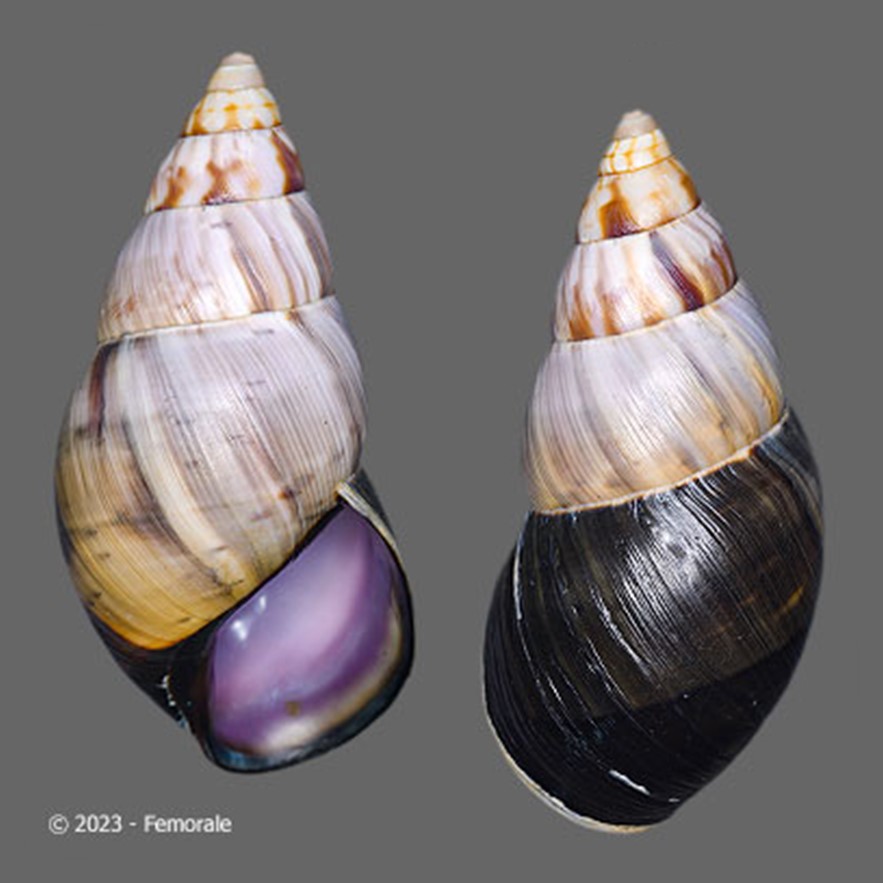
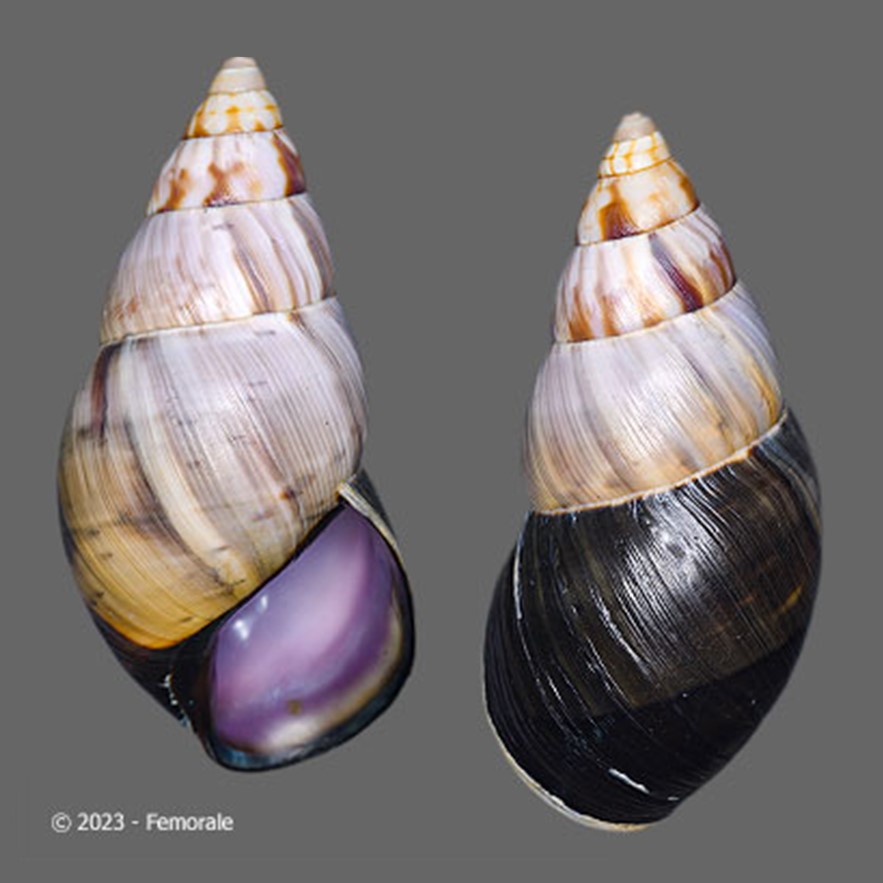
CLASSE: GASTROPODA: TERRESTRE FAMÍLIA: ORTHALICIDAE ESPÉCIE: Sultana atramentaria (L. Pfeiffer, 1855) Tamanho médio: 81 mm Ocorrência: Colômbia (Boyacá, Cundimarca, Norte de Santander, Putumayo, Santander); Equador [Província de Pastaza, Canelos (Martens 1885: 156); Peru, Departamento San Martin, Yuracyacu] Localidade tipo: “New Grenada” Nome original: Achatina atramentaria L. Pfeiffer, 1855 Sinônimos: Bulimus boussingaultii Hupé, 1857; Orthalicus iodes Shuttleworth, 1856; Sultana (Metorthalicus) atramentaria (L. Pfeiffer, 1855) Fotos: (1) cortesia Femorale, 2023, Sultana atramentaria (L. Pfeiffer, 1855), Colômbia, 68.9mm; (2,3) Museu Nacional de História Natural, Paris: SYNTYPE de Bulimus boussingaultii Hupé, 1857, MNHN-IM-2000-28025, 72.9mm, Colômbia, coleção M. Ghiesbreght 1842 Fontes: Descrição original: (como Achatina atramentaria L. Pfeiffer, 1855) Pfeiffer, L. (1855). Descriptions of thirty-eight new species of land shells, from the collection of...


CLASSE: GASTROPODA: TERRESTRE FAMÍLIA: ORTHALICIDAE ESPÉCIE: Sultana augusti (Jousseaume, 1887) Tamanho médio: 68 mm Ocorrência: Equador (Azuay, Pastaza, Tungurahua) Localidade tipo: "Le seul exemplaire que je connaisse de cette espèce a été rapporté de l'Equateur par notre collègue, M. Auguste Cousin" Nome original: Porphyrobaphe augusti Jousseaume, 1887 Sinônimos: Sultana (Metorthalicus) augusti (Jousseaume, 1887) Fotos: Museu Nacional de História Natural, Paris; HOLOTYPE de Porphyrobaphe augusti Jousseaume, 1887; MNHN-IM-2000-28014, 68.2mm, Coll. Jousseaume Fontes: Descrição original: (como Porphyrobaphe augusti Jousseaume, 1887) Jousseaume F. (1887). Mollusques nouveaux de la République de l'Equateur. Bulletin de la Société zoologique de France. 12: 165-186., disponível online em https://www.biodiversitylibrary.org/page/36024074 página(s): 165-167, pl. 3 fig. 10 Breure, A. S. H. & Mogollón Avila, V. (2016). Synopsis of Central Andean orthalicoid land...

CLASSE: GASTROPODA: TERRESTRE FAMÍLIA: ORTHALICIDAE ESPÉCIE: Sultana deburghiae (Reeve, 1859) Tamanho médio: 65 mm Ocorrência: Equador, Peru (?) Localidade tipo: “Peruvian side of the Amazon” Nome original: Bulimus deburghiae Reeve, 1859 Sinônimos: Bulimus gloriosus L. Pfeiffer, 1862; Orthalicus (Porphyrobaphe) gloriosus (L. Pfeiffer, 1862); Orthalicus (Porphyrobaphe) gloriosus var. elongatus K. Miller, 1878; Sultana (Metorthalicus) deburghiae (Reeve, 1859) Fotos: (1) Breure & Mogollón, 2016: LECTOTYPE de Sultana deburghiae, NHMUK 19601622, "banks of Amazon River", coll. de Burgh, 64.7mm; (2) Animal vivo: iNaturalist, observação 168165294, Line Juul Nielsen, Equador, xi.2021 Figura: Breure & mogollón, 2016: (A–D) Sultana (Metorthalicus) deburghiae (Reeve, 1859); (A–B) LECTOTYPE NHMUK 19601622 (H = 64.7mm); (C–D) LECTOTYPE de Bulimus gloriosus Pfeiffer, 1862 NHMUK 1975243 (H = 75.2mm) ...


CLASSE: GASTROPODA: TERRESTRE FAMÍLIA: ORTHALICIDAE ESPÉCIE: Sultana elizabethae Ahuir & Torres Alba, 2019 Tamanho médio: 65 - 74 mm Ocorrência: Peru (Piura) Localidade tipo: "N.E. Huancabamba, Piura Departement, Peru. ln tree trunks" Altitude: 2700 m Nome original: Sultana (Trachyorthalicus) elizabethae Ahuir & Torres Alba, 2019 Fotos: (1) Museu Nacional de História Natural, Paris: HOLOTYPE MNHN-IM-2000-35011, 69.5mm, coll. J. Ahuir; (2) cortesia Carles Dorado (Espanha), TOPOTYPE, 72.5mm Fontes: Descrição original: (como Sultana (Trachyorthalicus) elizabethae Ahuir & Torres Alba, 2019) Ahuir Galindo, J. & Torres Alba, J. S. (2019). One new terrestrial gastropod species from Peru. Malacologia Mostra Mondiale. 104: 3-4 Molluscabase: https://molluscabase.org/aphia.php?p=taxdetails&id=1358349


CLASSE: GASTROPODA: TERRESTRE FAMÍLIA: ORTHALICIDAE ESPÉCIE: Sultana fraseri (L. Pfeiffer, 1858) Tamanho médio: 89 mm Ocorrência: Equador (Cuenca) Localidade tipo: “in provincia Cuenca reipublicae Aequatoris” Comentários: Em Breue, 1985 traz como localidade tipo: "found on the road from Gualaquiza to Mendez — and near to the latter place", "Province of Cuenca, Republic of Ecuador" (ex Cuming ex Fraser) Nome original: Bulimus fraseri L. Pfeiffer, 1858 Sinônimos: Orthalicus fraseri (L. Pfeiffer, 1858); Orthalicus fraseri brevispira Pilsbry, 1899; Sultana (Metorthalicus) fraseri (L. Pfeiffer, 1858); Trachyorthalicus fraseri Pfeiffer; Orthalicus frazeri (sic) Fotos: (1,2) The Academy of Natural Sciences, Philadelphia: HOLOTYPE de Orthalicus fraseri brevispira, ANSP 78573, doador: Sowerby & Fulton, Equador, 69mm Figura: Breure & Mogollón, 2016: (A–B) Sultana fraseri (Pfeiffer, 1858), LECTOTYPE NHMUK 20140083...
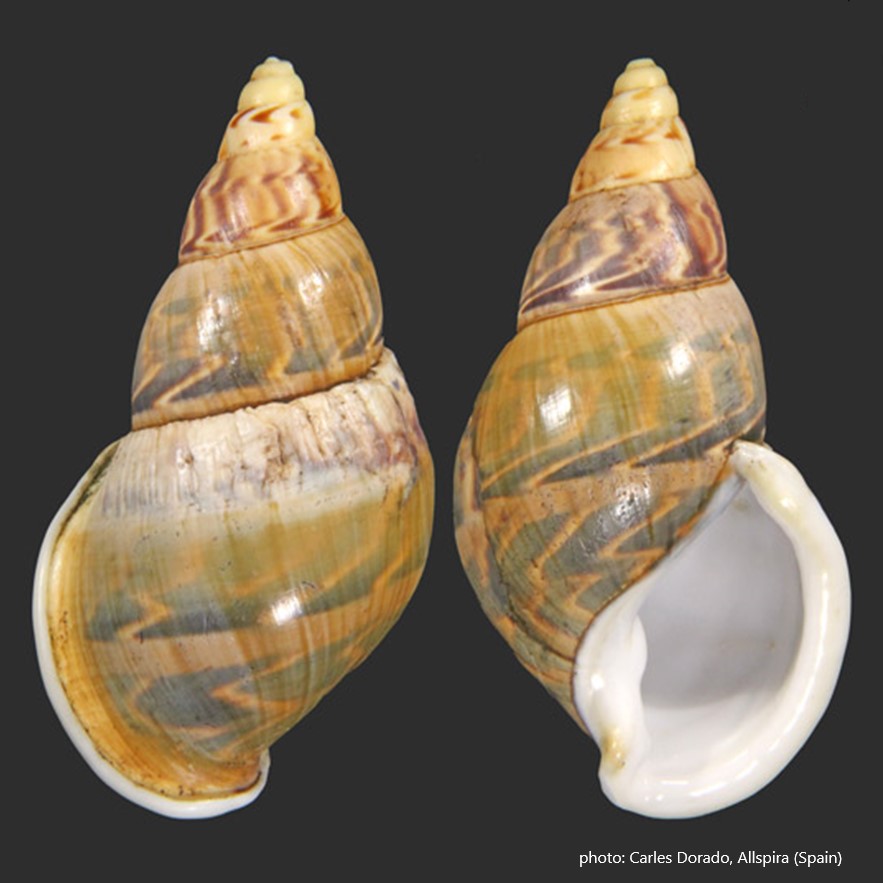
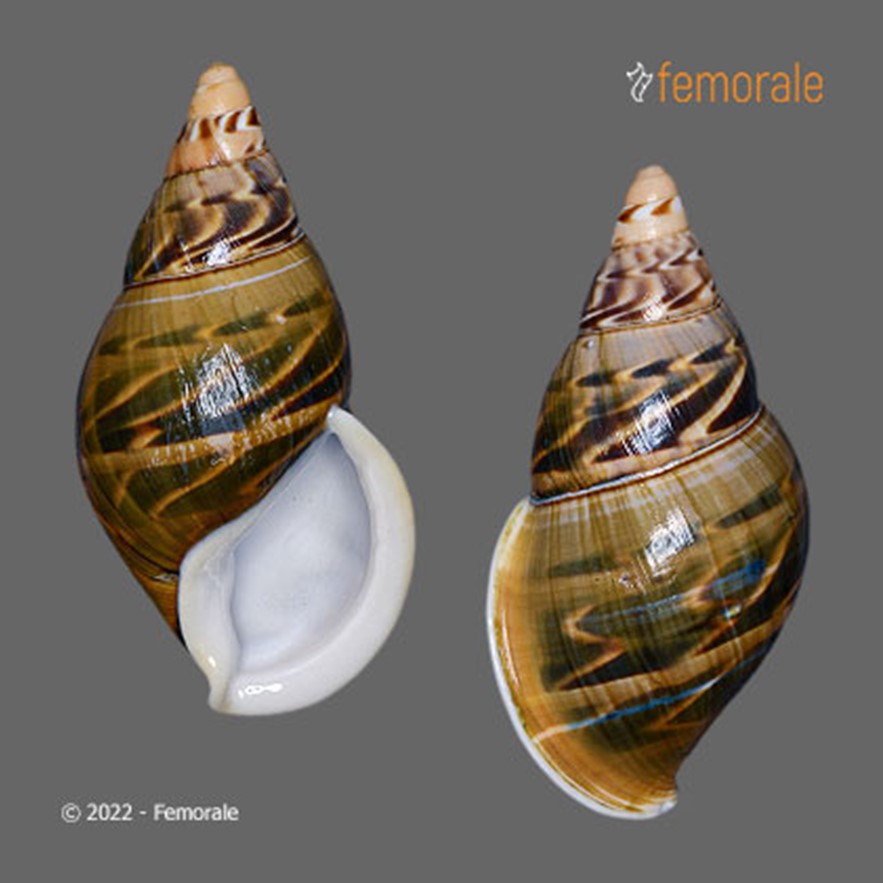
CLASSE: GASTROPODA: TERRESTRE FAMÍLIA: ORTHALICIDAE ESPÉCIE: Sultana hidalgoi Vega-Luz, 2021 Tamanho médio: 73 - 85 mm Ocorrência: Peru (Departamento Amazonas) Localidade tipo: Peru, Departamento Amazonas, Província de Bongará, Distrito de Yambrasbamba Nome original: Sultana (Metorthalicus) hidalgoi Vega-Luz, 2021 Etimologia: o nome da espécie é uma homenagem ao Prof. Joaquin Hidalgo Rodriguez (1839-1923), biólogo e malacólogo espanhol, acadêmico da Real Academia de Ciências Exatas, Físicas e Naturais de Madrid Fotos: (1) cortesia Carles Dorado (Allspira), 85.65mm; (2,3) cortesia Femorale, 2022, Peru, 73 e 72.8 mm respectivamente Fontes: Descrição original: (como Sultana (Metorthalicus) hidalgoi Vega-Luz, 2021) Vega-Luz R. (2021). A new Sultana Shuttleworth, 1856 (Pulmonata: Orthalicidae) from Peru. Malacologia Mostra Mondiale. 110: páginas 7-9 Molluscabase: https://molluscabase.org/aphia.php?p=taxdetails&id=1476907
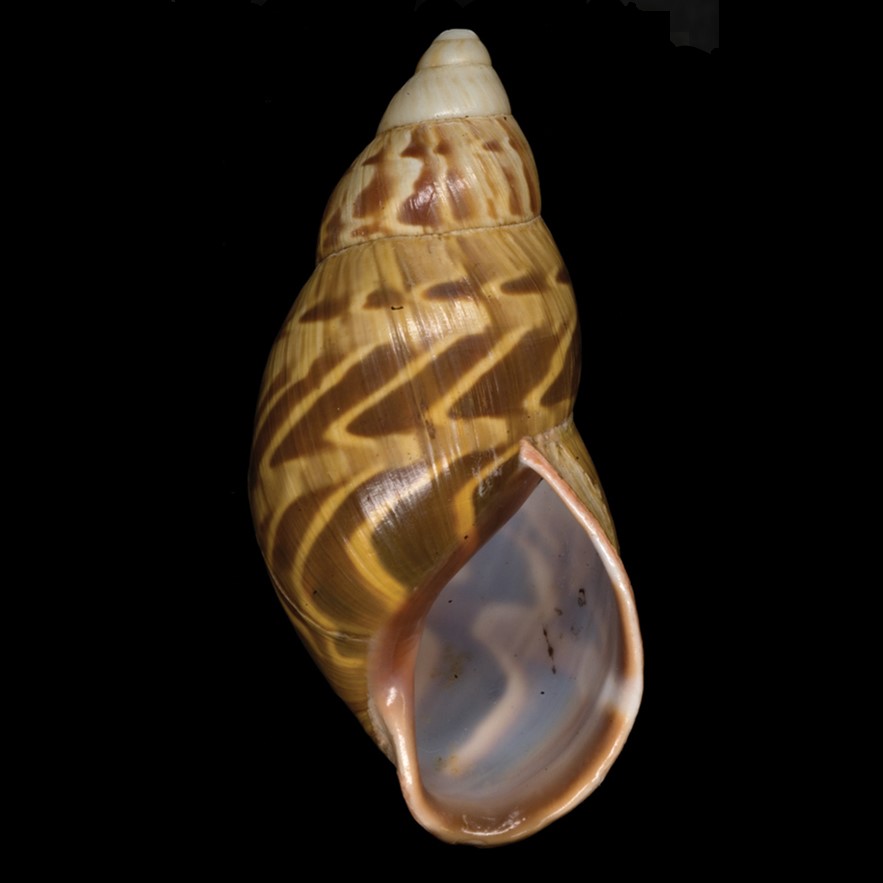
CLASSE: GASTROPODA: TERRESTRE FAMÍLIA: ORTHALICIDAE ESPÉCIE: Sultana kellettii (Reeve, 1850) Tamanho médio: 61 mm Ocorrência: Equador, Colômbia (Cundimarca) Localidade tipo: Equador? Nome original: Bulimus kellettii Reeve, 1850 Sinônimos: Bulimus jatesi Hupé, 1857; Bulimus jungairinoi Hidalgo, 1867; Sultana (Metorthalicus) kellettii (Reeve, 1850) Fotos: (1) Museu Nacional de Ciências Naturais, Madrid: SYNTYPE de Bulimus jungairinoi, Hidalgo, 1867, MNCN 15.05/3159, 66.3mm; (2) Museu Nacional de História Natural, Paris: LECTOTYPE MNHN-IM-2000-28080, 57.6 mm, Quito, Equador Figura: Breure & Mogollón, 2016: (A–B) Sultana (Metorthalicus) fraseri (Pfeiffer, 1858), LECTOTYPE NHMUK 20140083 (H = 88.9mm); (C–D) Sultana (Metorthalicus) kellettii (Reeve, 1850), LECTOTYPE NHMUK 1975241 (H = 61.2mm) Fontes: Descrição original: (como Bulimus kellettii Reeve, 1850) Reeve, L. A. (1848-1850). Monograph of the genus Bulimus. In: Conchologia...


CLASSE: GASTROPODA: TERRESTRE FAMÍLIA: ORTHALICIDAE ESPÉCIE: Sultana labeo (Broderip, 1828) Tamanho médio: 76 mm Ocorrência: Peru (Amazonas, "east of Chachapoyas") Localidade tipo: “sylvis Peruvianis” Habitat: Yungas Peruana Nome original: Bulinus labeo Broderip, 1828 Sinônimos: Bulimus labeo (Broderip, 1828); Sultana (Metorthalicus) labeo (Broderip, 1828) Comentários: Broderip (1828: 223) mencionou em seu texto que o material tipo se originou do Tenente Maw, que o obteve em “Toulea, cerca de nove léguas a leste de Chachapoyas”; esta é evidentemente a localidade atualmente conhecida como Taulia [-06.1200 S, -077.3700 W] Fotos: (1,2) cortesia Carles Dorado (Allspira), Spain: Peru, Chachapoyas, 74.25mm; (3) Breure & Mogollón, 2016: desenho original de Bulinus labeo Broderip 1828: suppl. 31, H = 76.2 mm Figura: Breure & Mogollón, 2016:...

CLASSE: GASTROPODA: TERRESTRE FAMÍLIA: ORTHALICIDAE ESPÉCIE: Sultana liae Vega-Luz, 2021 Tamanho médio: 82 - 88 mm Ocorrência: Peru (Departamento de Amazonas) Localidade tipo: Peru, Departamento de Amazonas, Distrito Bongará Nome original: Sultana (Metorthalicus) liae Vega-Luz, 2021 Fotos: (1) cortesia Carles Dorado (Allspira), 2023, 88mm; (2) idem, 82mm Fontes: Descrição original: ( como Sultana (Metorthalicus) liae Vega-Luz, 2021) Vega-Luz, R. (2021). A new Sultana Shuttleworth, 1856 (Pulmonata: Orthalicidae) from Peru. Malacologia Mostra Mondiale. 113: páginas 3-6 Molluscabase: https://molluscabase.org/aphia.php?p=taxdetails&id=1550245

CLASSE: GASTROPODA: TERRESTRE FAMÍLIA: ORTHALICIDAE ESPÉCIE: Sultana macandrewi (G. B. Sowerby III, 1889) Tamanho médio: 70 mm Ocorrência: Peru (Departamento la Libertad) Localidade tipo: “Santiago de Cou, Peru” Comentários: Segundo Breure & Mogollón, 2016: "a localidade-tipo mencionada por Sowerby não foi encontrada nos dicionários geográficos modernos. Como ele era também um comerciante e obtinha seus espécimes por meio de terceiros, pode ter havido um erro na rotulagem. Caso esta suposição esteja correta, a província de Santiago de Chuco poderia ter sido referida; esta província está localizada a oeste e adjacente ao rio Marañon. Esta espécie foi considerada até agora como Orthalicus macandrewi, mas é diferente de outras espécies de Orthalicus na forma e coloração da concha. Está agora provisoriamente colocado em...
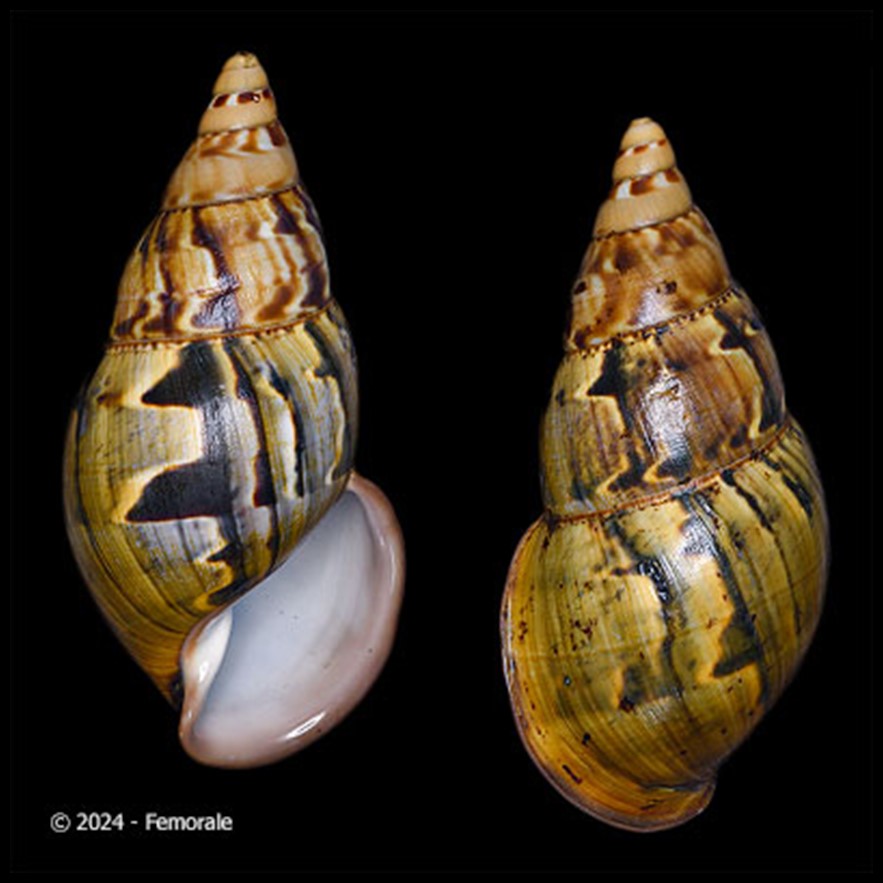
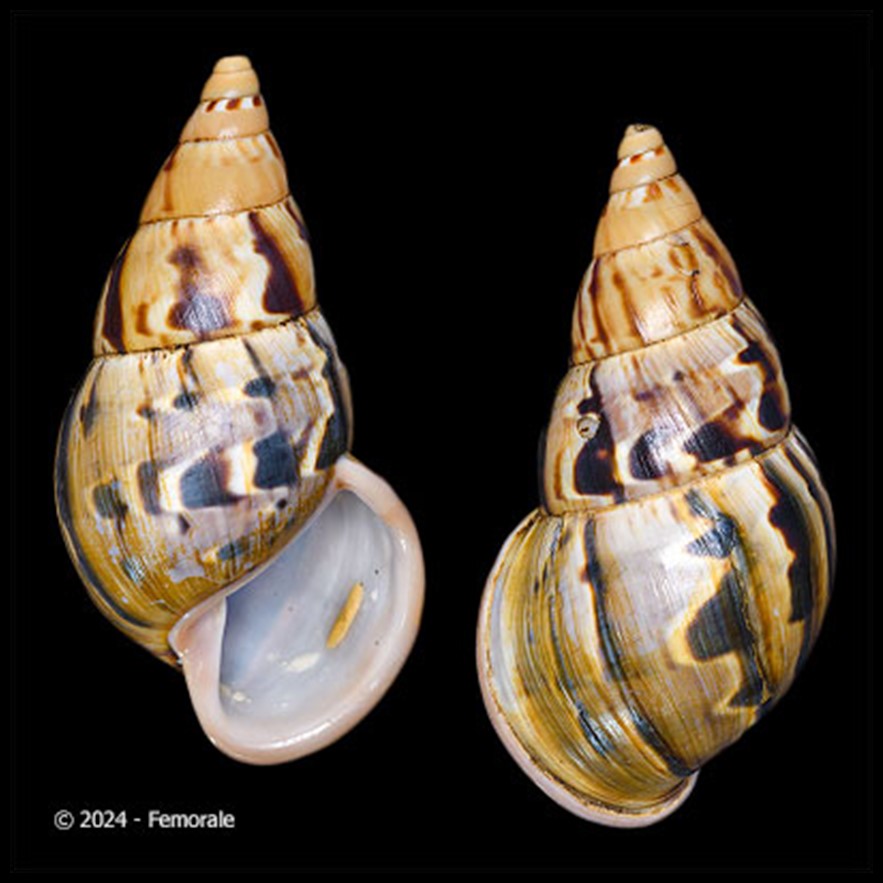
CLASSE: GASTROPODA: TERRESTRE FAMÍLIA: ORTHALICIDAE ESPÉCIE: Sultana maranhonensis (Albers, 1854) Tamanho médio: 75 - 85 mm Ocorrência: Peru, Colômbia(?) Localidade tipo: Peru (“in Columbia ad fluvium Maranhon”) Comentários: o rio Marañon hoje atravessa totalmente o território peruano, embora na época em que o material foi coletado por Warszewicz, algumas áreas faziam parte da Colômbia Nome original: Bulimus maranhonensis Albers, 1854 Sinônimos: Sultana (Metorthalicus) maranhonensis (Albers, 1854) Fotos: (1) cortesia Femorale, Peru, 2024, 85 e 78 mm respectivamente; (2) Breure & Mogollón, 2016: Museum für Naturkunde, Berlin: Sultana (Metorthalicus) maranhonensis (Albers, 1854), LECTOTYPE ZMB 101825, 75.6mm Fontes: Descrição original: (como Orthalicus powisianus var. niveus Preston, 1909) Preston, H. B. (1909). New land, freshwater, and marine shells from South América. The Annals and...

CLASSE: GASTROPODA: TERRESTRE FAMÍLIA: ORTHALICIDAE ESPÉCIE: Sultana meobambensis (L. Pfeiffer, 1855) Tamanho médio: 56 - 60 mm Habitat: vive em árvores e arbustos Ocorrência: Peru, Brasil Localidade tipo: Meobamba, Peru Nome original: Bulimus meobambensis L. Pfeiffer, 1855 Sinônimos: Orthalicus meobambensis (L. Pfeiffer, 1855); Orthalicus meobambensis carnea Strebel, 1909; Sultana (Sultana) meobambensis (L. Pfeiffer, 1855) Fotos: Natural History Museum, London: SYNTYPE de Bulimus meobambensis Pfeiffer, 1855; NHMUK 20100505 Figura: Breure A (2013): Museum für Naturkunde, Berlin: (A–B, i) HOLOTYPE de Orthalicus meobambensis carnea Strebel, 1909 ZMB 101823 (H = 68.7 mm); (C–E, ii) Sultana maranhonensis (Albers, 1854), LECTOTYPE ZMB 101825 (H = 75.6 mm) Fontes: Descrição original: (como Bulimus meobambensis L. Pfeiffer, 1855) Pfeiffer, L. (1855). Descriptions...
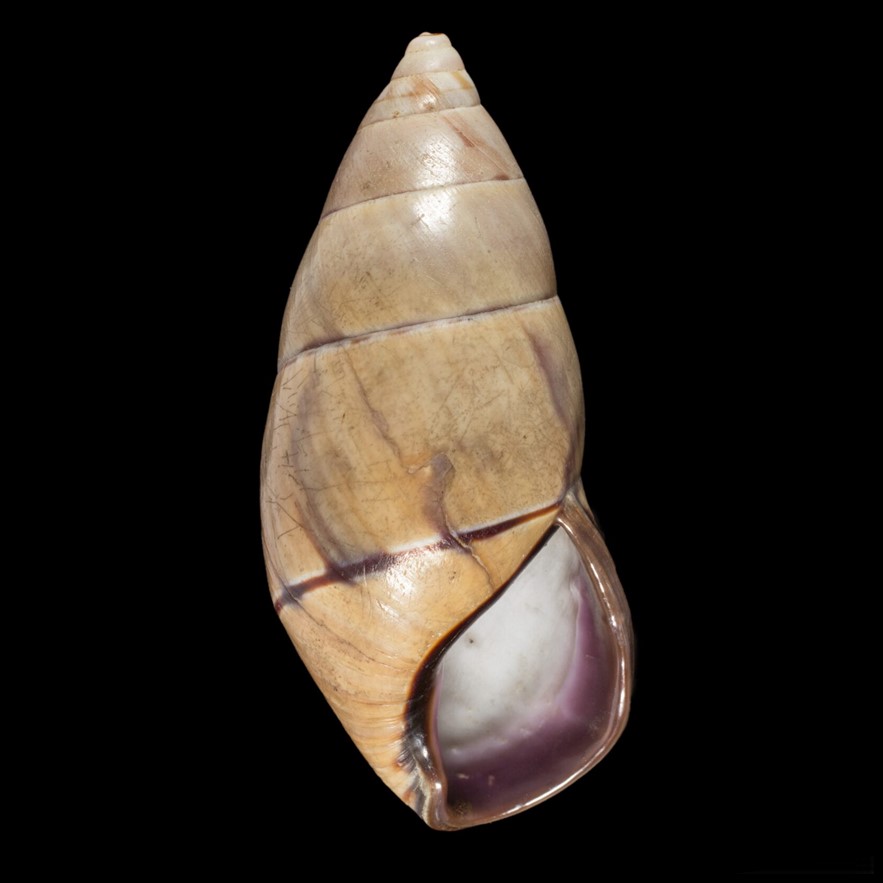
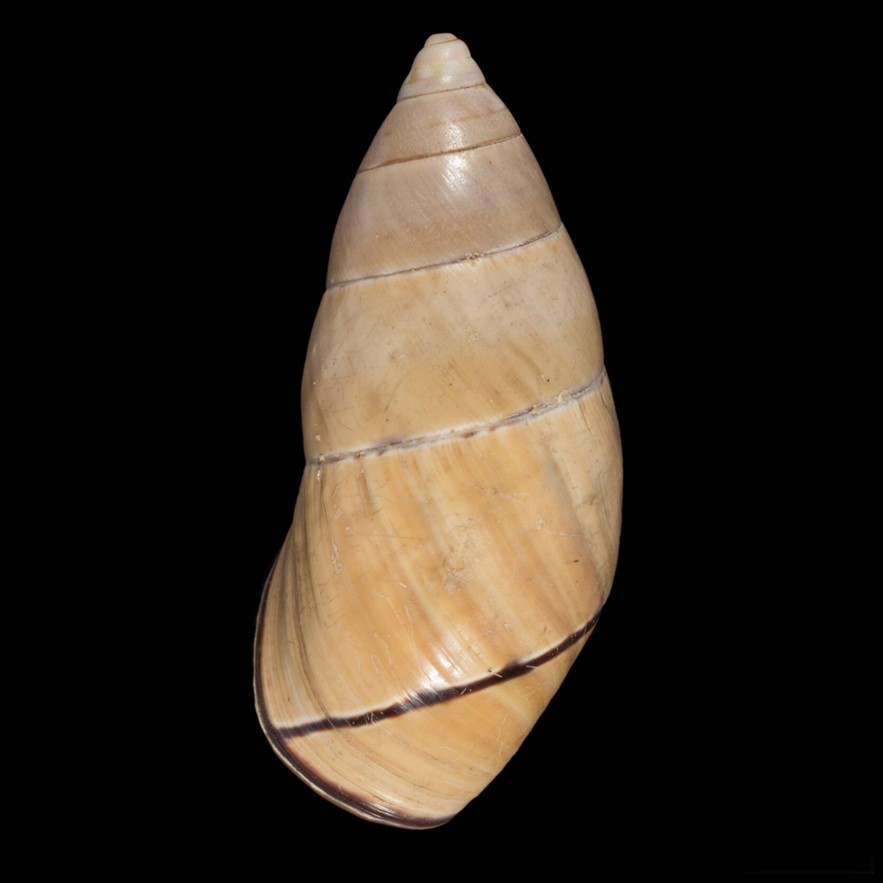
CLASSE: GASTROPODA: TERRESTRE FAMÍLIA: ORTHALICIDAE ESPÉCIE: Sultana powisiana (Petit de la Saussaye, 1843) Tamanho médio: 65 - 73 mm Ocorrência: Colômbia (Cauca, Caldas, Quindío, Risaralda, Santander, Valle del Cauca) Localidade tipo: Colômbia, "Nouvelle Grenade, Montagne de Quindin" Nome original: Bulimus powisianus Petit de la Saussaye, 1843 Sinônimos: Orthalicus powisianus (Petit de la Saussaye, 1843); Orthalicus powisianus var. niveus Preston, 1909; Sultana (Metorthalicus) powisiana (Petit de la Saussaye, 1843) Fotos: (1-3) Museu Nacional de História Natural, Paris: SYNTYPE de Bulimus powisianus Petit de la Saussaye, 1843, MNHN-IM-2000-21880, 73mm, Colômbia (Nouvelle Grenade, Montagne de Quindin); (4) Natural History Museum, London: HOLOTYPE de Orthalicus powisianus var. niveus, NHMUK 1909.8.18.85, 65.2mm, Colômbia ("Jimenez, Rio Dagua; 1600 ft'"), 488 m de altitude, M.G. Palmer leg., ex Preston ...

CLASSE: GASTROPODA: TERRESTRE FAMÍLIA: ORTHALICIDAE ESPÉCIE: Sultana shuttleworthi (Albers, 1854) Tamanho médio: 71 mm Ocorrência: Peru, Departamento de Loreto (ver comentários) Localidade tipo: Peru, “in Columbia ad fluvium Maranhon” Nome original: Bulimus shuttleworthi Albers, 1854 Sinônimos: Sultana (Metorthalicus) shuttleworthi (Albers, 1854) Comentários: o rio Marañon atualmente atravessa totalmente o território peruano, porém na época em que o material foi coletado por Warszewicz, algumas áreas faziam parte da Colômbia Fotos: (1) Breure & Mogollón, 2016: Museum für Naturkunde, Berlin, SYNTYPE ZMB 101827, 70.3mm, ex Albers coll. No. 544, Warzewicz leg., 71 mm Figura: Breure & Mogollón, 2016: (A–C) Sultana (Metorthalicus) shuttleworthi (Albers, 1854), SYNTYPE ZMB 101827 (H = 70.3 mm); (D–F) Sultana (Metorthalicus) wrzesniowskii (Lubomirski, 1880), HOLOTYPE MIZW (H =...

CLASSE: GASTROPODA: TERRESTRE FAMÍLIA: ORTHALICIDAE ESPÉCIE: Sultana sultana (Dillwyn, 1817) Tamanho médio: 40 - 75 mm Habitat: vive em árvores e arbustos Ocorrência: Guiana Francesa, Peru, Brasil (Amapá, Pará) Nome original: Helix sultana Dillwyn, 1817 Sinônimos: Orthalicus gallina-sultana (Chemnitz, 1795); Orthalicus sultana (Dillwyn, 1817); Orthalicus sultana angustior Preston, 1914; Orthalicus trullisatus Shuttleworth, 1856; Sultana (Sultana) sultana (Dillwyn, 1817); Sultana sultana angustior (Preston, 1914); Sultana sultana sultana (Dillwyn, 1817) Fotos: (1,2) cortesia Femorale, Serra do Navio, Amapá, Brasil, 69 mm; (3) Guiana Francesa, crédito: INPN/Olivier Gargominy Fontes: Descrição original: (como Helix sultana Dillwyn, 1817) Dillwyn, L. W. (1817). A descriptive catalogue of Recent shells, arranged according to the Linnean method; with particular attention to the synonymy. John...
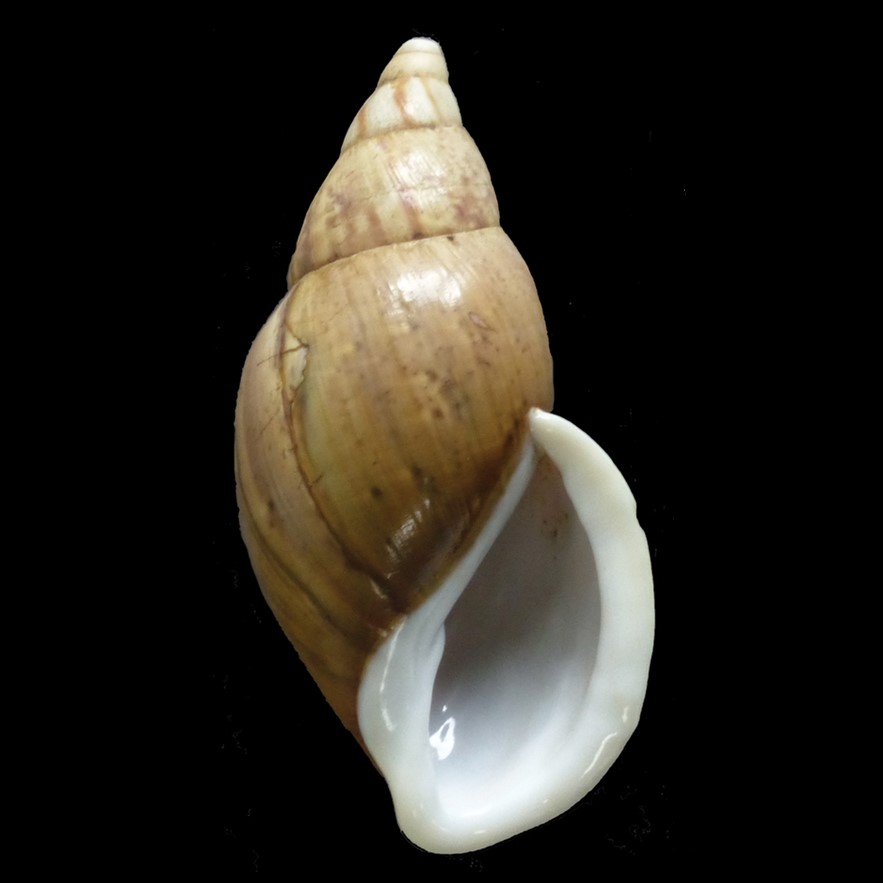
CLASSE: GASTROPODA: TERRESTRE FAMÍLIA: ORTHALICIDAE ESPÉCIE: Sultana wrzesniowskii (Lubomirski, 1880) Tamanho médio: 70 mm Ocorrência: Peru, Departamento Ayacucho, Província Huamanga Localidade tipo: Peru, “Tambillo” Nome original: Bulimus (Porphyrobaphe) wrzesniowskii Lubomirski, 1880 Sinônimos: Sultana (Metorthalicus) wrzesniowskii (Lubomirski, 1880) Comentários: Segundo Breure & Mogollón, 2016: "o material tipo foi localizado na coleção Lubomirski (D. Mierzwa-Szymkowiak, commun. pess., 2012). Esta espécie não foi recoletada após sua descrição" Fotos: (1) Breure & Mogollón, 2016: HOLOTYPE MIZW (H = 78.0 mm) Figura: Breure & Mogollón, 2016: (A–C) Sultana (Metorthalicus) shuttleworthi (Albers, 1854), SYNTYPE ZMB 101827 (H = 70.3 mm); (D–F) Sultana (Metorthalicus) wrzesniowskii (Lubomirski, 1880), HOLOTYPE MIZW (H = 78.0 mm) Fontes: Descrição original: (como Bulimus (Porphyrobaphe) wrzesniowskii Lubomirski, 1880) Lubomirski, P....
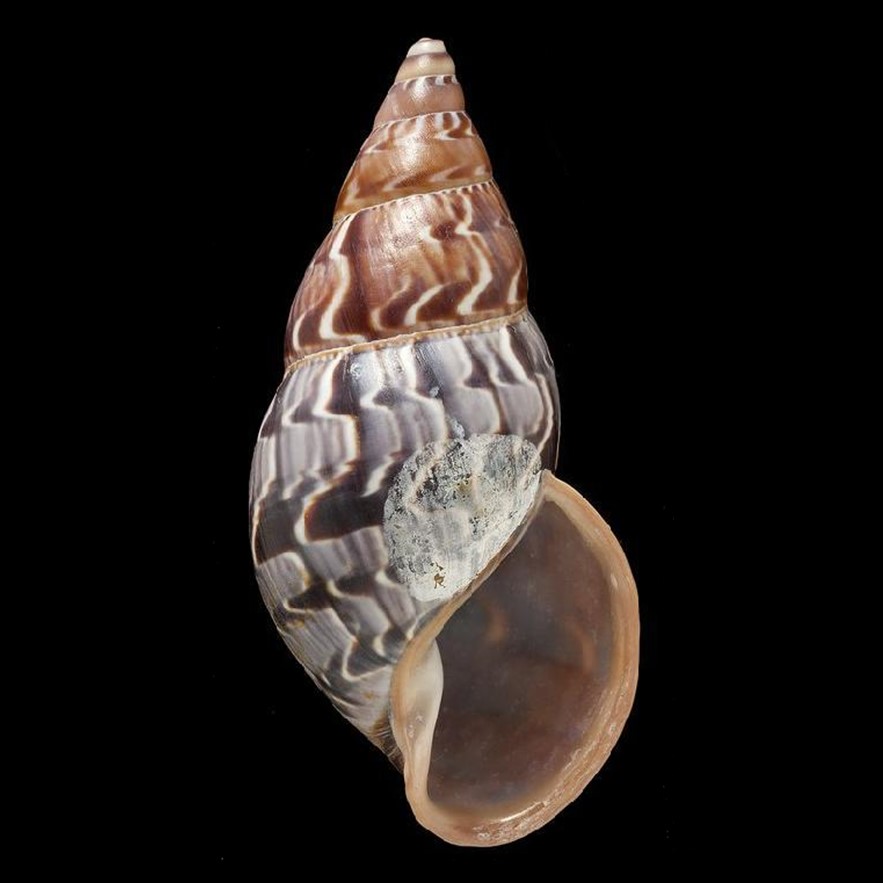

CLASSE: GASTROPODA: TERRESTRE FAMÍLIA: ORTHALICIDAE ESPÉCIE: Sultana yatesi (L. Pfeiffer, 1855) Tamanho médio: 82 mm Ocorrência: Peru, Meobamba Localidade tipo: “Meobamba, Eastern Peru (Mr. Yates)” Nome original: Bulimus yatesi L. Pfeiffer, 1855 Sinônimos: Sultana (Metorthalicus) yatesi (L. Pfeiffer, 1855); Porphyrobaphe grandis Rolle, 1902; Porphyrobaphe latevittata Shuttleworth, 1856; Porphyrobaphe sarcostoma Ancey, 1903; Porphyrobaphe sublabeo Ancey, 1890; Sultana (Metorthalicus) yatesi yatesi (L. Pfeiffer, 1855) Subespécies: (1) Sultana yatesi galactostomus (Ancey, 1890); (2) Sultana yatesi vicaria (Fulton, 1896); (3) Sultana yatesi yatesi (L. Pfeiffer, 1855) Fotos: (1,3) Natural History Museum, London: LECTOTYPE de Bulimus yatesi Pfeiffer, 1855, NHMUK 1975239, 84.3 mm, Peru (San Martín, Moyobamba), doador: Hugh Cuming; (2) SYNTYPE de Porphyrobaphe galactostoma Ancey, 1890, Amgueddfa Cymru - National Museum Wales, Cardiff, NMW.1955.158.24079, "Habitat in Republica...
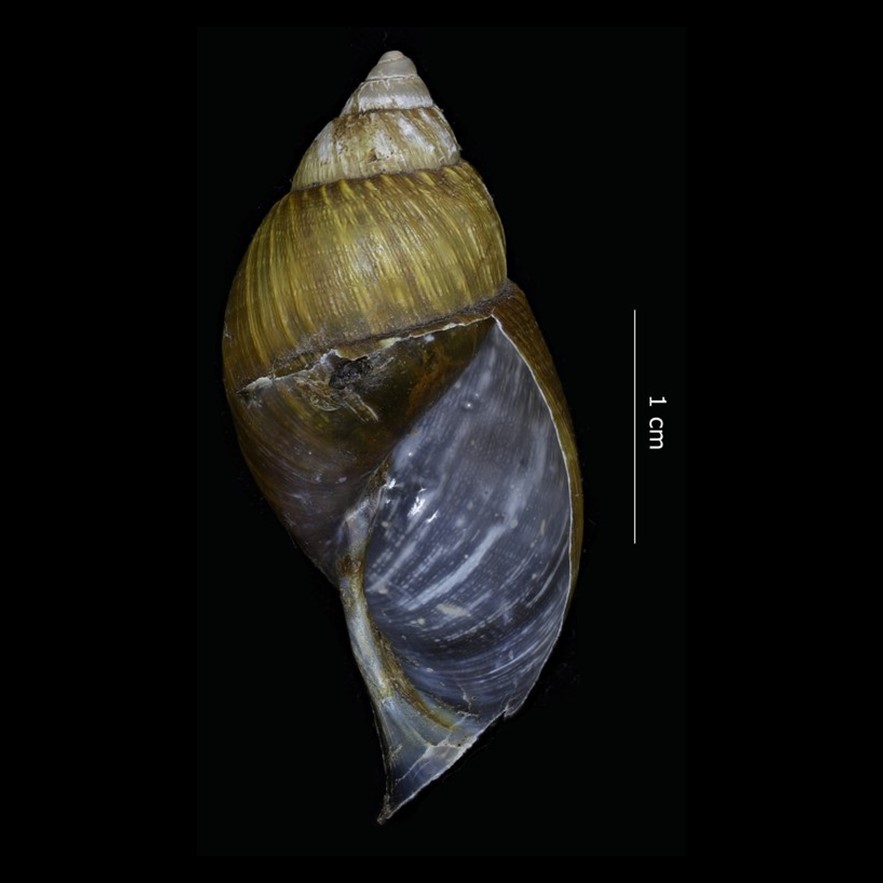
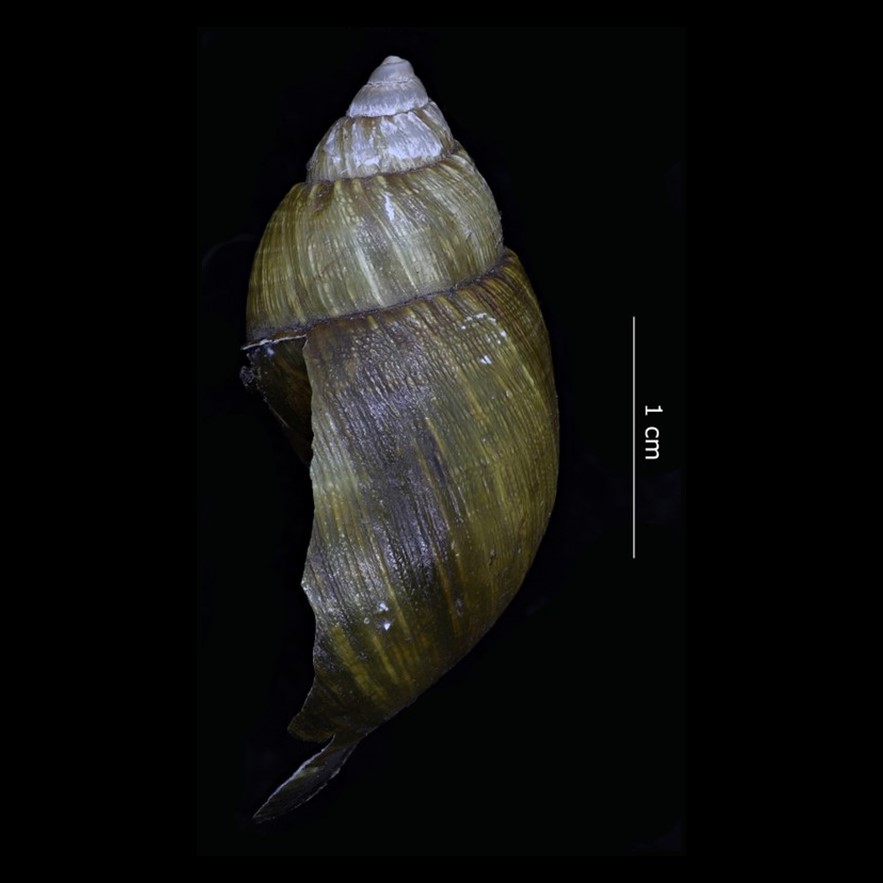
CLASSE: GASTROPODA: TERRESTRE FAMÍLIA: BULIMULIDAE ESPÉCIE: Suniellus adriani Breure, 2011 Tamanho médio: 32 mm Ocorrência: Equador (Pichincha) Localidade tipo: Equador, Província de Pichincha, “San Diego Cuchu” Nome original: Suniellus adriani Breure, 2011 Etimologia: o nome da espécie é uma homenagem a Adrián González, malacologista cubano que vive em Quito, Equador, como "reconhecimento a suas contribuições à malacologia Neotropical" Zoobank: urn:lsid:zoobank.org:act:B2AF1109-5F1F-41CE-A02C-4A7308AFF2D7 Descrição original: (Breure, 2011): "Shell 32.5 mm, 1.86 times as long as wide, elongate-ovate, with hardly convex sides, imperforate; very thin. Colour yellowish-olivaceus with brownish streaks, especially on last whorl. Upper whorls lighter in colour. Surface rather shining, with irregularly spaced, thickened growth striae, in between with weaker incrassations and, especially at upper part of last whorl, some oblong granules. Protoconch...
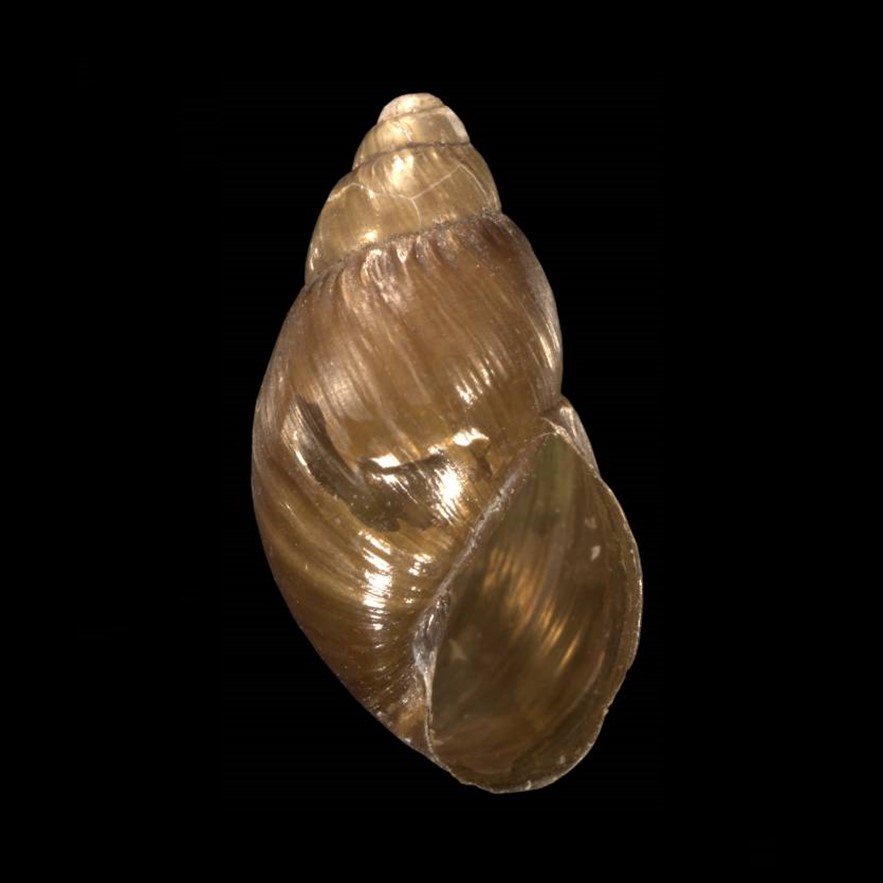
CLASSE: GASTROPODA: TERRESTRE FAMÍLIA: BULIMULIDAE ESPÉCIE: Suniellus chillu (Breure, 1978) Tamanho médio: 15 mm Ocorrência: Bolívia Localidade tipo: Bolívia, Río Songo, Cuticucho Altitude: 3800 - 4100 m Nome original: Scutalus (Suniellus) chillu Breure, 1978 Etimologia: o nome da espécie deriva da palavra "chillu" na língua nativa Quechua, que significa preto, em uma referência à coloração da concha Fotos: (1) Senckenberg Natural History Museum, Frankfurt: HOLOTYPE de Suniellus chillu, SMF 249640, Bolívia, Río Songo, Cuticucho, 15.2mm Fontes: Descrição original: (como Scutalus (Suniellus) chillu Breure, 1978) Breure, A. S. H. (1978). Notes on and descriptions of Bulimulidae (Mollusca, Gastropoda). Zoologische Verhandelingen. 164(1): 3-255. página(s): 188, fig. 323, pl. 11 fig. 5 Senckenberg. Collection Mollusca SMF. Occurrence dataset https://doi.org/10.15468/ohuexz accessed via GBIF.org on 2026-01-14....
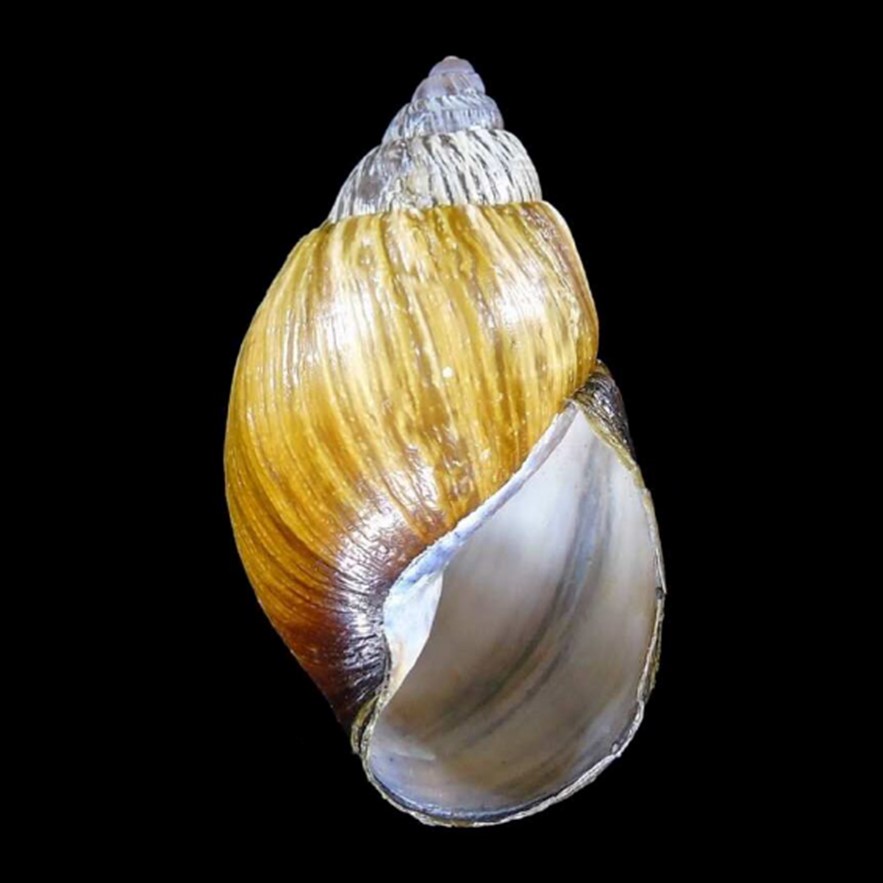
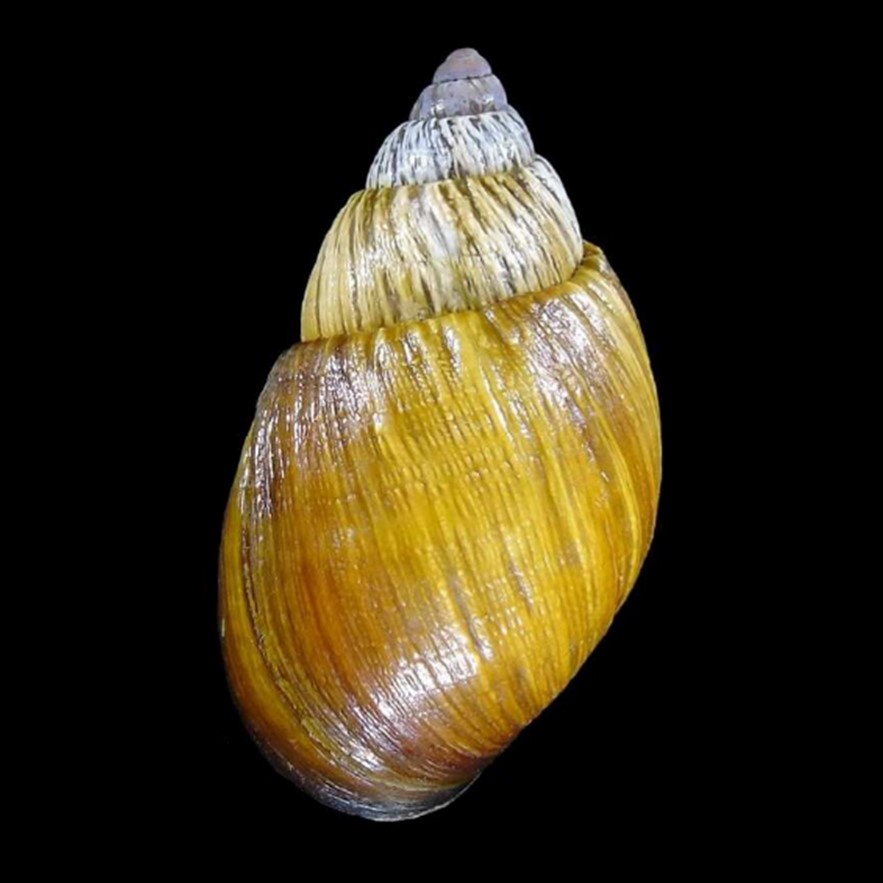
CLASSE: GASTROPODA: TERRESTRE FAMÍLIA: BULIMULIDAE ESPÉCIE: Suniellus coronensis Breure & Mogollón, 2025 Tamanho médio: 35 mm Ocorrência: Peru (Cajamarca) Localidade tipo: Peru, Departamento de Cajamarca, "Hualgayoc Province, Hualgayoc District, Cerro Corona" Altitude: 3958 m Nome original: Suniellus coronensis Breure & Mogollón, 2025 Etimologia: o nome da espécie é uma referência à localidade tipo Zoobank: https://zoobank.org/NomenclaturalActs/e7e03719-fdbe-4eec-809a-3f56c8c055af Descrição original: (Mogollón & Breure, 2025): "Shell up to 35.7 mm, 1.75 times as long as wide, elongate, rather thin; imperforate. Sculptured with irregularly spaced, thickened growth-striae, in between with weaker incrassations, and spiral rows of oblong granules, especially on the last two whorls. Protoconch sculptured with axial wrinkles on upper part of the whorl, becoming short granules in different directions on the lower part. Colour yellowish-olivaceus...


CLASSE: GASTROPODA: TERRESTRE FAMÍLIA: BULIMULIDAE ESPÉCIE: Suniellus goudoti (Petit de la Saussaye, 1843) Tamanho médio: 36 mm Ocorrência: Colômbia Localidade tipo: Colômbia, Tolima Nome original: Bulimus goudoti Petit de la Saussaye, 1843 Fotos: (1) Museu Nacional de História Natural, Paris: LECTOTYPE de Bulimus goudoti Petit de la Saussaye, 1843, MNHN-IM-2000-21877, Colômbia, Tolima, 36.5mm Fontes: Descrição original: (como Bulimus goudoti Petit de la Saussaye, 1843) Petit de la Saussaye, [S.]. (1843). Description de quatre coquilles nouvelles provenant du voyage de M. Goudot à la Nouvelle-Grenade. Revue Zoologique par la Société Cuvierienne. 6: 238-239., disponível online em https://www.biodiversitylibrary.org/page/2271395 página(s): 239 Breure, Bram & Roosen, Marijn. (2025). A new species of Suniellus Breure, 1978 from the páramo in northern Ecuador (Mollusca, Gastropoda, Bulimulidae). Revista Ecuatoriana...

CLASSE: GASTROPODA: TERRESTRE FAMÍLIA: BULIMULIDAE ESPÉCIE: Suniellus kochi (L. Pfeiffer, 1846) Tamanho médio: 20 mm Ocorrência: Peru, Chile (?) Localidade tipo: "(republica chilensi ?)" Nome original: Bulimus kochi L. Pfeiffer, 1846 Sinônimos: Scutalus (Suniellus) kochi (L. Pfeiffer, 1846) Descrição original: (Philippi, 1867): "T. imperforata, ovata, tenuissima, subrugulosa, nigrieanti-olivacea, epidermide tenuissima, decidua induta; spira brevis, obtusa; anfr. 4 convexi, ultimus 2/3, longitudinis superans; columella simplex, filaris, albida, rectiuscula; apertura oblongo-ovalis, intus concolor, perist. simplex, margine dextro antrorsum arcuato" Fotos: (1) cortesia Carles Dorado (Allspira): Suniellus cf kochi, Peru, Pasco, 35.4mm, 11.2022, 2800-3200 m de altitude Fontes: Descrição original: (como Bulimus kochi L. Pfeiffer, 1846) Pfeiffer, L. & Menke, K. T. (1846). Diagnosen neuer Heliceen. Zeitschrift für Malakozoologie. 3: 144., disponível online em https://www.biodiversitylibrary.org/page/16291938 ...

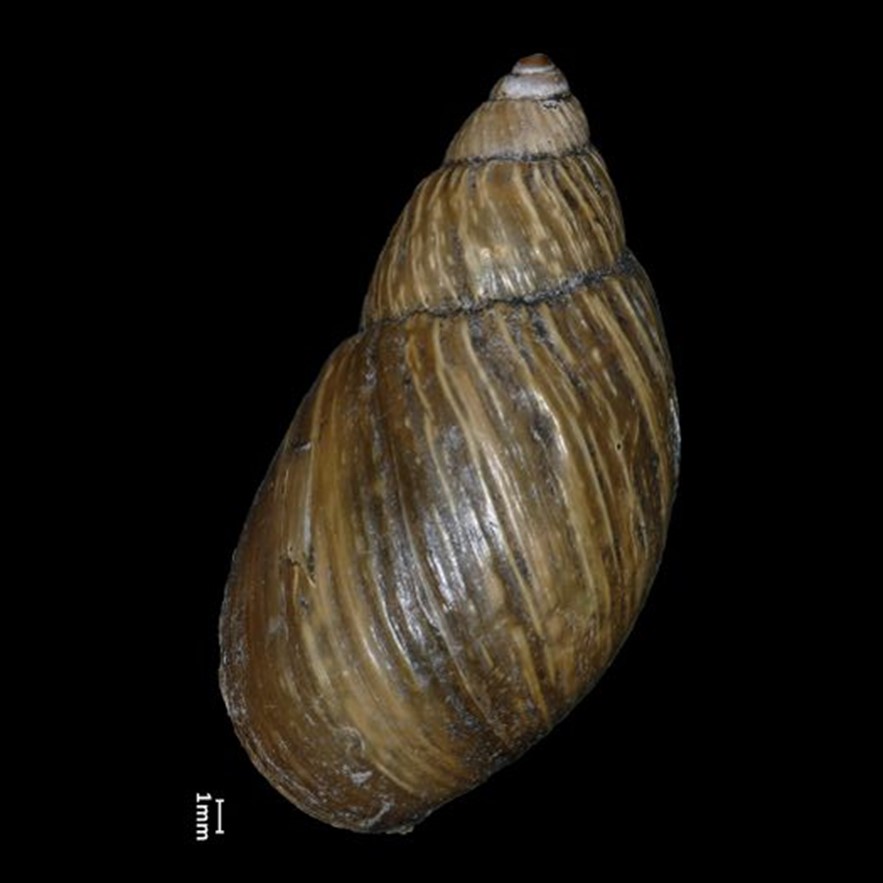
CLASSE: GASTROPODA: TERRESTRE FAMÍLIA: BULIMULIDAE ESPÉCIE: Suniellus troscheli (R. A. Philippi, 1867) Tamanho médio: 33 mm Ocorrência: Peru (Cordillera Blanca) Localidade tipo: Peru, "hacienda de Unigambal" Altitude: 3200 m Nome original: Bulimus troscheli R. A. Philippi, 1867 Comentários: Breure, 1978 registra Suniellus troscheli para o "Peru, La Libertad, 18 km E S E Yamabamba; shell height 18.5 mm" Descrição original: (Philippi, 1867): "B. testa obtecte perforata, ovata, tenui, subrugulosa, luteo-olivacea; spira pyramidata, apice obtusa; anfractibus quinque, planiusculis, ultimo spiram fere bis aequante; sutura submarginata, crenulata; apertura oblongo-ovali; columella simplici, filari; peristomate simplici, recto; margine columellari appresse dilatato" Redescrição: (Breure, 1978): "Shell imperforate, with slightly convex sides, thin. Colour dark brown with lighter axial streaks, the upper whorls lightly yellowish. Surface...
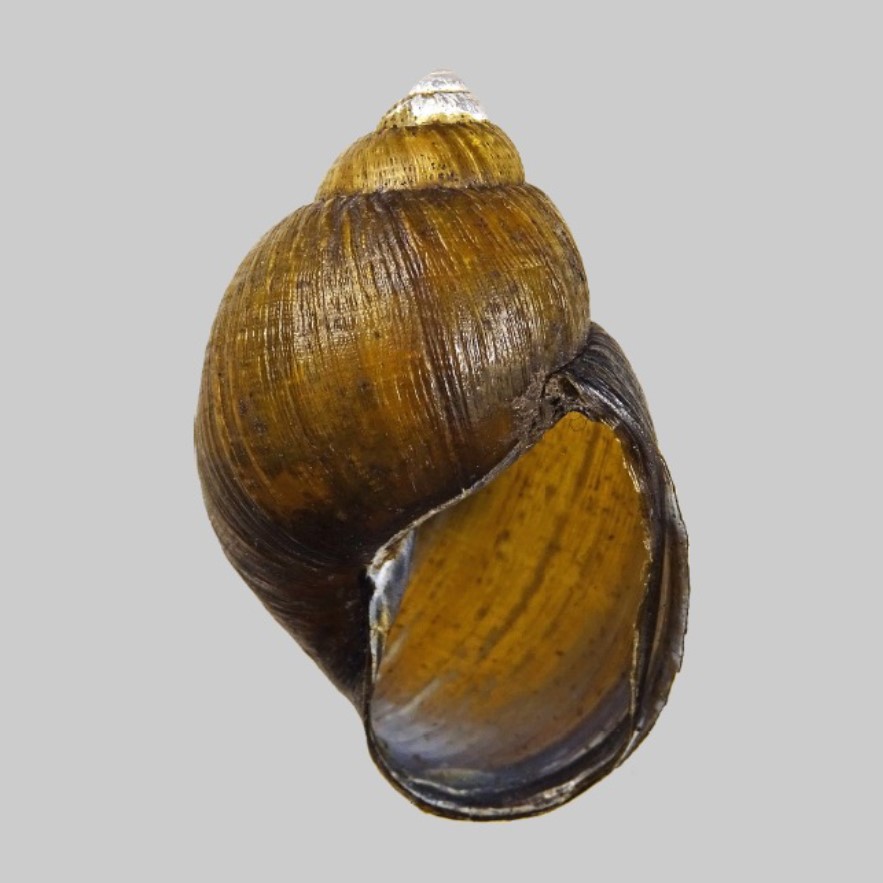
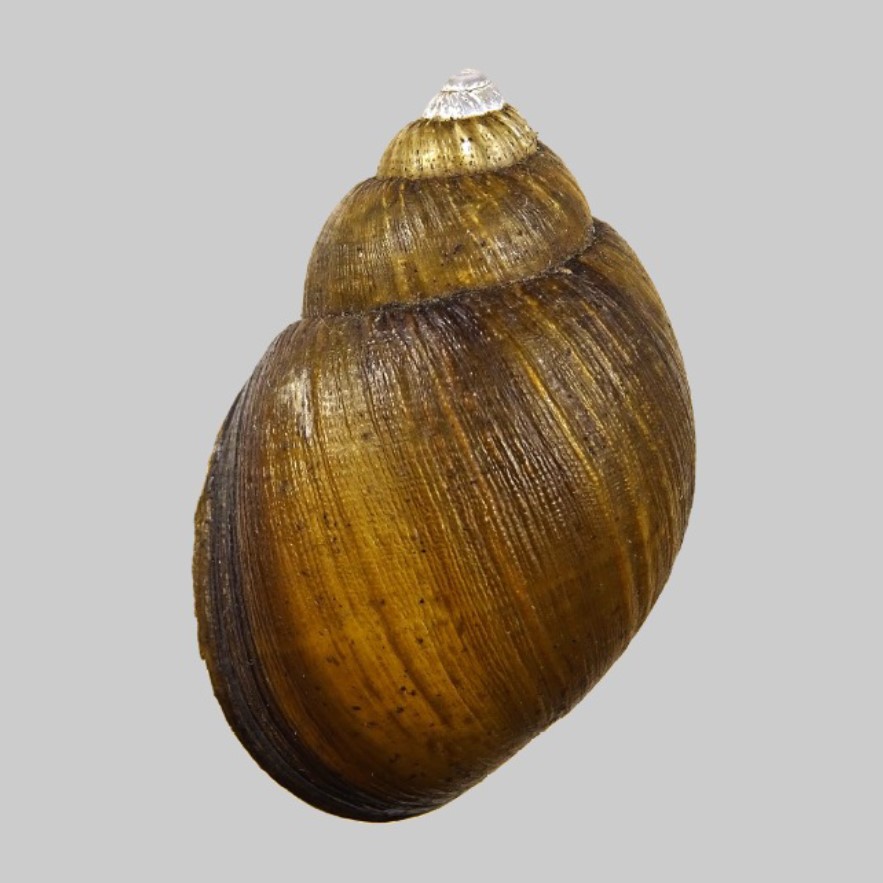
CLASSE: GASTROPODA: TERRESTRE FAMÍLIA: BULIMULIDAE ESPÉCIE: Suniellus tufinoensis Breure & Roosen, 2025 Tamanho médio: 34 mm Ocorrência: Equador (Carchi) Habitat: Ecorregião do Páramo do Norte dos Andes, Reserva Ecológica El Ángel Localidade tipo: Equador, Província de Carchi, Vulcão Chiles, Paramo Tufiño Altitude: 3669 m Nome original: Suniellus tufinoensis Breure & Roosen, 2025 Etimologia: o nome da espécie é uma referência à localidade tipo Zoobank: urn: lsid:zoobank.org:act:111B8099-F0D4-42AB-B76C-2BF98CEB663B Descrição original: (Breure & Roosen, 2025): "Shell height 34.3 mm, 1.55 times as long as wide, ovate, with hardly convex sides, imperforate, thin. Colour yellowish-olivaceus with streaks of brownish, especially behind the lip on the last whorl. Upper whorls lighter, the apex worn and whitish. Surface rather shining, with irregularly spaced, thickened growth striae,...

CLASSE: GASTROPODA: TERRESTRE FAMÍLIA: CLAUSILIIDAE ESPÉCIE: Symptychiella acuminata H. Nordsieck, 2010 Tamanho médio: 16.2–19.6 mm Ocorrência: Peru (San Martin) Localidade tipo: Peru, San Martin, "path from Nueva Cajamarca to Cerro Mirador" Altitude: 925 m Nome original: Symptychiella (Symptychiella) acuminata H. Nordsieck, 2010 Etimologia: o nome da espécie é uma referência ao formato da concha: Do Latim "acuminatus" = pontiagudo (= pointed) Descrição original: (Nordsieck, 2010): "Shell with more or less attenuated apical part, whorls rounded, protoconch broader than following whorls; yellowish-brown to -grey, in part yellowish-white; teleoconch whorls densely rib-striated, on the neck rib-striation more irregular and in part stronger; neck rounded, somewhat compressed below, subsutural swelling developed behind; aperture descending, piriform, in part more rhombic, white to yellowish-brown within, in part white,...


CLASSE: GASTROPODA: TERRESTRE FAMÍLIA: CLAUSILIIDAE ESPÉCIE: Symptychiella annae H. Nordsieck, 1999 Tamanho médio: 14 - 15 mm Ocorrência: Peru (Amazonas) Localidade tipo: Peru, Chachapoyas, "ca. 14 km from Mendoza to Chachapoyas" Altitude: 1800 m Nome original: Symptychiella annae H. Nordsieck, 1999 Sinônimos: Symptychiella (Symptychiella) annae H. Nordsieck, 1999 Comentários: O Holótipo está depositado no Museo de Historia Natural of the Universidad Nacional Mayor de San Marcos, Lima, Peru: MUSM 2173, 10.iii.1985, leg. B. Calderon Etimologia: o nome da espécie é uma homenagem à Anne Selinka ("in recognition of her achievements in our late specialised course of biology, especially of her interest in phylogenetic problems") Fotos: (1,2) cortesia Femorale, 2019, 15.3 e 15mm respectivamente Figura: Nordsieck, 2005: (15)...
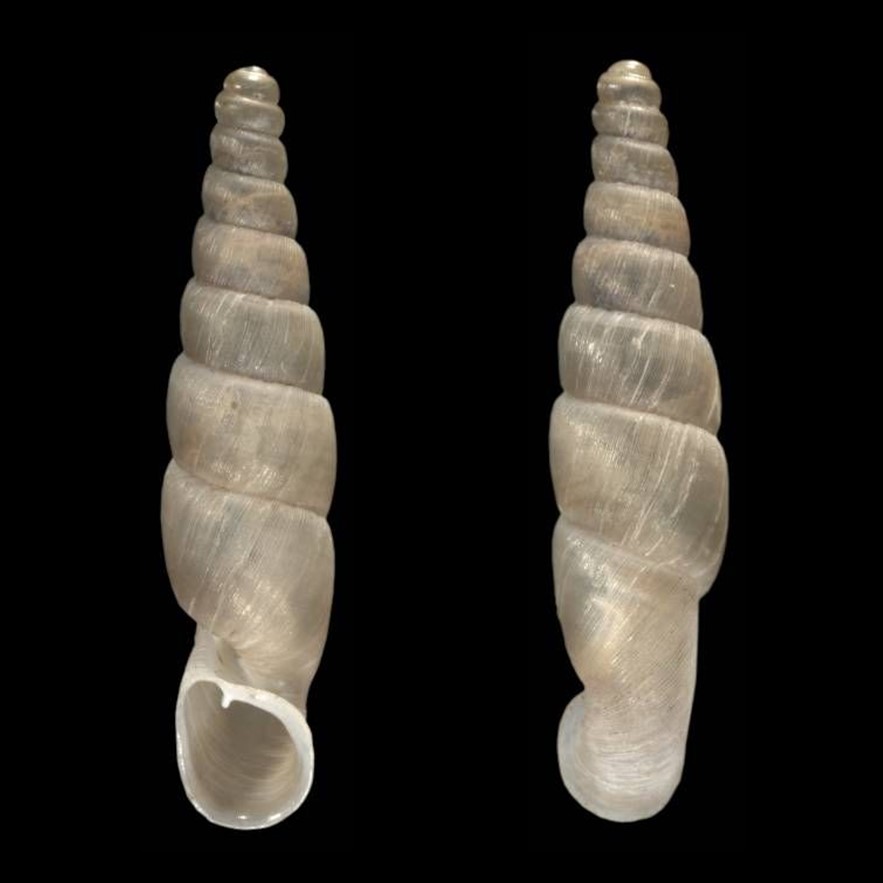

CLASSE: GASTROPODA: TERRESTRE FAMÍLIA: CLAUSILIIDAE ESPÉCIE: Symptychiella bilamellata H. Nordsieck, 2005 Tamanho médio: 13 - 16 mm Ocorrência: Peru (San Martin) Localidade tipo: Peru, San Martin, "path from Palestina to Cueva Huacharos de Palestina (ca. 23 km NW Rioja" Altitude: 950 m Nome original: Symptychiella (Symptychiella) bilamellata H. Nordsieck, 2005 Subespécies: (1) Symptychiella bilamellata bilamellata H. Nordsieck, 2005 (2) Symptychiella bilamellata costulata H. Nordsieck, 2010 (3) Symptychiella bilamellata laevigata H. Nordsieck, 2010 (4) Symptychiella bilamellata gracilicosta H. Nordsieck, 2010 Descrição original de Symptychiella bilamellata bilamellata: (Nordsieck, 2005): "Shell with ± attenuated apical part, whorls rounded, especially upper ones, protoconch blunt, not broader than following whorls, after first half whorl indistinctly rib-striated; yellowish-brown, in part with indistinct lighter subsutural band; teleoconch whorls densely and regularly ribbed, in...


CLASSE: GASTROPODA: TERRESTRE FAMÍLIA: CLAUSILIIDAE ESPÉCIE: Symptychiella christae H. Nordsieck, 2007 Tamanho médio: 12 mm Ocorrência: Peru (San Martin) Localidade tipo: Peru, San Martin, "Cueva de Diamante" Nome original: Symptychiella (Divanenia) christae H. Nordsieck, 2007 Etimologia: o nome da espécie é uma homenagem à malacologista alemã Christa Hemmen (* - 2024) Fotos: (1,2) cortesia Femorale, 2009, TOPOTYPE Fontes: Descrição original: (como Symptychiella (Divanenia) christae H. Nordsieck, 2007) Nordsieck, H. (2007). Worldwide Door Snails (Clausiliidae), Recent and Fossil. ConchBooks, Hackenheim, 214 pp. página(s): 4 Nordsieck, H. (2010). New taxa of the subfamilies Neniinae and Garnieriinae (Gastropoda: Stylommatophora: Clausiliidae). Archiv für Molluskenkunde, 139 (1): 45-69, 4 pls. Frankfurt am Main Molluscabase: https://molluscabase.org/aphia.php?p=taxdetails&id=1291561
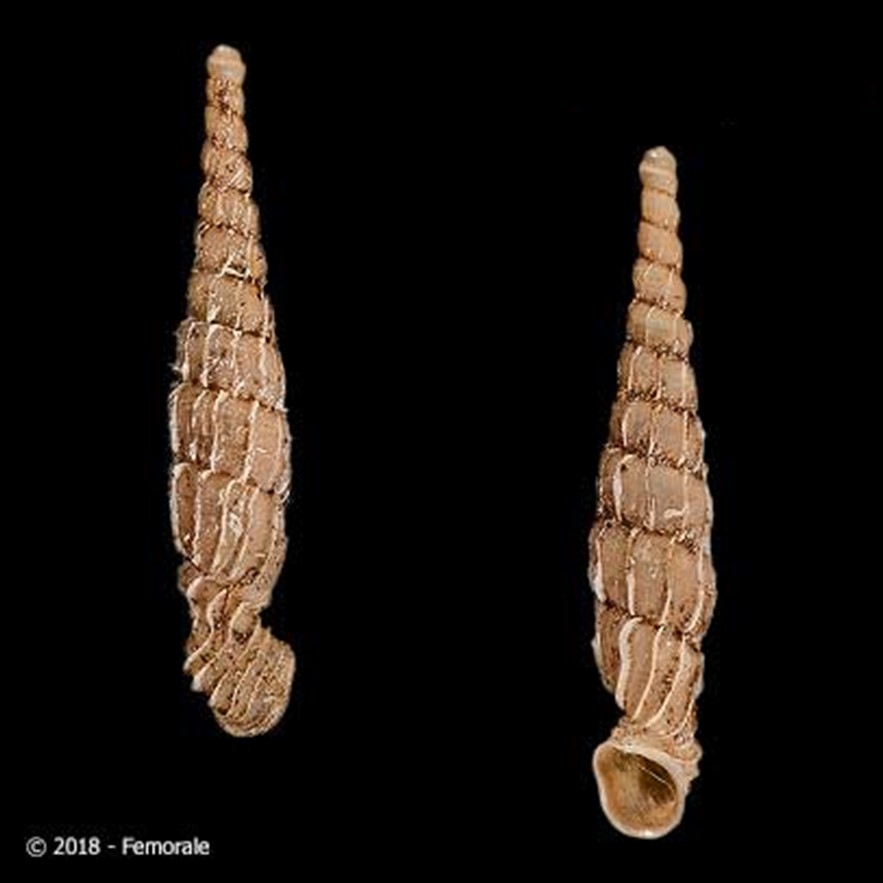
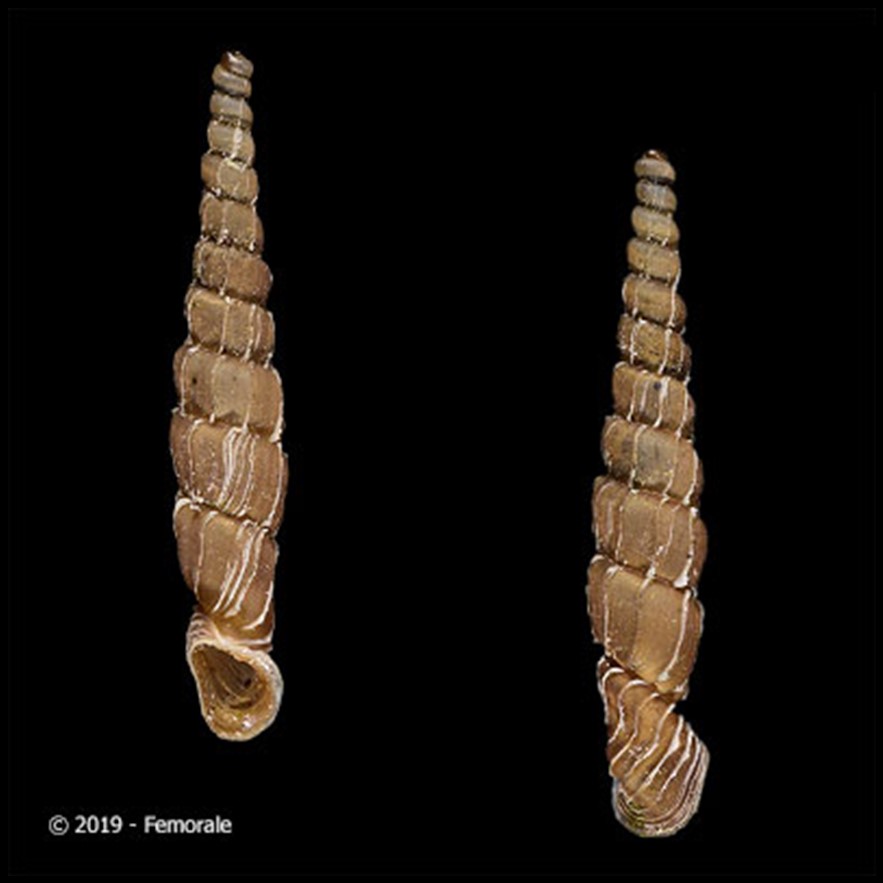
CLASSE: GASTROPODA: TERRESTRE FAMÍLIA: CLAUSILIIDAE ESPÉCIE: Symptychiella elegantissima H. Nordsieck, 2005 Tamanho médio: 14.5 - 16.8 mm Ocorrência: Peru (San Martin) Localidade tipo: Peru, "Peru, Dept. San Martin, path from Palestina to Cueva Huacharos de Palestina (ca. 23 km NW Rioja)" Altitude: nd Nome original: Symptychiella (Divanenia) elegantissima H. Nordsieck, 2005 Etimologia: o nome da espécie é uma referência à sua bela aparência, do Latim "elegantissimus", elegantíssima (=very elegant) Descrição original: (Nordsieck, 2005): "Shell with ± attenuated apical part, whorls rounded, suture deep, protoconch blunt, broader than or equally broad as following whorls, after first half whorl rib-striated; yellowish- to greyish reddishbrown; teleoconch whorls provided with widely spaced sharp ribs with fragile white crests, rib crests on the upper whorls low, on...

CLASSE: GASTROPODA: TERRESTRE FAMÍLIA: CLAUSILIIDAE ESPÉCIE: Symptychiella fratermajor H. Nordsieck, 2010 Tamanho médio: 14.3 – 17.4 mm Ocorrência: Peru (San Martin) Localidade tipo: Peru, San Martin, "path along river from village Aguas Claras to Cuevas de Aguas Claras (100 km NW Moyobamba)" Altitude: 950 m Nome original: Symptychiella (Symptychiella) fratermajor H. Nordsieck, 2010 Etimologia: o nome da espécie é uma referência ao tamanho relativamente maior que a espécie S. (S.) bilamellata, do Latim "frater" = irmão (=brother), "major" = maior (=larger) Descrição original: (Nordsieck, 2010): "Shell with conical or somewhat attenuated apical part, whorls much rounded, protoconch not broader than following whorls; yellowish-white to -brown, in part yellowish-grey; teleoconch whorls distinctly densely rib-striated, lower ones not more weakly, on the neck rib-striation...

CLASSE: GASTROPODA: TERRESTRE FAMÍLIA: ACHATINIDAE ESPÉCIE: Synapterpes auratus (L. Pfeiffer, 1846) Tamanho médio: 32 mm Ocorrência: Equador (Napo, Pichincha), Colômbia (Boyacá, Caldas, Cundimarca, Valle del Cauca) Localidade tipo: não informada Nome original: Bulimus auratus L. Pfeiffer, 1846 Sinônimos: Chryserpes auratus (L. Pfeiffer, 1846); Synapterpes (Chryserpes) auratus (L. Pfeiffer, 1846); Synapterpes auratus var. aratus Pilsbry, 1906 Fotos: (1,2) Natural History Museum, London: SYNTYPE NHMUK 1987019, localidade não informada Breure & Araujo, 2017: (A) Leptinaria anomala (Pfeiffer, 1846), MNCN 15.05/20183; (B) Leptinaria unilamellata (d’Orbigny, 1835), MNCN 15.05/20147; (C) Stenogyra regularis (Pfeiffer, 1852), MNCN 15.05/39953; (D) Subulina octona (Bruguière, 1792), MNCN 15.05/39954; (E) Obeliscus haplostylus (Pfeiffer, 1846), MNCN 15.05/37048; (F) Protobeliscus riparius (Pfeiffer, 1854), MNCN 15.05/15511; (G) Obeliscus obeliscus (Moricand, 1834), MNCN 15.05/15513; (H) Neobeliscus calcareus (Born, 1778), MNCN 15.05/15512; (I) Synapterpes auratus (Pfeiffer, 1846), MNCN 15.05/20330; (J) Synapterpes visendus (Hidalgo, 1869),...
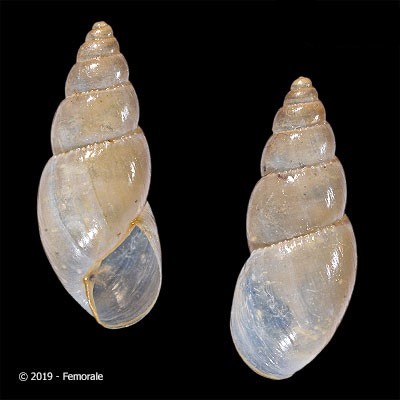
CLASSE: GASTROPODA: TERRESTRE FAMÍLIA: ACHATINIDAE ESPÉCIE: Synapterpes coronatus (L. Pfeiffer, 1846) Tamanho médio: 21 mm Habitat: vive no solo, sob folhas ou enterrada parte do tempo Ocorrência: Brasil (Rio de Janeiro) Localidade tipo: Brasil, sem localidade específica Nome original: Bulimus coronatus L. Pfeiffer, 1846 Sinônimos: Synapterpes (Synapterpes) coronatus (L. Pfeiffer, 1846); Bulimus (Leptomerus) coronatus L. Pfeiffer, 1846 Fotos: (1) cortesia Femorale, 2019, Rio de Janeiro, Serrá de Macaé, 18 mm Fontes: Descrição original: (como Bulimus coronatus L. Pfeiffer, 1846) Pfeiffer, L. (1846). Symbolae ad historiam Heliceorum. Sectio tertia. 1–100. Cassellis: Th. Fischer [< 26 August]., disponível online em https://biodiversitylibrary.org/page/12254325 página(s): 83 Simone, L. R. L. (2006). Land and Freshwater Molluscs of Brazil. Editora Gráfica Bernardi, FAPESP. São Paulo, 390 pp. Comentário: a...
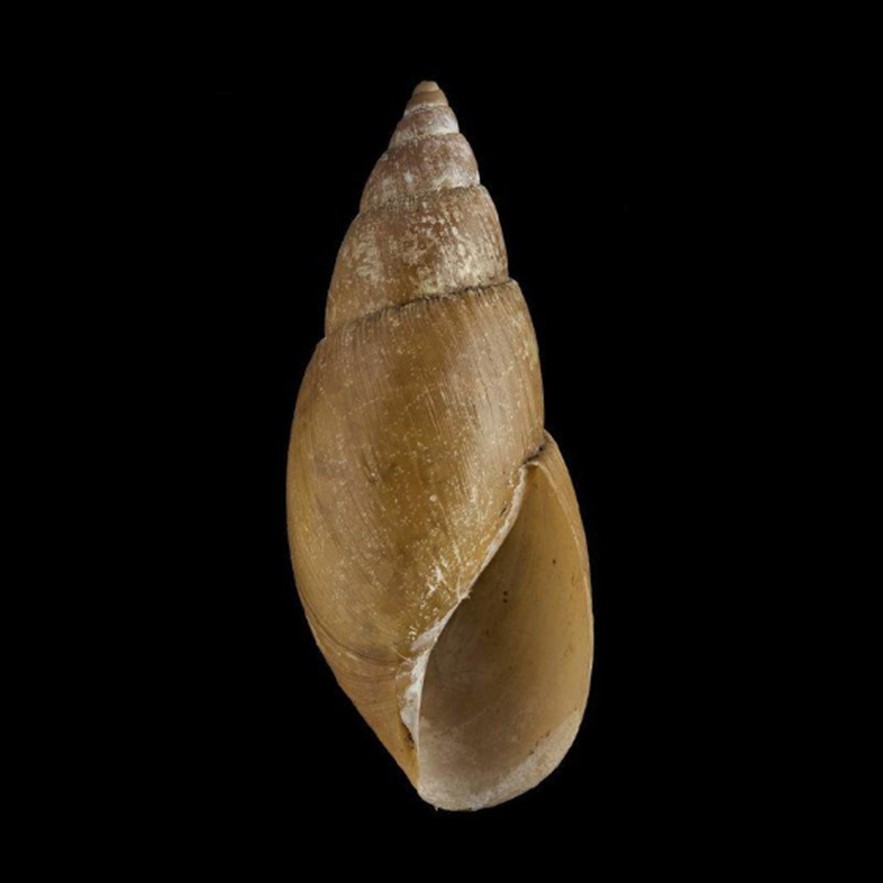
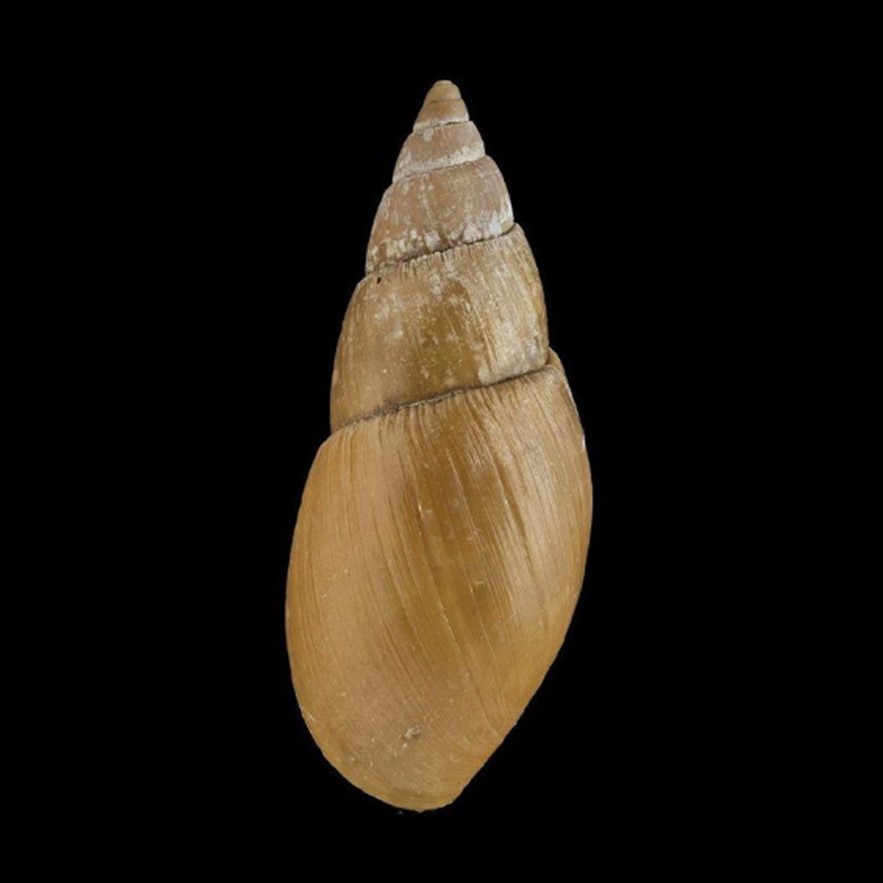
CLASSE: GASTROPODA: TERRESTRE FAMÍLIA: ACHATINIDAE ESPÉCIE: Synapterpes hanleyi (L. Pfeiffer, 1846) Tamanho médio: 30 - 52 mm Habitat: vive no solo, sob folhas ou enterrada parte do tempo Ocorrência: Brasil (Rio de Janeiro) Localidade tipo: Brasil, sem localidade específica Etimologia: nome da espécie em homenagem a Sylvanus Charles Thorp Hanley (1819 - 1899), malacólogo britânico, que também publicou vários trabalhos usando o pseudônimo de Charles Thorpe Nome original: Bulimus hanleyi L. Pfeiffer, 1846 Fotos: (1-3) Natural History Museum, London: SYNTYPE de Synapterpes hanleyi (L. Pfeiffer, 1846), NHMUK 20250441, Brasil; (4) animal vivo, Macaé, Rio de Janeiro, 32mm, coll. C. Henckes Fontes: Descrição original: (como Bulimus hanleyi L. Pfeiffer, 1846) Philippi, R. A. (1845-1847). Abbildungen und Beschreibungen neuer oder...
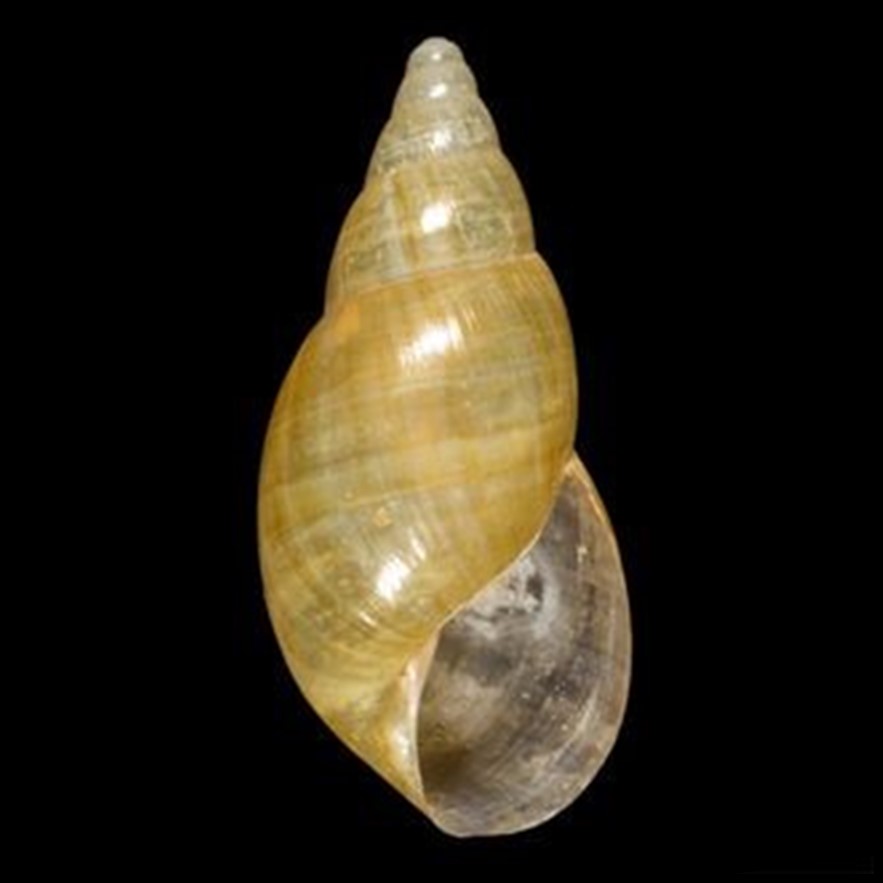
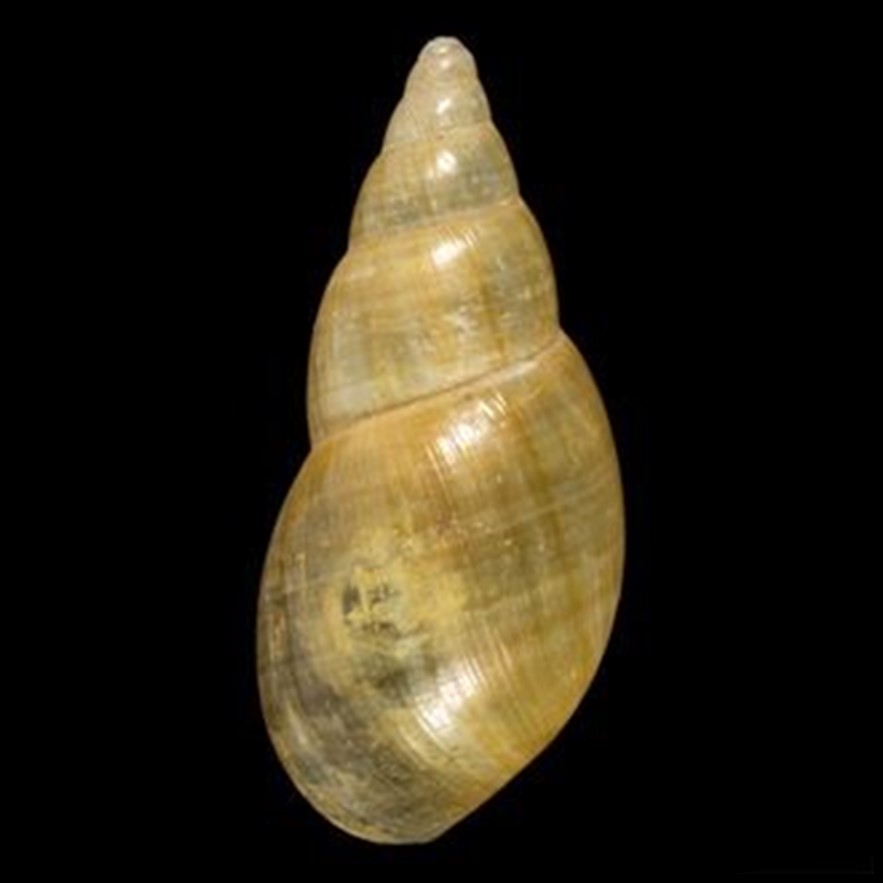
CLASSE: GASTROPODA: TERRESTRE FAMÍLIA: ACHATINIDAE ESPÉCIE: Synapterpes visendus (Hidalgo, 1869) Tamanho médio: 32 mm Ocorrência: Equador (Napo, Pichincha) Localidade tipo: Equador, Baeza Nome original: Bulimus visendus Hidalgo, 1869 Fotos: (1-3) Museu Nacional de História Natural, Paris: LECOTYPE de Synapterpes visendus, MNHN 2000-28157, Equador, Baeza, 32mm Breure & Araujo, 2017: (A) Leptinaria anomala (Pfeiffer, 1846), MNCN 15.05/20183; (B) Leptinaria unilamellata (d’Orbigny, 1835), MNCN 15.05/20147; (C) Stenogyra regularis (Pfeiffer, 1852), MNCN 15.05/39953; (D) Subulina octona (Bruguière, 1792), MNCN 15.05/39954; (E) Obeliscus haplostylus (Pfeiffer, 1846), MNCN 15.05/37048; (F) Protobeliscus riparius (Pfeiffer, 1854), MNCN 15.05/15511; (G) Obeliscus obeliscus (Moricand, 1834), MNCN 15.05/15513; (H) Neobeliscus calcareus (Born, 1778), MNCN 15.05/15512; (I) Synapterpes auratus (Pfeiffer, 1846), MNCN 15.05/20330; (J) Synapterpes visendus (Hidalgo, 1869), MNCN 15.05/3208. Linha da Escala: 1 mm (C), 1 cm (F–H), 5 mm (todos os outros) ...
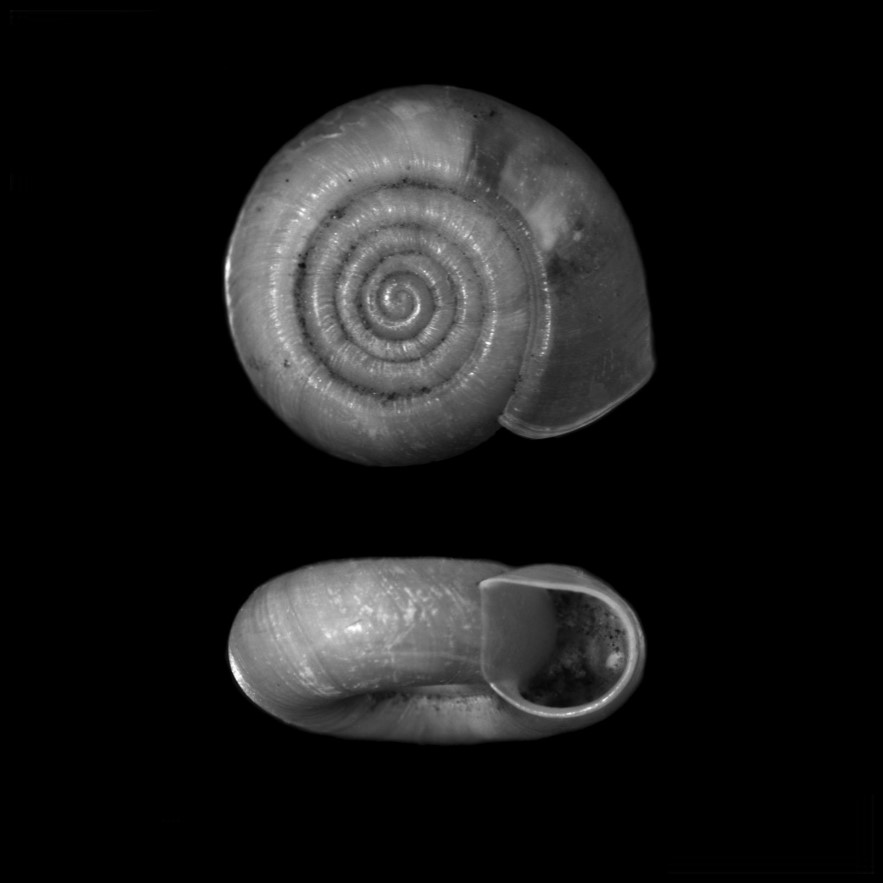
CLASSE: GASTROPODA: TERRESTRE FAMÍLIA: SCOLODONTINAE ESPÉCIE: Systrophia argentina (Strobel, 1874) Tamanho médio: 4.5 - 6.0 mm Distribuição: Argentina (Mendoza) Localidade tipo: Argentina, Mendoza, Villa Vicencio and Casa de Piedra, Precordillera Altitude: 2050 m Nome original: Hyalinia (Ammonoceras) argentina Strobel, 1874 Fotos: (1) Miquel, S.E. (2020): Museo Argentino de Ciencias Naturales, MACN-In 42446, Argentina, Mendoza, Quebrada San Isidro, 4.68mm Figura: Miquel, S.E. (2020): Systrophia argentina (Strobel, 1874), (A-D) MACN-In 42446, Quebrada San Isidro, 2.050 masl, Precordillera Mendoza province, Argentina; (E-F) detalhes da rádula Fontes: Descrição original: (como Hyalinia (Ammonoceras) argentina Strobel, 1874) Strobel, P. (1874). Materiali per una malacostatica di terra e di acqua dolce dell'Argentinia meridionale. IXXX + 142, 4 pls. [Biblioteca Malacologica, Pisa]., disponível online em https://www.biodiversitylibrary.org/page/32401424...
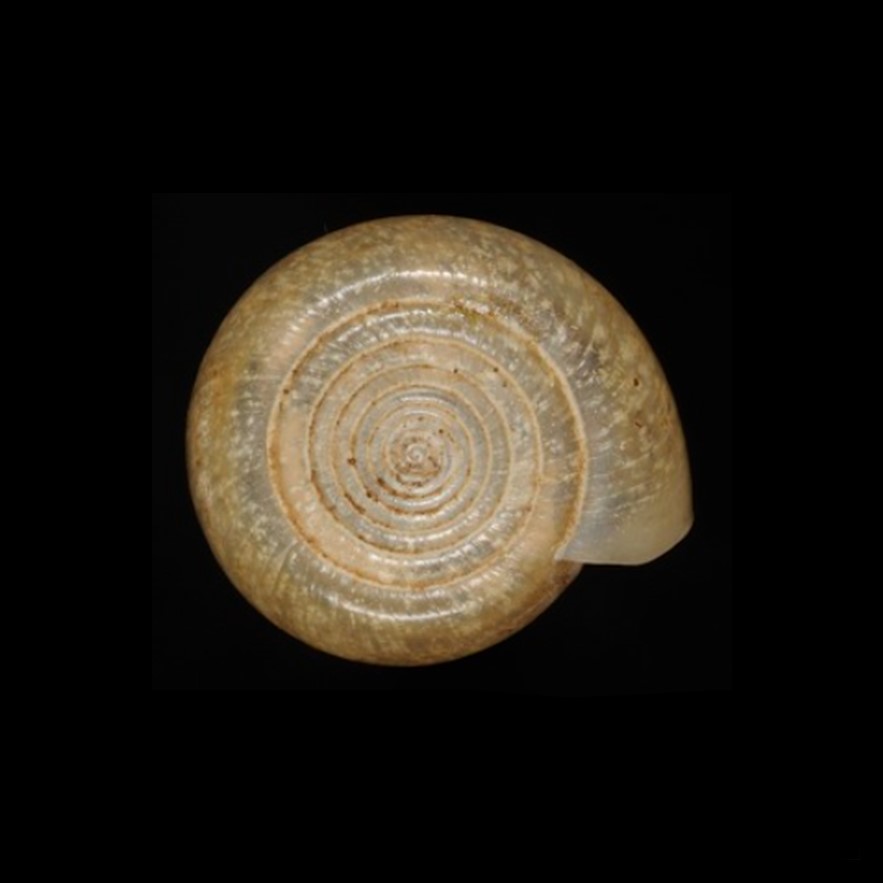
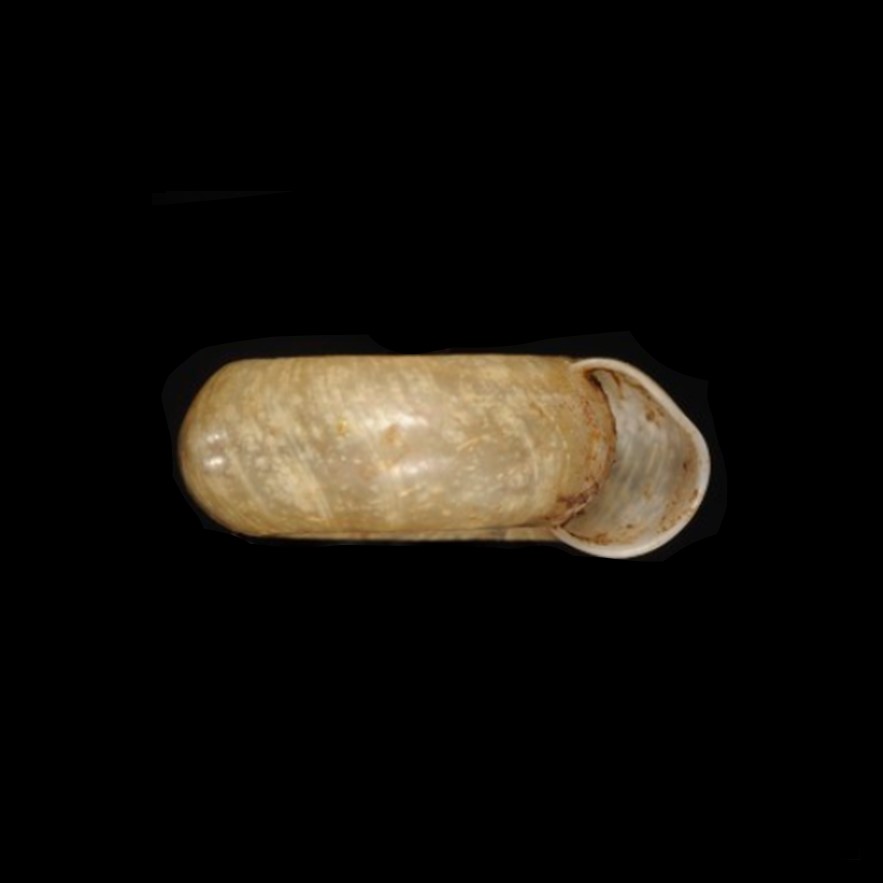
CLASSE: GASTROPODA: TERRESTRE FAMÍLIA: SCOLODONTIDAE ESPÉCIE: Systrophia eatoni F. Baker, 1914 Tamanho médio: 12 mm Distribuição: Brasil (Rondônia), Colômbia (Cesar, Norte de Santander) Localidade tipo: Porto Velho, Rondônia, Brasil Nome original: Systrophia eatoni F. Baker, 1914 Fotos: (1-3) The Academy of Natural Sciences, Philadelphia: LECTOTYPE ANSP 109299, Campo 35 da Ferrovia Madeira-Mamoré, Rondônia, doador: F. Baker, 1913 Fontes: Descrição original: Baker, F. (1914 ["1913"]). The land and fresh-water mollusks of the Stanford Expedition to Brazil. Proceedings of the Academy of Natural Sciences of Philadelphia. 65(3): 618-672., disponível online em https://www.biodiversitylibrary.org/page/26307597 página(s): 631 Linares, E. L. & Vera M. L. (2012). Catálogo de los Moluscos Continentales de Colombia. Bogotá: Universidad Nacional de Colombia. 360 pp. página(s): 227 Simone, L....
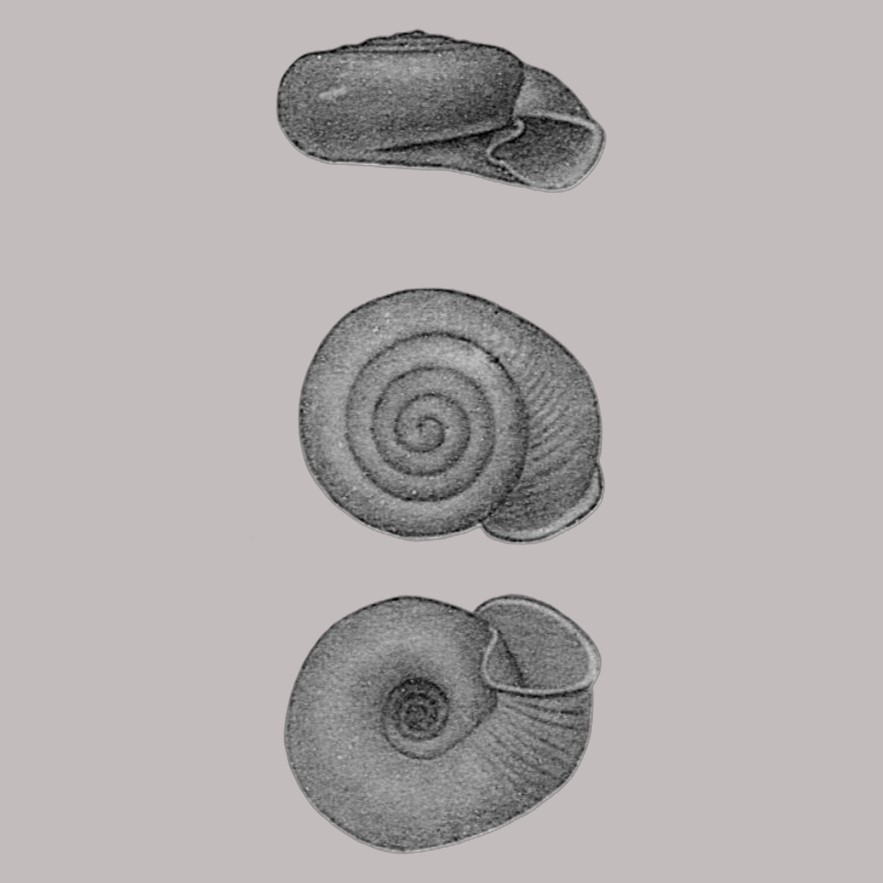
CLASSE: GASTROPODA: TERRESTRE FAMÍLIA: SCOLODONTINAE ESPÉCIE: Systrophia exigua (Thiele, 1927) Tamanho médio: 3.0 mm Distribuição: Brasil Localidade tipo: "Brasil", sem localidade específica Nome original: Systrophia (Entodina) exigua Thiele, 1927 Comentários: (a) Molluscabase, 2025 considera Systrophia exigua (Thiele, 1927) como taxon inquirendum; (b) material tipo depositado no Museum für Naturkunde, Berlin - Malakologie, SYNTYPE ZMB/Moll 79050 Fotos: (1) Thiele, J. (1927), plate 26, figuras 16 a - c, desenho original, editado, 2.5mm Fontes: Descrição original: Thiele, J. (1927). Über einige brasilianische Landschnecken. Abhandlungen der Senckenbergischen Naturforschenden Gesellschaft. 40 (3): 307-329, pl. 26. Frankfurt am Main. página(s): 320, Figs 16a-c Simone, L. R. L. (2006). Land and Freshwater Molluscs of Brazil. Editora Grafíca Bernardi, FAPESP. São Paulo, 390 pp, página 223 ...

CLASSE: GASTROPODA: TERRESTRE FAMÍLIA: SCOLODONTIDAE ESPÉCIE: Systrophia gigas Roosen & Dorado, 2025 Tamanho médio: 21 mm Distribuição: Equador (Napo) Localidade tipo: Equador, "Napo Province, vía Hollín - Loreto, Río Hollín" Altitude: 1072 m Nome original: Systrophia gigas Roosen & Dorado, 2025 Etimologia: o nome da espécie é uma referência ao grande tamanho, em relação às demais espécies do gênero Descrição original: (Roosen & Dorado 2025): "Shell strongly depressed, large for the genus, with a minimally raised spire; No distinction between protoconch and teleoconch. Whorl diameter small, only slowly increasing in width, creating a maze-like appearance from apertural view. Sculpture consists of growth lines and weak inconsistent spiral elements. Aperture and preceding section of whorl slightly deflected, impressed from the side, resulting in...
CLASSE: GASTROPODA: TERRESTRE FAMÍLIA: SCOLODONTIDAE ESPÉCIE: Systrophia gomezi (G. B. Sowerby III, 1892) Tamanho médio: 12 mm Ocorrência: Colômbia (Cundimarca) Localidade tipo: Colômbia, "Bogotá" Nome original: Hyalinia gomezi G. B. Sowerby III, 1892 Fotos: nd Fontes: Descrição original: Sowerby, G. B. III. (1892). Descriptions of seven new species of land-shells from the U.S. of Colombia. Proceedings of the Zoological Society of London. 1892: 296-299, pl. 23. [August]., disponível online em https://biodiversitylibrary.org/page/30979405 página(s): 298, pl. 23, figs. 5, 6 Petit, R. E. (2009). George Brettingham Sowerby, I, II & III: their conchological publications and molluscan taxa. Zootaxa. 2189: 1–218., available online at https://doi.org/10.11646/zootaxa.2189.1.1 Linares, E. L. & Vera M. L. (2012). Catálogo de los Moluscos Continentales de Colombia. Bogotá: Universidad Nacional de Colombia....
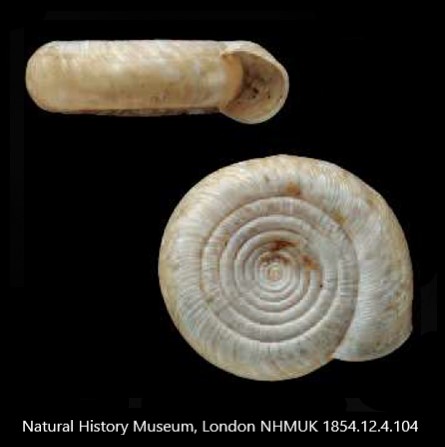
CLASSE: GASTROPODA: TERRESTRE FAMÍLIA: SCOLODONTIDAE ESPÉCIE: Systrophia helicycloides (A. d'Orbigny, 1835) Tamanho médio: 15 mm Distribuição: Bolívia, Equador, Colômbia, Brasil (Amazonas) Localidade tipo: Bolívia, Rio Chaparé Nome original: Helix helicycloides A. d'Orbigny, 1835 Sinônimos: Systrophia (Systrophia) helicycloides (A. d'Orbigny, 1835) Fotos: (1) Natural History Museum, London: NHMUK 1854.12.4.104, 14.6mm, "republica Boliviana" Fontes: Descrição original: (como Helix helicycloides A. d'Orbigny, 1835)Orbigny, A. d'. (1835). Synopsis terrestrium et fluviatilium molluscorum, in suo per Americam meridionalem itinere collectorum. Magasin de Zoologie. 5(61): 1-44., disponível online em https://www.biodiversitylibrary.org/page/2633132 página(s): 6 Simone, L. R. L. (2006). Land and Freshwater Molluscs of Brazil. Editora Gráfica Bernardi, FAPESP. São Paulo, 390 pp. página(s): 222 Salvador, Rodrigo & Miranda, Marcel & Santos, Fernanda & Oliveira, Cléo & Arruda, Janine & Cavallari,...

CLASSE: GASTROPODA: TERRESTRE FAMÍLIA: SCOLODONTIDAE ESPÉCIE: Systrophia heligmoida (A. d'Orbigny, 1835) Tamanho médio: 12.5 mm Distribuição: Equador, Peru, Brasil Localidade tipo: Equador (a localidade histórica de Guayaquil é considerada imprecisa) Nome original: Helix (Helicogena) heligmoida A. d'Orbigny, 1835 Sinônimos: Helix (Helicogena) heligmoida A. d'Orbigny, 1835; Helix (Polygyra) heligmoidea A. d'Orbigny, 1835; Helix heligmoida A. d'Orbigny, 1835; Polygyratia heligmoida (A. d'Orbigny, 1835); Systrophia (Entodina) heligmoida (A. d'Orbigny, 1835); Systrophia (Systrophia) heligmoida (A. d'Orbigny, 1835) Fotos: (1) Natural History Museum, London: SYNTYPE NHMUK 1854.12.4.106, doador: Alcide Dessalines d'Orbigny Fontes: Descrição original: (como Helix (Helicogena) heligmoida A. d'Orbigny, 1835) Orbigny, A. d'. (1835). Synopsis terrestrium et fluviatilium molluscorum, in suo per Americam meridionalem itinere collectorum. Magasin de Zoologie. 5(61): 1-44., disponível online em...

CLASSE: GASTROPODA: TERRESTRE FAMÍLIA: SCOLODONTIDAE ESPÉCIE: Systrophia incarum Crawford, 1939 Tamanho médio: 5.0 mm Ocorrência: Peru (Cuzco) Localidade tipo: Peru, "Pisac, in the Urubamba Valley" Altitude: 3200 m Nome original: Systrophia incarnum Crawford, 1939 Sinônimos: Wayampia incarna (Crawford, 1939) Fotos: (1,2) Natural History Museum, London: HOLOTYPE de Systrophia incarum Crawford, 1939, NHMUK 1939.4.17.104-107, coll 16.iv.1937, 9.0 mm Fontes: Descrição original: (como Systrophia incarnum Crawford, 1939) Crawford, G. I. (1939). Report on the terrestrial Mollusca collected by the Percy Sladen Expedition to Lake Titicaca, 1937. Proceedings of the Malacological Society of London. 23(6): 318–332., disponível online em https://doi.org/10.1093/oxfordjournals.mollus.a064373 página(s): 324, pl. 20, figs 20-22 Natural History Museum (2026). Natural History Museum (London) Collection Specimens. Occurrence dataset https://doi.org/10.5519/qd.4fmbrm00 accessed via GBIF.org on 2026-03-06....
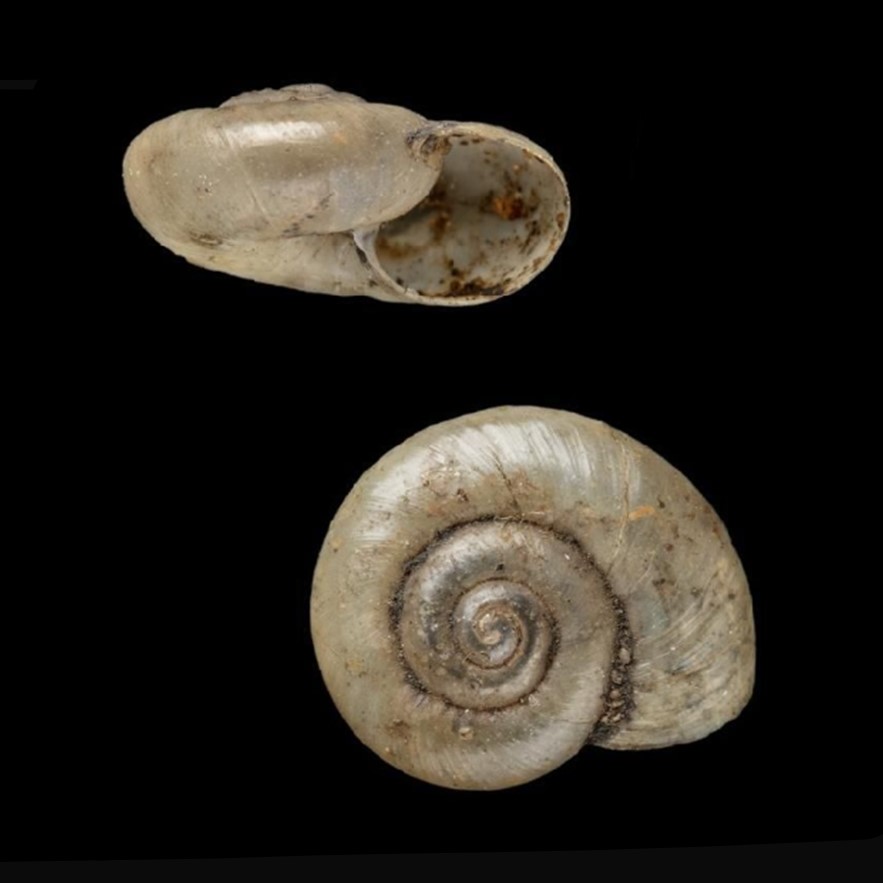
CLASSE: GASTROPODA: TERRESTRE FAMÍLIA: SCOLODONTIDAE ESPÉCIE: Systrophia insignis (A. d'Orbigny, 1835) Tamanho médio: 8 mm Ocorrência: Equador, Chile (Coquimbo?) Localidade tipo: Equador, Guayaquil Nome original: Helix insignis A. d'Orbigny, 1835 Fotos: (1,2) Natural History Museum, London: SYNTYPE de Systrophia insignis (A. d'Orbigny, 1835), NHMUK 1854.12.4.73, Equador, 8mm Fontes: Descrição original: (como Helix insignis A. d'Orbigny, 1835) Orbigny, A. d'. (1835). Synopsis terrestrium et fluviatilium molluscorum, in suo per Americam meridionalem itinere collectorum. Magasin de Zoologie. 5(61): 1-44., disponível online em https://www.biodiversitylibrary.org/page/2633132 página(s): 5; note: name attributed by d'Orbigny to Férussac Breure, A. S. H., Roosen, M. T. & Ablett, J. D. (2022). Land and freshwater molluscs of mainland Ecuador: an illustrated checklist. Iberus. 40(1): 1-290. página(s): 110, figs. 140, 147 ...
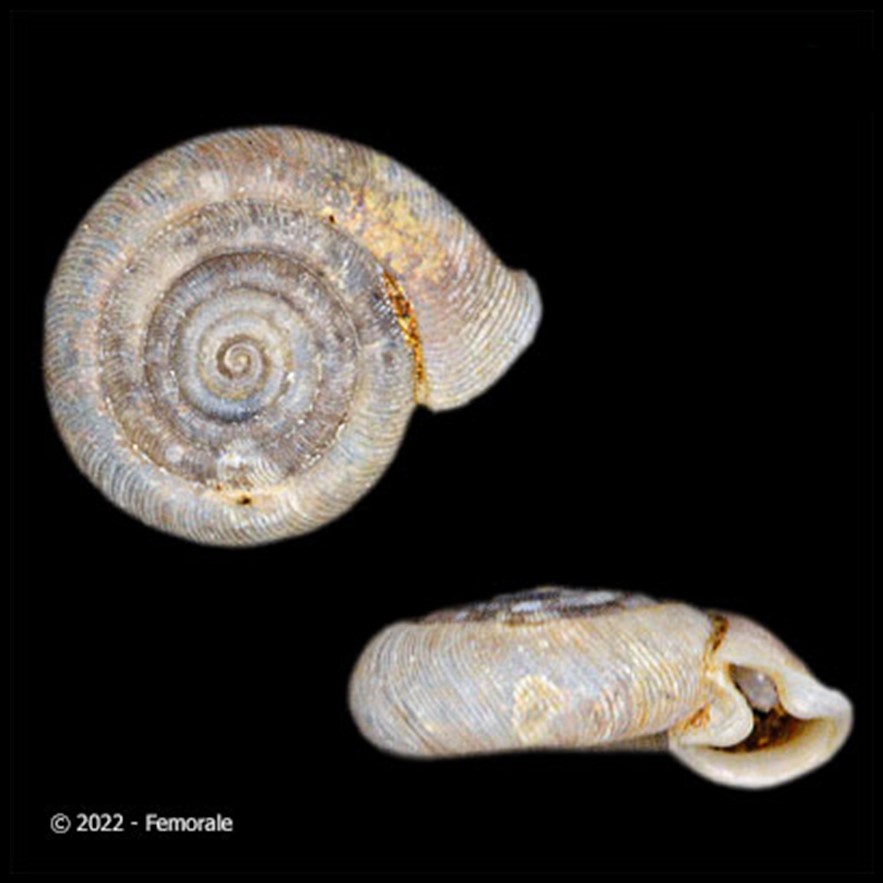

CLASSE: GASTROPODA: TERRESTRE FAMÍLIA: SCOLODONTIDAE ESPÉCIE: Systrophia lundii (Mörch, 1871) Tamanho médio: 5 mm Distribuição: Brasil (Minas Gerais) Localidade tipo: "Habitat Lappa da Pedro Brasiliae interioris. Lecta a P. W. Lund una cum Helicina Lundii Beck et Bul. sulcato Pfr." Comentários: Se considerarmos que Systrophia lundii provém da mesma localidade tipo de Helicina lundi, teríamos "Lapa da Pedro dos Indos". O material tipo está depositado no Natural History Museum of Denmark, SYNTYPE NHMD 91567, coll. Peter Lund, Lagoa Santa, Minas Gerais). Um segundo registro NHMD91566 foi coletado por Lund em Rio das Velhas Nome original: Helix (Polygyra) lundii Mörch, 1871 Sinônimos: Systrophia lundi (Mörch, 1871) Etimologia: o nome da espécie é uma homenagem a Peter Wilhelm Lund (Copenhague, 14 de junho de...
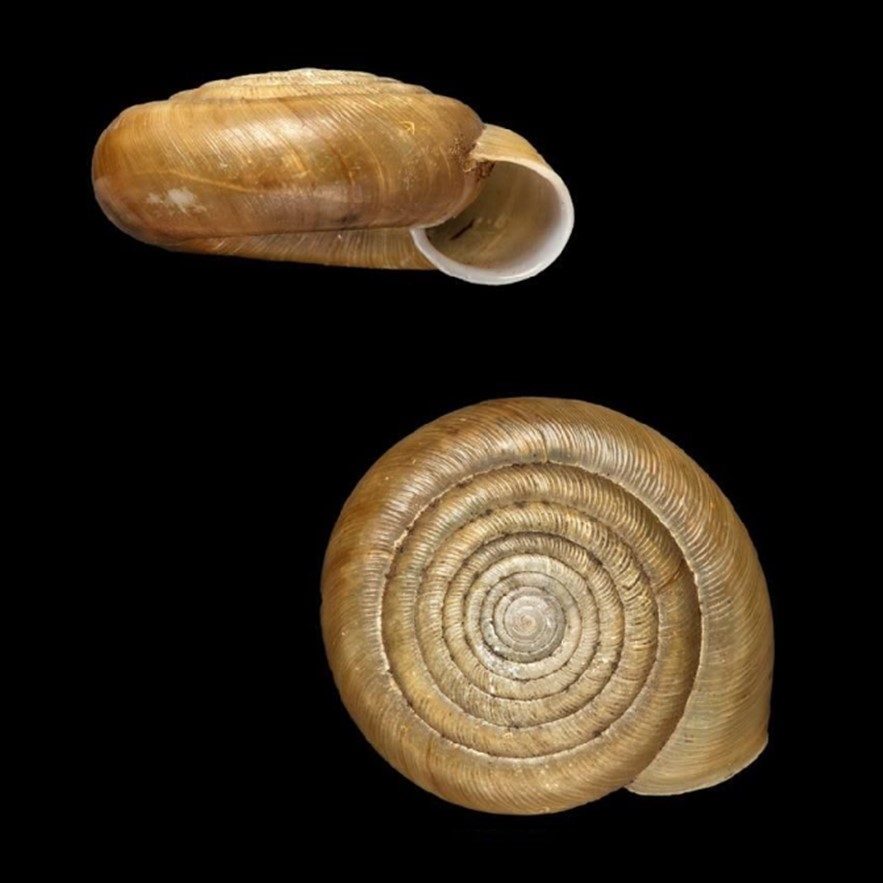
CLASSE: GASTROPODA: TERRESTRE FAMÍLIA: SCOLODONTINAE ESPÉCIE: Systrophia moellendorffi Rolle, 1904 Tamanho médio: 19 mm Distribuição: Peru (Chanchamayo, Huancabamba) Localidade tipo: Peru, "Huancabamba in Peru, bei 6–10000 Fuss Meereshöhe" Nome original: Systrophia moellendorffi Rolle, 1904 Sinônimos: Systrophia (Systrophia) moellendorffi Rolle, 1904; Systrophia moellendorfii Rolle, 1904 [sic] Comentários: Segundo Roosen & Dorado, 2025 "é possível que Systrophia helicycloides e Systrophia moellendorffi sejam representantes de um gênero separado de Systrophia, a julgar por seu grande tamanho, ausência de impressões ou dentes perto da abertura e forte nervura na teleoconcha" Fotos: (1,2) Natural History Museum, London: possível PARALECTOTYPE de Systrophia moellendorffi, NHMUK 1908.12.18.61-62, Peru, Huancabamba, 19.10mm Fontes: Descrição original: Rolle, H. (1904). Diagnosen neuer Arten. Nachrichtsblatt der deutschen malakozoologischen...
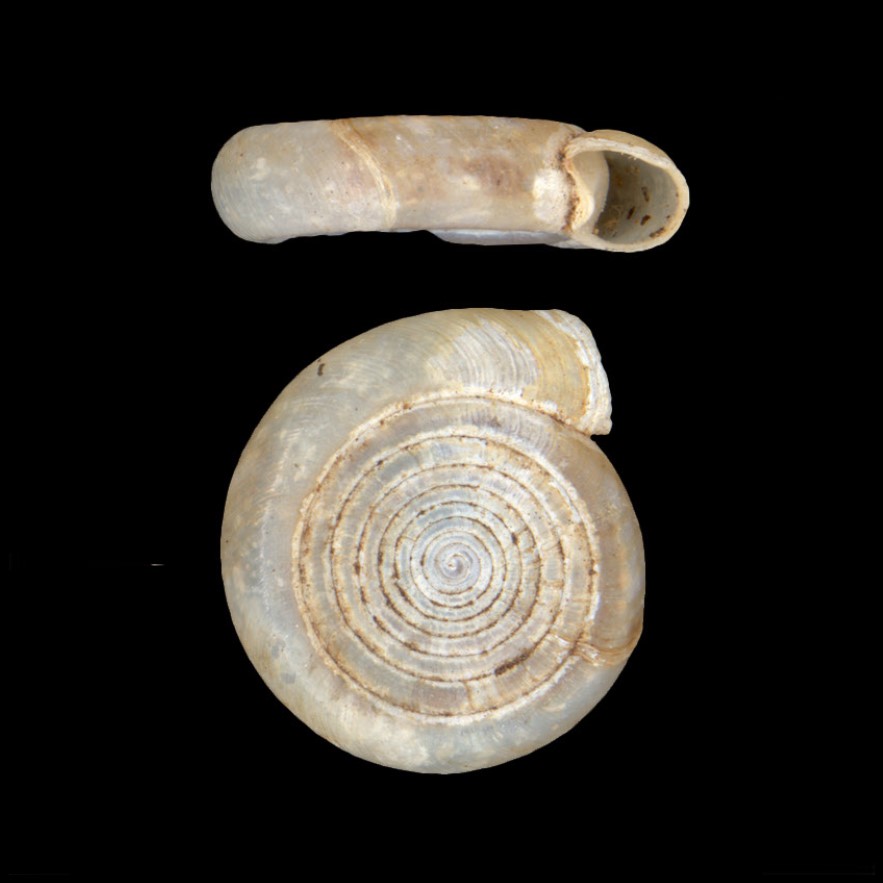
CLASSE: GASTROPODA: TERRESTRE FAMÍLIA: SCOLODONTINAE ESPÉCIE: Systrophia platygyra (Albers, 1857) Tamanho médio: 12 mm de diâmetro Distribuição: Colômbia Localidade tipo: Colômbia, "Colombia, ad fluvium Maranhon" Nome original: Helix platygyra Albers, 1857 Sinônimos: Systrophia (Entodina) platygyra (Albers, 1857) Fotos: (1,2) Breure & Ablett, 2024: Museum für Naturkunde Berlin, SYNTYPE de Systrophia platygyra, ZMB/Moll 264702, 12mm Fontes: Descrição original: (como Helix platygyra Albers, 1857) Albers, J. C. (1857). Diagnosen neuer Heliceen mit gelegentlicher Berichtigung einiger älteren Arten. Malakozoologische Blätter. 4(5): 89-100, pl. 1-2. Cassel [May]., disponível online em https://www.biodiversitylibrary.org/page/15865334 página(s): 94 Breure, Bram & Ablett, Jonathan. (2024). Salvation and documentation: additional (probable) type material of South American land-snail species (Gastropoda, Stylommatophora) in the Museum für Naturkunde Berlin. Journal of Conchology. 45. 1-14 Molluscabase:...

CLASSE: GASTROPODA: TERRESTRE FAMÍLIA: SCOLODONTIDAE ESPÉCIE: Systrophia riojaensis Roosen & Dorado, 2025 Tamanho médio: 11.9 - 13.5 mm Distribuição: Peru (San Martin) Localidade tipo: Peru, "San Martin Department, Rioja Province, Nueva Cajamarca, near Cueva de Palestina" Nome original: Systrophia riojaensis Roosen & Dorado, 2025 Etimologia: o nome da espécie é uma referência à localidade tipo, a Privíncia de Rioja Descrição original: (Roosen & Dorado 2025): "Shell strongly depressed, average size for the genus, with a sunken spire; no distinction between the protoconch and teleoconch. Whorl diameter small, only slowly increasing in width, creating a maze-like appear-ance from apical view. Sculpture consists solely of growth lines and numerous indistinct axial ribs. Aperture and preceding section of whorl slightly deflected, widened, impressed from the...

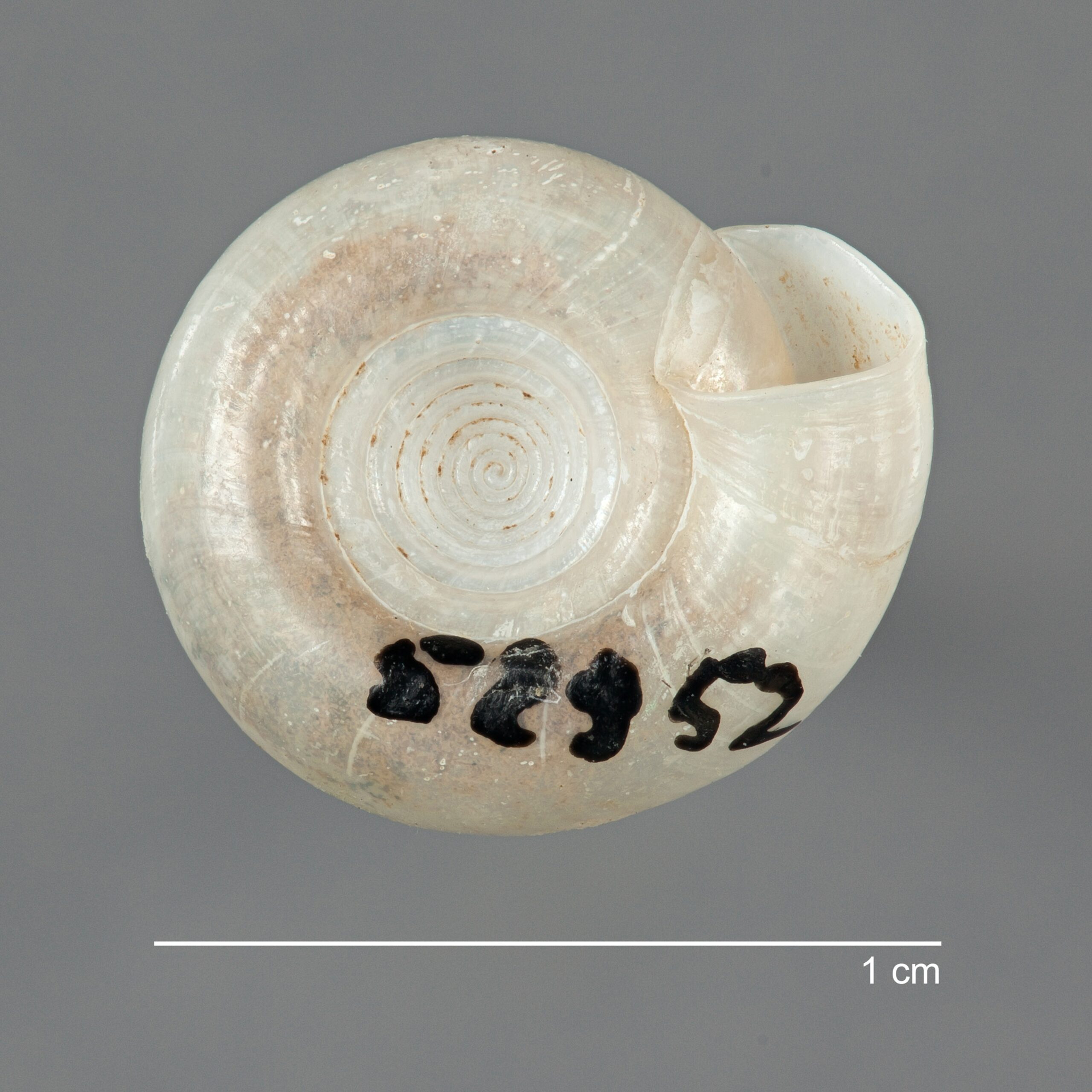
CLASSE: GASTROPODA: TERRESTRE FAMÍLIA: SCOLODONTIDAE ESPÉCIE: Systrophia siolii F. Haas, 1955 Tamanho médio: 10 mm Distribuição: Brasil (Pará) Localidade tipo: Serra Formosa, Monte Alegre, Pará Nome original: Systrophia (Systrophia) siolii F. Haas, 1955 Etimologia: o nome da espécie é uma homenagem ao agrônomo, pesquisador Harald Felix Ludwig Sioli (Köthen, 25 de agosto de 1910 – Plön, 14 de outubro de 2004). Foi preso em campo de concentração no interior do Pará durante a Segunda Guerra Mundial. Após a guerra, realizou pesquisas no Instituto Nacional de Pesquisa da Amazônia (INPA), em Manaus. Residiu na Amazônia por duas décadas Fotos: (1-3) Field Museum of Natural History: HOLOTYPE de Systrophia siolii Haas, 1955, FMNH 52352, 10mm, 22.ix, 1954, leg. Harald Sioli Fontes:...
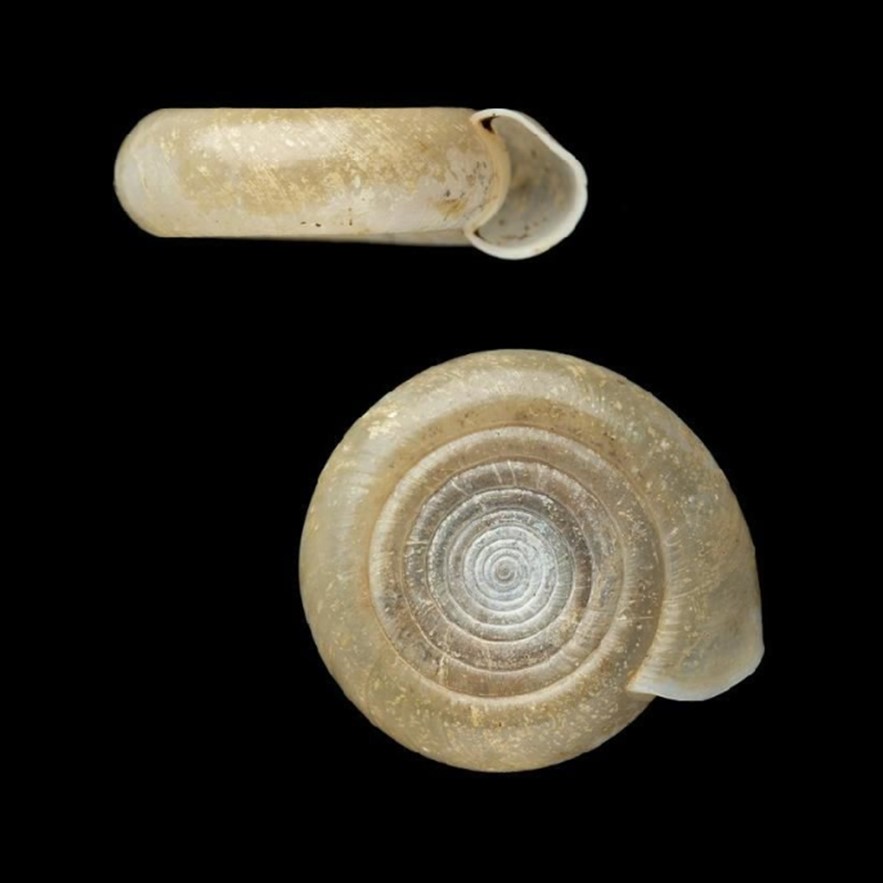
CLASSE: GASTROPODA: TERRESTRE FAMÍLIA: SCOLODONTIDAE ESPÉCIE: Systrophia stenogyra (L. Pfeiffer, 1854) Tamanho médio: ~13 mm Distribuição: Peru, Brasil (Amazonas) Localidade tipo: Ega, Brasil Nome original: Helix stenogyra L. Pfeiffer, 1854 Sinônimos: Systrophia (Systrophia) stenogyra (L. Pfeiffer, 1854) Fotos: (1,2) Natural History Museum, London: (1) SYNTYPE de Systrophia stenogyra (L. Pfeiffer, 1854), NHMUK 20220269, Brasil, Egas; (2) NHMUK 1850.10.28.4, Ega, Brasil, doador: Mr S Stephens Fontes: Descrição original: (como Helix stenogyra L. Pfeiffer, 1854) Pfeiffer, L. (1854). Nachschrift. Malakozoologische Blätter. 1: 221-223., disponível online em https://www.biodiversitylibrary.org/page/15864684 página(s): 221 Ramírez, R.; Paredes, C.; Arenas, J. (2003). Moluscos del Perú. Revista de Biologia Tropical. 51 (supplement 3): 225-284 Natural History Museum (2026). Natural History Museum (London) Collection Specimens. Occurrence dataset https://doi.org/10.5519/qd.4fmbrm00...
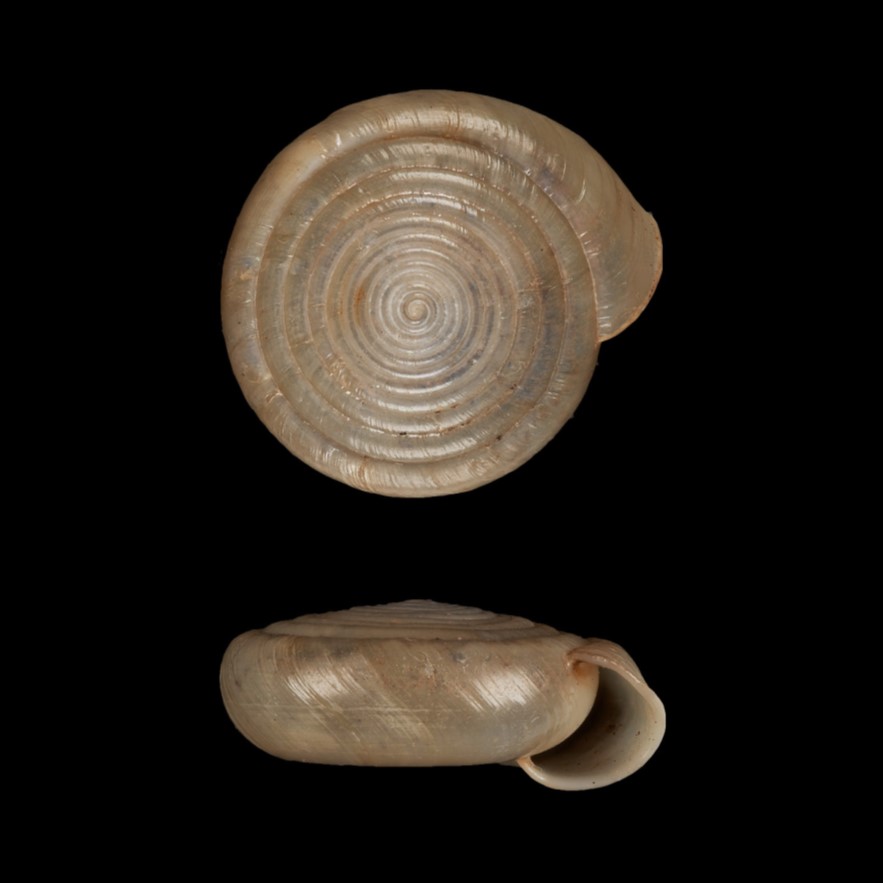
CLASSE: GASTROPODA: TERRESTRE FAMÍLIA: SCOLODONTINAE ESPÉCIE: Systrophia systropha (Albers, 1854) Tamanho médio: 12 mm Distribuição: Peru, ao longo do Rio Marañón Localidade tipo: “Columbia ad fluvium Maranhon” (= Rio Marañón, Peru), leg. Warszewicz (Albers 1854) Nome original: Helix systropha Albers, 1854 Sinônimos: Systrophia (Systrophia) systropha (Albers, 1854) Redescrição: Roosen, M. T.; Salvador, R. B.; Breure, A. S. (2025): "Shell of mediums size, subdiscoidal, with a slightly raised spire. First whorls smooth, earlier whorls with minute growth striae. No clear distinction between protoconch and teleoconch whorls. Vestigial spiral grooves visible on the ultimate whorl. Final portion of the last whorl slightly enlarged, widened. Aperture lunulate, with a slight depression on the apical side. Peristome thickened and slightly deflected. Umbilicus narrow for the genus, 43%...

CLASSE: GASTROPODA: TERRESTRE FAMÍLIA: SCOLODONTIDAE ESPÉCIE: Systrophia unidentata Roosen & Dorado, 2025 Tamanho médio: 8.9 - 10.8 mm Distribuição: Equador (Morona Santiago) Localidade tipo: Equador, "Morona Santiago Province, Río Yaupi, Cueva Chinkianas" Altitude: 260 m Nome original: Systrophia unidentata Roosen & Dorado, 2025 Etimologia: o nome da espécie "unidentata" refere-se à característica mais diferenciadora desta espécie, o seu dente apertural na parede palatina do peristômio Descrição original: (Roosen & Dorado 2025): "Shell strongly depressed, small for the genus, with a flat to slightly sunken spire; no visible dis-tinction between the protoconch and teleoconch. Whorl diameter small, only slowly increasing in width, creating a maze-like appearance from apical view. Sculpture con-sists of growth lines and weak inconsistent spiral elements. Aperture and preceding section...
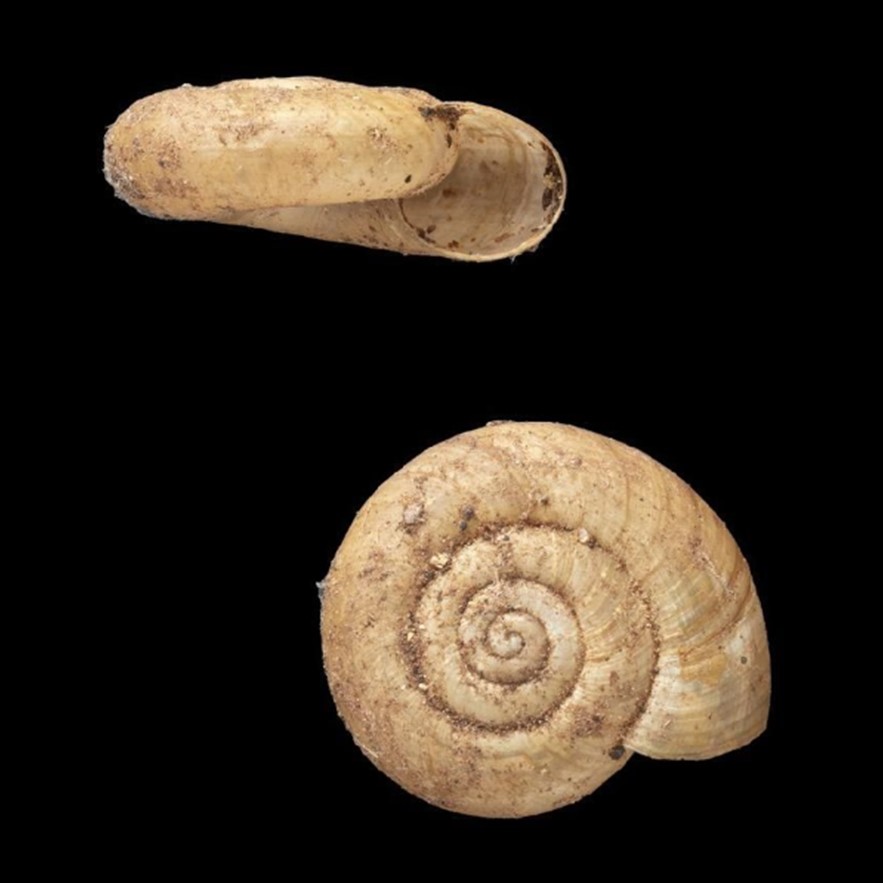
CLASSE: GASTROPODA: TERRESTRE FAMÍLIA: SCOLODONTIDAE ESPÉCIE: Systrophiella altivaga (Crawford, 1939) Tamanho médio: 9.0 mm Ocorrência: Peru (Puno) Localidade tipo: Peru, Puno, "Capachica" Altitude: 3800 m Nome original: Systrophia altivaga Crawford, 1939 Sinônimos: Happia (Systrophiella) altivaga (Crawford, 1939); Happia altivaga (Crawford, 1939); Systrophia (Systrophiella) altivaga Crawford, 1939 Fotos: (1,2) Natural History Museum, London: HOLOTYPE de Systrophiella altivaga (Crawford, 1939), NHMUK 1939.4.17.104-107, coll 16.iv.1937, 9.0 mm Fontes: Descrição original: (como Systrophia altivaga Crawford, 1939) Crawford, G. I. (1939). Report on the terrestrial Mollusca collected by the Percy Sladen Expedition to Lake Titicaca, 1937. Proceedings of the Malacological Society of London. 23(6): 318–332., disponível online em https://doi.org/10.1093/oxfordjournals.mollus.a064373 página(s): 324, pl. 20, figs 17-19 nova combinação: Roosen, M. T. & Breure, A. S. H. (2024). Revision...
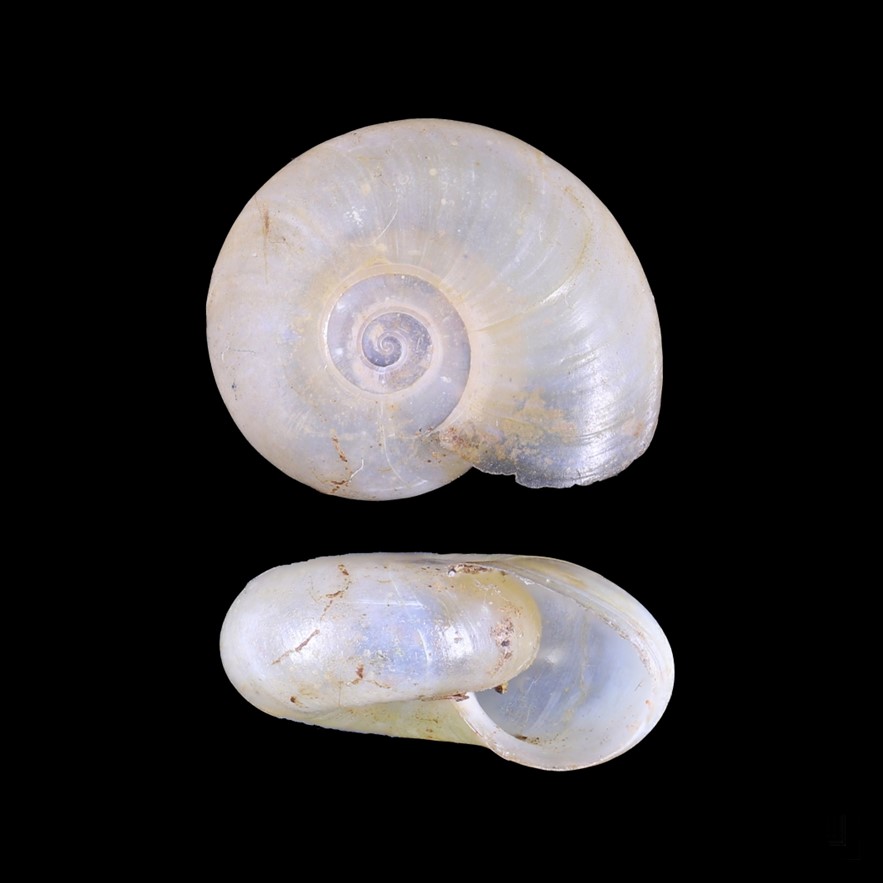
CLASSE: GASTROPODA: TERRESTRE FAMÍLIA: SCOLODONTINAE ESPÉCIE: Systrophiella circumplexa (Deshayes, 1839) Tamanho médio: 13 mm Distribuição: Brasil Localidade tipo: "Brasil", sem localidade específica ("Habite le Brésil; rapportée en 1822, par M.Descourtils. Collection du Muséum") Nome original: Helix circumplexa Deshayes, 1839 Sinônimos: Systrophia circumplexa (Deshayes, 1839) Fotos: (1-3) Museu Nacional de História Natural, Paris: SYNTYPE de Helix circumplexa Deshayes, 1839, MNHN-IM-2000-29186, coll. Com. M. Descourtils 1822, 12.6mm Fontes: Descrição original: (como Helix circumplexa Deshayes, 1839) Deshayes, G. P. (1839-1851). Histoire naturelle générale et particulière des mollusques terrestres et fluviatiles tant des espèces que l'on trouve aujourd'hui vivantes, que des dépouilles fossiles de celles qui n'existent plus; classés d'après les caractères essentiels que présentent ces animaux et leurs coquilles. Tome premier....
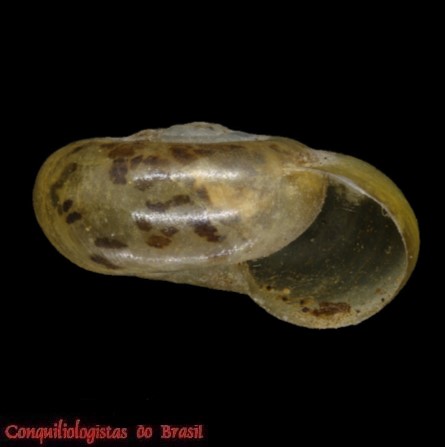
CLASSE: GASTROPODA: TERRESTRE FAMÍLIA: SCOLODONTIDAE ESPÉCIE: Systrophiella pygmea (Spix, 1827) Tamanho médio: ~8 mm Ocorrência: Brasil Localidade tipo: “Habitat cum precedentibus [Provinciis australioribus Brasiliae]” Comentário: o exemplar da Ilha Grande (Estado do Rio de Janeiro, Brasil) figurado por Barbosa (2014) difere apenas ligeiramente o material tipo (Roosen, Marijn & Breure, Bram, 2024) Nome original: Solarium pygmeum Spix, 1827 Sinônimos: Helix nana Wagner in Spix & Wagner 1827; Systrophiella pygmea (Spix in Spix & Wagner, 1827); Happia nana (Barbosa, 2014) Fotos: Roosen, Marijn & Breure, Bram. (2024): Zoologische Staatssammlung München, Munich, Germany (ZSM, SNSB): SYNTYPE de Systrophiella pygmea (Spix in Spix & Wagner, 1827); ZSM 20020657 Figura: Roosen, Marijn & Breure, Bram. (2024): SYNTYPE de Systrophiella pygmea (Spix in Spix...
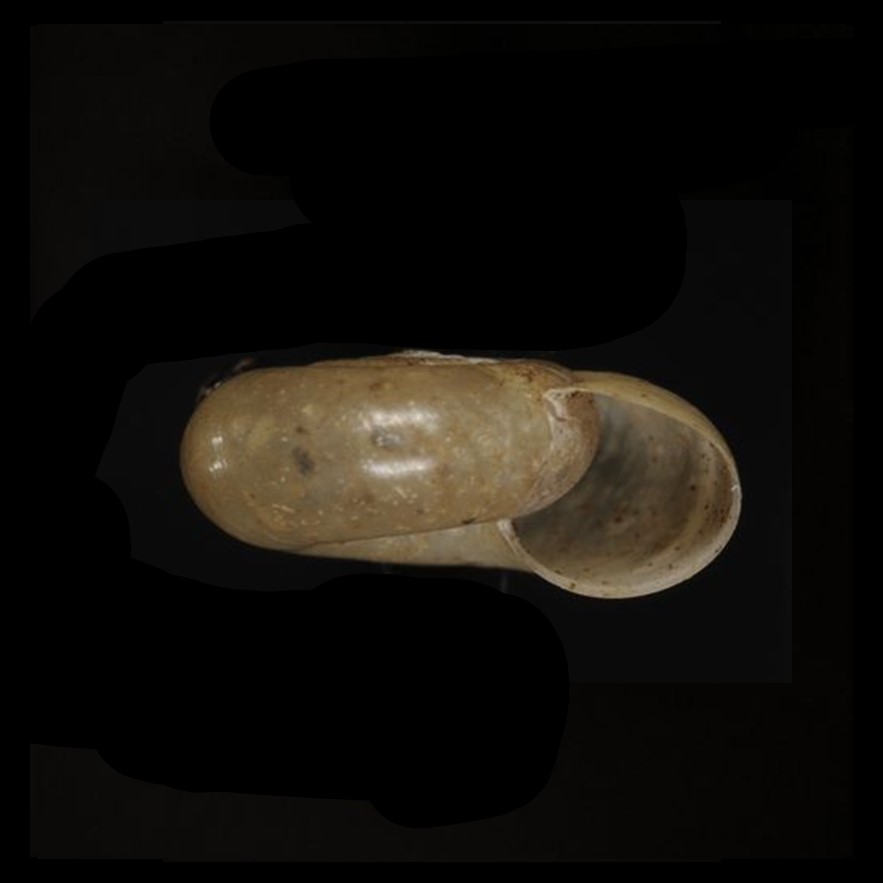
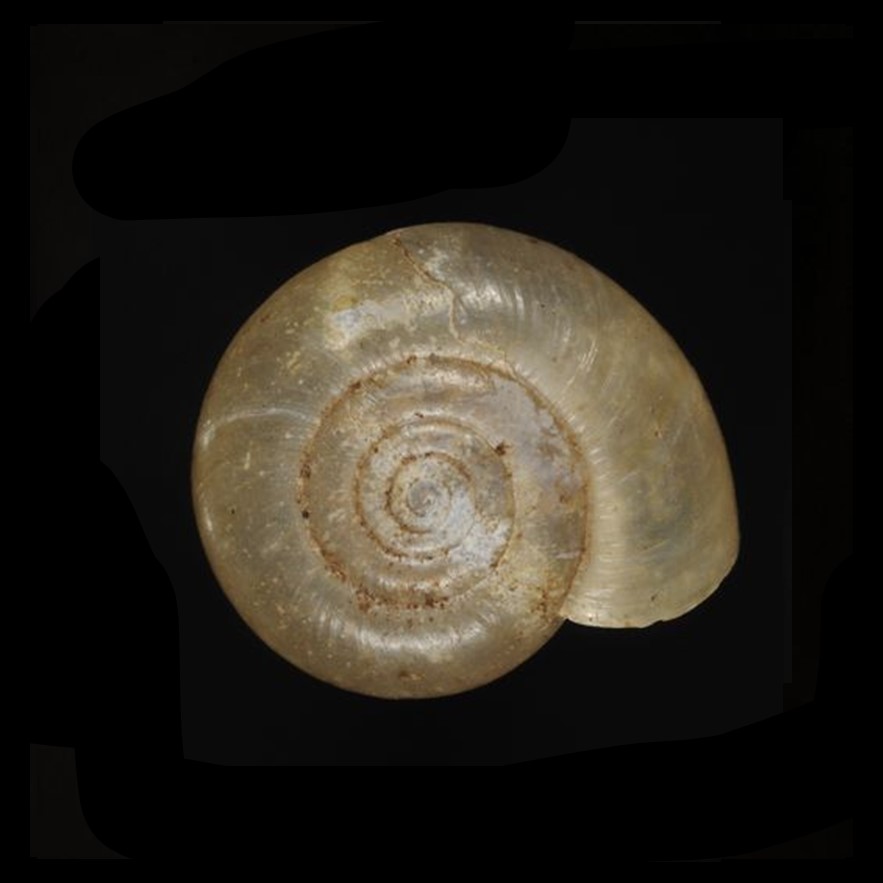
CLASSE: GASTROPODA: TERRESTRE FAMÍLIA: SCOLODONTINAE ESPÉCIE: Systrophiella snethlagei (F. Baker, 1914) Tamanho médio: 14.3 mm Distribuição: Brasil (Rondônia, Amazonas) Localidade tipo: Campo 39 da Expedição Stanford, Ferrovia Madeira-Mamoré, km 284 km acima de Porto Velho, Rondônia, Brasil Nome original: Happia snethlagei F. Baker, 1914 Sinônimos: Happia (Happia) snethlagei F. Baker, 1914; Happia snethlagei F. Baker, 1914 Etimologia: o nome da espécie é uma homenagem a Henriette Mathilde Maria Elisabeth Emilie Snethlage (1868-1929). Dra Snethlage foi uma ornitóloga e naturalista alemã, residente no Brasil, conhecida por seu trabalho com flora e fauna da Amazônia. Ela foi diretora do Museu Paraense Emílio Goeldi, entre 1914 e 1922, uma das primeiras mulheres a ocupar um cargo de direção em uma instituição científica na América Latina. Foi ela...
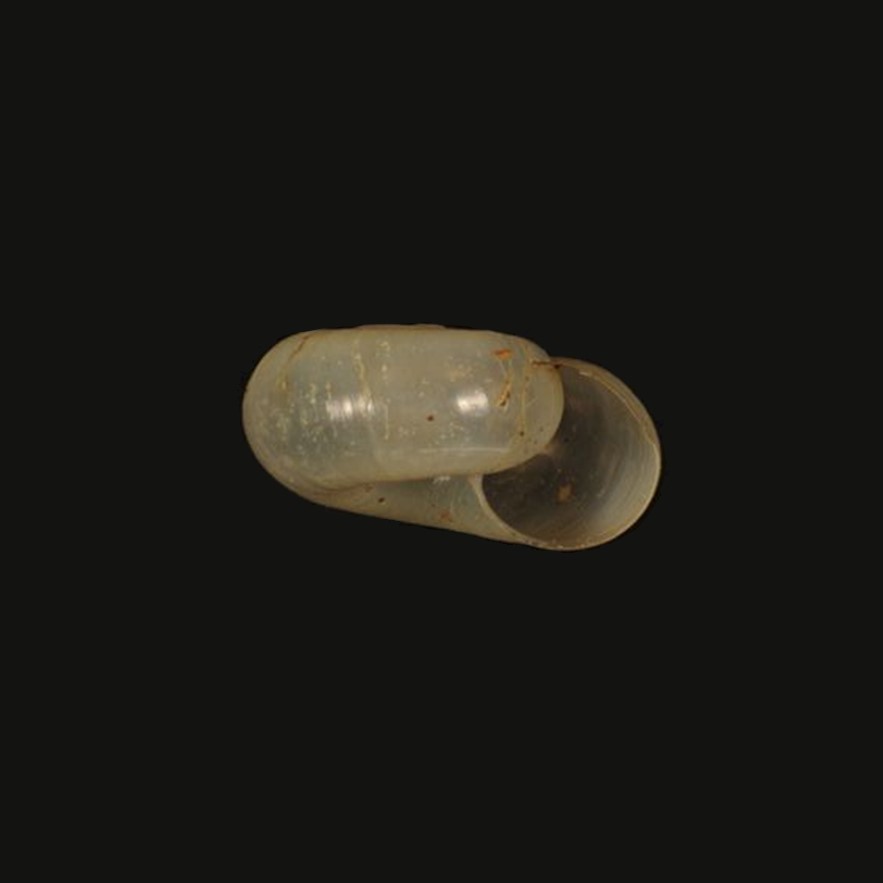
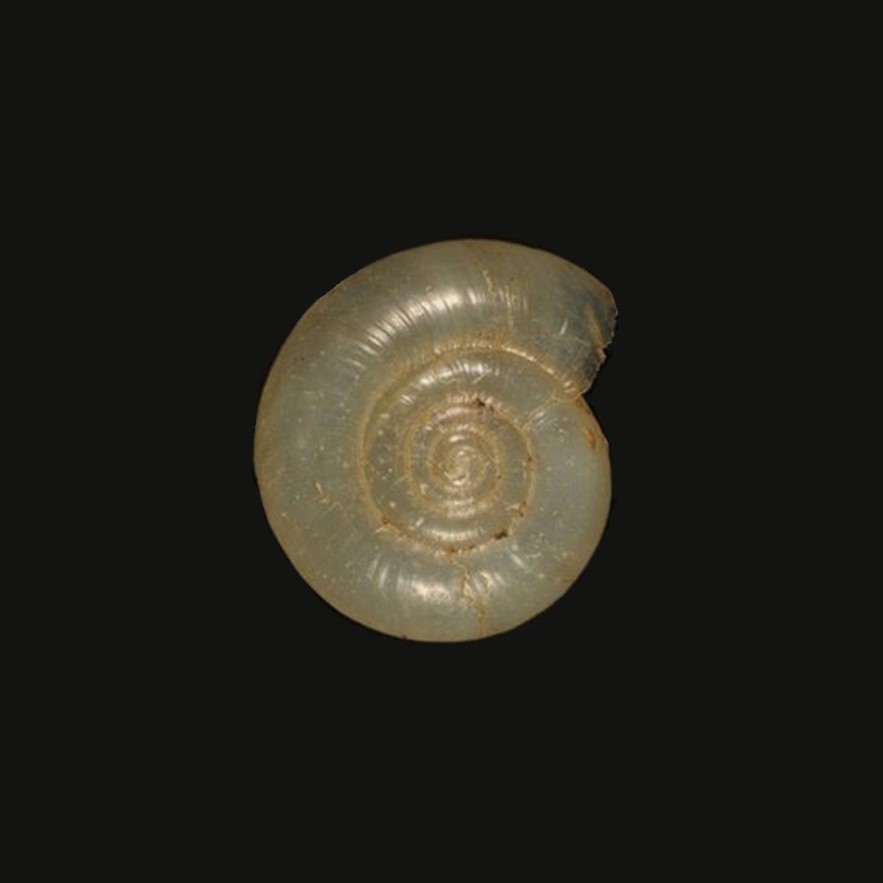
CLASSE: GASTROPODA: TERRESTRE FAMÍLIA: SCOLODONTIDAE ESPÉCIE: Systrophiella starkei (H. B. Baker, 1925) Tamanho médio: 8 mm Ocorrência: Venezuela Localidade tipo: Venezuela, San Esteban Nome original: Scolodonta (Systrophiella) starkei H. B. Baker, 1925 Sinônimos: Happia starkei (H. B. Baker, 1925); Scolodonta starkei H. B. Baker, 1925; Systrophia starkei (H. B. Baker, 1925) Fotos: (1-3) The Academy of Natural Sciences, Philadelphia: HOLOTYPE de Systrophiella starkei, ANSP 8868, Venezuela, San Esteban, coll. Starke, C. F., 8mm Fontes: Descrição original: (como Scolodonta (Systrophiella) starkei H. B. Baker, 1925) Baker, H. B. (1925). The Mollusca collected by the University of Michigan-Williamson Expedition in Venezuela, Part III: Pupillidae to Oleacinidae. Occasional Papers of the Museum of Zoology, University of Michigan. 156: 1-56, pls. 6-11., disponível online em https://deepblue.lib.umich.edu/bitstream/handle/2027.42/56595/OP156.pdf?sequence=1&isAllowed=y página(s): 26-29, pl....


CLASSE: GASTROPODA: TERRESTRE FAMÍLIA: SCOLODONTIDAE ESPÉCIE: Systrophiella vitrina (J. A. Wagner, 1827) Tamanho médio: 12 mm Ocorrência: Brasil (Bahia, Rio de Janeiro, São Paulo, Paraná, Santa Catarina) Localidade tipo: Brasil (“Habitat cum precedente [Provinciis australioribus Brasiliae]”.) Nome original: Helix vitrina J. A. Wagner, 1827 Sinônimos: Happia (Happia) vitrina J. A. Wagner, 1827; Happia vitrina (J. A. Wagner, 1827); Helix vitrina J. A. Wagner, 1827; Streptaxis (Happia) tumescens Suter, 1900; Streptaxis tumescens Suter, 1900 Fotos: (1) Salvador, R.B. (2020): SYNTYPE de Streptaxis tumescens Suter, 1900, MNZ M.205839; H = 5.4 mm, D = 9.6 mm; (2) HOLOTYPE de Systrophiella vitrina (J.A. Wagner in Spix & Wagner, 1827), ZSM 20020666 Fontes: Descrição original: (como Helix vitrina J. A. Wagner,...
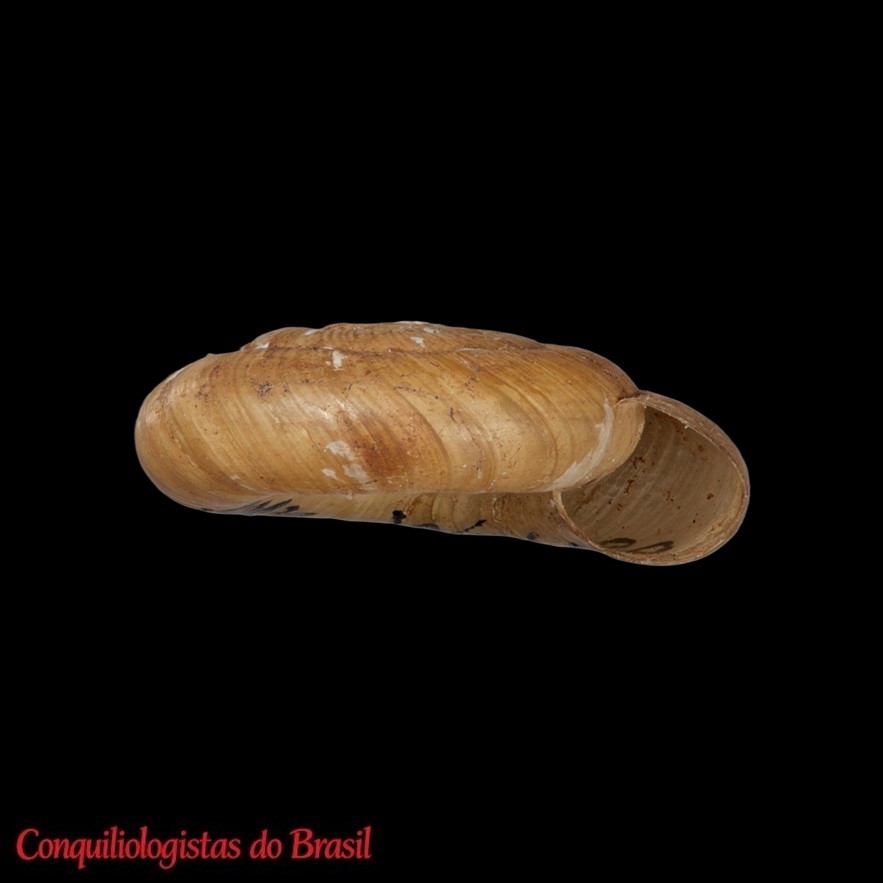
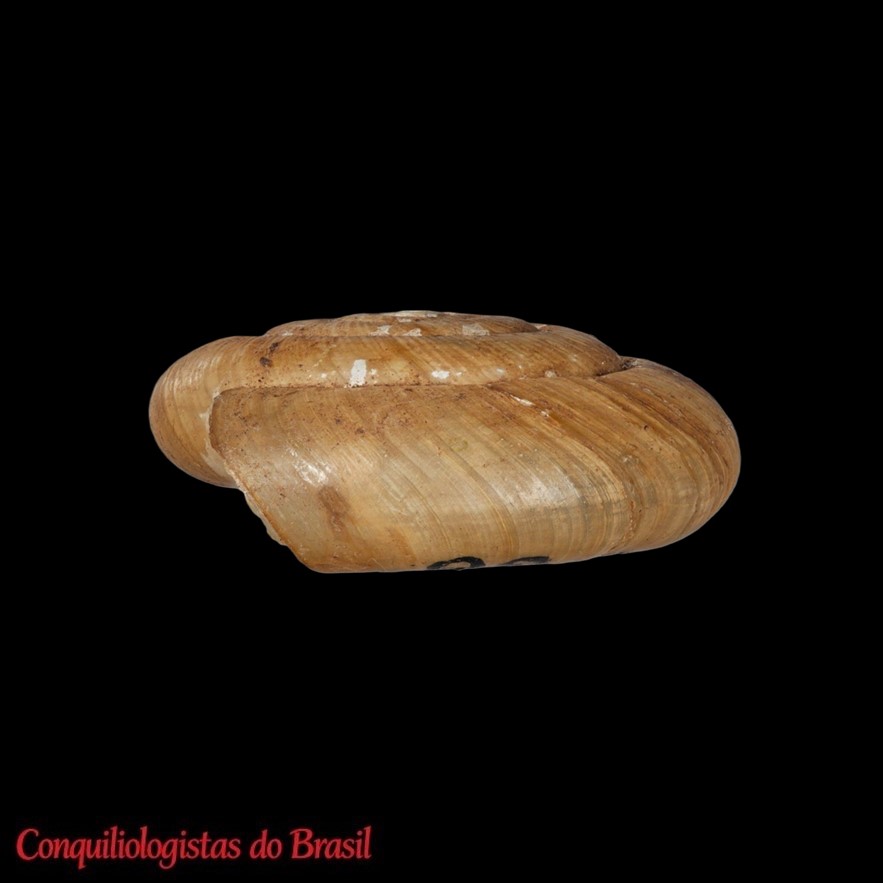
CLASSE: GASTROPODA: TERRESTRE FAMÍLIA: SCOLODONTIDAE ESPÉCIE: Systrophiella weyrauchi (F. Haas, 1951) Tamanho médio: 17 mm Ocorrência: Peru (Cuzco) Localidade tipo: Peru, Cuzco Altitude: 3500 m Nome original: Austroselenites weyrauchi F. Haas, 1951 Sinônimos: Happia (Systrophiella) weyrauchi (F. Haas, 1951); Happia weyrauchi (F. Haas, 1951); Systrophia (Systrophiella) weyrauchi (F. Haas, 1951) Fotos: (1-4) The Field Museum of Natural History: HOLOTYPE FMNH 30939 (ex WW 86), Peru, Cuzco, coll. W. K. Weyrauch, 17.3mm Fontes: Descrição original: (como Austroselenites weyrauchi F. Haas, 1951) Haas, F. (1951). Remarks on and descriptions of South American non-marine shells. Fieldiana: Zoology. 31(46): 503-545., disponível online em https://www.biodiversitylibrary.org/page/2784155 página(s): 535-537, fig. 119A-C Haas, F. (1955). On some small collections of inland shells from South America. Fieldiana, Zoology. 34(35): 361-387, figs. 70-84., disponível...

CLASSE: GASTROPODA: TERRESTRE FAMÍLIA: SCOLODONTINAE ESPÉCIE: Tamayoa banghaasi (Thiele, 1927) Tamanho médio: 3 - 4 mm Distribuição: Brasil (Paraíba, Pernambuco, Alagoas, Minas Gerais, Espírito Santo, Bahia, Rio de Janeiro) Localidade tipo: Brasil, Pernambuco, Olinda Nome original: Happia banghaasi Thiele, 1927 Sinônimos: Tamayoa (Tamayops) banghaasi (Thiele, 1927) Fotos: (1,2) Salvador, R. B., Silva, F. S. & Bichuette, M. E. (2023): Tamayoa banghaasi (Thiele, 1927), LES 0028035 Fontes: Descrição original: (como Happia banghaasi Thiele, 1927) Thiele, J. (1927). Über einige brasilianische Landschnecken. Abhandlungen der Senckenbergischen Naturforschenden Gesellschaft. 40 (3): 307-329, pl. 26. Frankfurt am Main. página(s): 319 Salvador, R. B., Silva, F. S. & Bichuette, M. E. (2023). Taxonomic study on a collection of terrestrial and freshwater gastropods from caves...
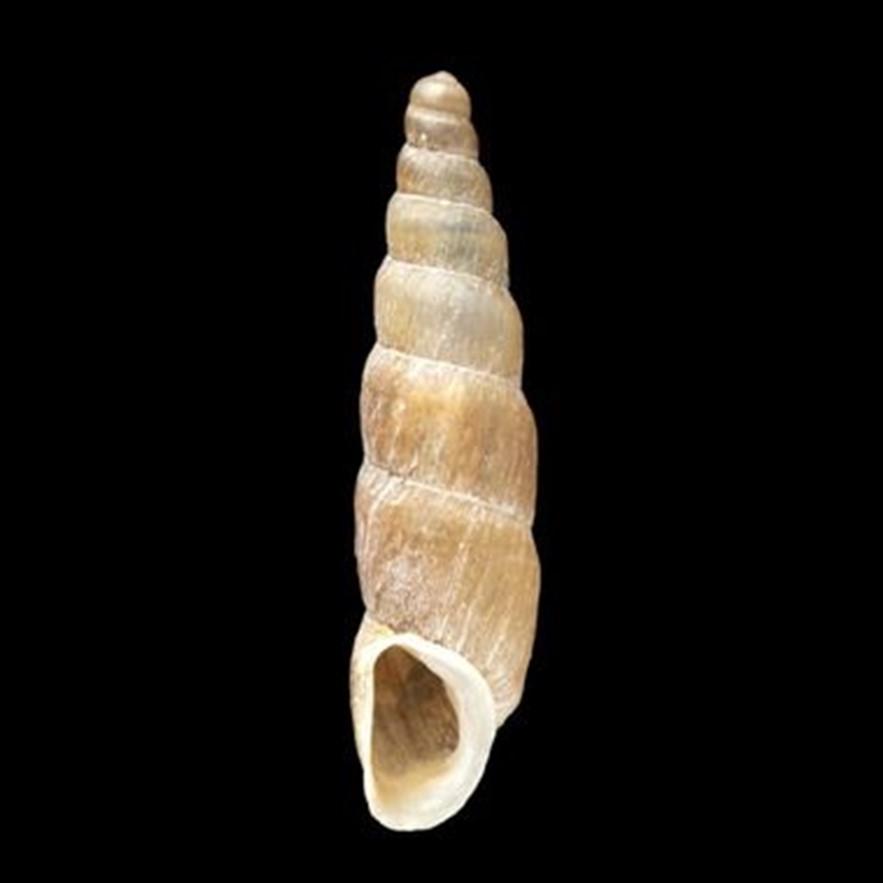
CLASSE: GASTROPODA: TERRESTRE FAMÍLIA: CLAUSILIIDAE ESPÉCIE: Temesa clausilioides (Reeve, 1849) Tamanho médio: 11 - 16 mm Ocorrência: Peru (Cajamarca, Cuzco) Localidade tipo: Peru, "Andes of Caxamarca" [Cajamarca] Altitude: 3100 m Nome original: Bulimus clausilioides Reeve, 1849 Fotos: (1,2) Natural History Museum, London: SYNTYPE de Temesa clausilioides (Reeve, 1849), NHMUK 1969273, "Andes of Peru", coll. Hugh Cuming Fontes: Descrição original: (como Bulimus clausilioides Reeve, 1849) Reeve, L. A. (1848-1850). Monograph of the genus Bulimus. In: Conchologia Iconica, or, illustrations of the shells of molluscous animals, 5: Pls 1–89 and unpaginated text. L. Reeve & Co., London, disponíve online em https://www.biodiversitylibrary.org/page/8966758 página(s): pl. 73, fig. 523 Sykes, E. R. (1901). Notes on the genus Temesa, H. & A. Adams, with...
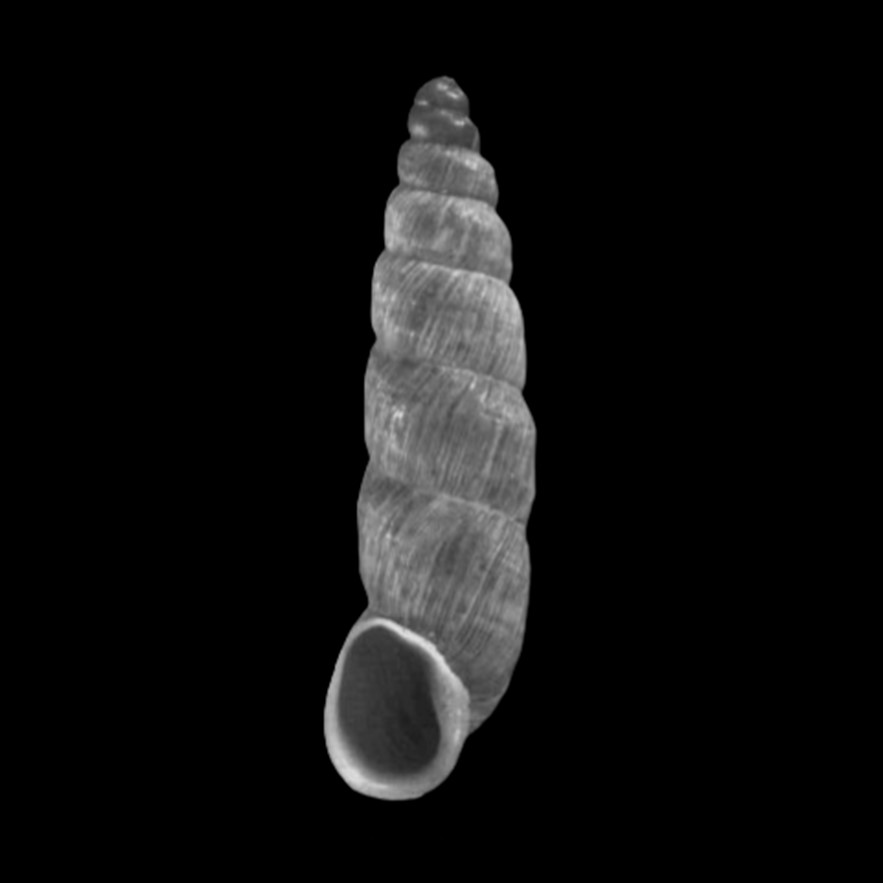
CLASSE: GASTROPODA: TERRESTRE FAMÍLIA: CLAUSILIIDAE ESPÉCIE: Temesa gradata Neubert & H. Nordsieck, 2005 Tamanho médio: 11.5 - 13.2 mm Ocorrência: Peru (Cajamarca) Localidade tipo: Peru, Cajamarca, 30 km NE of Encafiada Altitude: 3550 m Nome original: Temesa gradata Neubert & H. Nordsieck, 2005 Fotos: (1) Neubert, E. & Nordsieck, H. (2005): Holotype: UF 268790, Peru, Cajamarca, 30 km NE of Encafiada, F. G. Thompson leg., 22.iv.1972 Fontes: Descrição original: Neubert, E. & Nordsieck, H. (2005). New Southamerican Clausiliidae from the collections of the Florida Museum of Natural History (Gastropoda, Clausiliidae, Neniinae). Bulletin of the Florida Museum of Natural History, 45 (2): 45-62. Gainesville. página(s): 52, Fig. 23 Nordsieck, H. (2007). Worldwide Door Snails (Clausiliidae), Recent and Fossil....
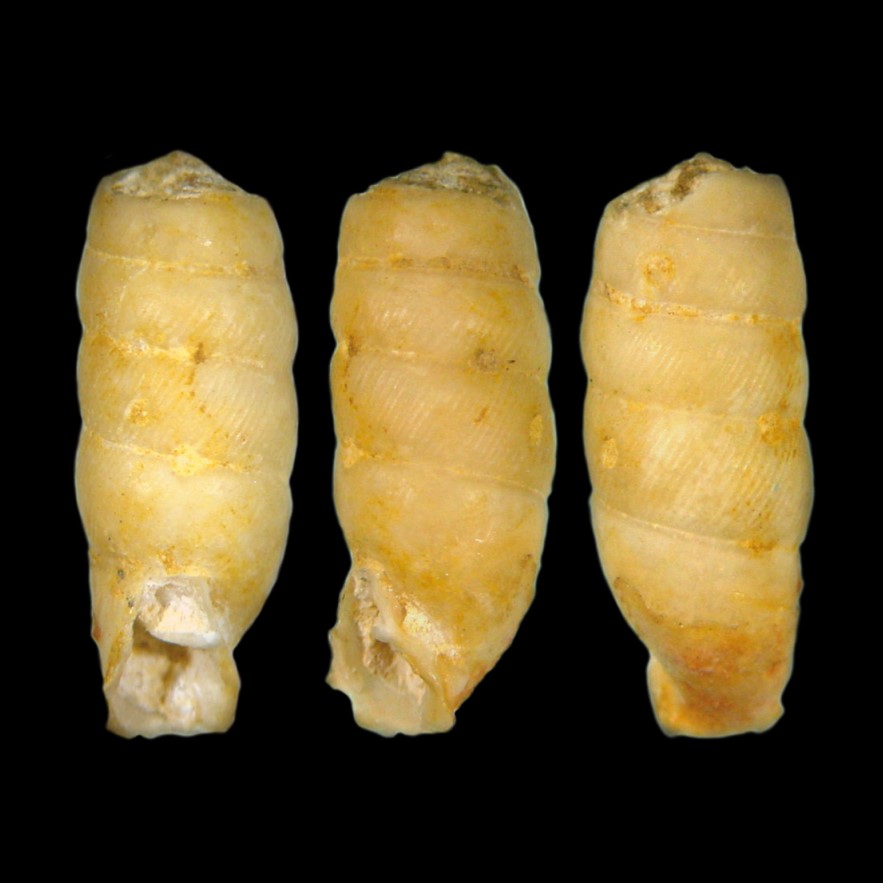
CLASSE: GASTROPODA: TERRESTRE FAMÍLIA: CLAUSILIIDAE ESPÉCIE: Temesa magalhaesi (Trindade, 1953) † Tamanho médio: 14.5 mm Ocorrência: Fóssil Período: Terciário, Paleoceno Médio Localidade tipo: Brasil, Rio de Janeiro, "Limestones of Parque Paleontológico de São José de Itaboraí" Nome original: Clausilia magalhaesi Trindade, 1953 † Etimologia: o nome da espécie é uma homenagem ao professor brasileiro Júlio de Magalhães, da Faculdade Nacional de Filosofia, Rio de Janeiro Fotos: (1) Salvador, Rodrigo & Simone, Luiz. (2013): Museu de Ciências da Terra, Rio de Janeiro, Temesa magalhaesi, DGM 4997-I, 14 mm Fontes: Descrição original: (como Clausilia magalhaesi Trindade, 1953 †) Trindade, N.M. (1953). Contribuição à paleontologia de São José de Itaboraí, Estado do Rio de Janeiro. Revista Científica. 4(3/4): 37-46. página(s): 40, fig. 1 Salvador, R.B.; Simone, L.R.L....

CLASSE: GASTROPODA: TERRESTRE FAMÍLIA: CLAUSILIIDAE ESPÉCIE: Temesa magnifica Sykes, 1901 Tamanho médio: 28.7 mm Ocorrência: Bolívia Localidade tipo: Bolívia, Sorato Altitude: 3600 m Nome original: Temesa magnifica Sykes, 1901 Descrição original: (Sykes, 1901): "Testa sinistrorsa, breviter rimata, fusiformi-turrita, solida, conferte costulato-striata, fusco-brunnea, maculis flavidis tessellata, apice obtuso; anfractus 8, plano-convexi, sutura bene impressa, ultimus paulo angustior, solutus, basi rotundatus; apertura quadrato-ovata, intus castanea, columella contorta, plicata, rapide ascendens, peristomate incrassato, subreflexo, castaneo" Fotos: (1) Sykes, 1901: reprodução do desenho original, 28.7mm Fontes: Descrição original: Sykes, E. R. (1901). Notes on the genus Temesa, H. & A. Adams, with descriptions of two new land-shells (Temesa and Clausilia) from South America. Proceedings of the Malacological Society of London. 4: 220-222., disponível online em...
CLASSE: GASTROPODA: TERRESTRE FAMÍLIA: CLAUSILIIDAE ESPÉCIE: Temesa pusilla (Poliński, 1921) Tamanho médio: 10.2 mm Ocorrência: Peru Localidade tipo: Peru, sem localidade específica (apenas 1 espécime coletado por K. Jelski) Nome original: Nenia pusilla Poliński, 1922 Sinônimos: Temesa (Temesa) pusilla (Poliński, 1921) Fotos: nd Fontes: Descrição original: (como Nenia wagneri Polinski, 1921) Poliński, W. (1922). Neue Clausiliiden aus Peru. Bulletin de l'Académie Polonaise des Sciences et des Lettres, Classe des Sciences Mathématiques et Naturelles, ser. B. (1921): 121-143. página(s): 129 Ramírez, R.; Paredes, C.; Arenas, J. (2003). Moluscos del Perú. Revista de Biologia Tropical. 51(supplement 3): 225-284 Iwan D, Mierzwa-Szymkowiak D, Kamiński M (2024). MIZ PAS Zoological Collections. Version 1.3. Museum and Institute of Zoology, Polish Academy of Sciences (MIIZ PAN). Occurrence...

CLASSE: GASTROPODA: TERRESTRE FAMÍLIA: MEGASPIRIDAE ESPÉCIE: Thaumastus achilles (L. Pfeiffer, 1853) Tamanho médio: 65 mm Habitat: vive no solo, sob folhas ou enterrada parte do tempo Alimentação: herbívoro Ocorrência: Brasil (Rio de Janeiro, São Paulo, Paraná, Minas Gerais, Espírito Santo) Localidade tipo: Brasil (‘‘in ripis fluvii Amazonum’’) Nome original: Bulimus achilles L. Pfeiffer, 1853 Sinônimos: Thaumastus (Thaumastus) achilles (L. Pfeiffer, 1853) Comentários: Molluscabase (2024) considera Thaumastus achilles como sinônimo de Thaumastus taunaisii (A. Férussac, 1822), mantido aqui para comparação Fotos: National History Museum, London: PARALECTOTYPE de Bulimus achilles Pfeiffer, 1852, lote NHMUK 1975269: estas espécies foram identificadas erroneamente como ‘‘Bulimus thompsoni Pfr’’, possivelmente porque a localidade foi mal interpretada como equatoriana, embora na verdade seja no Brasil (Breure & Araujo, 2017) ...

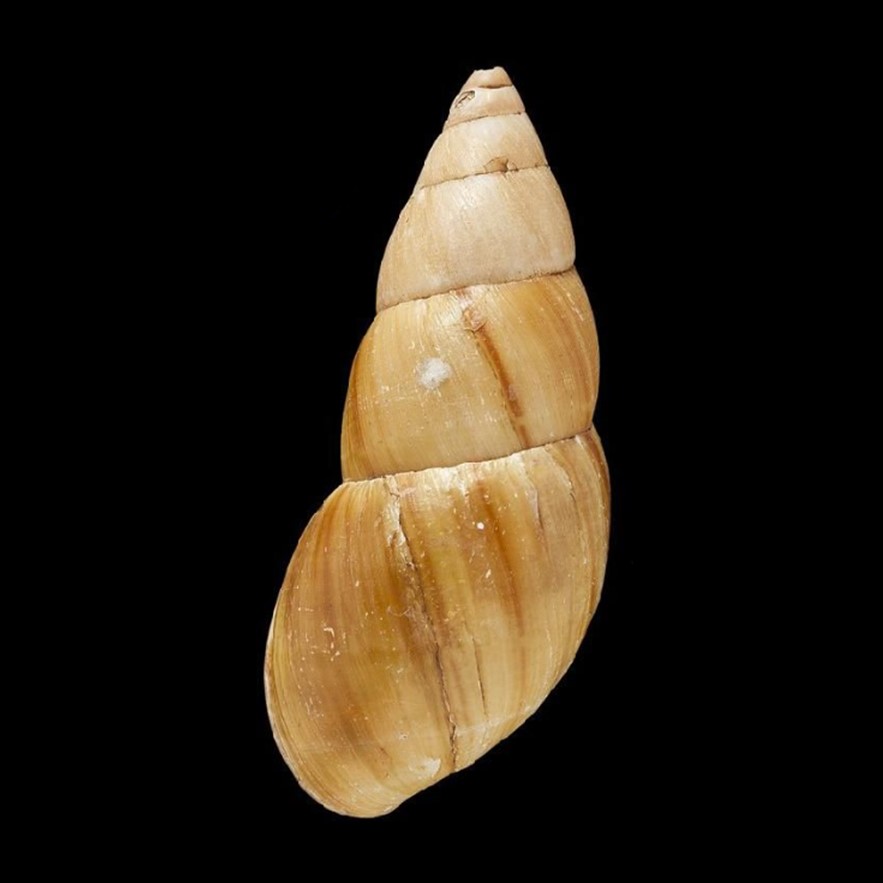
CLASSE: GASTROPODA: TERRESTRE FAMÍLIA: MEGASPIRIDAE ESPÉCIE: Thaumastus ascendens (L. Pfeiffer, 1853) Tamanho médio: 95 mm Habitat: vive no solo, sob folhas ou enterrada parte do tempo Alimentação: herbívoro Ocorrência: "Brasil" Nome original: Bulimus ascendens L. Pfeiffer, 1853 Sinônimos: Thaumastus (Thaumastus) ascendens (L. Pfeiffer, 1853) Fotos: (1-3) Natural History Museum, London: LECTOTYPE de Bulimus ascendens Pfeiffer, 1853, NHMUK 1975274, Brasil, coll. Hugh Cuming Fontes: Descrição original: (como Bulimus ascendens L. Pfeiffer, 1853) Pfeiffer, L. (1853). Monographia heliceorum viventium. Sistens descriptiones systematicas et criticas omnium huius familiae generum et specierum hodie cognitarum. Volumen tertium [Vol. 3]. Lipsiae: Brockhaus. i-viii + 711 pp. , disponível online em https://biodiversitylibrary.org/page/11646394 página(s): 378 Simone, L. R. L. (2006). Land and Freshwater Molluscs of Brazil. Editora Gráfica Bernardi,...

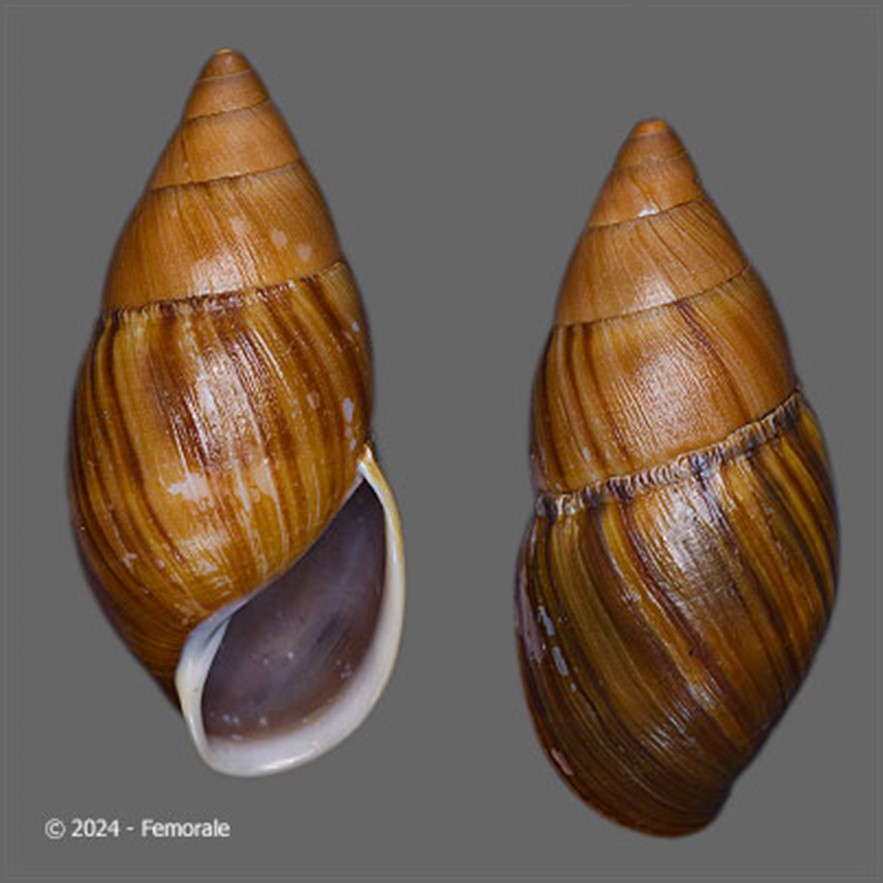
CLASSE: GASTROPODA: TERRESTRE FAMÍLIA: MEGASPIRIDAE ESPÉCIE: Thaumastus baixoguanduensis Pena, Coelho & Salgado, 1996 Tamanho médio: 56 mm Habitat: Vive no solo, sob folhas ou enterrada parte do tempo Alimentação: Herbívoro Ocorrência: Espírito Santo Localidade tipo: Município de Baixo Guandu, Espírito Santo Etimologia: nome da espécie é uma referência à localidade tipo, o município de Baixo Guandu Nome original: Thaumastus baixoguanduensis Pena, Coelho & Salgado, 1996 Sinônimos: Thaumastus (Thaumastus) baixoguanduensis Pena, Coelho & Salgado, 1996 Fotos: (1,3) Museu Nacional do Rio de Janeiro: HOLOTYPE MNRJ 6924, Pinetti, C.E. leg., Baixo Guandu, Espírito Santo; (2) cortesia Femorale, 2024, Espírito Santo, Baixo Guandu, 60.5mm Fontes: Descrição original: (como Thaumastus (Thaumastus) baixoguanduensis Pena, Coelho & Salgado, 1996) Pena, M. Silva,...